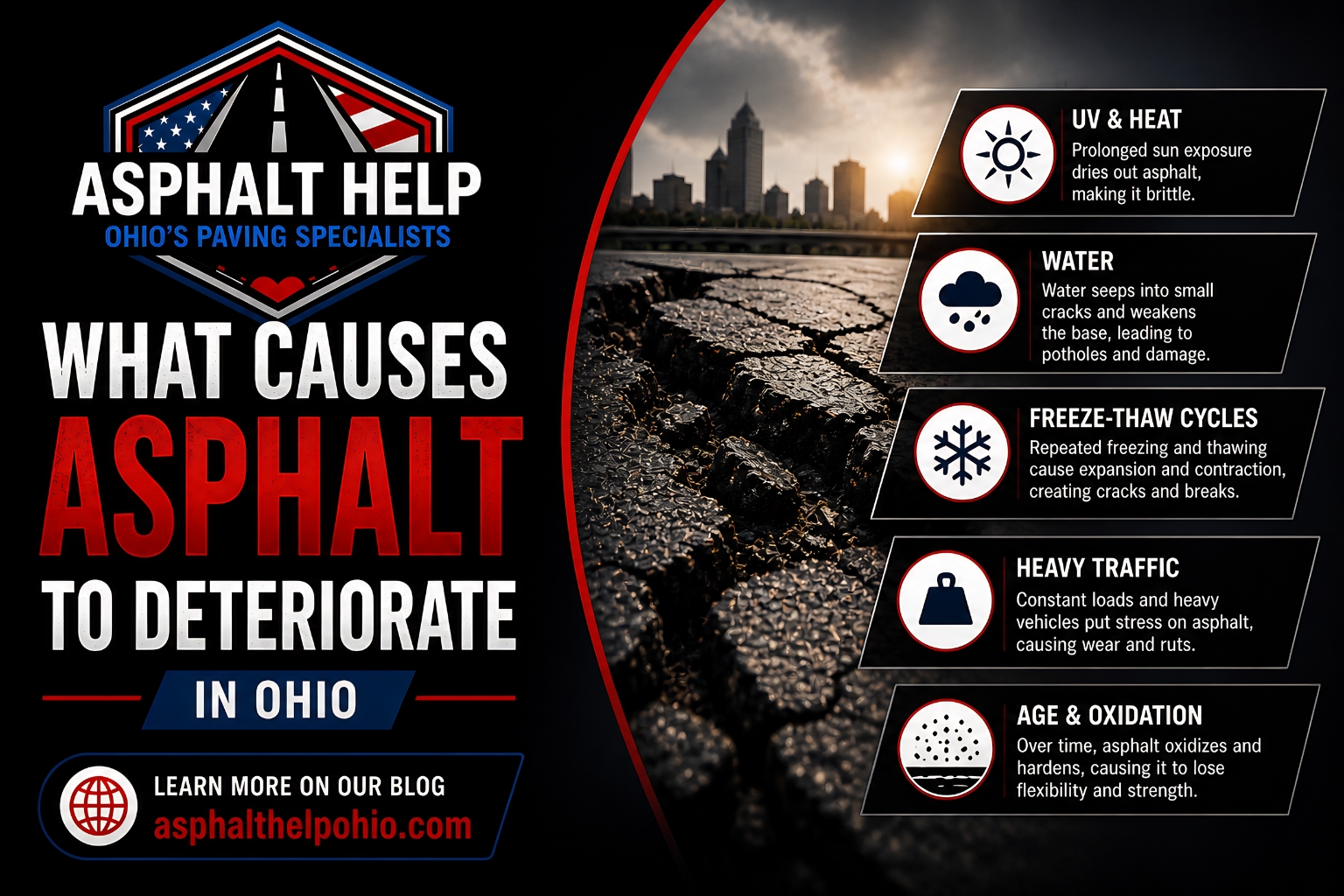

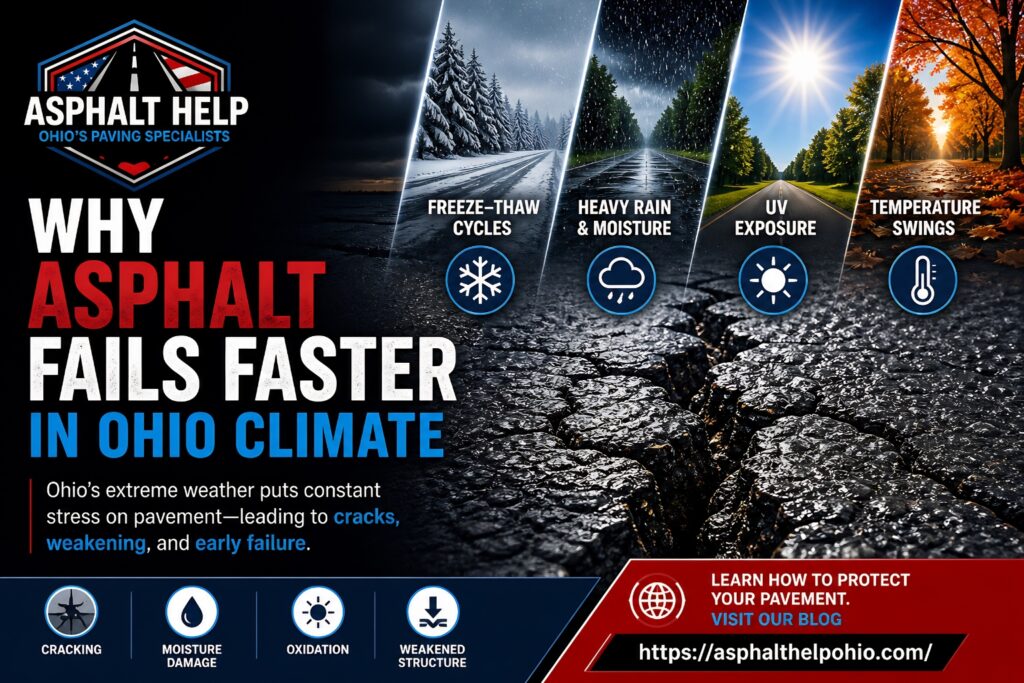
Why does asphalt failure in Ohio happen so quickly compared to other states? Ohio’s roads and driveways often deteriorate sooner than those in milder regions—and it’s no coincidence. Asphalt failure Ohio is a common concern among property owners due to the state’s harsh environmental conditions and structural challenges. From relentless freeze–thaw cycles to heavy precipitation, road salt, and dense traffic loads, Ohio pavements face a uniquely aggressive environment that accelerates wear and tear.
Even when asphalt is installed correctly, local paving professionals consistently observe a shorter lifespan compared to national averages. In many cases, well-constructed asphalt surfaces in Ohio last only 15–20 years, depending on maintenance and usage. Understanding why asphalt failure in Ohio occurs is key to extending pavement life and avoiding costly repairs.
Ohio Climate Stress: Freeze–Thaw, Rain and Salt
Ohio’s climate subjects pavement to dozens of freezing-and-thawing cycles each winter. For example, Cleveland’s design data show about 53 freeze–thaw cycles per year at standard depth. Daily temperature swings around 0 °C (32 °F) crack pavement (water enters pores, then expands when frozen). Even moderate winters can have multiple freezes per day. Average January highs are only 2–4 °C (35–40 °F) and lows near –4 °C (25 °F) in Central Ohio. Snowfall adds moisture: Columbus averages ~6–7 in (150–180 mm) of snow in Jan–Mar, and Cleveland over 8 in (200 mm). In short, water penetrates cracks, freezes, expands and worsens them repeatedly.
De-icing salts make this worse. Salt melts ice, creating brine that seeps into tiny cracks; when it refreezes the expanded water causes micro-cracks to grow. Over multiple winters, chloride ions chemically attack the asphalt binder, weakening its cohesion. In Ohio, snowplows and road salt usage are heavy, accelerating oxidation and raveling. Overall, experts note that “Ohio’s freeze–thaw cycle is notoriously tough on pavement”. Property owners should anticipate that untreated minor cracks quickly propagate through winter.
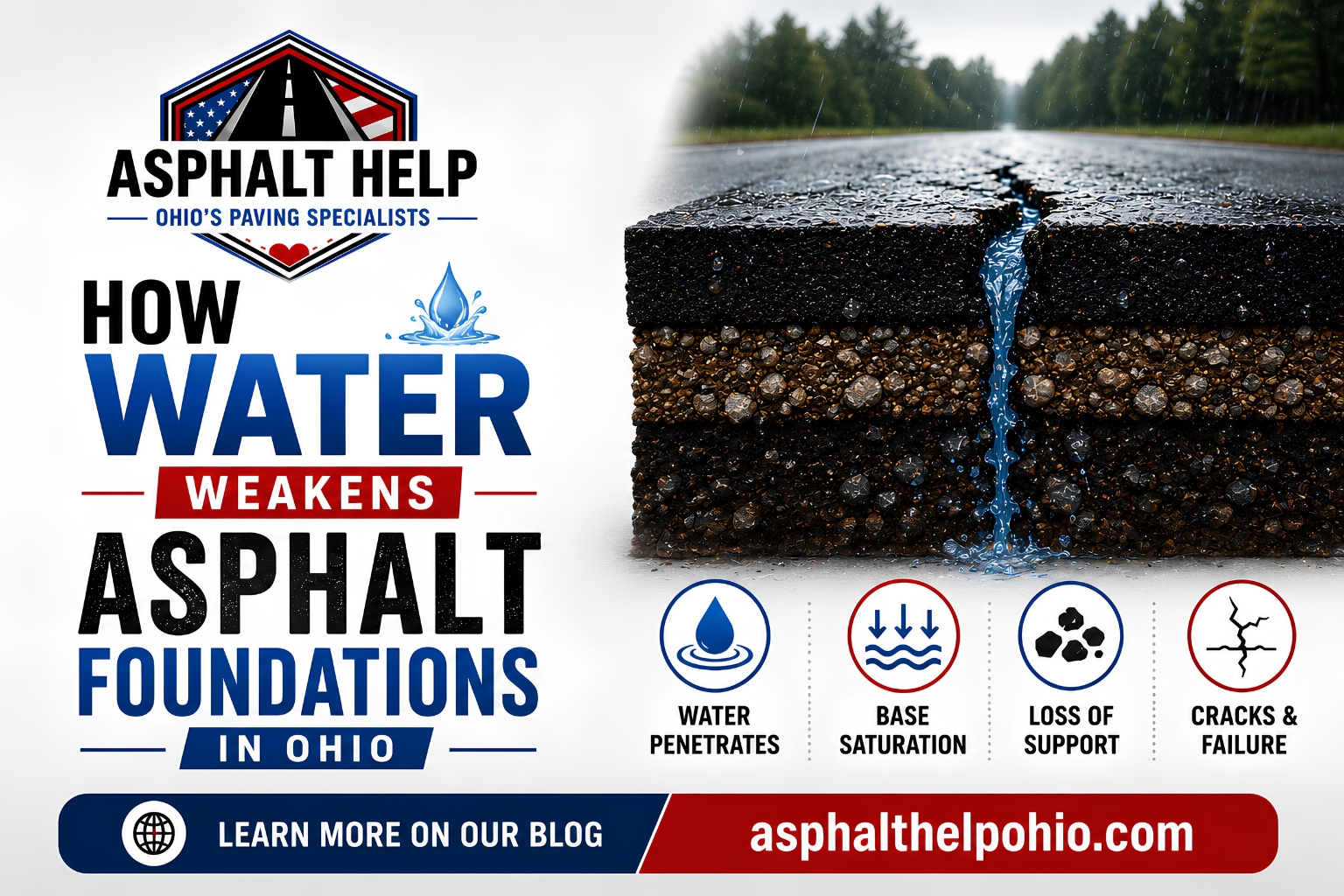
Rain and poor drainage also strain pavement. Ohio averages ~30–40 in (760–1000 mm) of annual precipitation, much of it in spring and fall. Standing water after storms or long thaws indicates drainage problems, which seep into the base and subgrade. Saturated soils under pavement freeze differently (frost heave) and lose strength. As one Ohio paving firm warns, “Water seeping through even small cracks can damage the base layers, causing structural problems that require complete rebuilding”. In short, Ohio’s moisture plus freeze–thaw combination makes durability a constant concern.
Other Causes: Traffic, Subgrade and Design Issues
Ohio’s highways and driveways also face heavy use. Freight traffic and frequent stop-starts stress pavement. When loads exceed design (or support is inadequate), fatigue cracks form. For example, studies and industry sources list heavy loading and poor base support as top triggers for alligator cracking. Weak or oversaturated subgrades (clays in some Ohio soils) settle or pump moisture under loads, leading to edge failures or depressions. Inadequate pavement thickness or mix design compounds these stresses. Unstable asphalt mixes (excess binder, rounded aggregates) are prone to rutting under warm weather. Northern Ohio’s practice of thinner overlaid layers (to save cost) means more vulnerability to freezing and traffic strain.
Finally, maintenance lapses allow minor damage to compound. If cracks or drains are ignored, oxygen and water accelerate aging. A timely sealcoat or crack sealing can stop problems, but delays mean more repair costs later. As Asphalt Help Ohio notes, crack sealing “prevents moisture penetration” and slows structural failure. Conversely, skipping maintenance lets small cracks turn into potholes or base failures by the next winter.
Symptoms: Cracks, Potholes, Rutting and Edge Failure
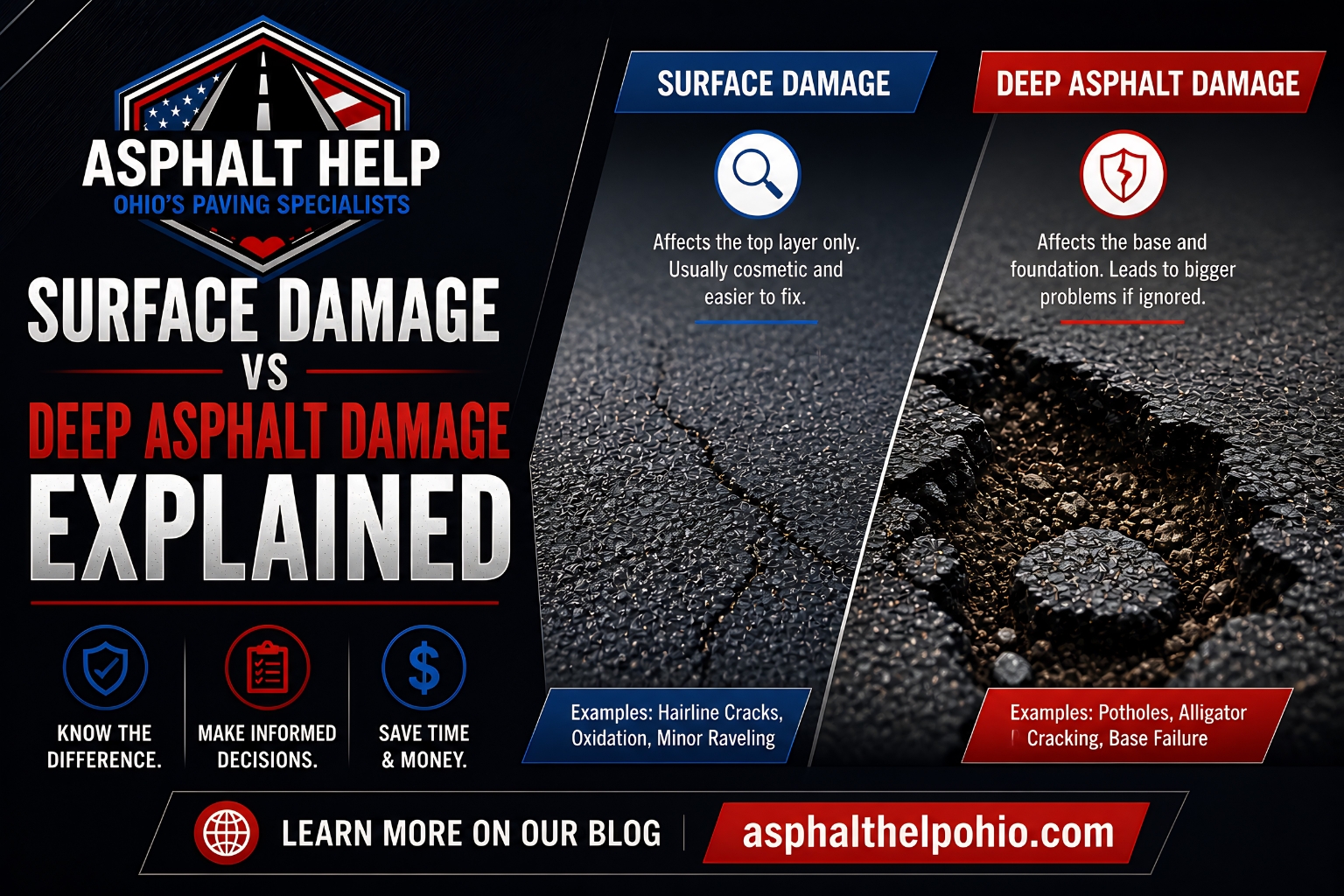
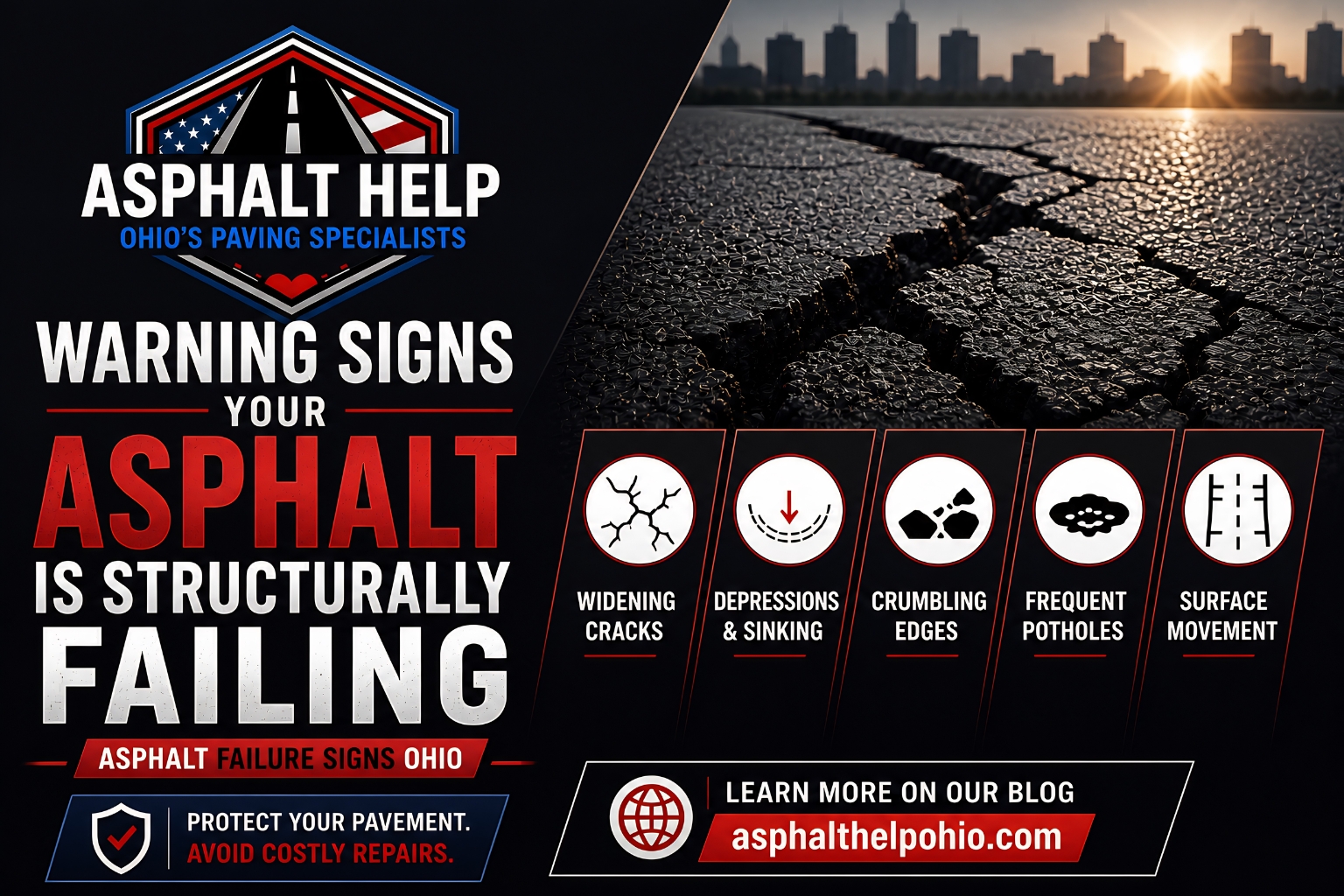
Central Ohio property owners see familiar distress patterns. Fatigue/alligator cracking (shattered “alligator-skin” pattern) indicates base fatigue from repeated loads or moisture damage. It often starts as small, interconnected cracks and grows rapidly under traffic. “Overloading of the pavement” and poor drainage are prime causes of alligator cracks. Potholes form when freeze–thaw and traffic pull pieces of pavement loose, leaving bowl-shaped holes. They often appear after a thaw; even a few freeze-thaw cycles can enlarge a tiny hole into a hazard. (As one Ohio contractor notes, potholes mean water has weakened the foundation, and patching is a temporary fix.)
Rutting shows up as longitudinal depressions in wheel paths from permanent deformation of asphalt or subgrade. Heavy trucks and hot summer days accelerate rut formation (weak binder or base loses support). Signs include visible grooves and water pooling in wheel tracks. Edge failures occur when pavement lacks shoulder support: the edges crack, crumble, or erode. This is often due to improper shoulder preparation, as water undermines the side of the road. Any frost heave (localized uplift from soil freezing) can buckle smaller sections, creating bumps or cracks.
Below is a table summarizing common failure modes in Ohio, their causes, symptoms, and typical fixes:
| Failure Mode | Causes | Signs/Symptoms | Recommended Fix/Prevention |
|---|---|---|---|
| Alligator (Map) Cracking | Repeated heavy loads; weak base/low compaction; moisture infiltration; ageing asphalt | Interconnected “crocodile” cracks covering an area; soft or spongy feel under load | Mill out and replace full-depth layer; ensure proper base compaction and thickness; restore drainage; use high-quality mix. Seal small cracks early to prevent progression. |
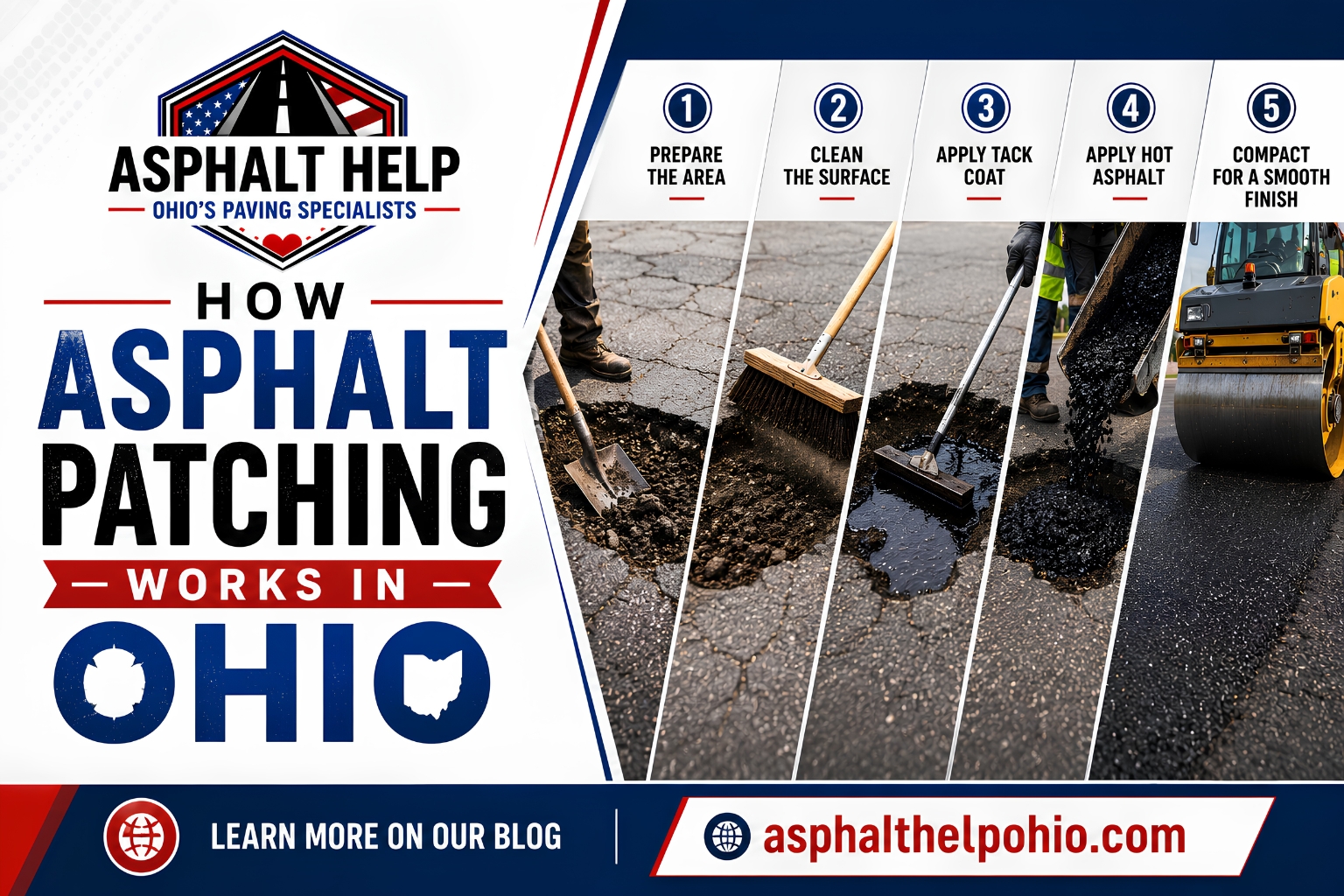
| Potholes | Water ingress and freeze–thaw; base voids; high traffic stress | Bowl-shaped holes with loose edges; dark patches; accelerated after winter | Cut out damaged area; patch with hot asphalt and compact. Improve drainage to stop water pooling. Consider asphalt overlays for widespread holes. |
| Rutting | Heavy wheel loads; warm mix and climate; saturated subgrade; insufficient base; inadequate mix/stiffness | Longitudinal grooves or channels in wheel paths; standing water; ride quality drop | Mill and overlay the surface or reconstruct the layer. Use rut-resistant mix (e.g. polymer-modified binders) and ensure proper compaction. Stabilize or thicken the base if subgrade is weak. Maintain cross-slope and clear drainage. |
| Edge Cracking/Failure | Unsupported edges; drainage channeling water under pavement; shoulder differences (overlay not matching shoulder) | Cracks parallel to pavement edge; crumbling shoulder; sudden drop-off between pavement and shoulder | Rebuild edge with proper shoulder support and compaction; add side-slope or apron; improve culvert/inlet drainage. When repaving, taper edges or widen pavement. Seal cracks along edges promptly. |
| Thermal/Block Cracking (minor) | Repeated shrinking/swelling from temperature swings (esp. shallow mixes) | Pattern of cracks a few meters apart forming rectangular blocks | Not a major structural issue; crack seal to prevent moisture ingress. Proper mix design and joint spacing can minimize. Sealcoat to protect from oxidation. |
Prevention and Repair Strategies
Timely maintenance is crucial in Ohio. Sealcoating and crack sealing form the first line of defense. A fresh sealcoat (every 2–3 years) keeps moisture and salts out of the asphalt. Caulking or filling cracks as soon as they appear stops water ingress and greatly extends life. Asphalt Help Ohio highlights sealcoating as a way to “protect pavement from moisture intrusion” and UV, delaying surface wear. In winter climates, avoiding early-season plowing damage (e.g. lifting the blade during paving) also helps.
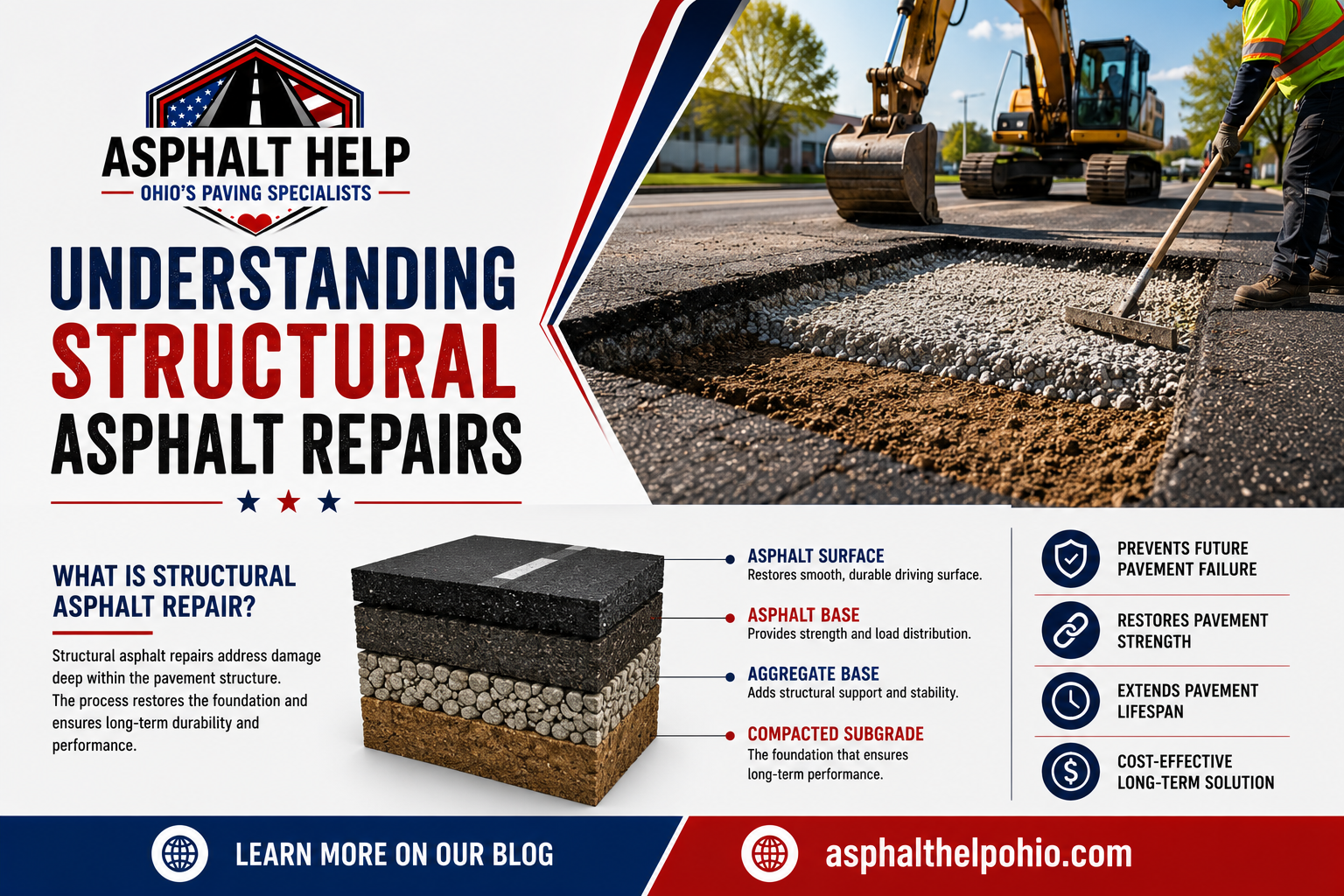
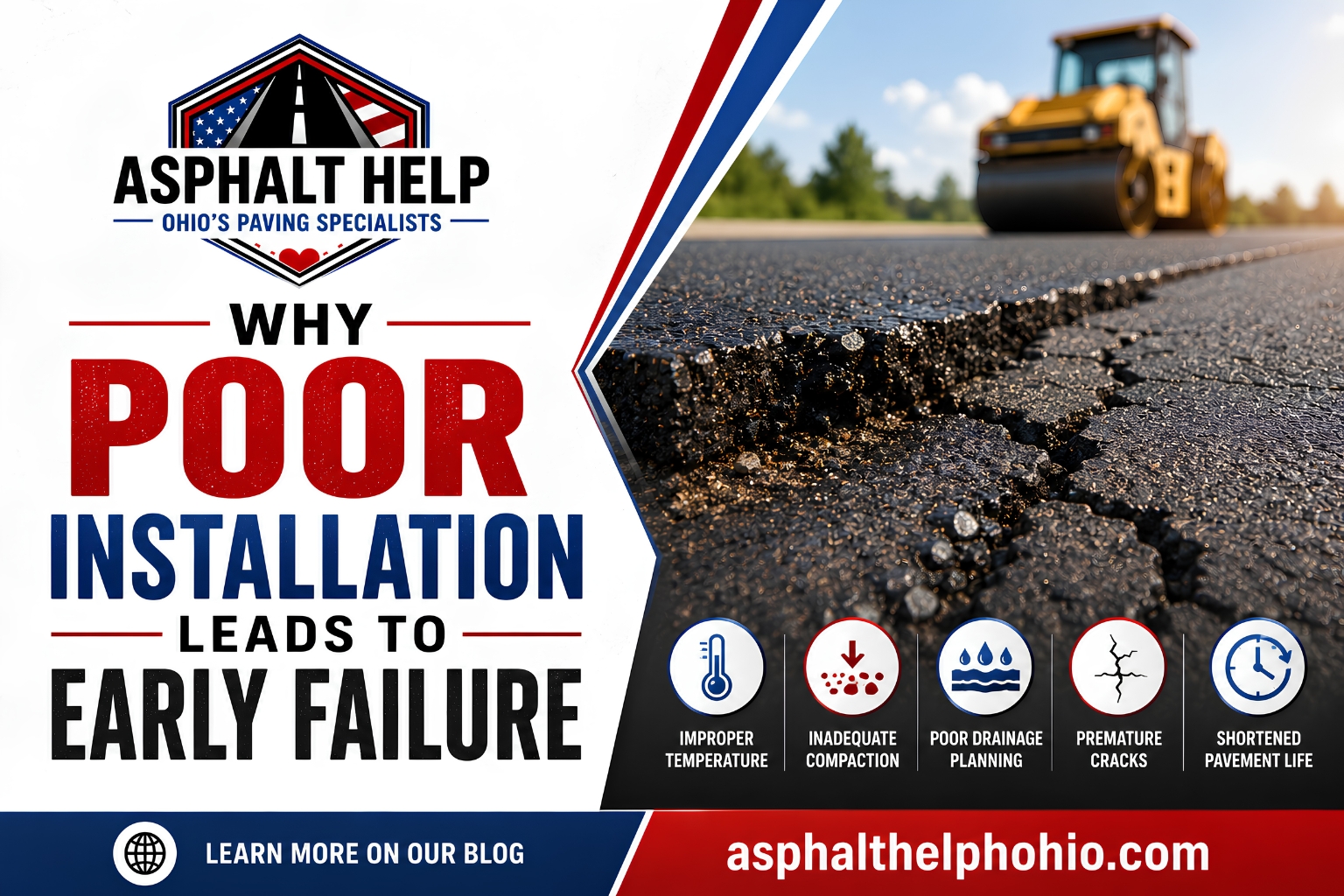
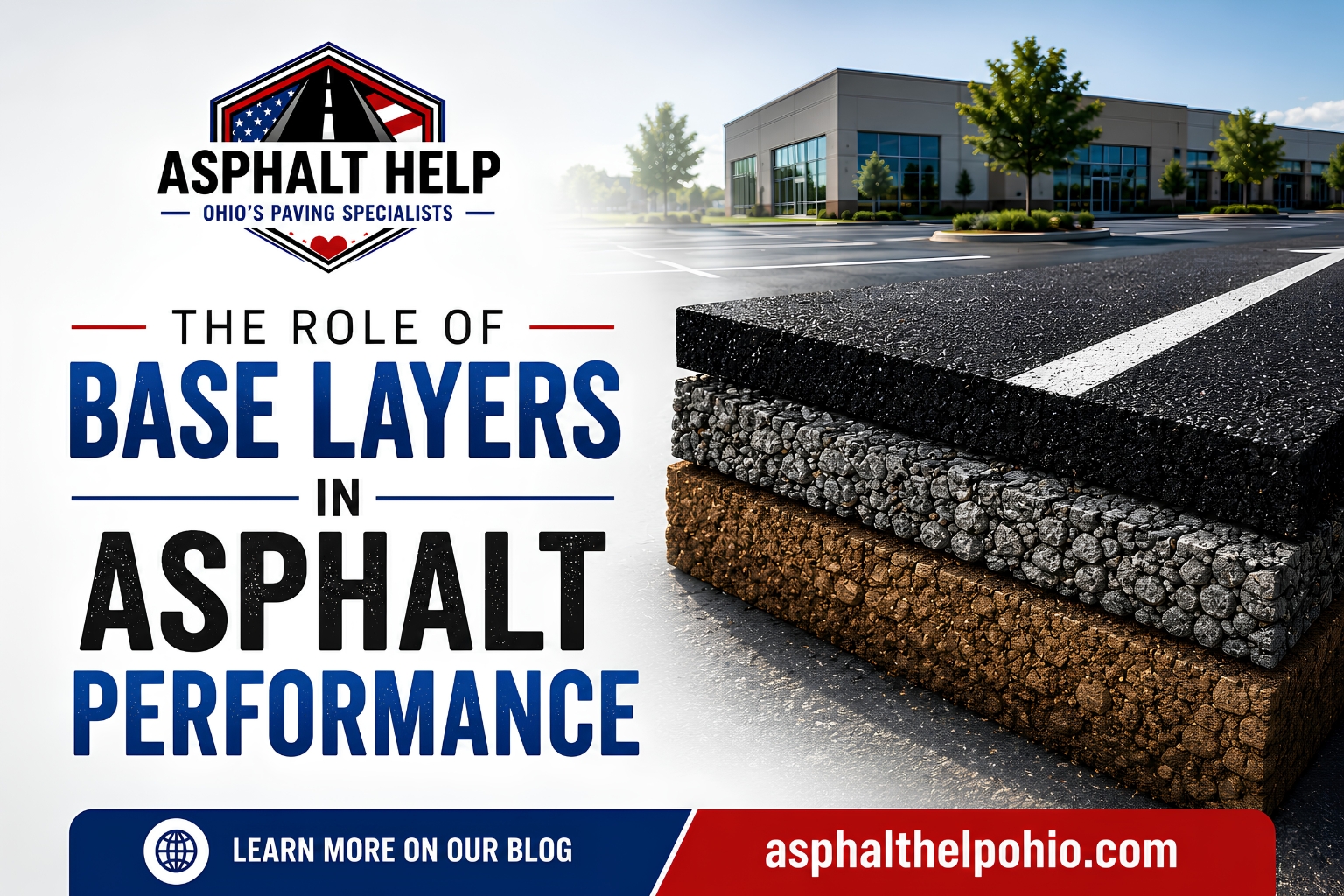
Proper pavement design and construction are equally vital. This means building on a well-compacted, drained base and using a mix suited to Ohio’s freeze–thaw range. Thick aggregate layers (e.g. ≥4–6 in [100–150 mm] under heavy truck routes) distribute loads; Superpave or polymer-modified mixes resist rutting. Good compaction during paving prevents future settlement. In repairs, professionals often mill out failed asphalt and repave (rather than just patching over a bad layer).
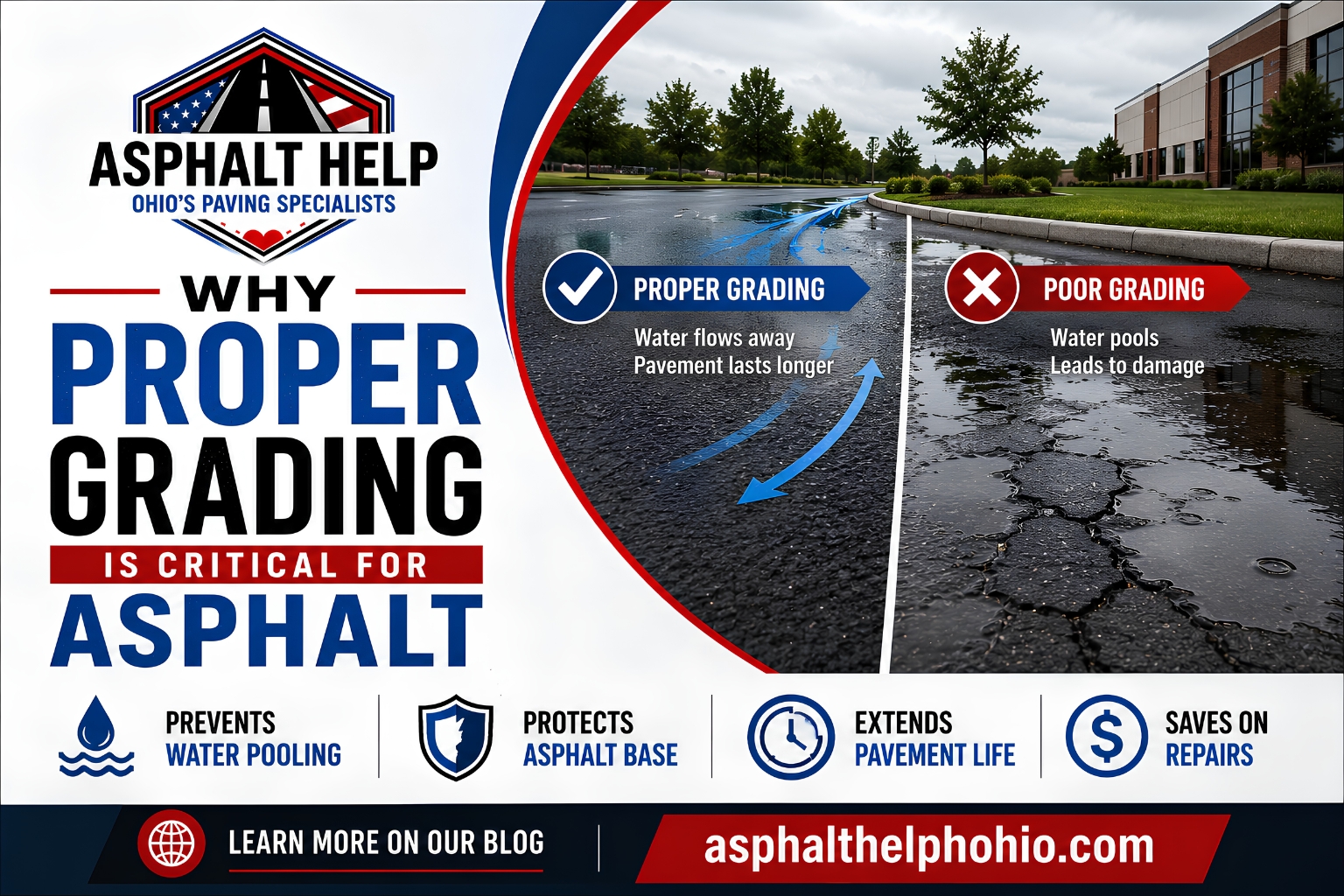
Maintaining drainage can’t be overstated. Correctly graded slopes, working gutters, and clean catchbasins remove water. As Asphalt Help Ohio notes, “Proper drainage control” and “designed slopes” protect asphalt from moisture damage. Regular sweeping of debris and leaves prevents clogs. In winter, use salts sparingly and shovel snow quickly to limit freeze–thaw cycles.
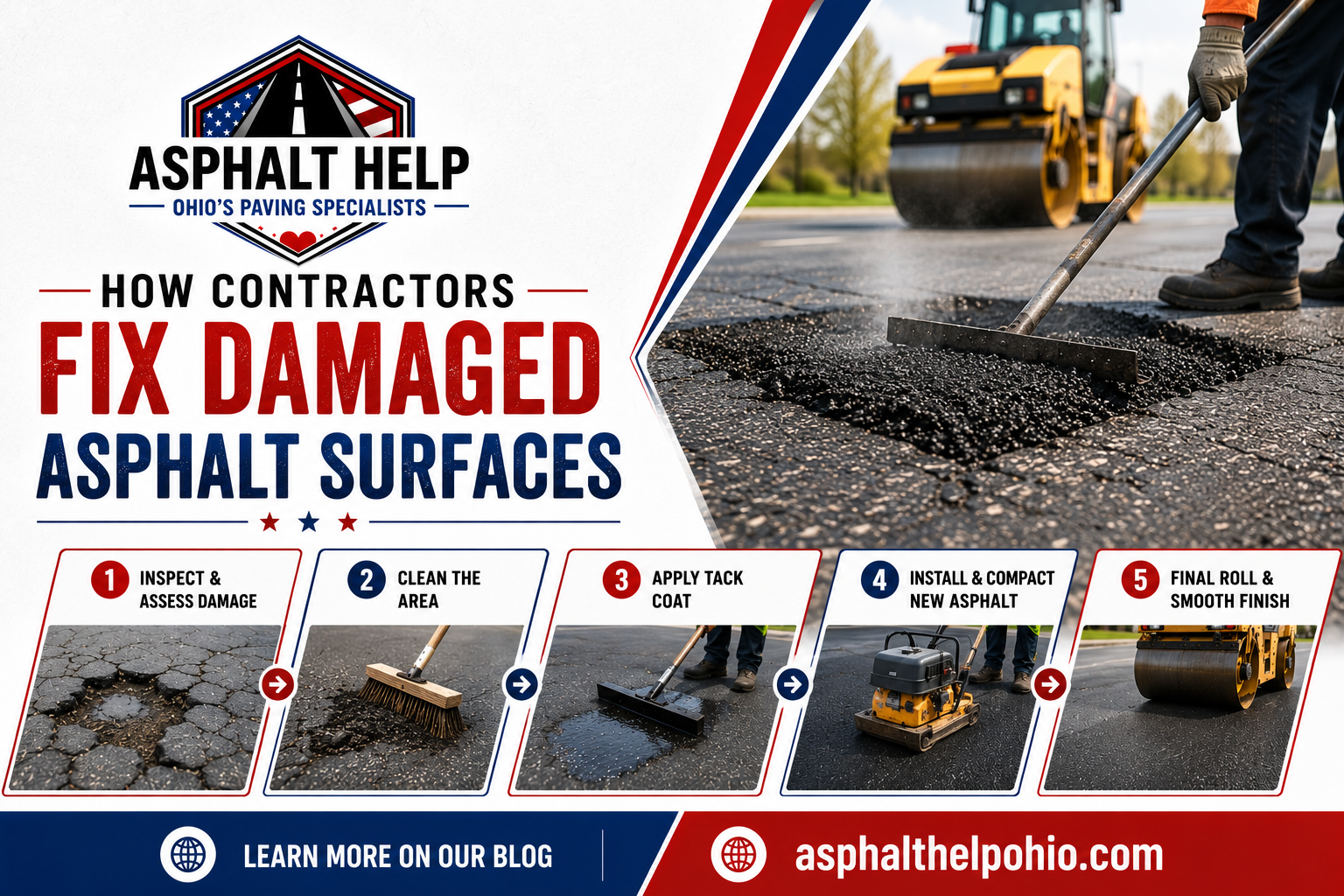
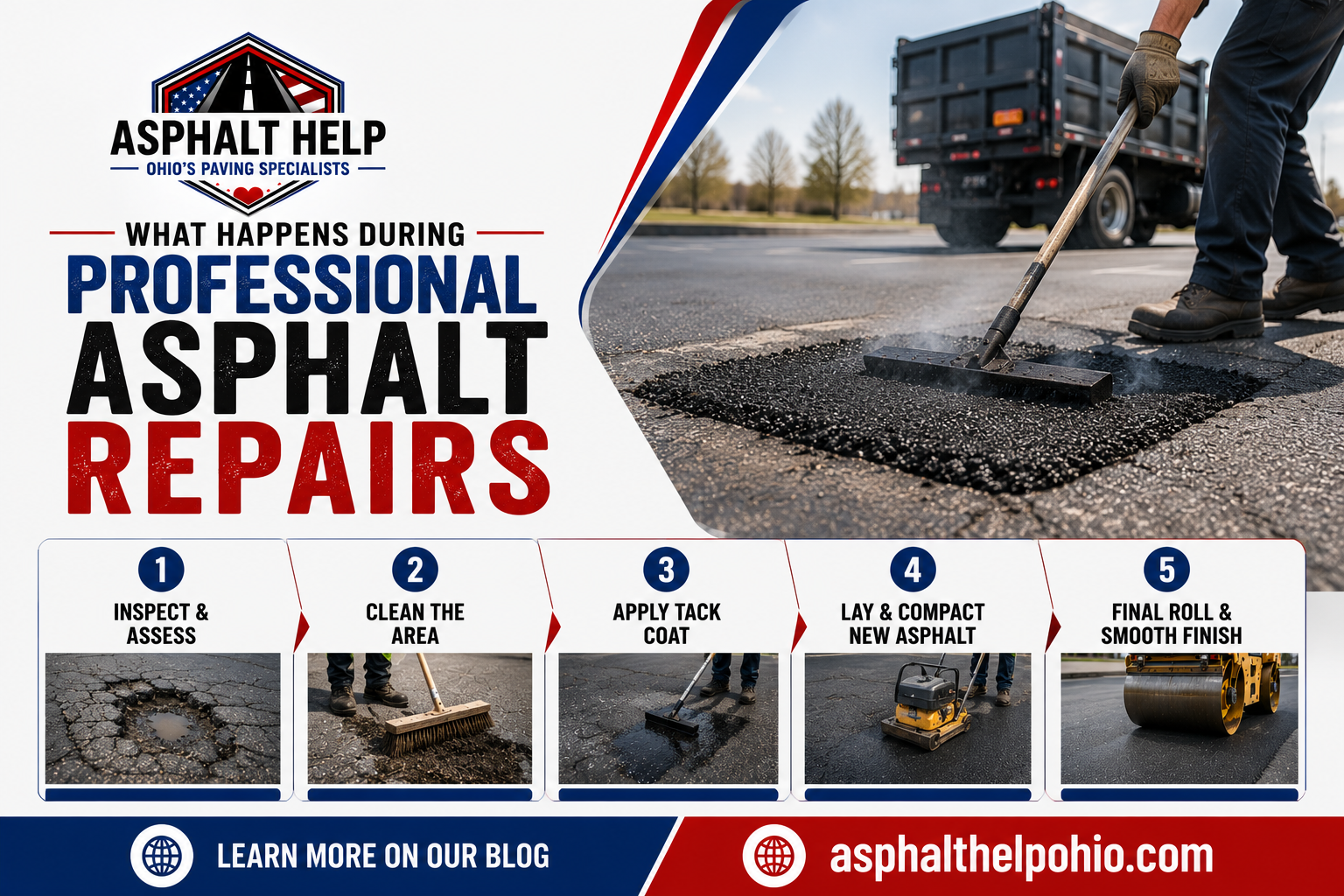
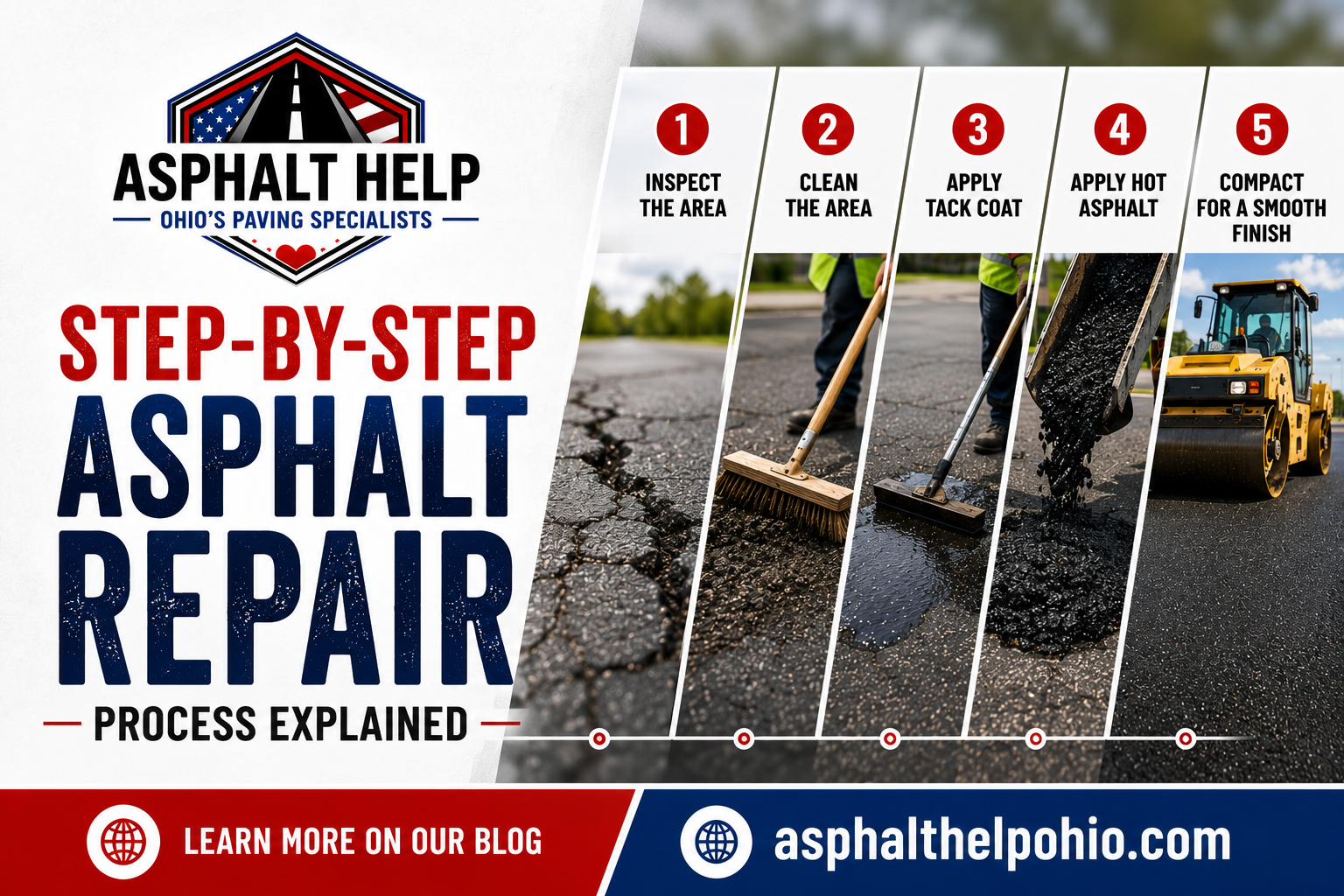
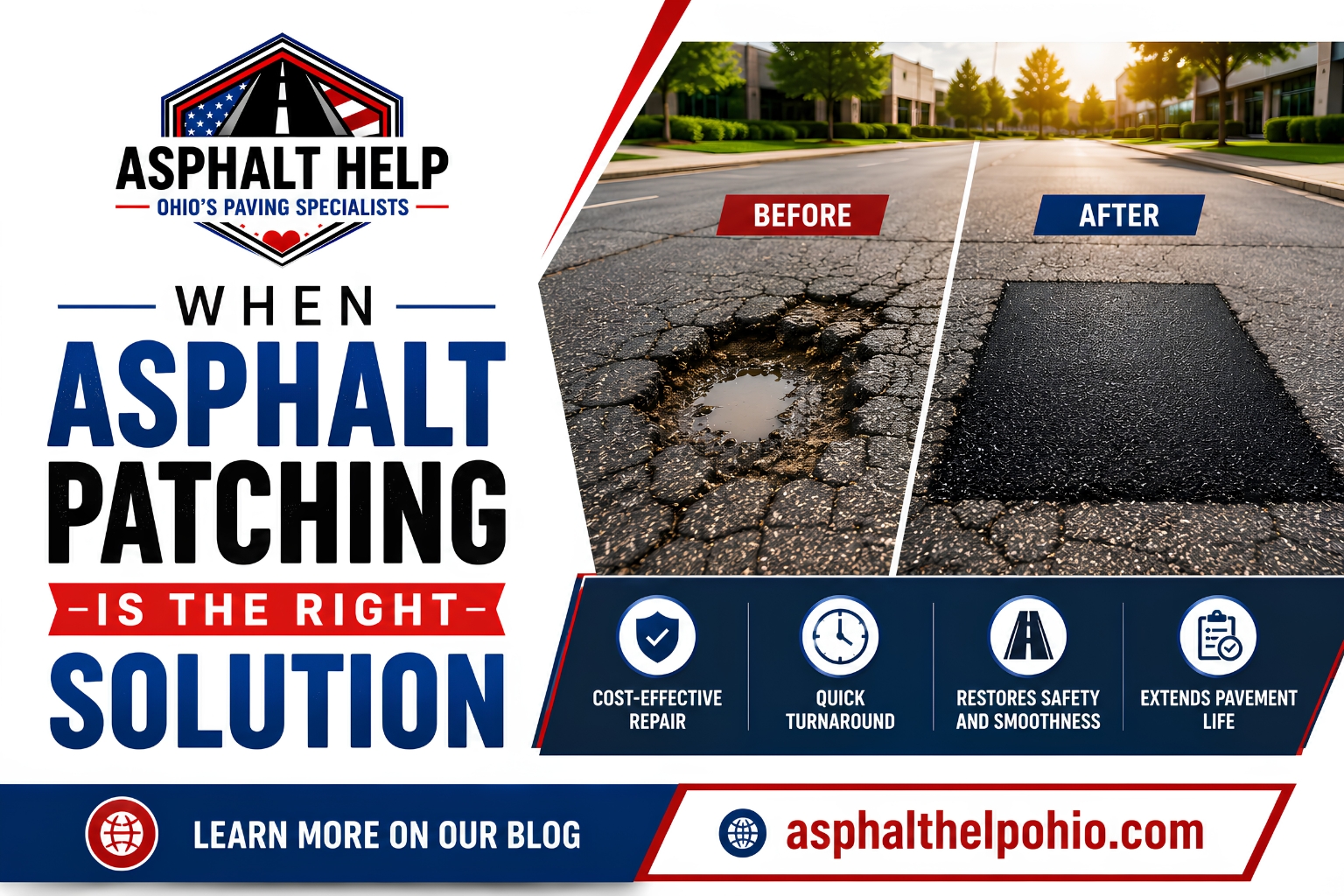
For existing failures: localized patching or overlays are common. Small cracks or potholes can be patch-sealed; however, many Ohio experts warn that large or multiple potholes usually warrant full repaving for a lasting fix. Repair crews will also regrade shoulders or add stone to strengthen edges. Importantly, address the root cause when fixing: e.g. correct drainage issues before repaving to avoid repeating the same damage.
Acting on a Timeline
Exact lifespans vary, but Ohio pavements degrade faster than in warm, dry climates. Industry observations note that even “proper maintenance” only yields about 15–20 years of service in Ohio. By comparison, driveways in southern states might reach 25–30 years. The difference is the relentless freeze–thaw and salt. In practice, if an asphalt surface shows deep or expanding cracks, spalling, or rutting after a handful of years, it reflects the Ohio climate’s toll. Scheduling major sealcoating or resurfacing in early spring (after thaw) can add several years. Conversely, ignoring early symptoms means failures progress to the next cold snap.
Choosing Asphalt Paving Services in Columbus, Ohio
Finding the right contractor is key. Search for “Asphalt Paving Services in Columbus Ohio” or “experienced asphalt contractors in Central Ohio” – Google and local listings should highlight companies familiar with Ohio conditions. Asphalt Help Ohio, for example, advertises that its crews have “deep knowledge of central Ohio soil, drainage, and weather conditions”. Their website states that every job uses quality materials and “professional compaction” to meet local freeze–thaw challenges.
When vetting contractors, ask about experience with Ohio’s climate. Good asphalt contractors will: prepare a sturdy base (correct slope, compact fill), use a mix tailored for local freeze–thaw exposure, and follow compaction specs. They should also offer sealcoating and crack sealing plans. Request references or photos of previous Columbus-area projects. A professional will explain that solutions (like overlays vs. full reconstruction) depend on the failure mode – and may even show the ODOT pavement design or mix specs behind their methods. Check for licensing and insurance, and compare quotes, but remember that extremely low bids may cut corners.
Asphalt Help Ohio and other Central Ohio pros highlight these points: they stress thorough site evaluation, grading and drainage control before paving, plus dense compaction and quality mix selection. For example, their team mentions building “asphalt systems designed to perform under real-world conditions” like freeze–thaw expansion and heavy traffic. In short, rely on local experts who understand that Ohio’s freeze–thaw can’t be ignored – and who back up their work with warranties or maintenance plans.
Actionable Maintenance Checklist for Ohio Pavements
- Inspect & Repair Early: Each spring, look for any cracks >¼ in (6 mm). Seal small cracks immediately to block moisture.
- Maintain Drainage: Ensure gutters, inlets, and side ditches are clear, so water runs off the pavement (standing water is a warning sign). Consider adding drains in problem spots.
- Sealcoat Regularly: Apply a high-quality asphalt sealcoat every 2–3 years on driveways or parking lots. This barrier slows oxidation and water entry.
- Keep Loads Appropriate: Avoid parking heavy vehicles on home driveways if possible. If hauling heavy loads, reinforce the pavement first (thicker asphalt/base).
- Professional Maintenance: Hire experts for major work. Look for contractors who offer concrete base repair, proper compaction, and polymer-modified mixes to enhance longevity.
- Seasonal Care: Remove snow early without plowing the asphalt (use a shovel rather than a plow blade) and use safer de-icers (calcium/magnesium chloride). Clean off de-icer residue in spring.
- Timely Overlays: If rutting or widespread cracking appears, plan an overlay or repave before full failure – it’s cheaper than full reconstruction later.
For Columbus-area owners, one practical step is to get an expert evaluation after harsh winters. An experienced contractor can suggest whether patching, crack filling, or a new asphalt layer is needed before problems worsen.
Call to Action
Protecting your pavement means acting now. If you notice cracks, potholes, or rutting on your driveway or parking lot, contact a local specialist for a free assessment. Asphalt Help Ohio offers a full range of asphalt repair, sealcoating and paving services tailored to Ohio’s climate. They emphasize thorough base preparation, quality materials, and precise installation to “deliver reliable performance” and extend pavement life. Reach out to Asphalt Help Ohio or another Columbus paving contractor today to plan maintenance – delaying fixes may lead to bigger (and more expensive) failures next winter.