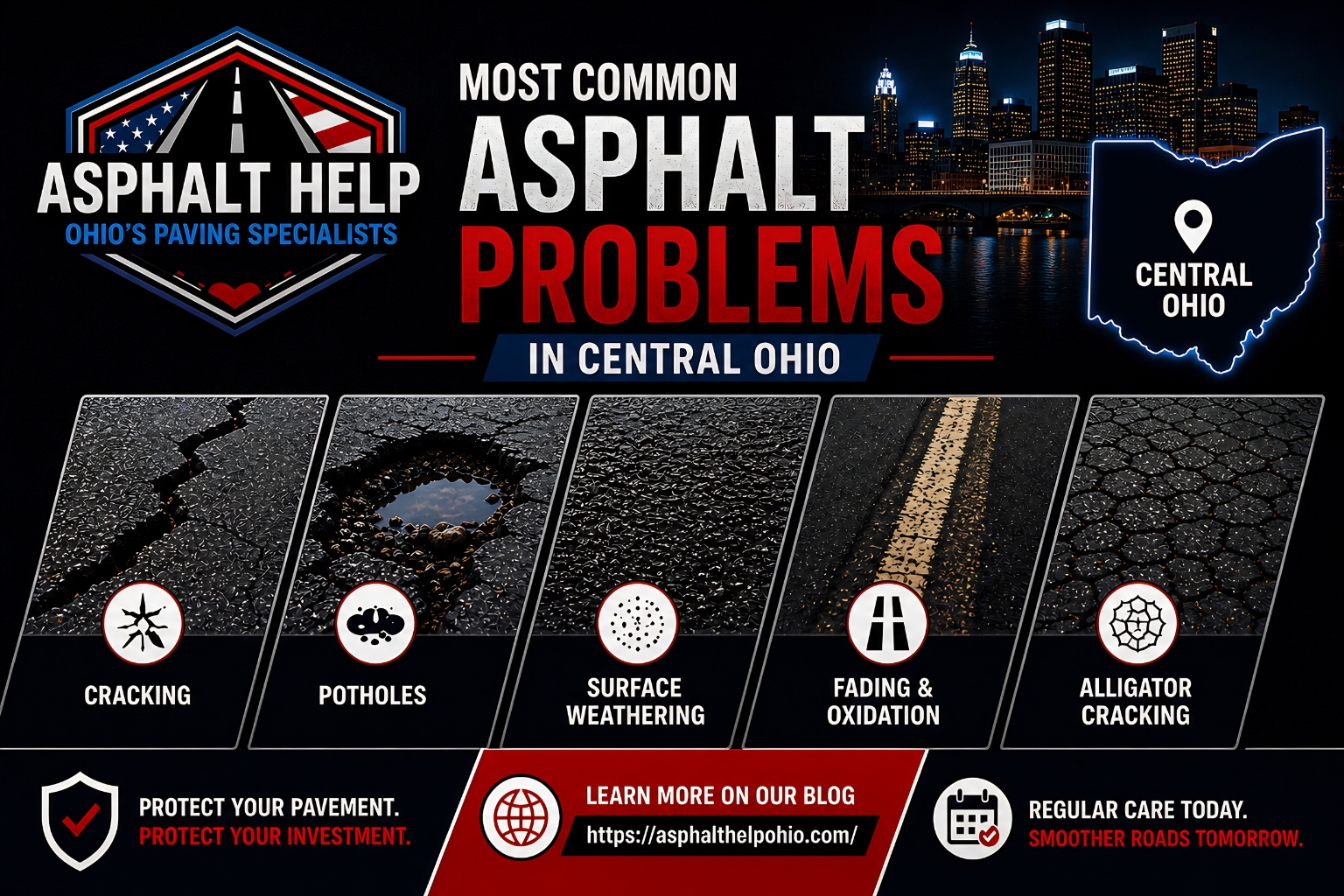


How Contractors Fix Damaged Asphalt Surfaces? Damaged asphalt rarely fixes itself. In fact, even minor pavement problems become more serious over time as water, traffic, and Ohio’s changing weather continue to weaken the surface. Professional contractors don’t simply cover damaged areas—they identify the underlying cause, repair the affected pavement, and restore its structural strength. The right repair method depends on the severity of the damage, the condition of the foundation, and how the pavement is used. When completed correctly, professional repairs can significantly extend the lifespan of driveways, parking lots, and roadways while improving safety and appearance.
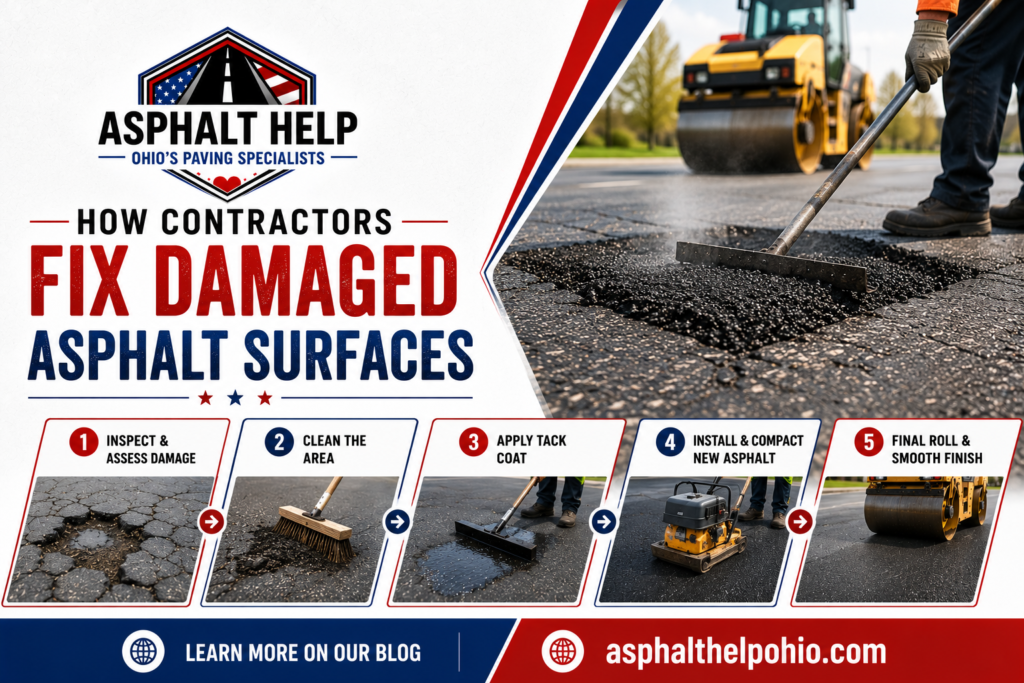
If you’re searching for asphalt repair methods Ohio, it’s important to understand that not every pavement problem requires complete replacement. Asphalt Help Ohio begins every project with a detailed site evaluation, inspecting drainage, grading, pavement condition, and the underlying base before recommending the most effective repair solution. Their experienced team provides asphalt patching, pothole repair, resurfacing, crack filling, structural repairs, and complete pavement replacement for residential, commercial, and municipal properties throughout Central Ohio.
Why Asphalt Becomes Damaged
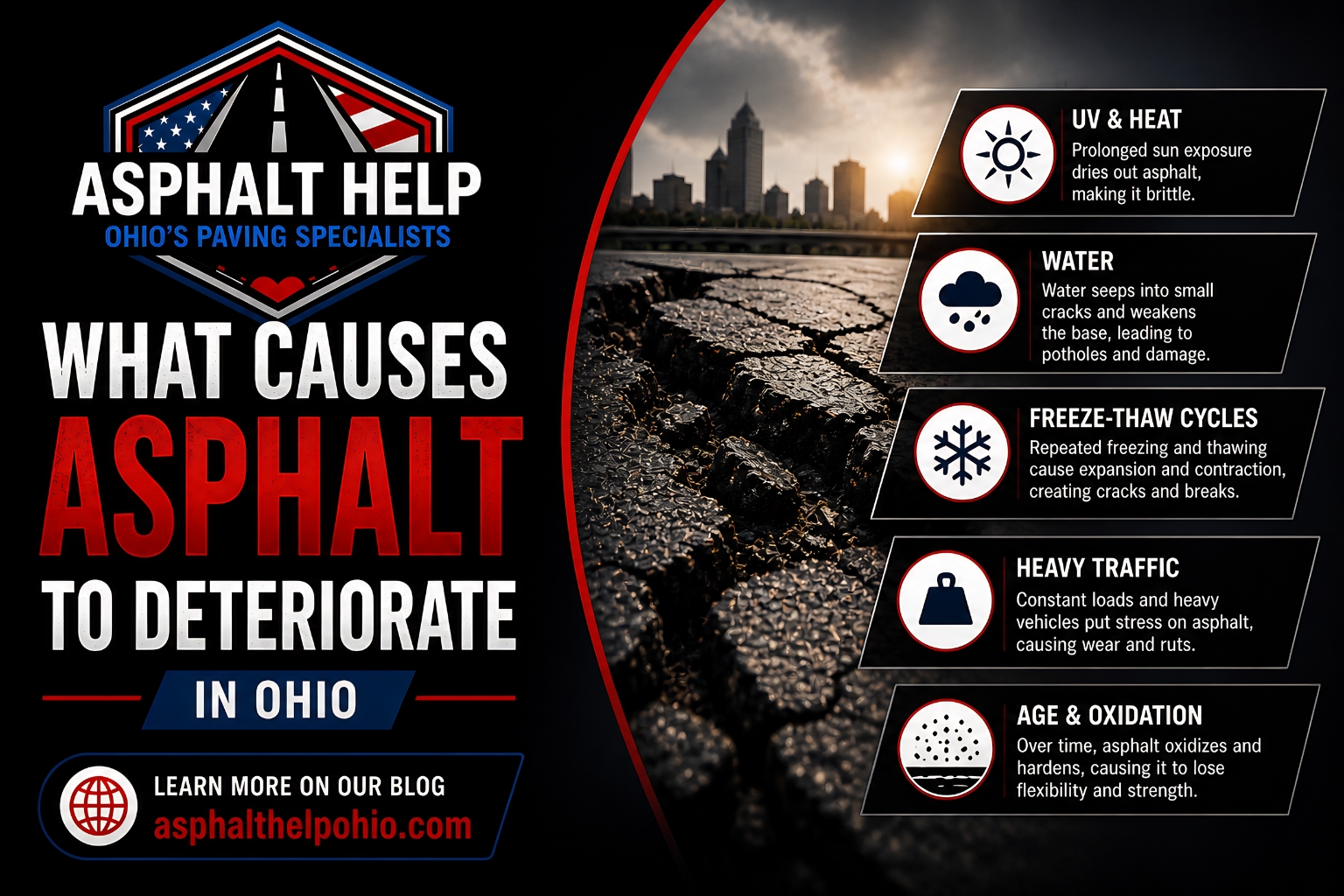
Asphalt is designed for durability, but it constantly faces environmental and traffic-related stress.
Some of the most common causes of pavement damage include:
- Water infiltration
- Heavy vehicle traffic
- Poor drainage
- Freeze-thaw cycles
- Surface aging
- Weak base materials
- Improper installation
- Oxidation from sunlight
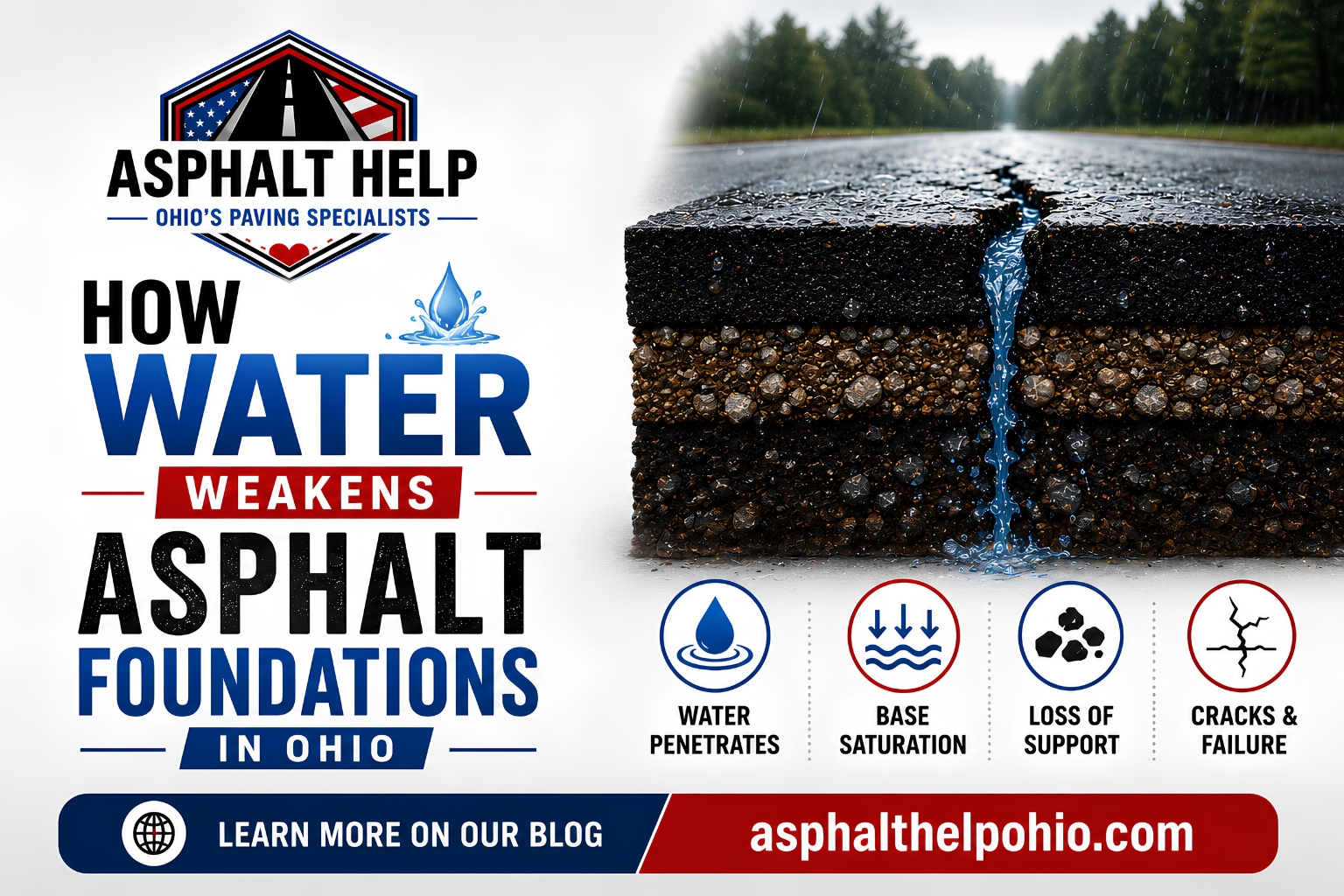
Ohio’s changing seasons create additional stress because moisture entering small cracks expands during freezing weather, gradually weakening the pavement structure. Asphalt Help Ohio designs and repairs pavement systems specifically for Ohio’s climate, emphasizing proper grading, drainage, and base preparation.
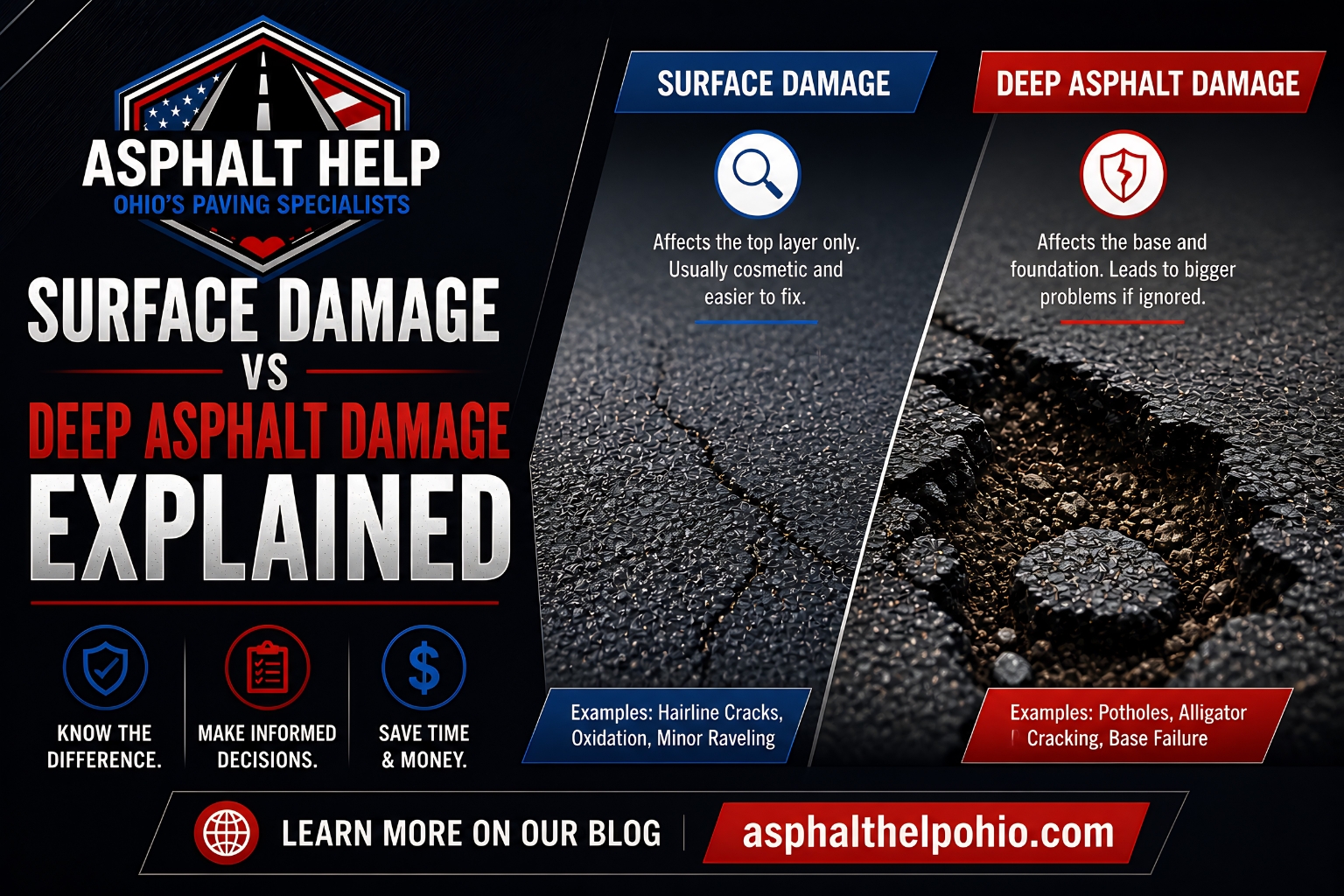
Common Types of Asphalt Damage
Before selecting a repair method, contractors determine exactly what type of damage exists.
| Pavement Problem | Common Cause | Typical Repair Method |
|---|---|---|
| Surface Cracks | Weather and aging | Crack filling |
| Potholes | Water damage | Asphalt patching |
| Alligator Cracking | Base failure | Full-depth repair |
| Rutting | Heavy traffic | Resurfacing or reconstruction |
| Edge Deterioration | Weak support | Edge repair and patching |
| Surface Wear | Oxidation | Resurfacing or maintenance |
| Drainage Damage | Standing water | Grading and repair |
Each repair method addresses a different level of pavement deterioration.
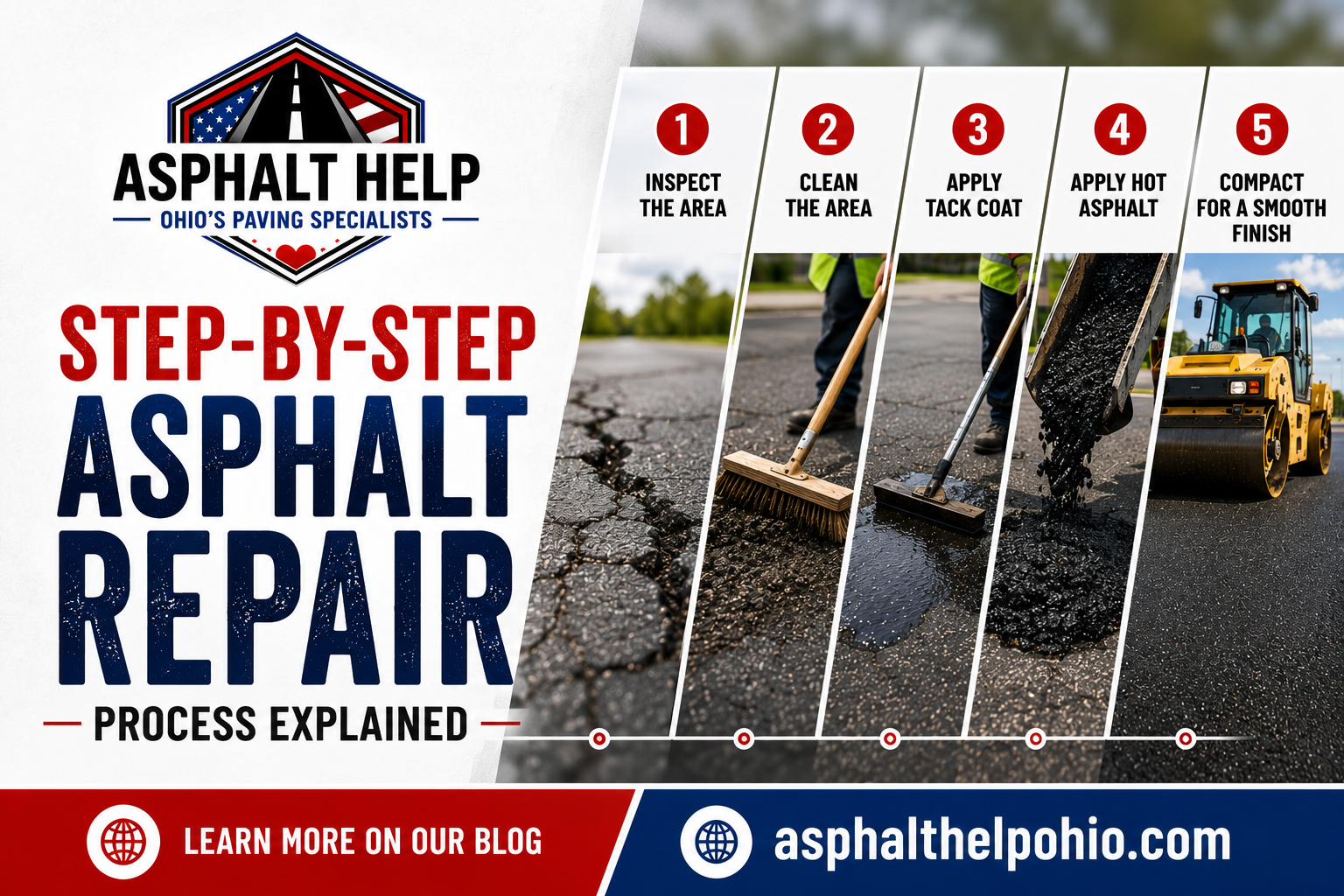
Step 1: Complete Pavement Inspection
Every professional repair begins with a thorough inspection.
Rather than immediately repairing visible damage, contractors evaluate the entire pavement system.
During the inspection they examine:
- Crack patterns
- Surface condition
- Drainage
- Low spots
- Base stability
- Traffic patterns
- Existing repairs
- Areas of water intrusion
Asphalt Help Ohio explains that every project begins with evaluating grading, drainage flow, and structural conditions before recommending repairs because correcting the underlying cause helps prevent future failures.
Step 2: Determining the Cause of the Damage
Visible pavement damage often represents only part of the problem.
Professional contractors identify what caused the deterioration.
Common causes include:
- Poor drainage
- Weak aggregate base
- Heavy truck traffic
- Moisture infiltration
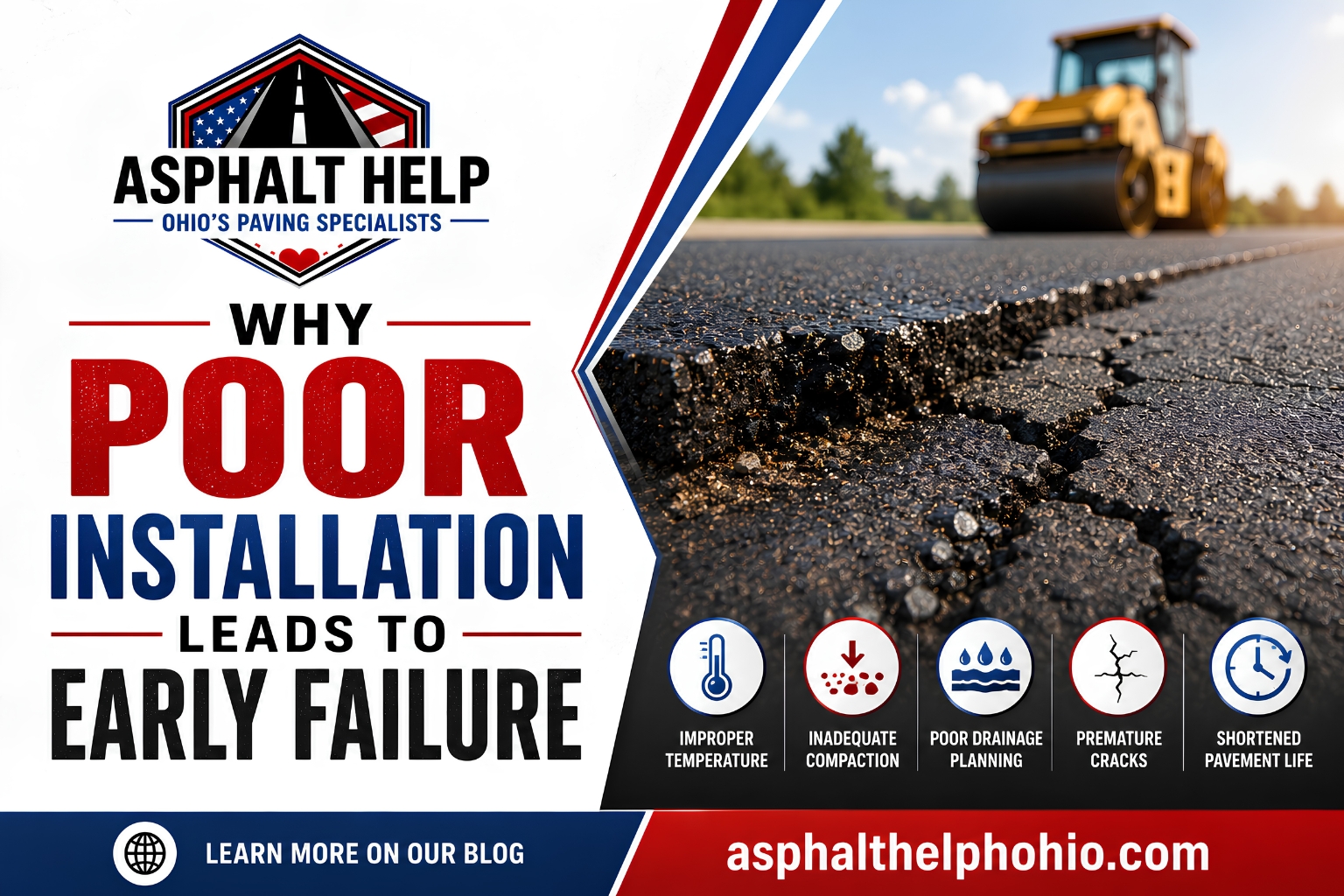
- Improper compaction
- Aging asphalt
- Freeze-thaw expansion
Repairing the root cause—not just the surface—helps improve long-term pavement performance.
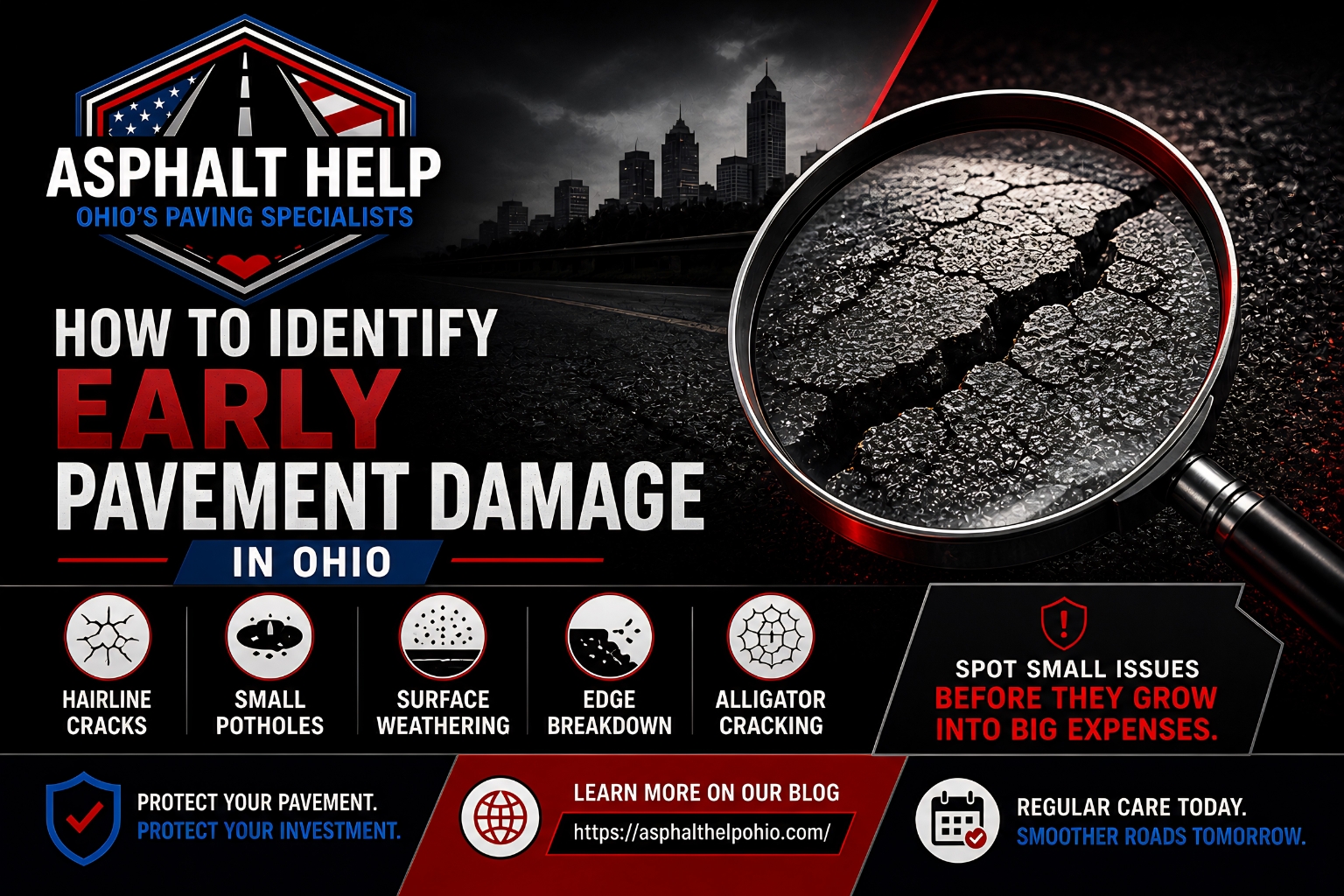
Step 3: Crack Filling
Small cracks are among the earliest signs of asphalt deterioration.
Professional crack filling prevents water from entering the pavement structure.
The process generally includes:
- Cleaning debris from cracks
- Removing vegetation
- Drying the repair area
- Applying professional crack filler
- Allowing proper curing
Crack filling slows pavement deterioration while reducing the risk of larger structural failures.
Asphalt Help Ohio includes crack filling among its preventative maintenance services because sealing pavement openings helps reduce moisture penetration and structural damage.
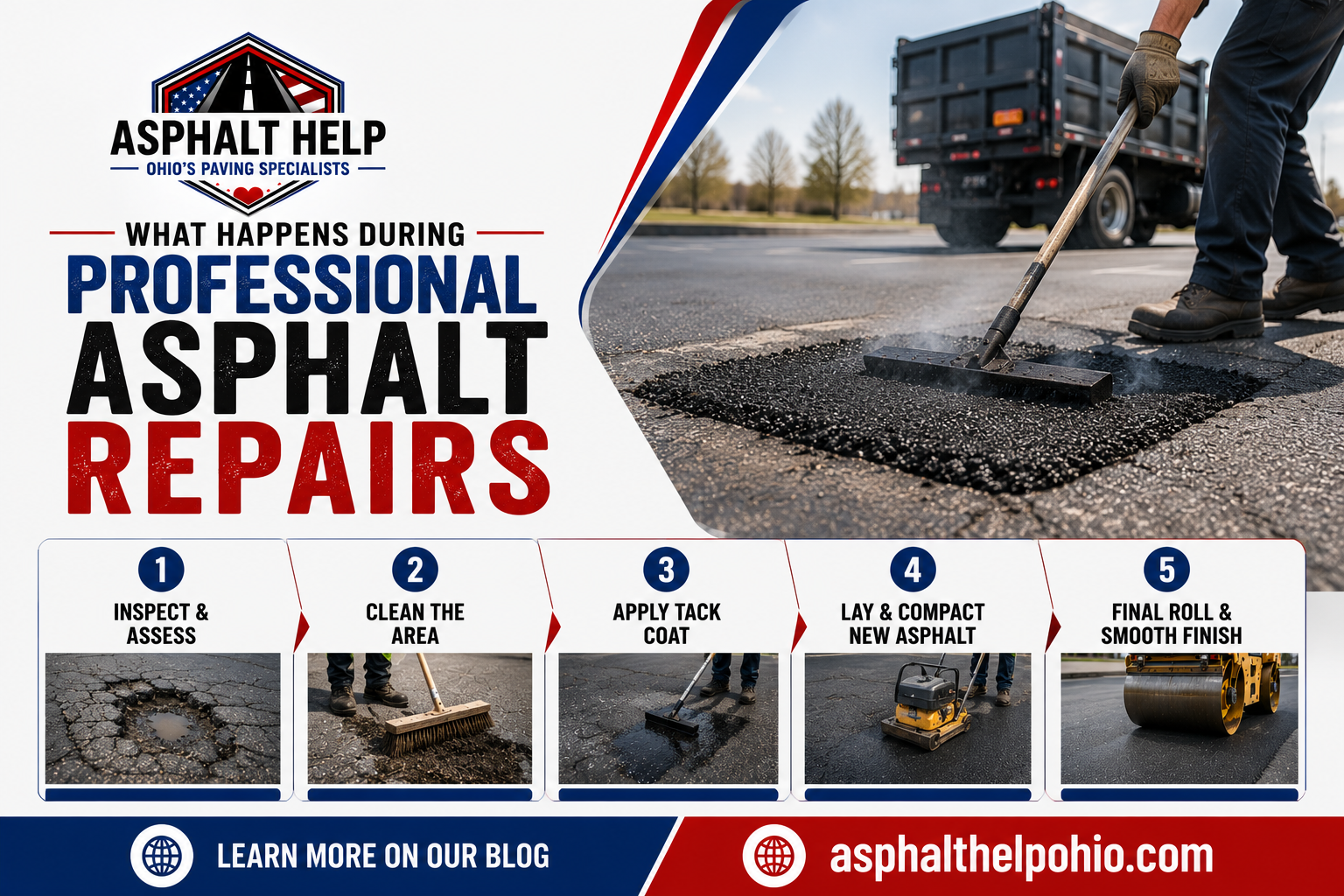
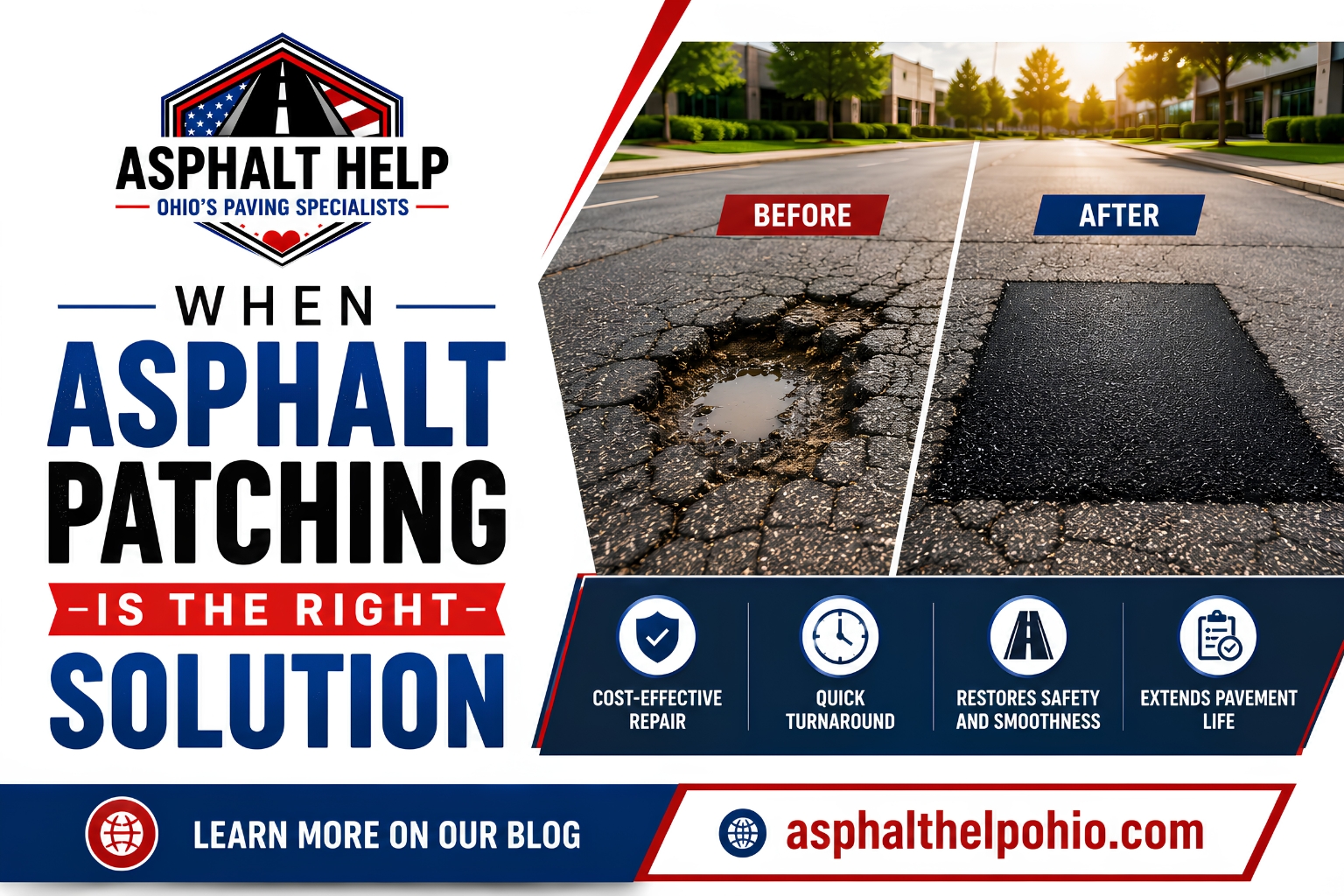
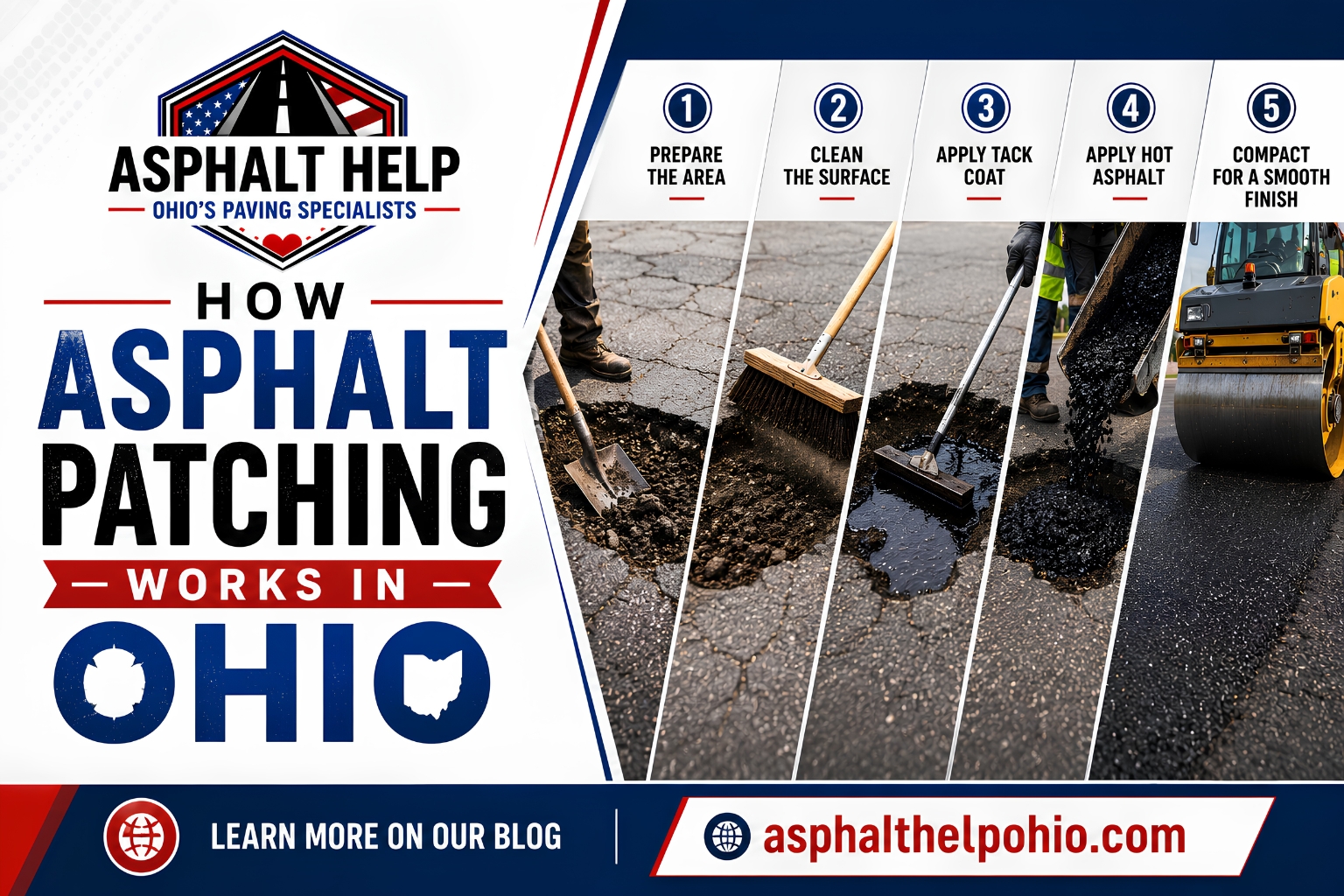
Step 4: Asphalt Patching
When damage affects only isolated sections of pavement, asphalt patching is often the best repair method.
Contractors typically:
- Remove damaged asphalt
- Inspect the base
- Repair weakened foundation materials if necessary
- Install new hot-mix asphalt
- Compact the repair
Properly completed patching restores structural strength while blending with surrounding pavement.
Asphalt Help Ohio describes asphalt patching as replacing damaged sections with properly compacted material to restore uniform load support and extend pavement life.
Step 5: Pothole Repair
Potholes create both safety hazards and structural problems.
Professional pothole repair involves much more than filling the hole.
The repair process often includes:
- Removing loose asphalt
- Cleaning the damaged area
- Repairing unstable base materials
- Installing fresh asphalt
- Compacting the repair to match surrounding pavement
Proper pothole repair helps prevent further deterioration while restoring a safe driving surface.
Step 6: Asphalt Resurfacing
Sometimes the pavement foundation remains strong while the surface has become worn.
In these cases, resurfacing may be the most effective solution.
Resurfacing involves:
- Repairing damaged areas
- Preparing the existing surface
- Applying a new asphalt overlay
- Compacting the new layer
This restores:
- Smoothness
- Appearance
- Durability
- Surface strength
Asphalt Help Ohio recommends resurfacing when pavement remains structurally sound but exhibits surface wear, providing renewed performance without full reconstruction.
Step 7: Full-Depth Asphalt Repair
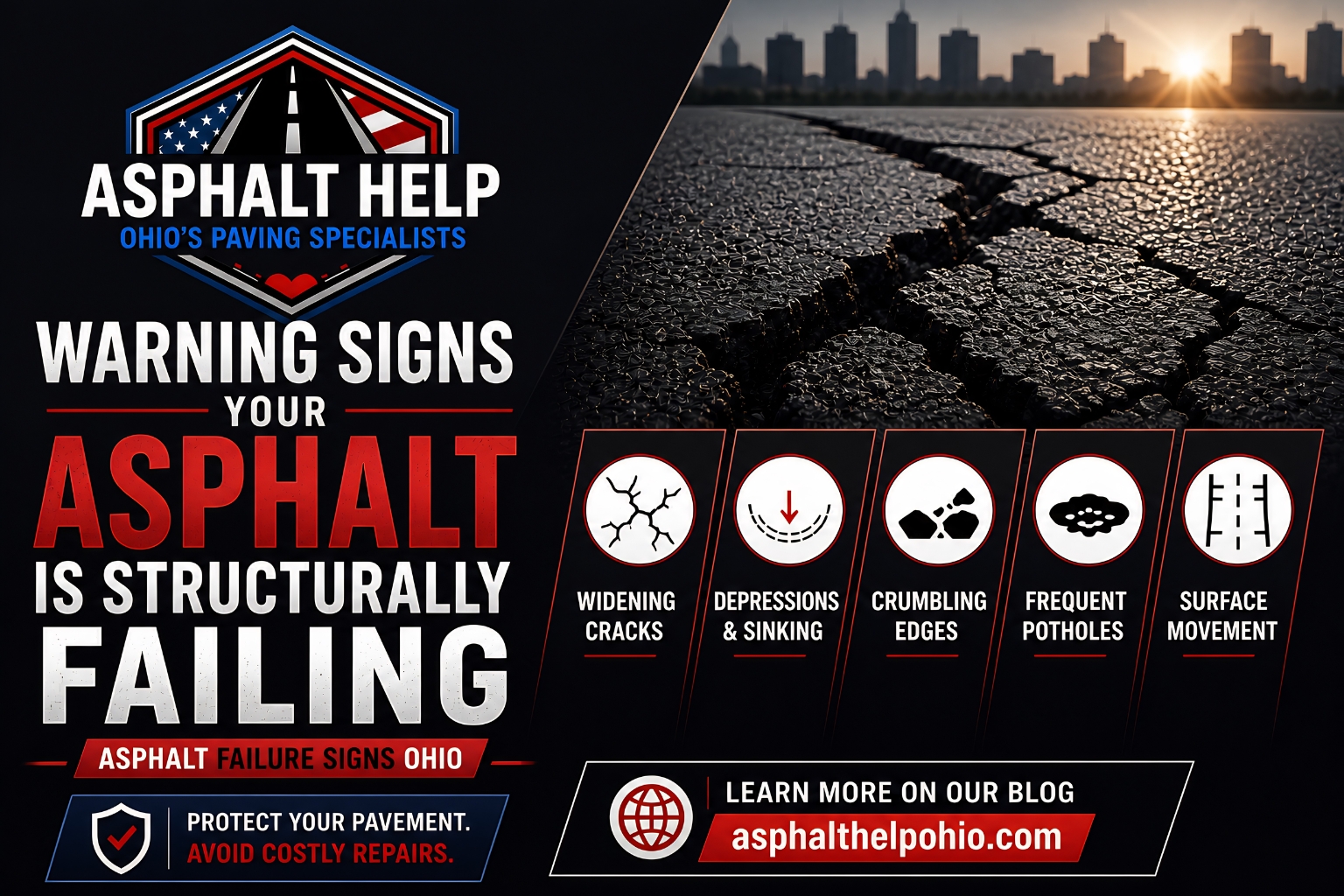
Severe pavement damage requires more extensive repairs.
Full-depth repairs remove both damaged asphalt and weakened foundation materials.
This process generally includes:
- Saw cutting damaged sections
- Excavating failed asphalt
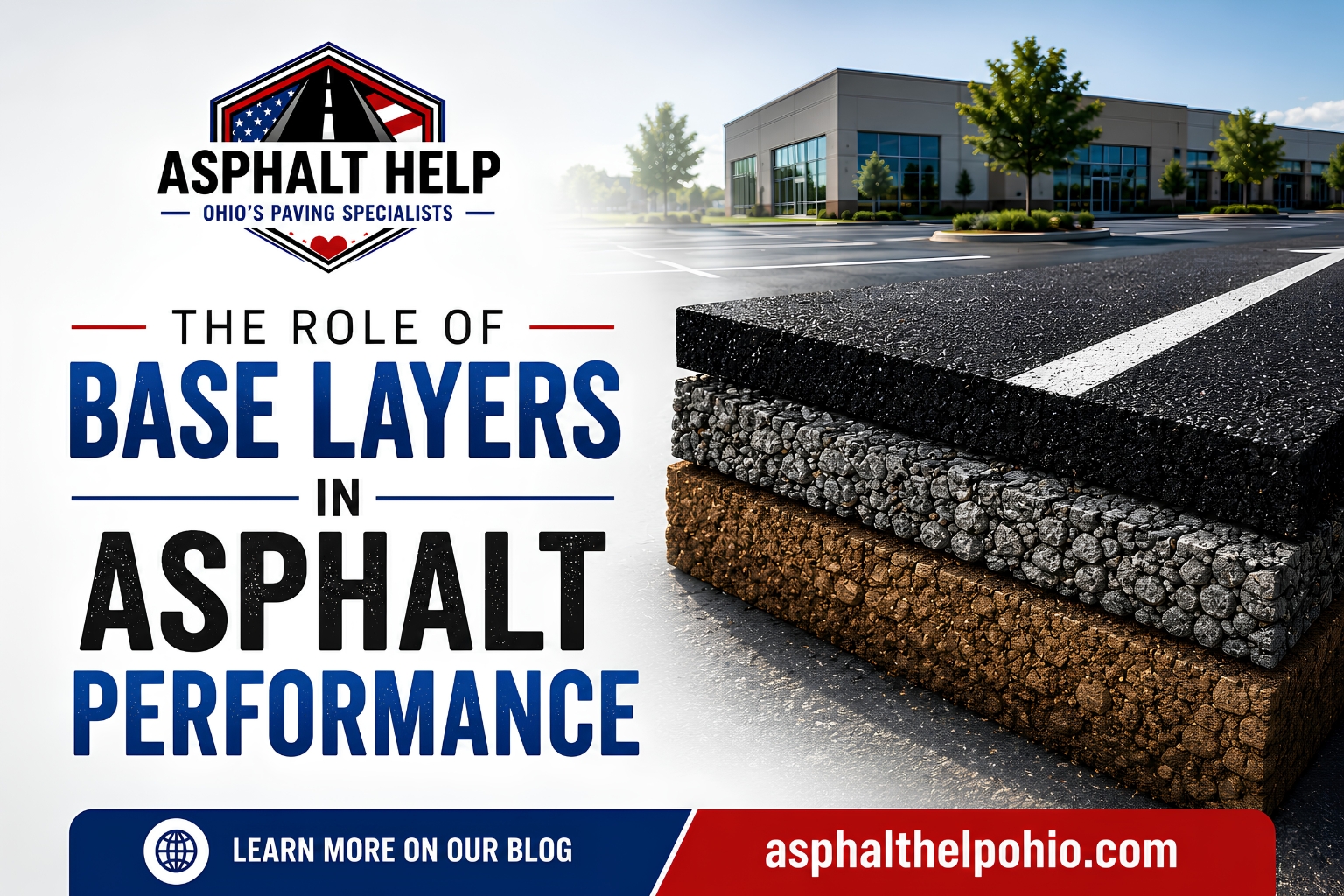
- Rebuilding the aggregate base
- Improving drainage
- Installing new asphalt
- Precision compaction
This method restores structural integrity rather than simply covering existing damage.
Industry professionals also recommend removing failed pavement, rebuilding the base, and correcting drainage where structural failures are present.
Step 8: Improving Drainage
Many asphalt failures begin with water.
Professional contractors frequently correct drainage issues while completing repairs.
Drainage improvements may include:
- Regrading pavement
- Correcting slopes
- Eliminating low spots
- Improving runoff
- Stabilizing edges
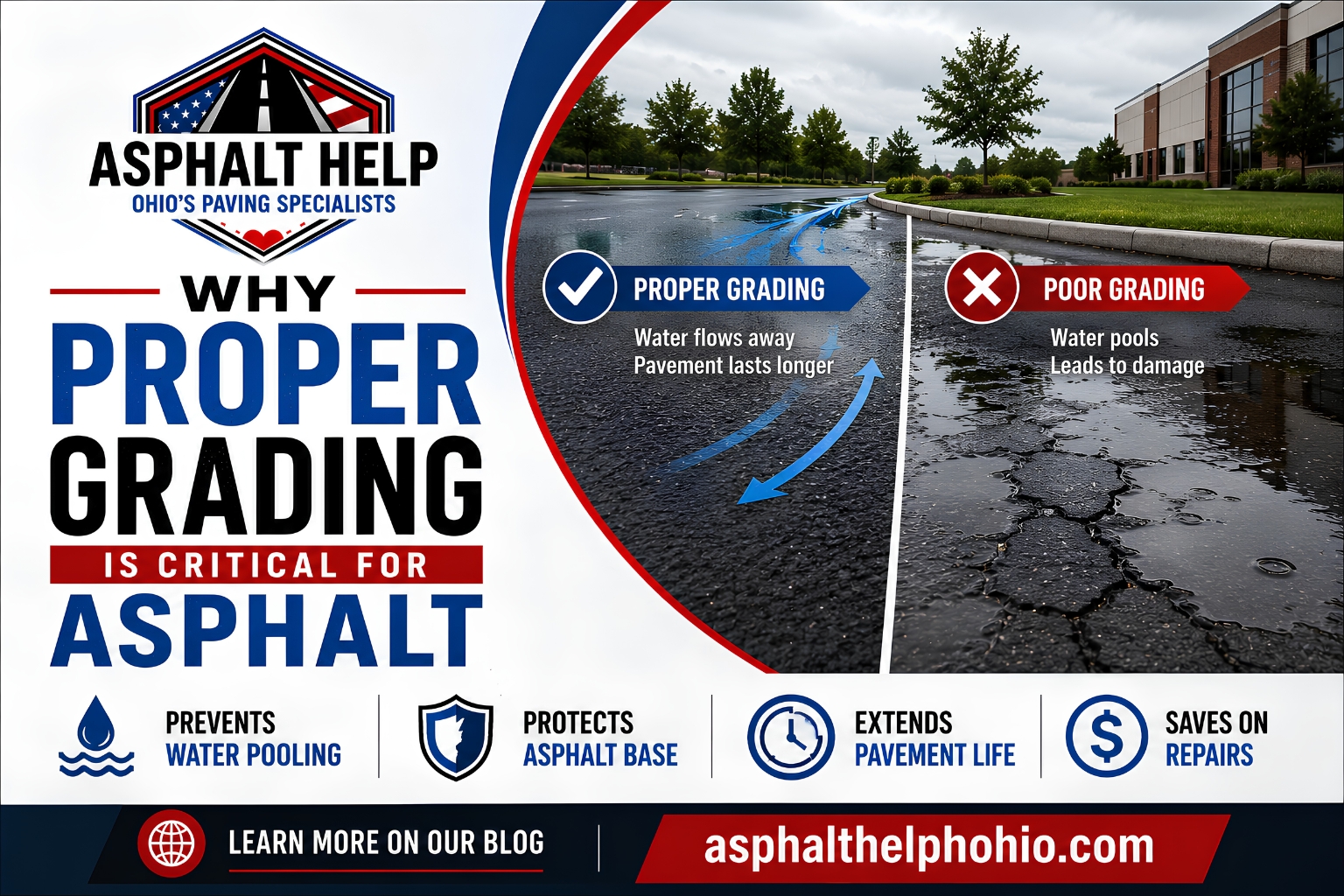
Asphalt Help Ohio emphasizes that proper grading and drainage are essential for preventing premature pavement deterioration throughout Ohio.
Step 9: Precision Compaction
Compaction is one of the most important stages of every repair.
Professional rollers compress the asphalt until the correct density is achieved.
Proper compaction helps:
- Increase pavement strength
- Improve load capacity
- Reduce air voids
- Improve moisture resistance
- Extend pavement lifespan
Without proper compaction, even quality asphalt materials may fail prematurely.
Step 10: Final Quality Inspection
Before the project is complete, contractors inspect every repair.
The inspection verifies:
- Smooth transitions
- Proper drainage
- Correct compaction
- Uniform appearance
- Structural stability
Only after confirming quality is the pavement reopened for normal use.
Choosing the Right Repair Method
Professional contractors select repair methods based on pavement condition rather than applying the same solution everywhere.
| Repair Method | Best Used For |
|---|---|
| Crack Filling | Minor surface cracks |
| Asphalt Patching | Localized pavement damage |
| Pothole Repair | Isolated surface failures |
| Resurfacing | Worn but structurally sound pavement |
| Full-Depth Repair | Structural pavement failure |
| Complete Replacement | Extensive deterioration |
This customized approach helps maximize pavement life while restoring long-term performance.
Why Professional Repairs Last Longer
Experienced contractors understand that successful repairs depend on much more than replacing damaged asphalt.
Professional repairs include:
- Site evaluation
- Drainage analysis
- Base stabilization
- Proper grading
- Quality asphalt materials
- Precision compaction
Asphalt Help Ohio highlights engineered base preparation, grading accuracy, drainage control, and high-density compaction as essential components of durable asphalt repairs built for Ohio’s demanding climate.
Why Choose Asphalt Help Ohio?
At Asphalt Help Ohio, every repair project begins with understanding why the pavement failed—not simply covering visible damage.
Our comprehensive asphalt repair services include:
- Structural asphalt repairs
- Asphalt patching
- Pothole repair
- Crack filling
- Asphalt resurfacing
- Parking lot repair
- Driveway repair
- Base stabilization
- Drainage improvements
- Full-depth pavement replacement
With more than 30 years of experience serving Central Ohio, our team combines quality materials, advanced equipment, engineered base preparation, and precision workmanship to restore asphalt surfaces that are built for long-term durability. Whether you need a small driveway repair or a large commercial pavement restoration, we deliver customized solutions designed to withstand Ohio’s traffic demands and challenging weather conditions.
Final Thoughts
Understanding asphalt repair methods Ohio helps property owners recognize that every pavement problem requires a different solution. Small cracks may only need professional crack filling, while potholes, rutting, or structural failures often require patching, resurfacing, or full-depth repairs. Choosing the correct repair method not only restores pavement appearance but also addresses the underlying causes of deterioration, helping extend pavement life and reduce future maintenance.
If your driveway, parking lot, or roadway is showing signs of damage, Asphalt Help Ohio provides professional inspections and customized repair solutions designed for Ohio’s unique climate. From crack filling and pothole repair to resurfacing and complete pavement reconstruction, our experienced team delivers durable asphalt repairs that improve safety, restore performance, and protect your investment for years to come.