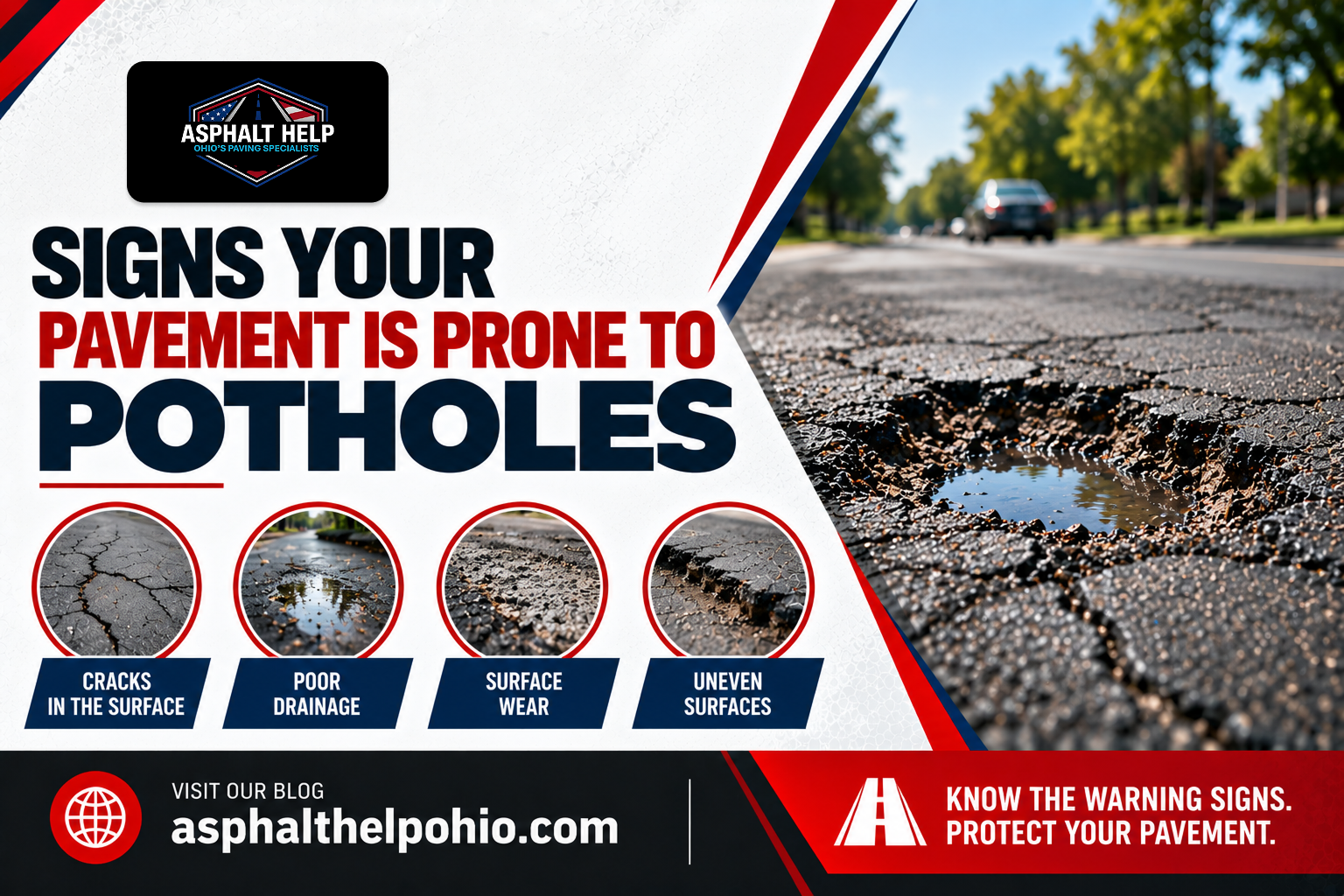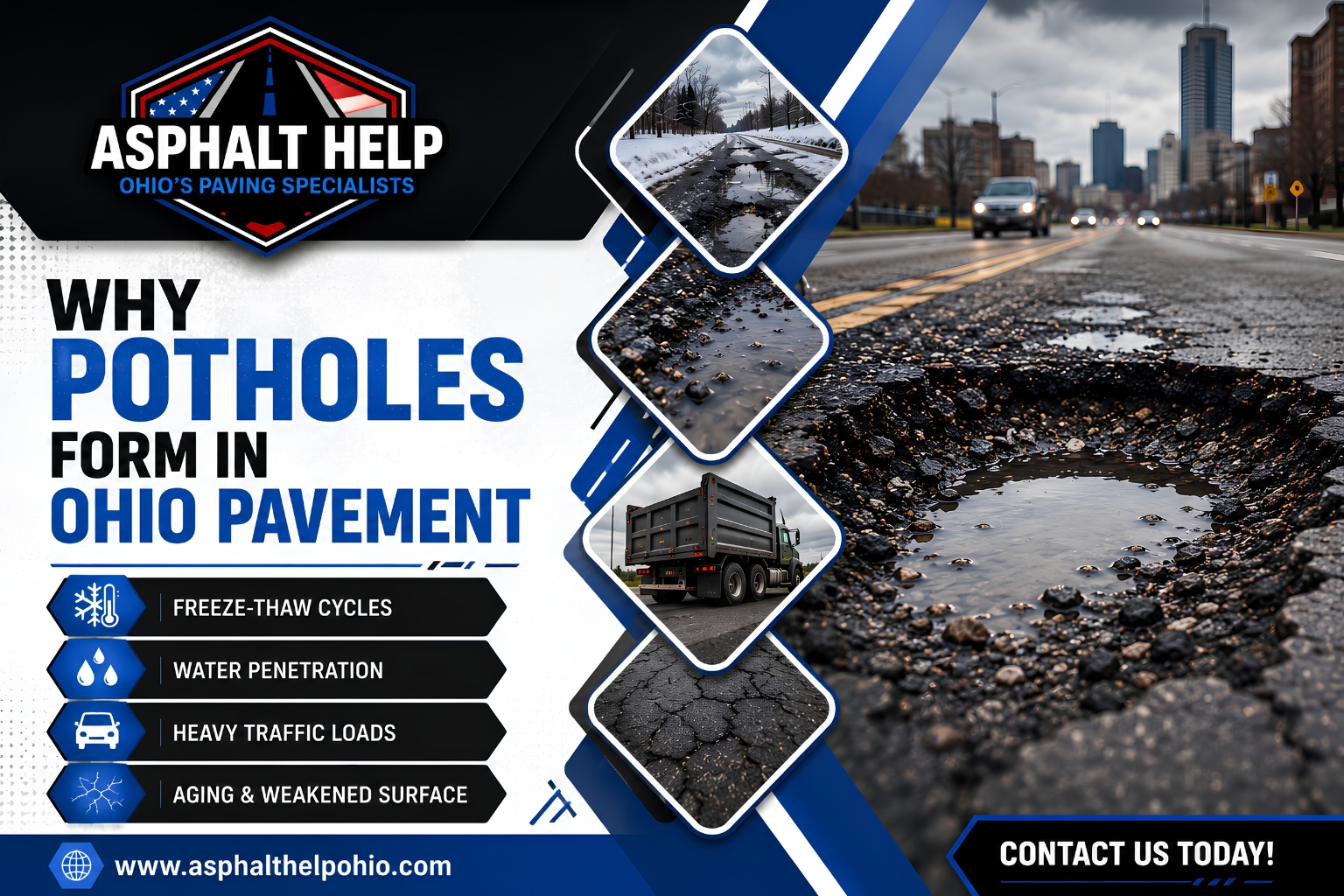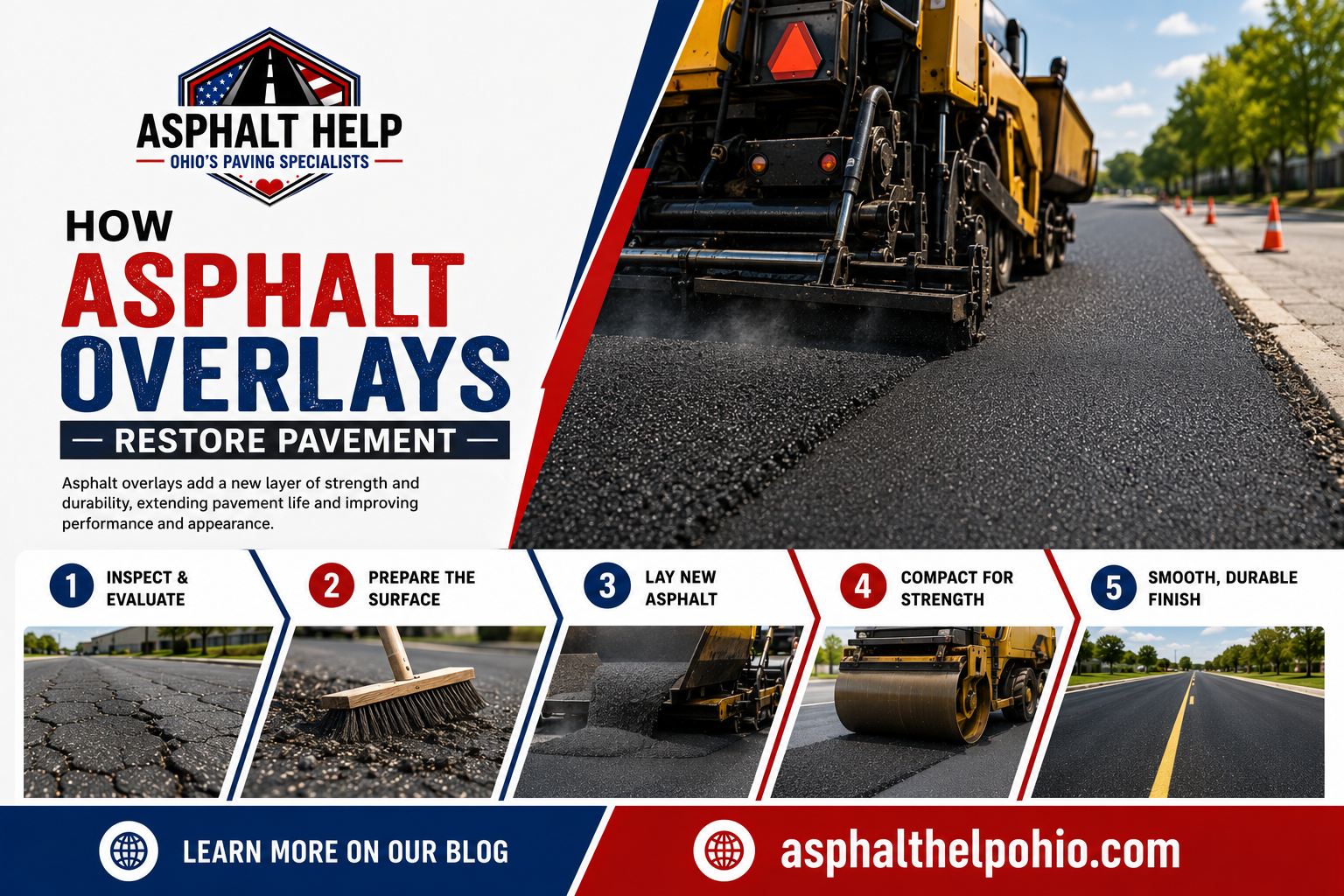




Why Should Potholes Be Repaired Promptly? A pothole may begin as a relatively small area of pavement failure, but leaving it unrepaired can allow surrounding damage to progress. In Ohio, moisture, freeze-thaw cycles, traffic, and underlying pavement weaknesses can work together to enlarge damaged areas. The Federal Highway Administration identifies moisture, freeze-thaw action, traffic, and poor underlying support as common factors associated with potholes and notes that unrepaired potholes can create safety and rideability concerns.
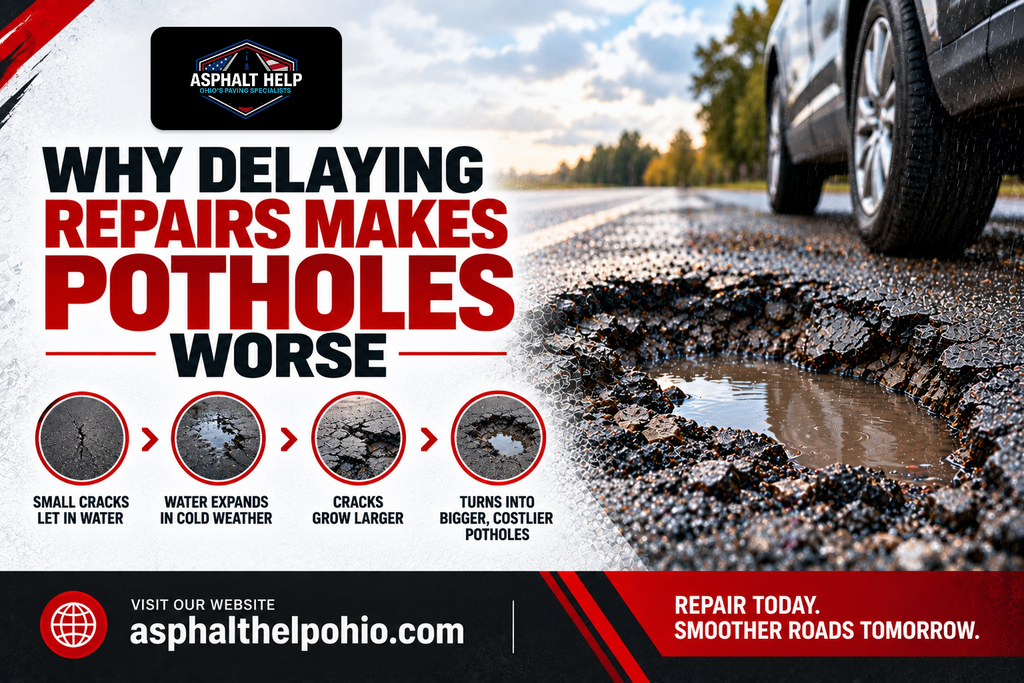
For property owners, understanding pothole damage Ohio conditions can help explain why prompt inspection and appropriate repair are important.
1. Water Can Enter the Damaged Area
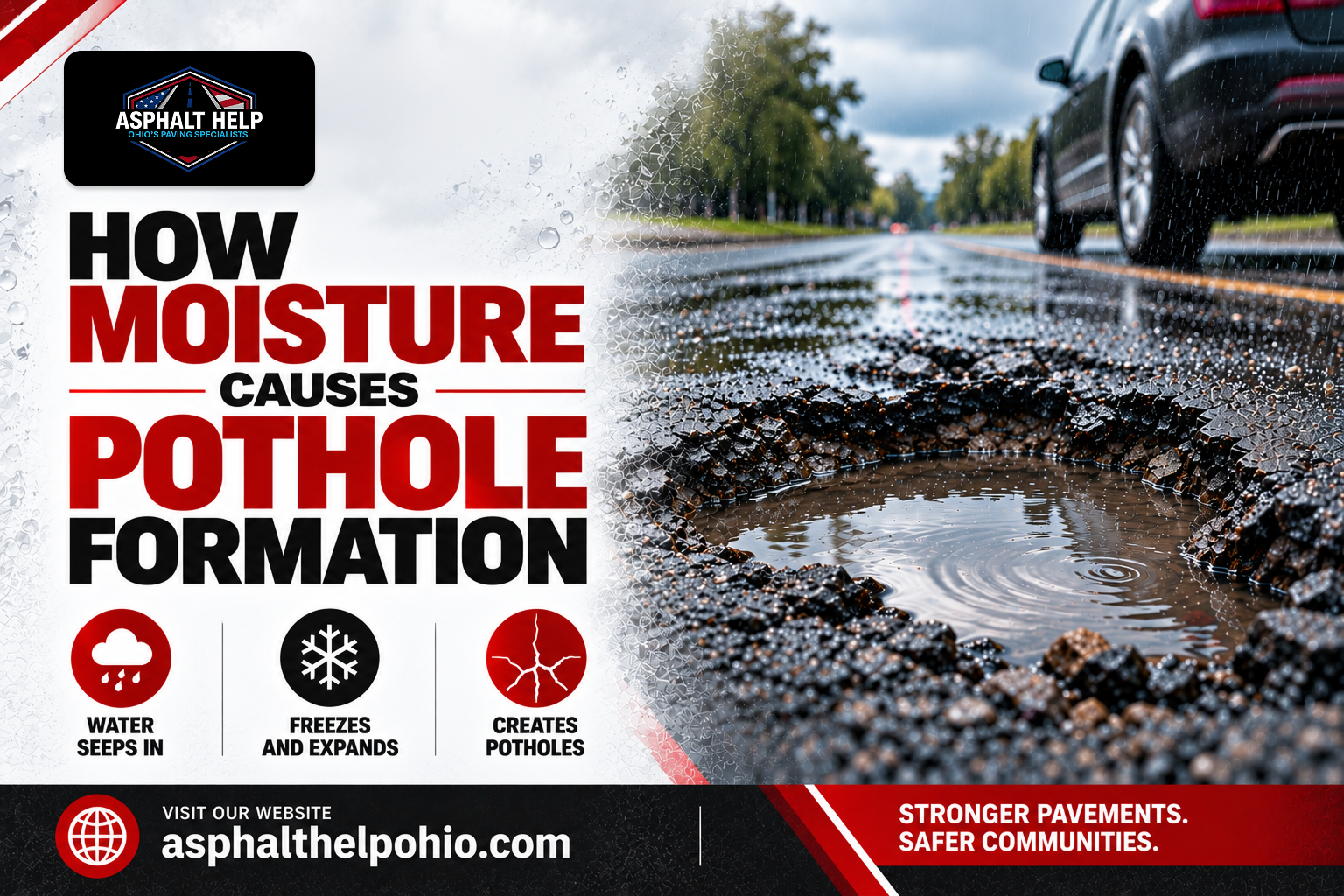
Once asphalt breaks apart, the exposed area can provide additional pathways for water to enter the pavement structure.
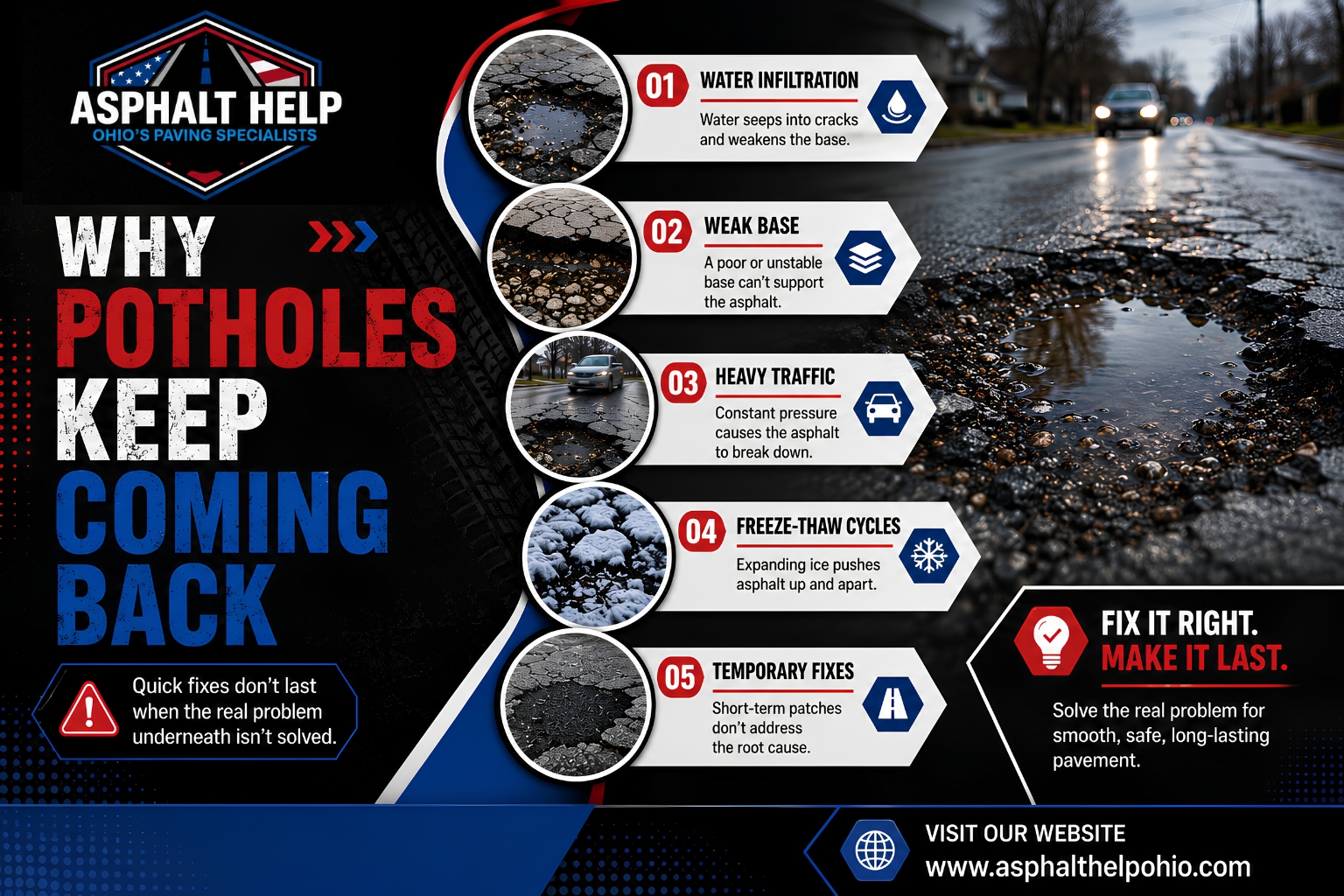
FHWA explains that cracks, pavement edges, and other surface defects can allow moisture to infiltrate pavement layers. As pavement ages and deteriorates, these pathways can become more numerous, accelerating moisture-related deterioration.
A pothole that remains open therefore isn’t simply an isolated hole in the surface. Water can continue affecting the surrounding pavement and supporting materials.
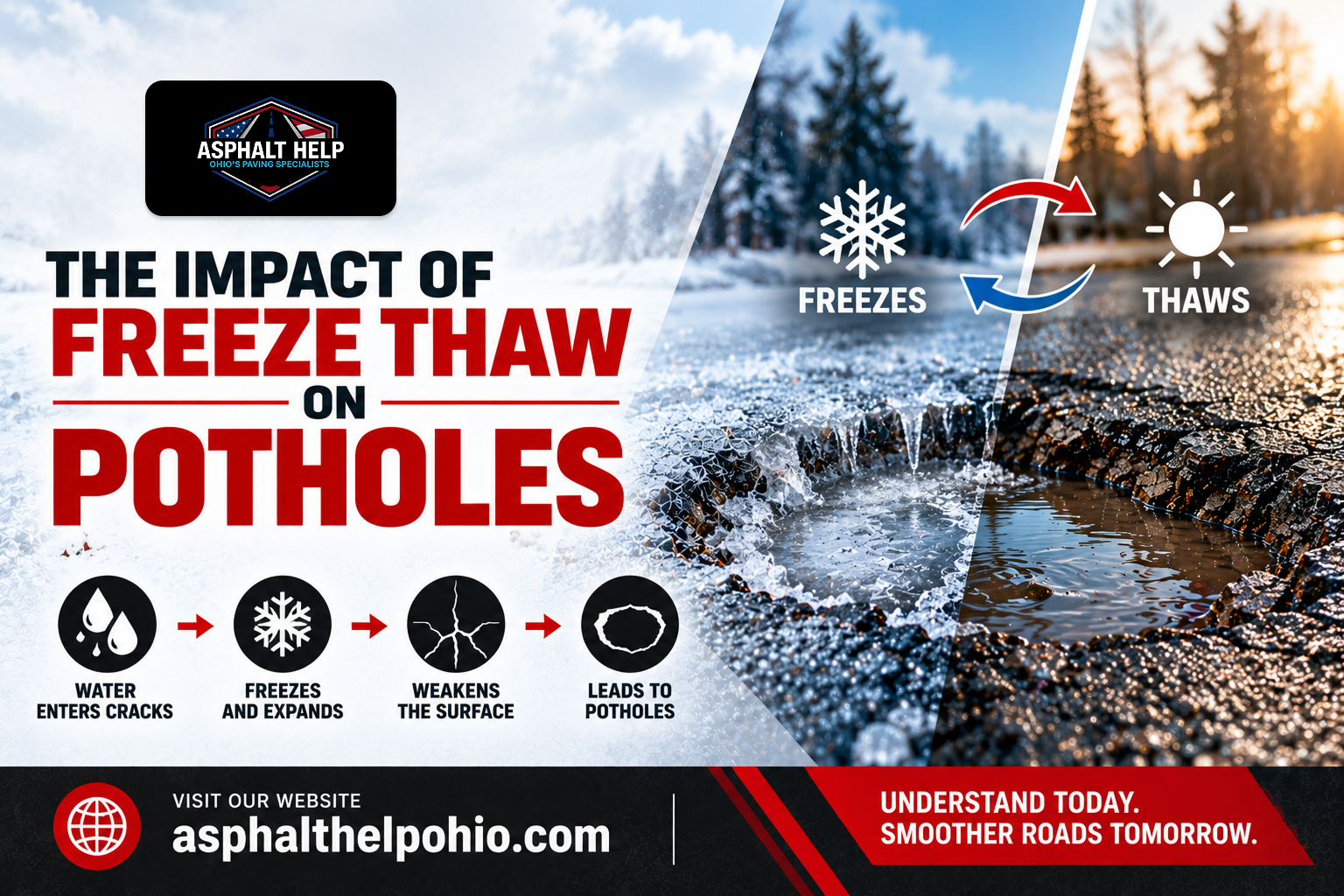
2. Freeze-Thaw Cycles Can Expand Existing Damage
Ohio’s changing temperatures can make an existing pothole more difficult to contain.
Water that enters pavement can freeze when temperatures drop and thaw when temperatures rise. FHWA identifies freeze-thaw cycles as a factor that can expand pavement cracks and contribute to pothole formation.
If a pothole is already present, repeated seasonal cycles can contribute to further deterioration around the damaged area.
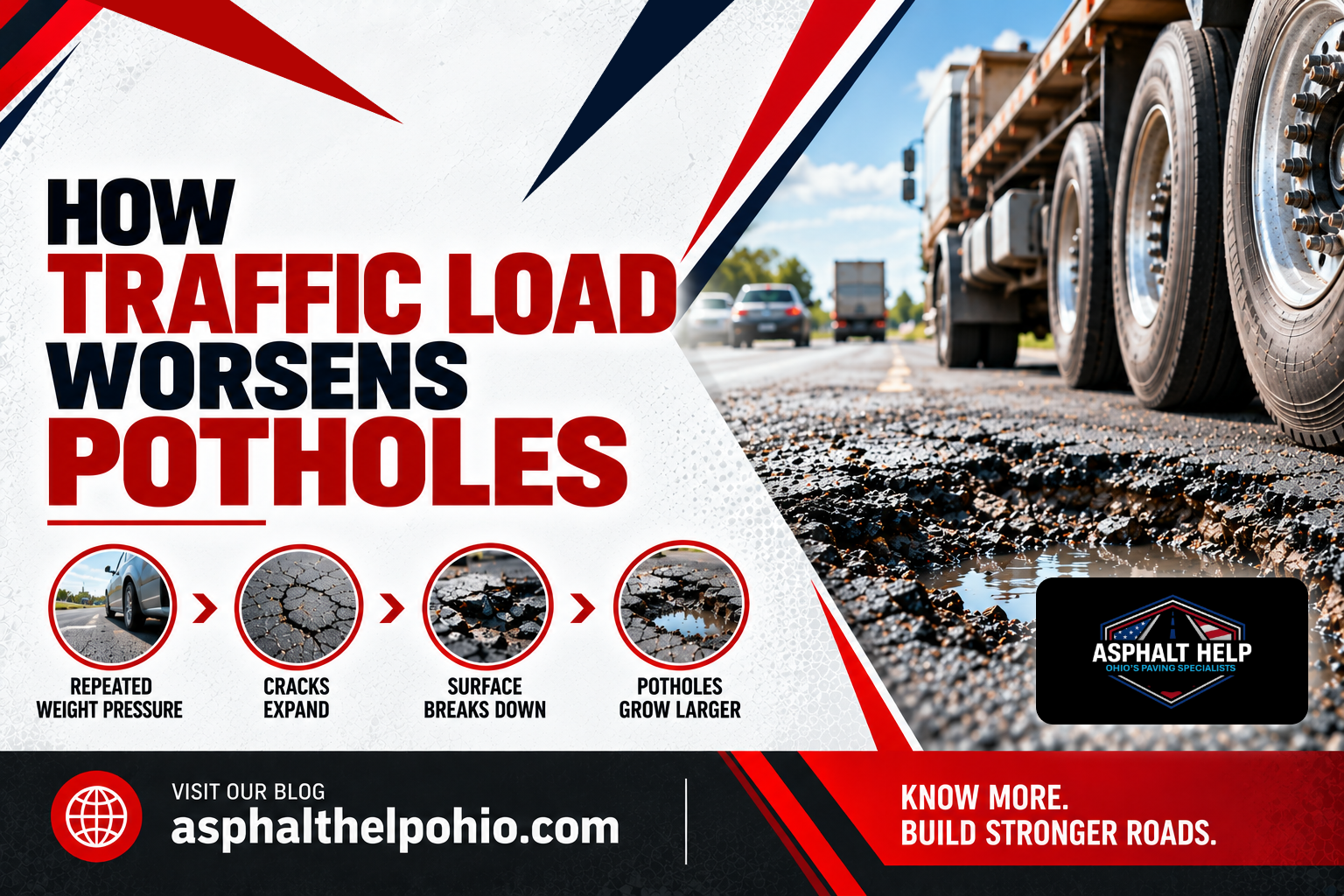
3. Traffic Continues to Stress the Weak Area
Every vehicle passing over damaged pavement applies another load to the area.
FHWA notes that pavement deterioration is influenced by traffic and environmental conditions, with deterioration potentially accelerating where traffic and environmental effects accumulate.
This can be particularly important in:
- Parking lot entrances
- Drive lanes
- Commercial properties
- Residential driveways
- Areas used by heavier vehicles
The more frequently vehicles travel across a weakened area, the more important timely maintenance becomes.
4. The Pothole Can Become Larger
A pothole doesn’t necessarily remain the same size.
As surrounding asphalt becomes cracked or weakened, additional material can break away. Water and traffic can then affect an increasingly larger section.
FHWA’s pothole repair guidance emphasizes that potentially hazardous potholes should be repaired promptly because unrepaired distress can create safety and rideability problems.
5. Damage Can Extend Beneath the Surface
One of the biggest concerns with delaying repair is that visible surface damage may not represent the full extent of the problem.
Pavement consists of multiple layers, including the asphalt surface, base, subbase, and subgrade. FHWA explains that satisfactory pavement performance depends on all these components functioning properly and that moisture can adversely affect underlying unbound materials.
If water reaches a weakened base or subgrade, repairing only the surface may not be sufficient.
6. Poor Drainage Can Keep Feeding the Problem
If a pothole develops where water repeatedly collects, delaying repair without addressing drainage can allow the underlying conditions to continue.
FHWA notes that moisture can enter pavement from multiple sources, including surface cracks and pavement edges, while excess moisture can negatively affect pavement performance.
Property owners should therefore look for:
- Standing water
- Repeated puddles
- Low areas
- Poor pavement slopes
- Water flowing toward the damaged section
- Drainage problems around pavement edges
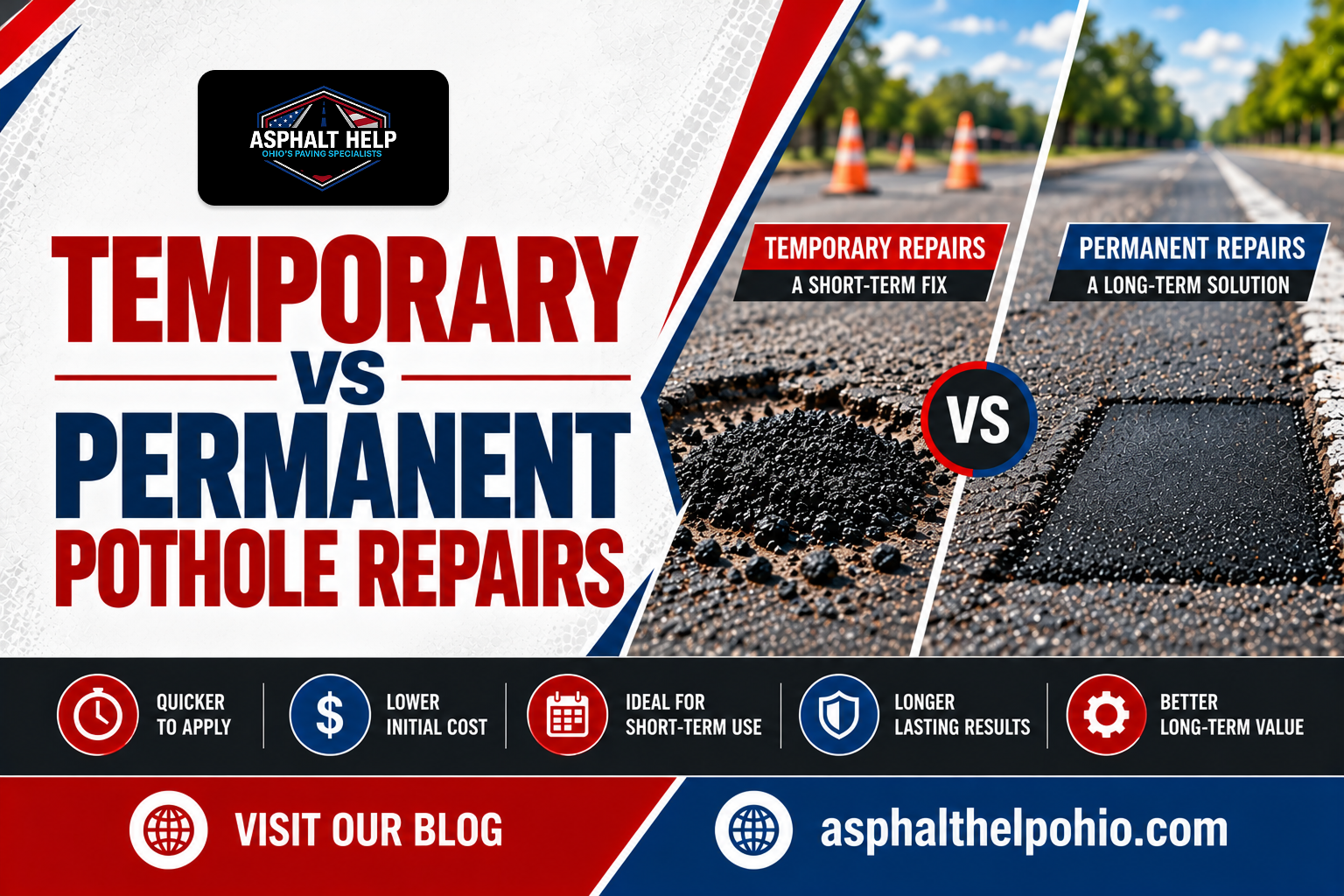
7. Repeated Repairs May Become Necessary
A pothole that is repeatedly exposed to water and traffic can eventually require more extensive attention.
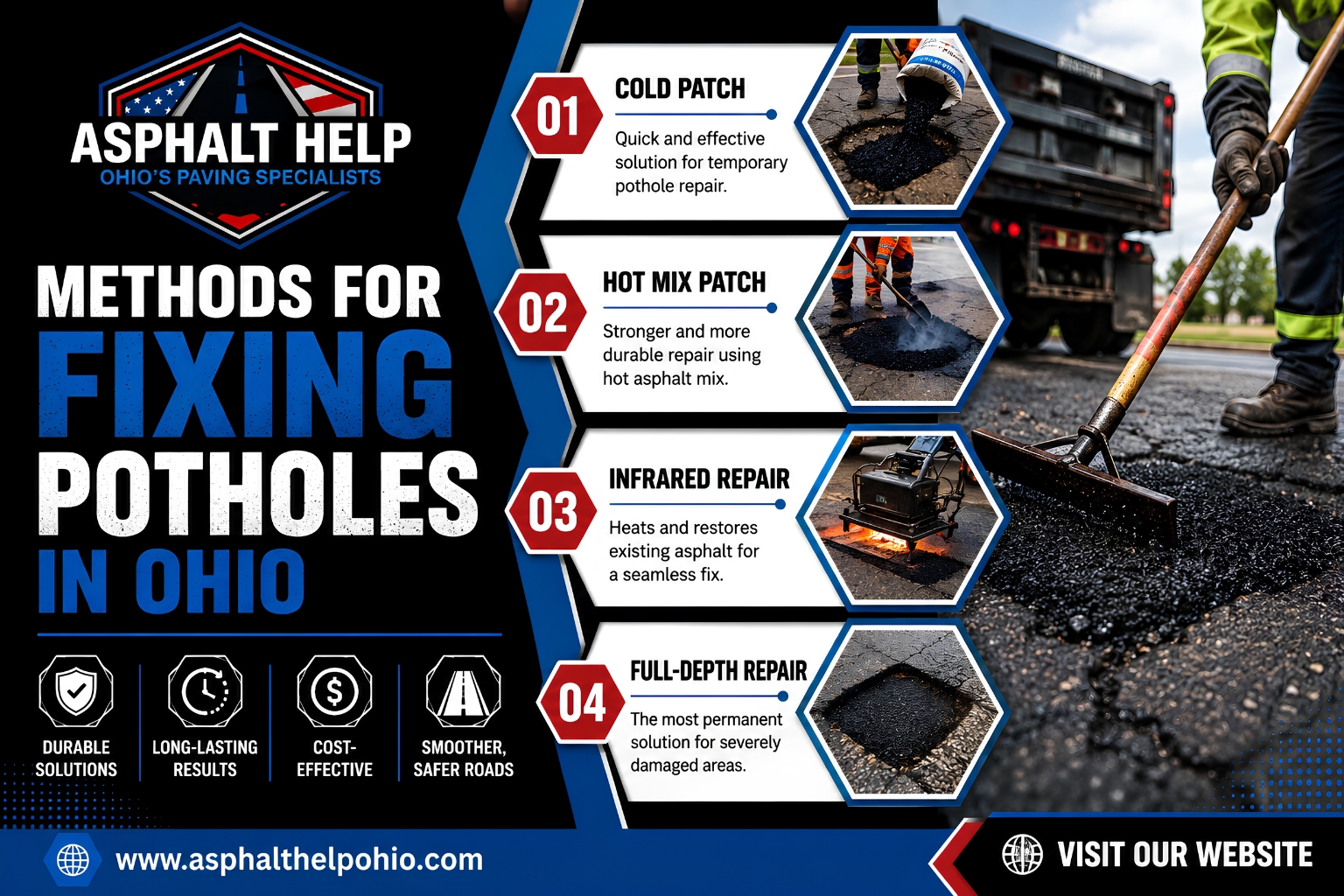
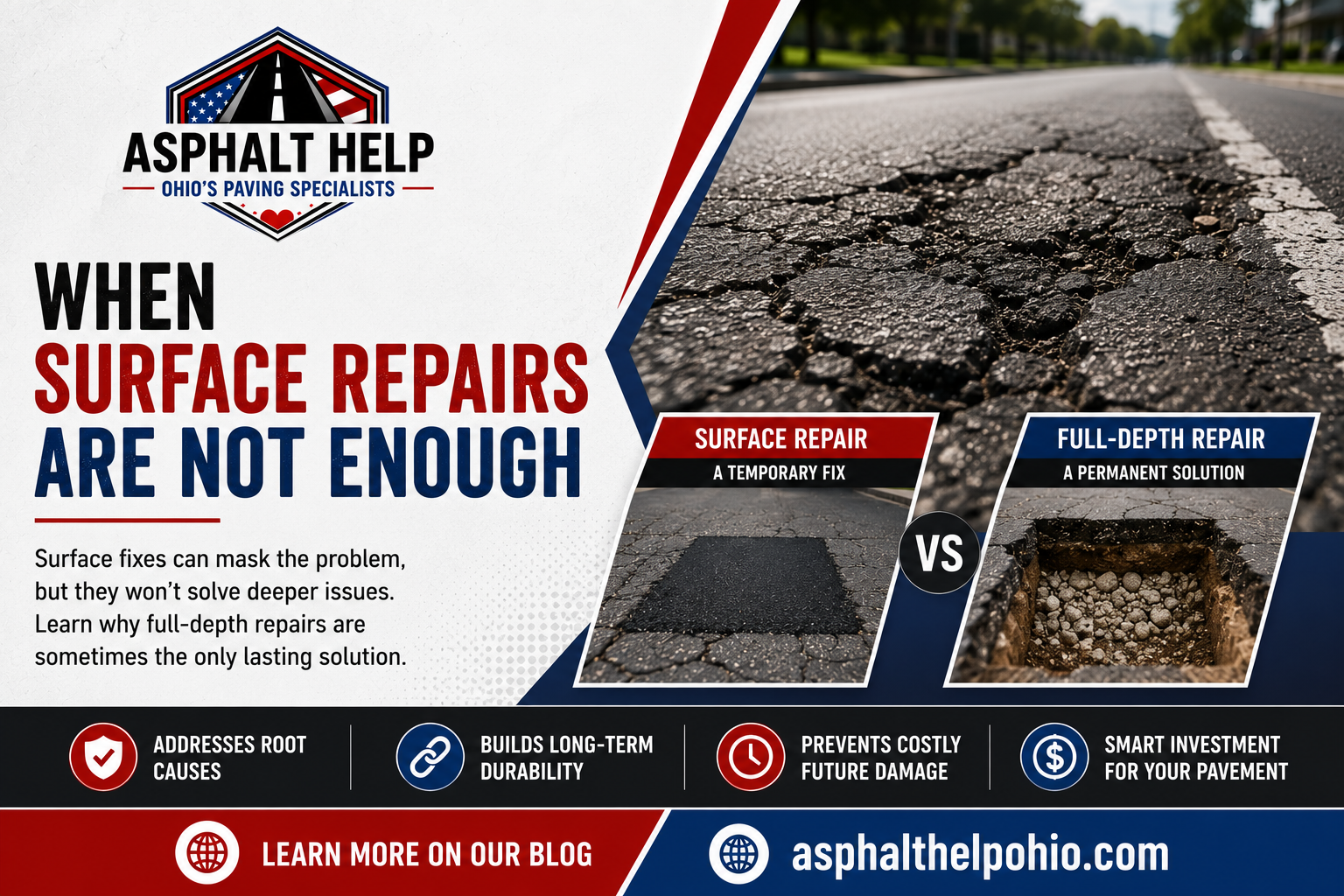
The appropriate repair depends on the extent of damage. A localized pothole in otherwise stable pavement may be suitable for patching, while deeper structural deterioration may require a more extensive repair.
FHWA’s pothole repair guidance recognizes different repair conditions based on factors such as traffic, pavement condition, climate, and the time until planned rehabilitation.
8. Delayed Repairs Can Affect Pavement Rideability
Potholes create uneven pavement surfaces.
As the damaged area grows, vehicles may encounter a larger change in pavement elevation. FHWA identifies pothole repair as necessary when pavement distress compromises safety or rideability.
For commercial properties, maintaining a smoother pavement surface can also help preserve the overall condition and usability of drive lanes and parking areas.
What Happens When a Pothole Is Left Unrepaired?
| Stage | Potential Development |
|---|---|
| Small pavement failure | Water can enter damaged areas |
| Moisture infiltration | Supporting materials may become vulnerable |
| Freeze-thaw cycles | Seasonal expansion and contraction add stress |
| Repeated traffic | Vehicles continue loading the weakened section |
| Surrounding cracking | More pavement can become distressed |
| Larger pothole | Additional material breaks away |
| Deeper deterioration | Base or subgrade problems may develop or become visible |
| More extensive repair | A larger section may require rehabilitation |
This progression is not inevitable for every pothole, but it illustrates why early evaluation is useful.
How Can Property Owners Reduce Pothole Damage?
Regular pavement maintenance can help identify problems before they become extensive.
Property owners can:
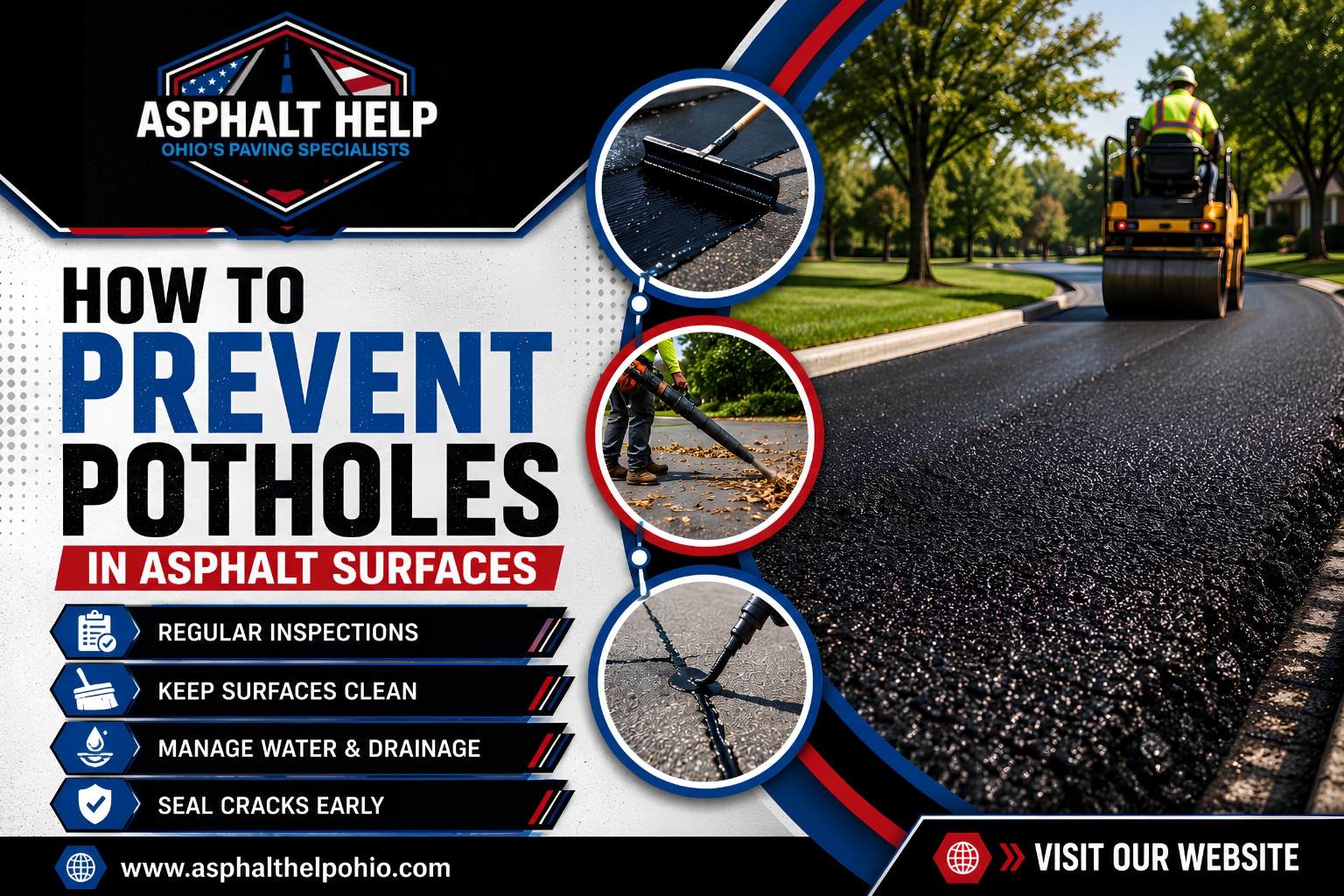
- Inspect asphalt regularly.
- Look for new cracks and depressions.
- Address suitable cracks promptly.
- Monitor areas where water collects.
- Maintain drainage paths.
- Inspect pavement after winter.
- Arrange appropriate pothole repairs when damage appears.
- Investigate potholes that repeatedly return.
The objective is not simply to make the pavement look better. It is to identify conditions that may allow deterioration to continue.
When Is Pothole Patching Appropriate?
A localized patch can be appropriate when the damage is limited and the surrounding pavement remains structurally stable.
A professional repair may involve removing weakened material, preparing the repair area, installing suitable asphalt material, and compacting the patch.
For deeper damage, the underlying pavement layers may also need to be evaluated.
When Is a More Extensive Repair Needed?
Repeated potholes, widespread cracking, pavement settlement, and extensive deterioration can indicate that the problem goes beyond one isolated surface defect.
FHWA explains that pavement performance depends on the condition of the complete pavement system, including structural layers and the subgrade.
In such situations, a contractor may need to evaluate whether localized patching, deeper repair, resurfacing, or reconstruction is appropriate.
Final Thoughts
Delaying repairs can allow pothole damage Ohio property owners experience to become more extensive. Water can enter damaged pavement, freeze-thaw cycles can add stress, and repeated traffic can continue loading the weakened area. FHWA identifies moisture, freeze-thaw action, traffic, and poor underlying support among the key factors associated with pothole development and deterioration.
The best response depends on the condition of the pavement. A small, localized pothole may require targeted patching, while recurring or extensive damage may indicate problems beneath the asphalt that need a broader repair strategy.
For property owners looking for asphalt pothole repair in Columbus, Ohio, Asphalt Help Ohio can evaluate the damaged area and help determine whether localized repair or a more extensive pavement solution is appropriate. Acting before a pothole expands can help limit further deterioration and protect the surrounding pavement.