


How Can You Prevent Potholes in Ohio Asphalt? Why wait for a pothole to become a major repair when early maintenance can help protect the pavement? Effective pothole prevention Ohio starts with controlling moisture, maintaining drainage, repairing cracks early, and monitoring asphalt before small problems become structural failures.
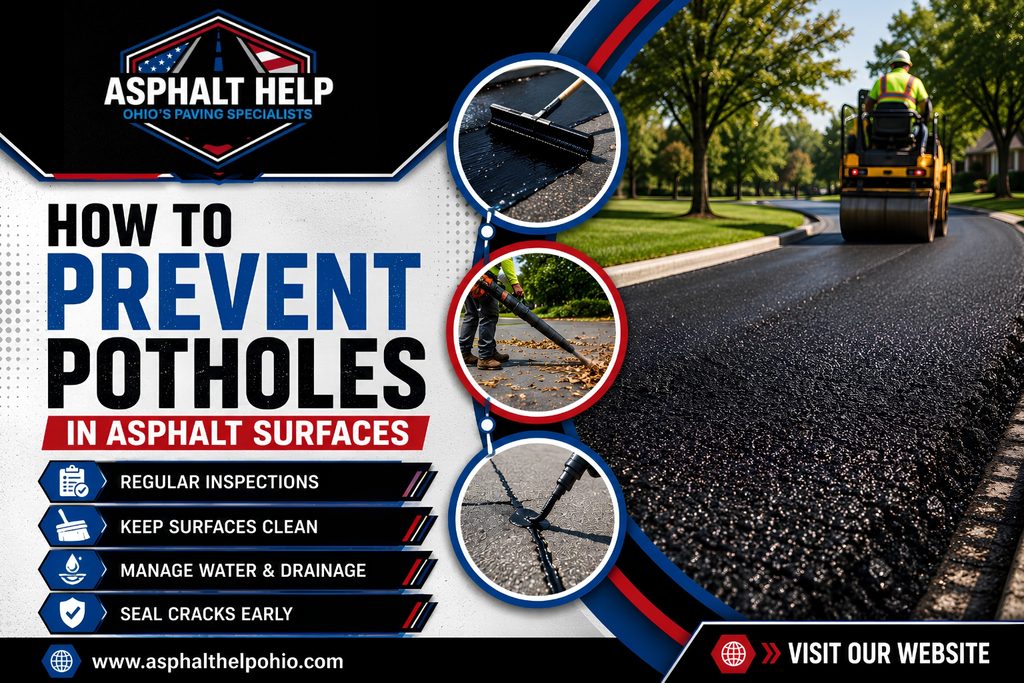
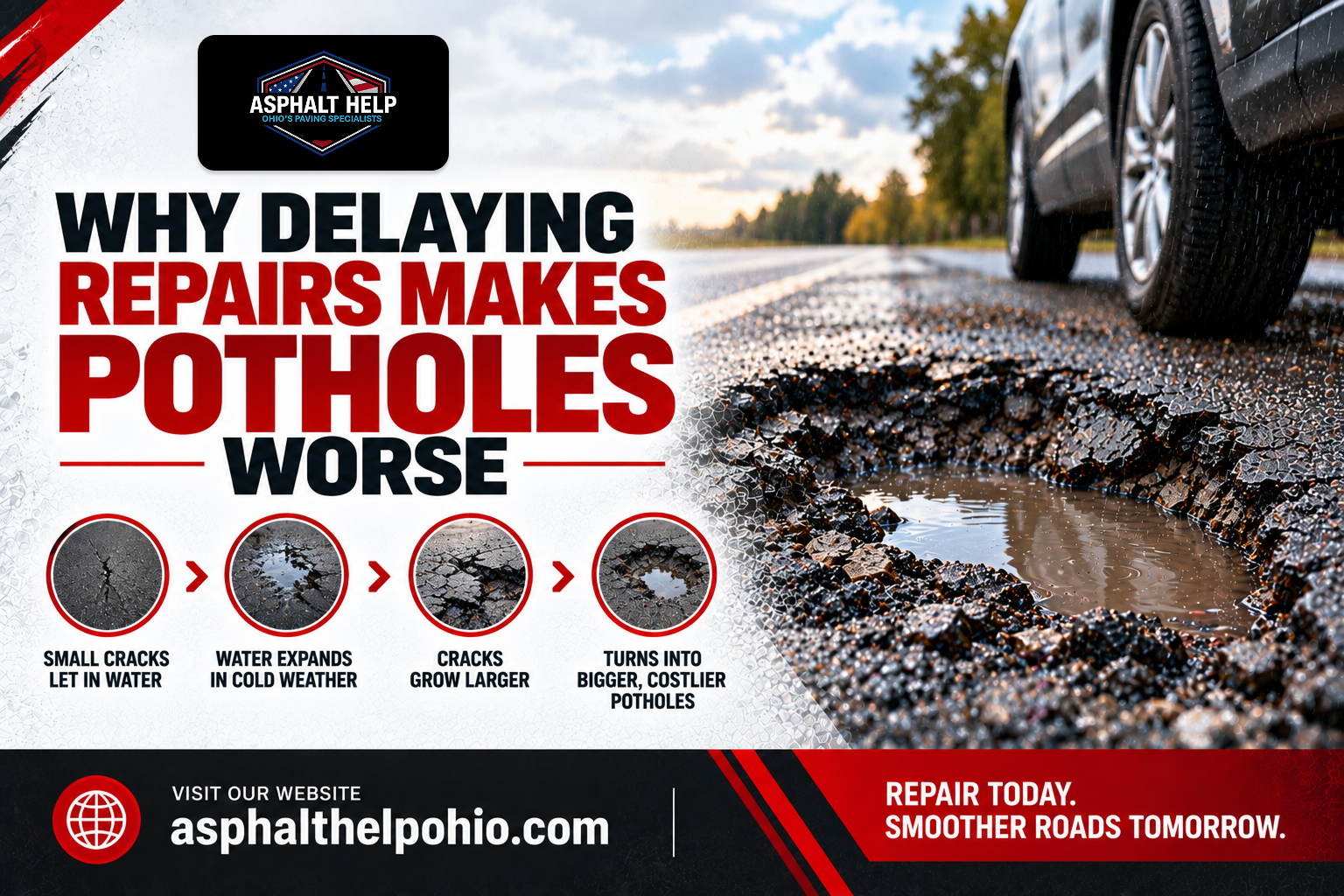
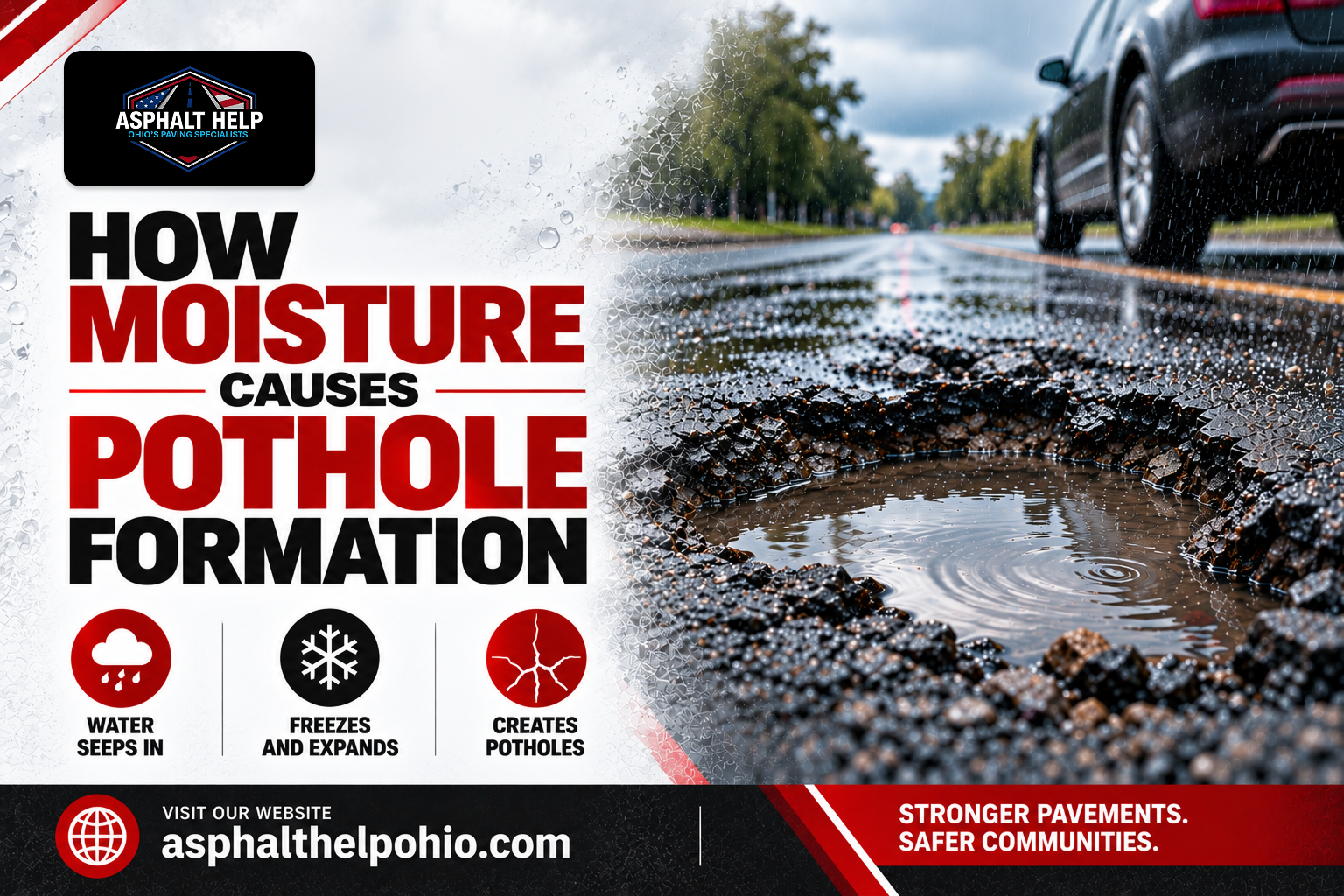
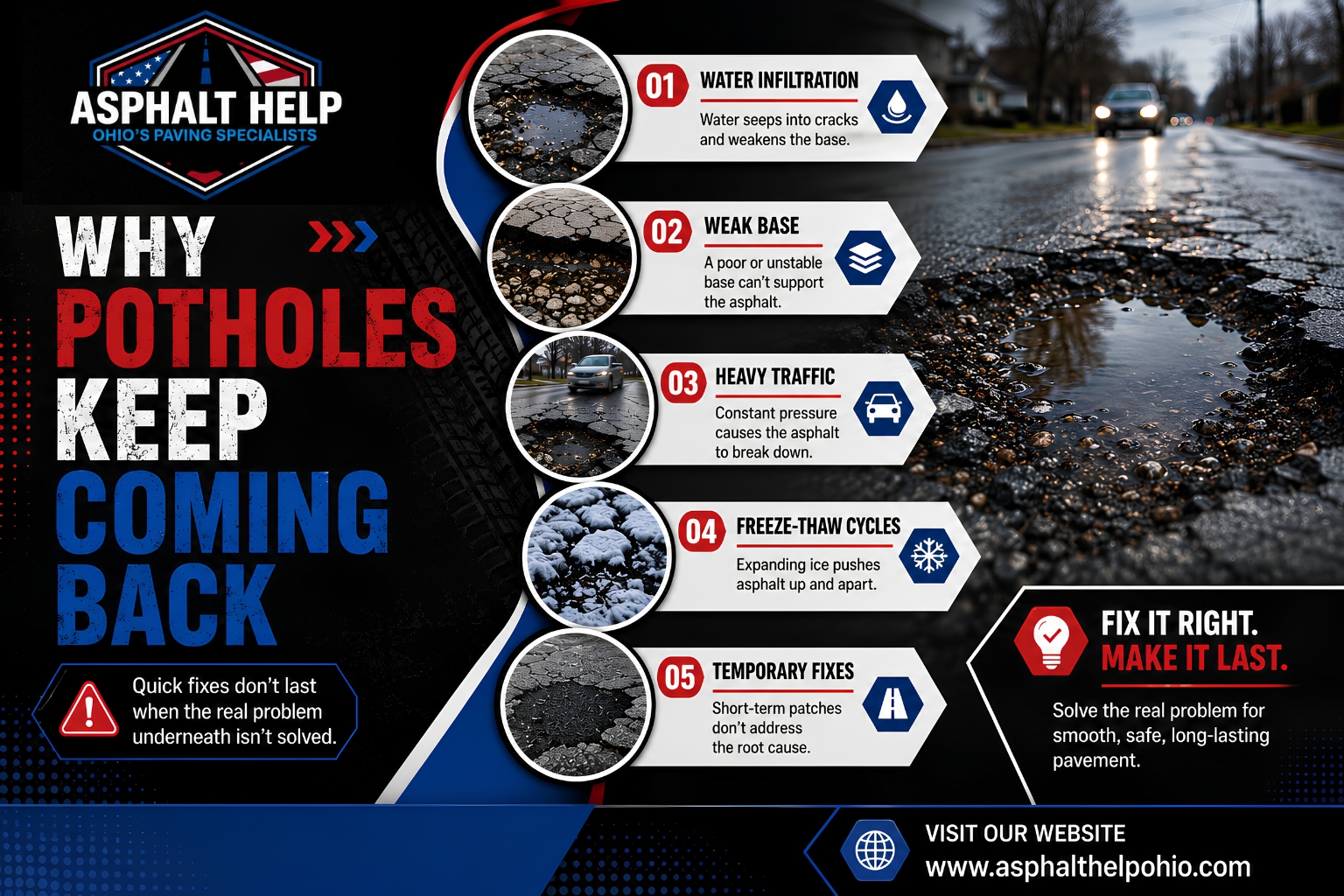
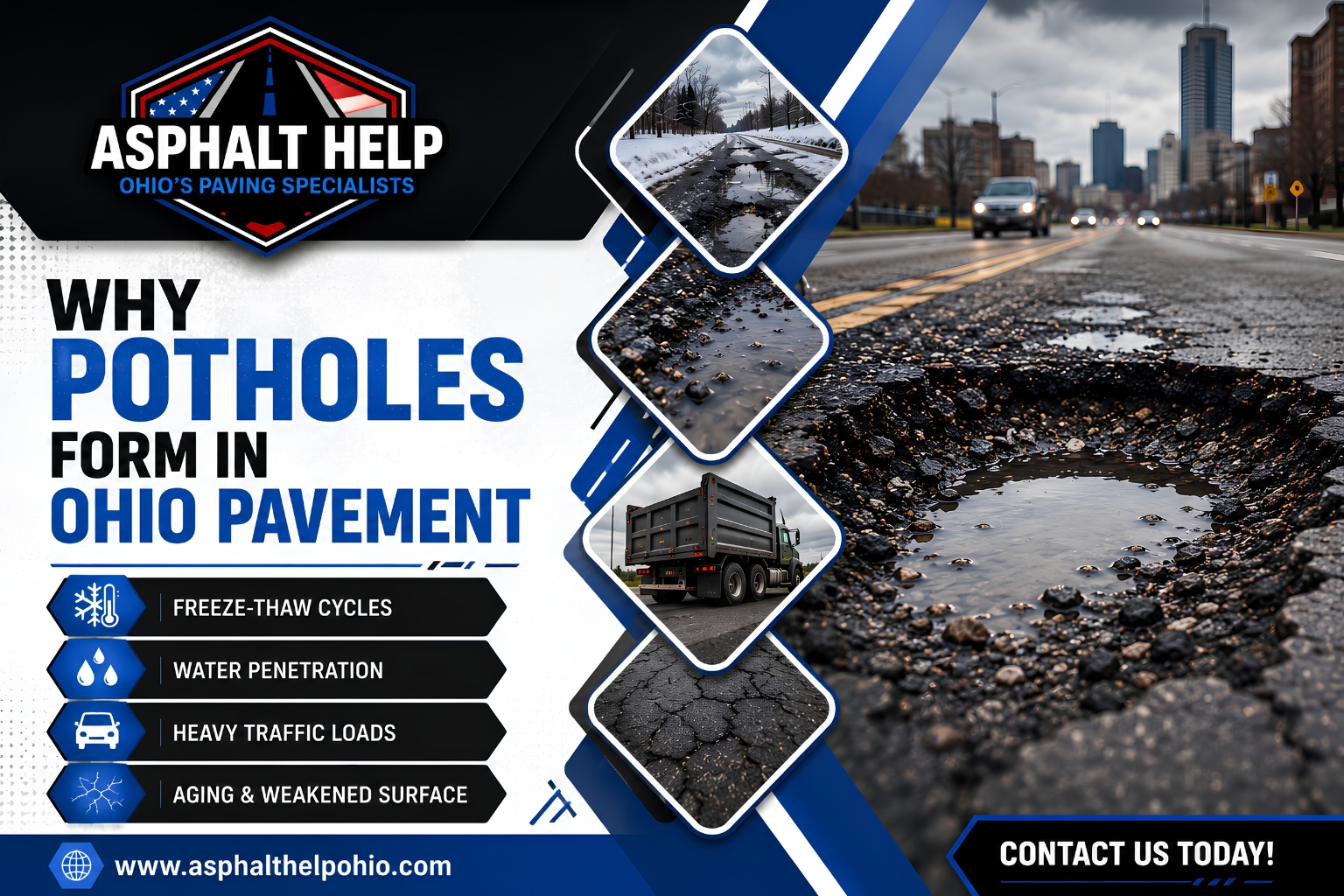
Asphalt Help Ohio explains that potholes commonly develop when water enters cracks, freezes and expands, and then combines with traffic pressure to weaken the pavement. Poor drainage, aging asphalt, and weak base layers can make the problem worse.
1. Repair Cracks Early
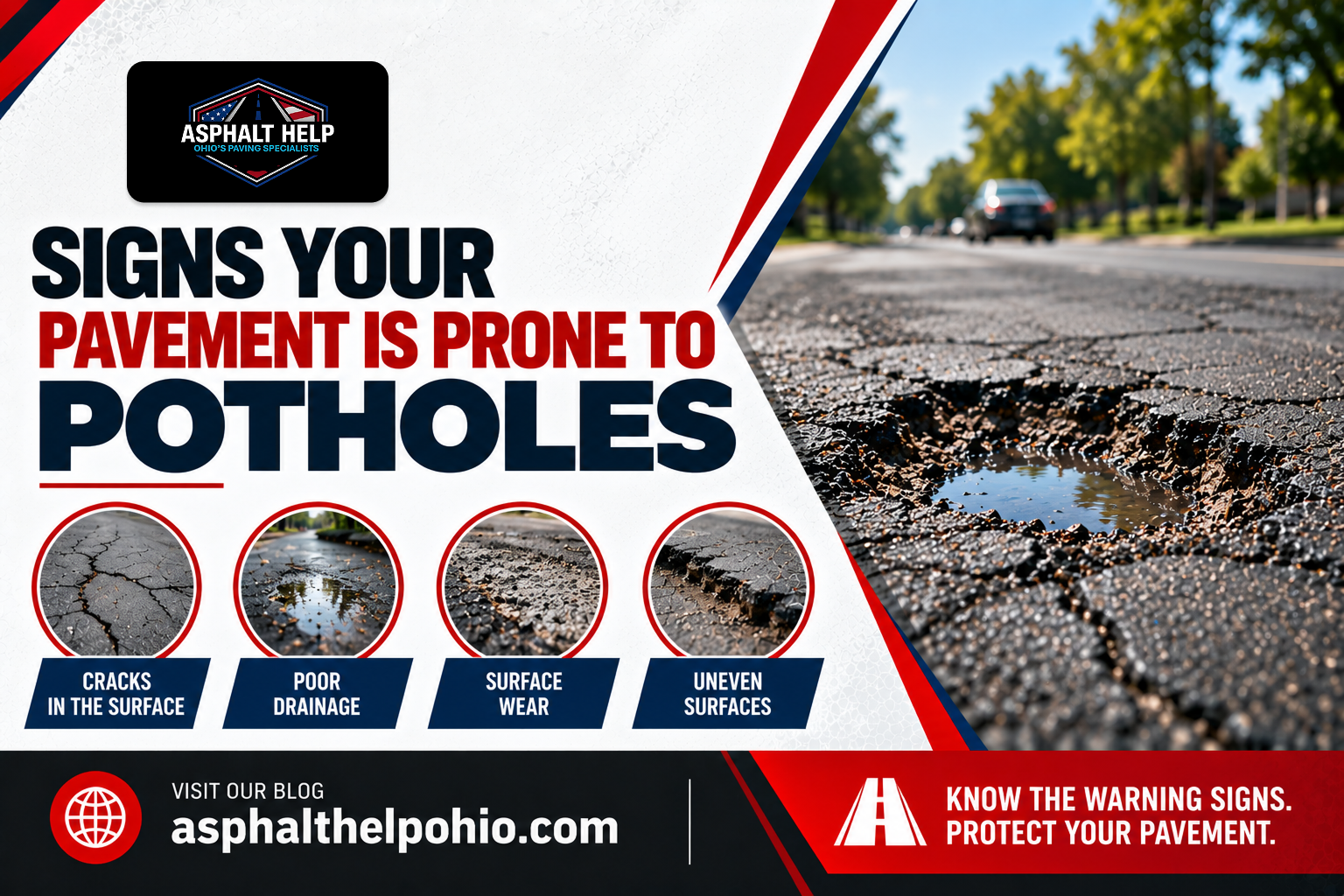
Cracks are often one of the first warning signs of pavement deterioration. Water can enter through untreated cracks and reach the layers beneath the asphalt.
Asphalt Help Ohio recommends prompt crack filling because sealing cracks can help prevent water penetration, further deterioration, and larger repairs.
Regularly check for:
- Hairline cracks
- Long cracks
- Connected cracks
- Cracks around potholes
- Crumbling pavement edges
Early treatment is generally easier than waiting until cracking develops into larger pavement damage.
2. Maintain Proper Drainage
Water management is one of the most important parts of preventing potholes.
Standing water can weaken asphalt and its supporting base. Asphalt Help Ohio emphasizes proper grading and drainage because standing water can accelerate cracking and weaken the pavement foundation.
Property owners should watch for:
- Persistent puddles
- Low spots
- Blocked drainage
- Water flowing toward asphalt
- Erosion around pavement edges
- Potholes repeatedly developing in the same location
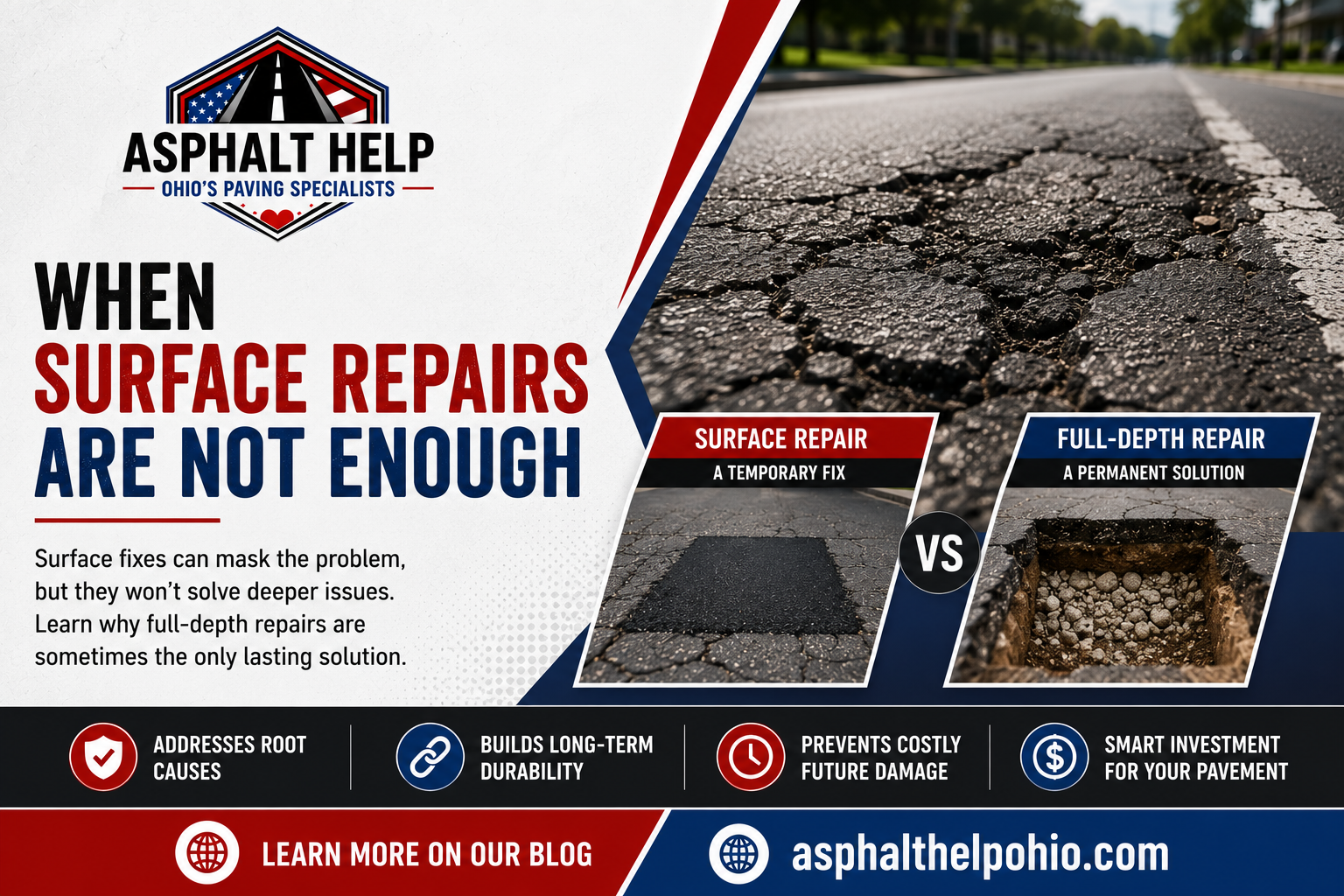
If water is the underlying problem, simply filling the pothole may not prevent it from returning.
3. Use Sealcoating on Suitable Asphalt
Sealcoating can help protect asphalt from moisture, UV exposure, oil, and everyday wear.
Asphalt Help Ohio states that sealcoating creates a protective barrier that helps prevent cracks, potholes, and premature surface deterioration.
However, sealcoating is most appropriate for pavement that is still structurally sound. Significant cracks and damaged areas should be properly addressed before applying a protective coating.
4. Schedule Regular Pavement Inspections
A regular inspection can reveal developing problems before they become major failures.
Asphalt Help Ohio recommends preventive maintenance that includes regular inspections, cleaning, crack filling, sealcoating, and minor repairs.
A useful inspection should look for:
| What to Check | Possible Concern |
|---|---|
| Small cracks | Moisture entry |
| Depressions | Weak or uneven pavement |
| Standing water | Drainage problems |
| Crumbling edges | Surface deterioration |
| Potholes | Localized pavement failure |
| Repeated repairs | Possible underlying structural issue |
5. Pay Attention After Winter
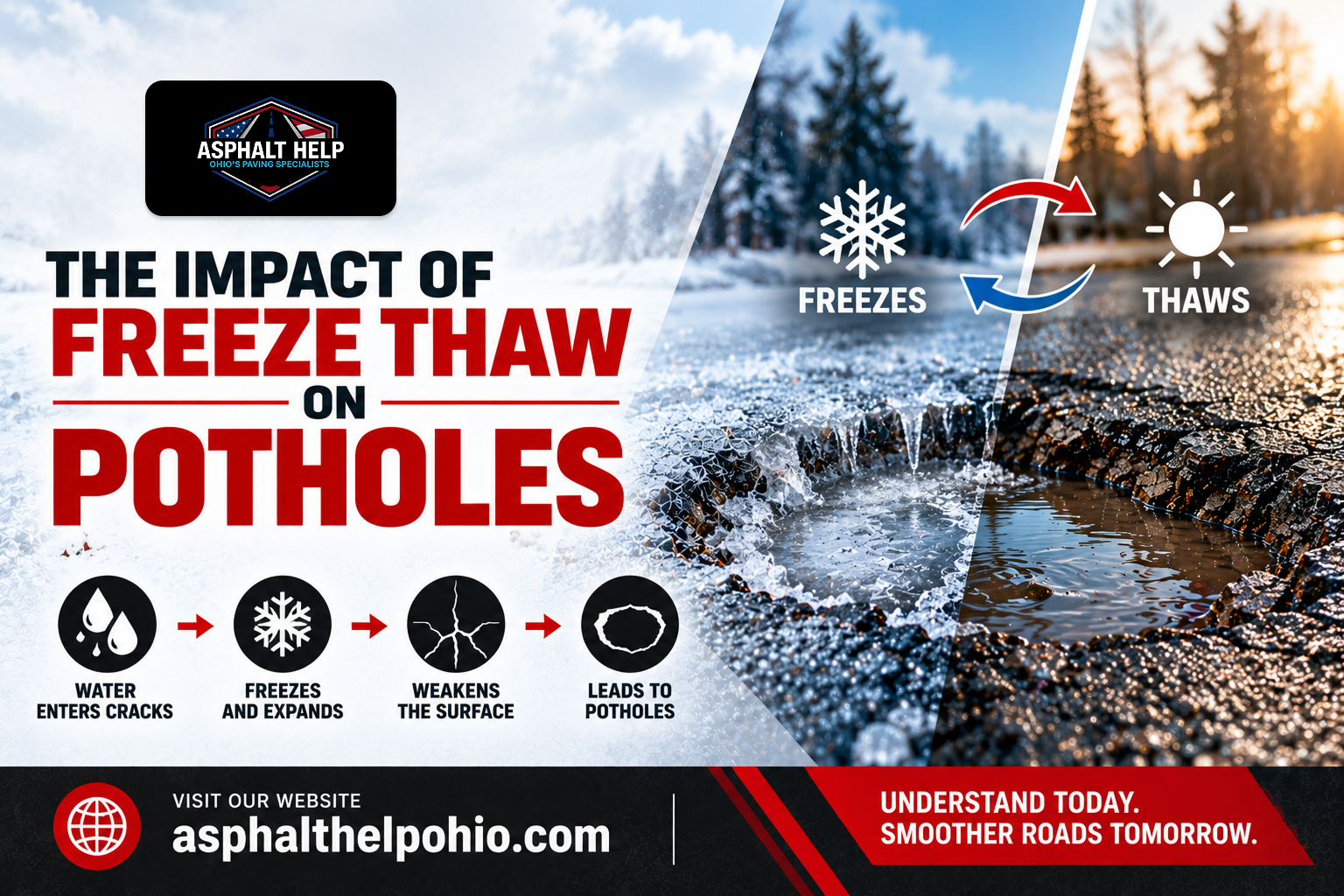
Ohio’s freeze-thaw cycles are an important contributor to pothole formation.
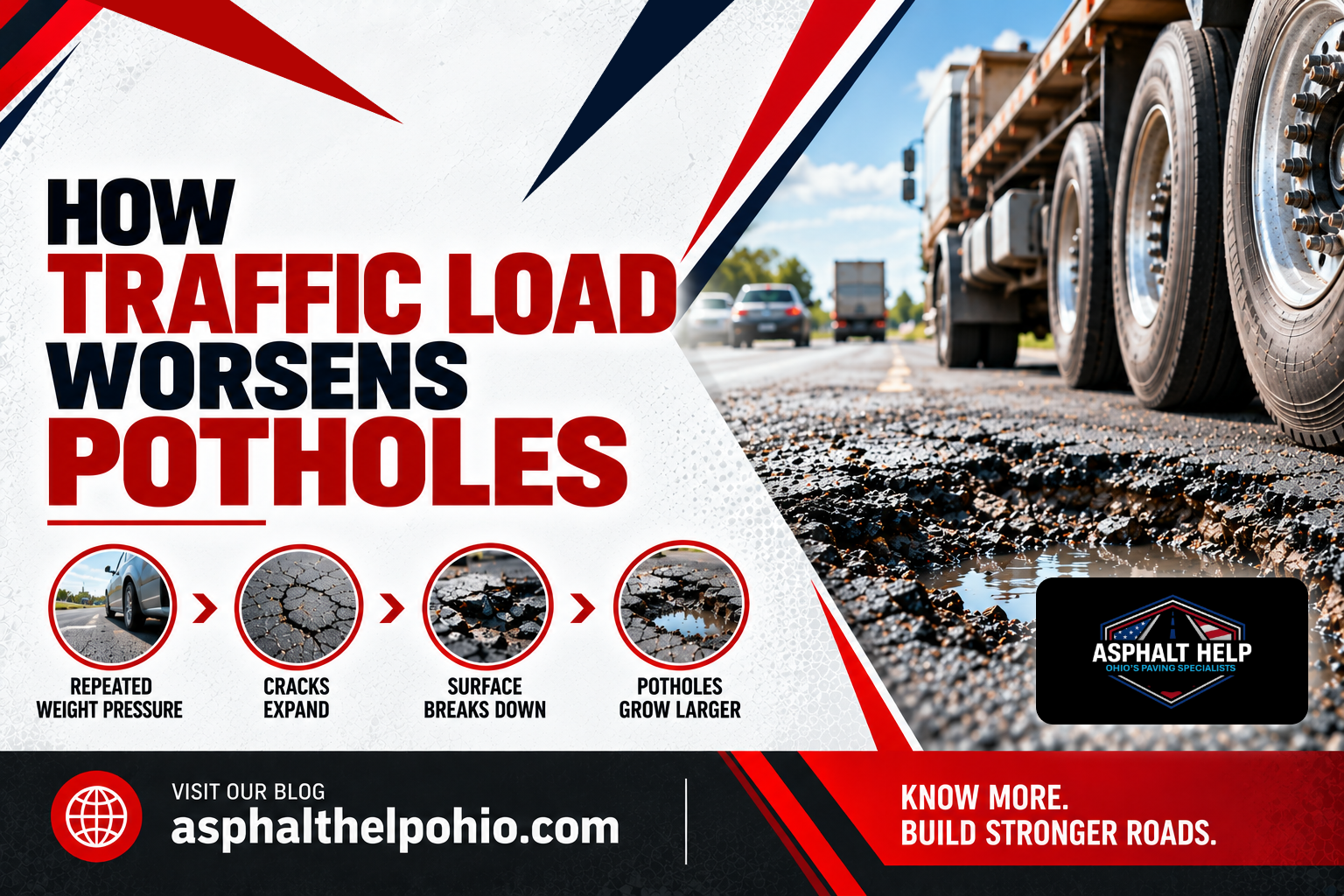
Water can enter small pavement cracks, freeze and expand, then thaw as temperatures rise. Repeated cycles can weaken the asphalt, while traffic places additional stress on the affected area. Asphalt Help Ohio identifies freeze-thaw cycles as one of the biggest contributors to potholes in Central Ohio.
Inspect pavement after winter for new cracks, potholes, depressions, and damaged edges.
6. Repair Small Depressions Before They Become Potholes
A shallow depression may not seem serious, but water can collect in low areas.
Asphalt Help Ohio identifies water pooling, cracks developing into depressions, and increasing pothole size or depth as warning signs of pavement deterioration.
Addressing these conditions early can reduce the opportunity for water and traffic to cause additional damage.
7. Avoid Excessive Heavy Loads
Heavy and repeated vehicle loads can accelerate deterioration when asphalt is already weakened.
Asphalt Help Ohio’s residential maintenance guidance recommends limiting extremely heavy vehicles to reduce premature cracking and surface deformation.
For commercial properties, traffic demands should be considered during pavement design and maintenance planning.
8. Keep Asphalt Clean
Dirt and debris can hide cracks and drainage problems.
Oil, fuel, and chemicals can also contribute to asphalt deterioration. Asphalt Help Ohio recommends keeping pavement clean and removing damaging spills promptly.
A clean pavement surface makes routine inspections easier and helps property owners identify problems earlier.
9. Repair Potholes Promptly
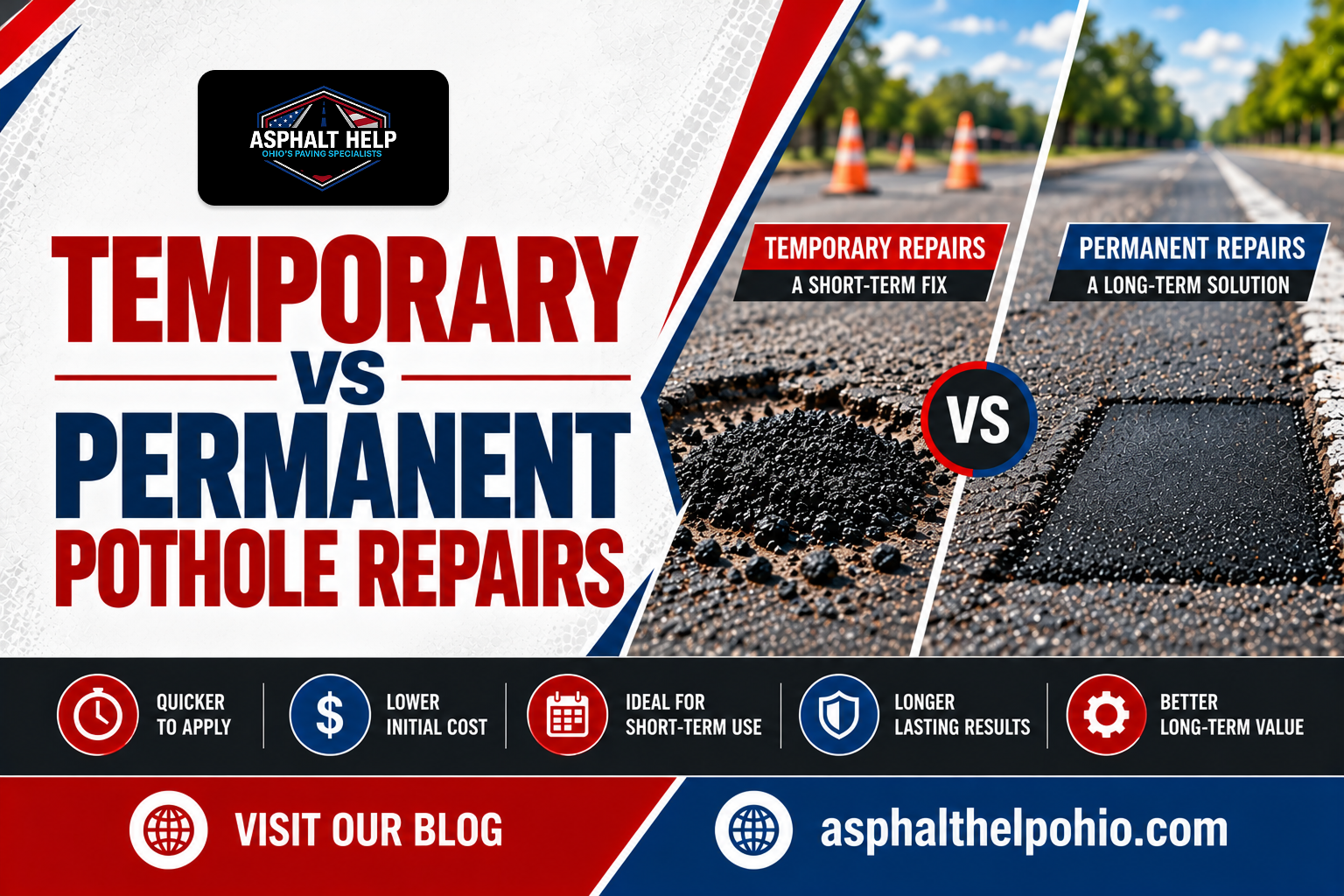
Once a pothole develops, don’t leave it untreated indefinitely.
Traffic can continue breaking down the surrounding asphalt, while water can enter the damaged area and contribute to additional deterioration.
Asphalt Help Ohio explains that timely pothole repairs help maintain smooth, safe surfaces while preventing further pavement deterioration.
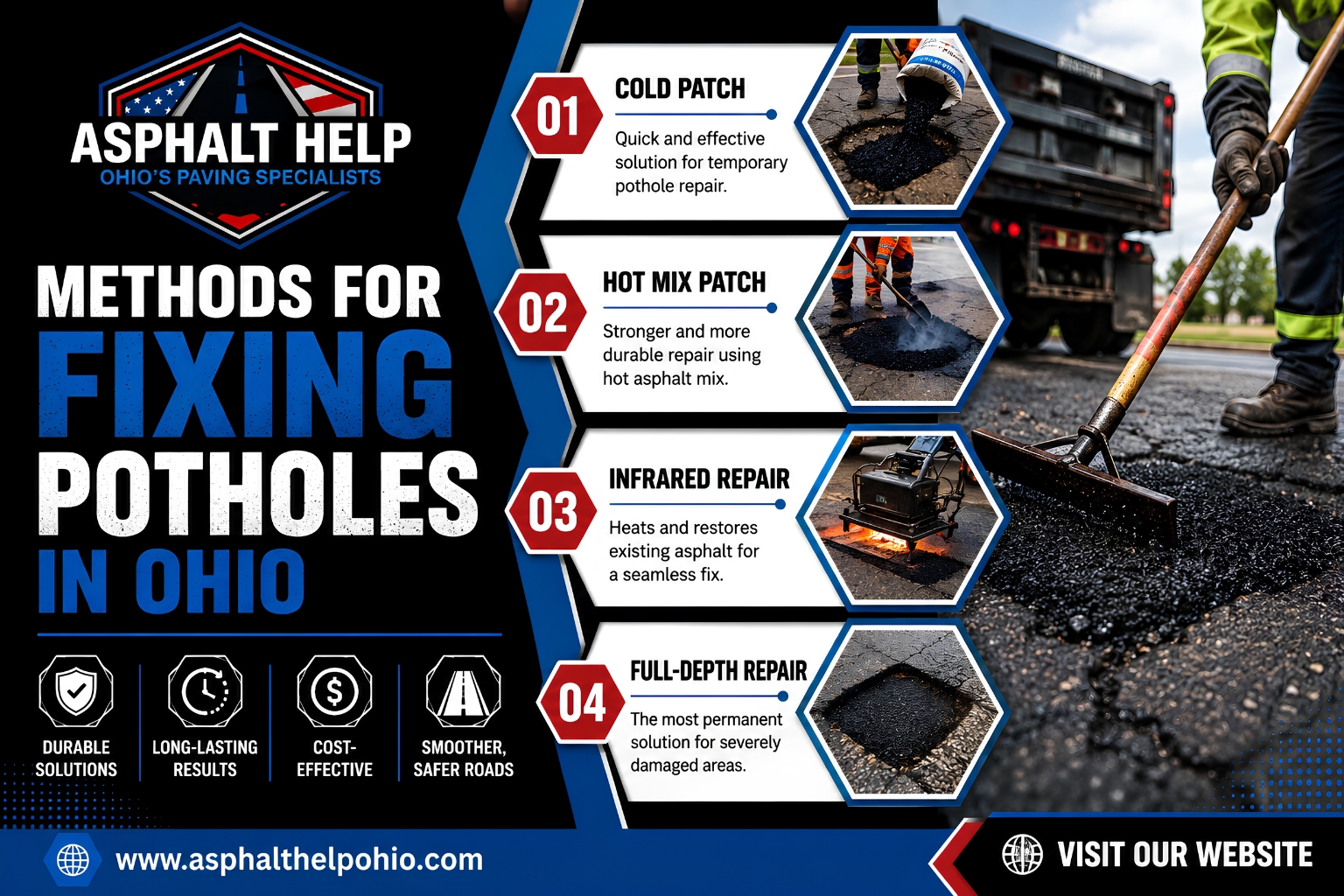
Professional repair may involve removing weakened asphalt, addressing the base when necessary, installing patching material, and compacting the repair.
10. Make Sure New Asphalt Is Properly Installed
Pothole prevention begins before pavement is even installed.
Proper grading, base stabilization, drainage, and compaction provide the foundation for long-term asphalt performance. Asphalt Help Ohio states that its paving process begins with site preparation and focuses on grading, base stabilization, and compaction.
Poor preparation can leave pavement more vulnerable to cracking, water damage, and premature failure.
11. Monitor Recurring Potholes
If the same pothole keeps coming back after repairs, investigate the underlying cause.
Possible contributing factors include:
- Drainage problems
- Weak base material
- Continued water infiltration
- Heavy traffic
- Structural pavement failure
Asphalt Help Ohio says its pothole repair process evaluates root causes and addresses base issues when necessary rather than simply filling the visible hole.
12. Consider Resurfacing When Damage Is Widespread
Potholes aren’t always isolated problems.
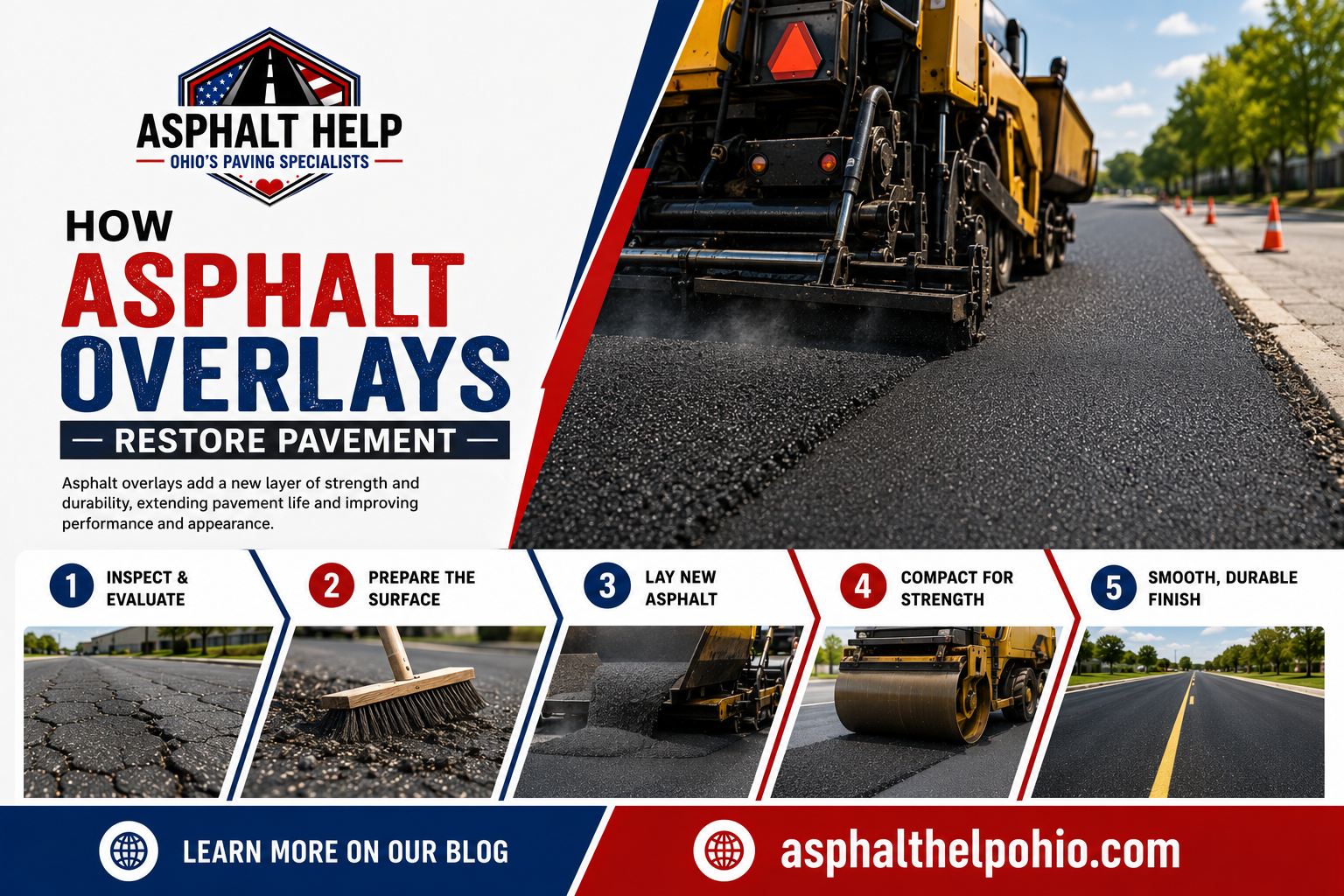
If a pavement surface has widespread wear and localized repairs are becoming frequent, resurfacing may be considered when the underlying pavement remains structurally sound.
Asphalt Help Ohio describes resurfacing as a solution for worn pavement where the existing structure can support a new asphalt layer.
If the foundation has failed, however, a surface overlay may not address the underlying problem.
13. Replace Structurally Failed Pavement
When pavement is severely cracked, sinking, or structurally unstable, more extensive work may be necessary.
Asphalt Help Ohio explains that removal and replacement involves removing damaged asphalt, correcting base problems, improving drainage, and installing new asphalt from the foundation upward.
This approach addresses the pavement structure rather than repeatedly treating surface symptoms.
Pothole Prevention Checklist
A practical maintenance routine can include:
- Inspect asphalt regularly.
- Fill suitable cracks promptly.
- Keep drainage systems functioning.
- Correct persistent standing-water problems.
- Apply sealcoating when appropriate.
- Repair potholes as soon as they appear.
- Limit unnecessary heavy loads.
- Clean oil and chemical spills.
- Inspect pavement after winter.
- Investigate recurring pavement failures.
Asphalt Help Ohio specifically recommends regular inspections, crack filling, sealcoating, and minor repairs as components of preventive asphalt maintenance.
Final Thoughts
Effective pothole prevention Ohio depends on addressing the conditions that cause pavement to weaken. Water infiltration, freeze-thaw cycles, traffic pressure, poor drainage, aging asphalt, and weak base layers can all contribute to pothole formation.
The most useful approach is to maintain asphalt before serious deterioration occurs. Regular inspections, prompt crack filling, proper drainage, suitable sealcoating, and timely pothole repairs can help protect pavement and reduce the likelihood of larger failures.
For properties that already have widespread damage, Asphalt Help Ohio evaluates pavement condition, drainage, foundation stability, and traffic demands before determining whether repair, resurfacing, or replacement is appropriate.
Preventing every pothole isn’t always possible in Ohio’s changing climate, but early maintenance can make a significant difference in how quickly pavement problems develop and how extensive the resulting repairs become.