

Do you know when asphalt overlays are the right solution for your pavement? Asphalt overlays provide an effective way to renew worn or deteriorated pavement without removing the entire asphalt surface. By placing a new layer of asphalt over a properly prepared existing pavement, contractors restore a smooth, durable driving surface while improving appearance, strength, and resistance to everyday wear. Understanding how asphalt overlays work helps property owners determine when this repair method is the right solution for extending pavement life.how asphalt overlays restore damaged pavement?
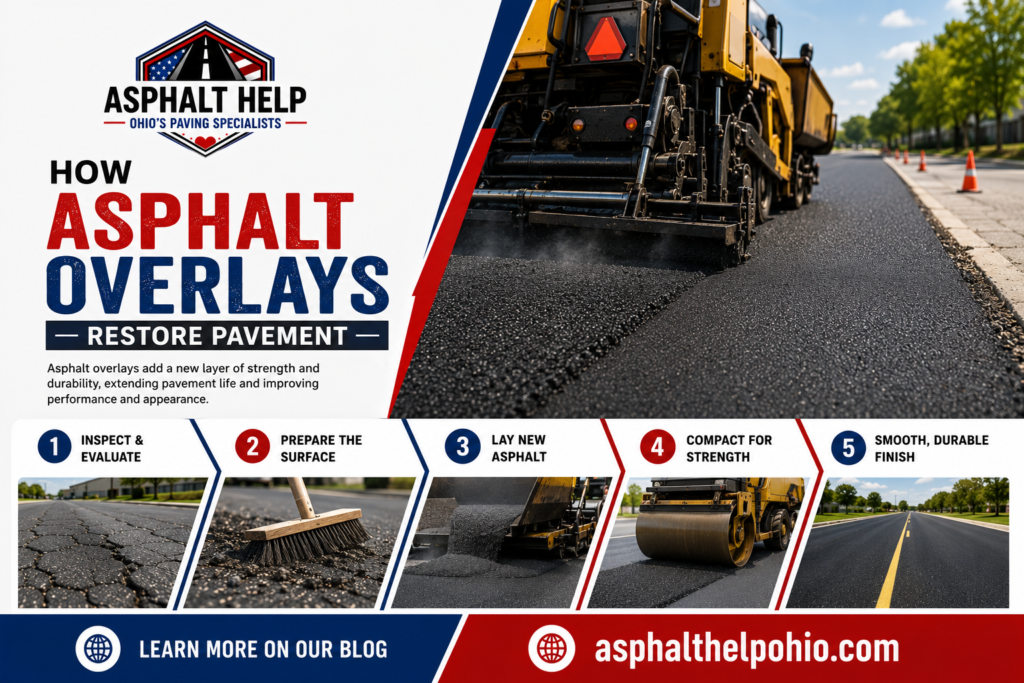
If you’re searching for asphalt overlay Ohio, understanding how the process works can help you determine whether resurfacing is the right solution for your property. Asphalt Help Ohio provides professional asphalt overlays for residential, commercial, and municipal properties throughout Central Ohio. Every project begins with a detailed site evaluation to inspect pavement condition, grading, drainage, and structural stability before recommending an overlay or a more extensive repair. This careful approach ensures every overlay is installed on a sound foundation for long-lasting performance.
What Is an Asphalt Overlay?
An asphalt overlay is the process of installing a new layer of hot-mix asphalt over an existing pavement that is still structurally sound.
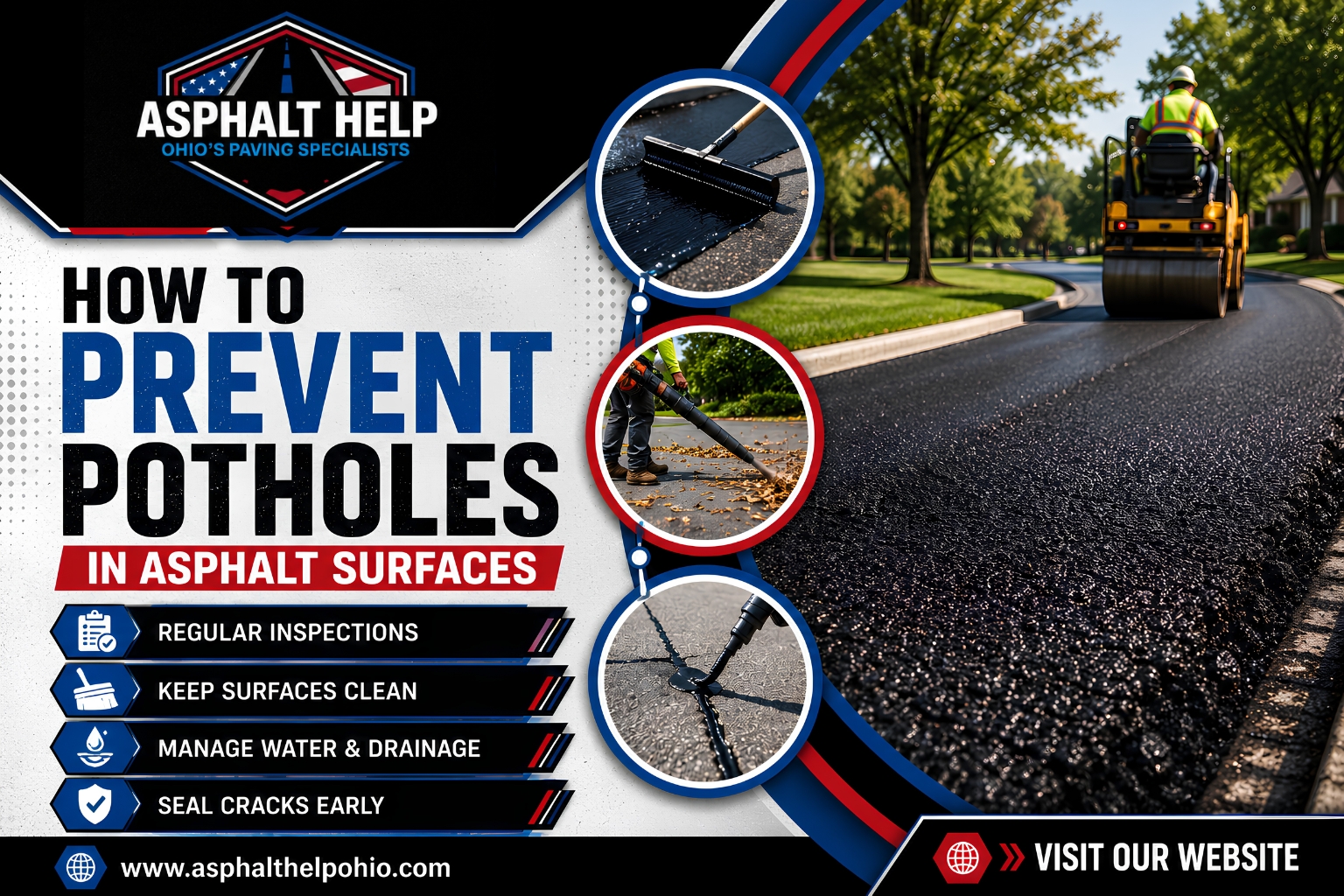
Instead of removing the entire pavement, contractors restore the surface by:
- Repairing damaged sections
- Correcting weak areas
- Cleaning the existing pavement
- Applying a bonding layer
- Installing new asphalt
- Compacting the new surface
The result is a smoother, stronger, and more attractive pavement that performs like a newer surface while preserving much of the existing structure. Asphalt Help Ohio lists resurfacing and overlays among its core paving services for pavement that has surface wear but retains structural integrity.
Why Pavement Needs an Overlay
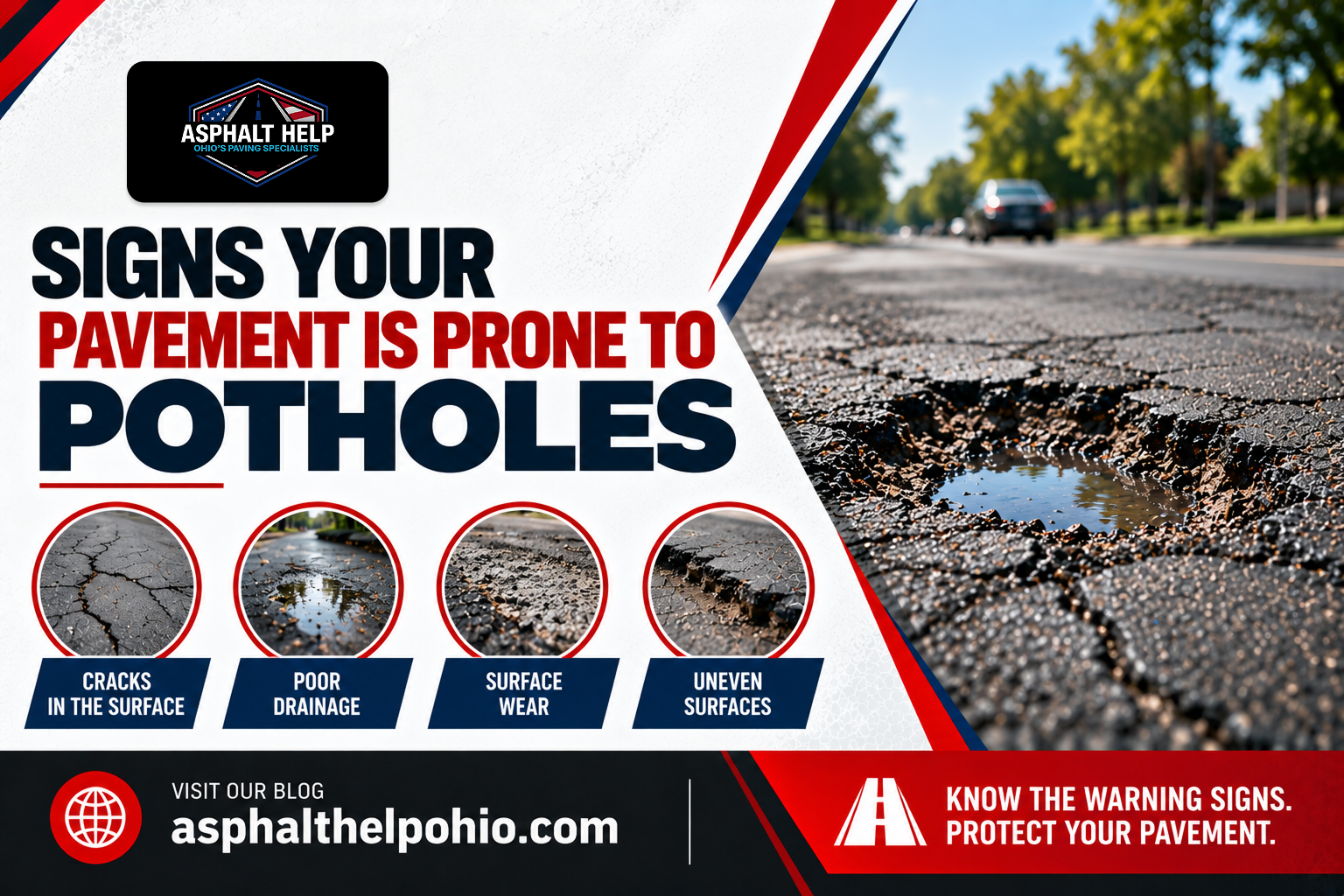
Even well-built asphalt eventually begins showing signs of aging.
Common causes include:
- Daily vehicle traffic
- UV exposure
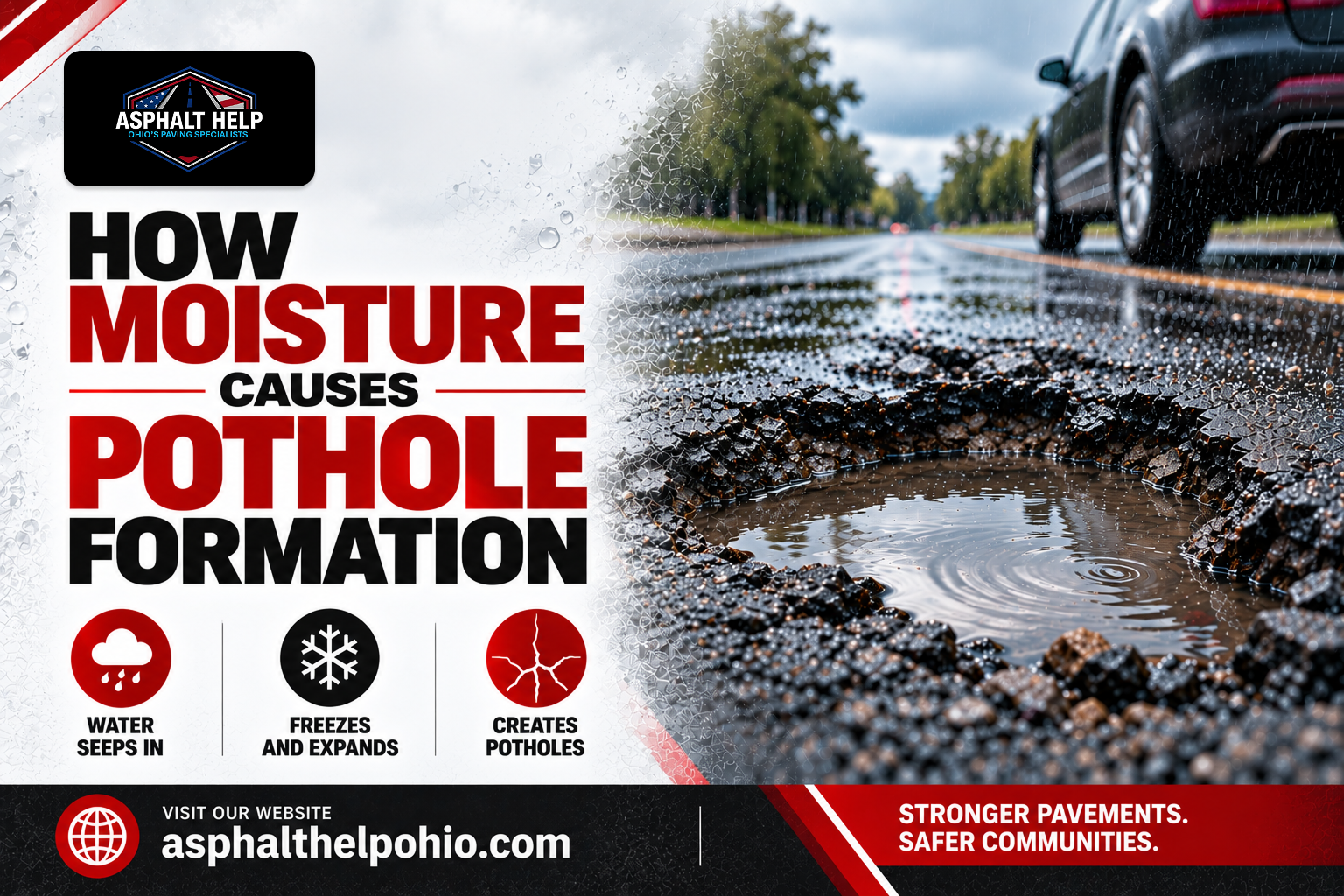
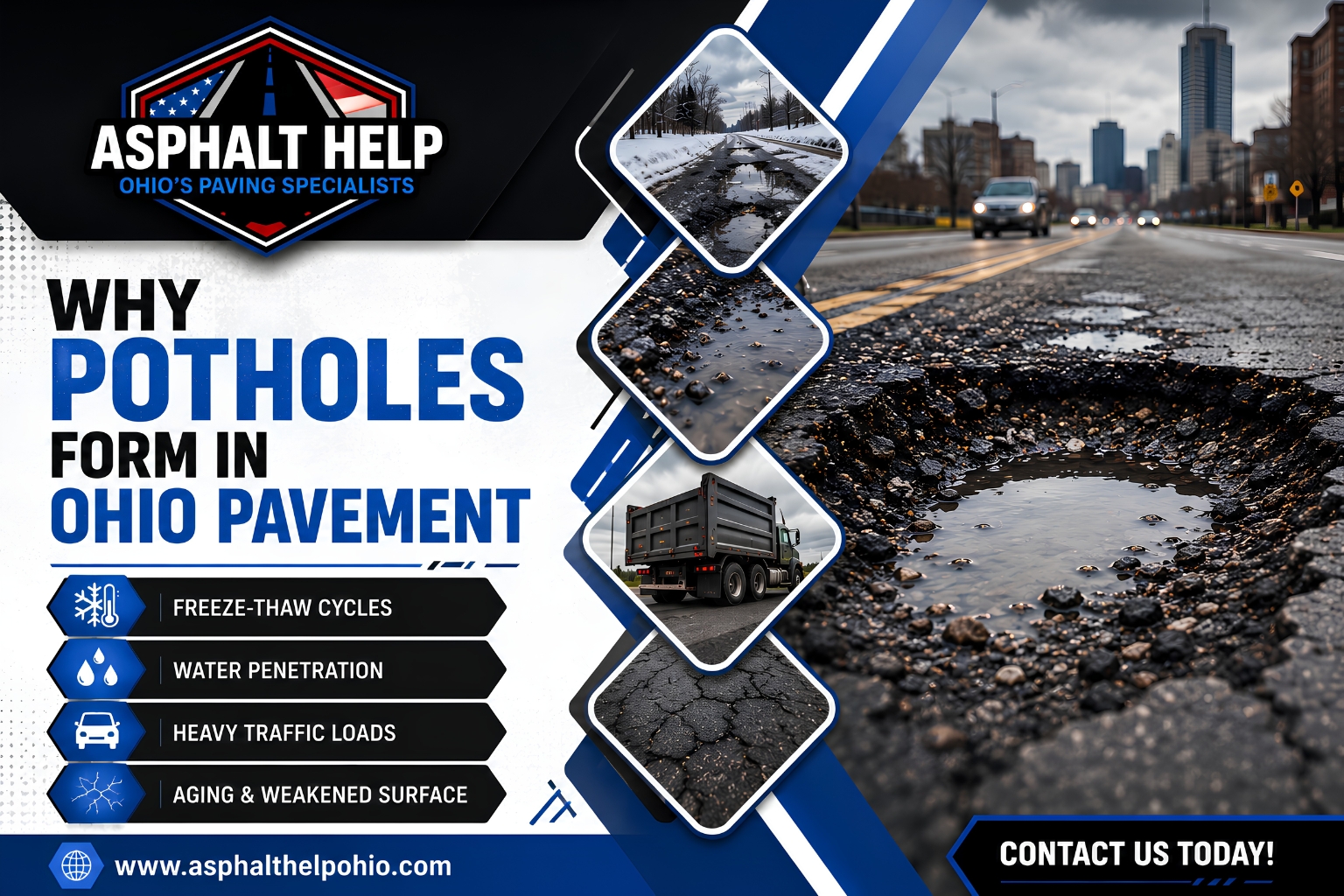
- Moisture infiltration
- Oxidation
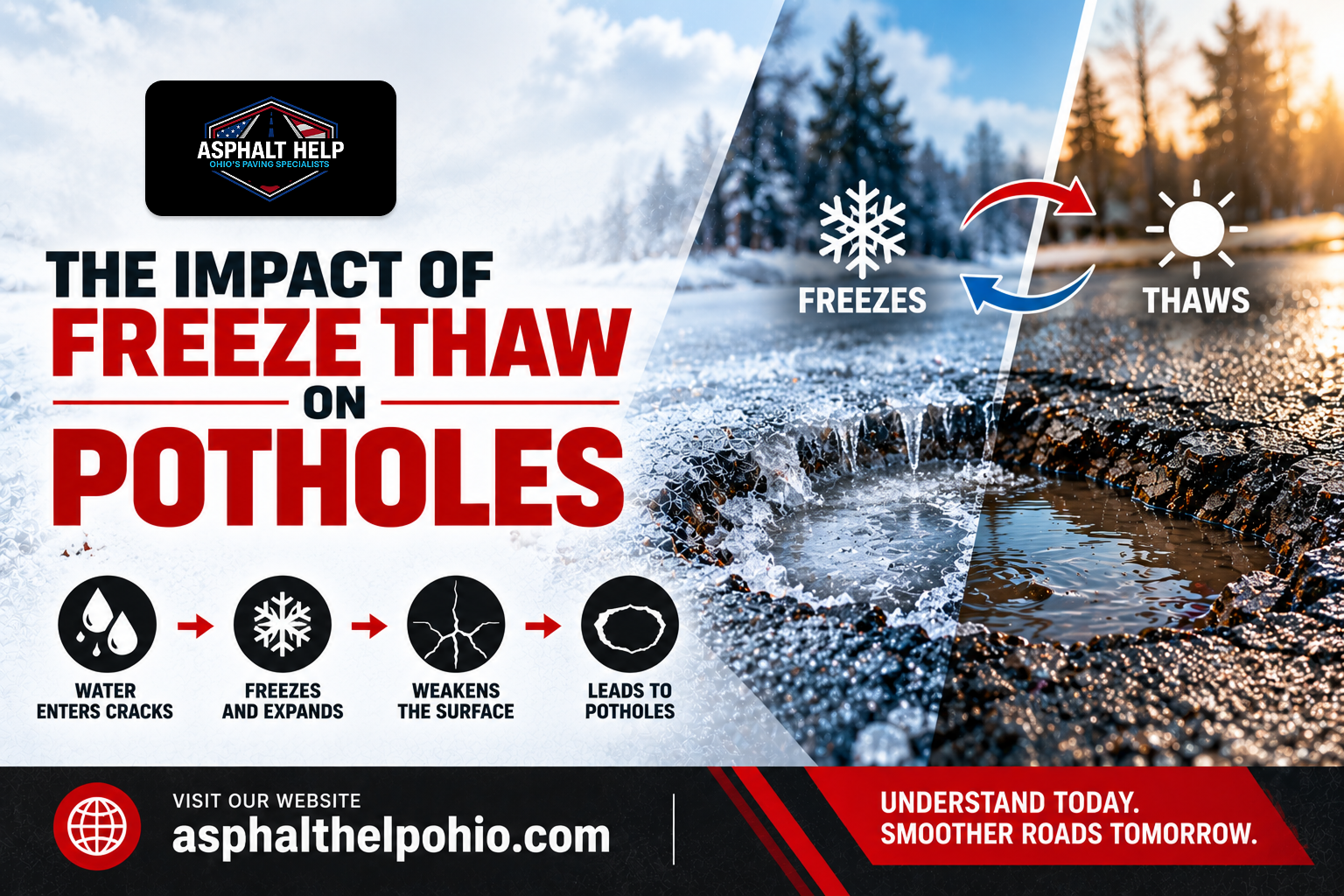
- Freeze-thaw cycles
- Minor cracking
- Surface wear
Over time, these conditions gradually wear down the upper asphalt layer while the foundation underneath may remain strong.
Rather than replacing the entire pavement, an overlay renews the driving surface and extends pavement life.
Signs an Asphalt Overlay May Be the Right Solution
Not every damaged pavement requires complete replacement.
Professional contractors often recommend overlays when they observe:
- Surface oxidation
- Minor to moderate cracking
- Weathered appearance
- Light rutting
- Rough driving surface
- Minor depressions
- Surface raveling
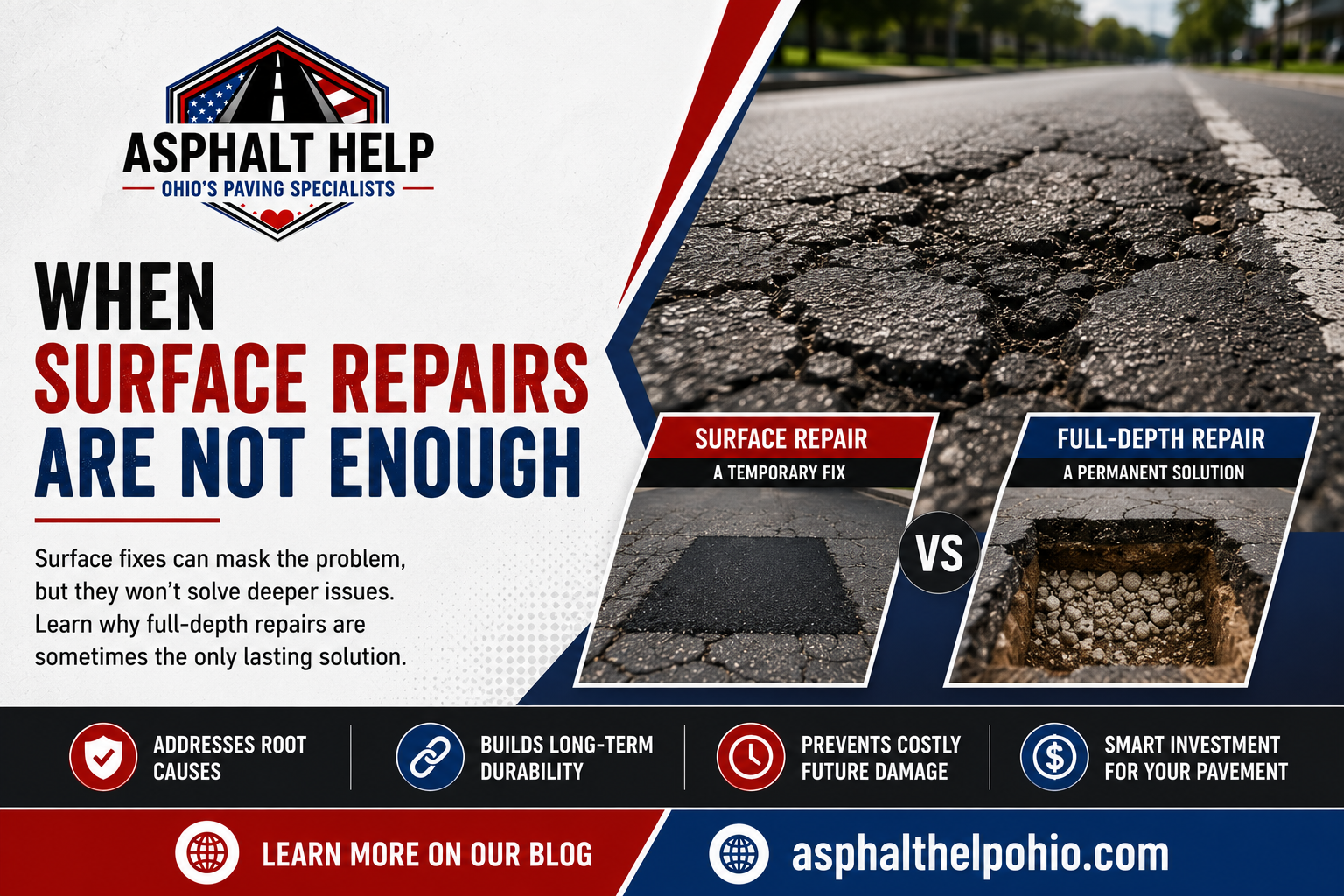
However, the underlying base must still be structurally stable before an overlay is installed. Asphalt Help Ohio notes that resurfacing is appropriate when pavement is structurally sound but showing surface wear.
When an Overlay Is Not the Best Option
An overlay cannot solve every pavement problem.
If contractors discover significant structural failures, other repair methods may be more appropriate.
Common conditions requiring more extensive repairs include:
- Severe alligator cracking
- Large areas of settlement
- Base failure
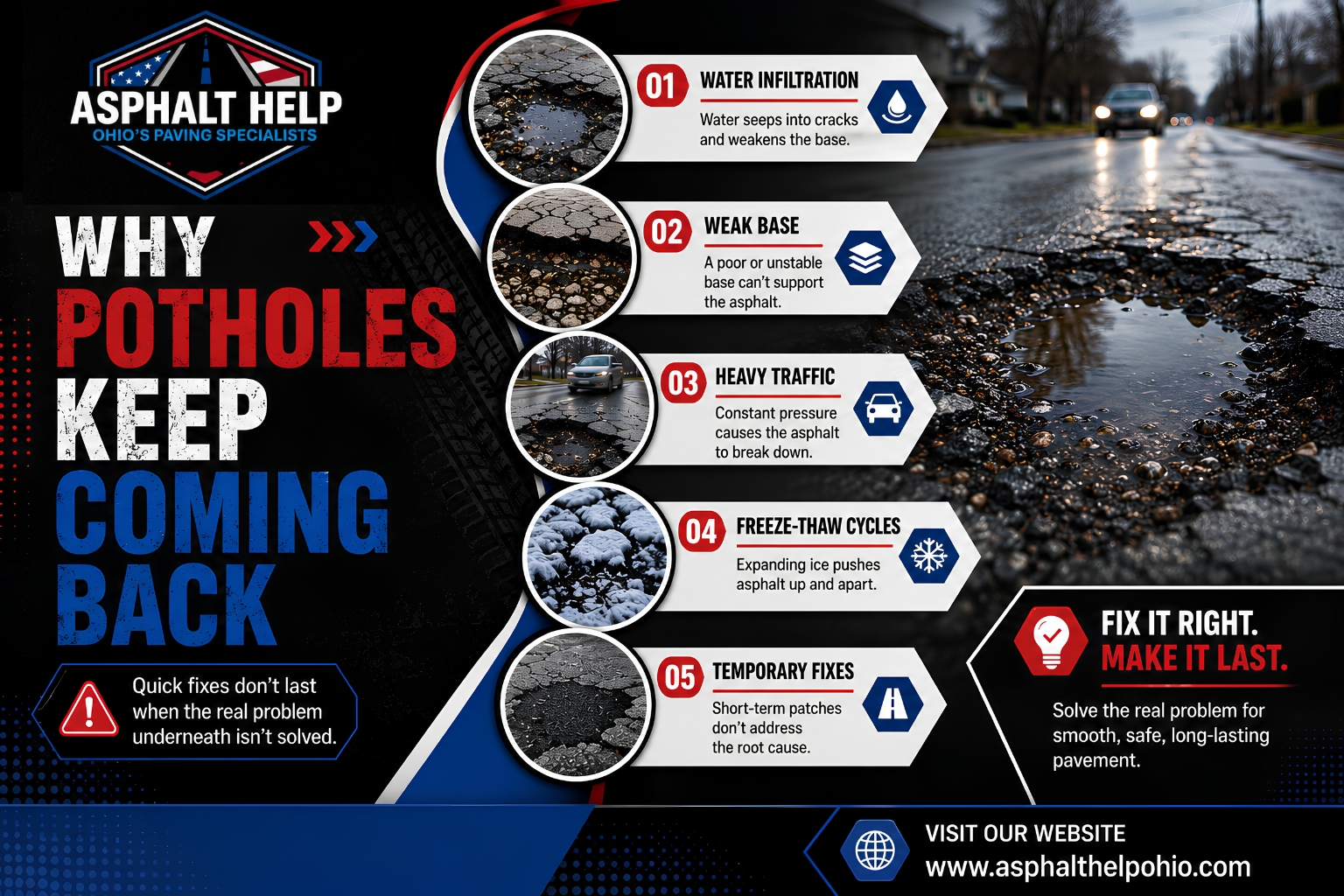
- Extensive potholes
- Poor drainage
- Widespread pavement instability
In these situations, Asphalt Help Ohio recommends removal and replacement so the underlying base can be repaired before new asphalt is installed.
Professional Asphalt Overlay Process
| Step | Purpose |
|---|---|
| Pavement Inspection | Evaluate structural condition |
| Surface Cleaning | Remove debris and contaminants |
| Localized Repairs | Repair weak pavement sections |
| Milling (when needed) | Create smooth transitions |
| Tack Coat Application | Bond old and new asphalt |
| Asphalt Overlay Installation | Restore pavement surface |
| Precision Compaction | Increase strength and durability |
| Final Inspection | Verify quality and drainage |
Every stage contributes to a durable, long-lasting overlay.
Step 1: Complete Pavement Evaluation
Every successful overlay begins with a detailed inspection.
Contractors evaluate:
- Pavement thickness
- Crack patterns
- Drainage
- Surface condition
- Existing repairs
- Base stability
- Traffic demands
Asphalt Help Ohio performs site evaluations before every resurfacing project to confirm grading, drainage, and structural suitability for an overlay.
Step 2: Repairing Existing Damage
Before installing new asphalt, contractors repair localized pavement problems.
This may include:
- Crack repair
- Asphalt patching
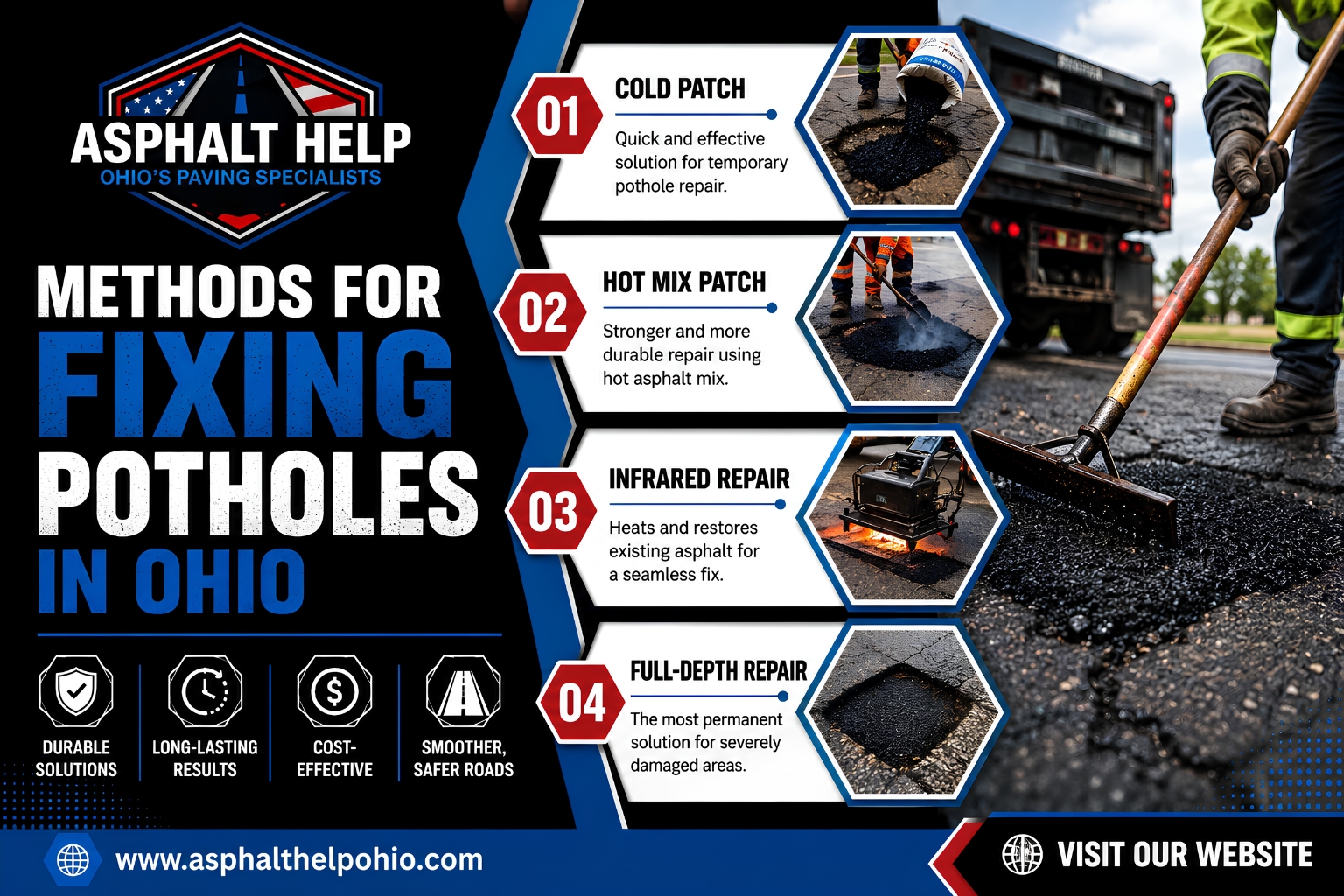
- Pothole repair
- Edge stabilization
- Surface leveling
Repairing damaged areas first creates a stronger foundation for the new overlay.
Step 3: Milling and Surface Preparation
Some overlay projects require milling before new asphalt is placed.
Milling removes portions of the old surface to:
- Improve smoothness
- Match surrounding elevations
- Create proper drainage
- Eliminate uneven transitions
- Prepare a stable bonding surface
Industry professionals frequently recommend milling when necessary to improve transitions and help the new overlay perform more effectively.
Step 4: Applying the Tack Coat
A tack coat is applied before the new asphalt layer.
This bonding material helps:
- Secure the overlay
- Prevent layer separation
- Improve structural performance
- Create long-term adhesion
Without proper bonding, the new asphalt may not perform as intended.
Step 5: Installing the Asphalt Overlay
Once preparation is complete, contractors install fresh hot-mix asphalt across the pavement.
Professional crews focus on:
- Uniform thickness
- Smooth placement
- Proper grading
- Consistent coverage
- Correct elevation
High-quality materials combined with experienced installation produce a pavement surface designed for years of reliable service. Asphalt Help Ohio installs overlays using high-performance asphalt mixes with precision grading and compaction for long-term durability.
Step 6: Precision Compaction
Compaction is one of the most important parts of every overlay project.
Professional rollers achieve proper pavement density by:
- Removing air voids
- Increasing structural strength
- Improving moisture resistance
- Creating smooth finishes
- Extending pavement lifespan
Proper compaction helps the new overlay withstand Ohio’s demanding weather and traffic conditions.
Benefits of Asphalt Overlays
Professional overlays provide numerous long-term advantages.
| Benefit | Long-Term Result |
|---|---|
| Smooth new surface | Better driving experience |
| Improved appearance | Increased curb appeal |
| Added pavement thickness | Greater durability |
| Better skid resistance | Improved safety |
| Extended pavement life | Delayed reconstruction |
| Restored drainage | Reduced water damage |
These improvements help property owners maximize the value of existing pavement.
Why Drainage Still Matters
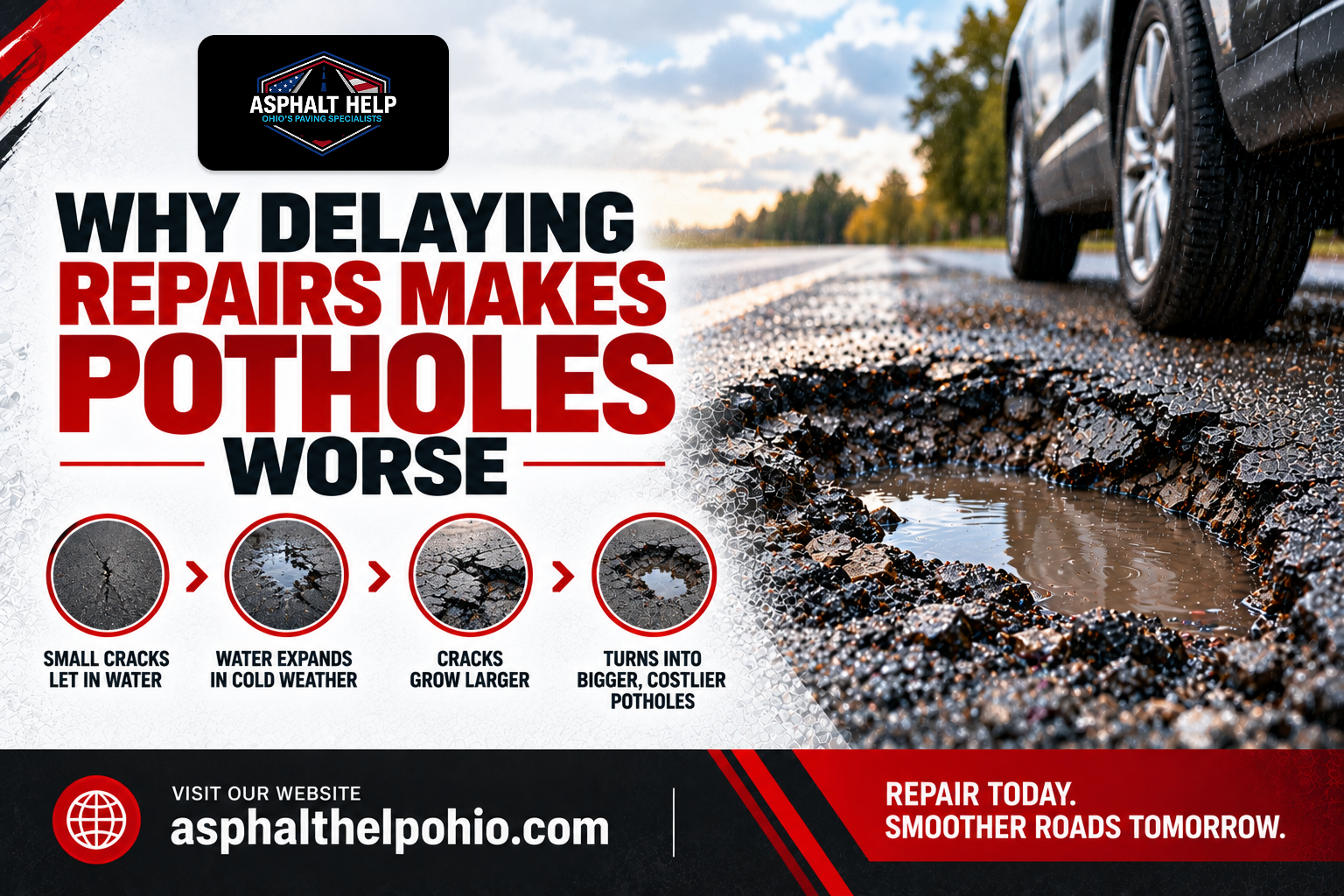
Even the best overlay can fail if drainage problems are ignored.
Professional contractors evaluate:
- Surface slope
- Water runoff
- Low areas
- Drainage flow
- Edge conditions
Correcting drainage issues before resurfacing helps protect the new asphalt from premature deterioration. Asphalt Help Ohio emphasizes grading and drainage corrections before paving because standing water accelerates cracking and weakens the pavement base.
Why Professional Installation Makes a Difference
An asphalt overlay is much more than adding another layer of asphalt.
Experienced contractors understand how to:
- Evaluate pavement condition
- Determine structural suitability
- Repair localized damage
- Prepare the existing surface
- Install proper overlay thickness
- Achieve high-density compaction
Experienced paving professionals also note that overlays perform best on structurally sound pavement and that underlying failures can eventually reflect through the new surface if not corrected beforehand.
Why Choose Asphalt Help Ohio?
At Asphalt Help Ohio, we provide professional asphalt overlay Ohio services for residential, commercial, and municipal properties throughout Central Ohio.
Our paving solutions include:
- Asphalt overlays
- Asphalt resurfacing
- Driveway resurfacing
- Parking lot resurfacing
- Asphalt patching
- Structural repairs
- Full-depth replacement
- Base stabilization
- Precision grading
- High-density compaction
Every project begins with a detailed site evaluation to determine whether an overlay is the best long-term solution. Our experienced team carefully inspects pavement condition, drainage, grading, and structural stability before recommending resurfacing or replacement. Using premium asphalt materials, engineered preparation, and professional installation techniques, we restore worn pavement with durable overlays built to withstand Ohio’s freeze-thaw cycles, heavy traffic, and everyday wear.
Final Thoughts
An asphalt overlay Ohio is an excellent solution for pavement that has surface wear but still has a stable foundation. By repairing localized damage, preparing the existing pavement, applying a strong bonding layer, and installing a new asphalt surface, contractors can restore smoothness, improve durability, and significantly extend pavement life without full reconstruction.
If your driveway, parking lot, or roadway is beginning to show signs of age, Asphalt Help Ohio can evaluate its condition and determine whether an asphalt overlay is the right choice. Our experienced team provides professional resurfacing solutions that restore appearance, improve performance, and help protect your pavement investment for years to come.