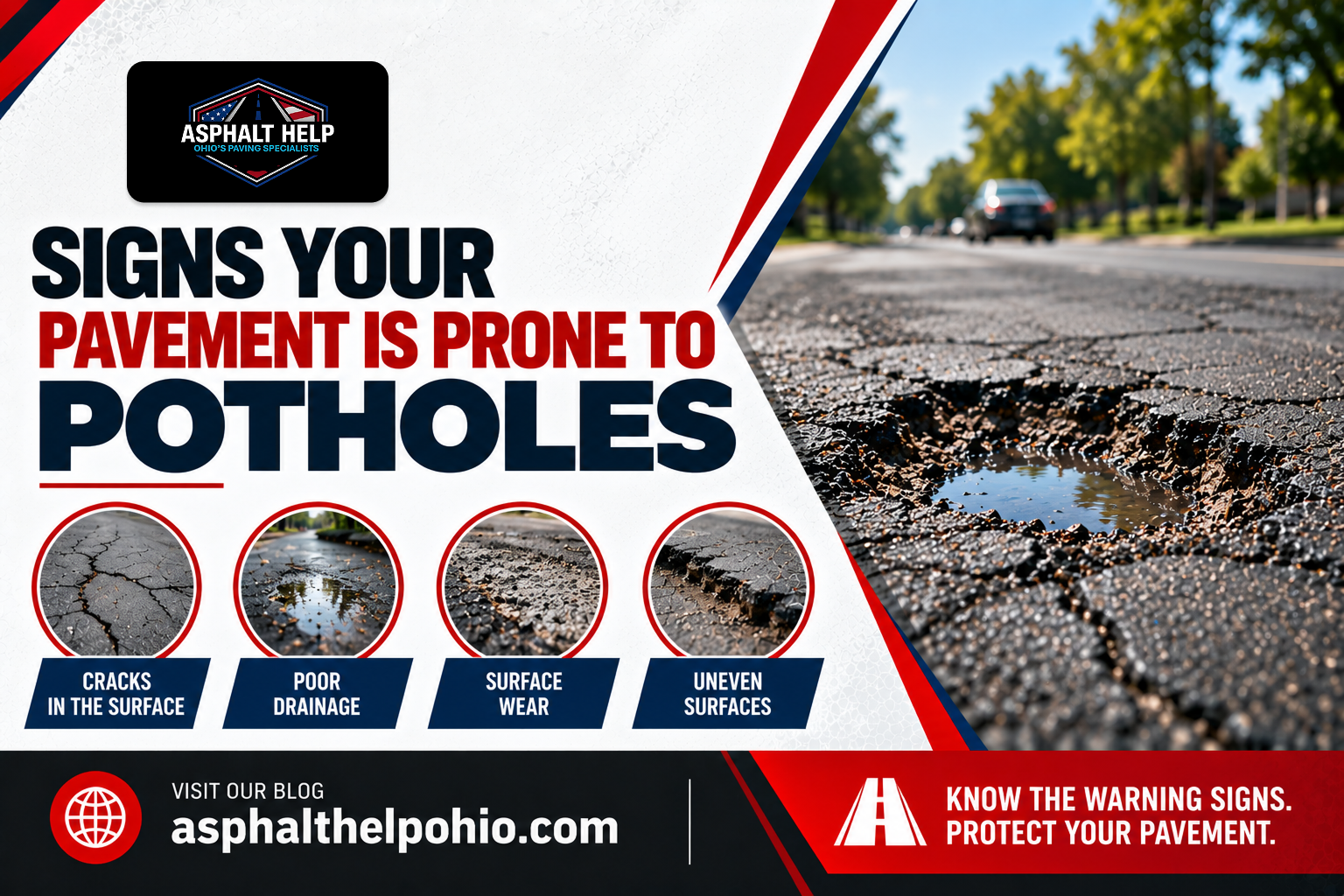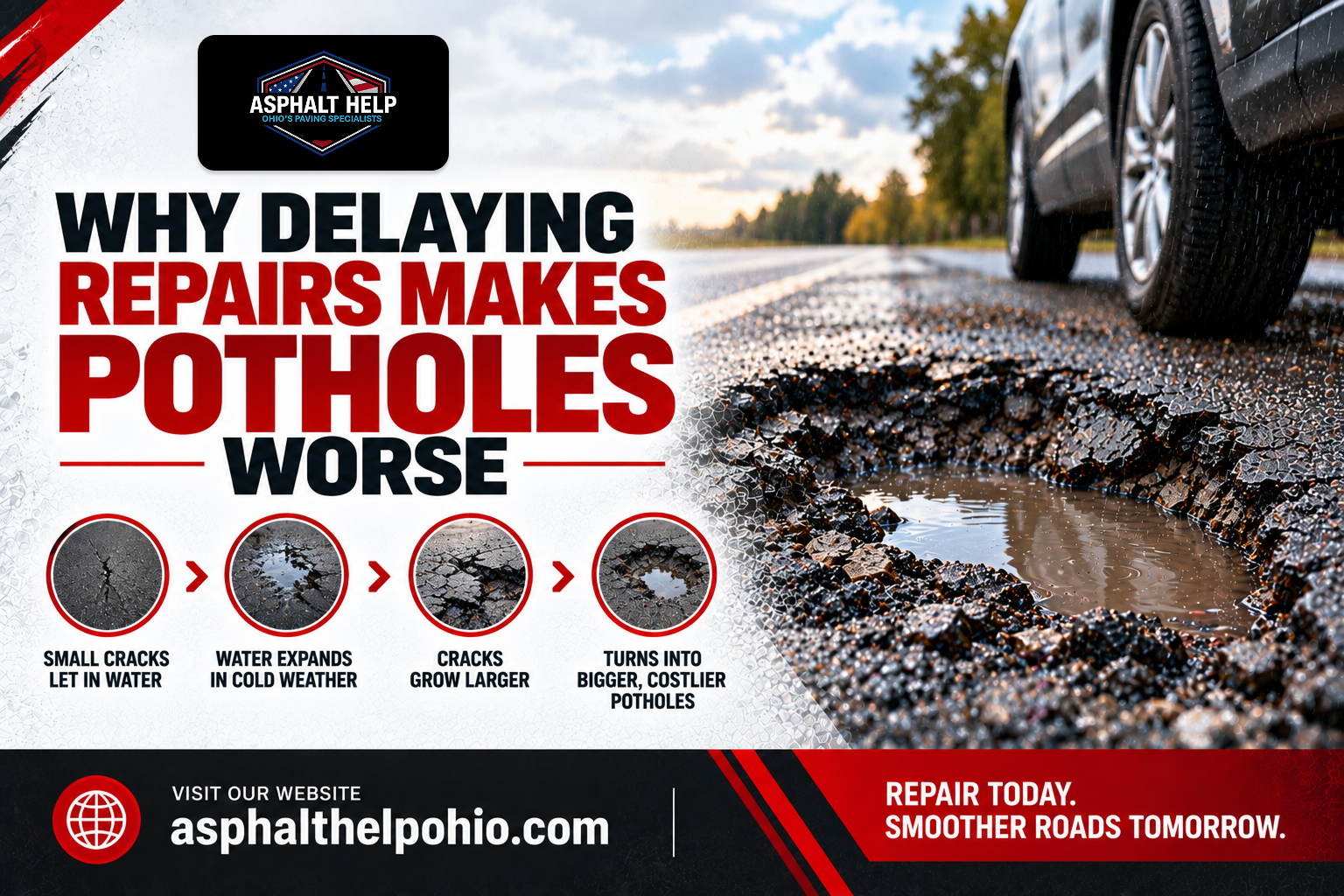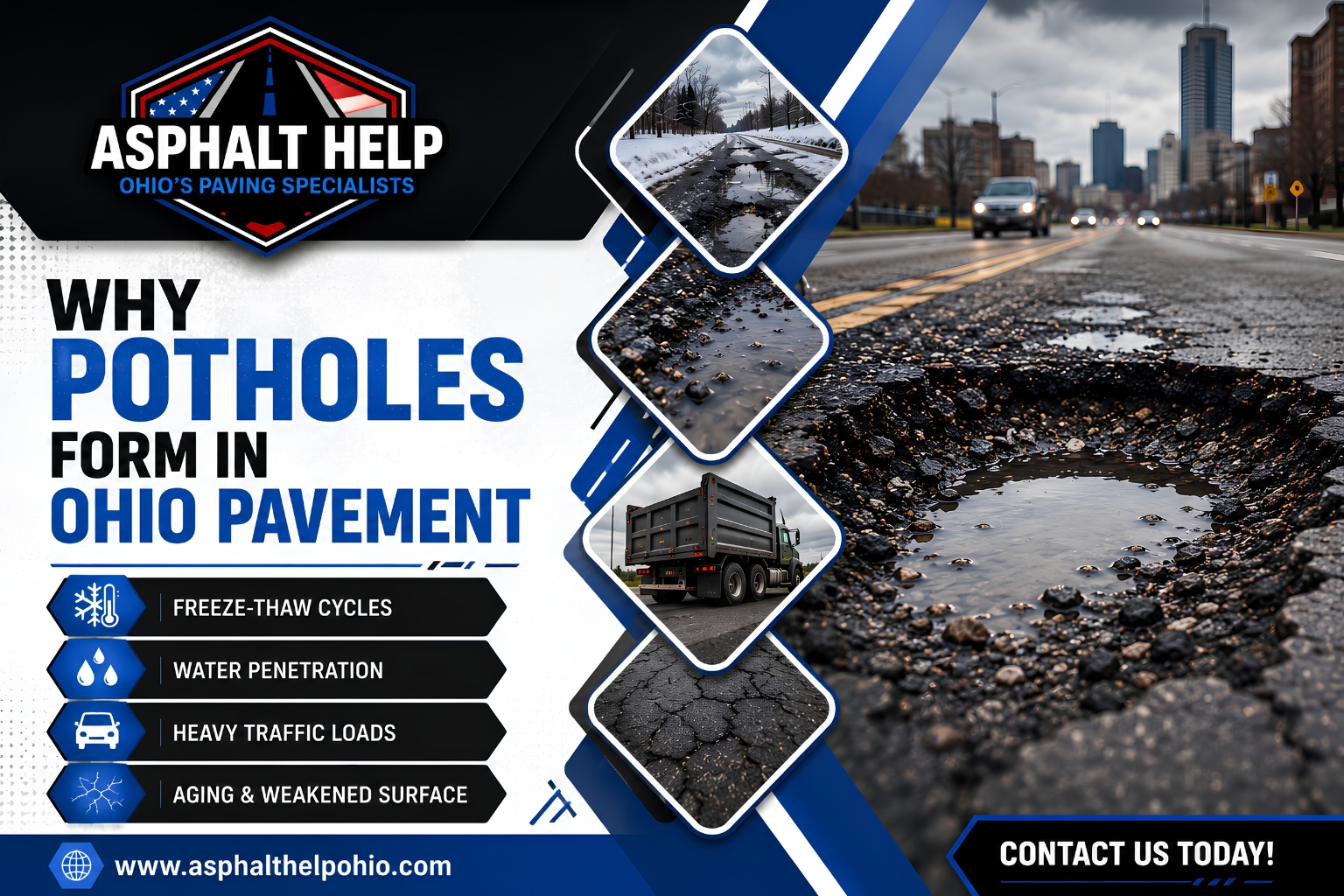




How Do Freeze-Thaw Cycles Cause Potholes in Ohio? Why do potholes often become more noticeable after winter? One major reason is the repeated freeze-thaw cycle. Water can enter cracks and other openings in pavement. When temperatures fall, that moisture freezes; when temperatures rise, it thaws. Repeated changes can weaken pavement and its supporting layers, especially where drainage or existing pavement defects are present. Ohio Department of Transportation guidance identifies repeated freeze-thaw cycles and poor drainage as contributing factors in potholes associated with localized structural deficiencies.
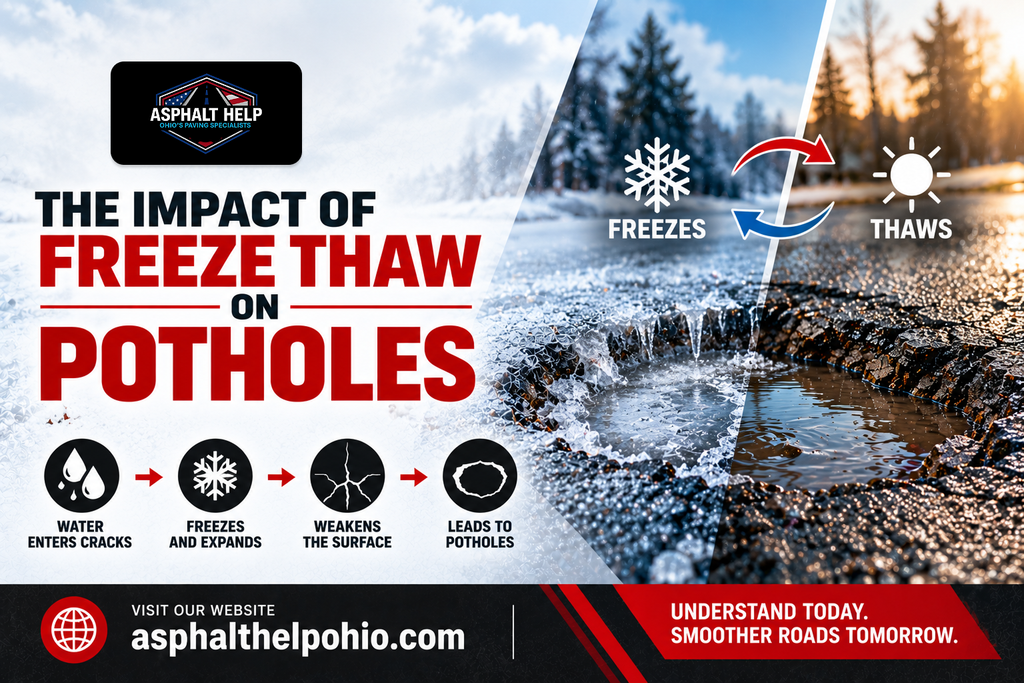
For Ohio property owners, understanding freeze thaw potholes Ohio conditions can make it easier to recognize why pavement that looked stable before winter may develop cracks, depressions, and potholes afterward.
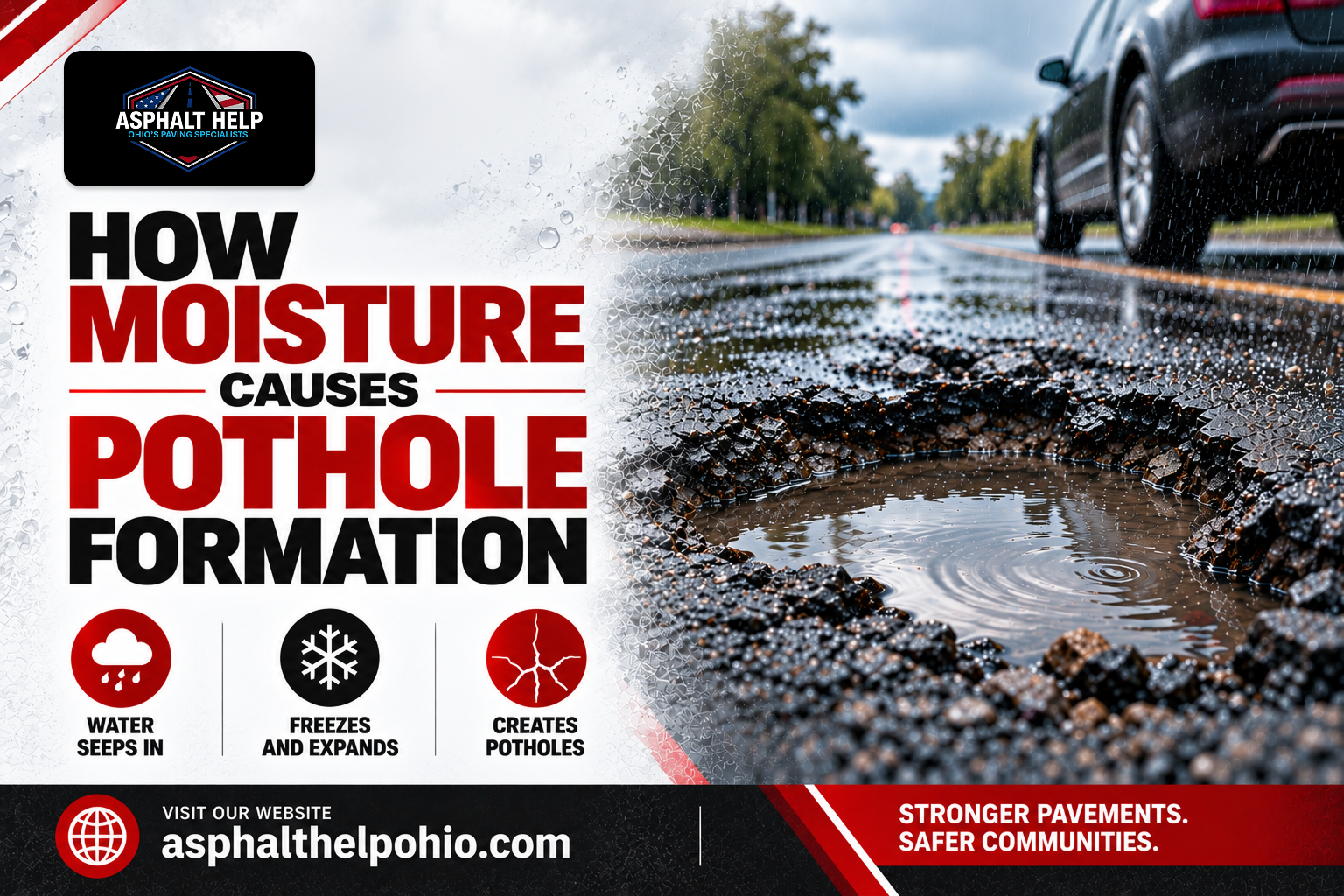
1. Water Is the Starting Point
Freeze-thaw damage generally requires moisture.
Rain, snowmelt, and groundwater can enter existing cracks, joints, pores, or other openings in pavement. Once water reaches vulnerable pavement layers, seasonal temperature changes can create additional stresses.
ODOT identifies poor drainage and freeze-thaw cycles among the contributing factors for localized pothole failures.
This is why keeping water away from and out of pavement is an important part of asphalt maintenance.
2. Freezing Water Creates Additional Stress
When temperatures drop below freezing, water within pavement-related voids can freeze and expand.
The expansion can place pressure on surrounding materials. If the pavement is already weakened, repeated freezing can contribute to cracking and deterioration.
Ohio pavement research has documented seasonal freeze-thaw conditions, including multiple shallow-to-medium freeze-thaw cycles at monitored Ohio sites.
The important point is that damage usually develops through repeated cycles rather than from a single freezing event.
3. Thawing Can Leave Pavement Vulnerable
The process doesn’t stop when temperatures rise.
As frozen moisture thaws, water can remain within or around the pavement structure. During spring conditions, weakened or saturated supporting materials may provide less resistance to traffic loads.
FHWA research explains that spring thaw can create conditions in which water reduces the strength of pavement-supporting materials.
This helps explain why potholes can become visible during late winter and spring even though the initial pavement damage may have developed earlier.
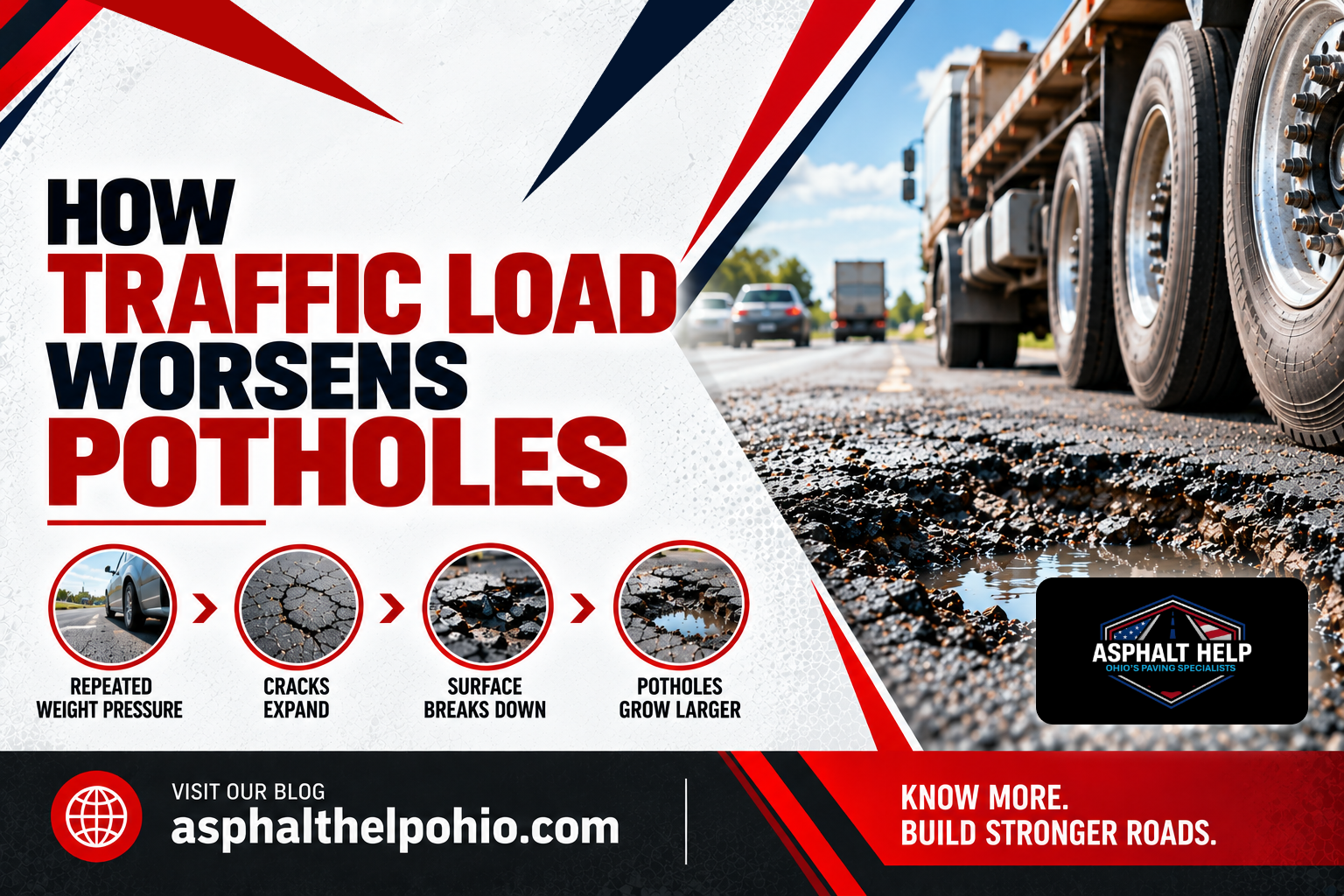
4. Traffic Accelerates the Damage
Freeze-thaw cycles can weaken pavement, but vehicle traffic also plays an important role.
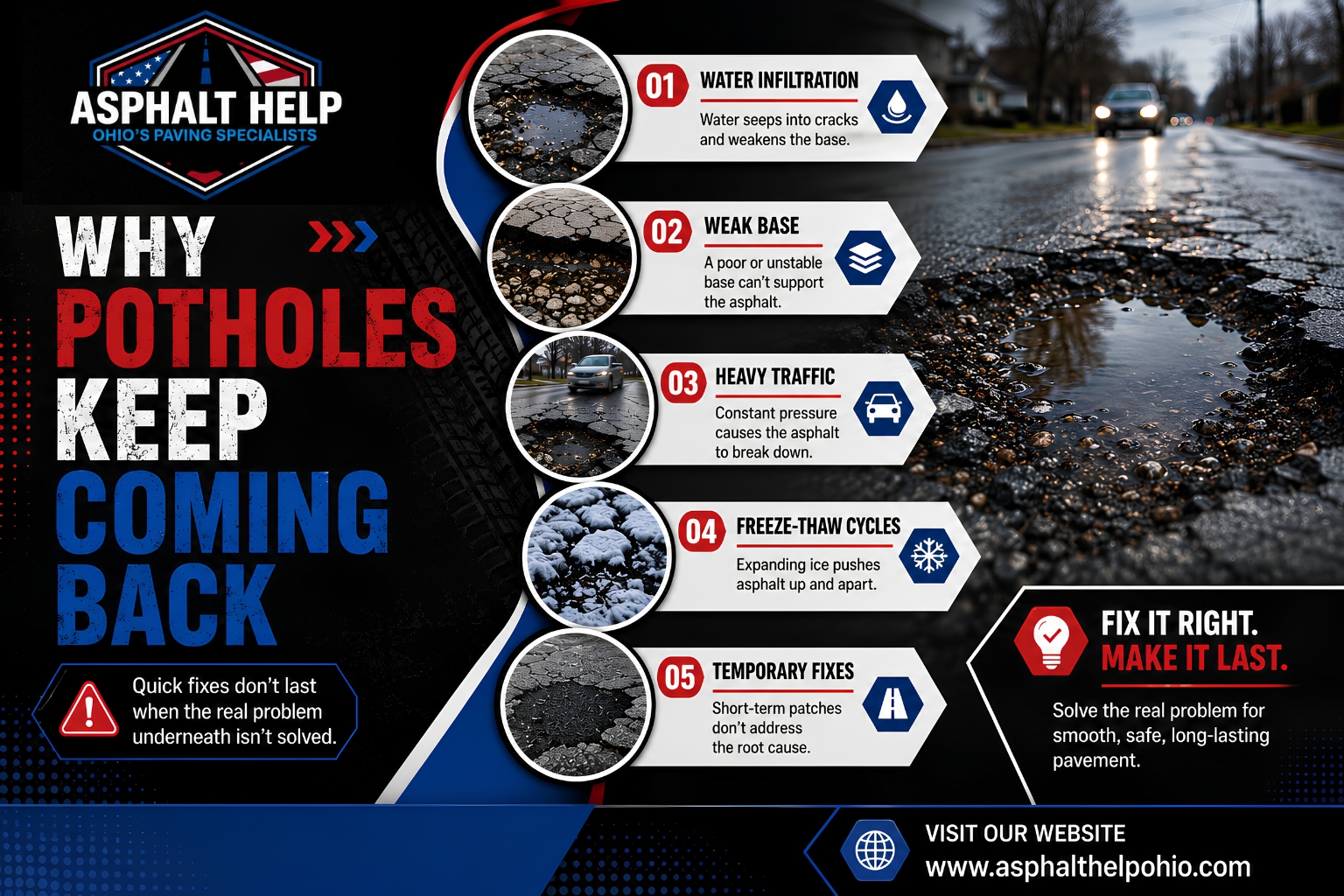
Cars, trucks, and other vehicles repeatedly place loads on the pavement. When asphalt or its supporting layers have already been weakened by moisture and seasonal conditions, traffic can accelerate cracking and material loss.
ODOT identifies repeated freeze-thaw cycles alongside weak asphalt, base, or subgrade layers and poor drainage as contributors to localized structural potholes.
5. Poor Drainage Makes Freeze-Thaw Problems Worse
Drainage is closely connected to freeze-thaw performance.
If water drains away efficiently, there is less opportunity for moisture to remain within vulnerable pavement areas. If drainage is poor, water can collect around the pavement and supporting layers.
ODOT recommends examining drainage conditions when investigating pavement problems, including pooling, inadequate drainage, and subsurface water infiltration.
Look for:
- Standing water
- Repeated puddles
- Low pavement areas
- Blocked drainage paths
- Erosion near pavement edges
- Potholes that repeatedly appear in the same location
6. Existing Cracks Give Water an Entry Point
Freeze-thaw deterioration can be especially problematic when asphalt already contains cracks.
A small crack may allow moisture to enter the pavement. Repeated freezing and thawing can then contribute to additional deterioration around the damaged area.
This is why addressing appropriate cracks before winter is an important part of preventative pavement maintenance.
7. Weak Base Layers Increase the Risk
The asphalt surface depends on the layers underneath it for support.
ODOT identifies weak asphalt, base, or subgrade layers as potential causes of localized structural deficiencies that can develop into potholes. Poor drainage and repeated freeze-thaw cycles can further contribute to the problem.
If the base is already weak, seasonal moisture and temperature changes can make the pavement more vulnerable to traffic.
8. Ohio’s Winter Conditions Create Repeated Cycles
Freeze-thaw conditions are not unusual in Ohio.
FHWA’s long-term pavement-performance data identifies monitored Ohio locations experiencing medium and multiple shallow-to-medium freeze-thaw cycles during winter.
Because temperatures can move above and below freezing, pavement may experience repeated freezing and thawing rather than remaining continuously frozen throughout winter.
How Freeze-Thaw Potholes Develop
| Stage | What Happens |
|---|---|
| 1. Existing crack or opening | Provides a pathway for moisture |
| 2. Water enters | Moisture reaches vulnerable pavement areas |
| 3. Temperature drops | Water freezes |
| 4. Expansion occurs | Additional stress develops |
| 5. Temperature rises | Water thaws |
| 6. Pavement remains vulnerable | Supporting materials may have reduced strength |
| 7. Traffic continues | Vehicle loads act on weakened pavement |
| 8. Damage progresses | Cracks, depressions, and potholes can develop |
This progression can vary depending on pavement structure, drainage, moisture conditions, traffic, and the severity of existing damage.
Why Potholes Become Visible After Winter
A pothole that appears in spring may have been developing for months.
The initial weakness may have existed before winter. Moisture then enters the pavement, freezing and thawing repeatedly adds stress, and traffic acts on the weakened area.
ODOT’s pavement repair guidance notes that potholes caused by localized structural deficiencies can be associated with poor drainage and repeated freeze-thaw cycles.
This is why a spring pavement inspection can be useful for identifying winter-related damage.
Can Freeze-Thaw Damage Be Prevented?
It isn’t possible to eliminate Ohio’s freeze-thaw cycles, but property owners can address conditions that make pavement more vulnerable.
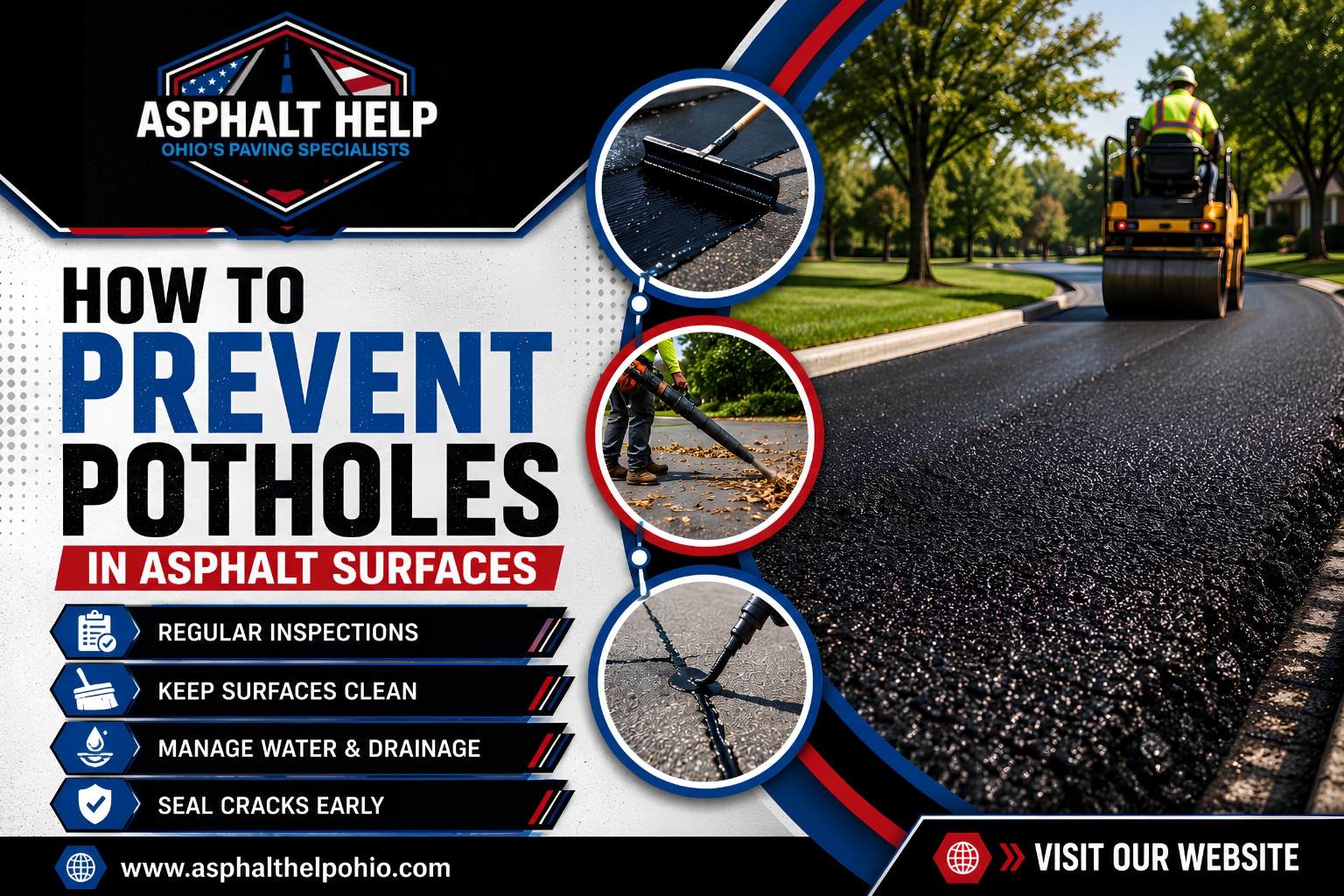
Useful maintenance practices include:
- Inspecting pavement before and after winter
- Addressing suitable cracks promptly
- Maintaining drainage
- Correcting persistent water-collection areas
- Repairing potholes before they expand
- Monitoring pavement edges
- Evaluating recurring pavement failures
The goal is to limit moisture exposure and address weaknesses before repeated seasonal cycles cause more extensive deterioration.
When Does a Pothole Need More Than Patching?
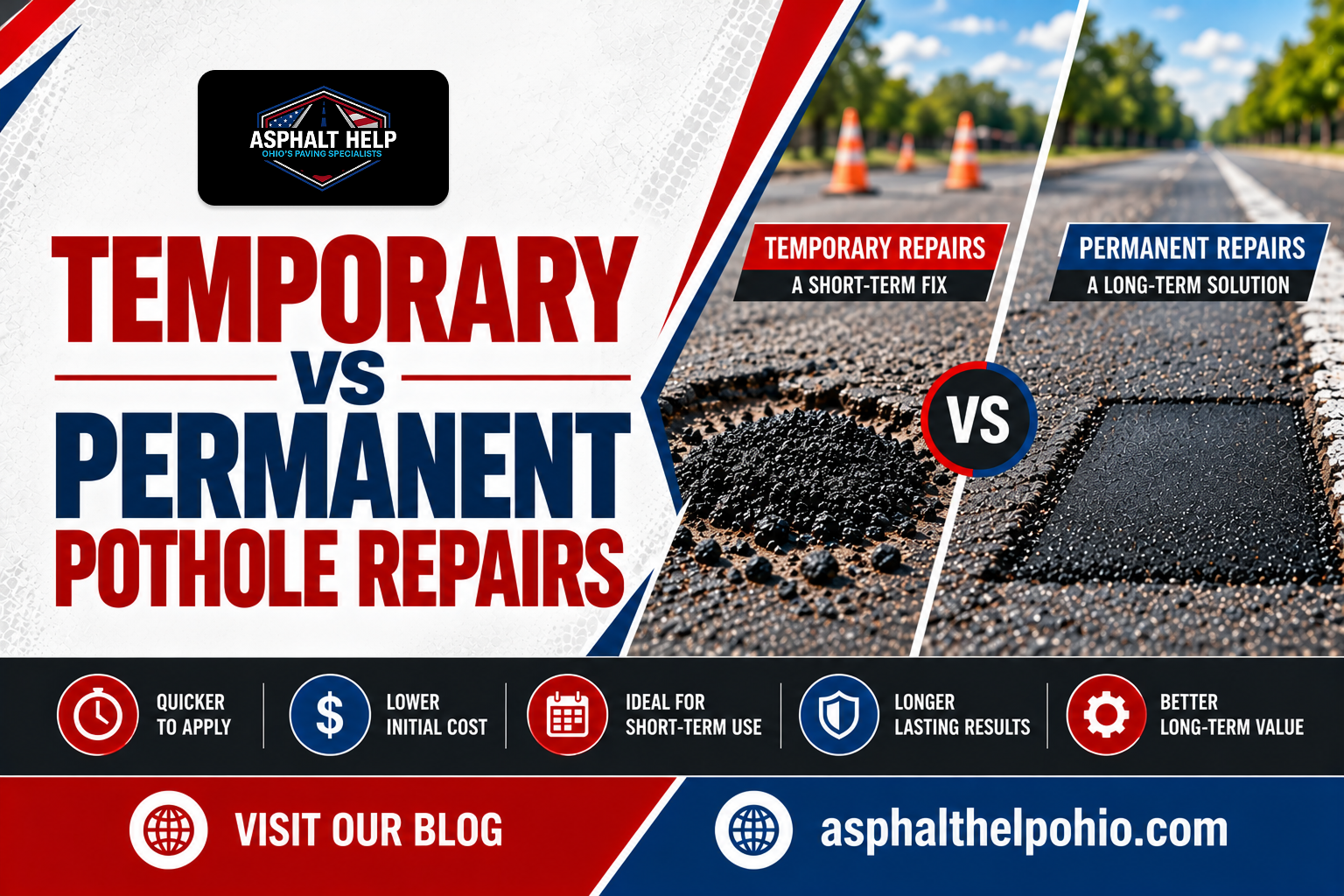
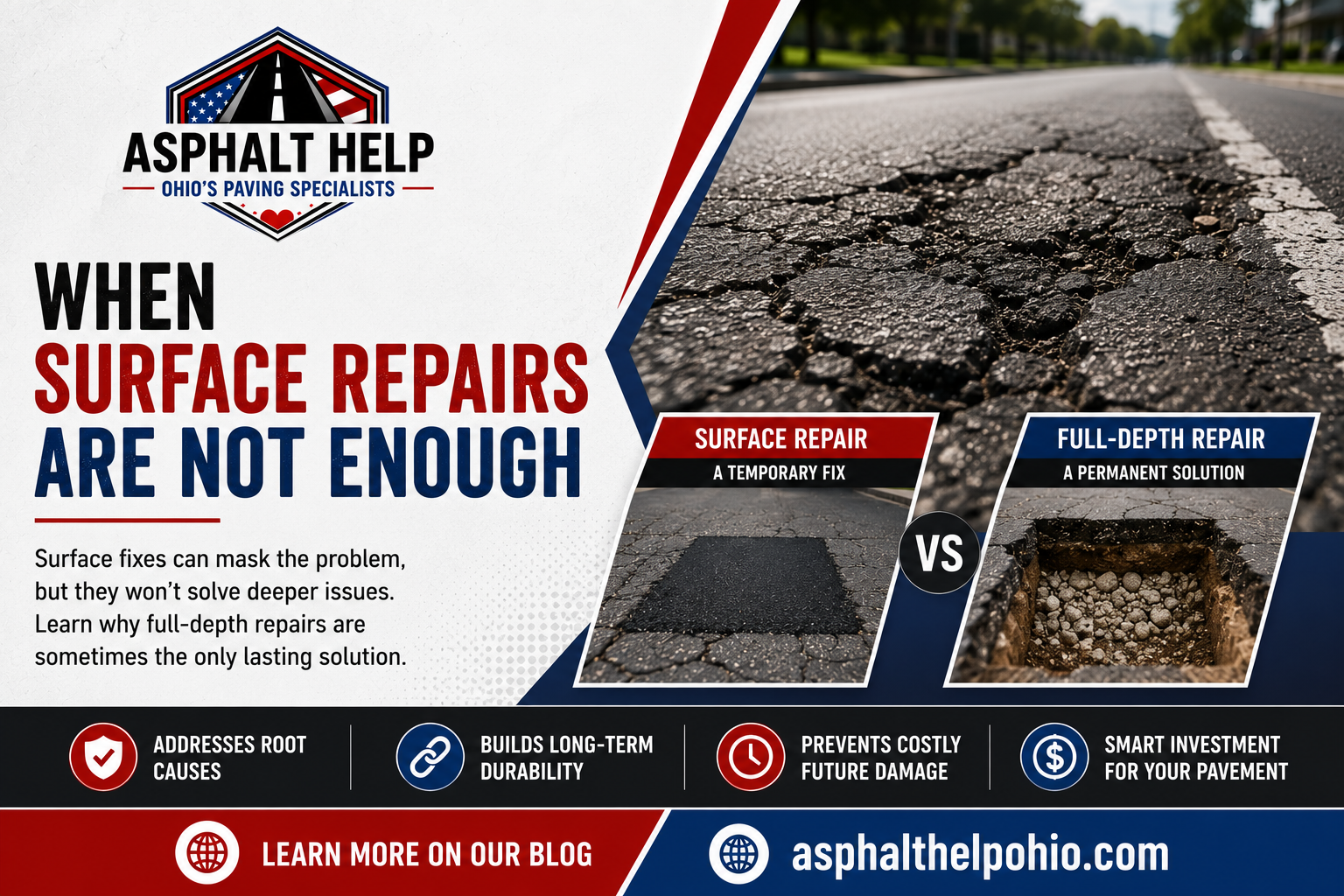
A localized pothole in otherwise stable pavement may be suitable for patching. However, repeated potholes, extensive cracking, pavement settlement, or evidence of base failure can indicate a deeper structural issue.
ODOT distinguishes localized potholes from more extensive conditions and identifies repair approaches based on the severity and cause of the pavement failure.
If the same location repeatedly fails, investigating drainage and underlying pavement conditions may be more useful than repeatedly treating only the visible surface.
How Asphalt Help Ohio Can Help
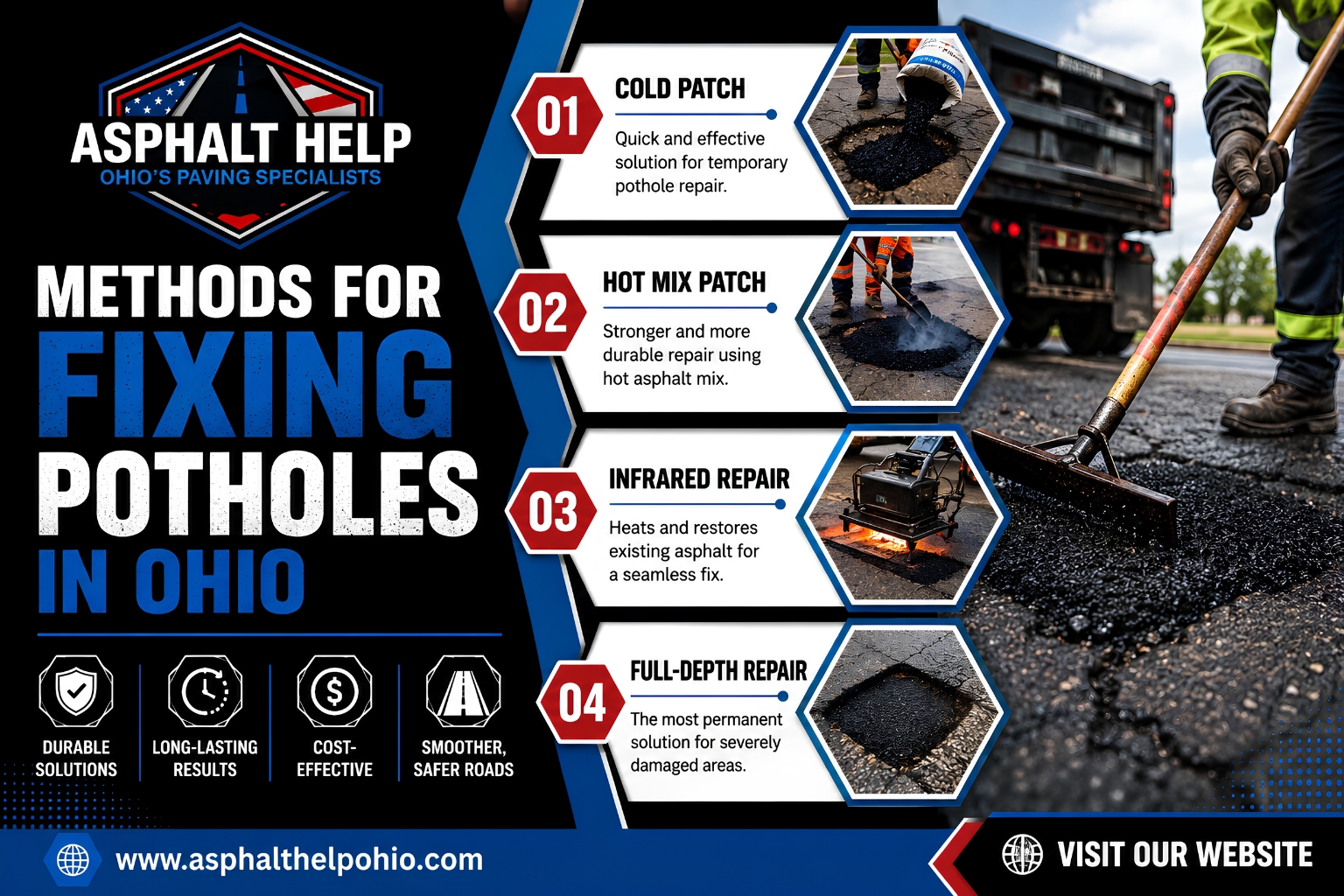
For property owners dealing with winter-related pavement damage, Asphalt Help Ohio can evaluate the condition of the damaged area and determine what type of repair may be appropriate.
Depending on pavement conditions, solutions can range from localized pothole repairs to more extensive asphalt work. The important consideration is identifying whether the problem is limited to the surface or involves the supporting pavement structure.
Final Thoughts
The relationship between freeze thaw potholes Ohio pavement experiences is closely connected to moisture. Water enters cracks and vulnerable pavement areas, freezing and thawing can create additional stresses, and traffic can accelerate deterioration once the pavement has been weakened. ODOT specifically identifies repeated freeze-thaw cycles and poor drainage as contributing factors in localized structural potholes.
Ohio’s seasonal conditions make preventative pavement care especially important. Regular inspections, proper drainage, timely crack maintenance, and prompt pothole repairs can help address vulnerabilities before they become more extensive.
When potholes repeatedly return after winter, the problem may involve more than surface damage. Evaluating the drainage, base, subgrade, and surrounding pavement can help determine whether localized repair is appropriate or whether a deeper pavement solution is needed.