


What Is the Difference Between Temporary and Permanent Pothole Repairs? Not every pothole requires the same repair method. The right pothole repair methods Ohio property owners need depend on the severity of the damage, weather conditions, traffic loads, pavement structure, and whether the underlying base has been affected.
Asphalt Help Ohio explains that effective pothole repair starts with inspecting the damaged area, identifying the underlying cause, removing weakened asphalt, addressing base issues when necessary, applying suitable patching material, and compacting the repair.
For some situations, a temporary repair can stabilize a pothole quickly. For longer-term performance, however, a permanent repair may require more extensive preparation and higher-quality asphalt materials.
Temporary Pothole Repairs
Temporary repairs are generally intended to stabilize damaged pavement when conditions do not allow for a more permanent solution immediately.
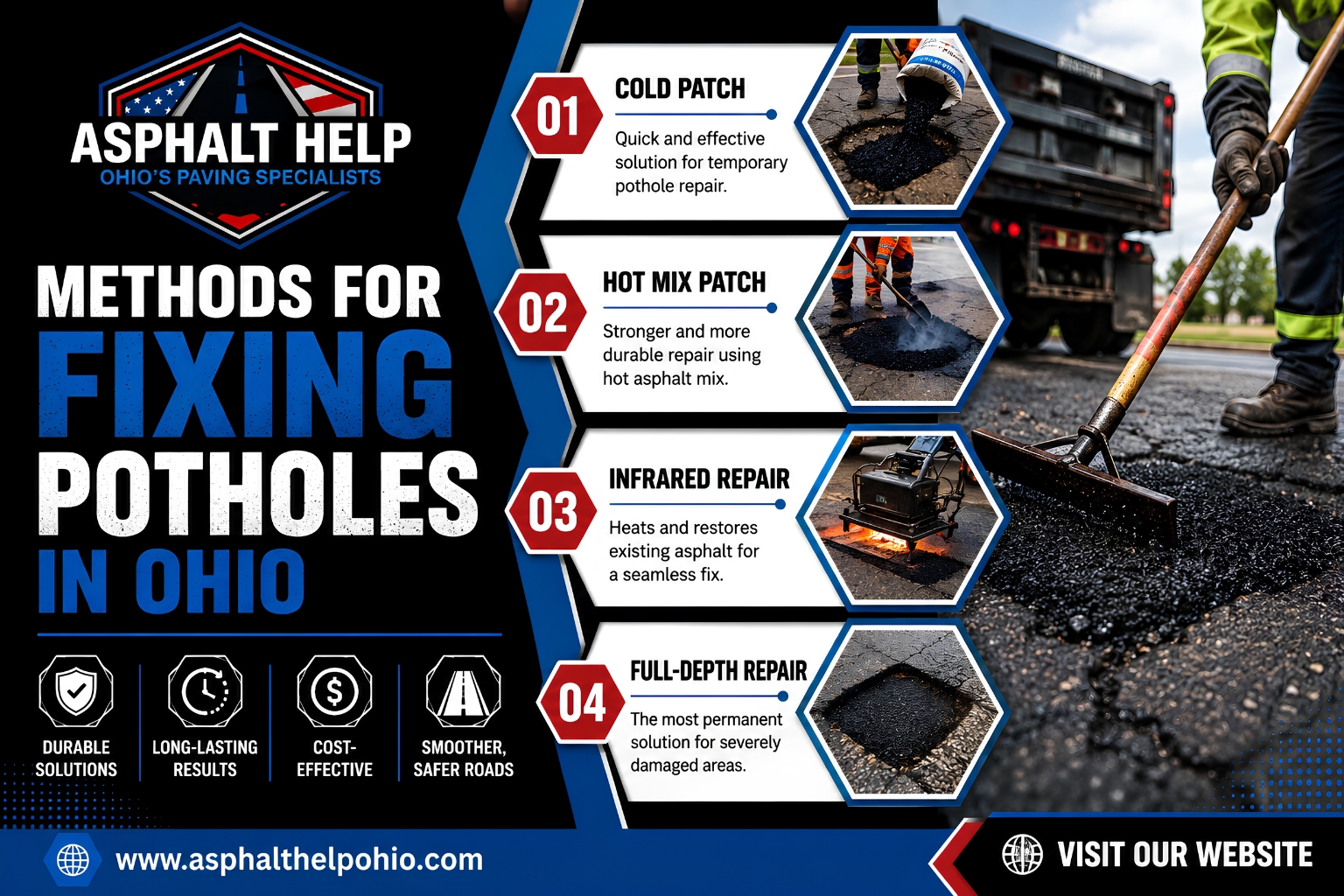
Cold Patch Repair
Cold patching is one of the faster ways to address an urgent pothole, particularly during colder weather.
Asphalt Help Ohio describes cold patch repair as a fast solution for urgent pothole problems, especially during colder months. It can stabilize the damaged area and reduce further deterioration until a permanent repair can be scheduled.
Cold patching can be useful when:
- Temperatures make other repair work impractical
- A pothole needs immediate attention
- Temporary stabilization is needed
- The property needs to remain accessible
However, a temporary repair should not automatically be considered equivalent to a permanent pavement restoration.
Permanent Pothole Repairs
Permanent repairs generally involve more preparation and are designed to restore the damaged pavement for longer-term service.
Hot-Mix Asphalt Patching
Hot-mix asphalt patching is a common permanent repair method for suitable potholes.
Asphalt Help Ohio describes hot-mix asphalt patching as a long-lasting repair option that involves removing weakened asphalt and installing durable new material.
A typical repair can involve:
- Inspecting the damaged area
- Removing loose or failed asphalt
- Preparing the repair area
- Addressing the base when necessary
- Installing asphalt
- Compacting the material
Proper preparation and compaction are important because simply placing new asphalt into a damaged area may not address underlying instability.
Full-Depth Patching
Some potholes extend deeper than the surface layer.
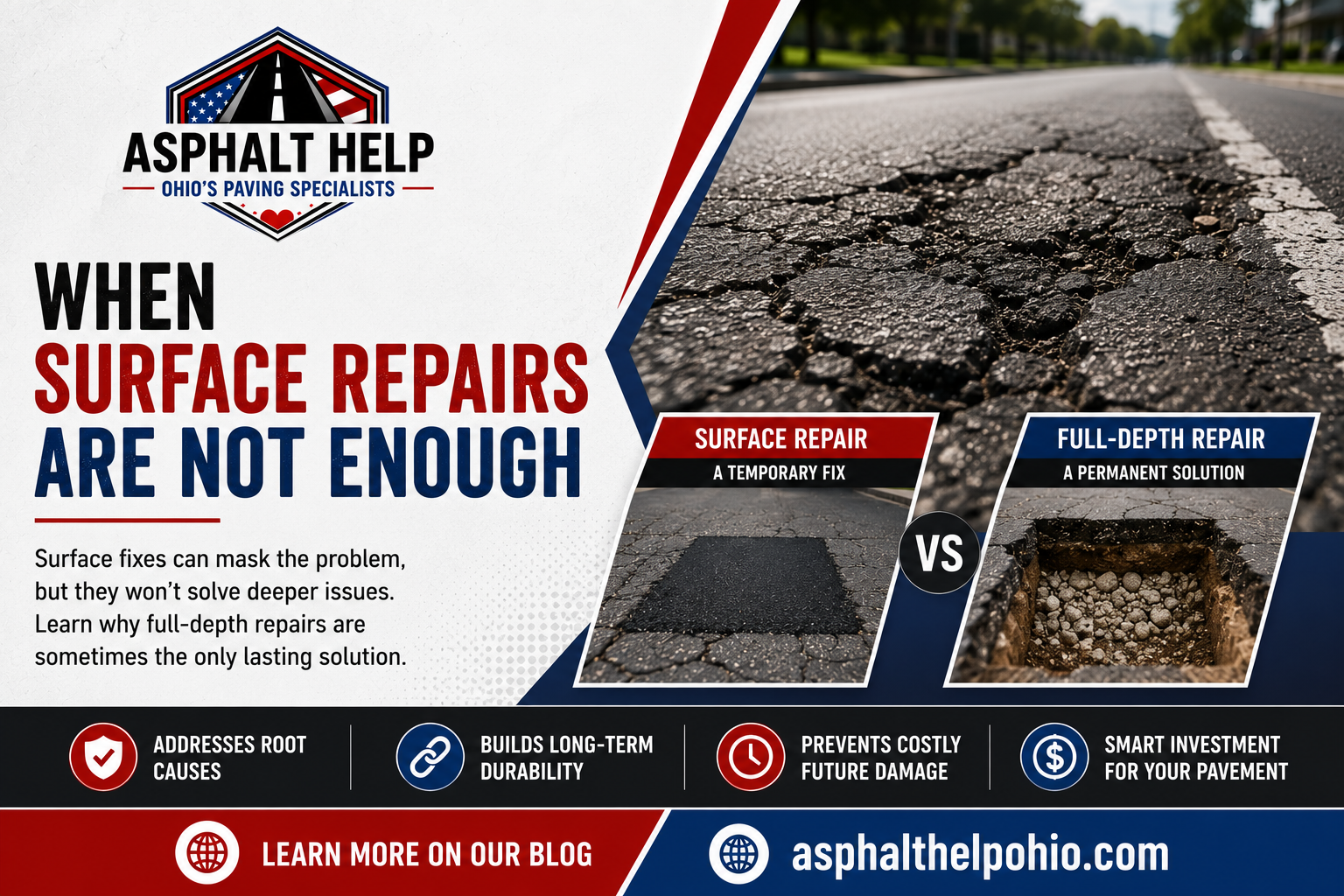
When the pavement structure beneath the pothole has been damaged, full-depth patching can remove the affected pavement and rebuild the area from the base upward.
Asphalt Help Ohio identifies full-depth patching as an option for severe pavement damage that extends beyond the surface.
This approach can be particularly relevant when:
- The same pothole repeatedly returns
- The pavement base is damaged
- Settlement is present
- Water has affected supporting layers
- Traffic loads have caused deeper deterioration
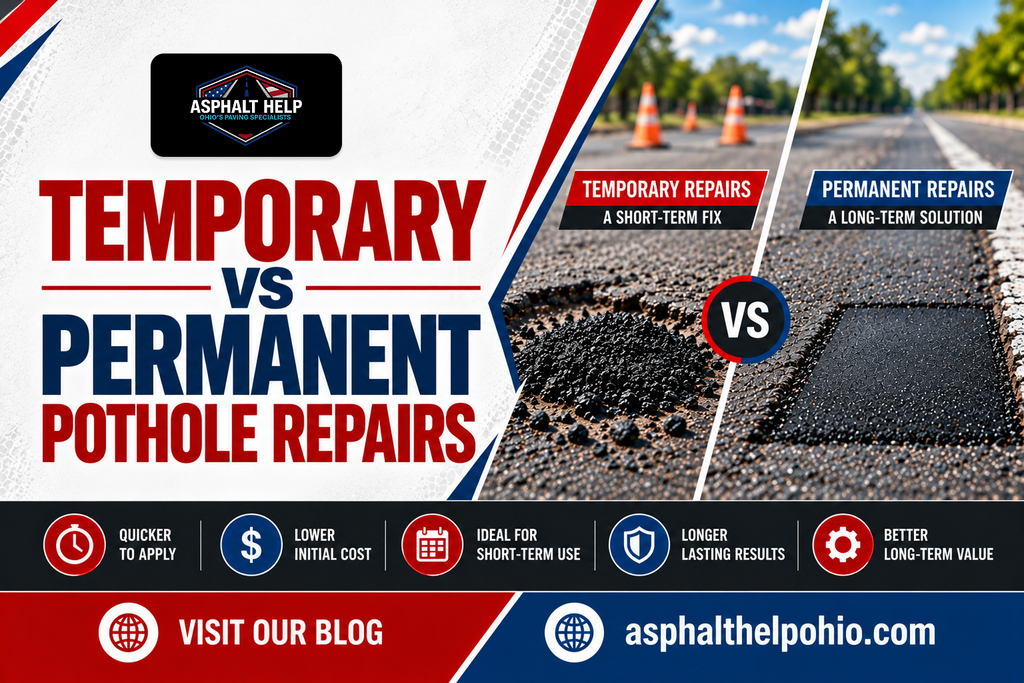
Temporary vs. Permanent Pothole Repair
| Factor | Temporary Repair | Permanent Repair |
|---|---|---|
| Primary purpose | Stabilize immediate damage | Restore pavement for longer-term use |
| Common method | Cold patch | Hot-mix or full-depth patching |
| Speed | Generally quick | Requires more preparation |
| Weather flexibility | Useful in colder conditions | Depends on suitable installation conditions |
| Surface preparation | Usually limited | More comprehensive |
| Base evaluation | May be limited | Considered when necessary |
| Expected durability | Shorter-term solution | Longer-term solution |
| Best suited for | Urgent or interim repairs | Planned pavement restoration |
The appropriate method depends on the actual pavement condition rather than simply the size of the visible pothole.
Why Temporary Repairs Still Have a Purpose
Temporary repairs should not necessarily be viewed as a poor solution. There are situations when immediate stabilization is important.
For example, a pothole that develops during unfavorable weather may need to be addressed before conditions are suitable for more extensive asphalt work.
A temporary repair can help stabilize the area while a permanent solution is scheduled.
The important distinction is understanding that temporary stabilization and permanent restoration serve different purposes.
Why Permanent Repairs Require More Preparation
A permanent pothole repair typically involves addressing more than the visible hole.
Asphalt Help Ohio’s repair process includes inspection, removal of damaged and loose asphalt, base preparation and stabilization when necessary, application of patching material, and compaction.
This preparation helps the new asphalt integrate with the existing pavement and provides appropriate support.
What Happens If the Base Is Damaged?
A pothole can sometimes indicate a problem below the asphalt surface.
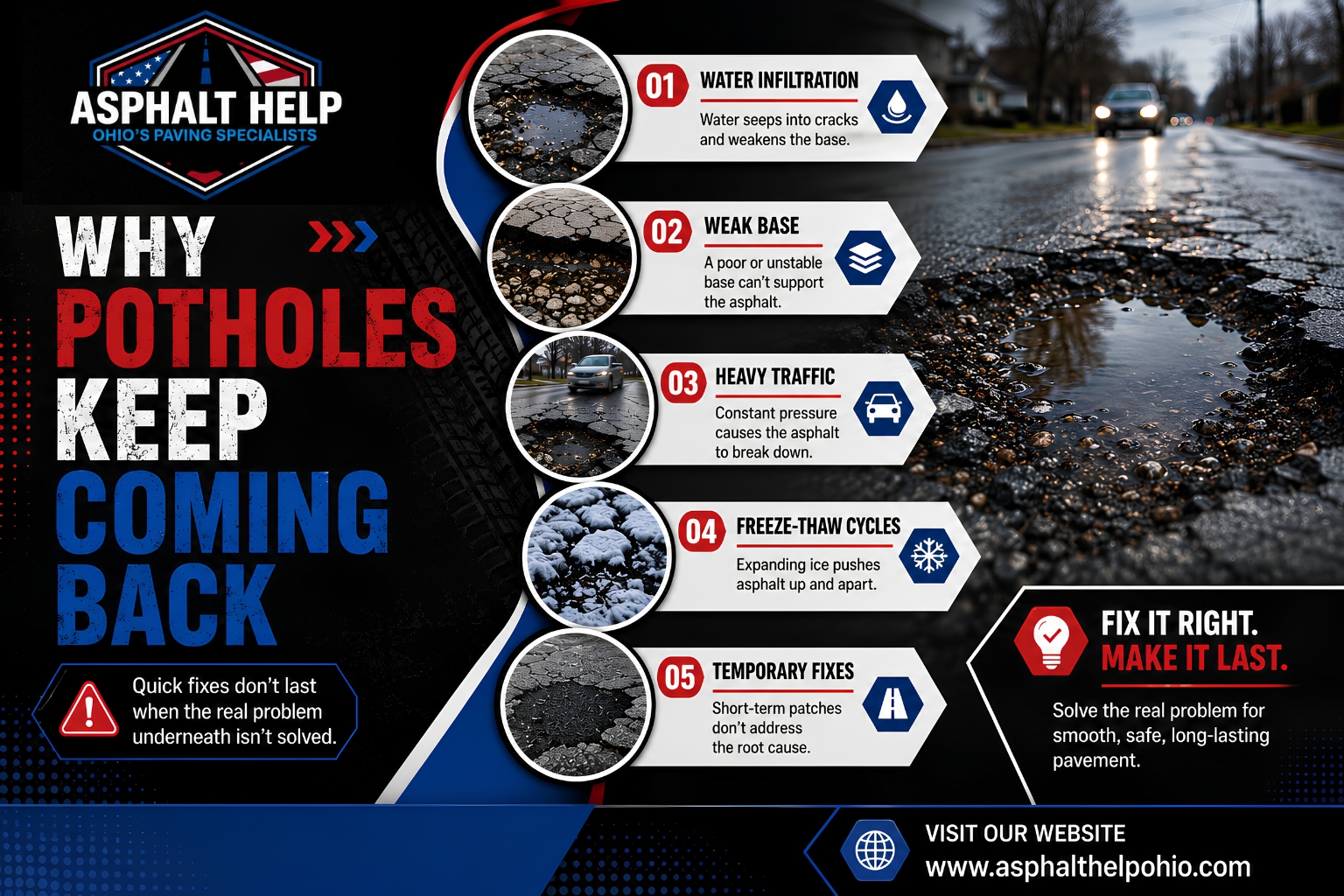
If the base is weak, saturated, or otherwise compromised, simply adding new surface material may not resolve the cause of the failure.
Asphalt Help Ohio specifically states that base issues are addressed when necessary during its pothole repair process.
This is especially important when potholes repeatedly develop in the same location.
When Should a Pothole Be Repaired Permanently?
A permanent repair should be considered when:
- The weather permits appropriate asphalt work
- The damaged area is stable enough for proper preparation
- The pothole is recurring
- The surrounding pavement is structurally sound
- The property owner wants a longer-term repair
- The damage extends into the pavement structure
The surrounding pavement should also be inspected because a pothole may be part of a larger deterioration pattern.
When Is Paving or Resurfacing More Appropriate?
Pothole patching is not always the best solution for widespread pavement deterioration.
If a pavement surface contains numerous potholes, extensive cracking, or widespread wear, a broader paving solution may be more appropriate.
Asphalt Help Ohio’s paving services include asphalt repair, pothole patching, resurfacing, milling, new asphalt installation, and asphalt removal and replacement.
Resurfacing
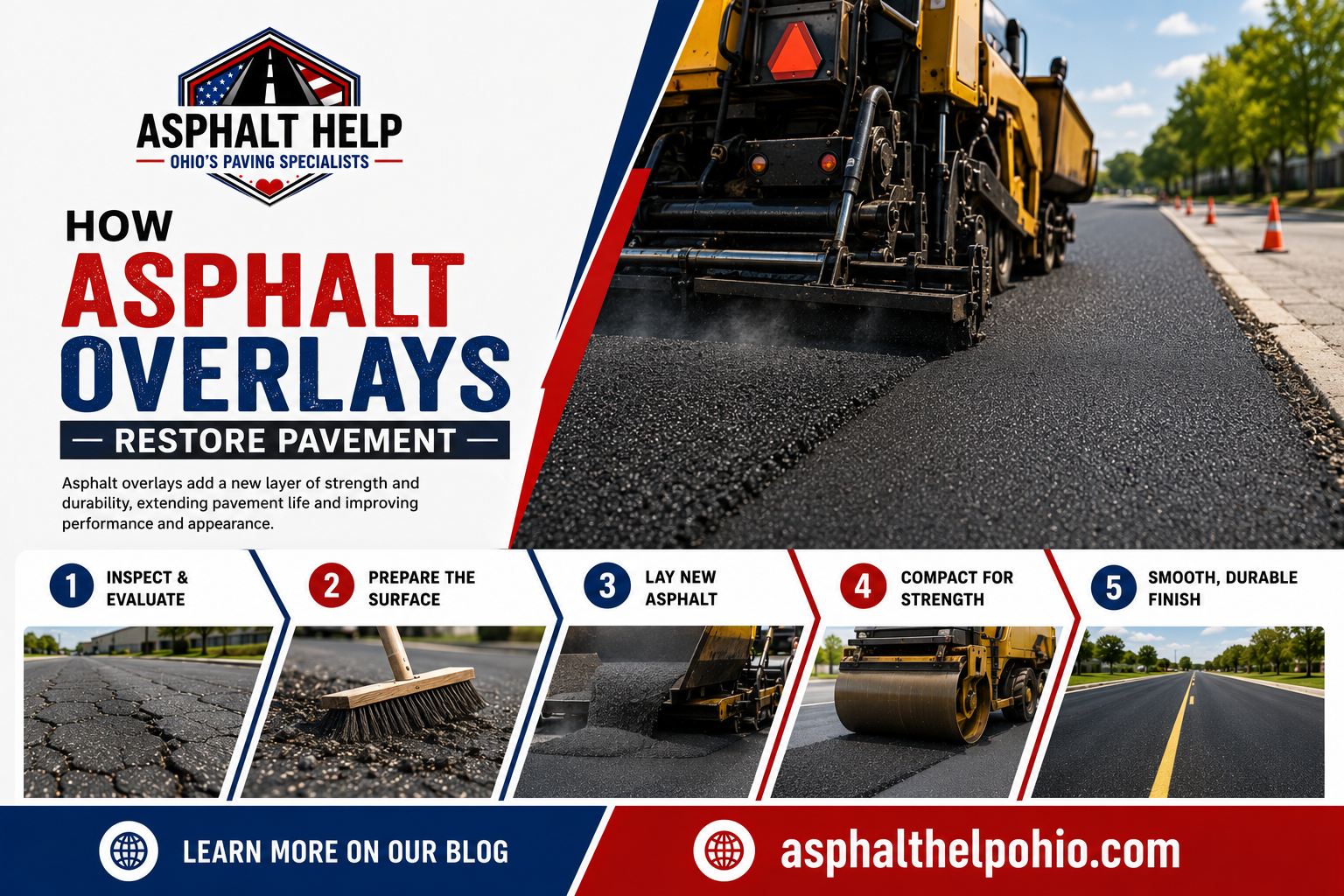
When the existing pavement remains structurally sound but has widespread surface wear, resurfacing can place a new asphalt layer over prepared pavement. Asphalt Help Ohio describes resurfacing as an option for worn pavement where the underlying structure remains stable.
Removal and Replacement
When pavement is severely cracked, sinking, or structurally unstable, more extensive reconstruction may be necessary. Asphalt Help Ohio’s paving information describes removal and replacement as a solution that addresses base problems and drainage before installing new asphalt.
How Ohio Weather Affects Pothole Repairs
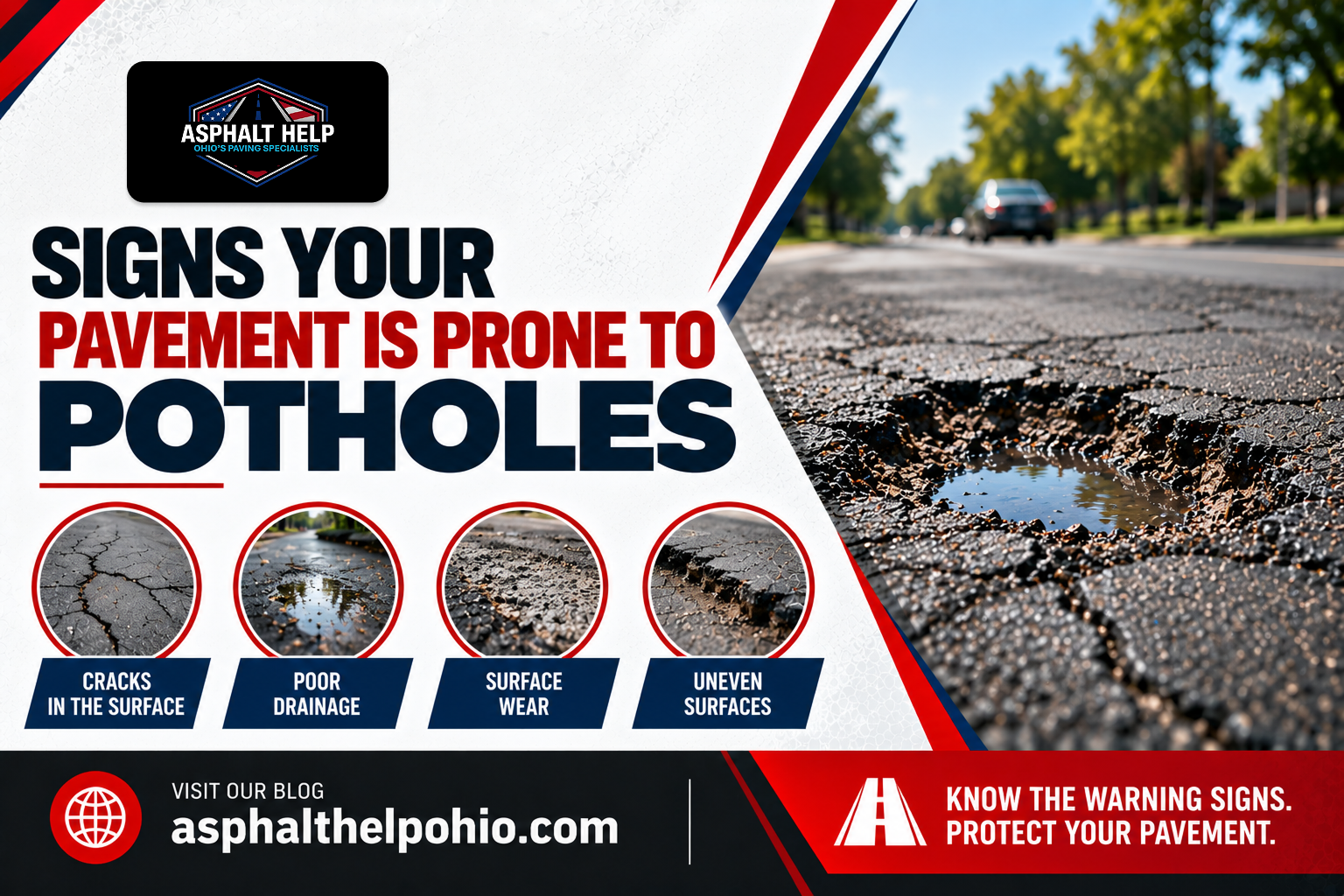
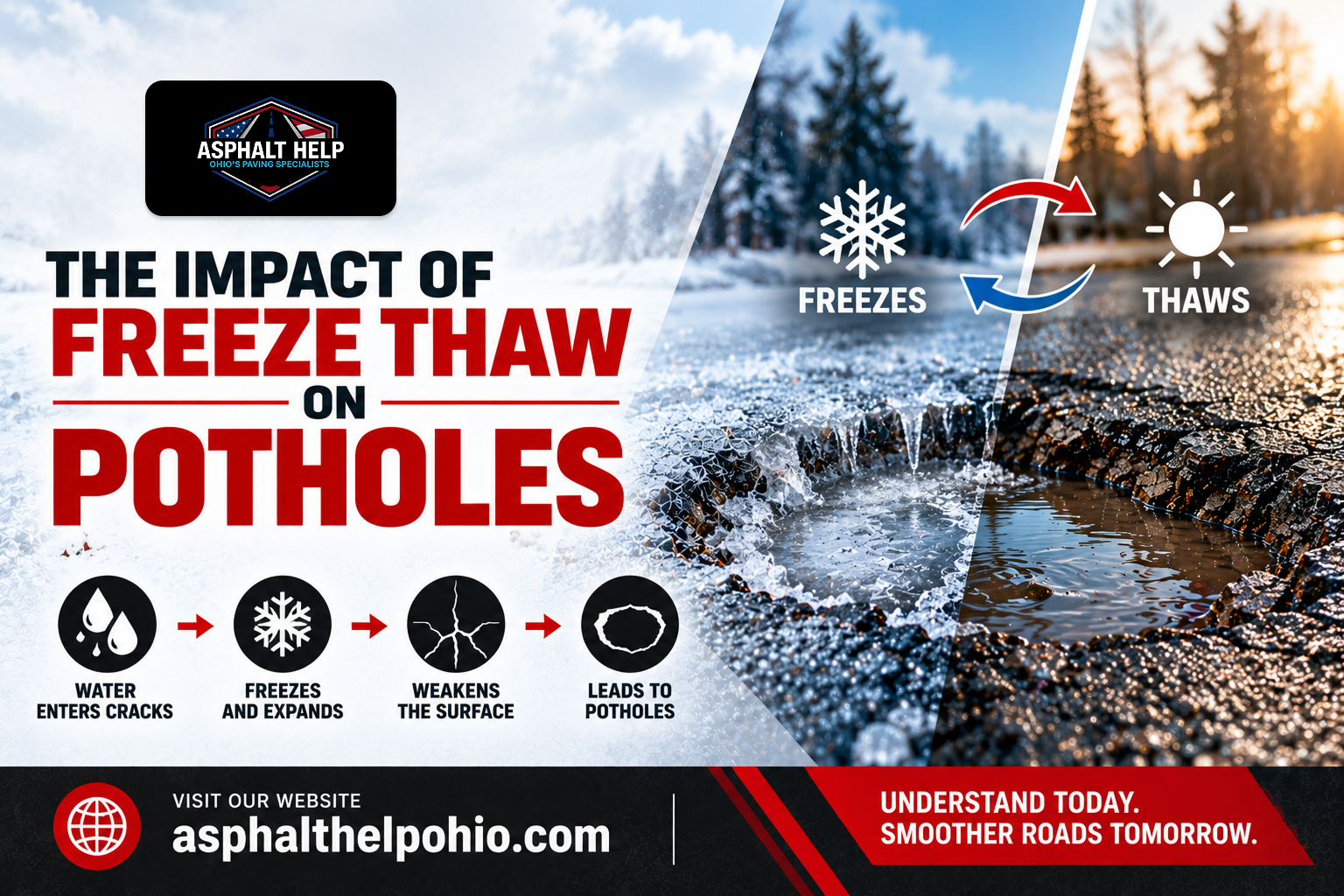
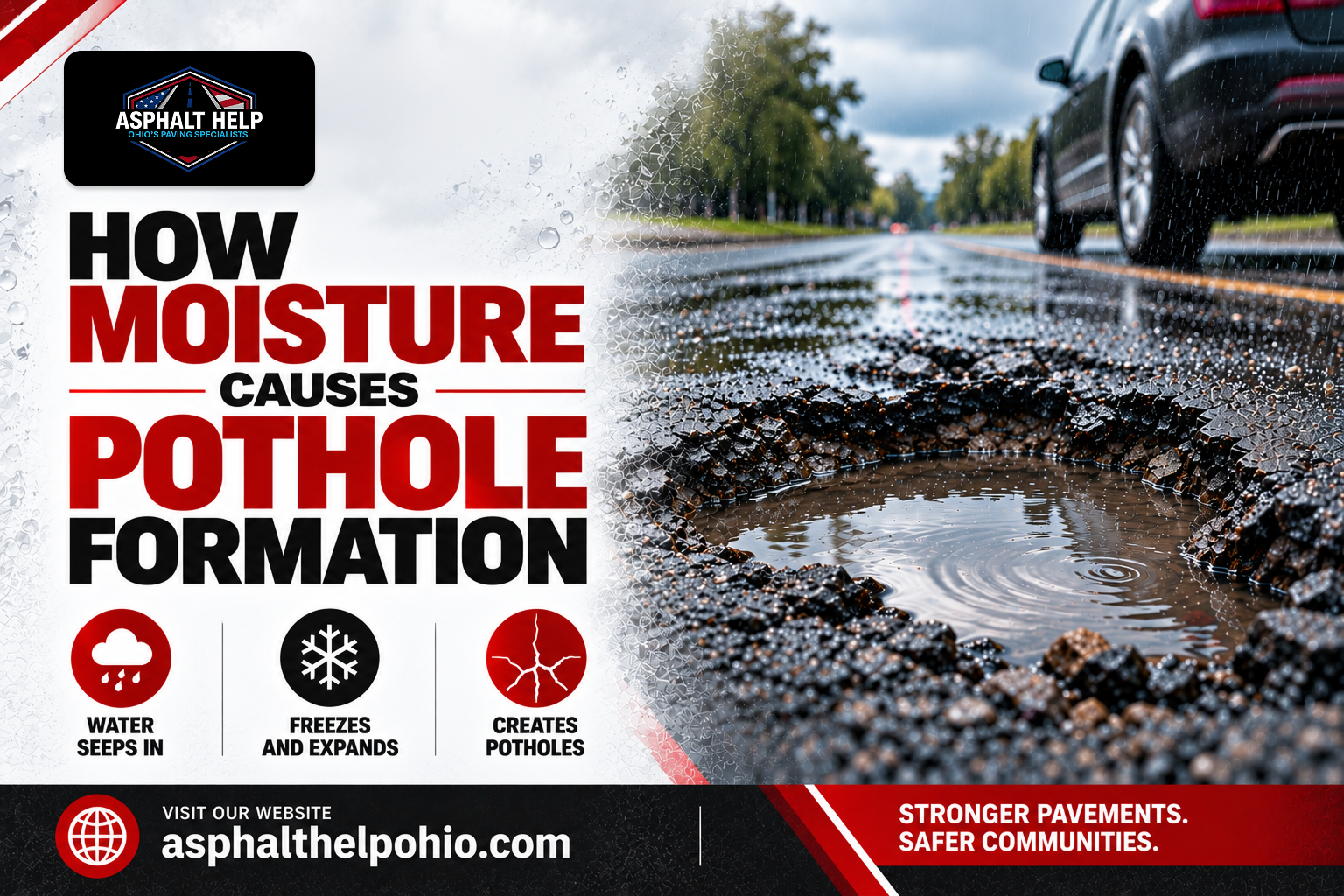
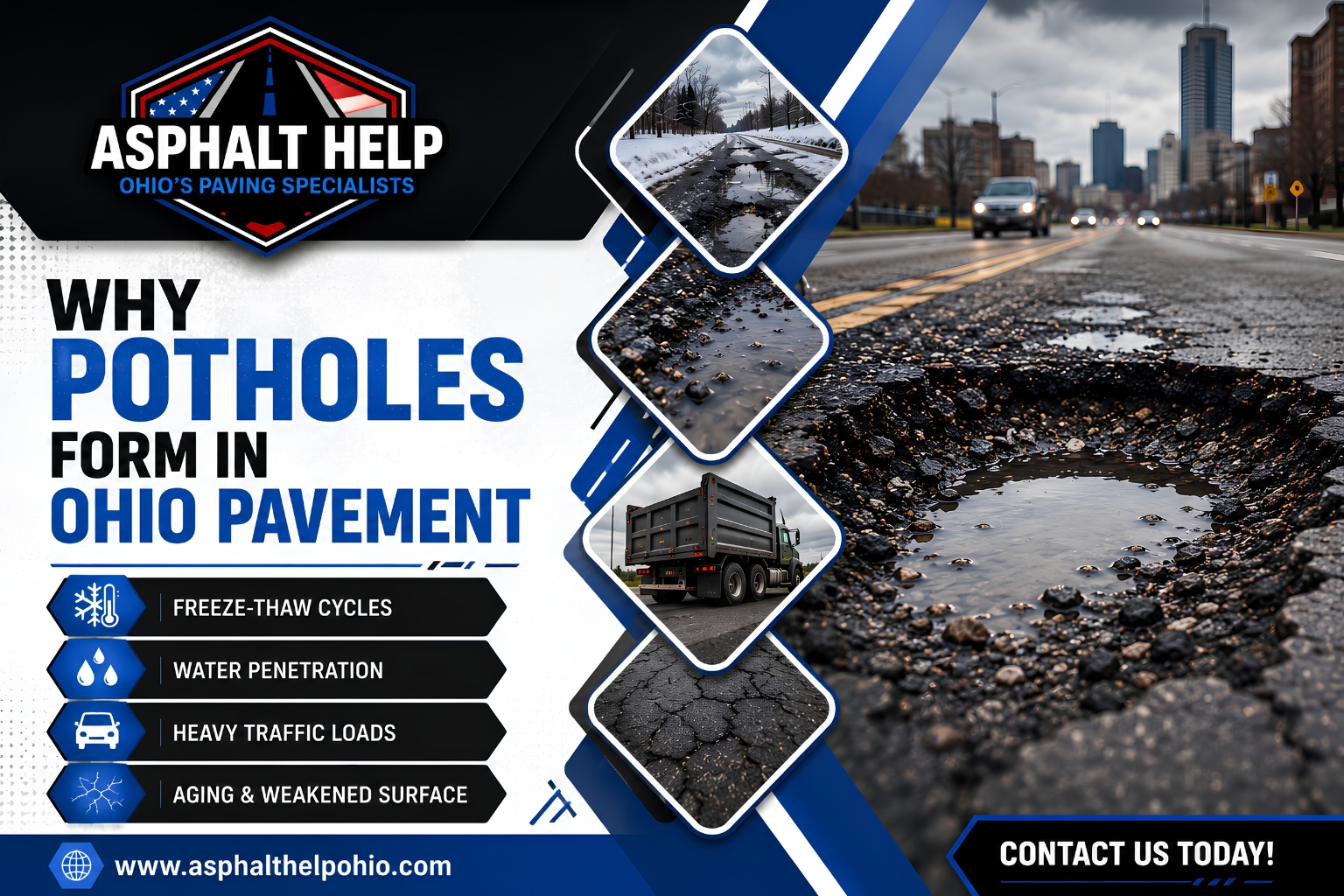
Ohio pavement experiences freeze-thaw cycles and seasonal moisture that can contribute to pavement deterioration.
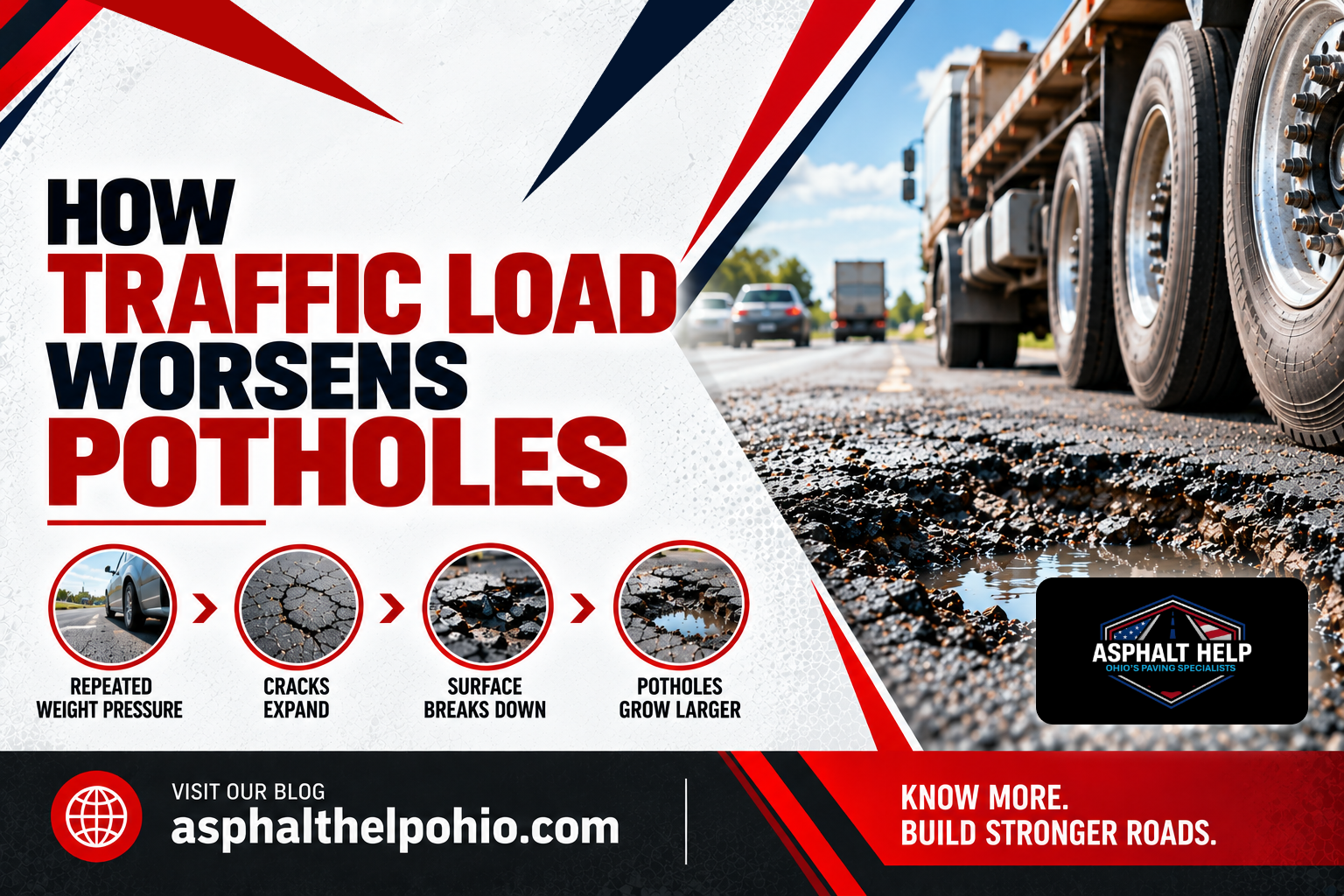
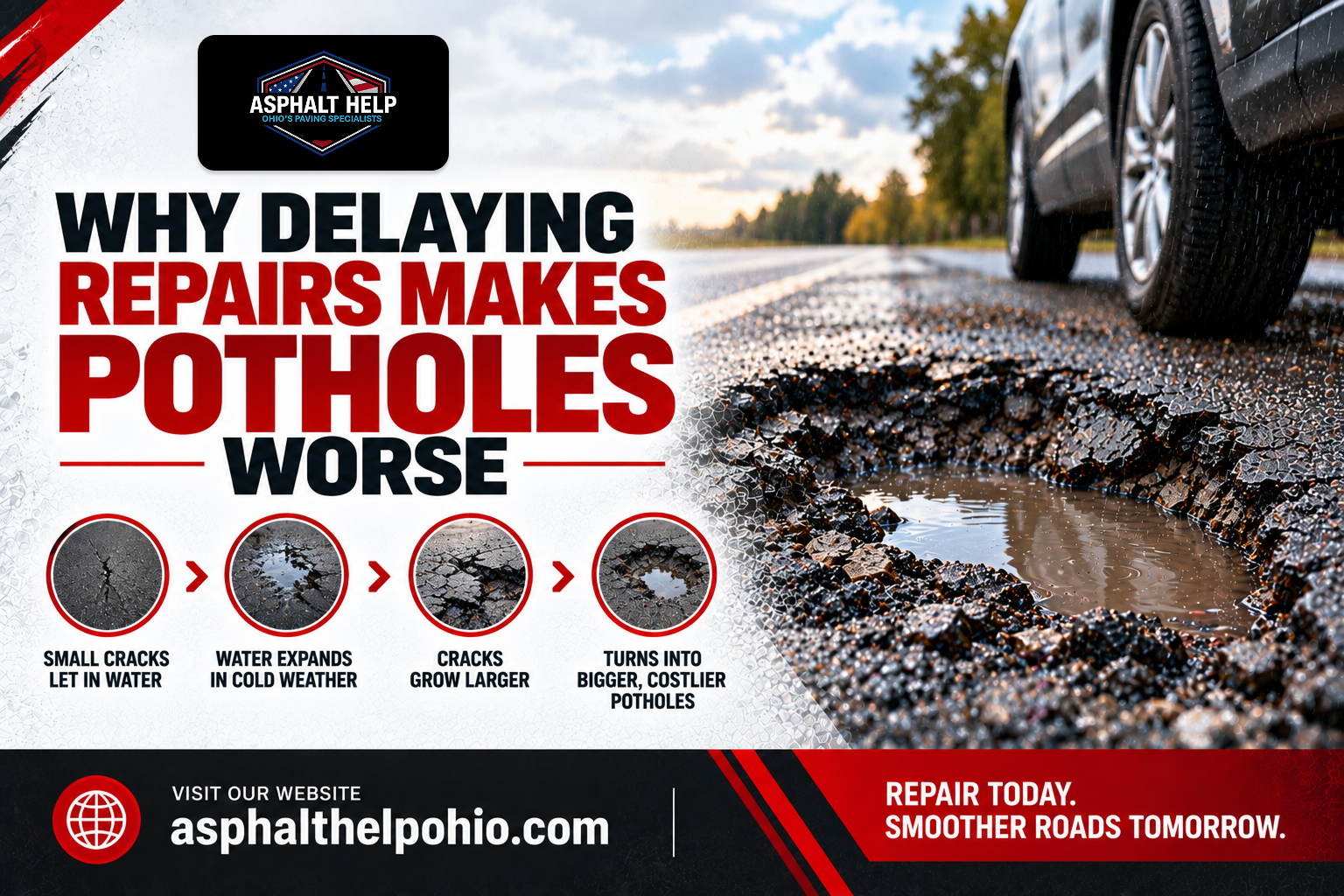
Water can enter cracks and damaged areas, while freezing and thawing can place additional stress on pavement. Traffic then continues to load areas that may already be weakened.
Asphalt Help Ohio specifically identifies moisture intrusion, traffic pressure, freeze-thaw cycles, poor drainage, aging asphalt, and weak base layers among the causes of potholes in Columbus, Ohio.
This makes choosing the appropriate repair method particularly important for Ohio properties.
How Asphalt Help Ohio Approaches Pothole Repairs
For asphalt pothole repair in Columbus Ohio, Asphalt Help Ohio begins with an inspection of the damaged area rather than automatically applying the same repair method to every pothole.
Its stated repair process includes:
- Inspecting the damage
- Removing damaged and loose asphalt
- Preparing and stabilizing the base when necessary
- Applying appropriate patching material
- Compacting the repair
The company provides pothole repair for residential driveways, commercial parking lots, private roads, and industrial pavement surfaces.
For larger pavement problems, its Asphalt Paving Services in Columbus Ohio include repair, patching, resurfacing, milling, new installation, and removal and replacement.
How to Prevent Potholes From Returning
Repairing the pothole is only part of maintaining asphalt.
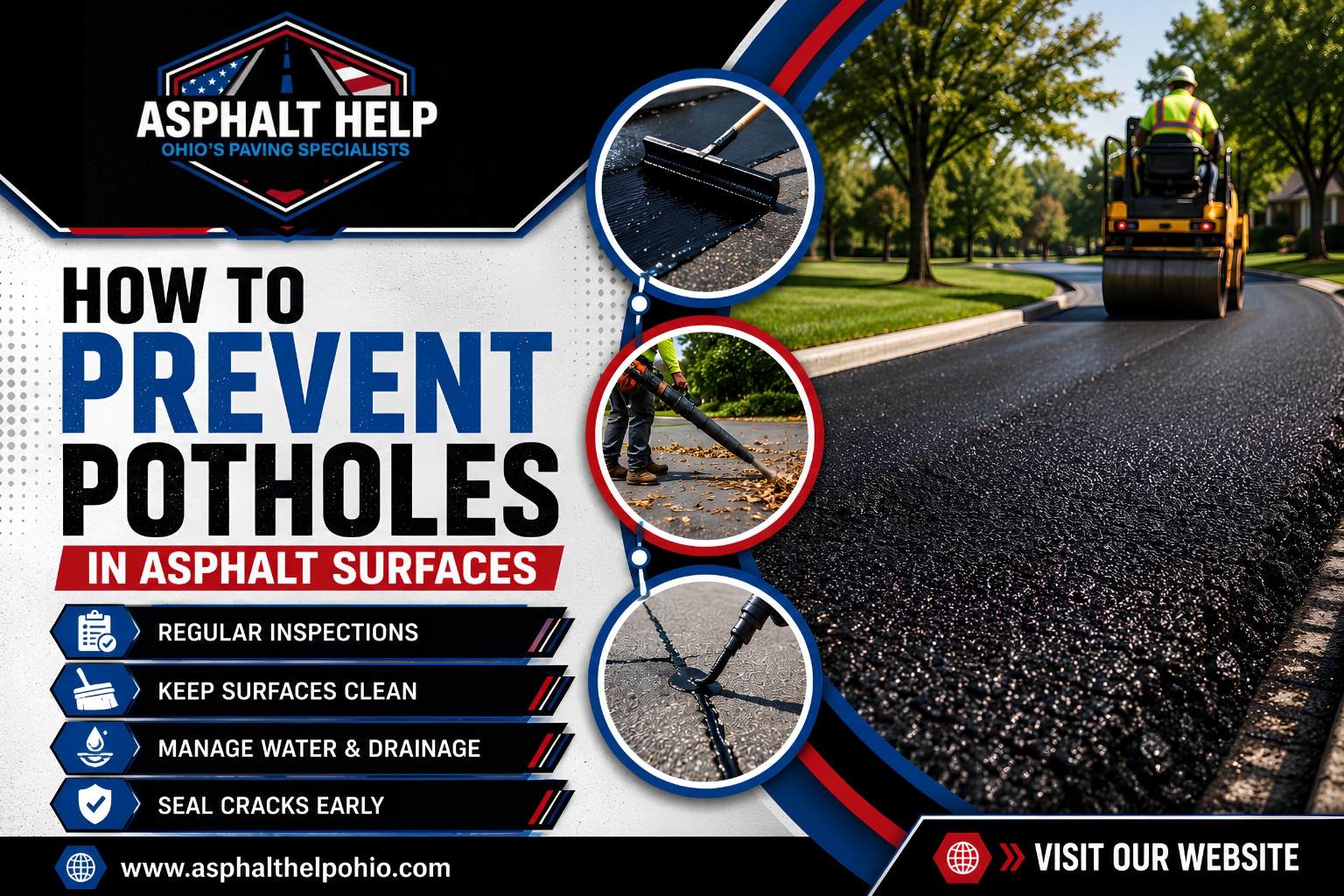
Property owners can also:
- Inspect pavement regularly
- Seal suitable cracks
- Maintain proper drainage
- Address standing water
- Apply sealcoating when appropriate
- Repair small pavement failures early
- Monitor areas where potholes repeatedly develop
Asphalt Help Ohio recommends crack sealing, protective sealcoating, proper drainage, and routine inspections as preventative maintenance practices.
Final Thoughts
Understanding pothole repair methods Ohio property owners can use starts with recognizing the difference between temporary stabilization and permanent pavement restoration. Cold patching can provide a quick solution when immediate stabilization is necessary, while hot-mix asphalt and full-depth patching can provide more comprehensive repairs when conditions allow.
If potholes continue appearing across a larger pavement area, individual patching may no longer address the broader problem. Resurfacing may be appropriate when the pavement structure remains stable, while removal and replacement may be necessary when the underlying pavement has significant structural deterioration.
For asphalt pothole repair in Columbus Ohio, Asphalt Help Ohio can evaluate the damaged area and select an appropriate repair approach based on pavement condition, traffic, environmental exposure, and underlying damage. When broader deterioration is present, the company’s Asphalt Paving Services in Columbus Ohio provide additional options for restoring the pavement beyond individual pothole repairs.