


Have you noticed thin lines, long splits, or interconnected cracks appearing on your asphalt driveway or parking lot? These patterns can reveal important clues about pavement condition. Some cracks develop as asphalt ages and responds to temperature changes, while others may indicate problems with drainage, construction joints, or the pavement’s supporting layers.
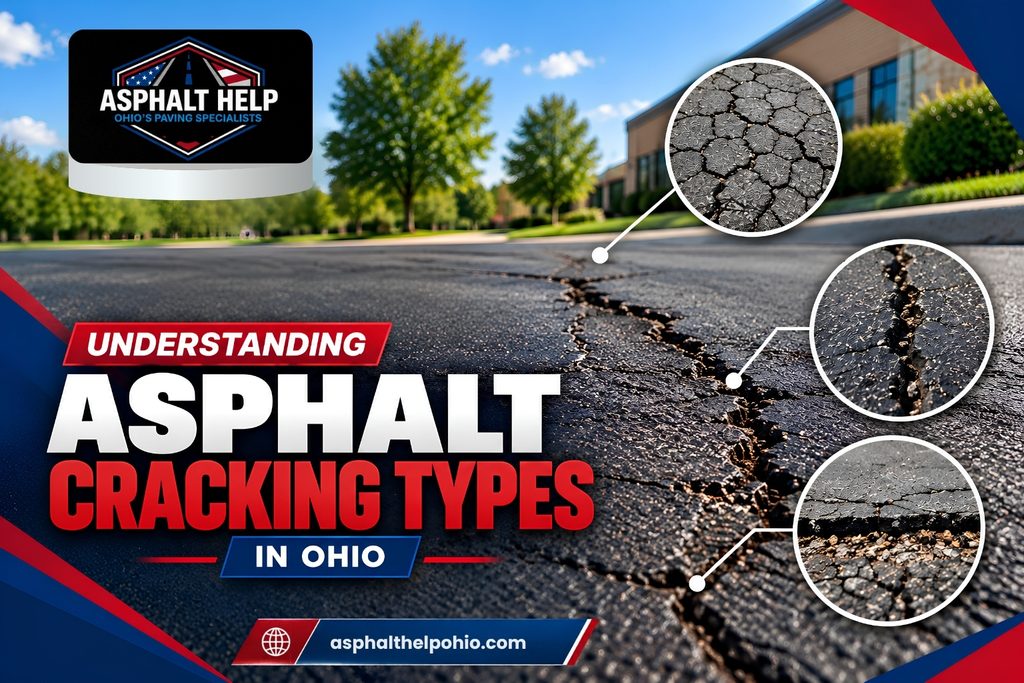
Understanding the different types of asphalt cracks Ohio property owners commonly encounter is an important step toward choosing appropriate maintenance and preventing avoidable deterioration. Ohio’s cold winters, changing seasonal temperatures, moisture, and repeated freeze-thaw cycles can place stress on asphalt pavement. Traffic loads and the quality of the pavement’s construction can also influence how cracks develop and spread.
What Are the Different Types of Asphalt Cracks in Ohio?
Not every crack means that an entire driveway or parking lot needs replacement. A narrow crack in otherwise stable pavement may require a different treatment from a network of interconnected cracks accompanied by potholes or sinking. The key is to identify the crack pattern, consider its likely cause, and determine whether the damage is limited to the surface or extends into deeper pavement layers.
Asphalt Help Ohio helps property owners understand pavement deterioration and explore suitable asphalt maintenance and repair options. Learning to recognize common cracking patterns can help you identify warning signs early and make better-informed decisions about your pavement.
Why Does Asphalt Crack in Ohio?
Asphalt is designed to withstand traffic and weather exposure, but it gradually changes as it ages. Cracks develop when stresses within the pavement exceed the material’s ability to accommodate them. The exact cause depends on environmental conditions, construction quality, pavement age, traffic, and the condition of the supporting layers.
1. Freeze-Thaw Cycles
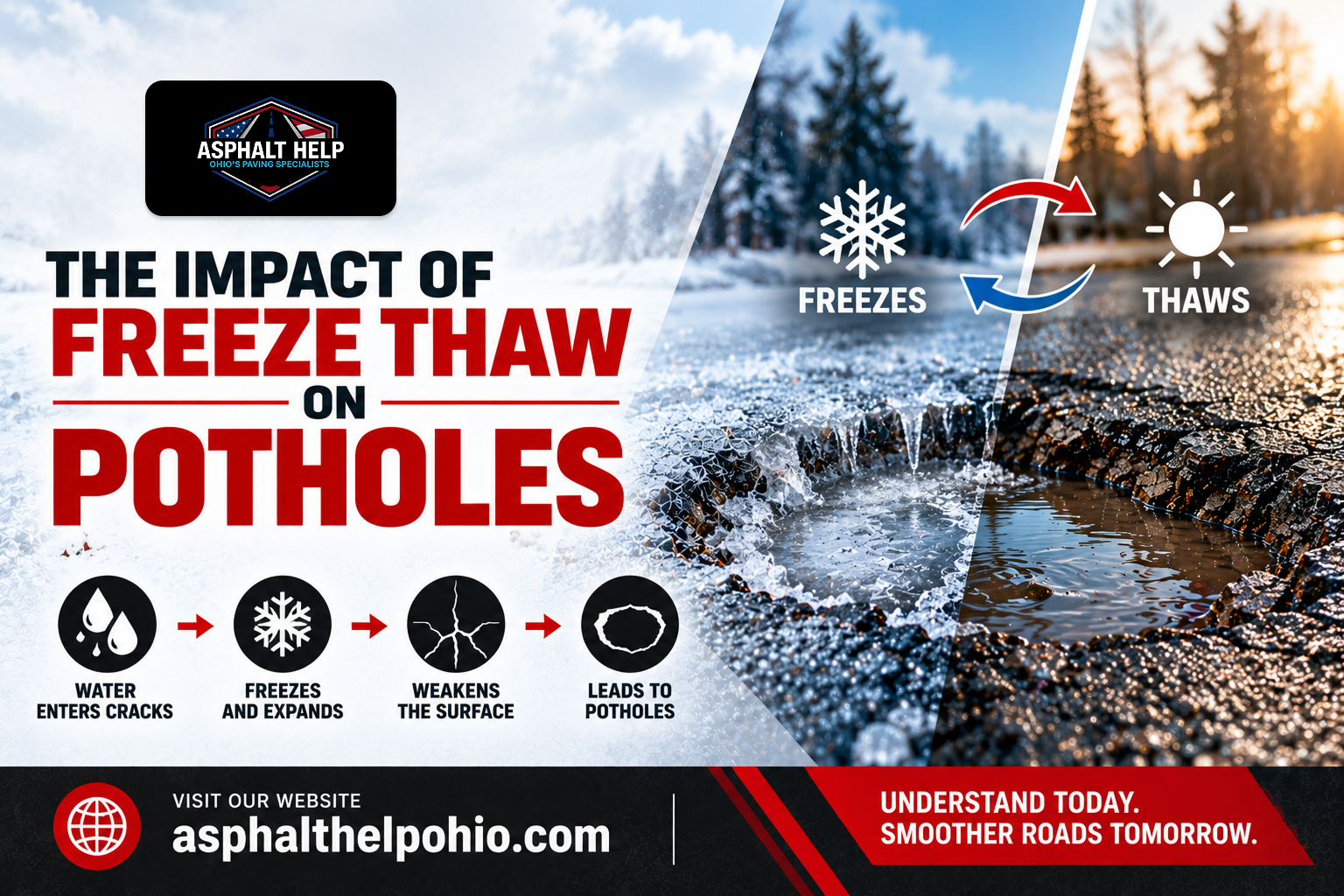
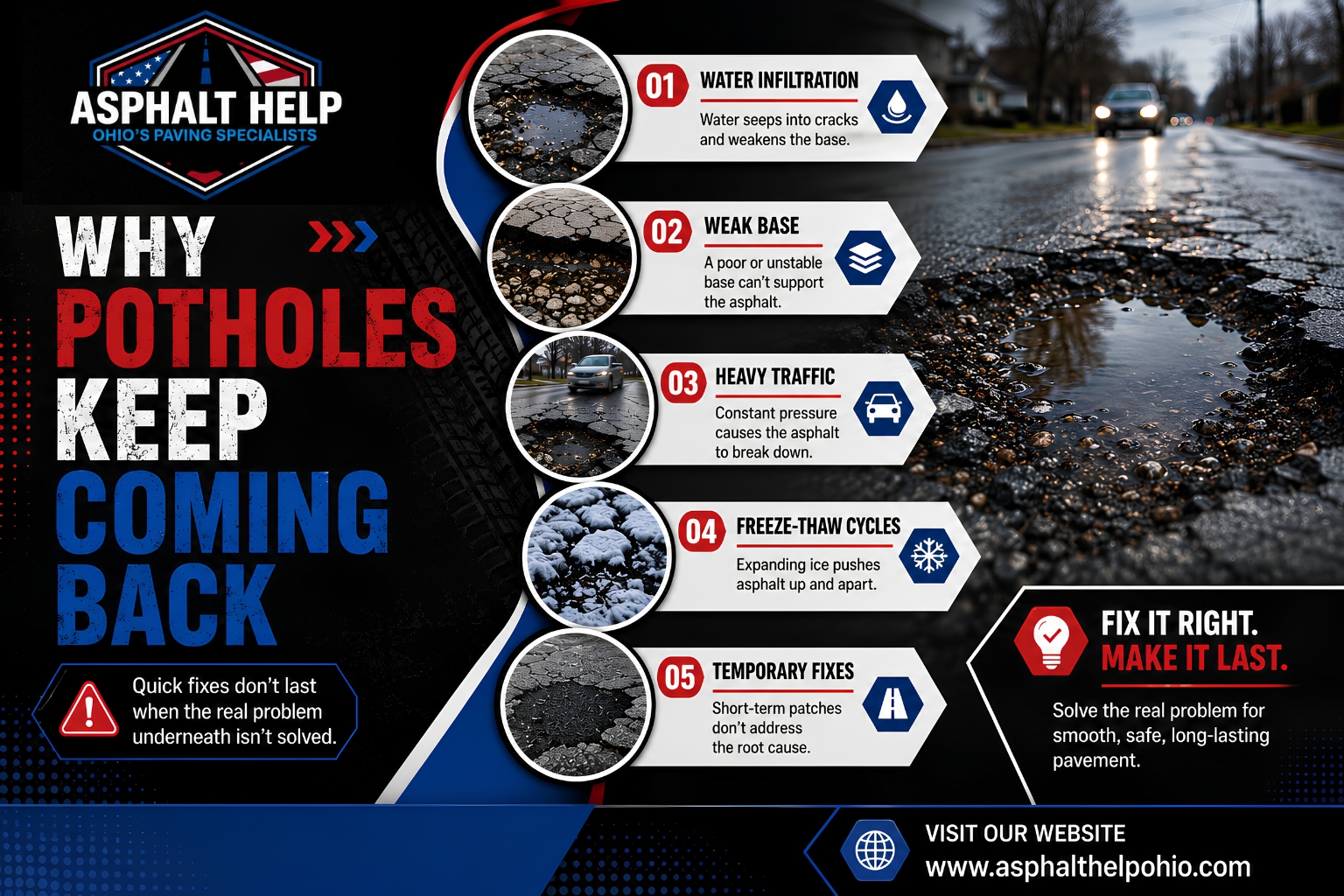
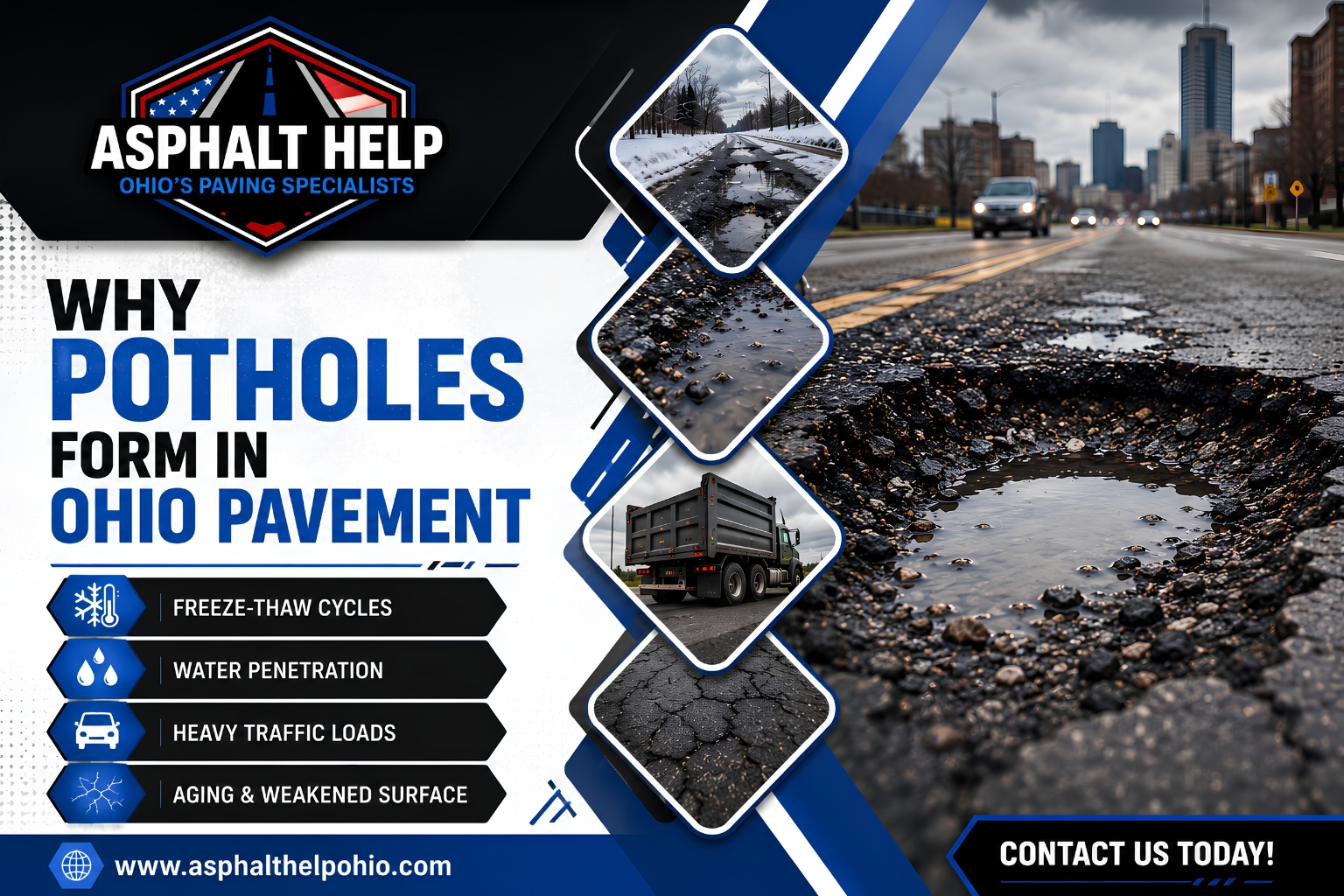
Ohio experiences seasonal temperature changes that can repeatedly freeze and thaw moisture around asphalt pavement. Water may enter existing cracks and openings. When temperatures fall, freezing water can expand and place additional stress on the surrounding material.
As temperatures rise, the ice melts, leaving moisture that may penetrate further into vulnerable areas. Repeated cycles can widen existing cracks, loosen aggregate, and contribute to pothole formation.
Freeze-thaw action does not cause every asphalt crack, but it can accelerate deterioration when moisture is present and the pavement already has weaknesses.
2. Temperature Changes and Thermal Stress
Asphalt expands and contracts as temperatures change. During cold weather, the asphalt binder becomes less flexible, making it more difficult for the pavement to accommodate temperature-related movement.
If the resulting stress becomes greater than the material can withstand, cracks may develop across the pavement. These are often called thermal cracks, and they may appear at relatively regular intervals.
Ohio’s seasonal temperature variations make thermal movement an important factor to consider when evaluating asphalt cracking.
3. Moisture and Poor Drainage
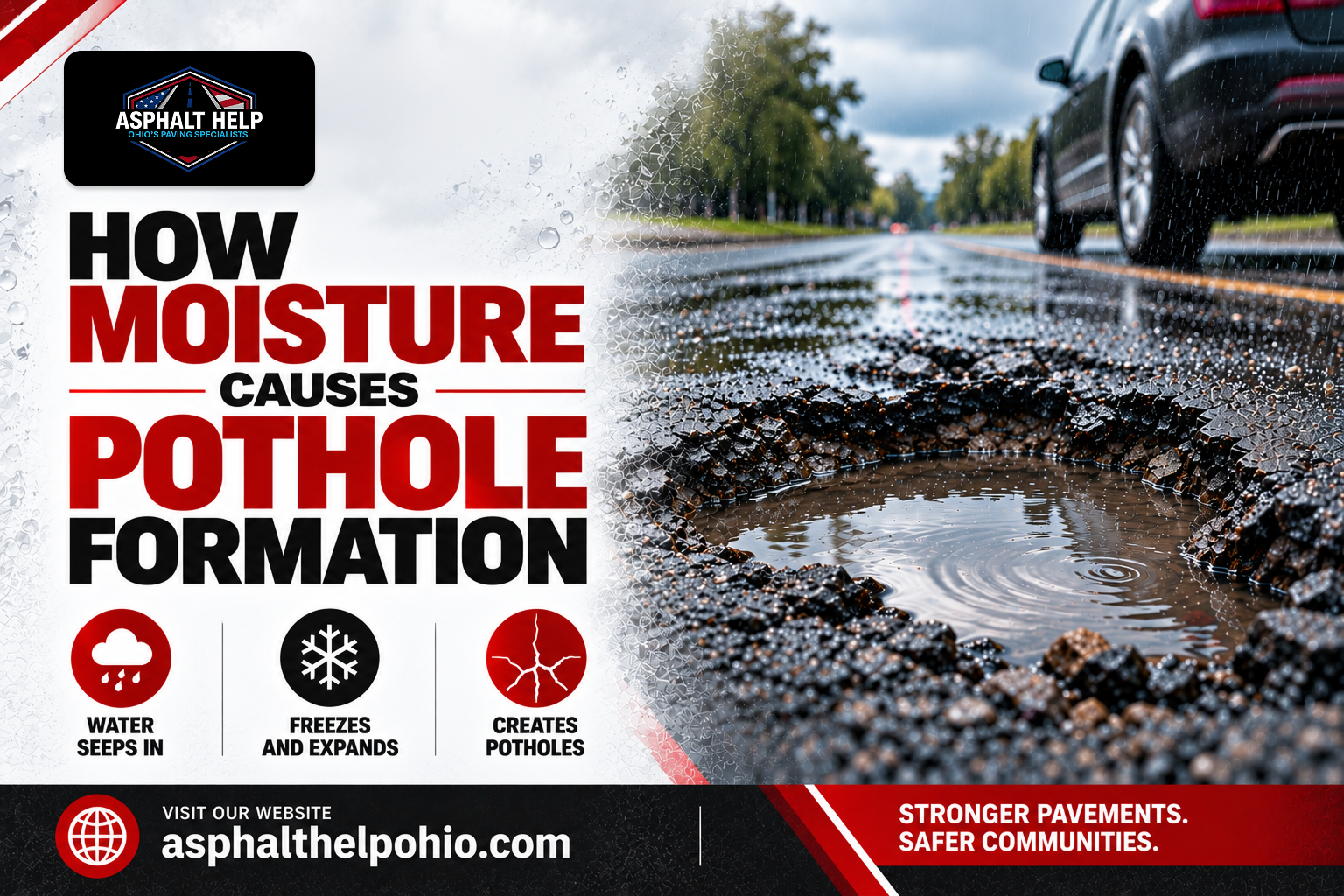
Water is one of the most important contributors to pavement deterioration. When water collects on asphalt or enters through cracks, it may weaken the supporting base or soil beneath the pavement.
Poor drainage can also allow moisture to remain near pavement edges, low spots, and damaged sections. If the supporting layers lose stability, the asphalt may begin to crack, settle, or break apart under traffic.
Cracks that occur alongside standing water, depressions, or repeated potholes deserve particular attention because the problem may extend beyond the visible surface.
4. Asphalt Aging and Oxidation
Over time, exposure to air and sunlight changes the asphalt binder through a process called oxidation. The binder gradually becomes harder and less flexible, reducing its ability to accommodate movement and stress.
As the pavement ages, it may become more susceptible to cracking under temperature changes and repeated traffic loads. Aging-related cracking can occur even when a pavement initially appeared smooth and well constructed.
Regular inspection and appropriate maintenance can help identify developing cracks before they become more extensive.
5. Traffic Loads and Pavement Fatigue
Every passing vehicle places stress on asphalt pavement. Repeated loading can gradually weaken pavement layers, especially when the pavement is inadequately supported or regularly exposed to heavy vehicles.
Over time, small cracks may develop in wheel paths and spread into interconnected patterns. This type of deterioration is commonly associated with fatigue cracking.
The location and pattern of cracks can provide clues about whether traffic loading may be contributing to the problem. However, the underlying cause should be assessed before selecting a repair.
6. Construction Joints and Base Problems
Asphalt pavement is often installed in sections or adjoining lanes. If the joints are not properly constructed or compacted, they can become vulnerable areas where cracks develop.
Cracks can also appear when existing joints or cracks in an underlying pavement layer reflect through a newer asphalt overlay. These are known as reflective cracks.
In other cases, inadequate support, settlement, or weaknesses in the base may contribute to cracking. The appropriate repair depends on the source and depth of the problem, not simply the appearance of the crack.
Common Types of Asphalt Cracks Ohio Property Owners Should Recognize
Different crack patterns often point to different forms of pavement distress. Recognizing them can help you understand when routine maintenance may be sufficient and when a more detailed assessment is needed.
1. Alligator Cracking
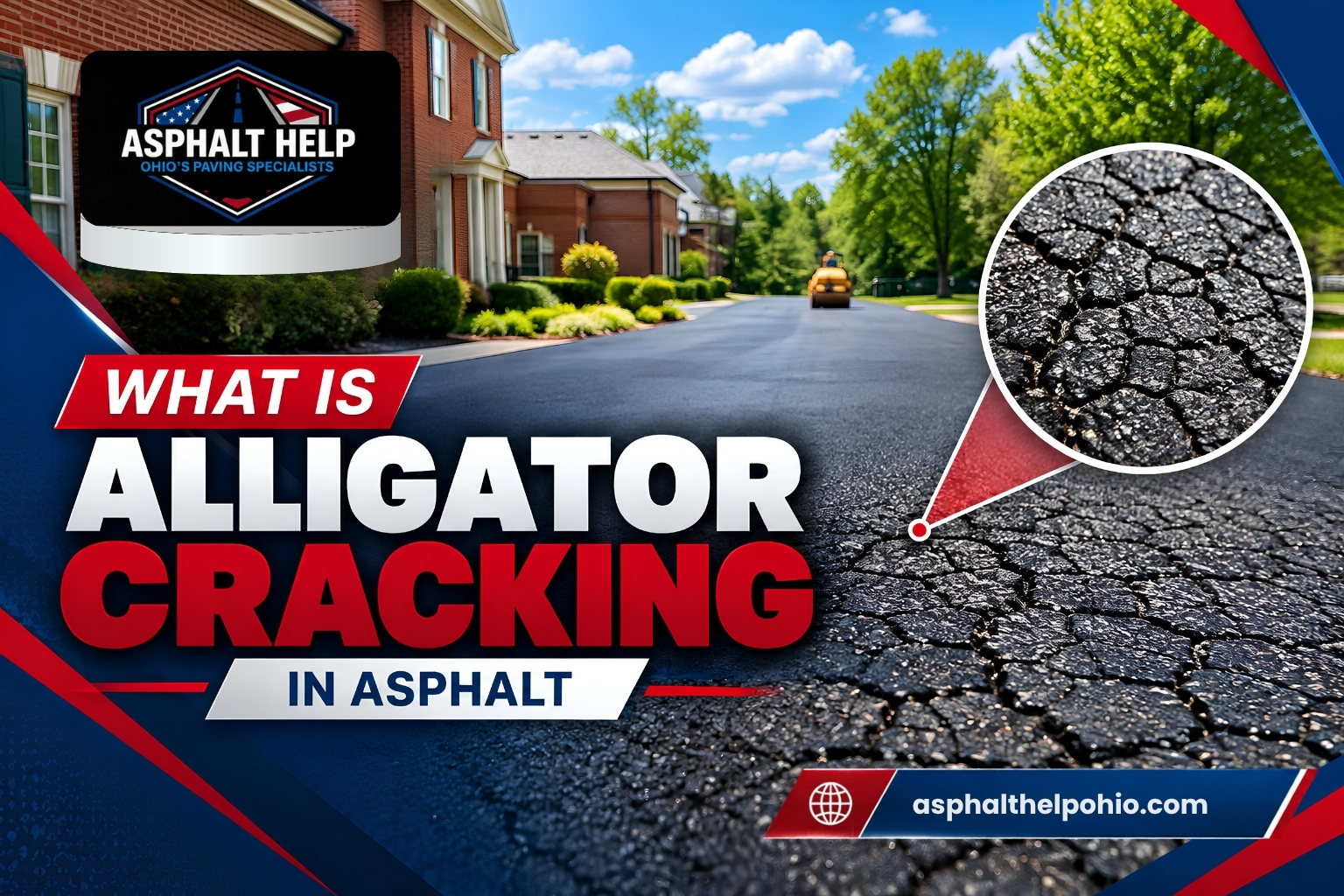
Alligator cracking is a pattern of interconnected cracks that resembles the scales of an alligator. It typically forms a network of small blocks and often appears in wheel paths or other areas exposed to repeated vehicle loading.
This type of cracking is commonly associated with fatigue and may indicate that the asphalt pavement or its supporting structure has become weakened. In some cases, inadequate drainage or insufficient support beneath the asphalt contributes to the deterioration.
Alligator cracking can progress from a few interconnected lines into areas where the pavement breaks apart. If loose pieces, potholes, or visible deformation appear alongside the cracks, the damage may be more advanced.
Common warning signs include:
- Interconnected cracks forming small, irregular blocks.
- Cracking concentrated where vehicle tires regularly travel.
- Loose asphalt pieces or broken pavement edges.
- Potholes developing within the cracked area.
- Damage that continues returning after superficial repairs.
Potential repair approach: Minor isolated distress may require localized attention, but widespread alligator cracking often calls for a closer evaluation of pavement depth and supporting layers. Depending on the findings, full-depth patching or more extensive rehabilitation may be necessary.
Filling the visible cracks alone may not resolve the underlying cause if the pavement structure has failed.
2. Longitudinal Cracking
Longitudinal cracks run approximately parallel to the direction of travel or the centerline of the pavement. They may appear along the middle of a driveway, near the boundary between paving lanes, or along a construction joint.
Several factors can contribute to longitudinal cracking, including inadequate compaction at joints, separation between adjoining pavement sections, underlying movement, and repeated traffic stress.
The crack’s location can provide useful clues. For example, a crack following a paving joint may indicate a joint-related problem, while cracking in a wheel path may suggest a different mechanism, including traffic-related fatigue.
Common warning signs include:
- Long cracks running in the direction of the driveway or roadway.
- Cracks following a seam between two paving sections.
- Edges that become chipped or broken.
- Cracks that widen or develop loose material.
- Additional cracking appearing nearby.
Potential repair approach: Crack sealing may be appropriate for certain narrow cracks when the surrounding pavement remains sound. If the crack is wide, deteriorating, or associated with deeper damage, patching or another repair method may be more suitable.
Correctly identifying the crack’s cause helps determine whether a surface treatment is likely to provide a lasting result.
3. Transverse Cracking
Transverse cracks extend across the pavement, generally at right angles to the direction of travel. They may form a single line across a driveway or appear at intervals along a larger paved surface.
Thermal contraction is a common contributor to transverse cracking in asphalt. As the pavement cools, the binder contracts and develops stress. When the material cannot accommodate that stress, a crack may form.
A transverse crack may also develop because an underlying joint or crack reflects through an asphalt overlay. Therefore, not every crosswise crack has the same cause.
Common warning signs include:
- Cracks running across the width of the pavement.
- Similar cracks appearing at repeated intervals.
- Openings that become wider during colder weather.
- Cracked edges or loose material around the opening.
- Water entering the pavement through the crack.
Potential repair approach: Suitable transverse cracks may be treated with crack sealing after the condition of the surrounding pavement has been assessed. When cracking is widespread or the underlying pavement has deteriorated, additional repairs may be necessary.
Regular monitoring can help identify whether a crack is remaining stable or becoming wider and more damaged.
4. Block Cracking
Block cracking divides the asphalt surface into large rectangular or square-shaped sections. Unlike alligator cracking, which often develops as a network of smaller blocks in heavily loaded areas, block cracking is frequently associated with asphalt aging and thermal shrinkage.
As the asphalt binder hardens, the pavement becomes less flexible and less capable of accommodating temperature-related movement. Cracks can then develop in intersecting lines that create a block-like pattern.
Block cracking may occur across broad areas of a driveway or parking lot rather than being limited to wheel paths.
Common warning signs include:
- Large rectangular or square-shaped cracks.
- Intersecting cracks distributed across the pavement.
- Cracking in areas with relatively light traffic.
- An aged or brittle-looking asphalt surface.
- Crack edges that gradually deteriorate.
Potential repair approach: Depending on the severity and condition of the pavement, appropriate maintenance may include crack sealing or a suitable resurfacing strategy. If the asphalt is extensively deteriorated, the affected material may require more substantial rehabilitation.
Because block cracking is often associated with aging, sealing individual cracks may help manage water entry but will not reverse the underlying hardening of the asphalt binder.
5. Edge Cracking
Edge cracks develop near the outer boundary of an asphalt pavement. They may run parallel to the pavement edge or form curved cracks that extend inward.
These cracks can occur when the pavement edge lacks adequate support, when water enters from the surrounding ground, or when the edge is exposed to repeated stress. Vegetation, erosion, poor drainage, and vehicles traveling too close to the edge may also contribute.
An unsupported pavement edge can be particularly vulnerable because it does not always have the same confinement as the central portion of the paved area.
Common warning signs include:
- Cracks running close to the driveway or parking lot boundary.
- Curved cracks extending inward from the edge.
- Broken or crumbling asphalt along the sides.
- Soil erosion or water accumulation near the pavement.
- Sections of the edge that appear to be breaking away.
Potential repair approach: The appropriate solution depends on whether the damage is confined to the surface or reflects a loss of edge support. Repairs may involve crack treatment, localized patching, improved drainage, or rebuilding the affected edge.
If the supporting material has eroded or become unstable, repairing only the visible crack may not address the cause.
6. Reflection Cracking
Reflection cracks appear when an existing crack or joint in an underlying pavement layer becomes visible through a newer asphalt surface.
This can happen when asphalt is placed over an older pavement that contains cracks or joints. Movement in the underlying layer transfers stress into the new asphalt, and a crack gradually develops above the original discontinuity.
Reflection cracking can occur in overlays over older asphalt or concrete pavement. The appearance may resemble transverse or longitudinal cracking, so the underlying pavement history can be important when identifying it.
Common warning signs include:
- Cracks following the same pattern as older pavement joints.
- Straight cracks reappearing after an overlay.
- Cracking that develops along predictable seams.
- Similar cracks occurring in several locations over an older pavement structure.
Potential repair approach: The repair depends on the underlying cause, the condition of the existing pavement, and the design of the overlay. Crack sealing may be suitable in some situations, while more extensive treatment may be needed if the underlying pavement is moving or deteriorating.
An overlay can improve the surface, but it does not automatically eliminate movement or defects in the pavement underneath.
7. Slippage Cracking
Slippage cracks can develop when an asphalt surface layer moves or loses adequate bonding with the layer beneath it. They may appear as crescent-shaped cracks or localized areas where the surface seems to have shifted.
Poor bonding between pavement layers, inadequate surface preparation, or stresses caused by braking and turning can contribute to this type of distress.
Slippage cracking is different from ordinary temperature-related cracking because movement or separation between layers is an important part of the problem.
Common warning signs include:
- Crescent-shaped or curved cracks.
- Areas where asphalt appears displaced.
- Localized surface movement near turning or braking zones.
- Separation or loose material within the affected area.
Potential repair approach: The affected material may need to be removed and replaced after the condition and bonding of the pavement layers have been evaluated. Simply sealing the visible crack may not correct the underlying separation.
8. Random Cracking
Random cracks do not follow a consistent direction or form a clearly defined pattern. They may appear as isolated lines, irregular branches, or combinations of short cracks across the asphalt.
Possible causes include aging, temperature-related stress, localized settlement, construction-related weaknesses, or the development of cracks in underlying layers.
Because random cracking has several possible causes, its appearance alone may not be enough to determine the correct treatment.
Common warning signs include:
- Irregular cracks running in different directions.
- Branching lines that develop over time.
- Cracks appearing in isolated areas without an obvious pattern.
- Openings accompanied by surface deterioration or water accumulation.
Potential repair approach: Small, stable cracks may be suitable for sealing when the surrounding pavement remains sound. If random cracking becomes widespread or appears alongside settlement and potholes, a more detailed pavement assessment may be necessary.
Comparing the Main Types of Asphalt Cracks
The following table summarizes the most common cracking patterns and the issues they may indicate.
| Crack Type | Typical Appearance | Common Contributing Factors | Possible Repair Approach |
|---|---|---|---|
| Alligator | Interconnected small blocks | Repeated loading, fatigue, weak support | Localized or full-depth repair, depending on severity |
| Longitudinal | Runs parallel to travel direction | Construction joints, compaction issues, traffic stress | Crack sealing or patching when appropriate |
| Transverse | Runs across the pavement | Thermal contraction, aging, reflective cracking | Crack sealing or more extensive repair if needed |
| Block | Large rectangular or square sections | Binder aging and thermal shrinkage | Crack sealing or suitable resurfacing |
| Edge | Along or near pavement boundaries | Poor edge support, moisture, erosion | Crack treatment, patching, or edge reconstruction |
| Reflection | Reappears over an underlying joint or crack | Movement in an existing pavement layer | Crack treatment or repairs addressing the underlying layer |
| Slippage | Curved cracks with possible surface movement | Poor bonding between pavement layers, turning stress | Removal and replacement of affected material |
| Random | Irregular cracks in different directions | Aging, localized movement, construction or base issues | Treatment based on the cause and pavement condition |
These are general indicators. Several types of cracking can look similar, and more than one cause may be present in the same area. Repair selection should be based on the actual pavement condition.
How to Determine the Severity of Asphalt Cracks
Identifying a crack type is only the first step. Property owners should also consider its width, length, pattern, location, and whether the surrounding pavement is deteriorating.
Ohio’s pavement condition guidance evaluates asphalt cracking using factors such as crack width, interconnected patterns, loose material, and the extent of the affected area. These factors help distinguish minor distress from more severe deterioration.
Low-Severity Cracks
Low-severity cracks are often narrow, relatively stable, and surrounded by pavement that remains intact. They may include isolated hairline cracks or small openings without significant edge deterioration.
Depending on the crack type, preventive maintenance or crack sealing may be appropriate. However, even a narrow crack should be monitored if water regularly enters it or if it continues to spread.
Medium-Severity Cracks
Medium-severity cracks may be wider, more numerous, or accompanied by minor chipping and loose material. Multiple cracks may appear in the same area, and the surrounding asphalt may begin to deteriorate.
These conditions deserve closer attention because the repair may require more than simply filling the opening. The correct approach depends on the crack pattern and whether the pavement beneath it remains stable.
High-Severity Cracks
High-severity cracking may involve extensive interconnected patterns, broken asphalt, significant material loss, or visible pavement deformation. Potholes and unstable areas may also develop.
When these signs appear, a professional assessment can help determine whether localized patching, full-depth repairs, or broader rehabilitation is necessary. Treating the visible crack without addressing underlying damage may lead to recurring problems.
Important: Crack width alone does not determine severity. A narrow crack associated with settlement or repeated pavement failure may deserve more attention than a wider crack in otherwise stable pavement.
How to Repair Asphalt Cracks in Ohio
The appropriate repair depends on the type of crack, its severity, and the condition of the surrounding pavement. Choosing a treatment based only on appearance can lead to unnecessary work or repairs that fail to address the real problem.
1. Crack Sealing
Crack sealing involves placing a suitable sealing material into prepared cracks to help limit water infiltration and reduce further deterioration.
It may be appropriate for certain longitudinal, transverse, and other cracks when the pavement remains structurally sound. The crack must be suitable for the selected material and treatment method.
Crack sealing does not restore a failed pavement foundation or correct extensive fatigue cracking. It is a maintenance treatment rather than a universal solution for every crack.
2. Asphalt Patching
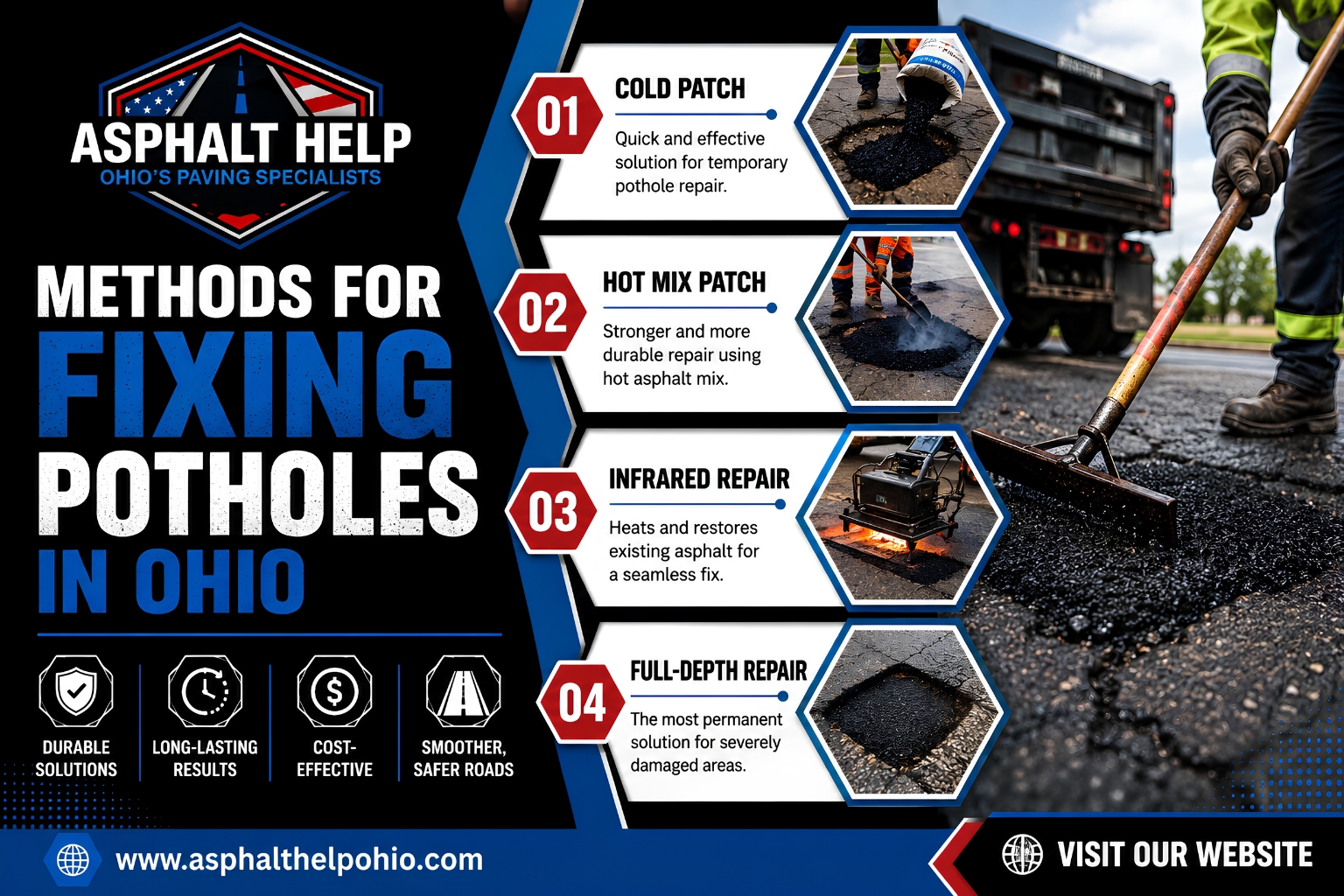
Patching repairs localized areas where the asphalt has broken apart or deteriorated. Depending on the problem, the damaged material may need to be removed and replaced.
Surface-level patching may be sufficient for certain shallow defects. When the damage extends into deeper layers, a full-depth patch may be needed to restore the affected pavement and its support.
Patching is particularly important when cracking is accompanied by potholes, missing material, or localized pavement failure.
3. Full-Depth Asphalt Repair
Full-depth repair may be necessary when deterioration extends through the asphalt layers and affects the supporting structure. The damaged pavement is removed, and weakened material beneath it is repaired or replaced as needed.
This approach is often considered for severe alligator cracking, recurring potholes, and localized structural failures. The actual repair depth should be determined by assessing the affected pavement.
4. Asphalt Resurfacing
Resurfacing involves placing a new asphalt layer over an existing pavement that is suitable for an overlay. It can renew the riding surface and address certain types of surface deterioration.
However, extensive structural damage, unstable base materials, or unresolved drainage problems should be addressed before resurfacing. Otherwise, existing defects may reappear through the new surface.
5. Drainage Improvements
When water contributes to pavement deterioration, improving drainage may be an important part of the repair plan. This can involve correcting low areas, improving water flow, or addressing other drainage deficiencies.
Drainage work alone will not repair existing cracks, but it can help address a contributing cause and reduce the likelihood of continued moisture-related damage.
Ohio’s pavement repair guidance emphasizes evaluating drainage and determining whether visible distress reflects deeper problems before choosing a repair strategy.
How to Prevent Asphalt Cracks from Spreading
Although asphalt cracking cannot always be prevented, proper maintenance can help reduce avoidable deterioration and extend pavement service life.
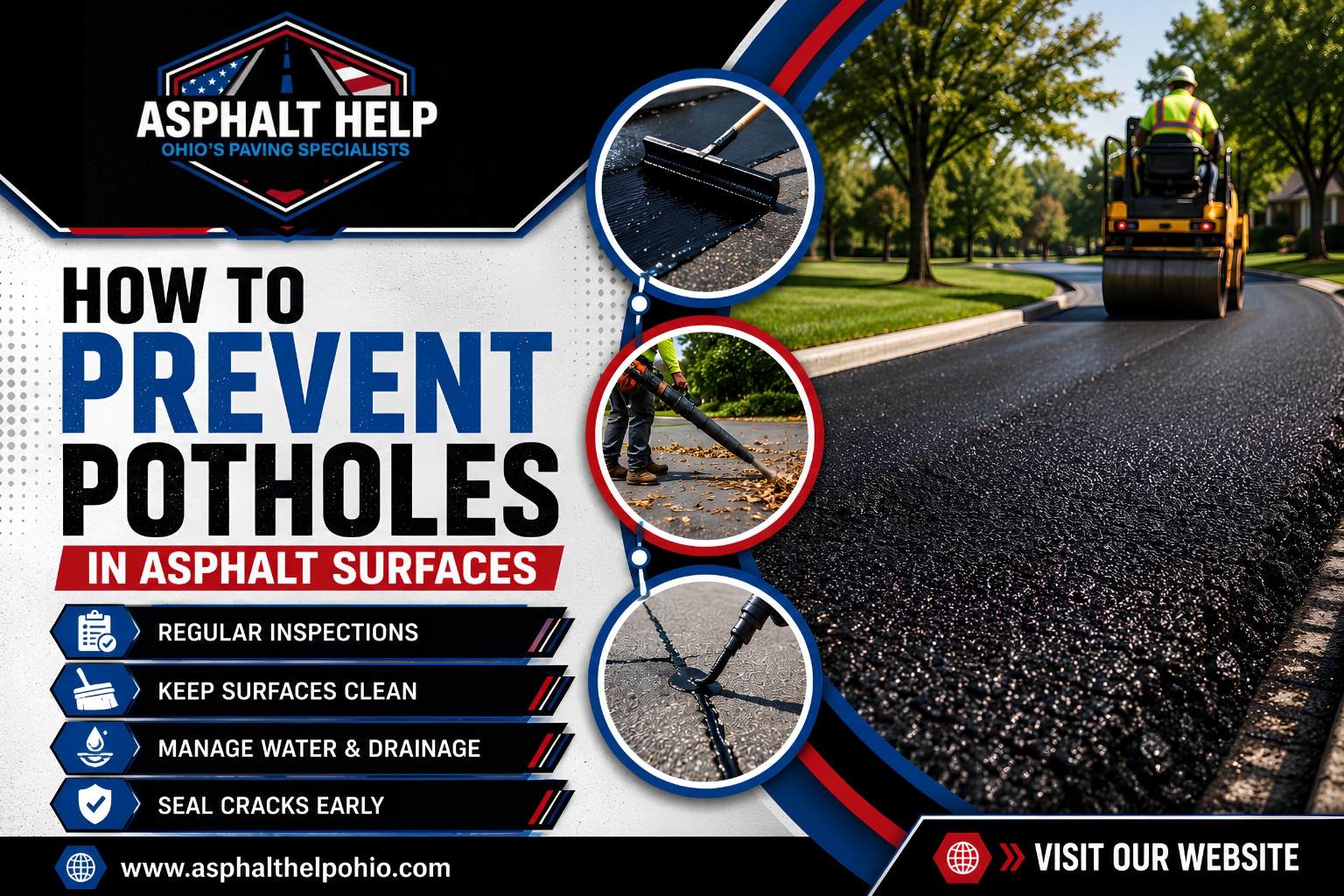
Inspect Your Pavement Regularly
Inspect driveways, parking lots, and access roads for new cracks, widening openings, loose material, and areas that collect water. Pay special attention to pavement edges and locations where vehicles regularly turn or stop.
Regular observations help identify changes before small defects develop into more extensive problems.
Seal Suitable Cracks Early
When cracks are appropriate for sealing, timely treatment can help limit water infiltration. Waiting until cracks become heavily deteriorated may reduce the effectiveness of preventive maintenance.
Cracks associated with movement, settlement, or widespread fatigue should be assessed before selecting a treatment.
Keep Drainage Areas Clear
Ensure that water can flow away from paved areas rather than accumulating near the surface or along pavement edges. Persistent standing water may indicate a drainage issue that needs attention.
Good drainage helps protect both the asphalt surface and the supporting materials underneath it.
Address Potholes and Broken Areas Promptly
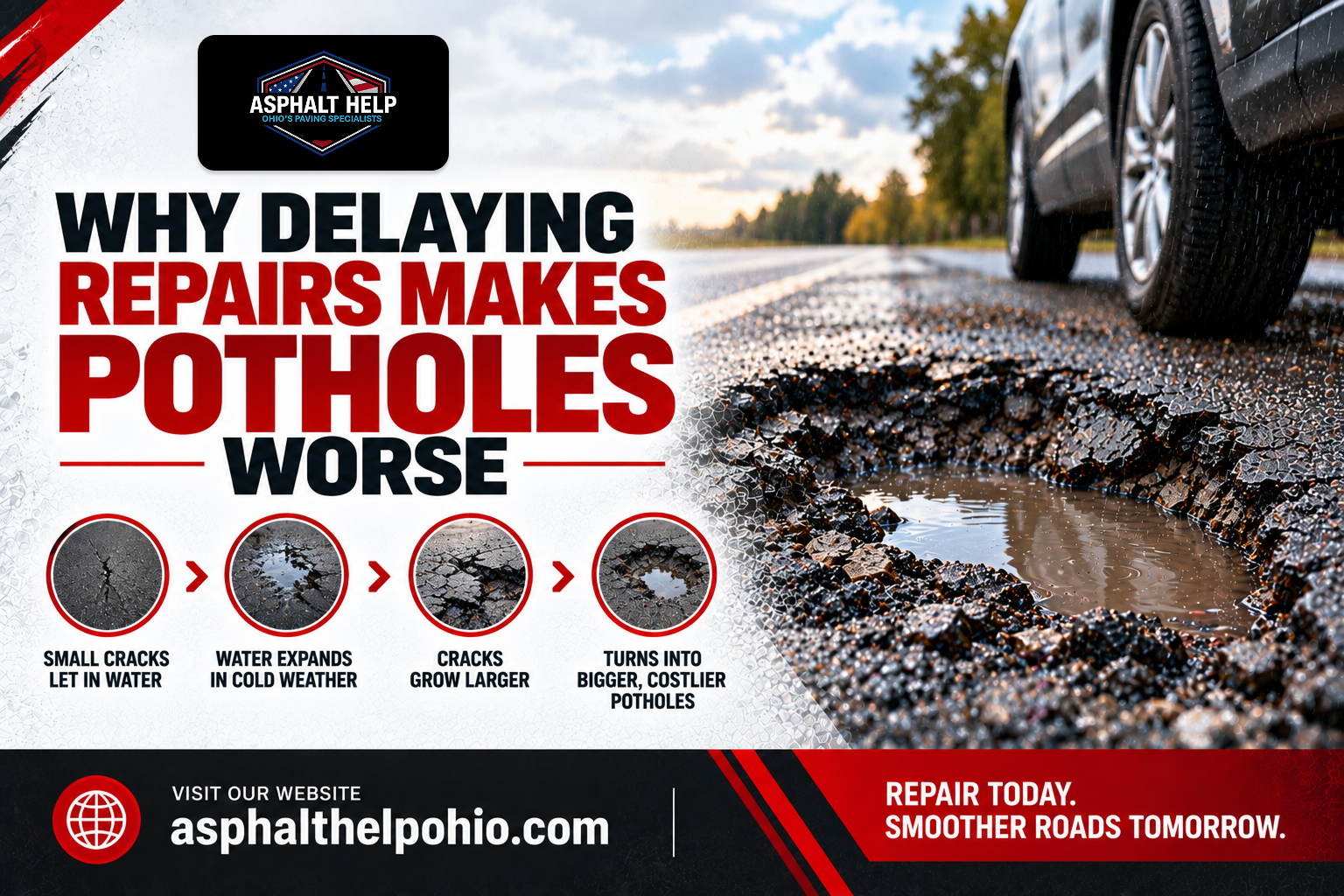
Potholes and broken pavement can allow additional water to enter and may become larger under traffic. Promptly assessing these areas can help prevent further deterioration.
If potholes repeatedly return after repair, investigate whether the original repair addressed the underlying cause.
Use Appropriate Maintenance Treatments
Crack sealing, suitable surface treatments, patching, and resurfacing each serve different purposes. Select treatments according to the pavement’s condition rather than applying the same solution to every defect.
Protective treatments can help maintain sound pavement, but they cannot substitute for structural repairs when the underlying layers have failed.
Evaluate the Pavement After Winter
After Ohio’s winter season, inspect the pavement for new cracks, widening openings, potholes, and surface breakup. Freeze-thaw cycles and moisture can aggravate existing defects.
A post-winter inspection helps identify which areas need routine maintenance and which require a more detailed assessment.
When Should You Contact an Asphalt Professional?
Some cracks can be managed through routine maintenance, but other signs indicate that the pavement may need a professional evaluation.
Consider arranging an assessment if you notice:
- Widespread alligator cracking or interconnected crack patterns.
- Cracks that continue widening or spreading.
- Potholes that repeatedly return after repairs.
- Sunken pavement or noticeable depressions.
- Loose asphalt, crumbling edges, or missing material.
- Standing water around cracked or damaged areas.
- Cracks appearing alongside deep ruts or other signs of pavement movement.
These warning signs do not automatically mean the entire pavement needs replacement. An assessment can help determine whether the problem is localized or whether deeper repairs are necessary.
For commercial properties, identifying pavement defects early is especially important because deteriorated parking areas and access routes may affect day-to-day operations. Residential property owners can also benefit from understanding whether a driveway needs minor maintenance or a more extensive repair.
Understanding Asphalt Cracks Helps Protect Your Pavement
Asphalt cracks develop for different reasons, and each pattern provides useful information about pavement condition. Longitudinal and transverse cracks may be associated with joints, temperature changes, or aging. Block cracking often indicates thermal shrinkage and binder hardening, while alligator cracking can point to fatigue and possible structural weakness. Edge cracking, reflection cracking, slippage cracking, and random cracking each have their own potential causes.
For property owners researching asphalt cracks Ohio, the most effective approach is to identify the cracking pattern, assess its severity, and determine whether the underlying pavement remains stable. Ohio’s seasonal weather, moisture exposure, traffic loads, and pavement aging can all influence how cracks develop and progress.
Asphalt Help Ohio helps property owners understand pavement problems and explore appropriate asphalt repair solutions. By recognizing cracking early and selecting repairs based on the underlying cause, property owners can make informed maintenance decisions, reduce avoidable deterioration, and help extend the useful life of their asphalt pavement.