


Are your asphalt problems only surface-level — or signs of more serious structural damage? Asphalt pavement naturally wears down over time due to traffic loads, weather exposure, moisture infiltration, and environmental stress. However, understanding the difference between asphalt surface vs structural damage is critical because not all pavement problems require the same repair approach. Some issues affect only the top layer of the asphalt and are considered cosmetic or surface-related, while others indicate serious structural weakness beneath the pavement. In Ohio, where freeze–thaw cycles, heavy rainfall, snow, road salt, and temperature fluctuations constantly impact asphalt systems, distinguishing between surface wear and structural failure becomes especially important for long-term pavement performance.
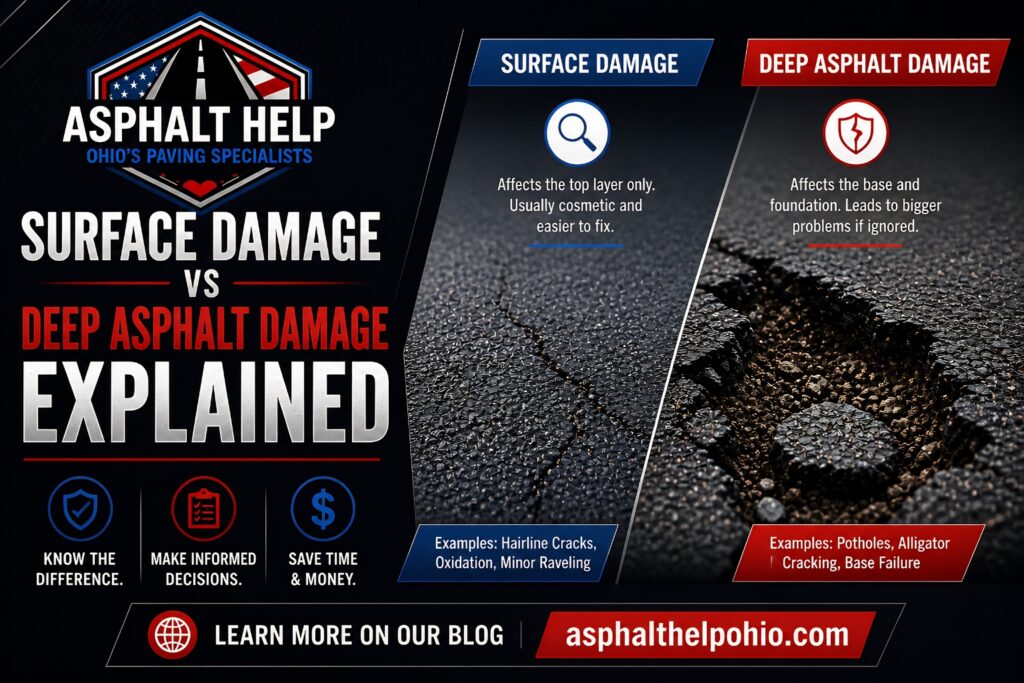
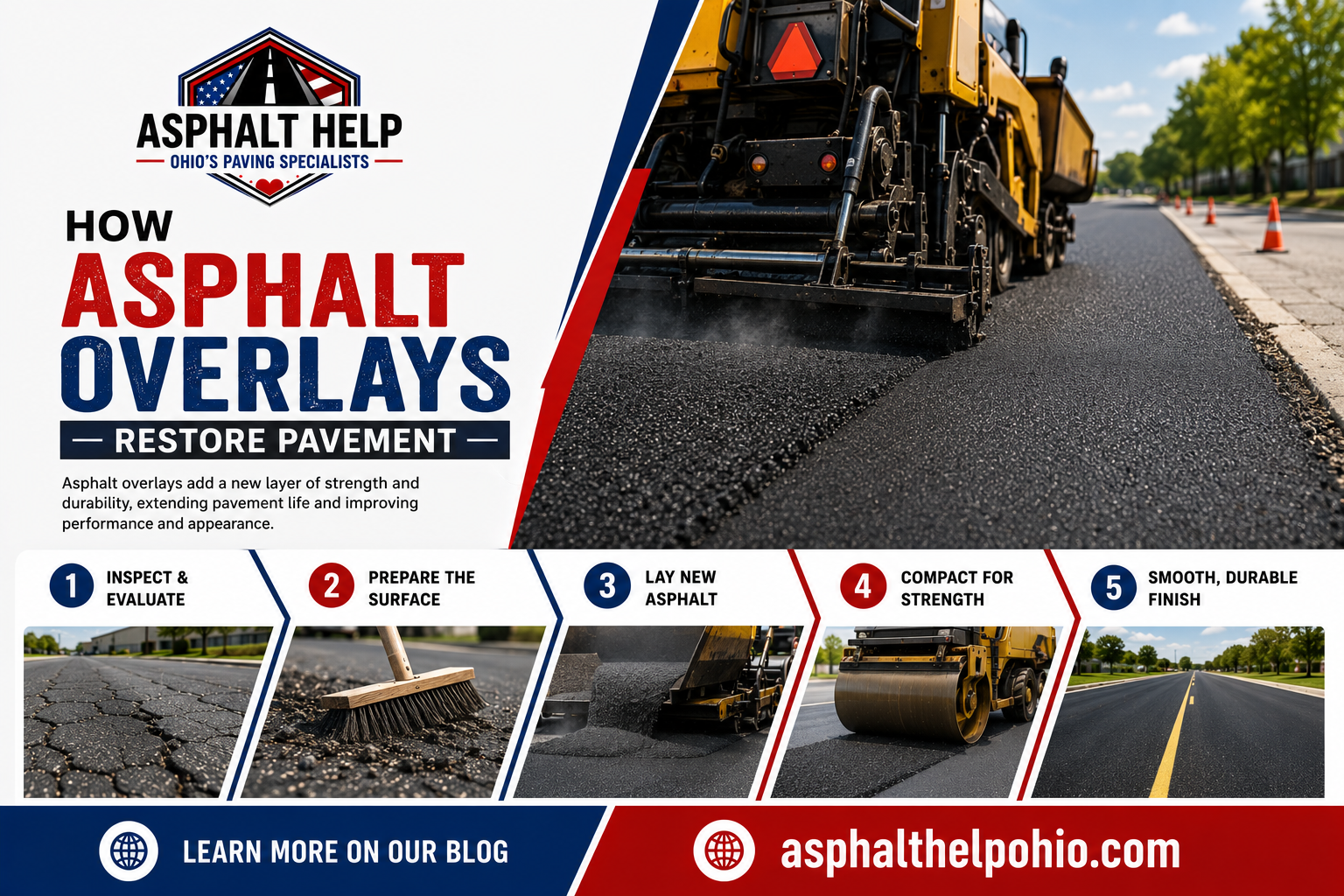
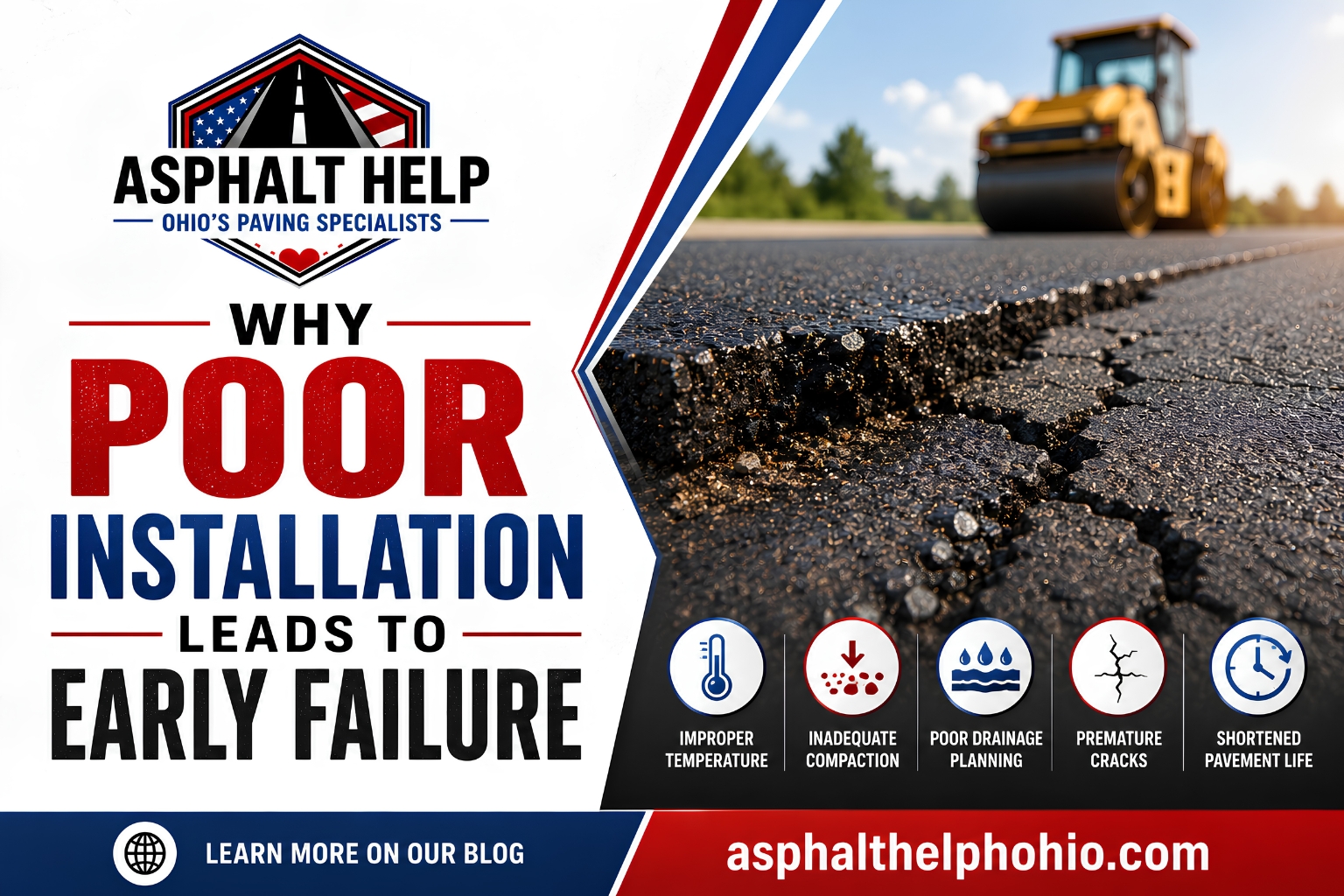
Surface damage often includes fading, minor cracking, surface oxidation, raveling, or light wear caused by aging and environmental exposure. These issues are typically repairable through preventative maintenance services such as sealcoating, crack sealing, or asphalt overlays. Structural damage, on the other hand, usually involves deeper foundation problems such as alligator cracking, rutting, sinking pavement, potholes, drainage failures, or widespread instability caused by weakened base layers and moisture intrusion. If structural issues are ignored, pavement deterioration can spread quickly and lead to expensive reconstruction or full replacement projects.
Understanding Asphalt Surface Damage
Surface damage affects the upper layer of asphalt pavement without significantly impacting the underlying foundation.
These issues are often considered early-stage pavement deterioration and may be manageable through preventative maintenance and surface repairs.
Common Types of Asphalt Surface Damage
1. Minor Surface Cracks
Small surface cracks are common as asphalt ages and experiences weather exposure.
Examples include:
- Hairline cracks
- Small longitudinal cracks
- Surface shrinkage cracks
These cracks are often caused by:
- Oxidation
- UV exposure
- Minor pavement movement
- Surface aging
If addressed early, these issues can often be controlled before causing deeper damage.
2. Fading and Oxidation
Asphalt naturally fades over time due to sun exposure and oxidation.
Signs include:
- Gray pavement color
- Dry appearance
- Loss of rich black finish
- Surface brittleness
While oxidation primarily affects appearance initially, prolonged exposure can weaken pavement flexibility and increase cracking risks.
3. Surface Raveling
Raveling occurs when asphalt aggregate begins separating from the binder.
Common symptoms include:
- Loose gravel
- Rough texture
- Surface erosion
- Worn appearance
Surface raveling is typically an early warning sign of aging pavement and surface wear.
4. Minor Edge Wear
Driveway and parking lot edges are vulnerable to:
- Small cracks
- Surface chipping
- Minor crumbling
These issues often develop due to moisture exposure and traffic stress near unsupported pavement edges.
What Is Structural Asphalt Damage?
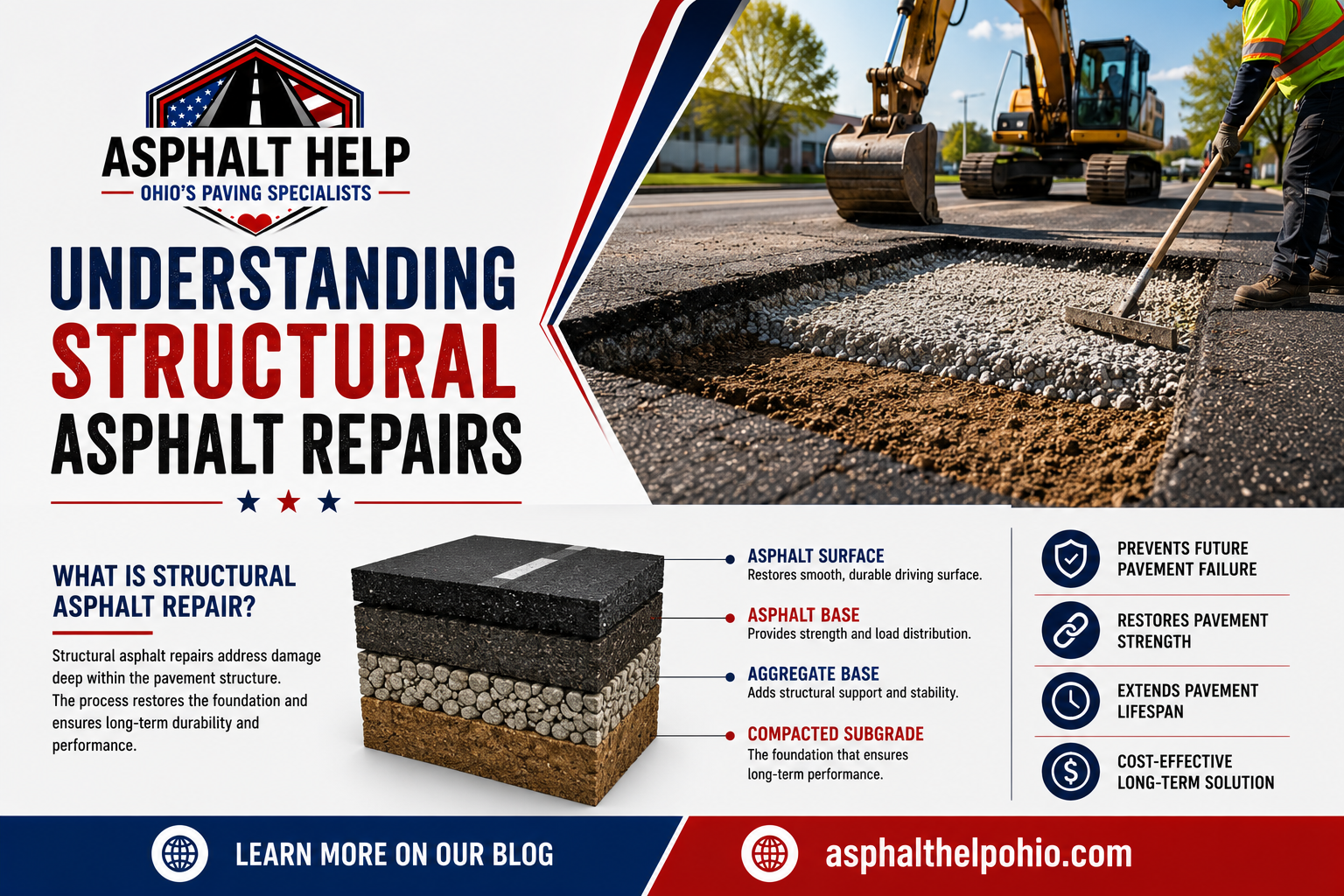
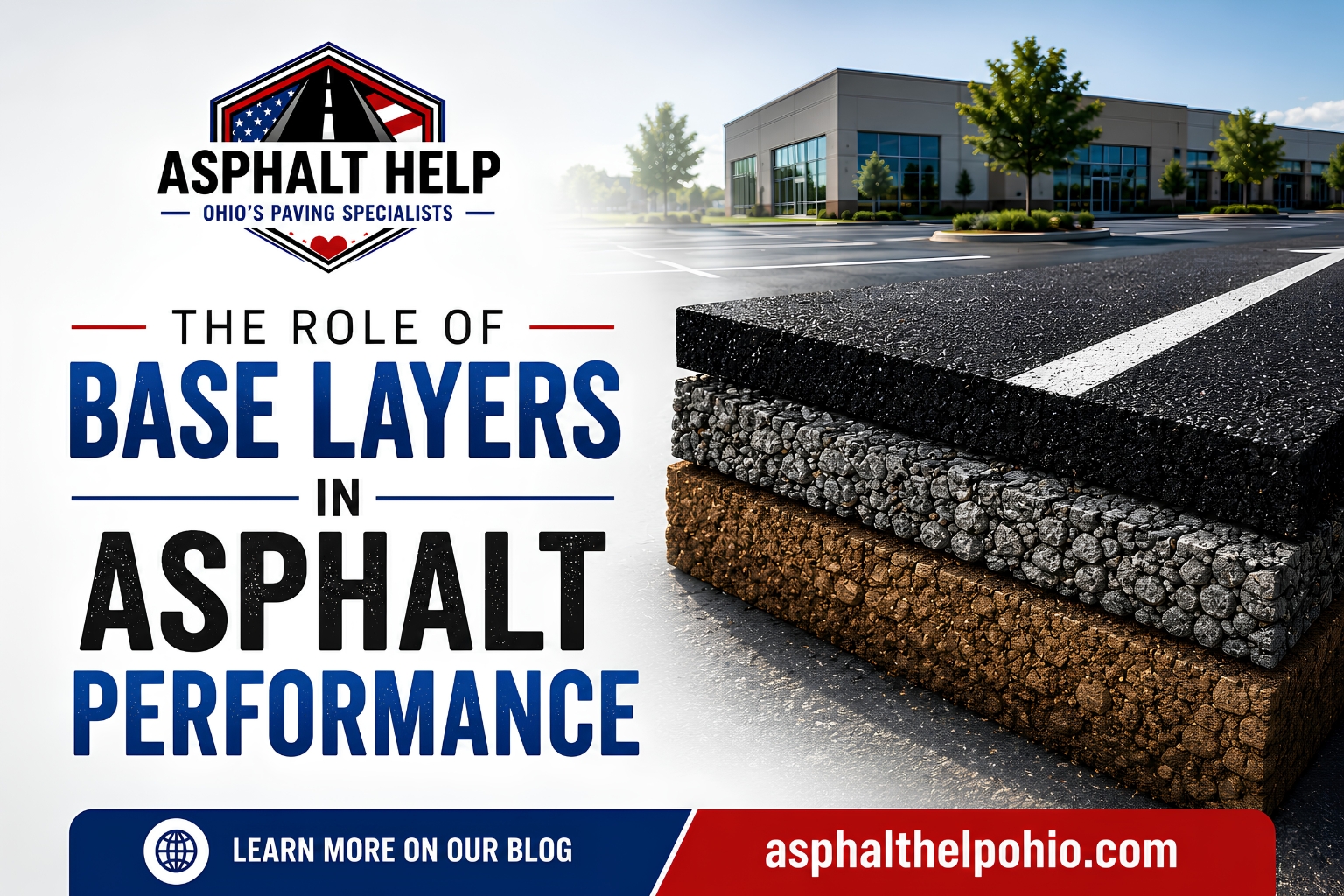
Structural asphalt damage affects the deeper pavement layers beneath the surface.
Unlike surface wear, structural problems usually involve:
- Foundation weakening
- Base failure
- Soil instability
- Drainage problems
- Significant moisture infiltration
Structural damage often requires more extensive repairs because the problem exists below the visible pavement surface.
Common Types of Structural Asphalt Damage
1. Alligator Cracking
Alligator cracking is one of the clearest indicators of structural pavement failure.
Characteristics include:
- Interconnected crack patterns
- Surface resembling reptile skin
- Multiple broken pavement sections
This type of damage usually indicates:
- Base failure
- Foundation instability
- Heavy load fatigue
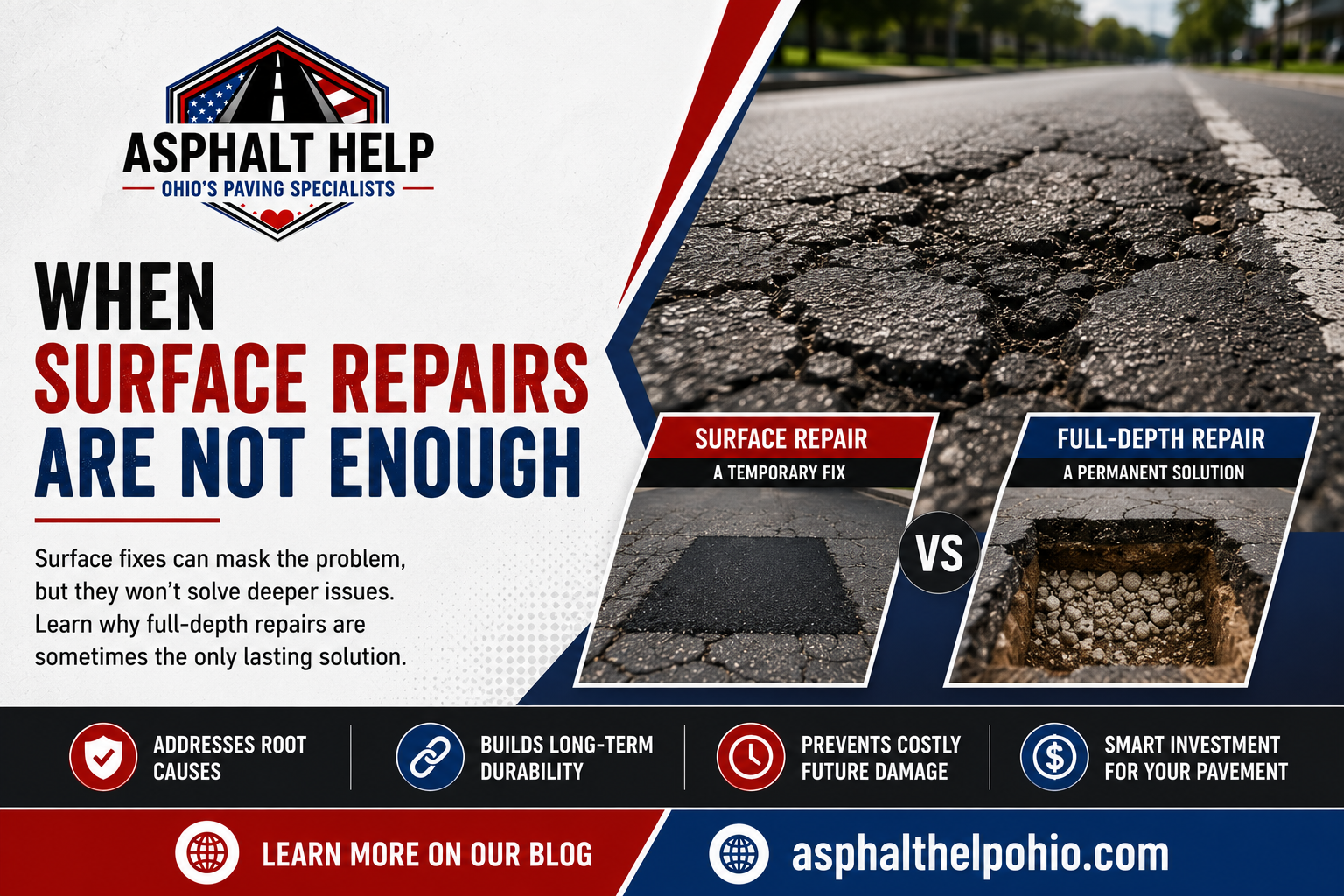
Surface sealing alone will not correct structural failure.
2. Potholes
Potholes develop when the pavement foundation weakens beneath the surface.
Common causes include:
- Water infiltration
- Freeze-thaw damage
- Base erosion
- Traffic stress
Potholes indicate that structural support beneath the pavement has already deteriorated.
3. Surface Sinking and Depressions
Uneven pavement surfaces often signal foundation instability.
Signs include:
- Sunken areas
- Surface depressions
- Tire rutting
- Low spots
These issues are commonly caused by:
- Weak base layers
- Soil movement
- Improper compaction
- Moisture damage
4. Severe Drainage Problems
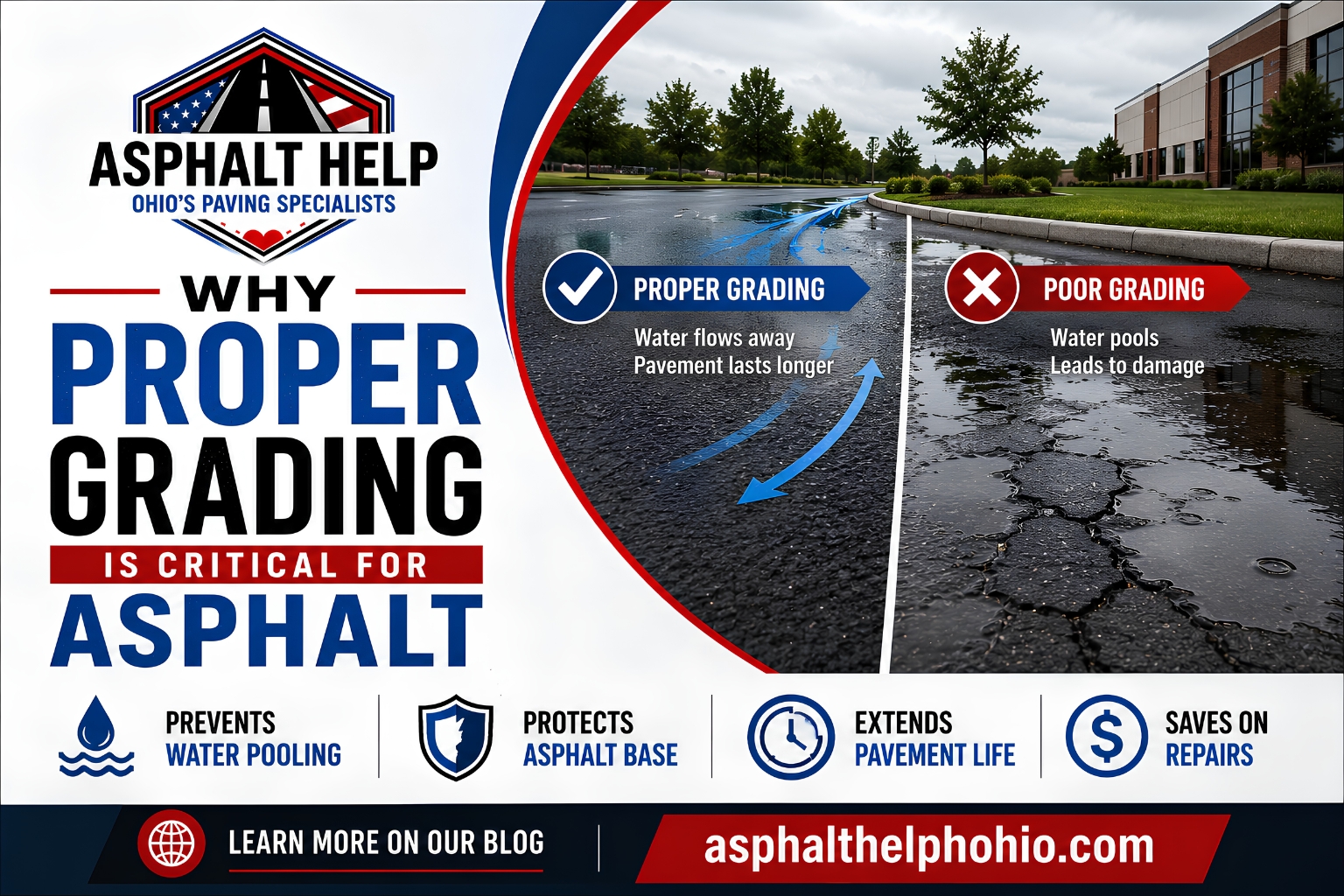
Standing water is often a sign of deeper pavement issues.
Drainage-related structural symptoms include:
- Persistent pooling
- Water retention
- Base softening
- Surface shifting
Poor drainage allows moisture to penetrate beneath the pavement, weakening the entire asphalt structure.
Why Ohio Weather Accelerates Both Surface and Structural Damage
Ohio’s climate creates ideal conditions for pavement deterioration.
Common environmental stress factors include:
- Freeze-thaw cycles
- Snow and ice
- Road salt exposure
- Heavy rainfall
- Seasonal temperature swings
- Moisture fluctuations
These conditions can quickly transform small surface problems into serious structural failures if maintenance is delayed.
Surface Damage vs Structural Damage Comparison Table
| Damage Type | Surface Damage | Structural Damage |
|---|---|---|
| Depth | Top asphalt layer | Beneath pavement surface |
| Severity | Mild to moderate | Moderate to severe |
| Common Signs | Fading, small cracks, raveling | Potholes, sinking, alligator cracks |
| Main Causes | Oxidation, UV exposure | Base failure, moisture intrusion |
| Repair Complexity | Lower | Higher |
| Structural Risk | Minimal initially | Significant |
| Moisture Impact | Surface exposure | Foundation weakening |
| Typical Solution | Sealcoating, crack filling | Structural repair or reconstruction |
How Surface Damage Can Become Structural Damage
One of the biggest pavement maintenance mistakes is ignoring early surface problems.
For example:
- Small cracks form.
- Water enters the pavement.
- Freeze-thaw cycles expand the cracks.
- Moisture weakens the base layer.
- Structural failure develops.
This process is extremely common throughout Ohio due to seasonal weather fluctuations.
Routine maintenance helps interrupt this cycle before severe structural deterioration occurs.
Importance of Early Pavement Inspections
Professional inspections help identify whether pavement damage is cosmetic or structural.
This distinction is important because:
- Surface repairs may not solve structural issues.
- Structural damage can worsen beneath the surface.
- Early intervention helps reduce severe deterioration.
Property owners seeking reliable Asphalt Paving Services in Columbus Ohio benefit from comprehensive pavement evaluations that assess both visible and subsurface conditions.
Preventative Maintenance for Surface Damage
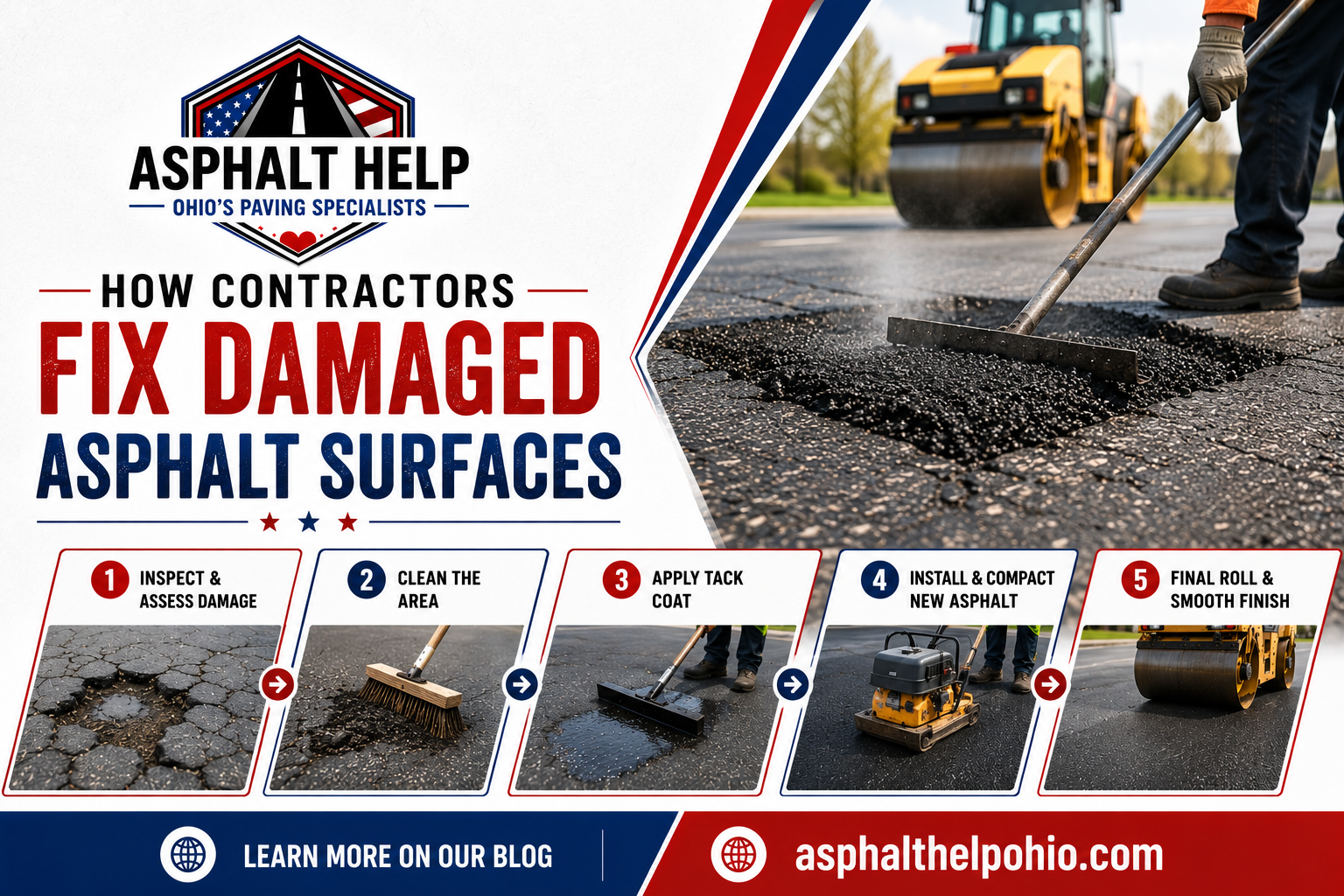
Surface-level issues can often be managed through:
- Sealcoating
- Crack sealing
- Surface patching
- Drainage improvements
- Routine inspections
Preventive maintenance helps extend pavement lifespan while reducing the likelihood of structural failure.
Why Structural Repairs Require Professional Expertise
Structural pavement damage requires more advanced repair strategies.
Working with experienced asphalt contractors in Central Ohio helps ensure:
- Accurate pavement assessments
- Proper drainage evaluation
- Foundation inspection
- Long-term repair planning
- Structural stability solutions
Experienced professionals understand how Ohio’s environmental conditions affect pavement systems and can identify the true source of deterioration.
Signs You Should Schedule a Professional Pavement Evaluation
Property owners should seek professional inspections if they notice:
- Expanding cracks
- Repeated potholes
- Water pooling
- Surface sinking
- Uneven pavement
- Multiple recurring repairs
- Extensive cracking patterns
These symptoms may indicate deeper structural problems beneath the asphalt surface.
Why Local Ohio Experience Matters
Ohio pavement systems require climate-specific expertise.
Local paving professionals understand:
- Freeze-thaw stress
- Seasonal moisture risks
- Soil movement
- Drainage challenges
- Asphalt aging patterns
At Asphalt Help Ohio, pavement solutions are tailored specifically for Ohio’s environmental conditions and long-term durability needs.
Long-Term Benefits of Addressing Damage Early
Early pavement maintenance provides:
- Reduced structural deterioration
- Longer pavement lifespan
- Better surface appearance
- Lower maintenance frequency
- Improved drainage performance
- Enhanced safety
- Better long-term pavement stability
Prompt attention to small issues often prevents extensive structural repairs later.
Final Thoughts
Identifying whether asphalt damage is cosmetic or structural is one of the most important steps in protecting pavement lifespan and reducing unnecessary repair costs. Small surface issues can often be repaired early with routine maintenance, while structural failures usually require more extensive repairs to stabilize the pavement foundation and prevent continued deterioration. Understanding the difference between asphalt surface vs structural damage helps homeowners, business owners, and property managers make informed maintenance decisions before pavement conditions worsen.
For residential driveways, early inspections can help detect hidden moisture damage, foundation instability, or drainage issues before major cracking and potholes develop. For commercial parking lots and paved surfaces, identifying structural damage early improves safety, protects traffic flow, and helps reduce long-term liability and repair expenses. Services such as crack sealing, overlays, drainage correction, patching, and full-depth repairs may all play a role depending on the severity of the pavement damage.
If your asphalt surface is showing signs of cracking, sinking, potholes, or uneven wear, Asphalt Help Ohio can help evaluate your pavement condition and identify whether the damage is surface-level or structural before recommending the most effective repair solution for Ohio’s challenging climate conditions.