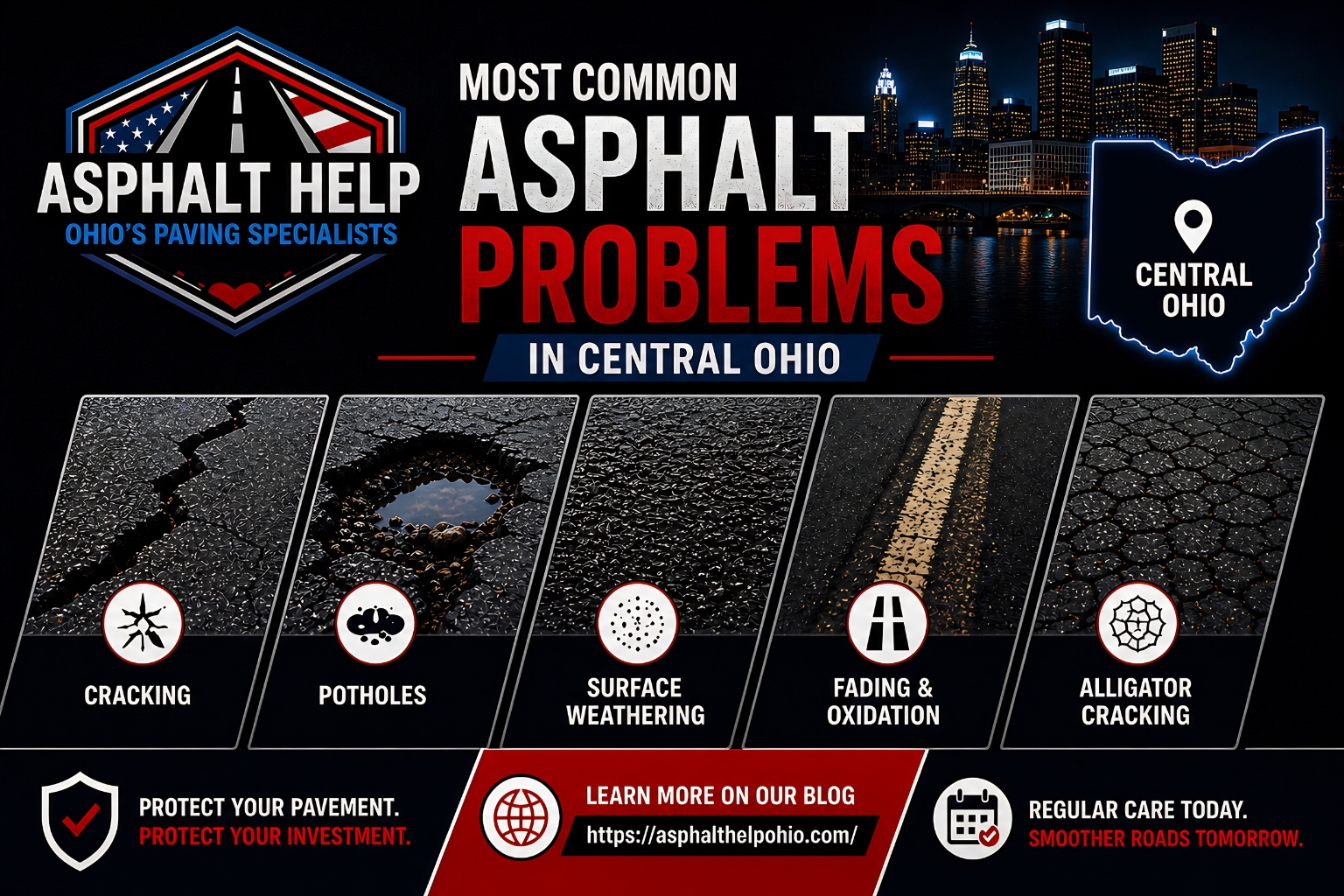



What happens when a driveway or parking lot starts breaking down in one area but does not yet need a full replacement? In many cases, the answer is asphalt patching ohio. Patching is used to repair localized damage such as potholes, cracked sections, and surface failures before those problems spread across the rest of the pavement. In Ohio, that matters even more because water can weaken the underlying soil, traffic can break unsupported asphalt apart, and freeze-thaw cycles can make small failures grow faster.
For property owners comparing Asphalt Paving Services in Columbus Ohio, patching is often one of the most practical ways to protect the pavement they already have. Asphalt Help Ohio says it provides asphalt patching and repair, resurfacing, removal and replacement, driveway paving, parking lot paving, and other full-service asphalt work across Central Ohio, with projects that begin with site evaluation, drainage review, and base-focused repair planning.
Working with experienced asphalt contractors in Central Ohio matters because patching is not just about filling a hole. It usually requires removing damaged material, checking the base below, restoring support when needed, and compacting the new asphalt so the repaired area can blend with the surrounding surface. Asphalt Help Ohio says it handles exactly that kind of repair work for residential, commercial, and municipal properties, and it emphasizes long-term durability rather than quick cover-ups.
What asphalt patching is!
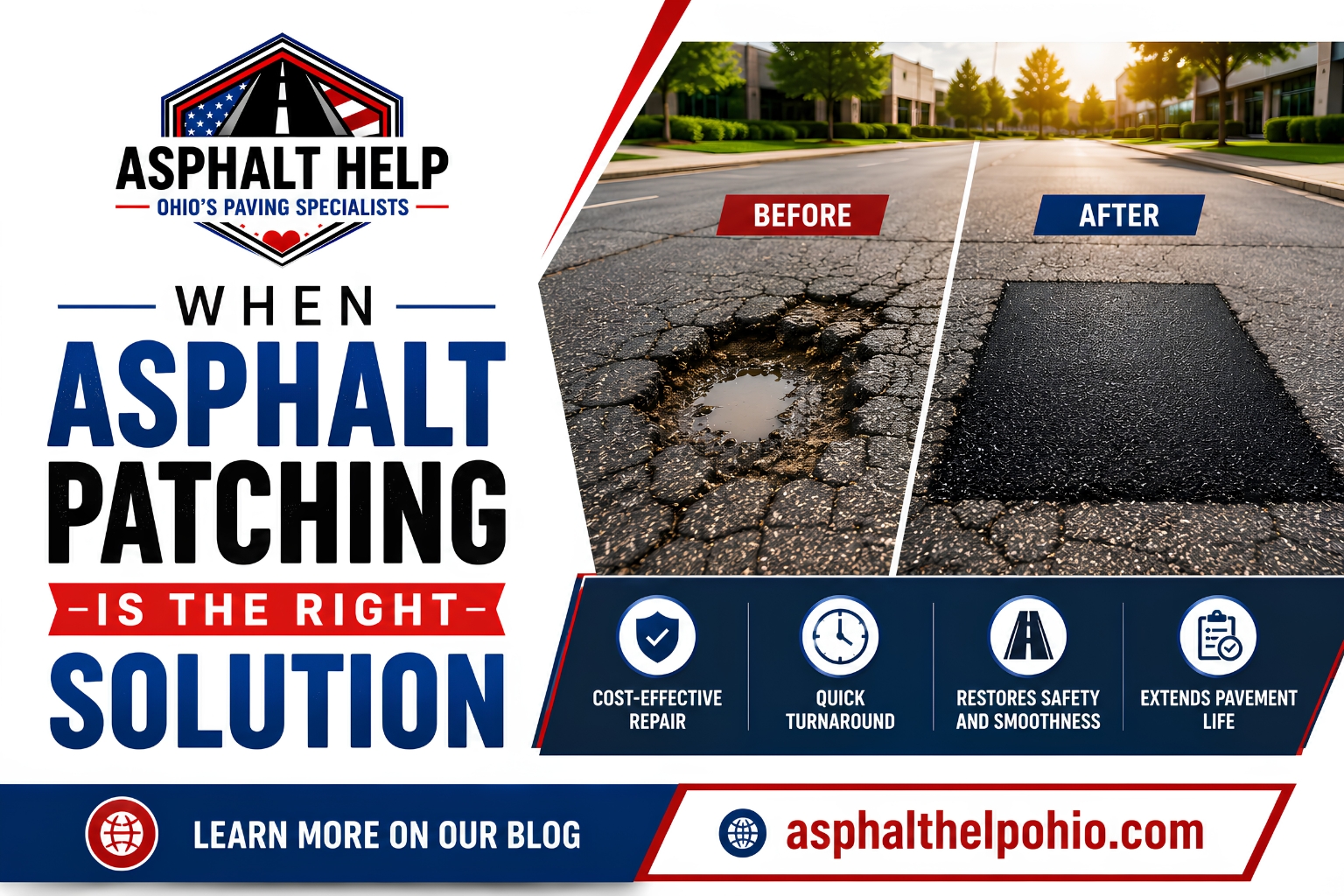
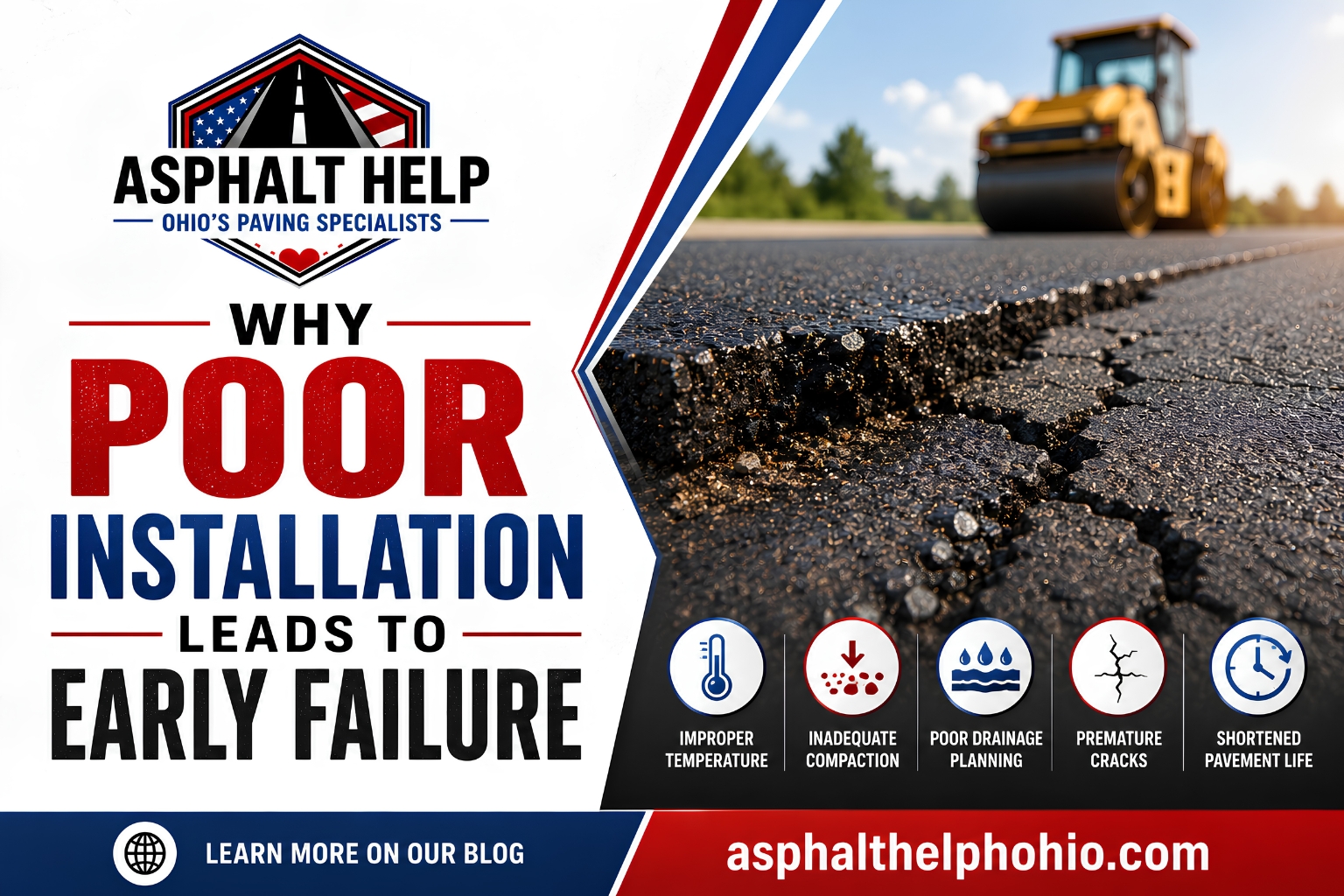
Asphalt patching is a targeted repair process used to fix damaged spots in a pavement surface without rebuilding the entire area. The patch may be temporary or more permanent depending on weather conditions, the condition of the base, and how severe the damage is. Technical references on pothole repair describe temporary patching as common when weather is not favorable, while more durable repairs often use hot-mix asphalt and replace damaged base material beneath the failed section.
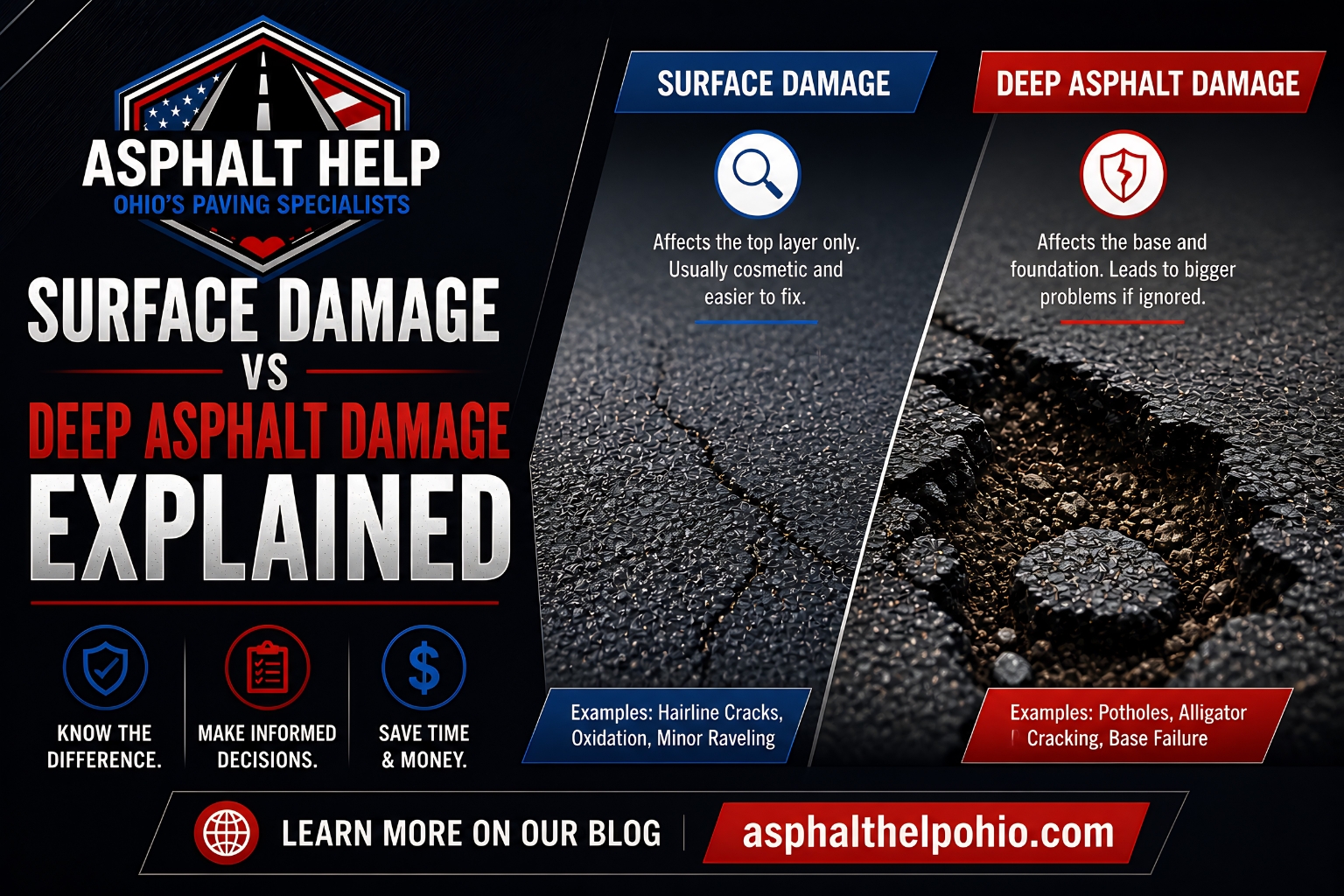
Patching is usually chosen when the pavement is still salvageable overall. If the foundation is stable enough, a patch can restore strength, improve safety, and stop damage from spreading. If the pavement has widespread structural failure, patching may be only a short-term fix and resurfacing or replacement may be needed instead. Asphalt Help Ohio notes that severely cracked or sinking pavement may require removal and replacement, while localized damage can often be handled with patching and repair.
What causes the need for asphalt patching
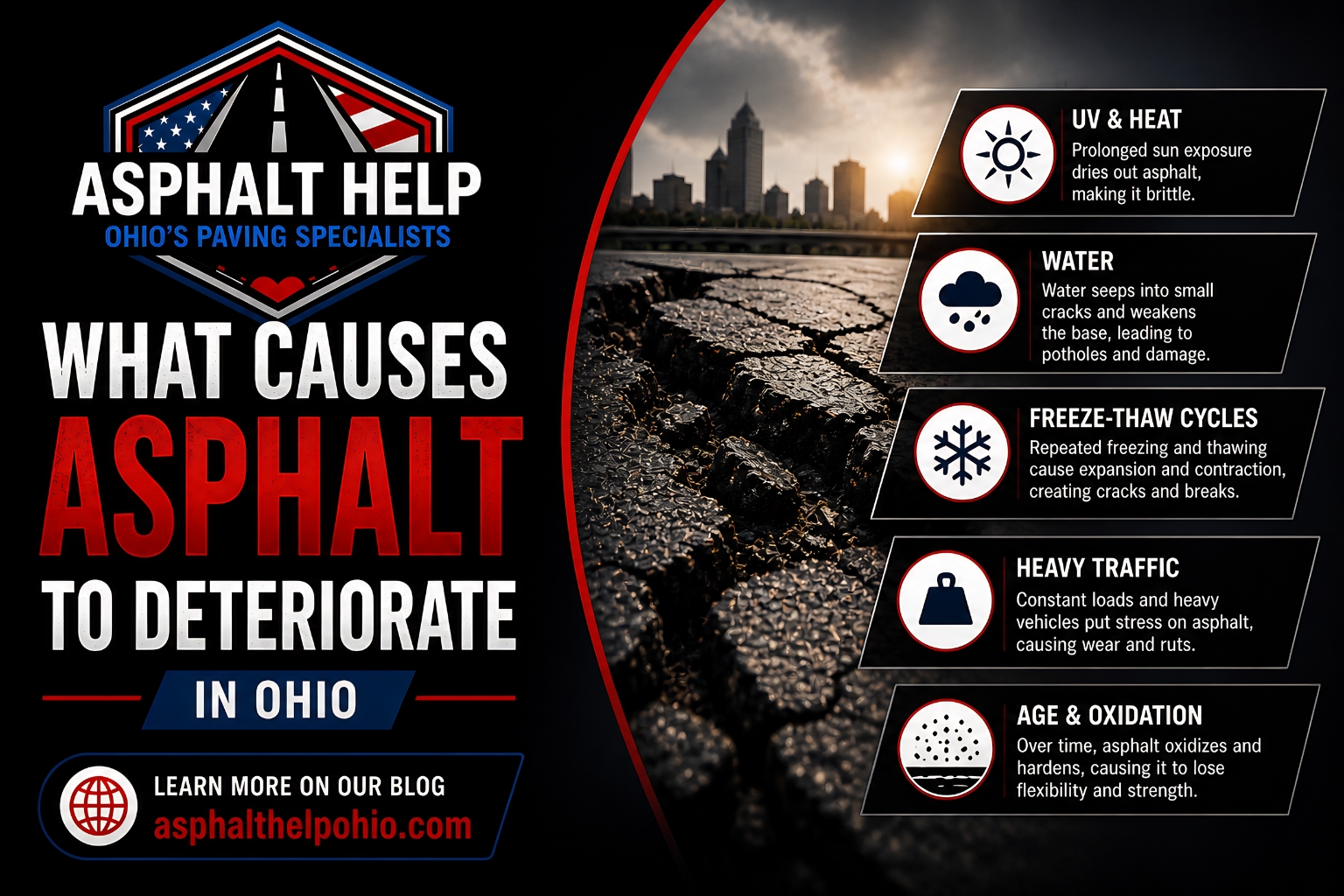
1. Water damage
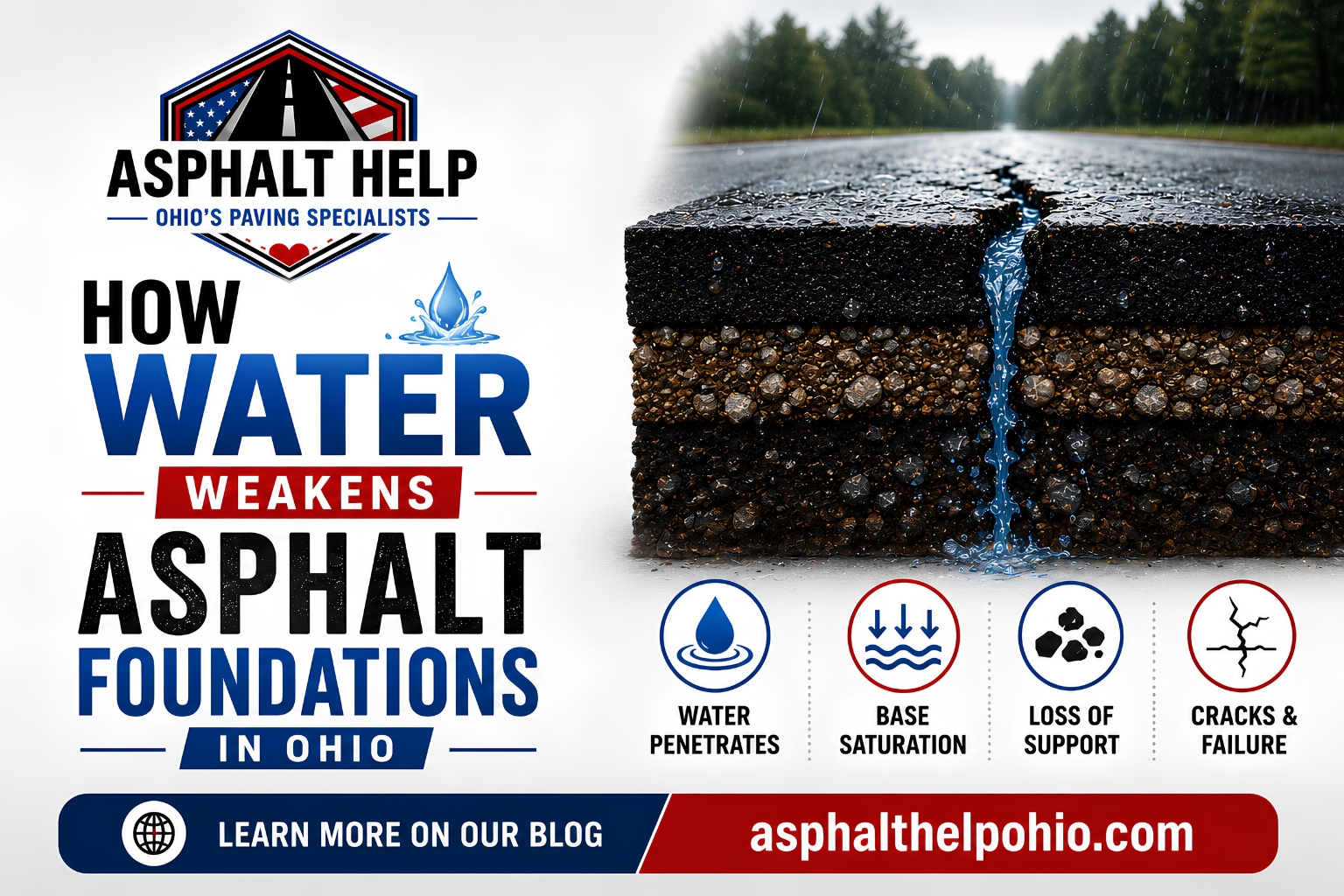
Water is one of the biggest causes of pavement failure. It weakens the soil below the asphalt, and then traffic stresses the unsupported surface until it breaks apart. In cold weather, trapped water can freeze and expand, widening cracks and helping potholes form.
2. Repeated traffic loads
Asphalt surfaces wear out faster where vehicles brake, turn, and concentrate pressure in the same spots. Over time, those areas can deform or break apart if the base underneath is not strong enough. Rutting and fatigue cracking are common consequences of repeated load stress on weakened pavement.
3. Freeze-thaw cycles
Ohio weather makes small cracks more dangerous. Water enters the opening, freezes, expands, and then thaws, leaving the pavement weaker each time the cycle repeats. This is one reason potholes and cracking often accelerate after winter weather.
4. Aging and oxidation
As asphalt ages, UV exposure and air cause oxidation, which makes the surface stiffer and less resilient. Once that happens, cracking becomes more likely and damaged sections begin to fail faster.
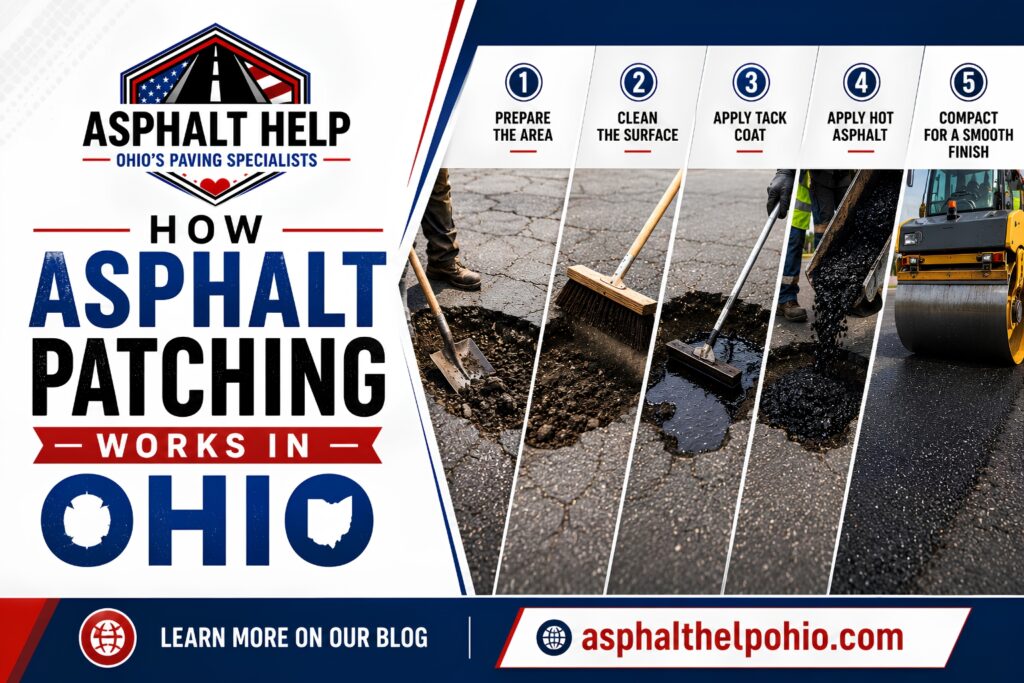
How the patching process works
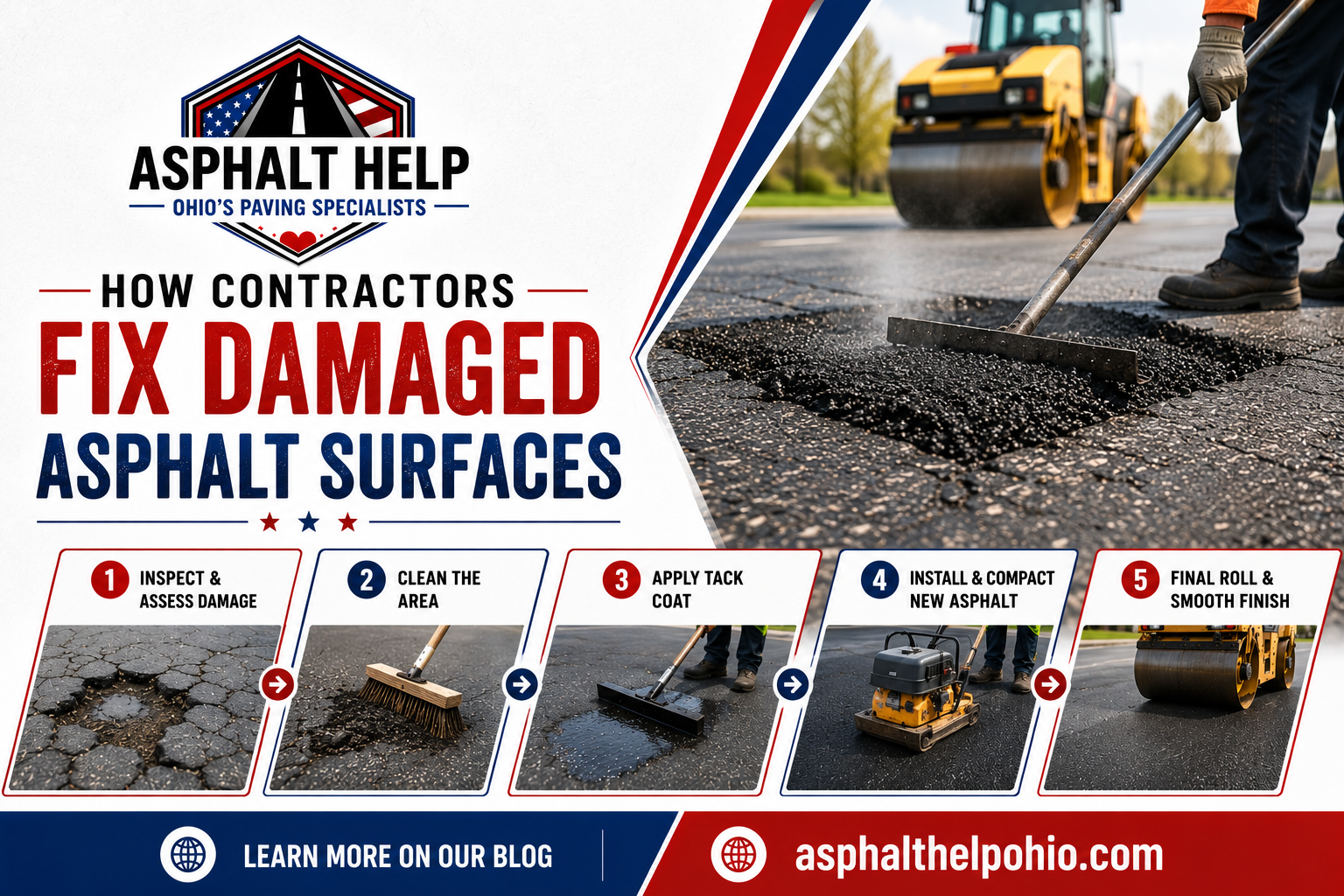
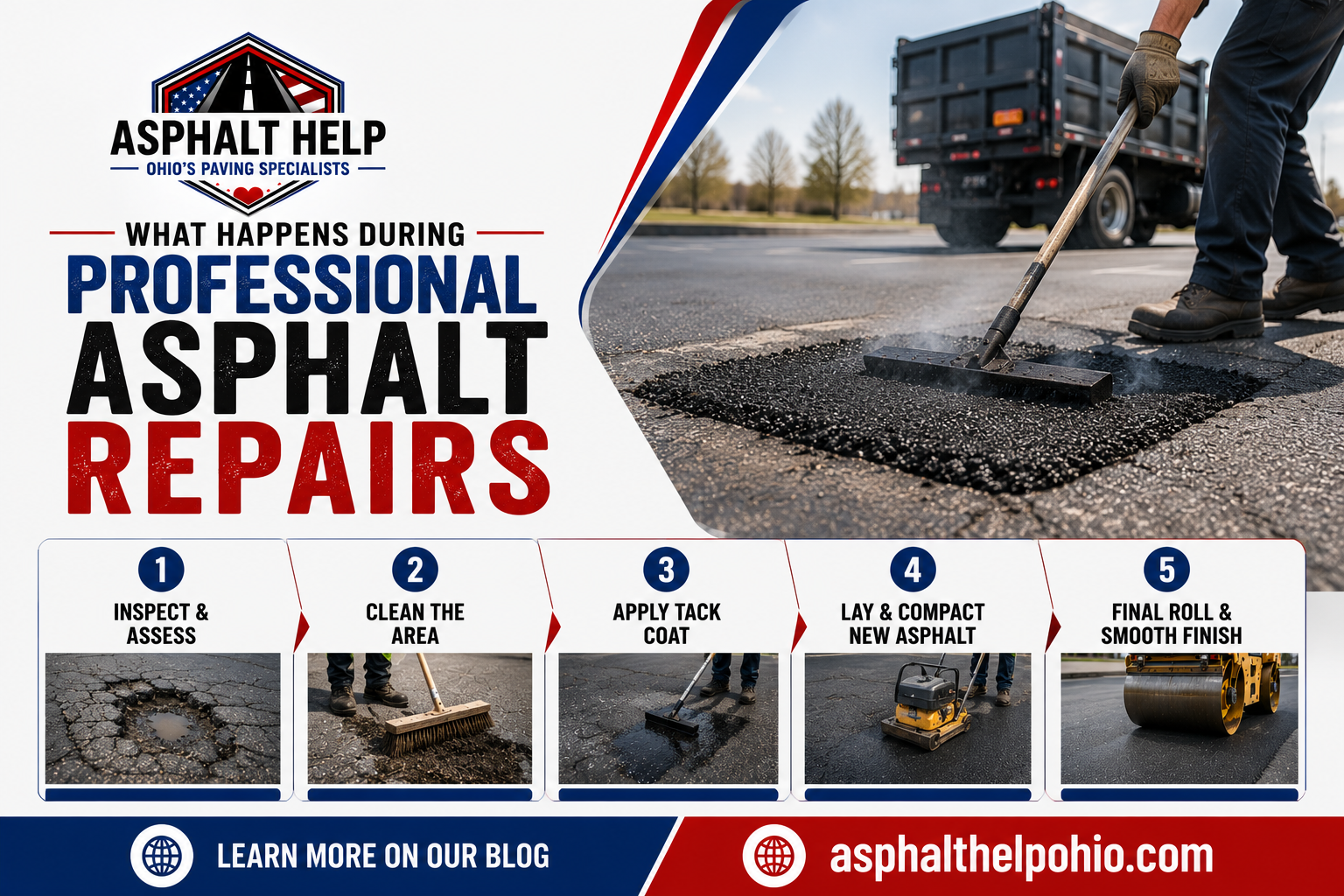
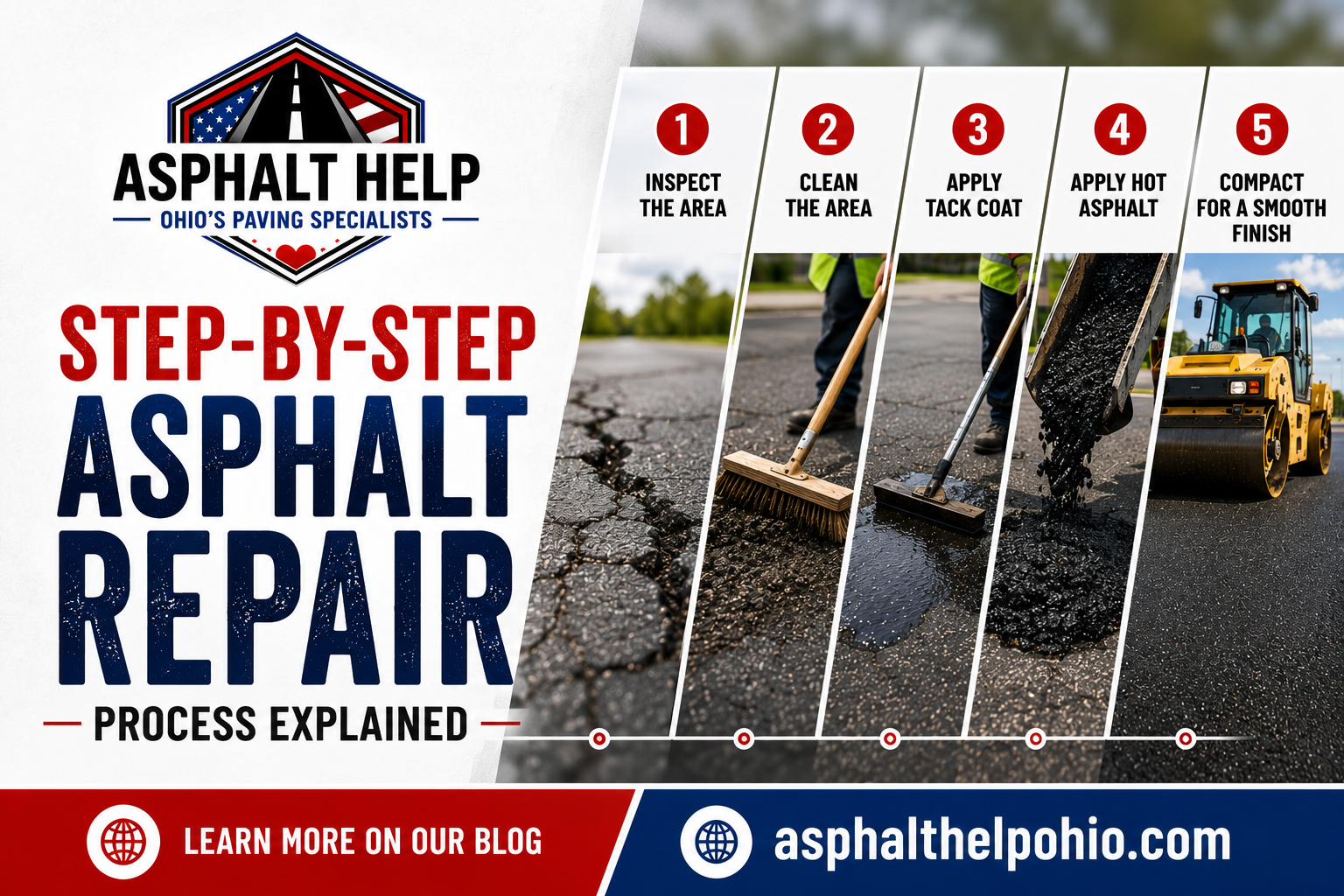
1. Inspection of the damaged area
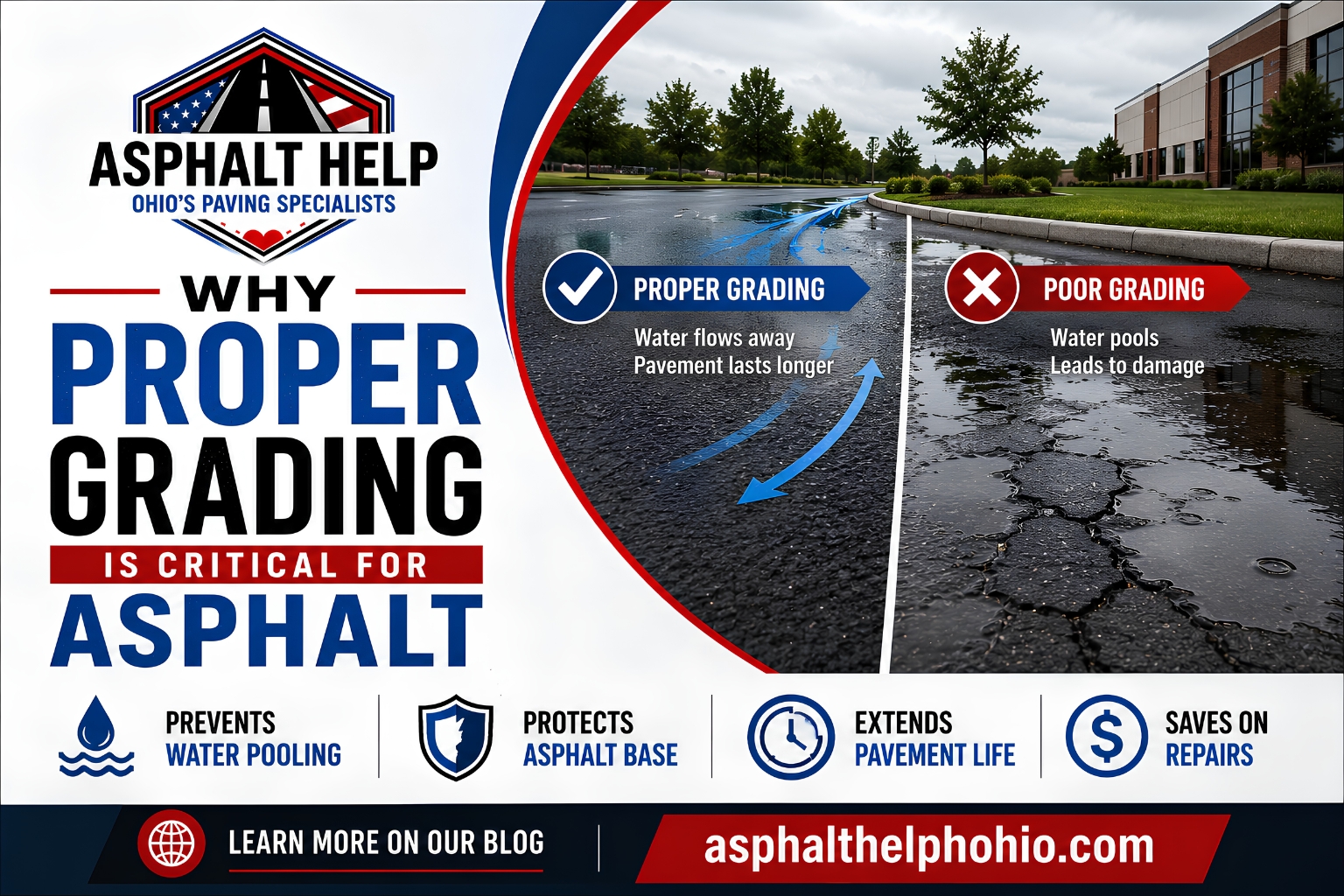
A contractor starts by identifying the damaged section and checking whether the issue is only at the surface or extends deeper into the base. Asphalt Help Ohio says every project begins with a detailed site evaluation that checks grading, drainage flow, and areas prone to water retention because standing water accelerates cracking and weakens the base.
2. Cutting out the failed asphalt
The damaged asphalt is removed so the crew can work with a stable perimeter. Pothole repair guidance describes semi-permanent repairs as involving reconstruction of the failed area’s perimeter and replacement of damaged material rather than simply throwing material into the hole.
3. Repairing the base if needed
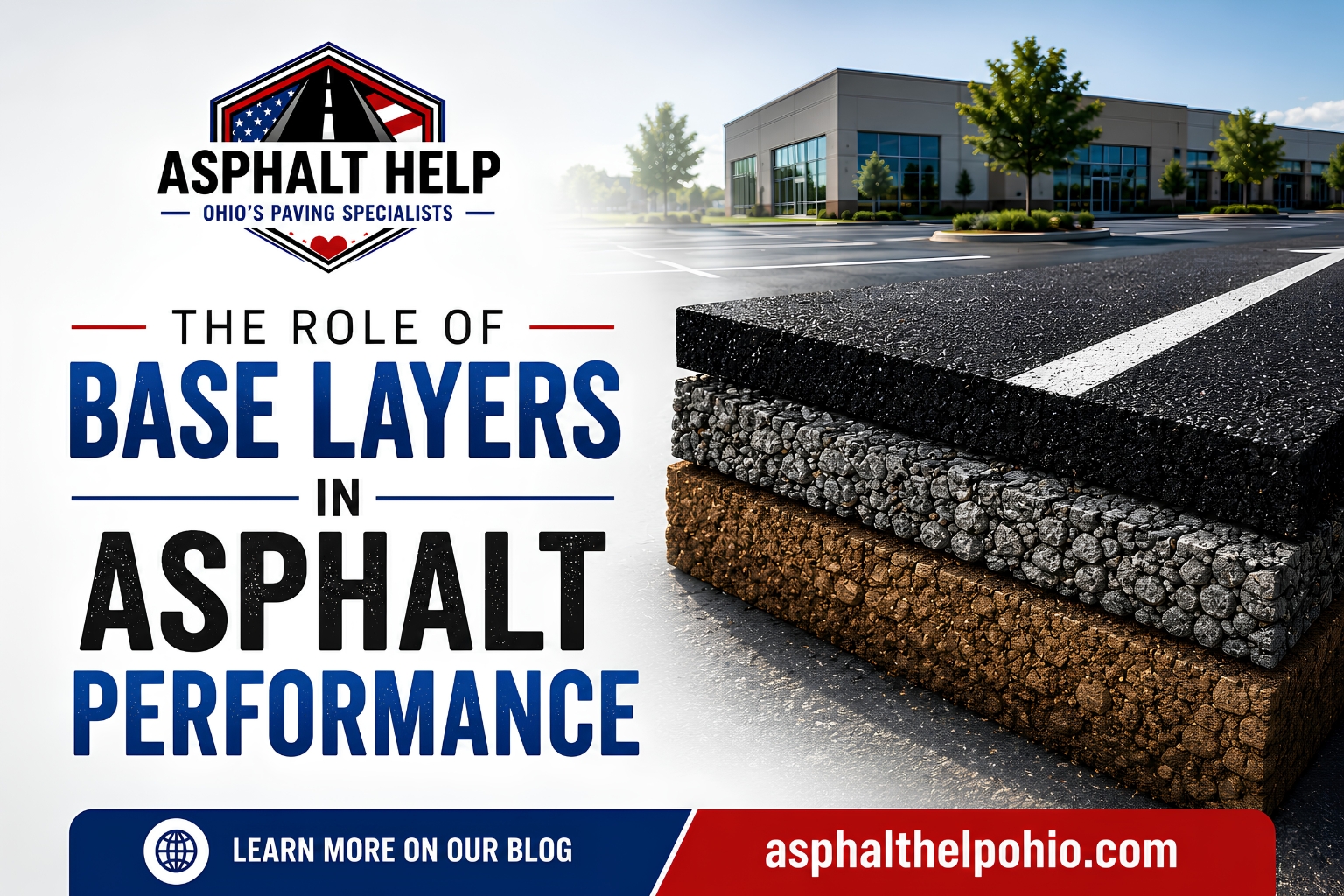
If water has softened the base or subgrade, the damaged support material has to be corrected before the new asphalt goes in. That step is important because patches fail early when the pavement underneath is still weak. Asphalt Help Ohio says its patching and repair work includes repairing the base when needed so the fix lasts longer.
4. Placing the new asphalt
Once the area is prepared, the patch material is placed. Patching can use hot-mix asphalt or cold-mix material depending on conditions. Technical references note that cold mix is commonly used for temporary patching, while hot-mix patching is preferred for more durable repairs when conditions allow.
5. Compacting the repair
Compaction is critical because it helps the patch bond with the surrounding pavement and reduces the chance of early failure. Asphalt Help Ohio’s customer feedback highlights the importance of proper compaction and thickness before compaction, which shows how much the finished durability depends on this step.
6. Blending the repair with the surface
A good patch should not just fill the hole; it should also fit the surrounding grade as closely as possible. That helps the pavement look cleaner, drain better, and reduce trip hazards. Patching guidance from technical sources also notes that more careful repairs reconstruct the perimeter of the failed area and use a more durable fill above replaced base materials.
Temporary patching versus more permanent patching
| Repair type | Best use | Key characteristic |
|---|---|---|
| Temporary patch | Weather does not allow a full repair | Fast restoration, often using cold mix asphalt |
| Semi-permanent patch | Damaged area needs a more reliable fix | Better perimeter reconstruction and hot-mix replacement when possible |
| Base repair plus patch | Damage extends below the surface | Removes weak material and rebuilds support before patching |
Temporary patching can be useful in winter or during unfavorable conditions, but it is not always the best long-term answer. More durable work is usually better when the weather and pavement condition allow it.
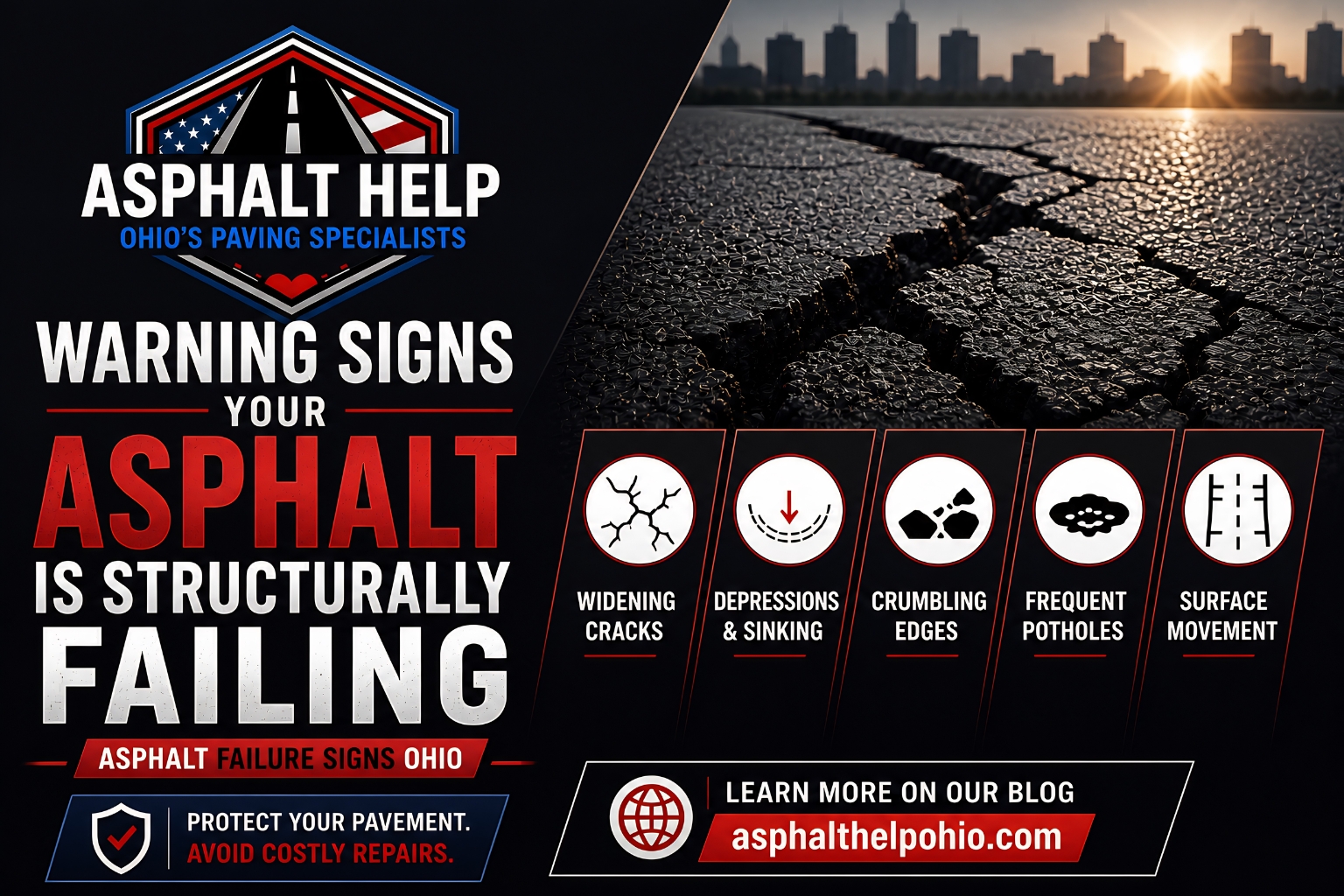
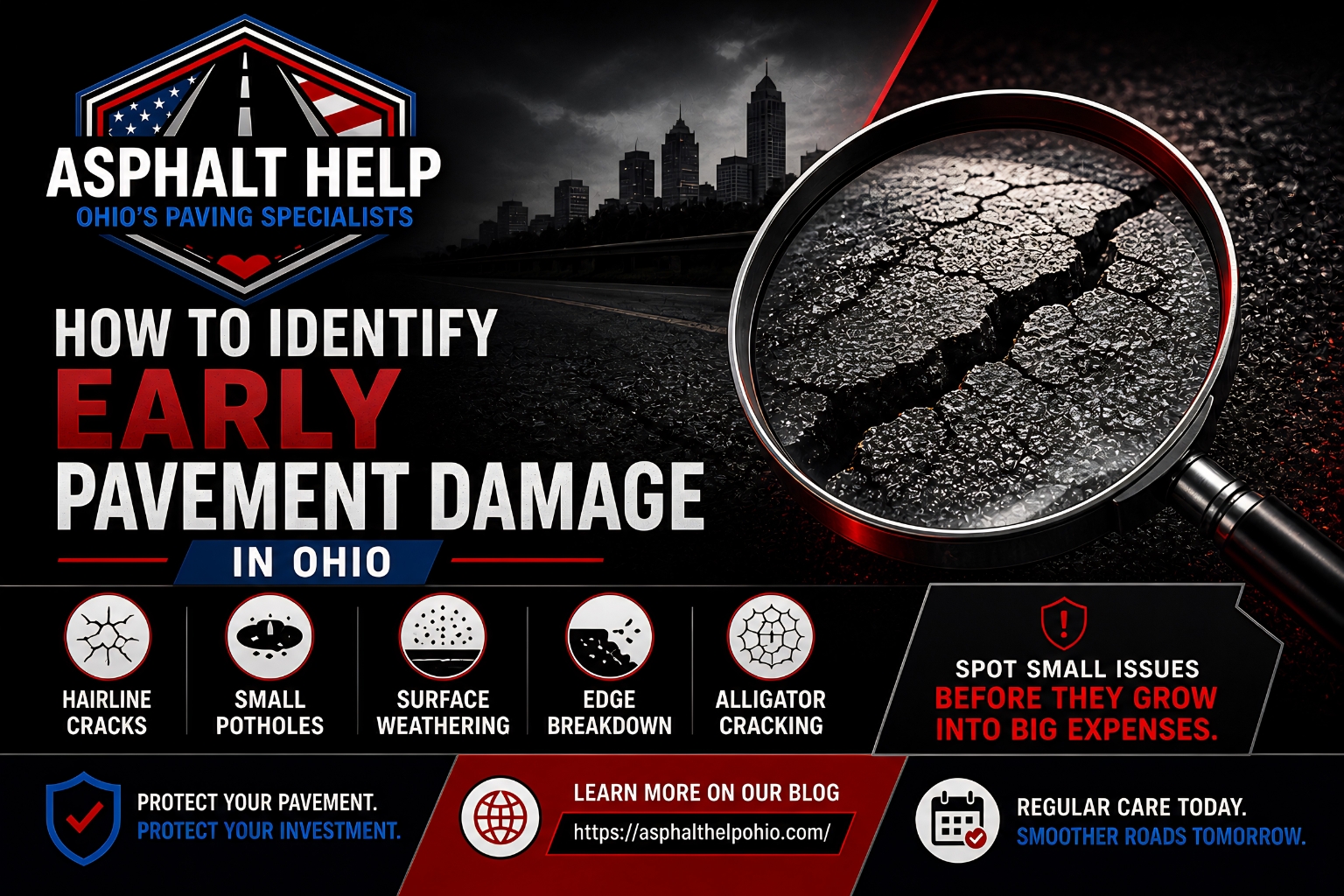
Signs your pavement may need patching
- Potholes: These usually mean the surface has already broken down and water plus traffic have damaged the area below.
- Alligator cracking: A web-like crack pattern often points to base failure or repeated load stress.
- Soft spots: These can signal water intrusion or weakened support below the asphalt.
- Edge breakup: Edges often fail first when drainage is poor or support is weak.
- Reappearing damage: If the same area keeps breaking down, the base may need more than a surface fix.
Why patching matters in Ohio
Ohio’s weather makes patching especially important because a small problem can turn into a much larger one after a wet season or winter freeze-thaw cycle. Asphalt Help Ohio says its work is built for the region’s climate, and it specifically notes that proper slope corrections, drainage, and strong asphalt lifts are essential for long-term performance.
If patching is done early, property owners can protect the surrounding pavement, improve safety, and delay larger repair costs. If it is delayed too long, the damage can spread to the point where resurfacing or full replacement becomes the better option. Asphalt Help Ohio offers both resurfacing and removal/replacement for those more serious cases.
Why professional patching matters
Professional patching works better because it addresses the full repair sequence: diagnose the cause, remove failed material, restore the base when needed, place the right patch material, and compact it properly. Asphalt Help Ohio says its crew handles these steps for homes, businesses, and municipal sites across Central Ohio, and that it brings more than 30 years of experience to that work.
A patch done poorly can look acceptable at first but fail again quickly if the base is still weak or the compaction is not right. A patch done well is more likely to blend with the surrounding pavement and keep the problem from spreading.
Our asphalt services in Columbus and Central Ohio
Asphalt Help Ohio provides asphalt patching and repair, new asphalt paving, resurfacing, removal and replacement, over stone paving, driveway paving, gravel driveway upgrades, parking lot paving, and sealcoating across Columbus and nearby Central Ohio communities. The company says it serves residential, commercial, and municipal properties, and that every project begins with a detailed evaluation of grading, drainage, and pavement condition.
For property owners looking for Asphalt Paving Services in Columbus Ohio, that means patching is part of a larger maintenance approach rather than a one-off fix. It is used to restore damaged sections, preserve the rest of the pavement, and keep the surface functioning safely for as long as possible.
Final thoughts
Asphalt patching works in Ohio by removing damaged pavement, checking and repairing the base if needed, placing new asphalt, and compacting it so the repaired section can perform better under traffic and weather exposure. Because water, freeze-thaw cycles, and repeated load stress can damage pavement quickly, patching is often the smartest way to stop small failures from becoming larger ones.
For anyone dealing with asphalt patching Ohio issues, the key is timing. Early repair usually means a smaller fix, better appearance, and longer pavement life. Asphalt Help Ohio’s patching, resurfacing, and replacement services are built around that idea, with a strong focus on drainage, base repair, and long-term durability in Central Ohio.