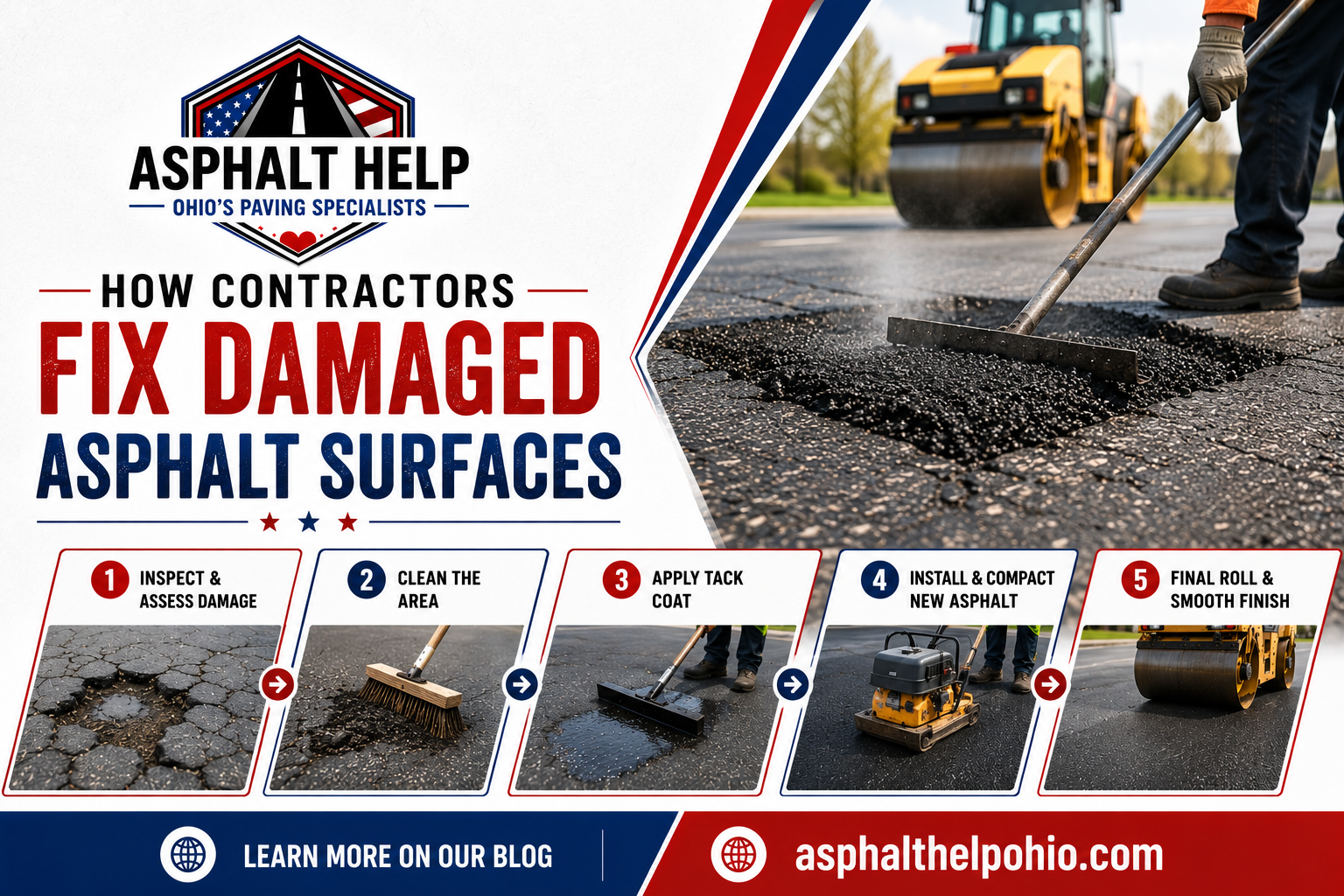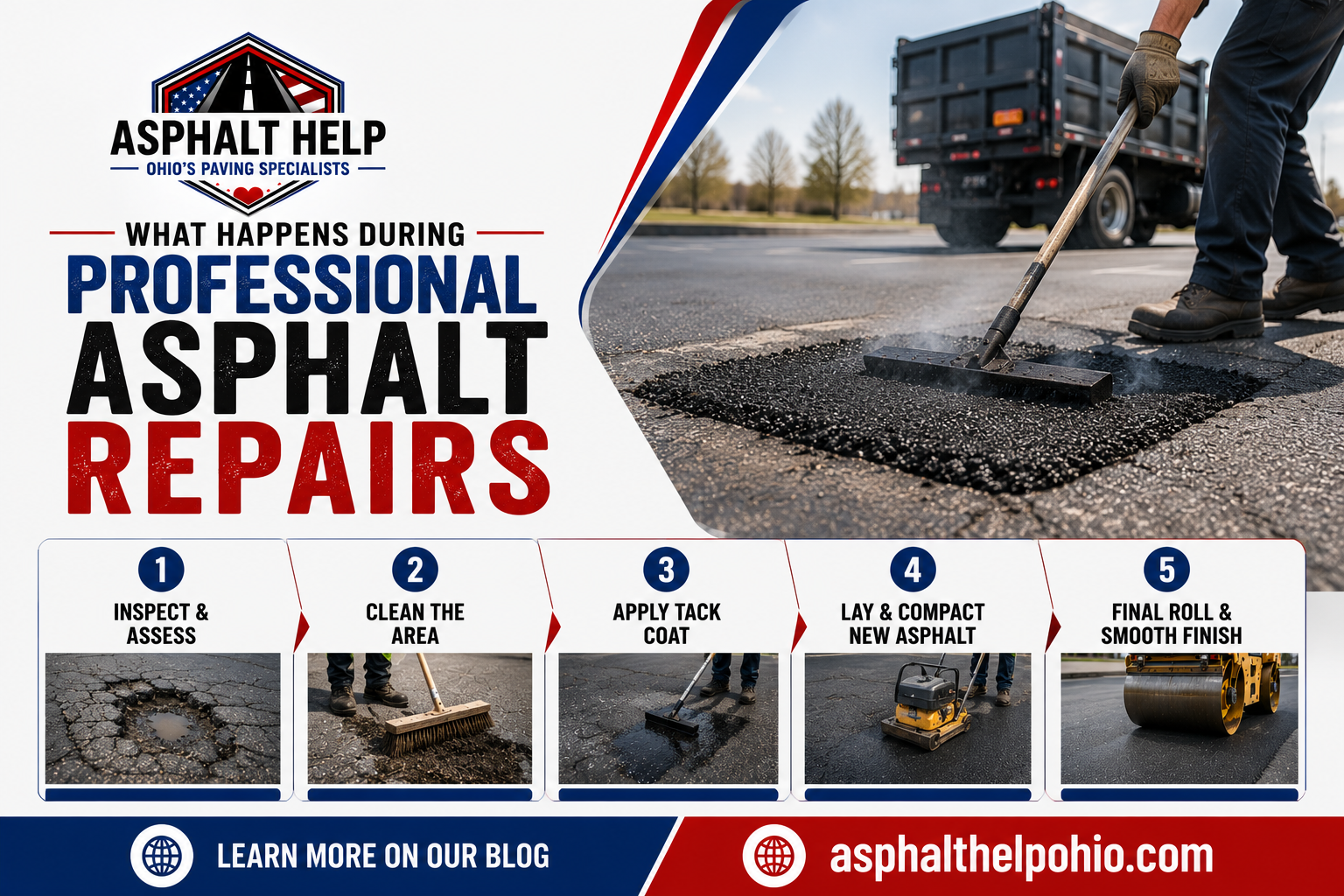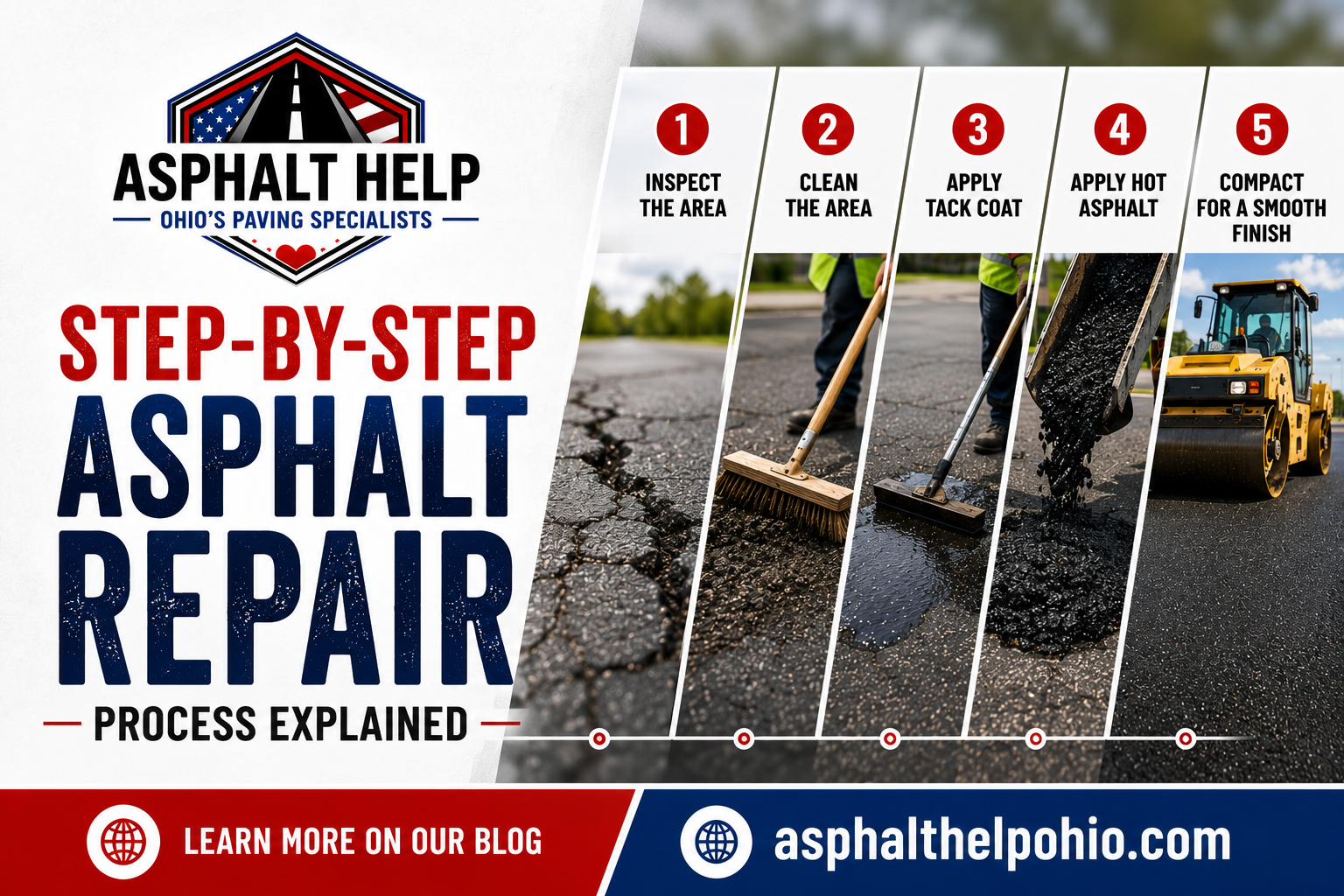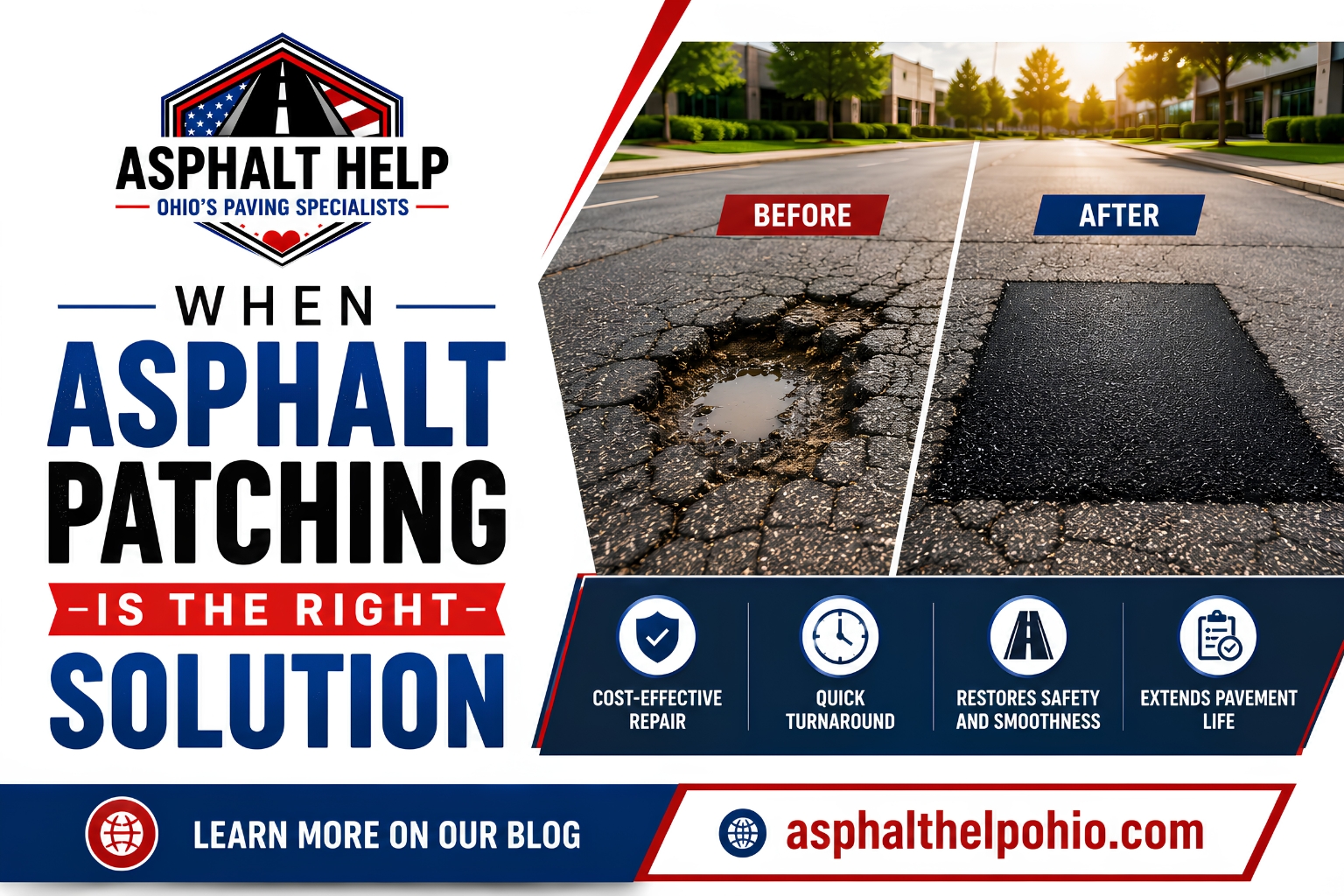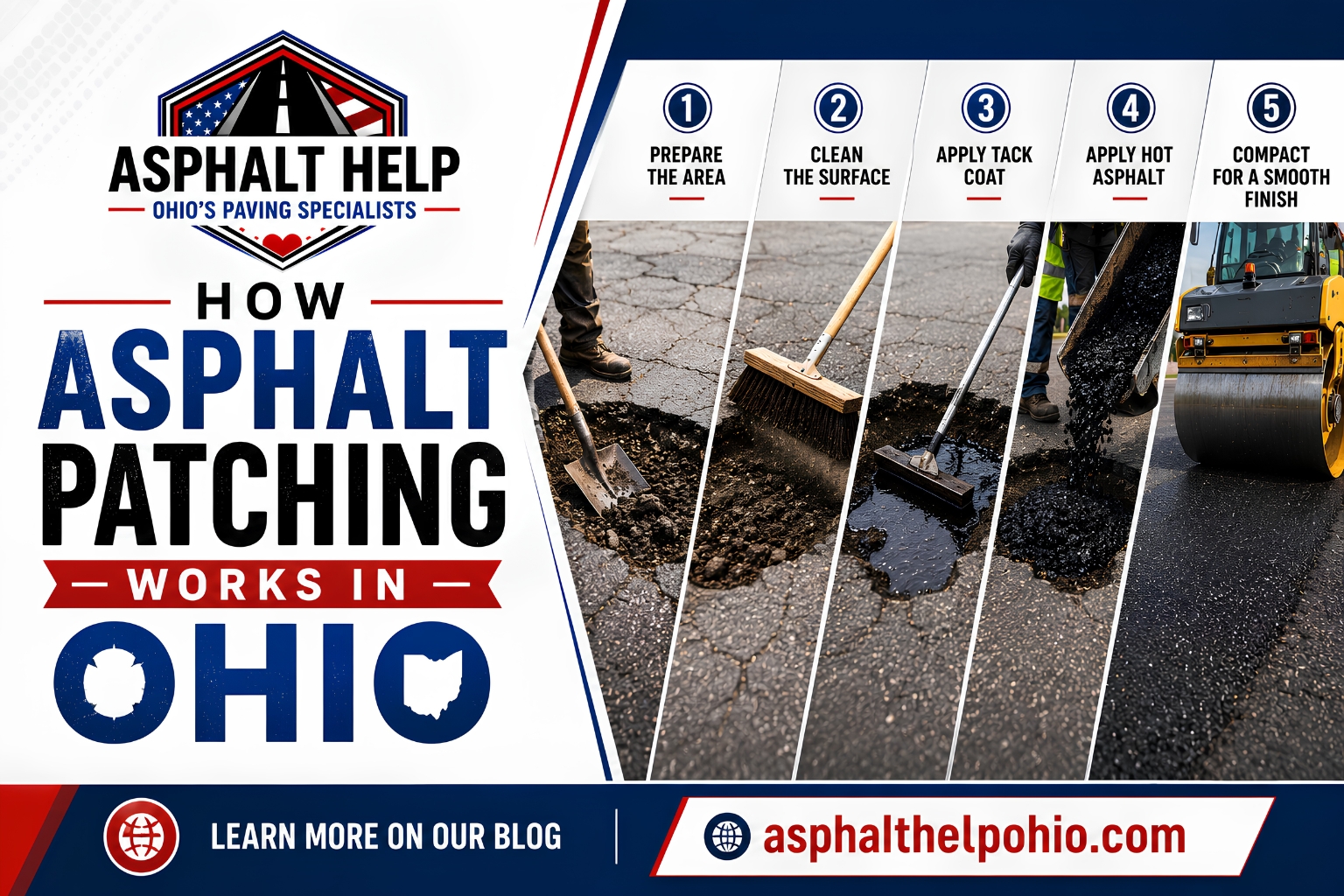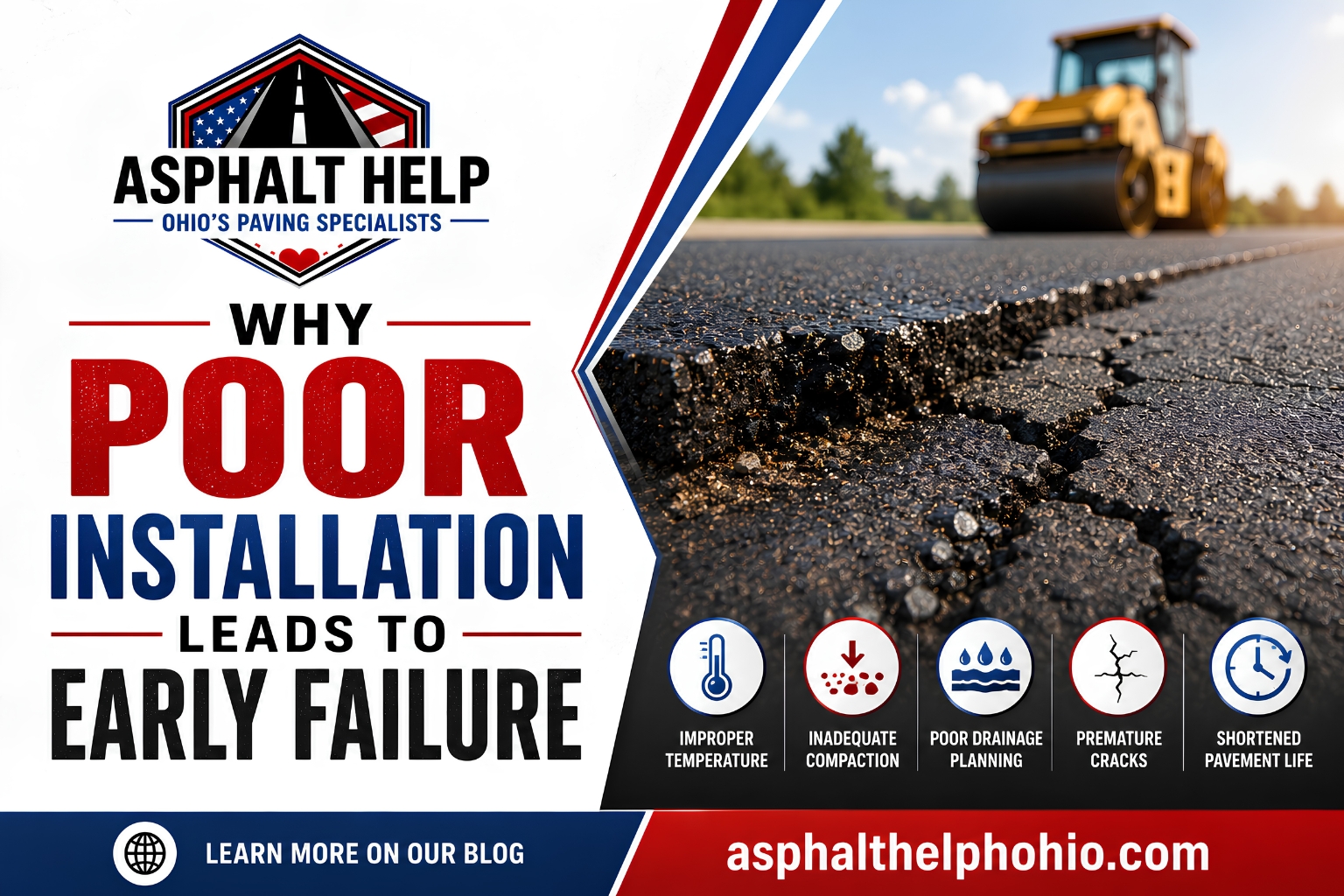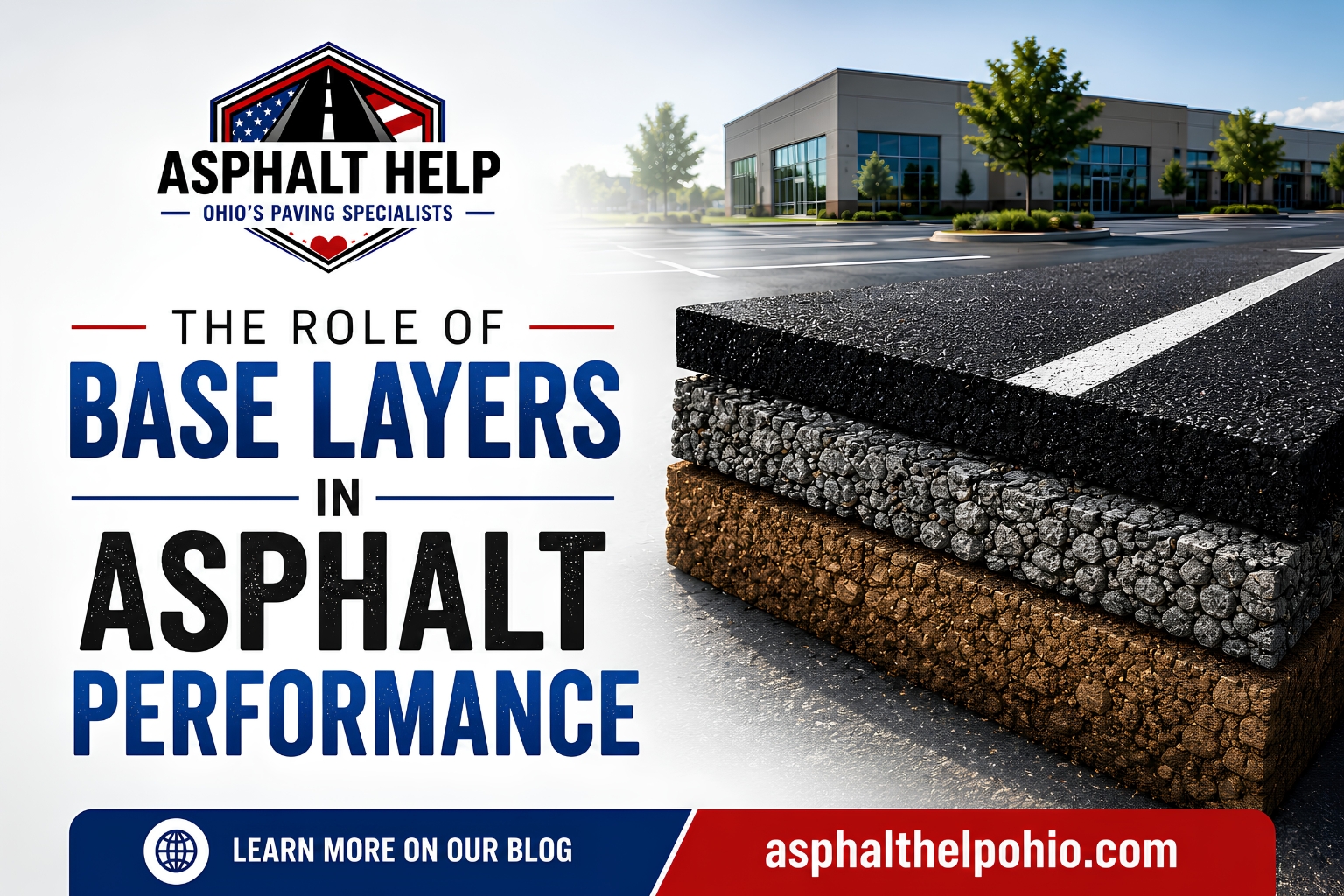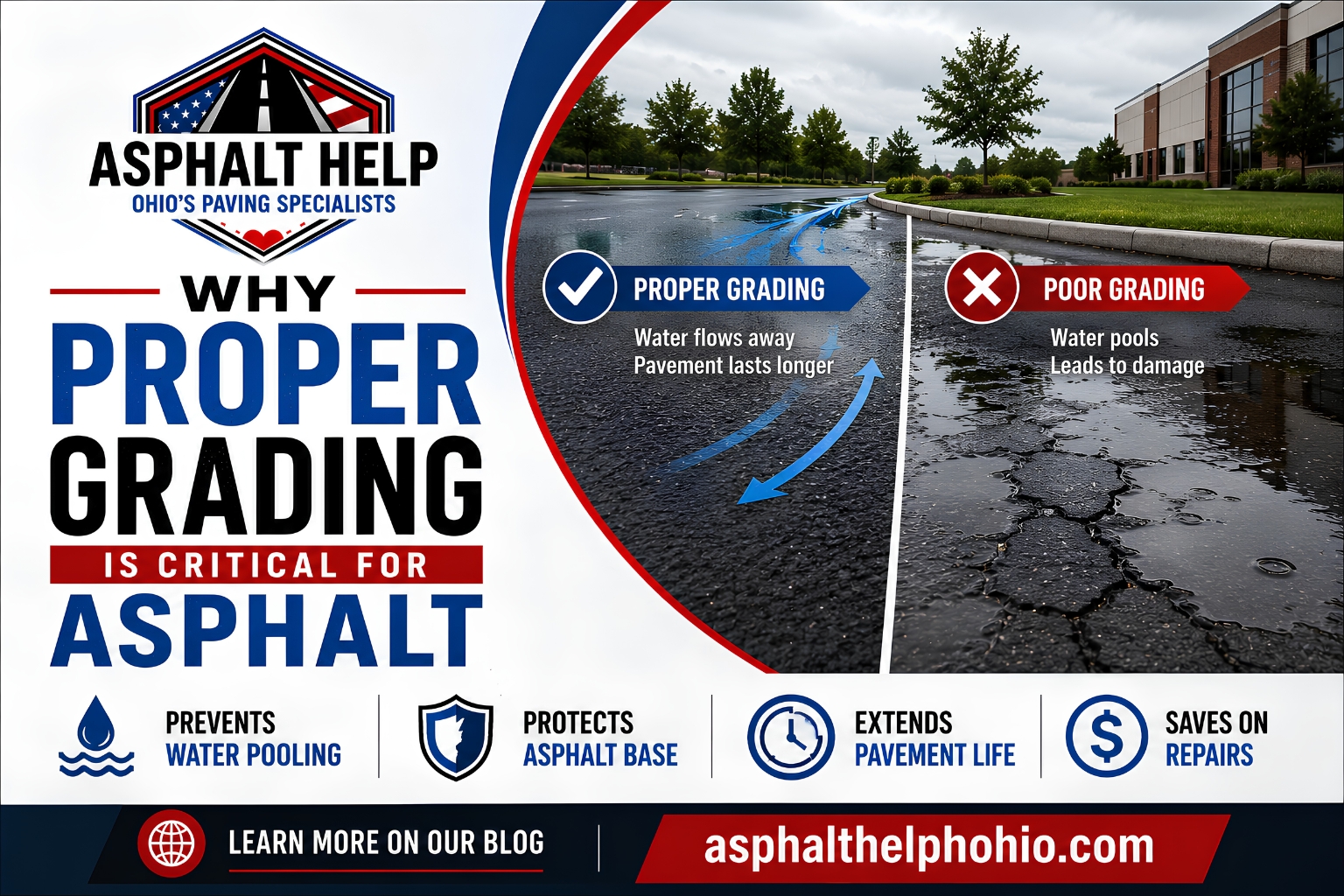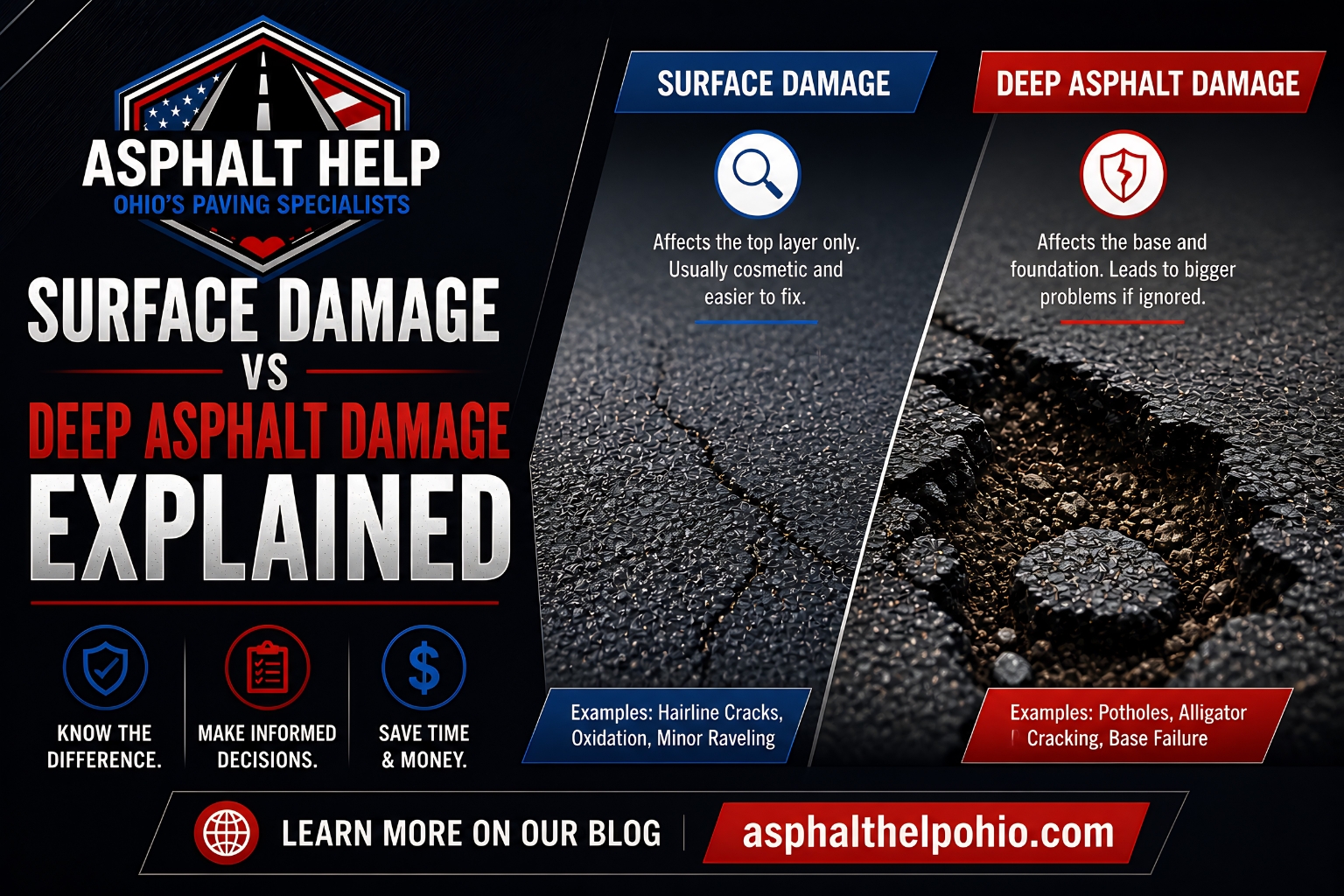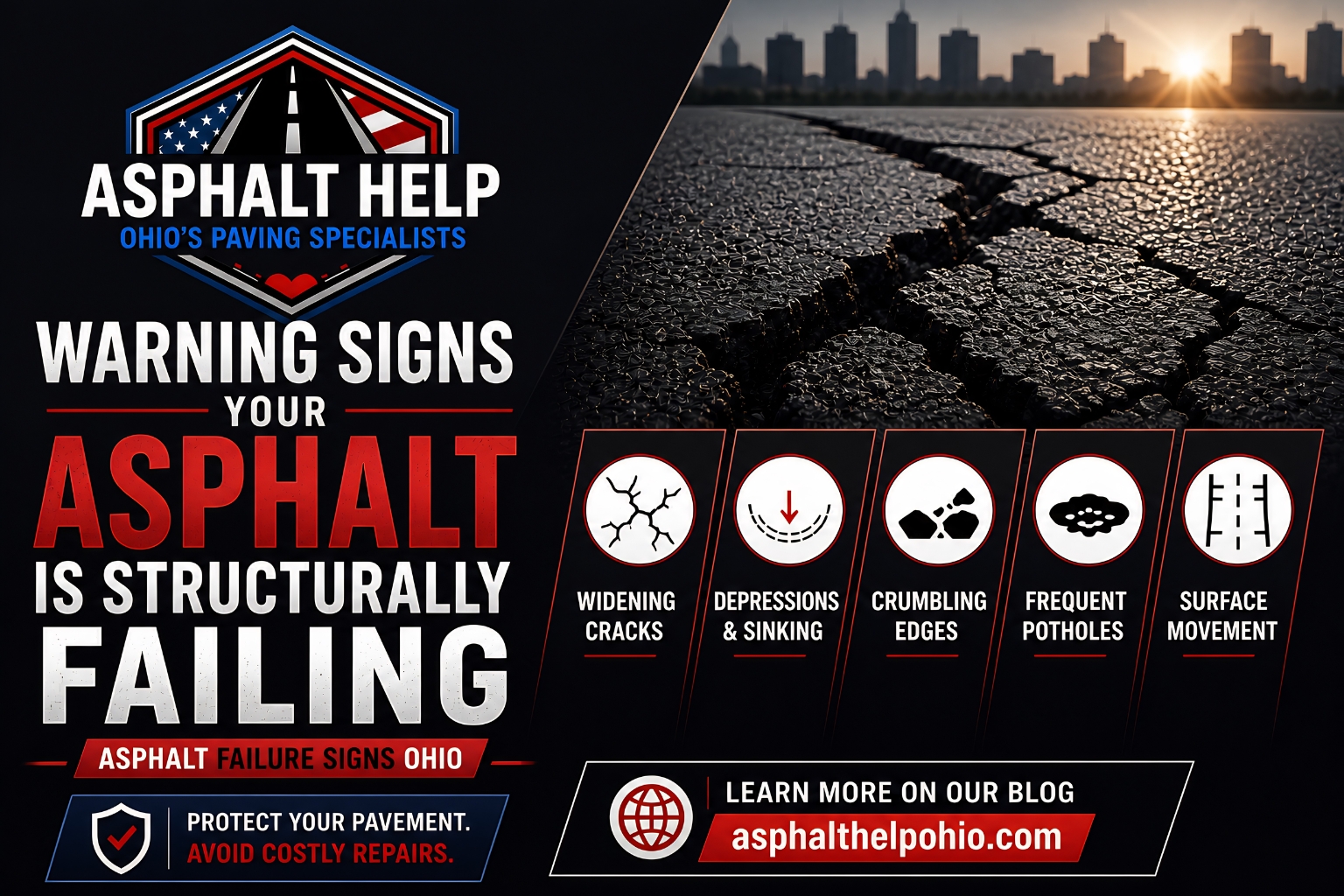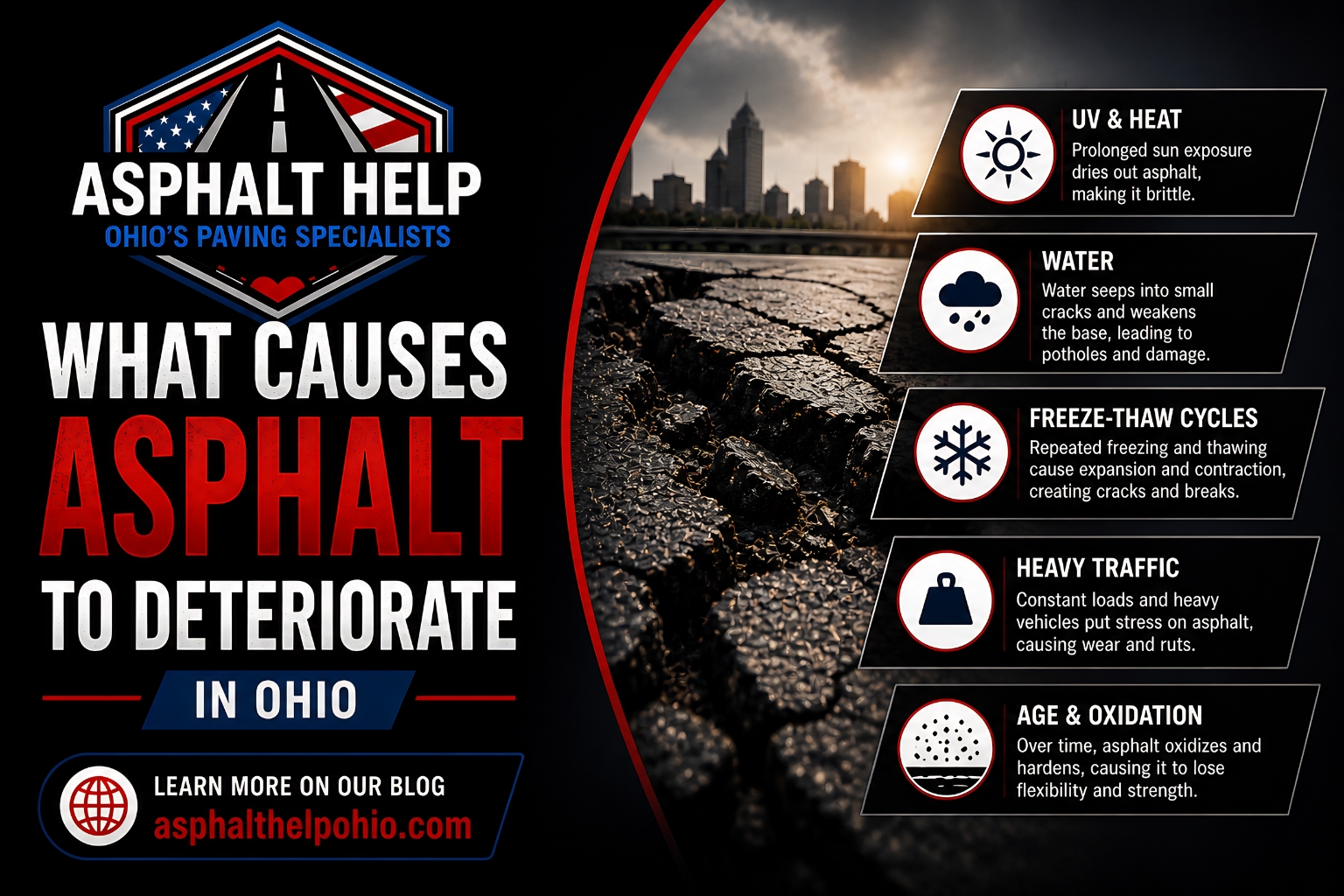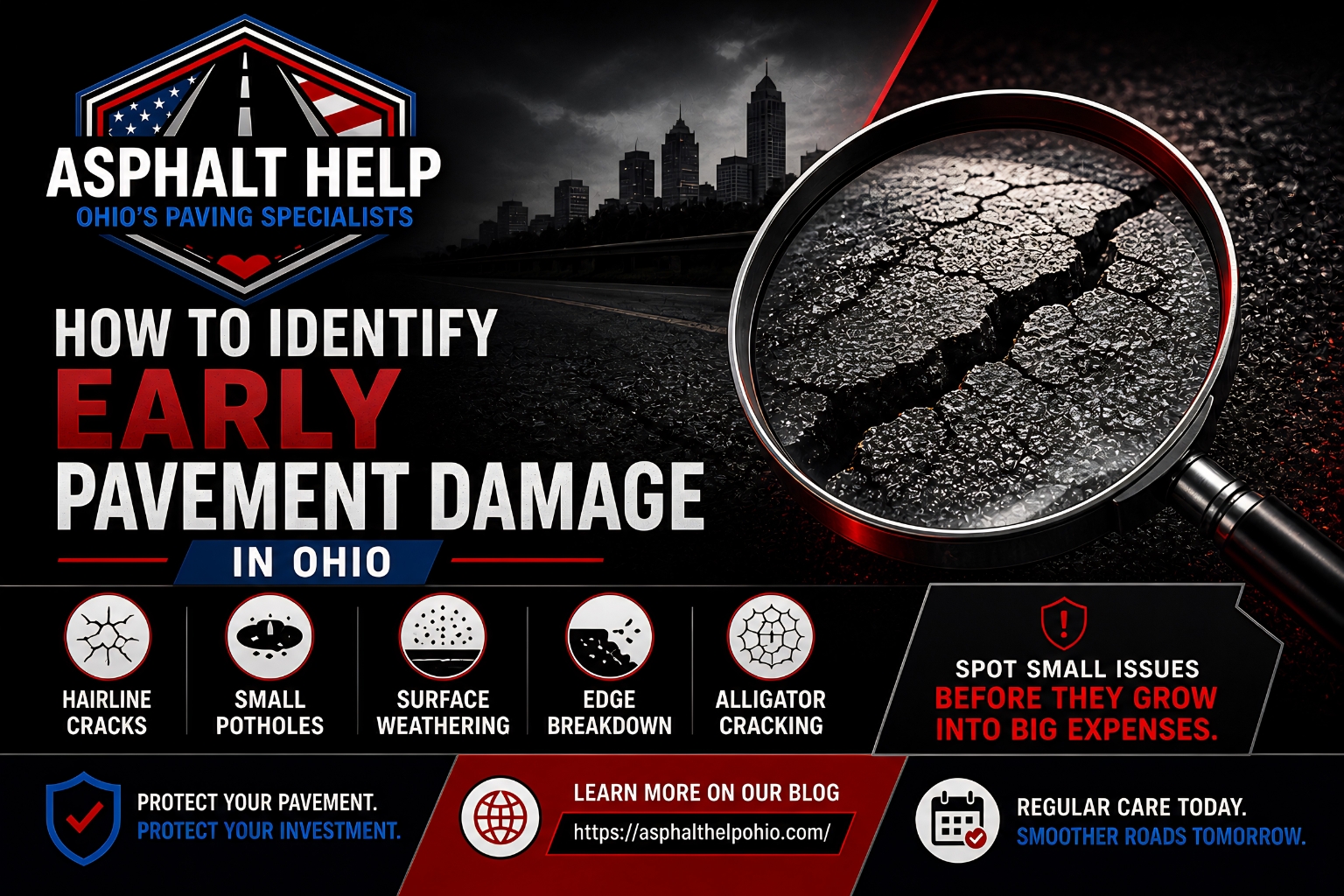


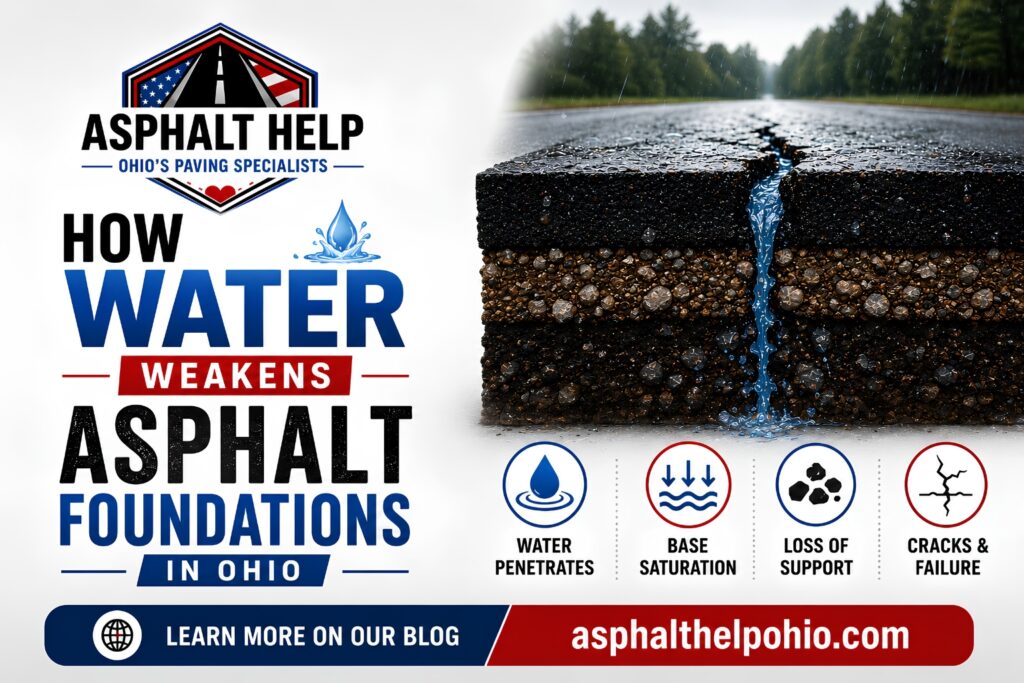
Why does asphalt that looks fine on the surface suddenly start failing underneath? The answer is often water. One of the biggest causes of hidden pavement damage in Ohio is moisture infiltration, and much of that damage begins below the surface long before visible problems appear. Understanding water damage asphalt Ohio property owners commonly face is important because even small cracks or weak spots can allow water to seep into the pavement structure. Once moisture reaches the base layers, it softens the foundation, weakens soil stability, and reduces the pavement’s ability to support traffic loads. Over time, this hidden deterioration makes the asphalt far more vulnerable to cracking, sinking, rutting, and pothole formation.
For homeowners and property managers comparing Asphalt Paving Services in Columbus Ohio or looking for , the big takeaway is simple: a durable asphalt surface depends on what happens underneath it as much as what you see on top. Asphalt Help Ohio offers residential, commercial, and municipal asphalt paving, resurfacing, patching, tear-out and replacement, and sealcoating across Central Ohio, including Columbus and nearby communities.
Why water is such a serious problem for asphalt in Ohio
Water does not usually destroy asphalt in one dramatic event. It works gradually. Once moisture gets into cracks, joints, or weak edges, it can reach the subbase and subgrade. That weakens support under the pavement, and then traffic begins to stress the surface more aggressively. In freeze-thaw weather, water in the pavement structure can freeze, expand, and open the damage further, which is one reason potholes and fatigue cracking are so common in cold climates.
Ohio weather makes this process worse because pavement often sees wet conditions followed by cold snaps. That repeated cycle allows water to get in, freeze, thaw, and return again, which keeps stressing the foundation. Once the supporting layers soften, the asphalt can flex too much and begin to fail under ordinary vehicle loads.
The main ways water weakens an asphalt foundation
| Water problem | What happens underground | What you notice on the surface |
|---|---|---|
| Surface pooling | Water sits and slowly enters cracks and edges | Dark spots, soft areas, slippery patches |
| Base saturation | Subbase loses strength and support | Depressions, rutting, sagging |
| Freeze-thaw cycles | Trapped water expands and widens cracks | More cracking each winter |
| Edge infiltration | Water enters the pavement from the sides | Edge cracking and breakup |
| Ongoing traffic on weakened areas | Load stress increases on softened layers | Potholes, alligator cracking, settlement |
Water trapped under asphalt softens the layers below and reduces the pavement’s ability to carry traffic safely. In winter, that trapped moisture can freeze and expand, then thaw and leave a weakened, saturated base behind.
What water damage looks like at each stage
1. Tiny cracks become entry points
Small cracks may seem harmless at first, but they act like open doors for water. Once moisture gets inside, the pavement starts losing support from beneath, and a crack that was easy to manage can turn into a larger structural problem.
2. The base starts to soften
As water reaches the subbase and subgrade, it weakens the material that is supposed to hold the asphalt up. The surface may still look intact, but it is no longer sitting on a strong foundation. That is when soft spots, sinking, and early fatigue often begin.
3. Traffic turns weakness into visible damage
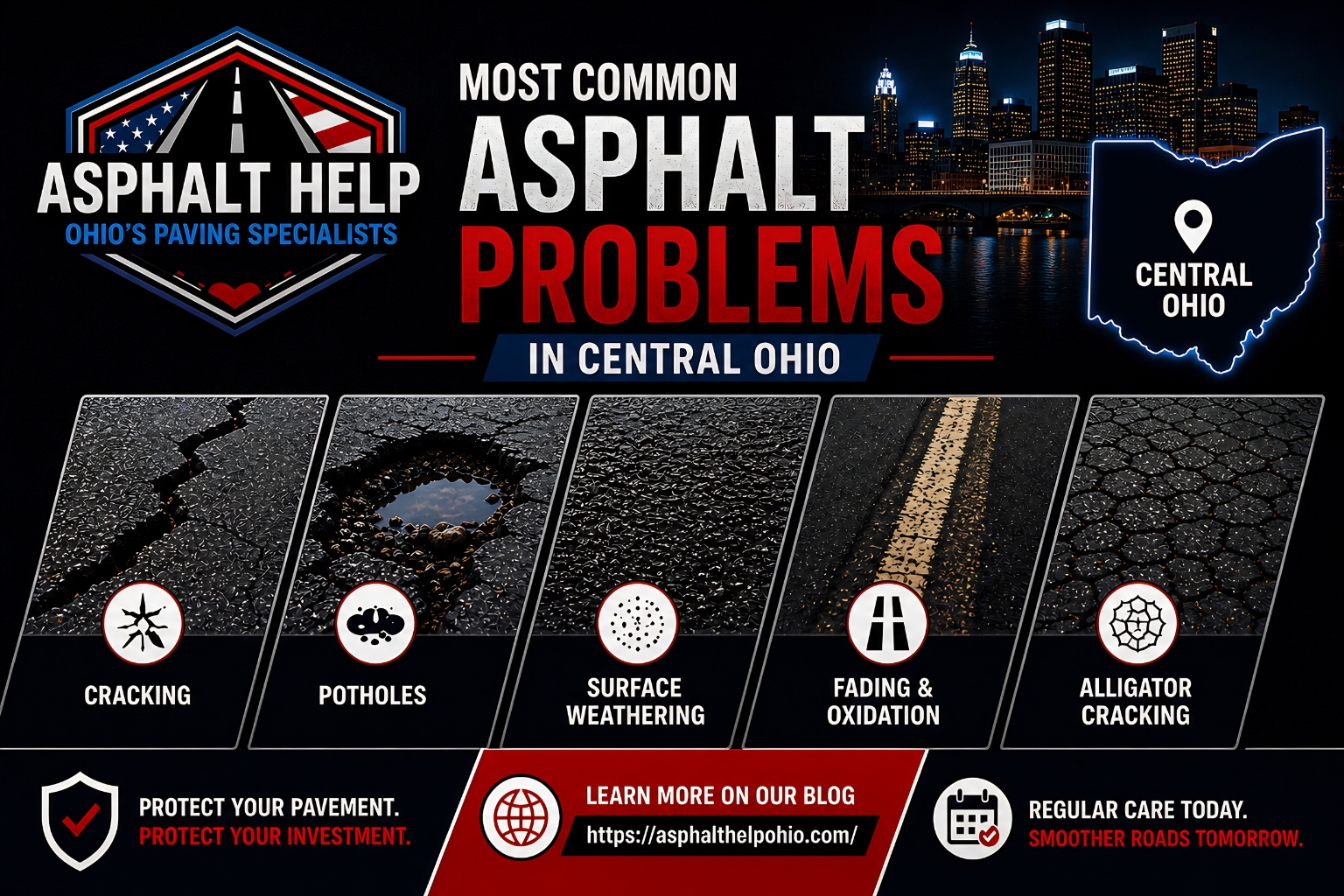
Once the foundation is weakened, daily driving pressure can break the surface faster. Repeated wheel loads then create fatigue cracking, which may look like an interlaced pattern or alligator-style cracking. If ignored, those damaged areas can progress into potholes.
4. Freeze-thaw cycles accelerate failure
In Ohio, water that enters the pavement structure can freeze and expand, then thaw and leave voids or weak support behind. This repeated movement widens cracks, breaks apart edges, and shortens the lifespan of the pavement.
Why drainage matters so much
Drainage is one of the most important defenses against asphalt water damage. When water is directed away from the surface, it has fewer chances to enter cracks or saturate the base. When drainage is poor, water lingers on the pavement longer, which increases the chance of infiltration and long-term damage. Asphalt Help Ohio notes that every project begins with a detailed site evaluation to confirm grading, drainage flow, and areas prone to water retention, because standing water in Ohio accelerates cracking and weakens the base.
That is why slope correction, proper grading, and base preparation matter so much. A well-built driveway or parking lot does not just look smooth; it guides water away before it can become a structural problem.
Common warning signs of water-related foundation damage
- Alligator cracking: This interlaced cracking pattern often points to sub-base failure, poor drainage, or repeated overloading. It is a warning sign that the pavement is losing support below the surface.
- Potholes: These often begin when water weakens the base and traffic breaks the unsupported pavement apart. Potholes are a sign that the problem has already moved beyond the surface layer.
- Edge cracking: Cracks near the edges often happen where water collects more easily and support is weaker. Once edge damage starts, it can spread inward.
- Soft or sunken spots: These suggest the foundation has lost density or strength from moisture infiltration. They often get worse after rain or thaw periods.
- Faster wear after storms: If the pavement looks fine when dry but breaks down after wet weather, that is usually a sign water is entering and weakening the foundation.
How to protect asphalt from water damage in Ohio
- Fix cracks early. Small openings are easier to seal before water reaches the base and creates larger failures.
- Keep drainage working. Proper slope and grading help move water away from the pavement instead of letting it sit on top or seep in.
- Use sealcoating as protection. Asphalt Help Ohio lists sealcoating as one of its services, and sealcoating helps protect asphalt surfaces from water intrusion and surface deterioration.
- Repair weak areas before resurfacing. If the base is already compromised, simply covering the top layer will not solve the problem for long. Asphalt Help Ohio offers patching, resurfacing, and tear-out/replacement depending on the condition of the pavement.
- Choose the right repair method. A structurally sound surface may benefit from resurfacing, while severe water damage often needs deeper repair or full replacement.
Why local experience matters in Central Ohio
Central Ohio pavement has to deal with seasonal moisture, temperature swings, and traffic wear. That is why experienced asphalt contractors in Central Ohio are valuable: they know how to evaluate drainage, build stronger bases, and recommend the right solution instead of just covering problems up. Asphalt Help Ohio describes itself as a family-owned Central Ohio paving company with 30+ years of experience, and its services include new asphalt installation, resurfacing, structural repairs, pothole repair, over stone paving, and sealcoating.
Their service area also includes Columbus and many surrounding communities, which matters because local soil, grading, and weather patterns affect how quickly water damage develops.
When repair is not enough
If cracking keeps returning, the pavement sinks after rain, or potholes keep forming in the same spots, the foundation may be too weakened for a simple patch. In those cases, tear-out and replacement can be the better long-term fix because it allows the base to be corrected before new asphalt is installed. Asphalt Help Ohio specifically offers asphalt removal and replacement for pavement that is severely cracked, sinking, or structurally unstable.
Final thoughts
Water weakens asphalt foundations by entering cracks, softening the base, and making the pavement more vulnerable to traffic and Ohio’s freeze-thaw cycles. The damage usually starts below the surface, which is why drainage, grading, crack repair, and sealcoating are so important. A good-looking top layer means very little if the foundation underneath is being slowly washed out.
For property owners who need help, Asphalt Help Ohio provides asphalt paving, resurfacing, patching, sealcoating, and replacement services across Central Ohio, with a focus on long-term performance and proper site evaluation.