


How can you prevent small asphalt cracks from turning into larger pavement problems? The most effective approach is to identify cracks early, repair them with the appropriate treatment, and address the conditions causing the damage. In Ohio, changing temperatures, moisture, freeze-thaw cycles, traffic, and aging asphalt can all contribute to crack development.
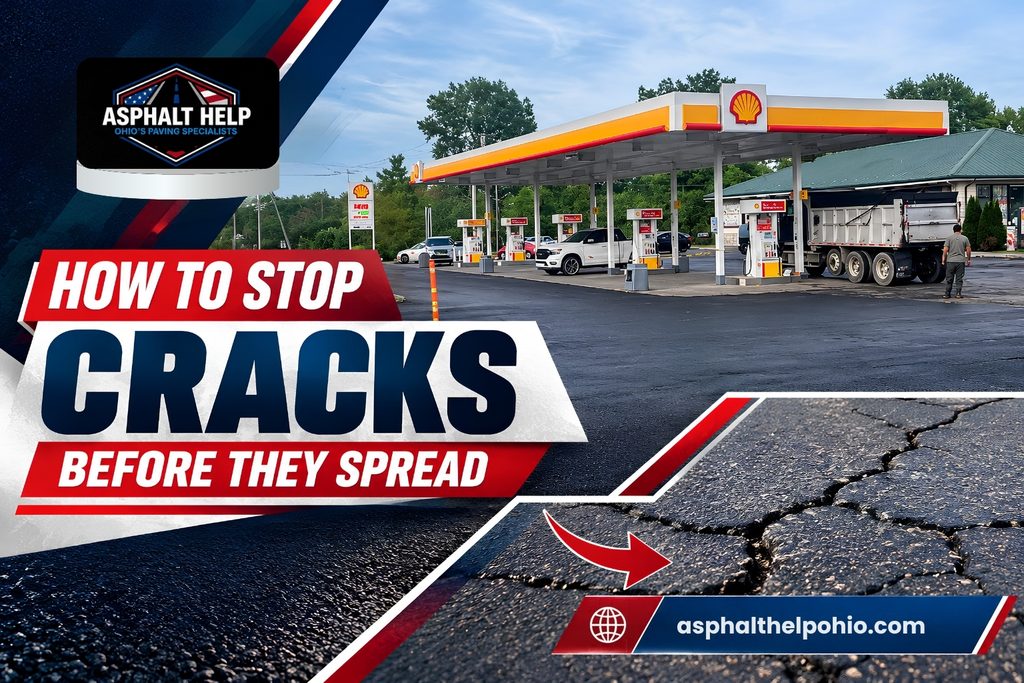
Effective crack prevention asphalt Ohio maintenance focuses on more than filling visible openings. Water can enter untreated cracks and weaken the supporting pavement layers, while repeated traffic and temperature changes can make existing damage worse. If the underlying cause is not addressed, cracks may return even after repairs.
Asphalt Help Ohio helps property owners understand common asphalt problems and suitable maintenance approaches. Whether you manage a residential driveway, a rental property, or a commercial parking area, taking action when cracks first appear can help preserve the pavement and reduce the risk of more extensive deterioration.
Why Do Asphalt Cracks Spread in Ohio?
Before deciding how to prevent cracks from spreading, it is important to understand what causes them.
1. Freeze-Thaw Cycles
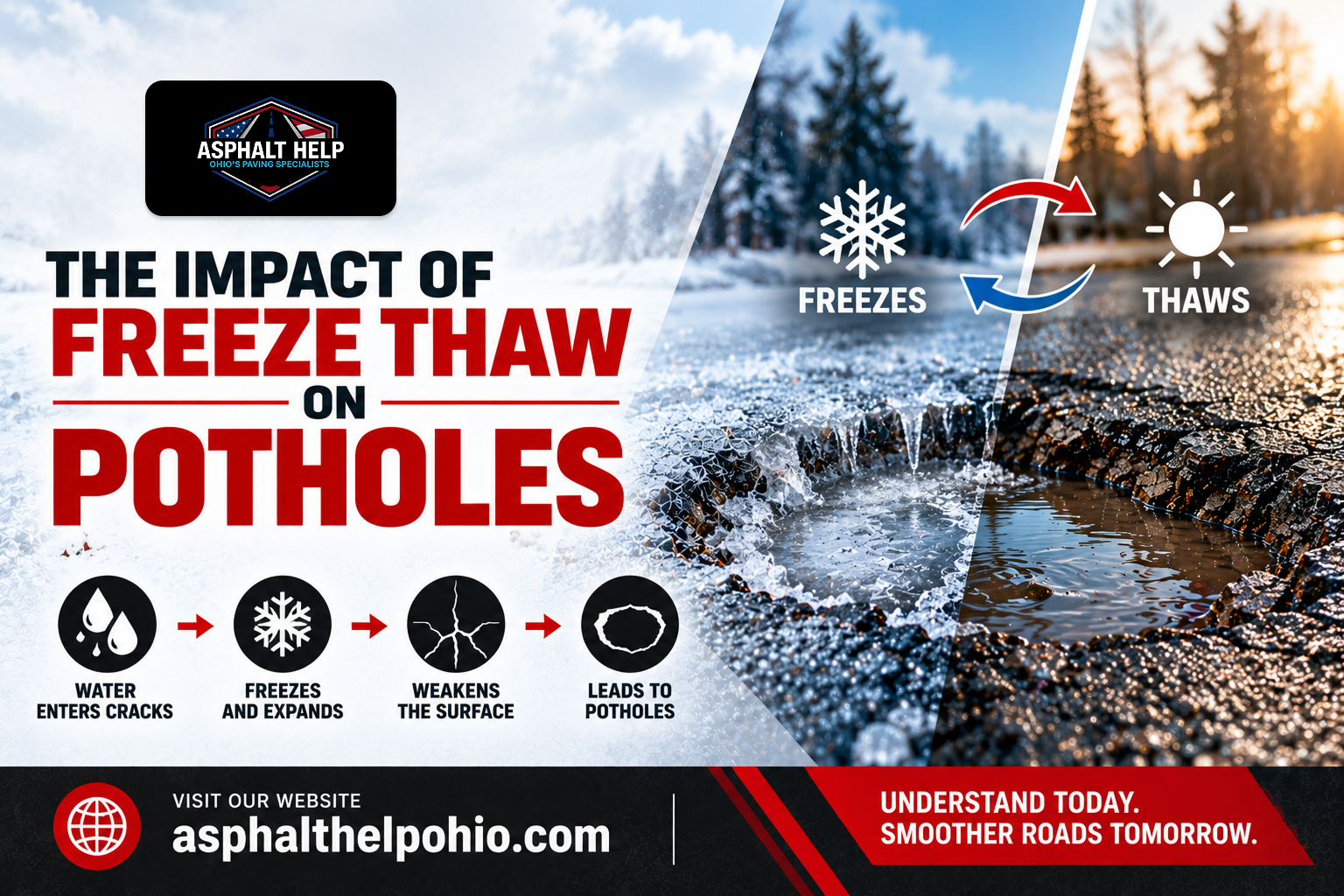
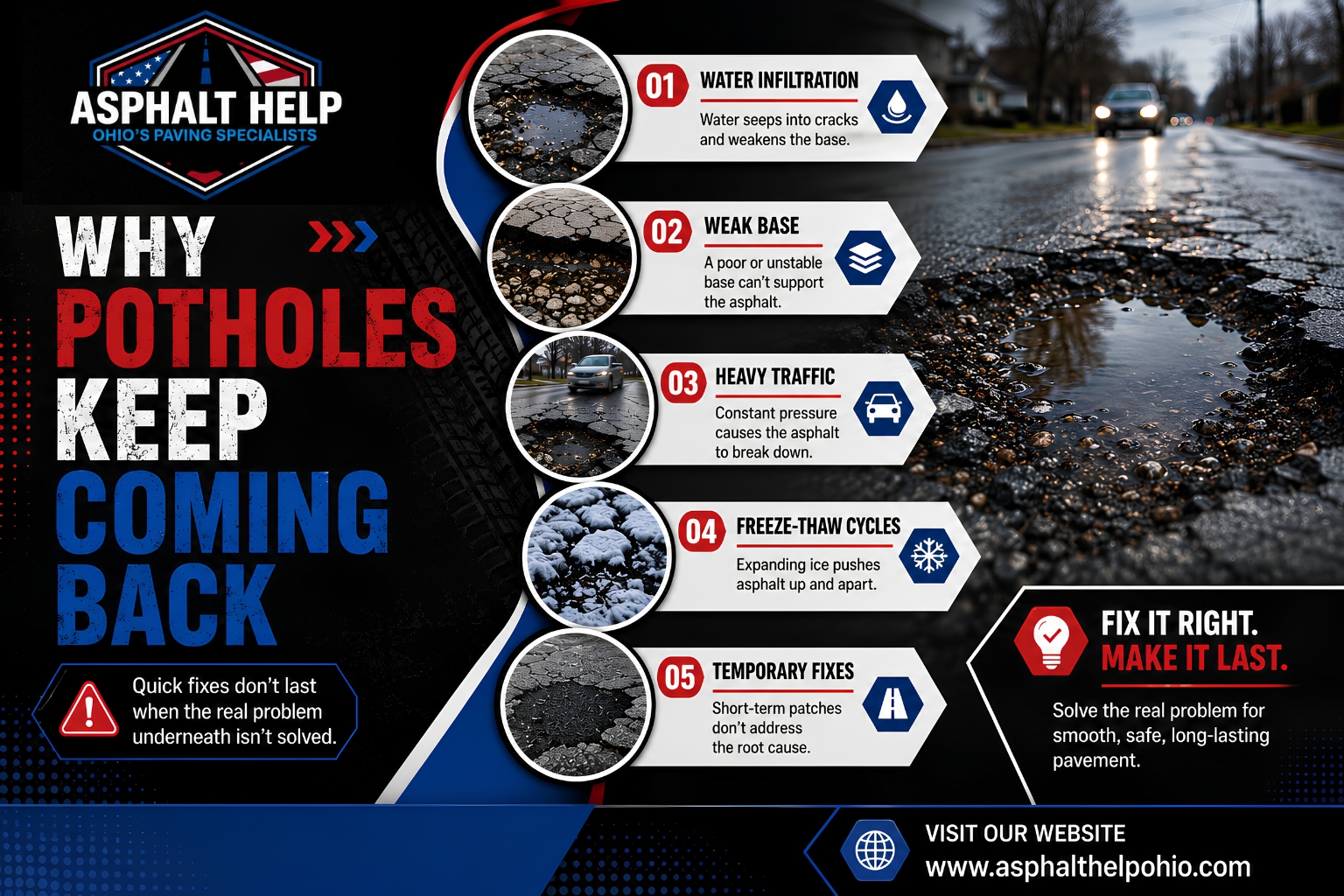
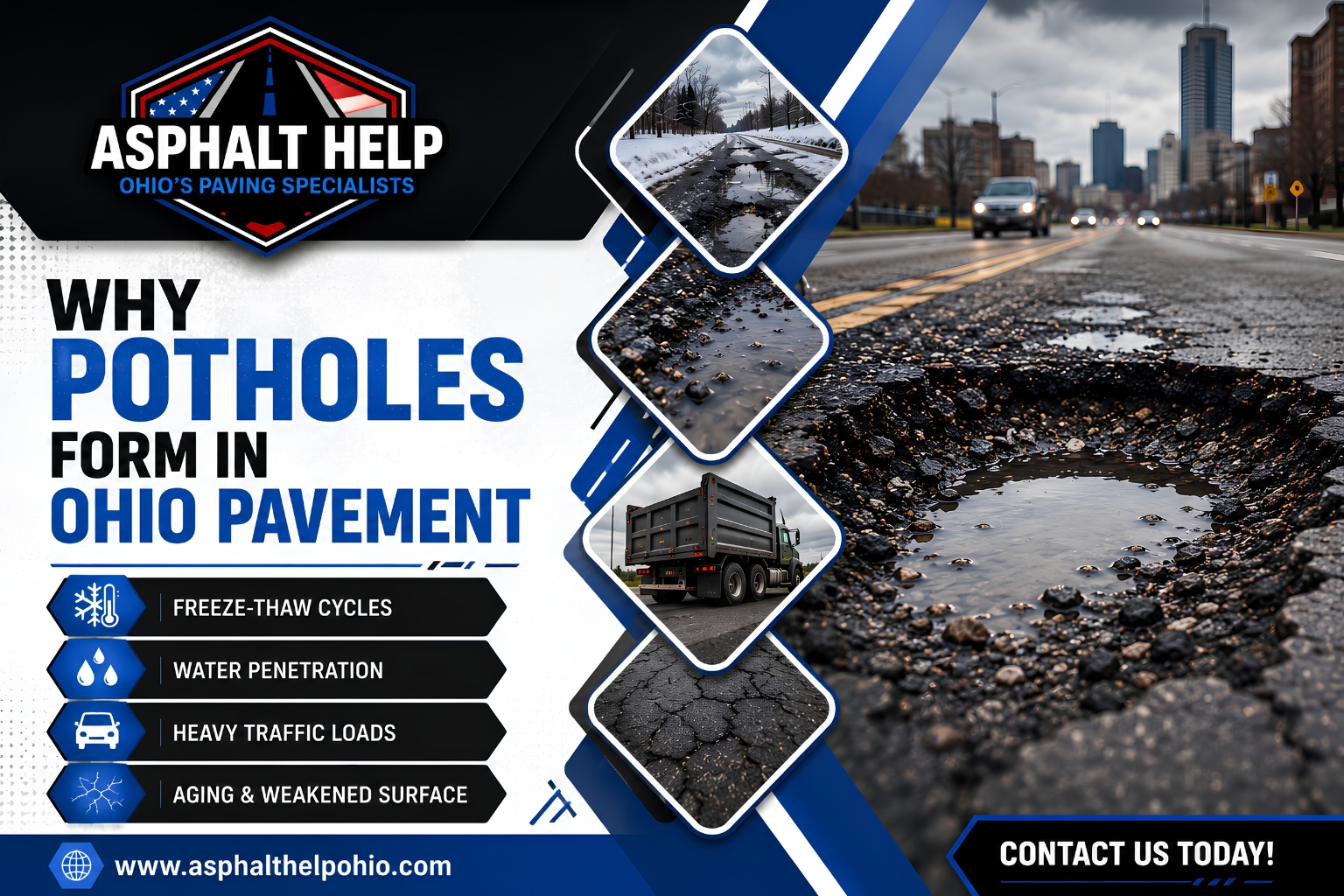
Ohio’s winter weather can expose asphalt to repeated temperature changes. Water that enters existing cracks may freeze and thaw as conditions change, contributing to deterioration around the openings.
The pavement itself also contracts in cold temperatures and expands as temperatures rise. These changes can place stress on aging or weakened asphalt.
Although freeze-thaw conditions do not cause every crack, they can worsen existing damage, especially when moisture is already reaching the underlying pavement layers.
2. Water Infiltration
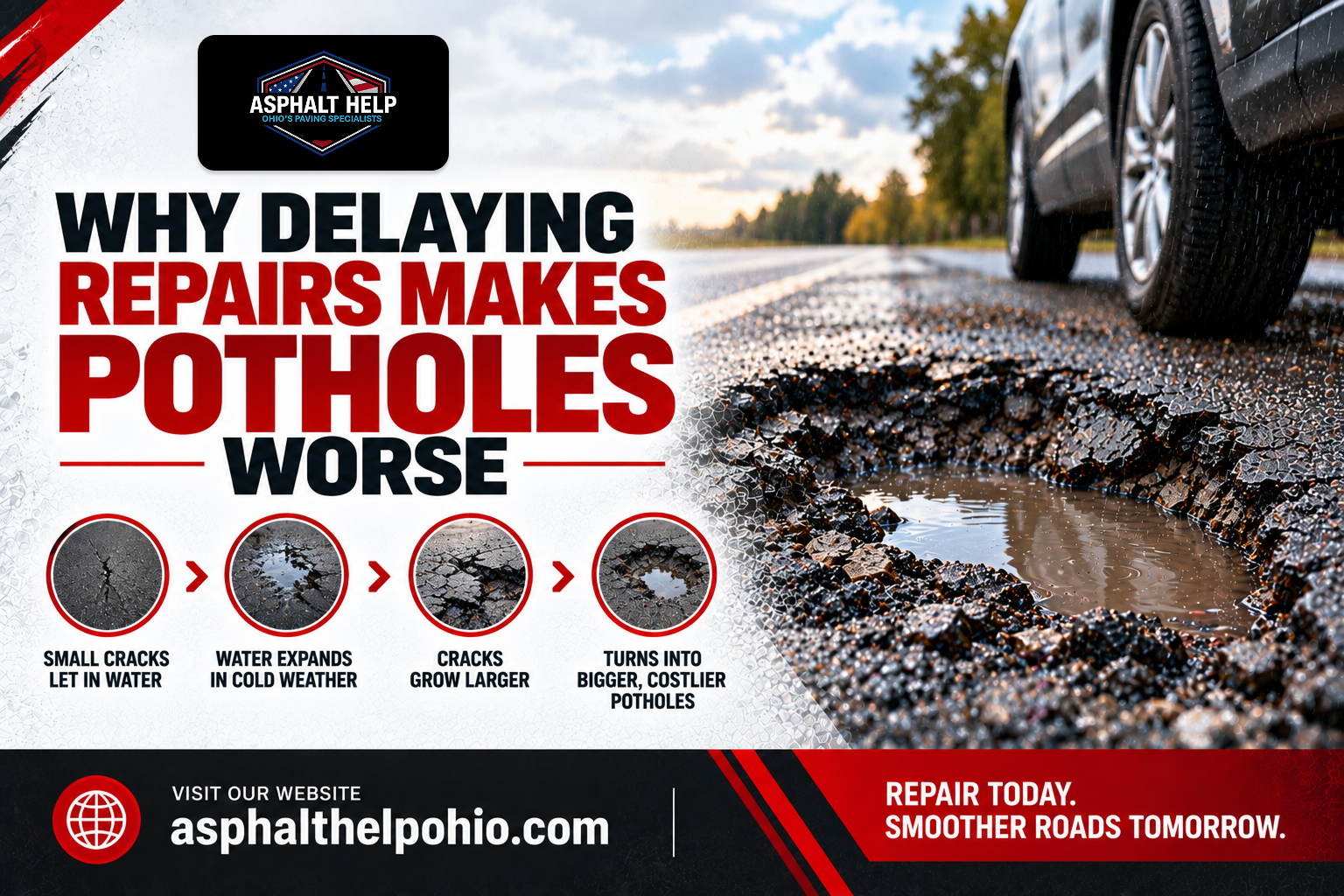
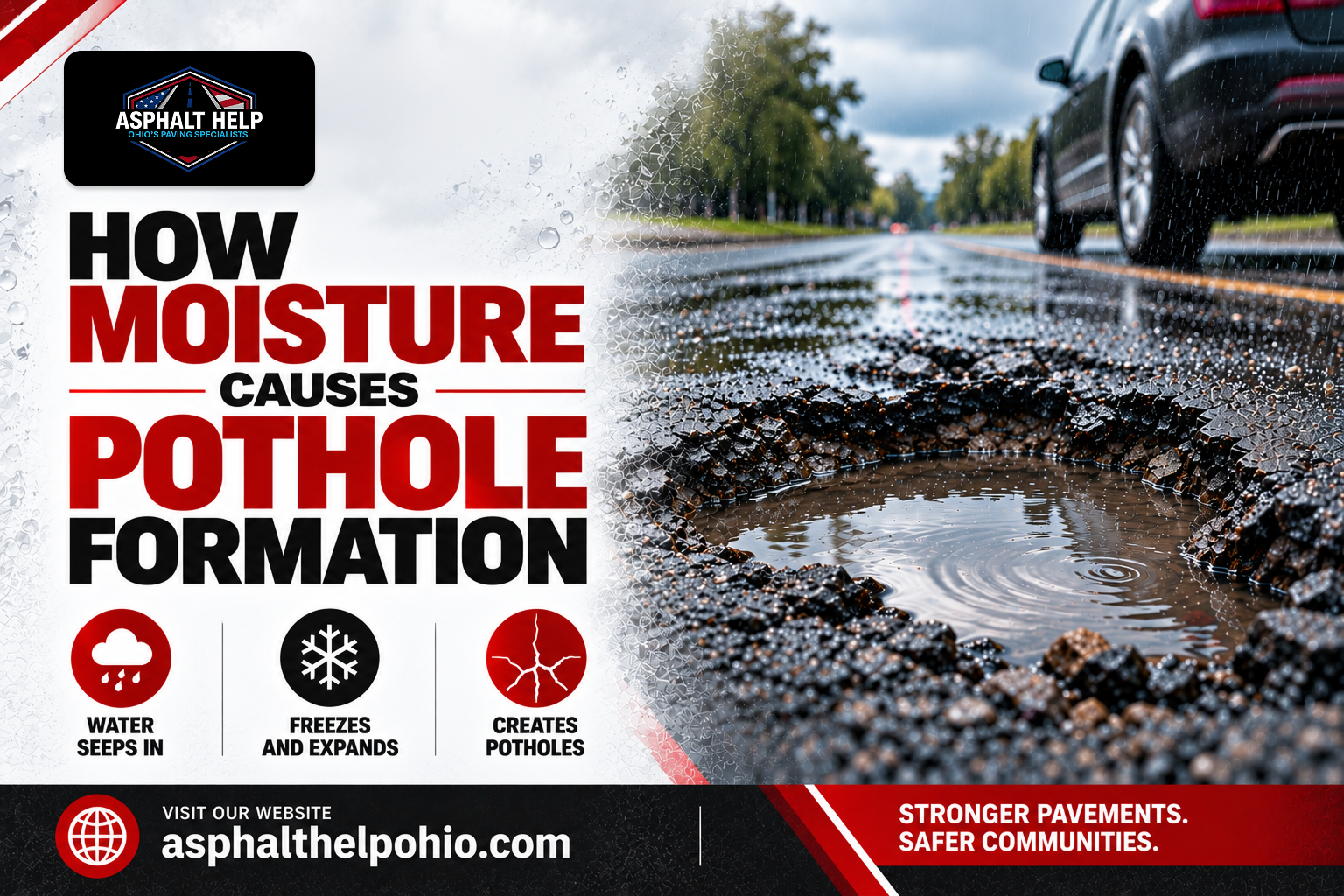
Water is one of the most important factors to consider when managing cracked asphalt. Once water enters an opening, it may reach the base or subgrade beneath the pavement.
Excess moisture can weaken susceptible supporting materials. When vehicles travel over the affected area, the asphalt may experience additional movement and stress.
This can lead to wider cracks, loose pavement, depressions, or potholes. Sealing suitable cracks helps limit water entry, although it cannot eliminate every source of moisture or repair an already failed base.
3. Heavy or Repeated Traffic
Vehicle loads place stress on asphalt every day. Repeated traffic can cause cracks to grow, particularly when pavement is too thin for its intended use or the supporting layers are unstable.
Commercial parking lots, loading zones, access lanes, and driveways used by heavy vehicles may experience greater stress than areas used primarily by passenger cars.
If cracks develop in wheel paths or around turning areas, the traffic pattern and structural condition of the pavement may need to be evaluated.
4. Aging Asphalt
Over time, exposure to sunlight, air, and weather changes the asphalt binder. Older pavement may become less flexible and more vulnerable to cracking.
Aging can make an asphalt surface more susceptible to temperature-related stress and other forms of deterioration. Regular inspections help property owners recognize developing problems before the damage becomes widespread.
5. Poor Drainage
Water that repeatedly collects on or around asphalt can contribute to deterioration. Low spots, blocked drainage paths, and runoff flowing toward pavement edges may increase moisture exposure.
If water continues to reach the supporting layers, sealing the visible cracks alone may not solve the problem. Drainage improvements may also be necessary.
1. Inspect Asphalt Regularly
The first step in crack prevention is knowing where damage is developing.
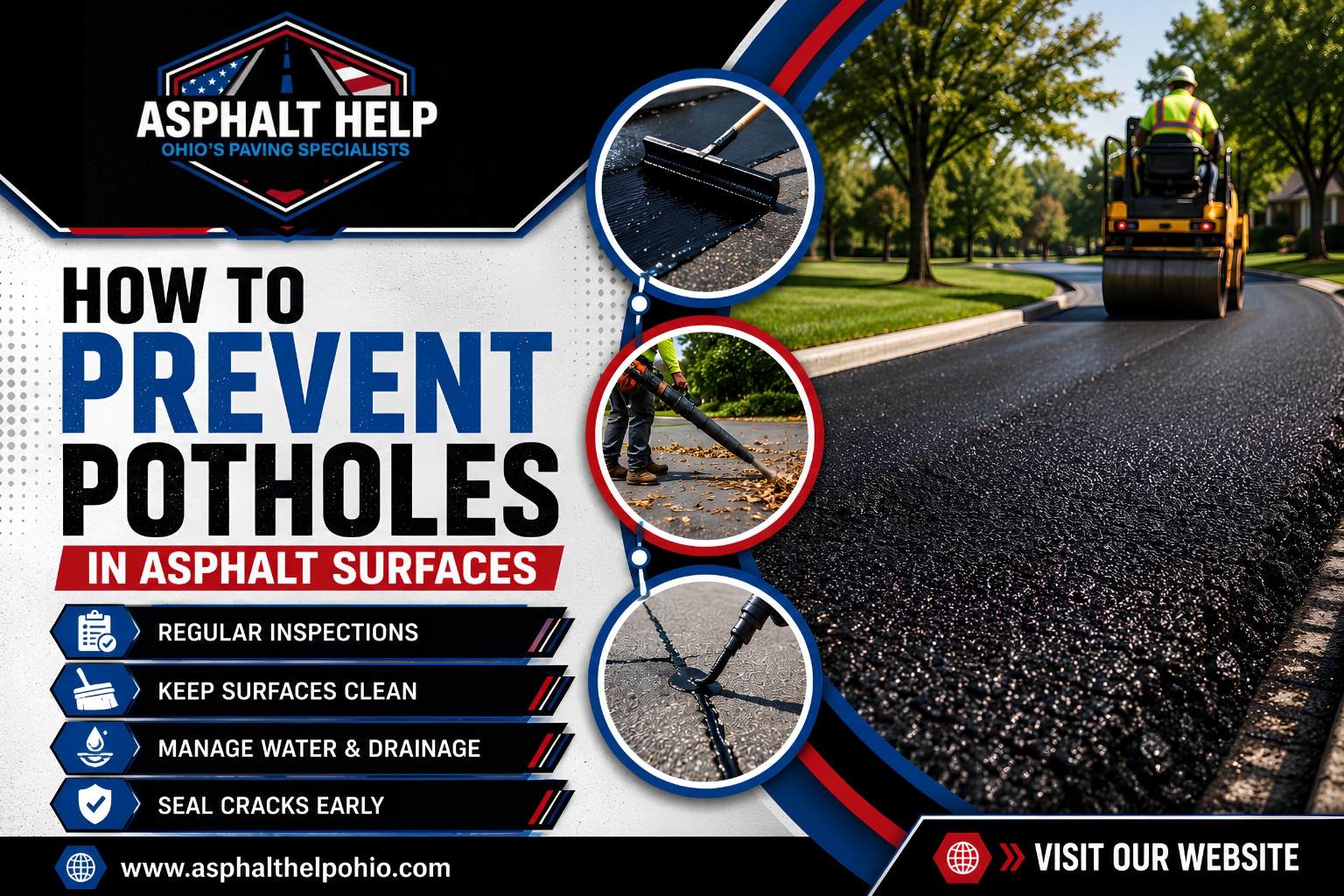
A crack that is noticed early can be assessed before it becomes part of a larger network of cracks or develops into a pothole. Regular inspections are useful for residential driveways, rental properties, commercial parking lots, and other paved areas.
Look for:
- Hairline cracks that are beginning to widen.
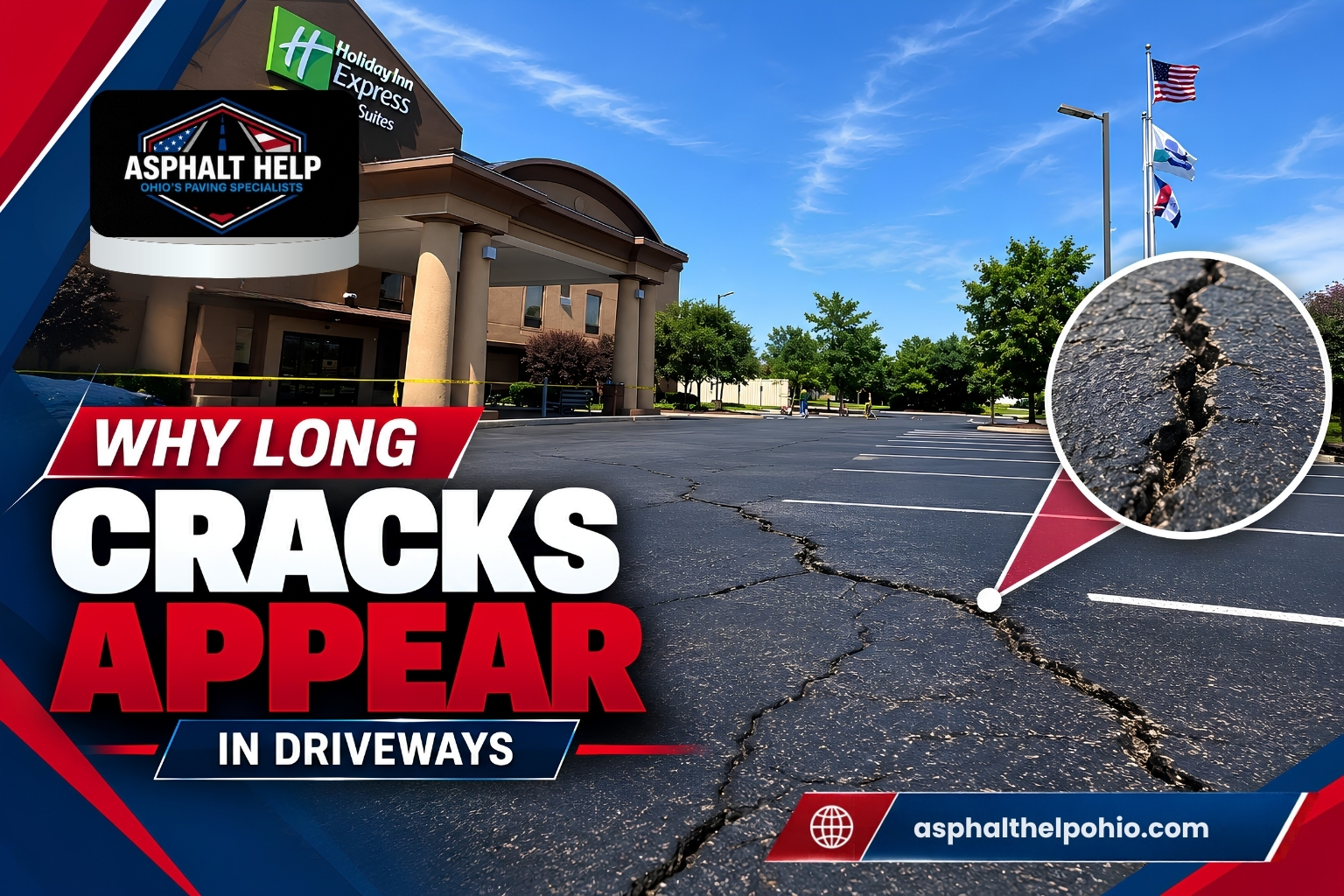
- Long cracks running along or across the pavement.
- Cracks forming near pavement joints and edges.
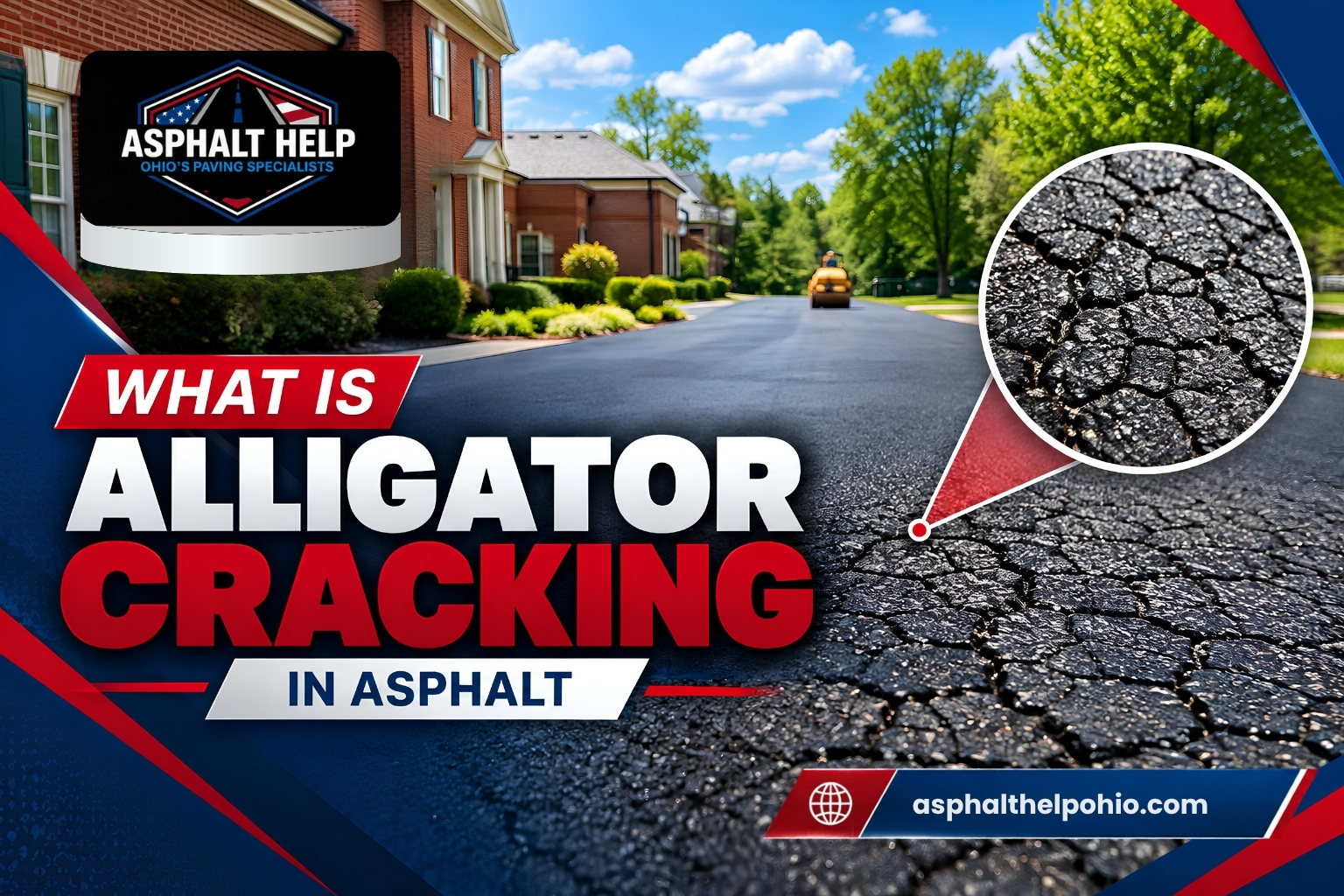
- Small cracks connecting into an alligator-like pattern.
- Loose asphalt or crumbling crack edges.
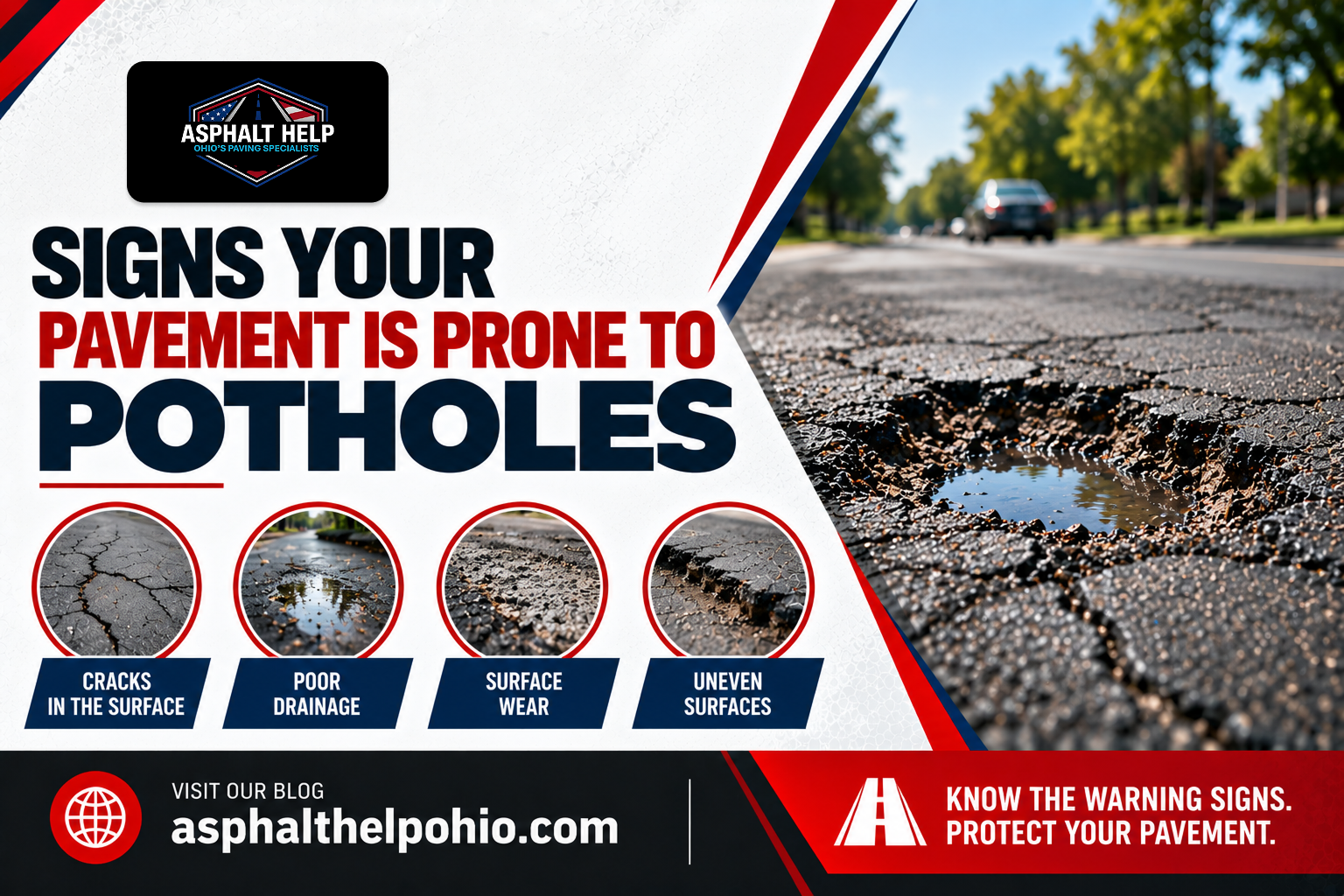
- Depressions or areas where water collects.
- Potholes or previous repairs that are beginning to fail.
Inspect pavement in clear, dry conditions when cracks and surface defects are easier to see. It is also useful to compare the surface with previous observations to determine whether damage is spreading.
A seasonal inspection routine can help identify changes after winter and during periods of changing weather.
2. Seal Suitable Cracks Before Water Enters
Crack sealing is an important preventive maintenance treatment for suitable asphalt pavement.
The process involves preparing the crack and applying an appropriate sealing material to limit water and debris from entering the opening. Proper preparation and product selection matter because different cracks behave differently as temperatures change.
Crack sealing is most useful when the surrounding pavement remains in reasonable condition and the damage is appropriate for this treatment.
It is not a universal solution. Wide cracks with crumbling edges, extensive interconnected cracking, or signs of structural failure may require a different repair.
The Ohio Department of Transportation explains that crack sealing is intended to reduce water infiltration and slow deterioration. Its pavement guidance also distinguishes between cracks that can be sealed and more severe damage requiring other treatments.
3. Fix Drainage Problems
Effective drainage helps protect both the asphalt surface and the materials underneath it.
If water repeatedly collects around a driveway or parking lot, investigate why it is not draining away. Possible causes include inadequate slope, blocked drainage paths, low areas, or runoff from nearby surfaces.
Depending on the site, addressing the problem may involve clearing drainage paths, correcting the slope, improving runoff management, or repairing a depressed pavement section.
Pay particular attention to:
- Driveway edges where water accumulates.
- Low spots in parking areas.
- Areas around drains and inlets.
- Downspouts that discharge toward asphalt.
- Sections where cracks repeatedly return after repair.
Drainage improvements should be matched to the actual site conditions. Simply sealing a crack may not prevent recurring damage if water continues to weaken the pavement below.
4. Choose the Right Repair for the Crack Type
Not every asphalt crack should be repaired in the same way. Choosing an appropriate treatment is essential for preventing further deterioration.
| Pavement Condition | Possible Maintenance Approach | Important Consideration |
|---|---|---|
| Small, isolated cracks | Inspect and seal when appropriate | The surrounding pavement should be stable |
| Long cracks with sound edges | Crack sealing or filling, depending on crack behavior | Select a treatment suited to the crack |
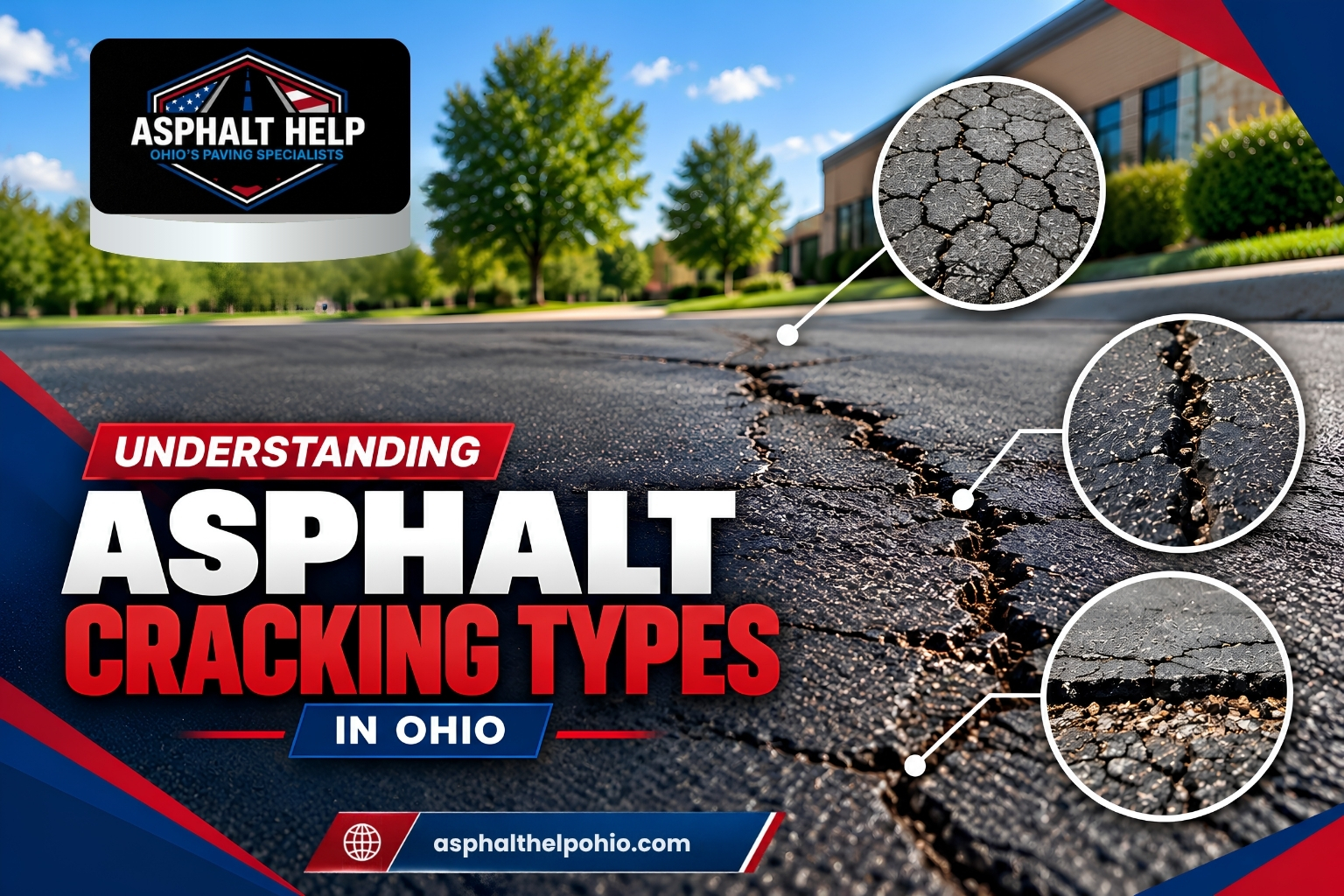
| Cracks with crumbling edges | Patching or a more substantial repair | Loose and deteriorated material may need removal |
| Interconnected alligator cracking | Structural assessment and appropriate patching or rehabilitation | The base or subgrade may be failing |
| Cracks with sinking or recurring settlement | Investigate drainage and foundation conditions | Surface treatment alone may not solve the problem |
| Widespread pavement deterioration | Evaluate rehabilitation or reconstruction | The overall pavement condition determines the best approach |
These are general guidelines, not a substitute for a pavement assessment. Crack width, movement, severity, traffic, and the condition of the supporting layers all affect the repair decision.
5. Avoid Relying on Sealcoating Alone
Sealcoating can help protect suitable asphalt from oxidation and weather exposure. It can also improve the appearance of an asphalt surface.
However, sealcoating does not replace dedicated crack repair. It cannot restore a weakened base, correct significant settlement, or rebuild broken pavement.
Before sealcoating, cracks and other defects should be evaluated and treated as needed. If the pavement has widespread structural damage, more substantial repairs may be necessary before a protective surface treatment is appropriate.
A maintenance plan should distinguish between treatments that protect a sound surface and repairs that correct existing damage.
6. Protect Driveways From Preventable Damage
Residential driveways can develop cracks because of weather, aging, traffic, drainage, and construction conditions. Although these factors cannot all be eliminated, consistent maintenance can help reduce the risk of premature deterioration.
Homeowners can:
- Inspect the driveway periodically for new cracks.
- Arrange appropriate repairs when cracks appear.
- Keep drainage paths clear.
- Investigate standing water and recurring low spots.
- Watch for crumbling edges and settlement.
- Avoid allowing known pavement defects to deteriorate unchecked.
If a crack returns after repair, consider whether the original cause has been resolved. Recurring damage may indicate movement beneath the surface or another issue that requires further investigation.
7. Include Rental Properties in Your Pavement Maintenance Plan
Rental properties may have driveways, shared parking spaces, private access lanes, and other paved areas that experience regular vehicle traffic.
When pavement maintenance is delayed, small defects can spread and affect the usability and appearance of these areas.
Property owners and managers should establish a routine for checking paved surfaces, recording defects, and arranging repairs when appropriate. Pay attention to frequently used entrances, turning areas, parking spaces, and locations where water collects.
A documented maintenance routine can make it easier to recognize recurring problems and plan repairs based on pavement condition rather than waiting until damage becomes extensive.
8. Maintain Commercial Parking Lots Proactively
Commercial parking lots experience repeated traffic from customers, employees, delivery vehicles, and service providers. The type and volume of traffic can influence how quickly pavement defects develop.
Preventive maintenance should include regular inspections of drive aisles, entrances, loading areas, parking spaces, and drainage features.
Commercial property managers should pay particular attention to cracks in wheel paths, interconnected cracking, loose asphalt, and potholes. These conditions may indicate that the pavement needs more than routine surface maintenance.
A suitable maintenance program should prioritize defects according to severity and the risk of further deterioration. It should also consider whether repairs are needed in isolated locations or across larger sections of the property.
9. Schedule Maintenance Around Pavement Conditions
The effectiveness of crack treatment depends partly on the weather, pavement condition, material selection, and preparation.
Cracks should be assessed before selecting a repair schedule. The appropriate time for sealing depends on the product specifications and the expected conditions during application and curing.
Ohio’s seasonal weather makes planning particularly important. Cold, wet, or unsuitable conditions may affect the quality of some repair work.
Rather than waiting for a particular season regardless of pavement condition, inspect the asphalt regularly and schedule appropriate maintenance when conditions allow the repair material to perform as intended.
10. Address Structural Problems Before They Spread
Some cracks are signs of deeper pavement failure rather than isolated surface defects.
If cracking appears alongside depressions, potholes, widespread breakup, or recurring settlement, the pavement may have lost support from the base or subgrade.
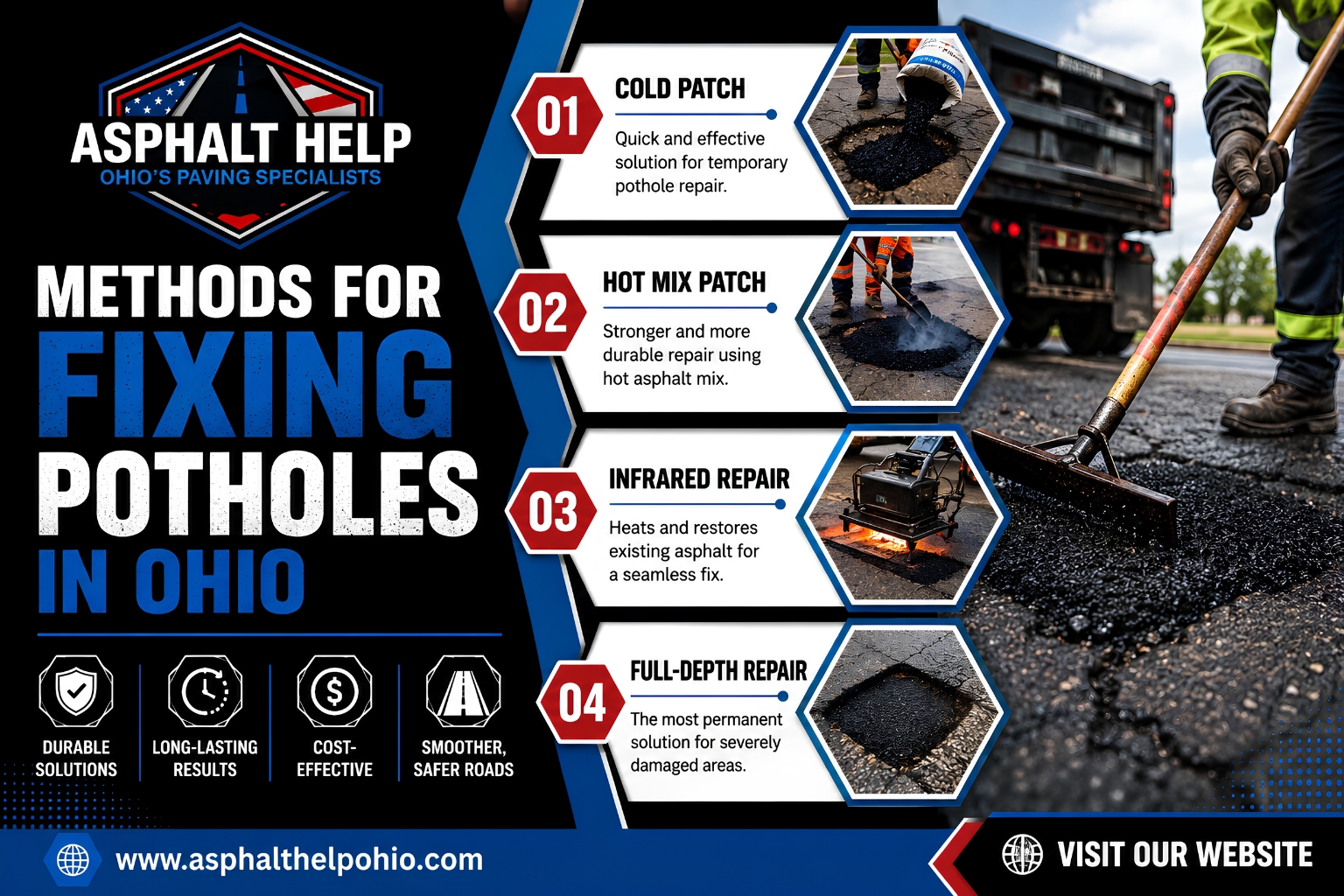
In these situations, filling the visible opening may provide only limited benefit. The affected area may need to be investigated to determine whether damaged asphalt or underlying material must be removed and replaced.
For widespread deterioration, rehabilitation or reconstruction may be more appropriate than repeated localized repairs.
The goal is not simply to make cracks less visible. It is to select a treatment that addresses the reason the pavement is failing.
Common Crack Prevention Mistakes to Avoid
Even when property owners recognize the importance of maintenance, certain mistakes can limit the effectiveness of their efforts.
Waiting Until Cracks Become Large
Delaying an assessment allows more time for water to enter and for traffic and weather to affect the damaged area. Inspecting early gives property owners more opportunities to select a suitable treatment.
Using the Same Treatment for Every Crack
Different crack types and severity levels require different approaches. A suitable crack seal may work for one defect, while a structurally damaged area may need patching or more extensive repair.
Ignoring Water Accumulation
Repeated standing water can signal a drainage issue. If the source remains unresolved, the pavement may continue to deteriorate even after cracks are sealed.
Applying Sealcoating Over Unrepaired Damage
A protective coating does not restore structural support or repair every crack. Existing defects should be assessed and treated appropriately before sealcoating.
Overlooking Cracks That Keep Returning
Recurring cracks may indicate movement, weak support, or an unresolved drainage problem. Repeating the same surface repair without investigating the cause may not provide a durable result.
A Practical Asphalt Crack Prevention Checklist
Use this checklist as a starting point for residential, rental, and commercial asphalt maintenance.
- Inspect asphalt surfaces regularly in clear, dry conditions.
- Record the location and extent of new cracks.
- Check for loose edges, potholes, and settlement.
- Look for standing water and drainage problems.
- Seal suitable cracks with an appropriate treatment.
- Arrange structural repairs when the damage warrants them.
- Confirm that recurring problems have been investigated.
- Apply sealcoating only when the pavement is suitable and necessary repairs have been addressed.
- Reinspect repaired areas to monitor their condition.
The checklist should be adapted to the age, condition, traffic, and drainage characteristics of each paved area.
Frequently Asked Questions About Asphalt Crack Prevention in Ohio
1. How do you stop asphalt cracks from spreading?
Inspect cracks early, select an appropriate sealing or repair method, and address water infiltration and drainage problems. If cracking reflects structural failure, the affected pavement and supporting layers may require more substantial repairs.
2. Why do asphalt cracks get worse during Ohio winters?
Cold temperatures can cause asphalt to contract, while moisture entering existing cracks can contribute to deterioration during freeze-thaw conditions. Traffic and weakened supporting layers may add to the damage.
3. Is crack sealing better than crack filling?
The appropriate method depends on the type of crack, how much it moves with temperature changes, its width, and the pavement condition. The terms are sometimes used interchangeably, but the treatments and materials can differ.
4. Can sealcoating prevent all asphalt cracks?
No. Sealcoating can protect suitable asphalt from oxidation and weather exposure, but it cannot eliminate all cracking or repair a failed pavement foundation. Crack treatment and structural repairs may be necessary.
5. How often should asphalt be inspected?
A regular inspection schedule is useful, with additional checks after winter or when new damage becomes noticeable. The appropriate frequency depends on pavement age, traffic, drainage, and overall condition.
6. Can small cracks be repaired without replacing the pavement?
Often, yes. Suitable isolated cracks may be sealed or filled without replacing the entire surface. If the surrounding asphalt is breaking apart or the foundation has weakened, more extensive repairs may be required.
7. Why do repaired cracks come back?
Cracks can return if the original cause remains unresolved. Possible reasons include continued pavement movement, water infiltration, temperature-related stress, traffic loading, or a weak underlying base.
8. Does crack prevention apply to rental and commercial properties?
Yes. Residential driveways, rental property parking areas, and commercial lots all benefit from appropriate inspections, drainage management, and timely repairs. Maintenance should reflect the traffic and pavement conditions at each property.
Conclusion
Preventing asphalt cracks from spreading starts with early detection and the right repair strategy. In Ohio, temperature changes, moisture, freeze-thaw cycles, traffic, and pavement aging can all contribute to cracking. Regular inspections, appropriate crack sealing, good drainage, and timely structural repairs can help slow deterioration and preserve suitable asphalt surfaces.
For property owners researching crack prevention asphalt Ohio, the most important step is to address both the visible damage and its underlying cause. Asphalt Help Ohio helps property owners understand asphalt pavement problems and evaluate appropriate maintenance options for residential driveways, rental properties, and commercial pavement. A consistent maintenance plan can help identify problems sooner and keep asphalt surfaces in better condition over time.