




Why do long cracks appear in asphalt driveways, even when the surface once looked smooth and durable? Long driveway cracks often develop because of temperature changes, aging asphalt, poor construction joints, ground movement, or moisture weakening the pavement’s foundation. In Ohio, seasonal temperature swings and freeze-thaw conditions can contribute to cracking, especially when water enters existing openings.
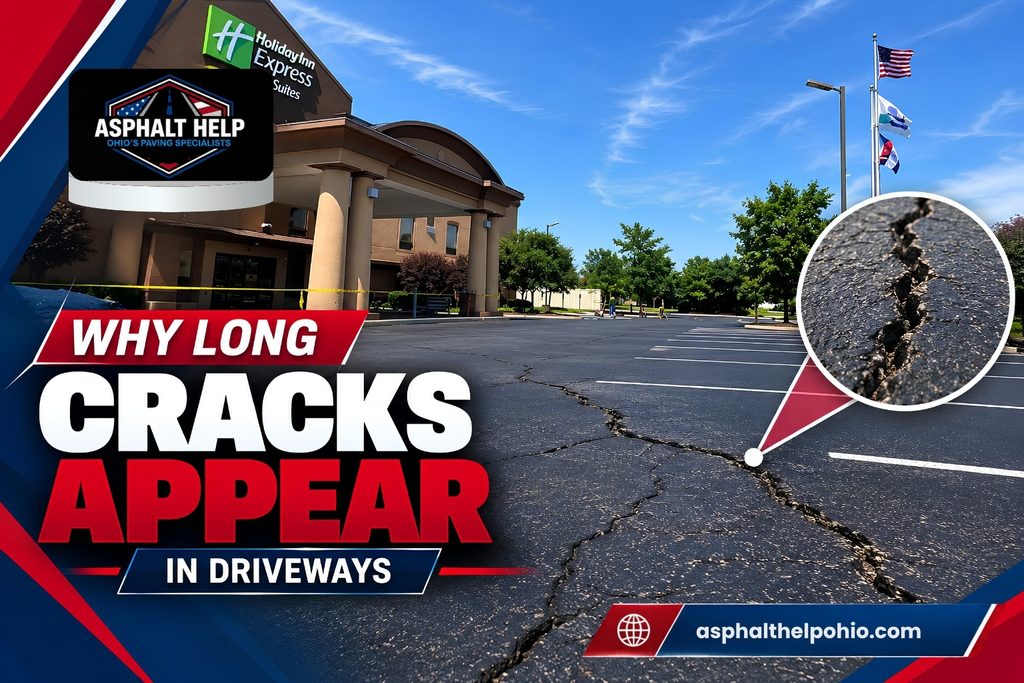
Understanding the cause of driveway cracks Ohio homeowners experience is important because not every crack requires the same repair. A narrow crack may need monitoring or sealing, while a wide crack accompanied by sinking, crumbling edges, or multiple connected cracks may indicate a more serious problem beneath the surface.
Asphalt Help Ohio helps property owners understand asphalt deterioration and identify suitable maintenance and repair approaches. Whether you manage a residential driveway, a rental property, or a commercial property, recognizing early signs of damage can help you make informed decisions about pavement maintenance.
What Do Long Driveway Cracks Look Like?
Long cracks generally extend in one direction across part or most of an asphalt driveway. Some run parallel to the driveway’s length, while others follow the edges or appear near the joints between paving sections.
Common signs include:
- Longitudinal cracks: Cracks that run in the same direction as the driveway.
- Edge cracks: Cracks that develop near the sides of the asphalt surface.
- Joint cracks: Long openings where two paving sections meet.
- Widening cracks: Openings that become more noticeable over time.
- Cracks with loose edges: Damaged asphalt begins breaking away around the opening.
- Cracks with depressions: The pavement near the crack appears uneven or sunken.
The direction and location of a crack can offer clues about its cause. For example, a crack along a paving joint may be associated with construction or compaction, while a crack near the driveway edge may indicate inadequate support or drainage problems.
However, appearance alone cannot always identify the underlying issue. The surrounding pavement and supporting ground may also need to be evaluated.
What Causes Long Driveway Cracks in Ohio?
Several conditions can contribute to long cracks in asphalt driveways. Identifying the likely cause helps determine whether sealing, patching, or more extensive repairs may be appropriate.
1. Ohio’s Changing Temperatures
Asphalt expands and contracts as temperatures change. During cold weather, the pavement contracts and can develop tensile stress. If the asphalt has become brittle with age or the stress exceeds its ability to accommodate movement, cracks may form.
Ohio’s winters can create challenging conditions for asphalt surfaces. Repeated temperature fluctuations can contribute to existing cracks widening or new cracks developing.
Temperature-related cracking does not always follow the same pattern. Some cracks run across the driveway, while others may extend lengthwise depending on pavement conditions, construction, and other sources of stress.
2. Freeze-Thaw Cycles and Moisture
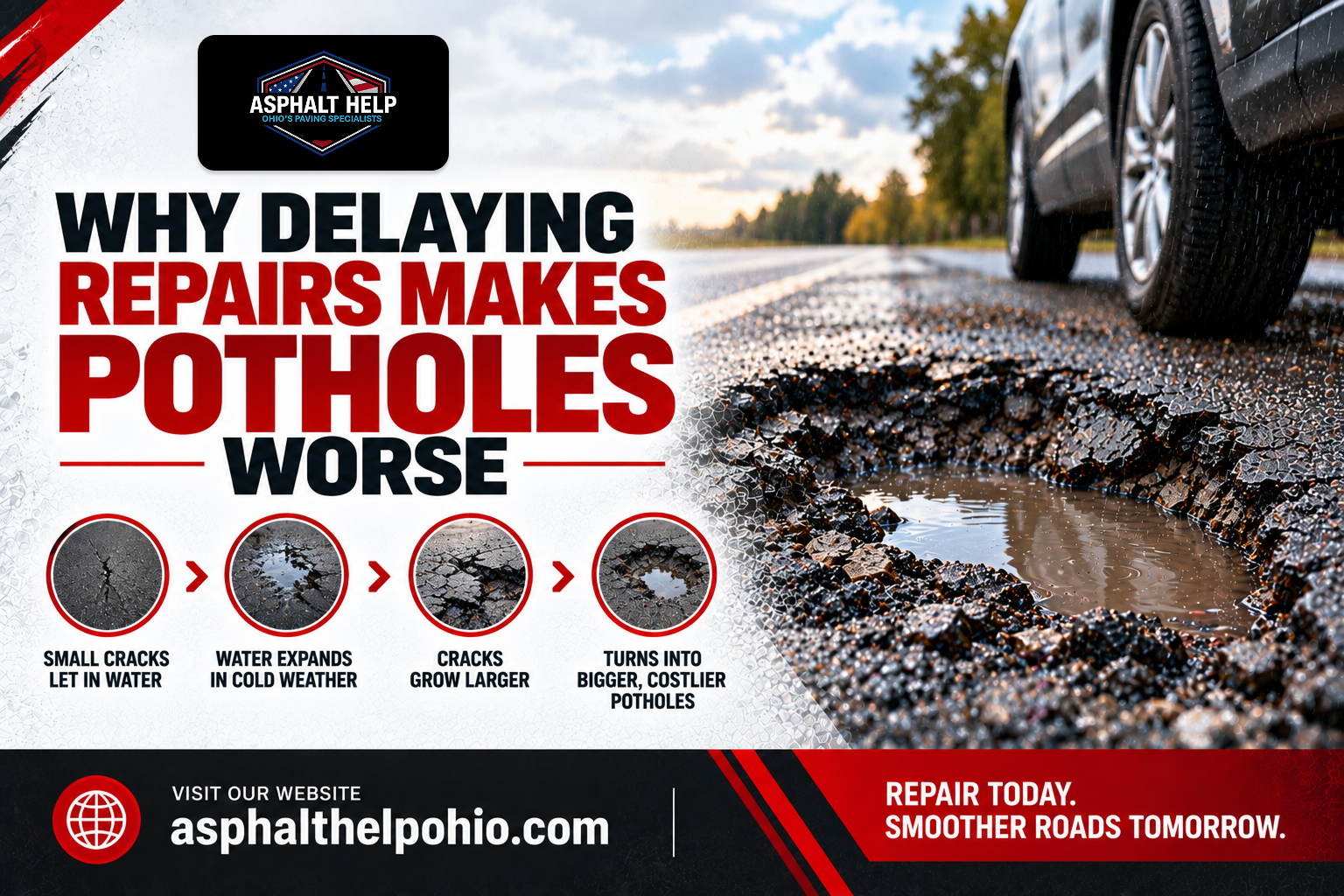
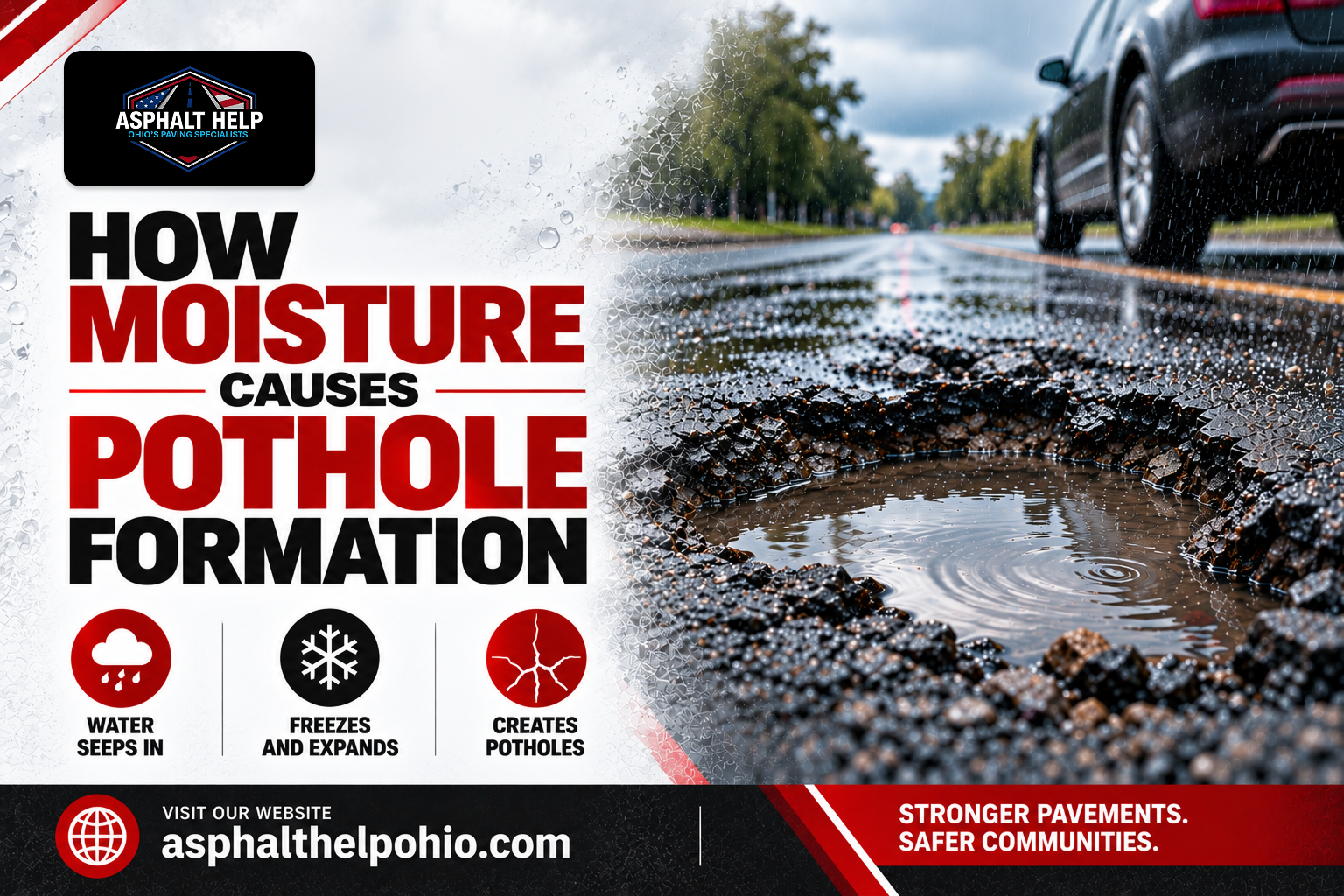
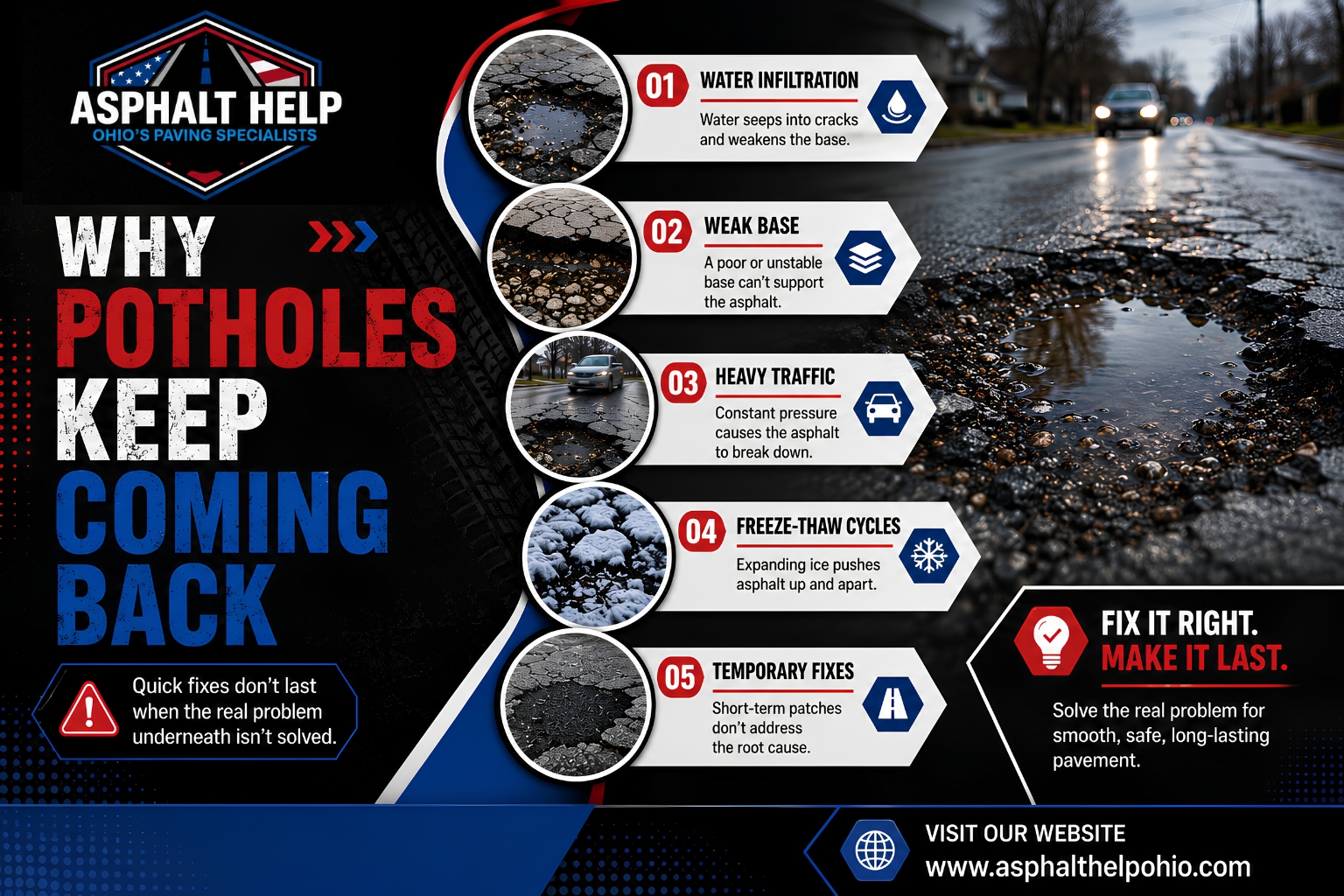
Water can enter small openings in asphalt and reach the materials beneath the surface. When temperatures fluctuate around freezing, repeated freezing and thawing can contribute to pavement deterioration.
Moisture can also weaken susceptible base materials or the underlying soil. When the support beneath the driveway becomes less stable, the asphalt may move under vehicle loads and develop additional cracks.
This is why long cracks should not be ignored when they are accompanied by soft areas, settlement, or recurring water accumulation.
3. Poor Compaction Along Paving Joints
Many asphalt surfaces are constructed in sections. Where two sections meet, contractors create a joint that needs adequate compaction and bonding.
If the joint is not properly compacted or bonded, it may become a weak point. A long crack can then form along the joint as the pavement experiences traffic and weather-related stress.
Joint-related cracking may appear as a relatively straight line extending along the driveway. It can remain narrow initially but may widen if water enters the opening or the surrounding asphalt deteriorates.
4. Weak Soil or Inadequate Base Support
An asphalt driveway depends on a stable foundation. The base layer distributes vehicle loads, while the underlying soil supports the entire pavement structure.
If the base was inadequately prepared, poorly compacted, or weakened by moisture, the driveway may settle unevenly. This movement can create long cracks or cause existing cracks to widen.
Settlement may be more noticeable where the driveway crosses areas with inconsistent soil conditions or where water repeatedly affects the foundation.
If a crack appears alongside a depression or uneven surface, the problem may extend beyond the asphalt itself.
5. Heavy or Repeated Vehicle Loads
Vehicle traffic places stress on asphalt. Repeated loading can gradually weaken pavement, particularly when the driveway was not designed for the weight or frequency of the vehicles using it.
Regular passenger-car traffic may be suitable for a residential driveway, but repeated heavy deliveries, service vehicles, or equipment can place greater demands on the pavement.
Long cracks that develop in wheel paths may indicate repeated traffic stress. If additional interconnected cracks form nearby, the damage may be progressing toward fatigue-related pavement failure.
6. Aging Asphalt
Asphalt changes as it ages. Exposure to air, sunlight, and weather gradually affects the binder that holds the aggregate together.
Over time, aged asphalt can become less flexible and more vulnerable to cracking when exposed to temperature changes and traffic stress.
An older driveway may therefore develop cracks more readily than a newer surface. However, age alone does not explain every crack. Construction quality, drainage, pavement thickness, and foundation conditions also matter.
7. Poor Drainage Around the Driveway
Water that collects on or around a driveway can contribute to deterioration. Drainage problems may occur when the pavement has low spots, the surrounding ground slopes toward the driveway, or runoff cannot flow away properly.
When moisture repeatedly reaches the base or subgrade, it may weaken the supporting materials. The asphalt can then settle, move, or crack under traffic.
Pay attention to long cracks near low areas, driveway edges, downspouts, and locations where water frequently accumulates. These patterns may indicate that drainage should be investigated as part of the repair process.
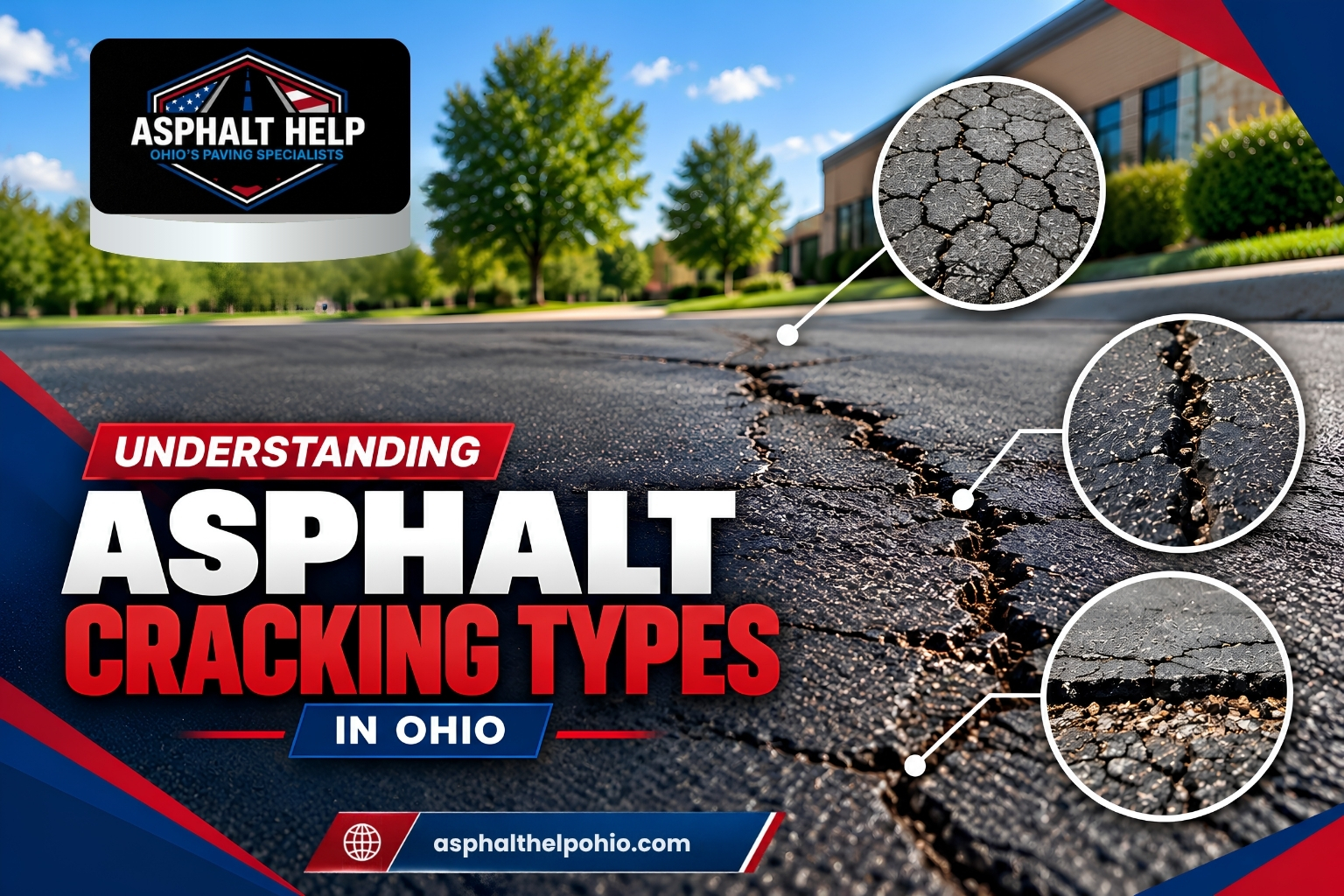
Types of Long Cracks Found in Asphalt Driveways
Not all long cracks have the same cause. Understanding the main types can help property owners recognize what to look for before arranging an inspection.
| Crack Type | Appearance | Possible Cause |
|---|---|---|
| Longitudinal cracking | Runs parallel to the driveway’s length | Weak paving joints, settlement, insufficient support, or traffic stress |
| Edge cracking | Develops near the driveway’s outer edge | Poor edge support, drainage issues, or frost-related movement |
| Transverse cracking | Runs across the driveway rather than along it | Temperature-related stress, aging asphalt, or movement beneath the surface |
| Reflective cracking | Reappears above an existing crack or joint in an underlying layer | Movement or cracking in the layer below the asphalt |
| Fatigue-related cracking | May begin as lengthwise cracks and develop into interconnected patterns | Repeated loading and inadequate pavement support |
These descriptions are general indicators, not definitive diagnoses. Several factors can contribute to the same crack, and more than one type of damage can occur in the same driveway.
Why You Should Not Ignore Long Driveway Cracks
A narrow crack may initially appear to be a minor cosmetic issue. However, an untreated opening can allow moisture to enter the pavement and contribute to further deterioration.
Potential consequences include:
- Widening cracks: Temperature changes and pavement movement can make existing openings larger.
- Water infiltration: Moisture may reach the base and underlying soil.
- Loose asphalt edges: The material around a crack may begin to crumble.
- Potholes: Damaged sections can break apart as deterioration progresses.
- Uneven pavement: Settlement may create depressions or changes in surface level.
- More extensive repairs: If the damage spreads, a localized repair may no longer be sufficient.
Not every long crack will develop into a major pavement failure. Nevertheless, identifying the cause early can help determine whether a relatively simple repair is suitable or whether the driveway needs more substantial work.
How Are Long Driveway Cracks Repaired?
The appropriate repair depends on crack width, location, severity, and the condition of the pavement underneath.
1. Inspect the Crack and Surrounding Pavement
Start by assessing the crack’s length, width, and location. Check whether the edges are intact or crumbling and whether the surrounding surface is level.
It is also important to look for signs of drainage problems, recurring settlement, potholes, or interconnected cracks. These conditions can indicate that the damage extends beyond the visible opening.
2. Seal Suitable Cracks
Crack sealing may be appropriate for certain cracks that have not caused substantial structural damage. The process generally involves preparing the crack and applying a suitable sealant to help limit water infiltration.
Sealing is a maintenance measure, not a universal solution. It cannot restore a failed base or correct substantial settlement.
The crack should be evaluated before selecting a treatment, particularly if it is widening or accompanied by other pavement damage.
3. Patch Damaged Sections
When asphalt around a crack has broken apart, a patch may be needed. The repair method depends on the extent of deterioration and whether the supporting layers remain stable.
A surface-level repair may be suitable for certain shallow defects. If the base is weakened, the damaged asphalt and affected supporting material may need to be removed and replaced.
A patch should address the failed material rather than simply cover the visible opening.
4. Correct Drainage or Foundation Problems
If the crack is associated with water accumulation, settlement, or weak ground support, those issues should be considered as part of the repair plan.
Depending on the conditions, work may involve improving drainage, rebuilding an affected base section, or correcting unstable pavement areas.
Without addressing the underlying problem, the crack may return even after the asphalt surface has been repaired.
5. Consider Resurfacing or Reconstruction When Needed
If cracking is widespread or repeated repairs have failed, broader rehabilitation may be more appropriate.
Resurfacing can improve a pavement that remains structurally suitable, but it will not reliably solve extensive foundation failure by itself. Where the asphalt and base have deteriorated significantly, removing and rebuilding the affected sections may be necessary.
An assessment can help determine which approach best matches the driveway’s condition.
Can Sealcoating Prevent Driveway Cracks?
Sealcoating can help protect suitable asphalt from oxidation and weather exposure, but it does not eliminate every cause of cracking.
It is important to understand the difference between protecting an asphalt surface and repairing an existing defect. Sealcoating is not a substitute for crack sealing, patching, drainage correction, or structural repairs where those treatments are needed.
Before applying a sealcoat, the driveway should be evaluated and appropriate repairs completed. Cracks that indicate settlement or structural weakness need more than a protective surface layer.
How Can Homeowners Prevent Driveway Cracks in Ohio?
Although asphalt cannot be made completely immune to cracking, suitable construction and regular maintenance can reduce the risk of premature deterioration.
Keep Water Moving Away From the Driveway
Check whether runoff drains away from the pavement and whether water regularly collects near the edges. Investigate persistent ponding and drainage problems rather than allowing moisture to affect the supporting layers.
Inspect the Driveway Seasonally
Examine the surface after winter and periodically throughout the year. Look for new cracks, widening openings, loose asphalt, and uneven areas.
Seasonal inspections can help you recognize changes before the damage becomes extensive.
Address Cracks According to Their Cause
Small cracks and structural failures require different treatments. Do not assume that every crack can be solved with the same sealant or surface coating.
When cracks return after repairs, investigate whether the underlying cause remains unresolved.
Maintain the Driveway Edges
Driveway edges may be more vulnerable when they lack proper support or are exposed to runoff. Keep an eye on edge cracking, erosion, and areas where the surrounding soil has settled.
Ensure Proper Construction and Support
When installing a new driveway or rebuilding a damaged section, suitable site preparation, base compaction, drainage, and asphalt placement all contribute to performance.
A driveway should be designed for its expected use, including the types and frequency of vehicles that will travel across it.
When Should You Get a Professional Assessment?
Consider having the driveway evaluated if:
- A crack is widening or becoming deeper.
- Asphalt along the crack is crumbling or breaking away.
- The pavement is sinking or uneven.
- Water repeatedly collects near the damaged area.
- Several cracks are appearing close together.
- A previously repaired crack has returned.
- Long cracks are developing alongside wheel paths or near the driveway edge.
These signs do not automatically mean that the entire driveway needs replacement. They indicate that the damage should be assessed so the repair can address the actual problem.
Frequently Asked Questions About Driveway Cracks in Ohio
1. Why do long cracks appear in asphalt driveways?
Long cracks can develop because of temperature changes, aging asphalt, weak paving joints, repeated vehicle loads, poor drainage, or movement in the underlying soil and base. The specific cause depends on the crack’s location and surrounding pavement conditions.
2. Are long driveway cracks normal in Ohio?
Asphalt can develop cracks over time, and Ohio’s seasonal weather can contribute to pavement stress. However, widening cracks, crumbling edges, and cracks accompanied by settlement should be evaluated rather than automatically treated as normal aging.
3. Can I repair long driveway cracks without replacing the driveway?
Often, yes. Some cracks can be sealed, while localized damaged areas may need patching. If the base has failed or the cracking is widespread, more extensive repairs may be required.
4. Does water make driveway cracks worse?
Water can enter existing cracks and affect the materials supporting the asphalt. If the base or soil weakens, traffic and temperature changes may contribute to additional movement and deterioration.
5. Will sealcoating fill long driveway cracks?
Sealcoating is a protective surface treatment, not a dedicated crack repair. Suitable cracks should be treated separately, and structural damage should be addressed before sealcoating is considered.
6. Why do cracks appear along the edge of my driveway?
Edge cracks may be associated with inadequate support, poor drainage, erosion, frost-related movement, or vehicles repeatedly traveling close to the pavement edge. The cause should be identified before selecting a repair.
7. Why do driveway cracks return after being repaired?
Cracks may return when the original cause remains unresolved. For example, a repair may not last if water continues to weaken the base, the ground keeps settling, or repeated traffic stress affects the same area.
8. When is driveway replacement necessary?
Replacement may be considered when deterioration is widespread, the supporting structure has failed extensively, or repeated repairs are no longer providing a suitable result. An assessment can help determine whether localized repairs, rehabilitation, or reconstruction is appropriate.
Conclusion
Long driveway cracks can develop for several reasons, including Ohio’s changing temperatures, moisture infiltration, aging asphalt, weak paving joints, repeated vehicle loads, and inadequate foundation support. Although some cracks can be managed with routine maintenance, others may indicate deeper problems that require a more thorough repair. Paying attention to crack location, width, surrounding damage, and drainage conditions can help property owners make better maintenance decisions.
For anyone researching driveway cracks Ohio, the best approach is to identify the cause before choosing a treatment. Asphalt Help Ohio helps property owners understand asphalt deterioration and evaluate practical repair options. Whether the pavement serves a residential home, a rental property, or a commercial location, addressing damage appropriately can help maintain a more durable and functional asphalt surface.