
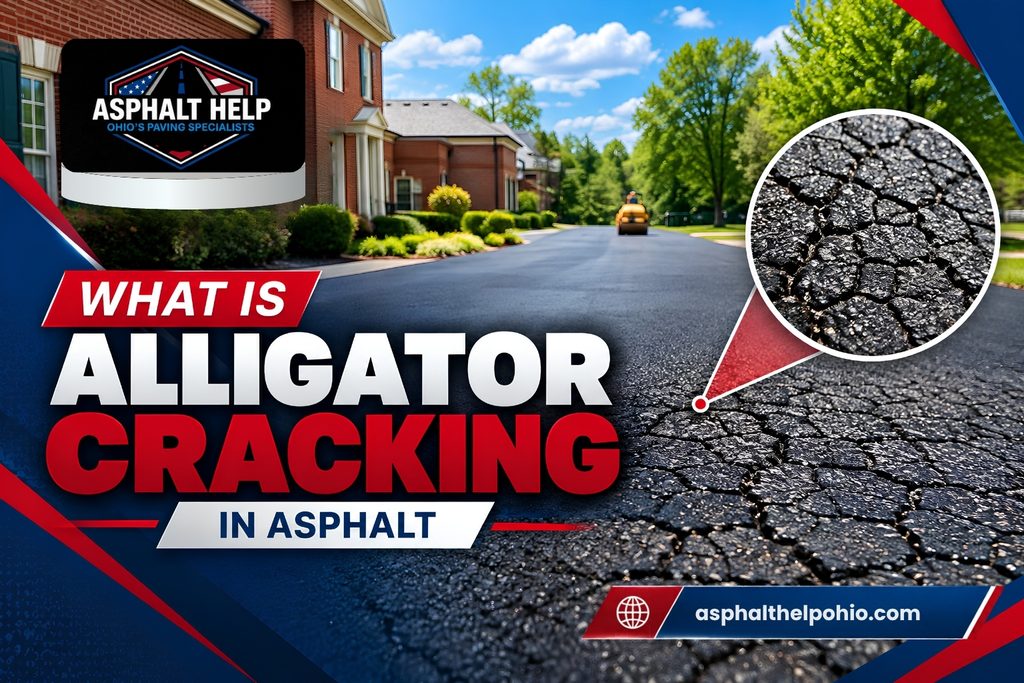
What is alligator cracking in asphalt, and why does it appear on driveways, roads, and parking lots across Ohio? Alligator cracking is a pattern of interconnected cracks that resembles an alligator’s skin and often indicates structural weakness in the pavement. It commonly develops when asphalt repeatedly bends under traffic loads because the pavement layers or underlying base cannot provide enough support.
For property owners and managers, recognizing alligator cracking Ohio conditions early can help prevent minor-looking pavement damage from progressing into broken asphalt and potholes. Ohio’s seasonal temperature changes, moisture, drainage problems, and repeated vehicle traffic can all contribute to pavement deterioration. However, alligator cracking is not simply a cosmetic issue. It often requires an assessment of the asphalt surface and the supporting layers beneath it.
Asphalt Help Ohio helps property owners understand common asphalt failures, evaluate potential repair options, and make informed decisions about maintaining pavement throughout Ohio.
What Does Alligator Cracking Look Like?
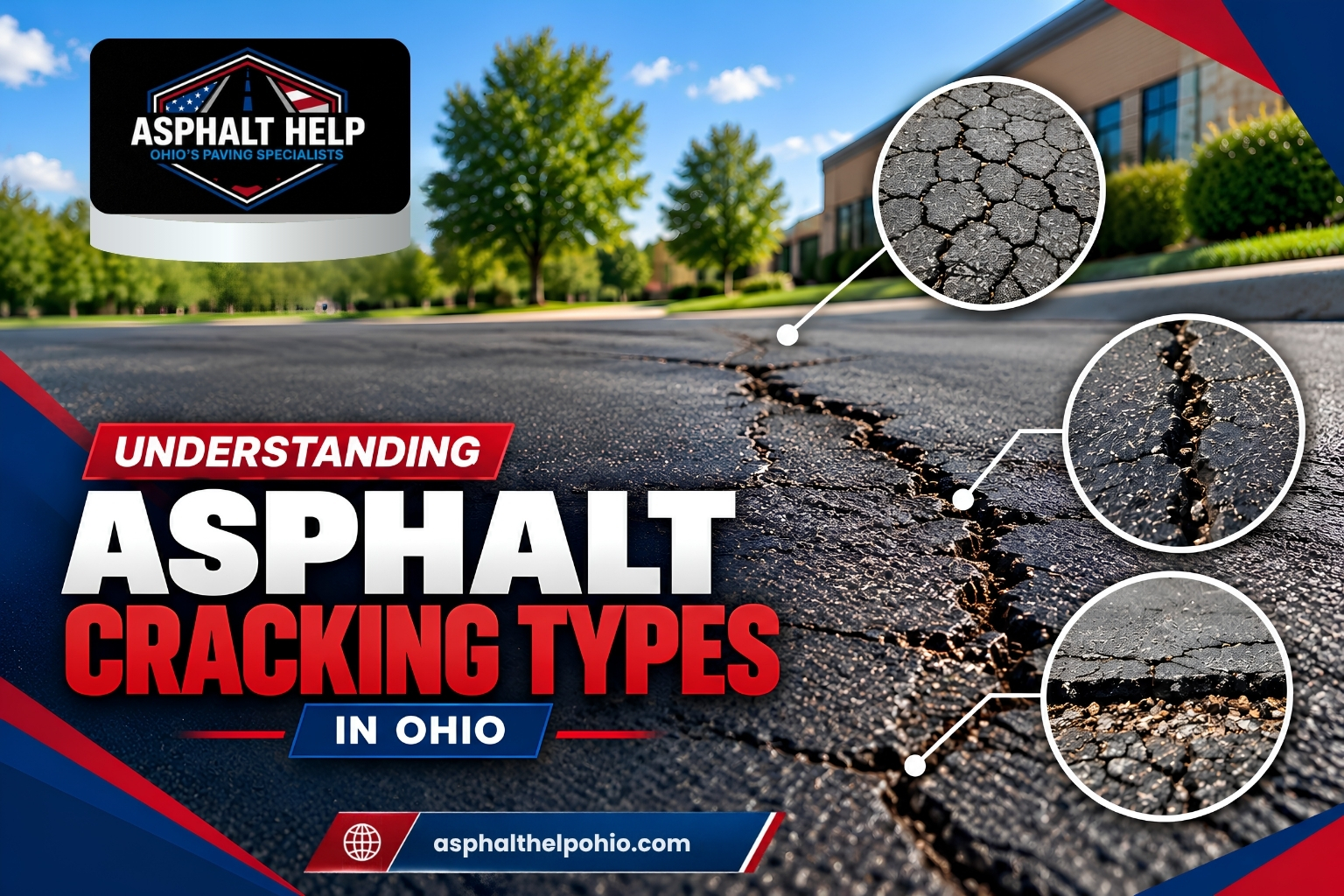
Alligator cracking is easy to recognize once you know what to look for. Instead of appearing as one isolated line, the cracks connect to form a network of small, irregular shapes across the pavement.
Common signs include:
- Interconnected cracks: Multiple cracks join together to create a pattern resembling reptile skin.
- Cracks in wheel paths: Damage often begins where vehicle tires repeatedly travel.
- Small, broken asphalt sections: The pavement between cracks may begin separating or loosening.
- Surface depressions: Affected areas may sink or become uneven as the underlying support weakens.
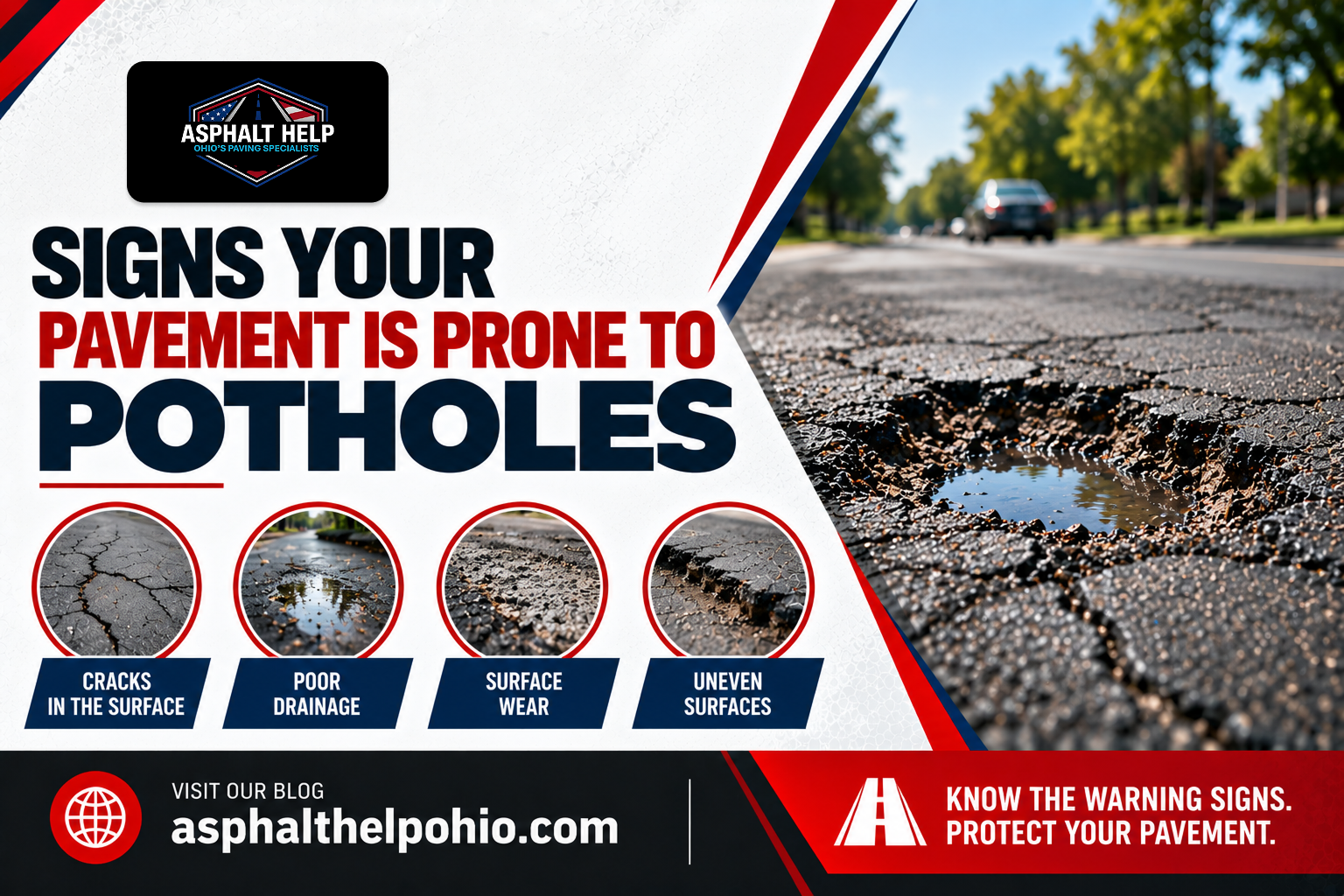
- Pothole development: Advanced cracking can lead to pieces of asphalt breaking away.
In many cases, the damage begins with individual cracks running in the direction of traffic. Repeated loading causes additional cracks to form and connect until the pavement develops a recognizable alligator-like pattern.
The location and extent of the cracking can provide useful clues about its cause. For example, cracking concentrated beneath vehicle wheel paths may suggest repeated loading or inadequate pavement support. Cracking around drainage areas may indicate that moisture is contributing to the problem.
What Causes Alligator Cracking in Ohio?
Several factors can contribute to alligator cracking. The underlying cause matters because the correct repair depends on whether the problem is limited to the asphalt surface or extends into the supporting layers.
1. Repeated Traffic Loads
Every vehicle places stress on asphalt pavement. A properly designed and constructed pavement structure distributes that stress through the asphalt, base, and supporting soil.
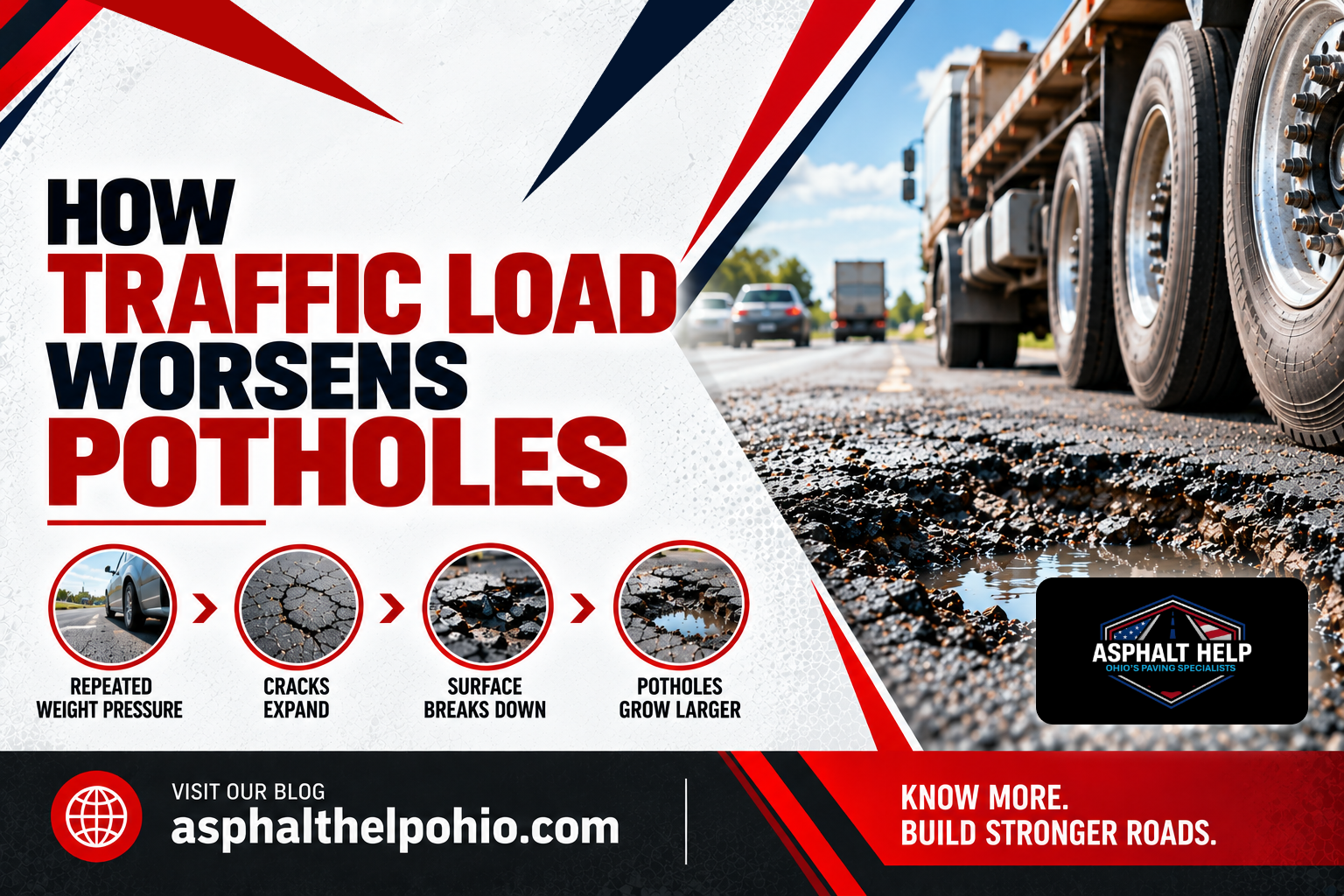
Over time, repeated traffic loads can cause fatigue damage. The risk increases when the pavement is too thin for the traffic it carries or when the underlying layers are weak.
Driveways, access roads, commercial parking lots, and loading areas may experience concentrated stress where vehicles frequently travel, turn, stop, or park. Heavy delivery vehicles can place additional demands on pavement that was not designed for those loads.
When repeated stress exceeds the pavement’s capacity, cracks can develop and gradually connect into an alligator pattern.
2. Weak or Inadequate Base Layers
Asphalt pavement relies on more than its visible surface. The aggregate base and underlying soil help distribute vehicle loads and provide stable support.
If the base was poorly compacted, contains unsuitable material, or has weakened over time, the asphalt above it may flex more than it should under traffic.
This movement places additional stress on the asphalt and can accelerate fatigue cracking. Simply covering the damaged surface may not correct the problem if the base remains unstable.
3. Poor Drainage and Water Infiltration
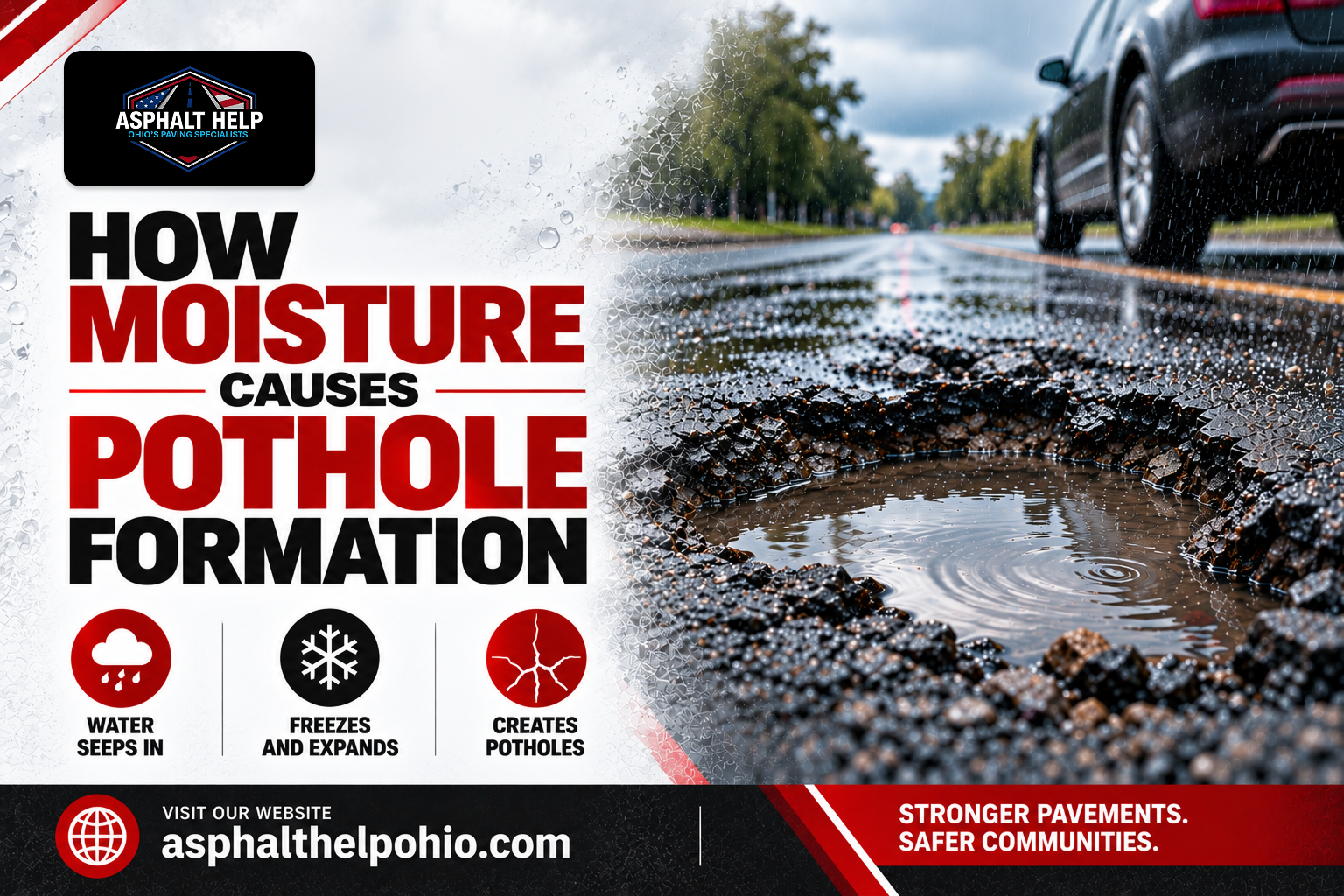
Water is a major concern for asphalt pavement in Ohio. Rain, melting snow, and runoff can enter through existing cracks and reach the supporting layers.
Excess moisture may weaken susceptible base materials or the underlying soil. When the pavement loses support, vehicles can cause greater movement and stress, making cracking more likely.
Drainage problems may also cause water to collect near low spots, pavement edges, or parking lot drains. If cracking repeatedly appears in these locations, the drainage system and underlying support should be evaluated.
4. Ohio’s Freeze-Thaw Conditions
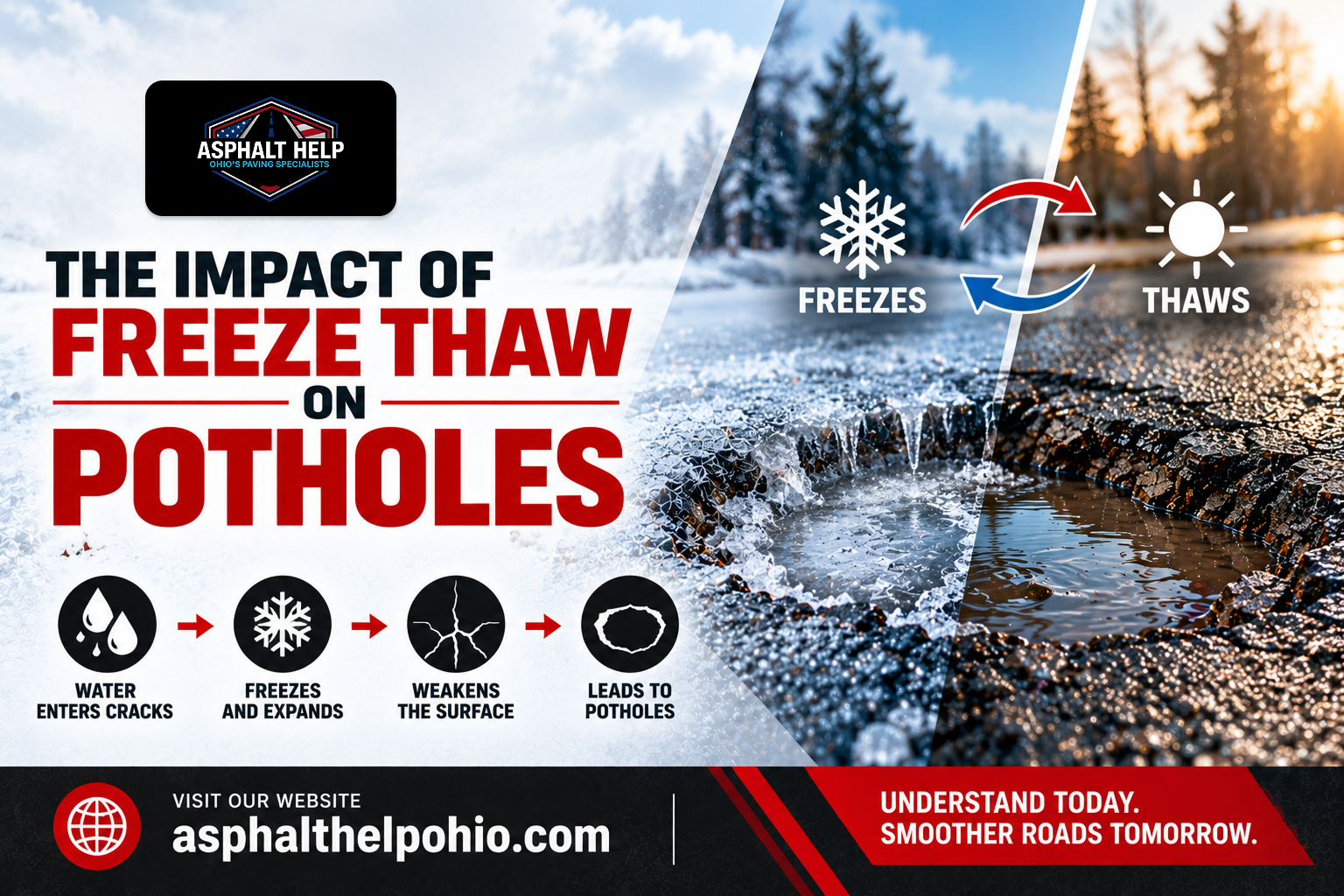
Ohio experiences seasonal temperature changes that can place additional stress on pavement. During colder periods, water may freeze and thaw as temperatures fluctuate. These cycles can contribute to pavement deterioration, particularly when moisture has already entered cracks or weakened the pavement structure.
Spring can be especially revealing because saturated ground and weakened supporting layers may become more vulnerable to traffic loads during thawing conditions.
However, freeze-thaw cycles are not the sole cause of alligator cracking. Repeated loading, pavement thickness, construction quality, and drainage also play important roles.
5. Pavement That Is Too Thin for Its Use
A pavement structure needs sufficient thickness and support for the vehicles that use it.
A residential driveway primarily used by passenger vehicles has different loading requirements from a commercial access lane that regularly accommodates delivery trucks. If the asphalt or base is inadequate for the actual traffic, repeated loading can cause premature deterioration.
A professional assessment can help determine whether the existing pavement structure is suitable for its current use.
6. Aging and Existing Pavement Deterioration
Asphalt changes over time as it experiences weather, traffic, and oxidation. Older pavement may become more susceptible to cracking, especially when maintenance has been delayed or previous damage has remained untreated.
Age alone does not automatically cause alligator cracking. The pattern usually indicates that the pavement is experiencing stress or inadequate support, so the underlying conditions should be investigated.
Why Is Alligator Cracking a Serious Asphalt Problem?
Alligator cracking is important because it can signal a structural problem rather than a simple surface defect.
When cracks connect, water can enter the pavement more easily. If the supporting layers are already weak, additional moisture and traffic may accelerate the damage.
Ignoring the problem can lead to several consequences:
- Progressive pavement failure: Small cracked sections can become loose and break apart.
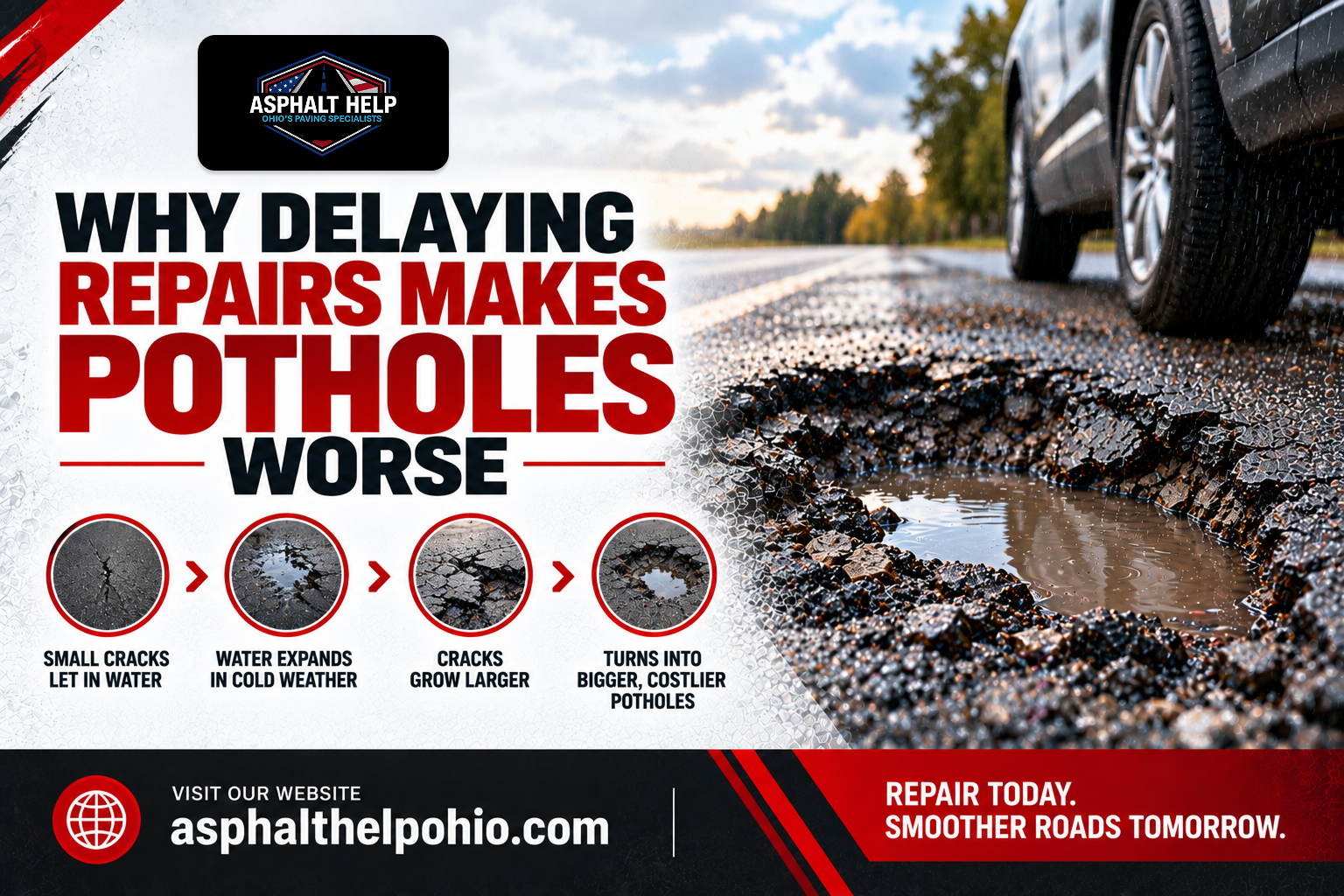
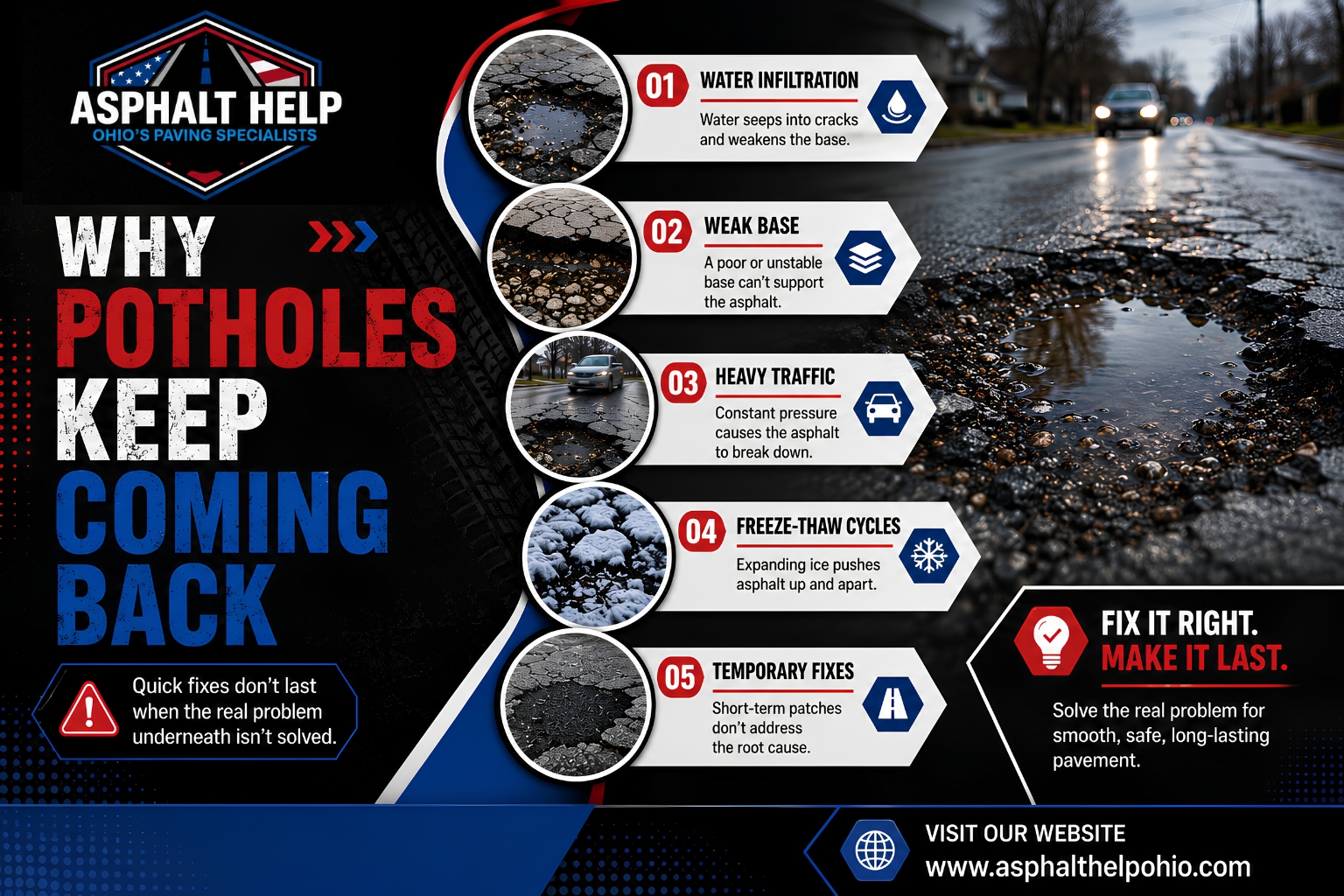
- Potholes: Broken asphalt may leave depressions that worsen with traffic and weather.
- Uneven surfaces: Localized settlement can affect vehicle movement and pedestrian access.
- Greater repair requirements: A small damaged area may expand, requiring more extensive repairs.
- Reduced property appearance: Cracked pavement can make a driveway or parking area look poorly maintained.
- Potential safety concerns: Loose material, depressions, and potholes may create hazards for people and vehicles.
Early evaluation is useful because it helps determine whether localized repair is still practical or whether the damage has spread too far for a limited repair to be effective.
How Severe Is Alligator Cracking?
The severity of alligator cracking depends on the size and condition of the cracked area, the amount of broken or loose asphalt, and whether the pavement has deformed.
| Severity | Common Signs | General Repair Consideration |
|---|---|---|
| Low | Early cracking with limited interconnected areas and little visible breakup | Inspect the cause and monitor or repair as appropriate |
| Moderate | More connected cracks, some loose edges, or localized deterioration | Evaluate whether the affected asphalt and supporting layers need repair |
| Severe | Extensive interconnected cracking, broken asphalt, depressions, or potholes | Localized or full-depth structural repair may be necessary |
These categories are general descriptions, not a substitute for a pavement inspection. Actual repair decisions depend on the extent of the damage and the condition of the underlying layers.
The Ohio Department of Transportation’s pavement repair guidance identifies different corrective strategies according to distress severity, including crack sealing for certain moderate crack conditions and partial- or full-depth repairs for severe damage. The appropriate treatment must match the specific type and extent of pavement failure.
How Is Alligator Cracking Repaired?
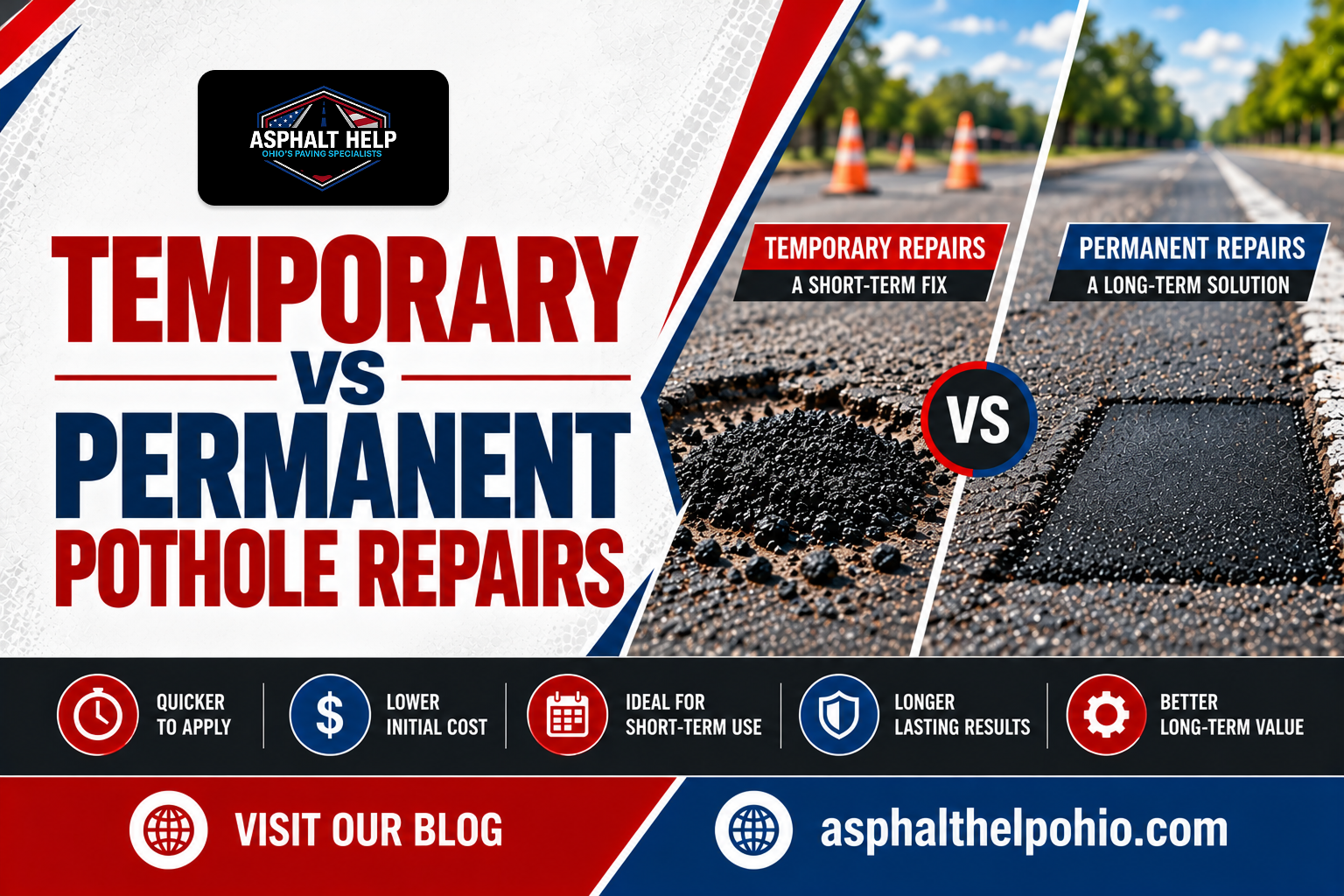
The right repair method depends on the cause and severity of the damage. A surface treatment alone generally cannot correct a structural failure beneath the asphalt.
1. Inspect the Damaged Area
The first step is to examine the crack pattern, its location, any loose pavement, signs of settlement, and nearby drainage conditions.
An assessment should determine whether the cracking is isolated or widespread and whether the base or subgrade may have lost strength. Where necessary, further investigation can help establish the depth and extent of the failure.
2. Repair the Underlying Problem
If water infiltration or poor drainage has contributed to the damage, those issues should be addressed as part of the repair plan.
Depending on the site, this may involve improving runoff, correcting a drainage problem, or replacing weakened base material. Without restoring adequate support, a new asphalt surface may develop similar cracking again.
3. Use Full-Depth Patching for Localized Structural Failure
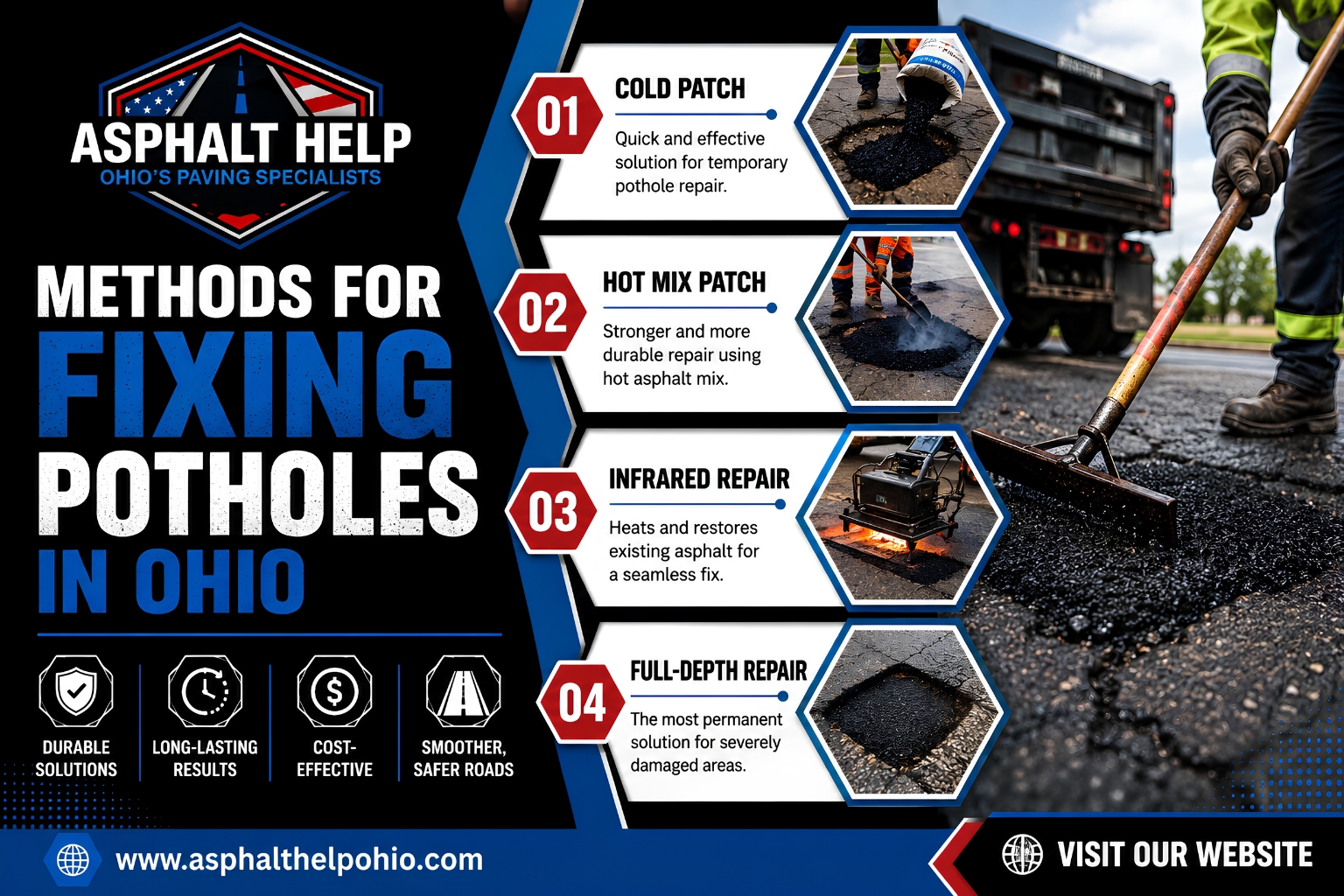
When alligator cracking affects a limited area, a full-depth patch may be suitable. This typically involves removing the damaged asphalt and addressing weakened supporting material before placing and compacting replacement materials.
The repair area needs to extend far enough to reach sound pavement and stable support. The required depth and dimensions depend on the conditions found during inspection.
A proper patch addresses the failed section rather than simply covering the visible cracks.
4. Consider Larger-Scale Rehabilitation for Widespread Damage
If alligator cracking covers a large portion of a driveway, road, or parking lot, repeated small patches may not provide a durable solution.
Depending on the pavement’s condition, rehabilitation may involve multiple repairs, milling and overlaying suitable sections, or reconstructing the affected pavement structure. Extensive structural failure may require removal and replacement of the asphalt and damaged base or subgrade.
An overlay should not be assumed to solve the problem if the existing pavement remains unstable. The underlying issues must be evaluated first.
5. Reassess Drainage and Surface Conditions
After repairs, the surrounding pavement and drainage should be reviewed to reduce the likelihood of recurring damage. Water should be directed away from vulnerable areas, and low spots or persistent ponding should be investigated.
Maintenance and periodic inspections can then help identify new problems before they become more extensive.
Can Sealcoating Fix Alligator Cracking?
No. Sealcoating does not repair structural alligator cracking.
Sealcoating is a protective surface treatment that can help protect suitable asphalt from oxidation and weather exposure. It can also improve the pavement’s appearance. However, it does not restore a failed base, stabilize weak soil, or replace broken asphalt.
Applying sealcoating over severe alligator cracking may hide some of the visible contrast temporarily, but it does not address the cause of the damage. The cracked pavement may continue to deteriorate beneath the coating.
Before sealcoating, the pavement should be assessed to determine whether it is structurally sound enough for the treatment. Areas with significant interconnected cracking generally require appropriate repairs first.
Alligator Cracking vs. Other Types of Asphalt Cracks
Not every crack pattern indicates the same problem. Understanding the differences can help property owners recognize when further evaluation is needed.
| Crack Type | What It Looks Like | Common Causes or Associations |
|---|---|---|
| Alligator cracking | Interconnected, irregular cracks resembling reptile skin | Repeated loading, weak pavement structure, poor drainage |
| Longitudinal cracking | Cracks running parallel to the pavement’s direction | Joint problems, traffic stress, or other pavement conditions |
| Transverse cracking | Cracks running across the pavement | Temperature-related stress and asphalt aging |
| Block cracking | A network of larger, roughly rectangular sections | Shrinkage and temperature-related changes in asphalt |
| Edge cracking | Cracks concentrated near the pavement edge | Inadequate edge support, drainage issues, or traffic stress |
These patterns can overlap, and appearance alone may not identify the precise cause. Alligator cracking is particularly significant because it is commonly associated with structural fatigue.
How Can Ohio Property Owners Help Prevent Alligator Cracking?
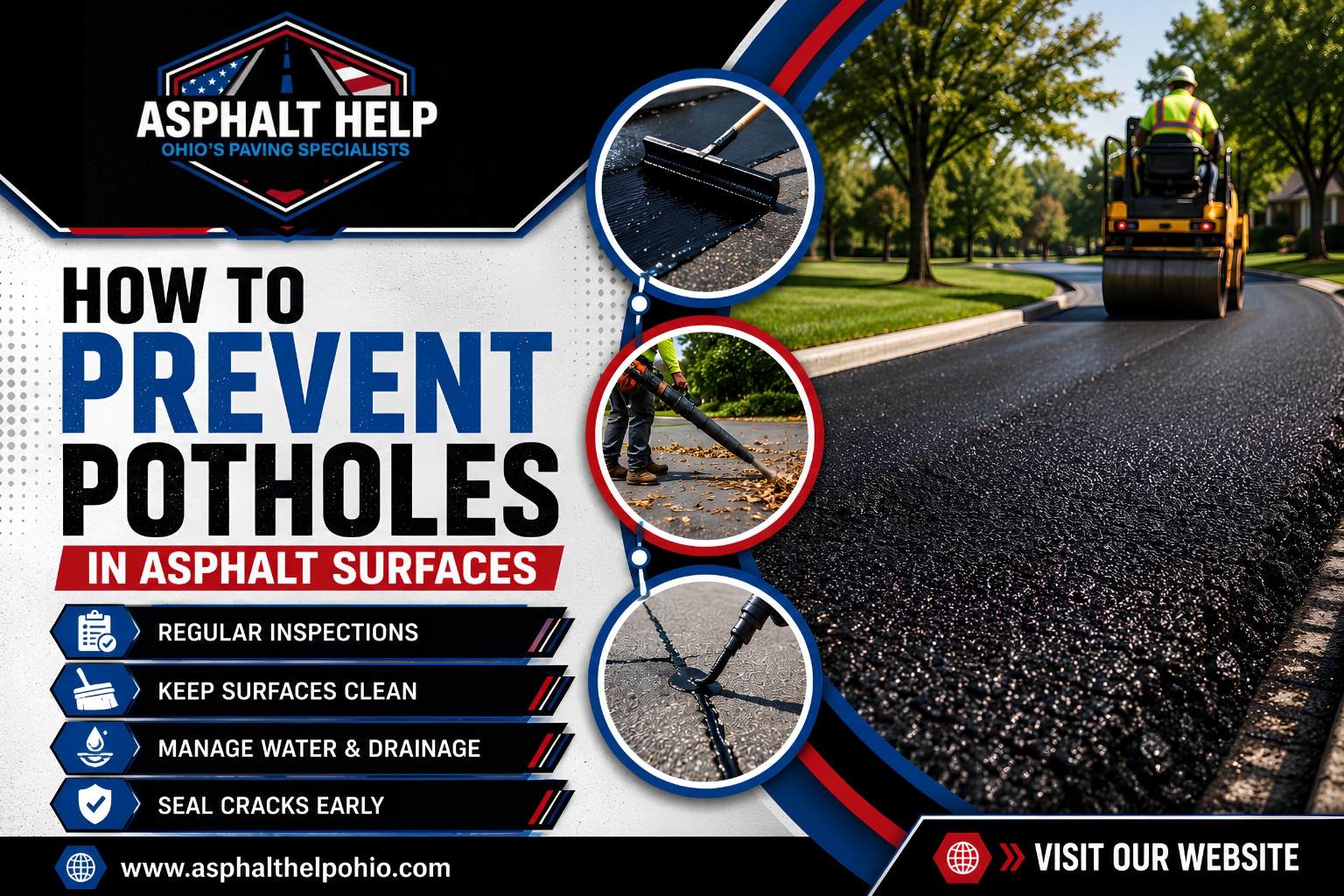
Although not every pavement failure can be prevented, appropriate design, drainage, and maintenance can reduce the risk of premature damage.
Maintain Proper Drainage
Keep drainage paths clear and investigate recurring water accumulation. Water should not be allowed to collect around pavement edges or remain in depressions for extended periods.
If cracking appears near a drain or low spot, evaluate whether water is weakening the supporting layers.
Address Early Signs of Pavement Damage
Inspect asphalt periodically, especially after winter and during spring thaw. Look for isolated cracks, depressions, loose material, and areas where water collects.
Early identification does not guarantee that a surface repair will be sufficient, but it provides an opportunity to assess the cause before the damage spreads.
Match Pavement Design to Traffic
Pavement thickness and base preparation should reflect the expected traffic and ground conditions. Areas that accommodate regular heavy vehicles may require a different pavement structure from areas used mainly by passenger cars.
When pavement is being installed or reconstructed, appropriate site preparation and drainage are important parts of long-term performance.
Schedule Routine Inspections
A regular inspection routine can help property owners identify changes in pavement condition over time. Check high-use wheel paths, loading zones, parking spaces, entrances, and drainage areas for signs of deterioration.
Documenting where cracks appear and whether they spread can also help when planning repairs.
Choose Repairs Based on the Actual Damage
Different asphalt problems require different treatments. Crack sealing may be appropriate for certain isolated cracks, while alligator cracking caused by structural failure usually requires more substantial work.
Choosing a treatment based on the underlying cause is more effective than applying the same surface treatment to every pavement problem.
When Should You Seek an Asphalt Assessment?
Consider arranging an assessment when you notice:
- Interconnected cracks forming a repeating pattern.
- Cracks spreading through vehicle wheel paths.
- Asphalt pieces becoming loose or breaking away.
- Potholes appearing within cracked areas.
- Depressions or uneven pavement around the cracks.
- Water collecting near damaged sections.
- Cracking returning after previous surface repairs.
If the damage is widespread or continues to return, the pavement may need more than routine maintenance. An assessment can help clarify whether a localized patch, drainage correction, broader rehabilitation, or reconstruction is appropriate.
Frequently Asked Questions About Alligator Cracking in Ohio
1. What is alligator cracking in asphalt?
Alligator cracking is a network of interconnected cracks that resembles an alligator’s skin. It commonly develops when repeated traffic loads cause pavement fatigue, often because the asphalt structure or underlying support is inadequate.
2. What causes alligator cracking in Ohio?
Potential causes include repeated traffic loading, weak base materials, inadequate pavement thickness, poor drainage, moisture infiltration, and seasonal weather conditions. More than one factor may contribute to the damage.
3. Can alligator cracking be repaired without replacing the entire driveway?
Yes, in some cases. If the damage is limited to a relatively small area, a localized full-depth patch may be appropriate. Widespread cracking or extensive base failure may require more substantial rehabilitation or reconstruction.
4. Does sealcoating stop alligator cracking?
No. Sealcoating protects suitable asphalt surfaces but cannot correct structural failure. The damaged asphalt and any weakened supporting layers should be evaluated and repaired as needed before a surface treatment is considered.
5. Will alligator cracking turn into potholes?
It can. As the cracks connect and the asphalt breaks apart, traffic and water can contribute to the formation of potholes and further pavement deterioration.
6. Is alligator cracking always caused by heavy vehicles?
No. Heavy vehicles can increase pavement stress, but passenger-car traffic can also contribute when the pavement is thin, poorly supported, or weakened by moisture and drainage problems.
7. When is an asphalt overlay appropriate?
An overlay may be suitable when the existing pavement can provide adequate support after necessary repairs. If severe alligator cracking reflects widespread structural failure, simply placing a new layer on top may not resolve the underlying problem.
8. How can I reduce the risk of alligator cracking?
Maintain drainage, inspect pavement regularly, address developing damage, and ensure the pavement structure is appropriate for the traffic it carries. Promptly investigating interconnected cracking can help prevent further deterioration.
Conclusion
Alligator cracking is more than an appearance issue. It often indicates that asphalt pavement is experiencing structural fatigue or has lost adequate support from its underlying layers. In Ohio, repeated traffic loads, moisture, drainage problems, and seasonal weather can contribute to the damage. Recognizing the crack pattern early can help property owners understand the problem and consider suitable repair options before the affected area deteriorates further.
For anyone dealing with alligator cracking Ohio, the most important step is to identify the underlying cause before choosing a repair. Asphalt Help Ohio can help property owners understand common asphalt pavement problems and the repair approaches that may be appropriate. Whether the damage affects a driveway, access lane, or parking area, matching the repair to the pavement’s actual condition is essential for achieving a more durable result.