


What Are the Signs of Pothole-Prone Pavement in Ohio? Potholes rarely develop without warning. Before a pavement surface develops a large hole, it may show smaller signs of deterioration such as cracking, depressions, loose edges, standing water, or recurring surface failures. Recognizing these warning signs early can help property owners address underlying problems before they become more extensive.
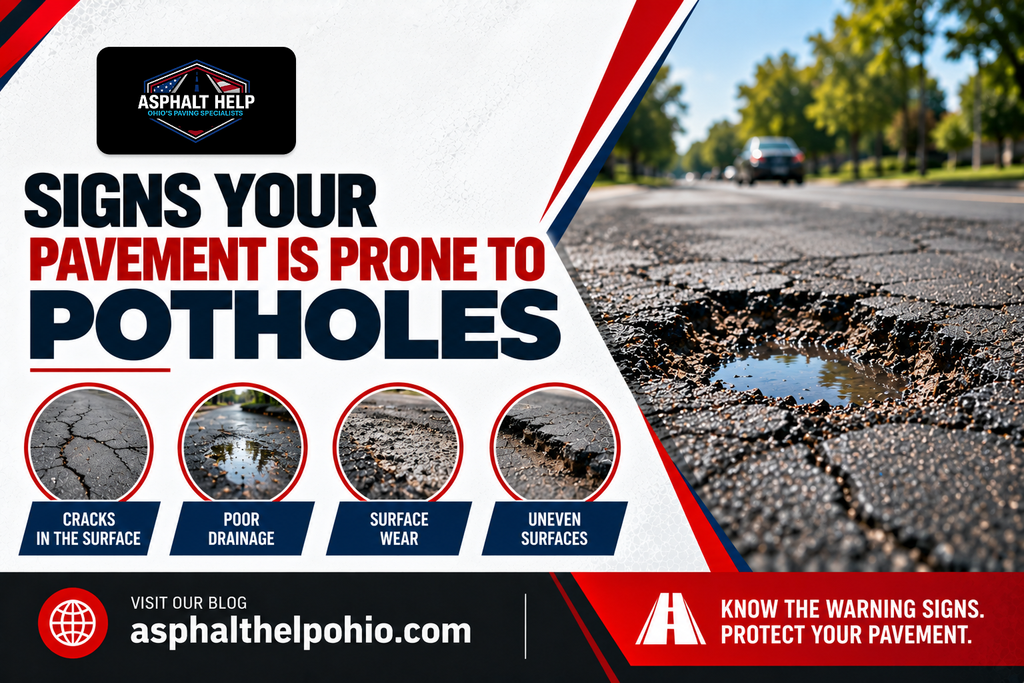
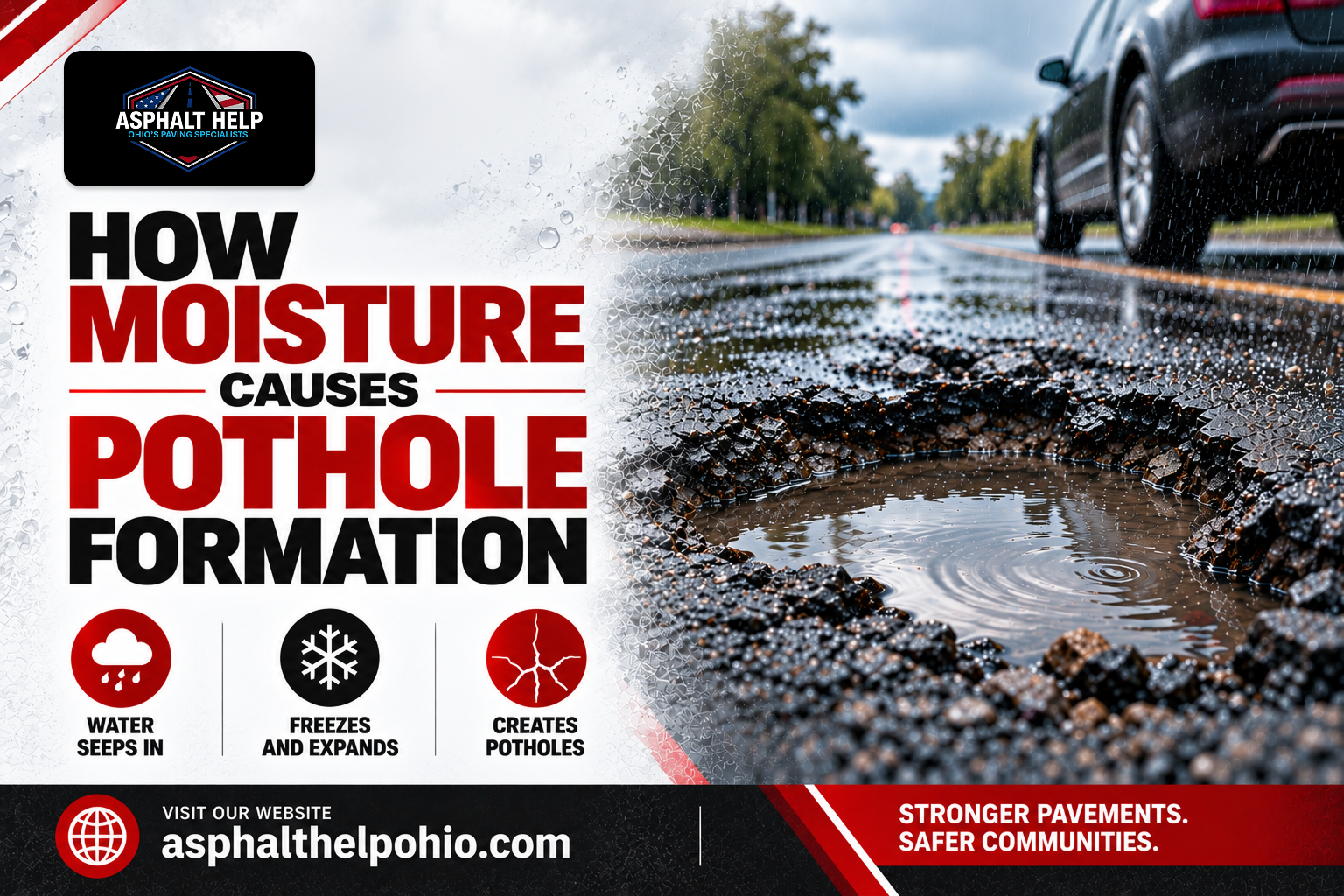
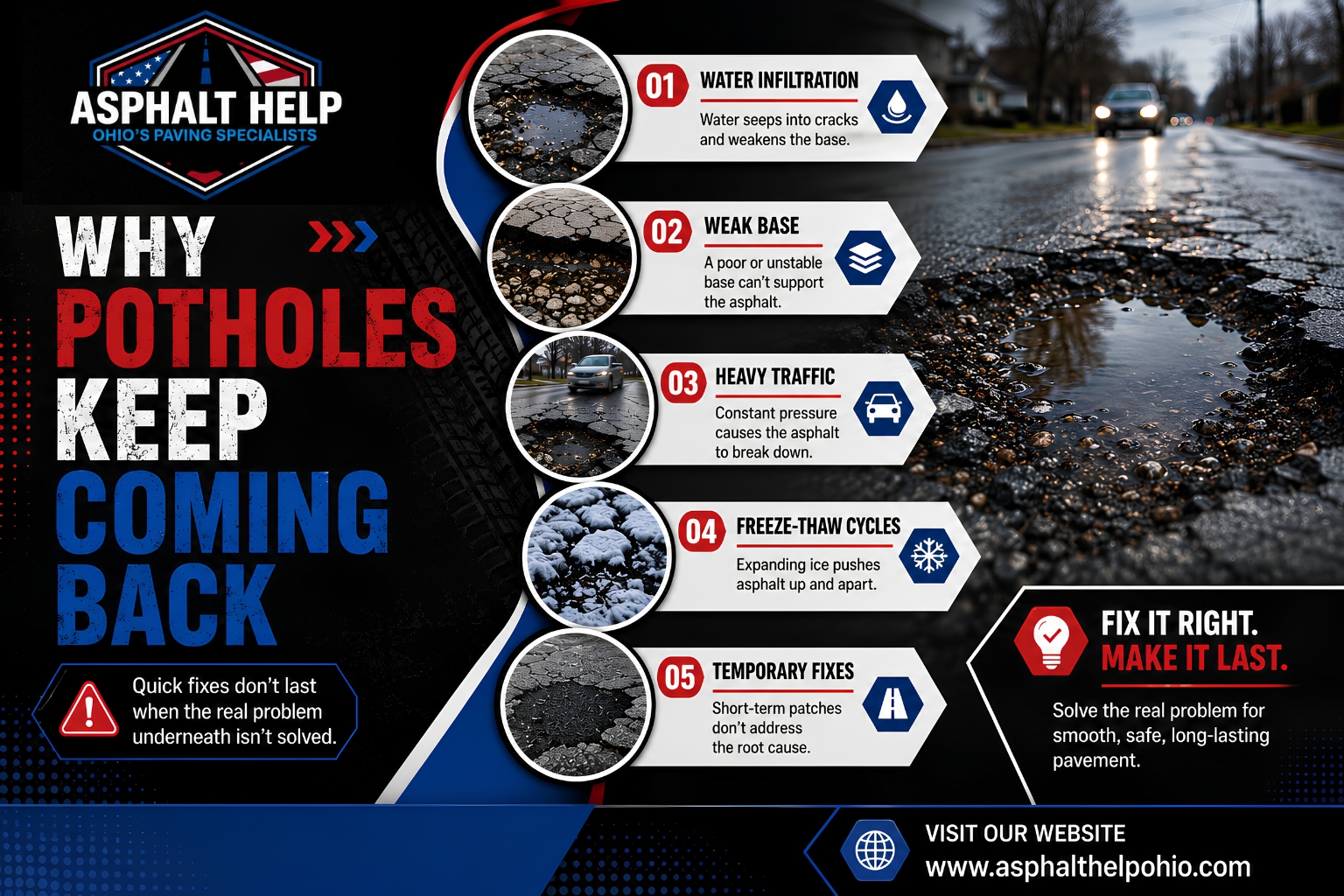
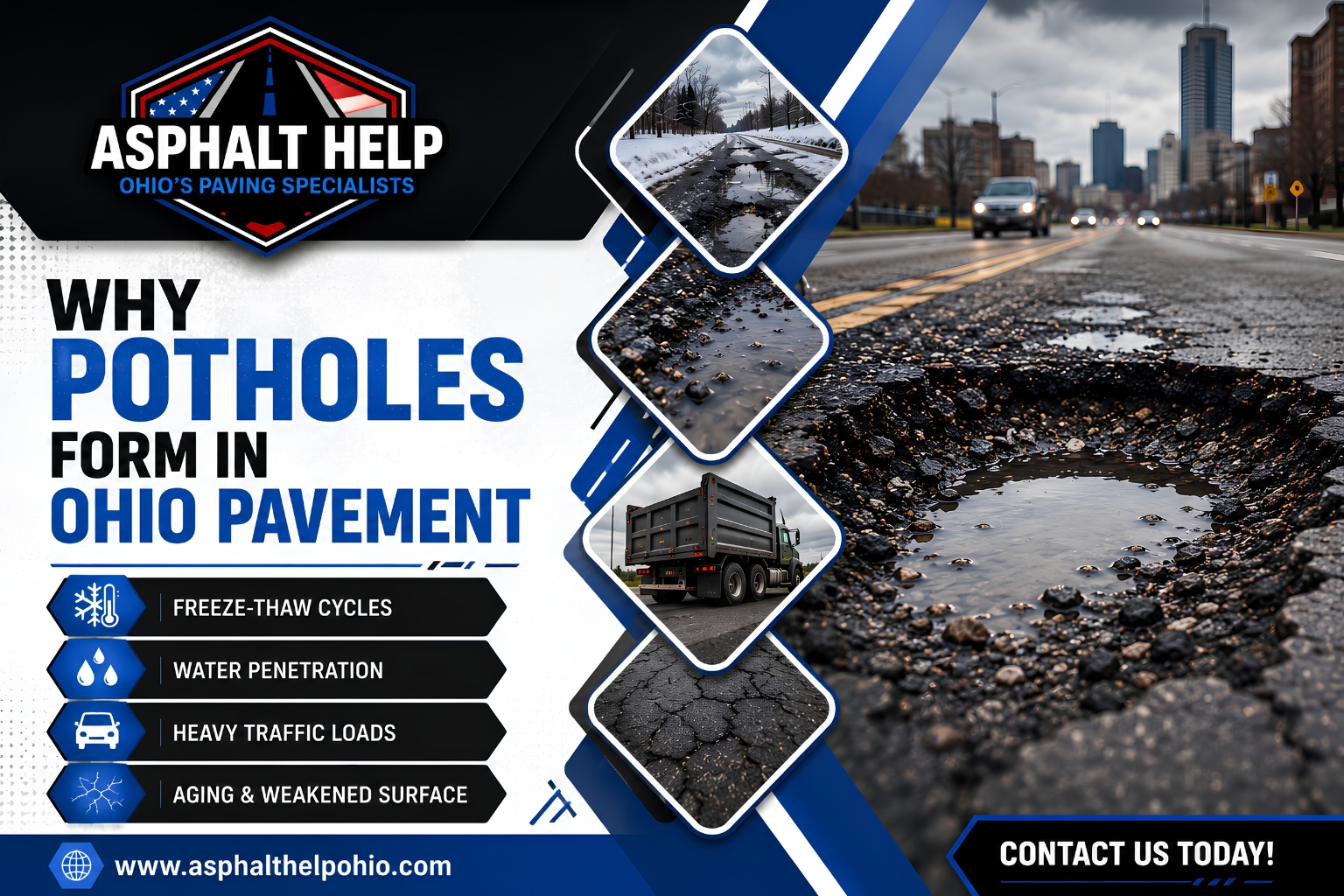
In Ohio, moisture, freeze-thaw cycles, traffic pressure, poor drainage, aging asphalt, and weak pavement layers can all contribute to pothole formation. Asphalt Help Ohio specifically identifies these factors as common contributors to potholes in Columbus and Central Ohio.
1. Cracks Are Spreading Across the Surface
Cracks are among the earliest signs that asphalt may be becoming vulnerable to further deterioration.
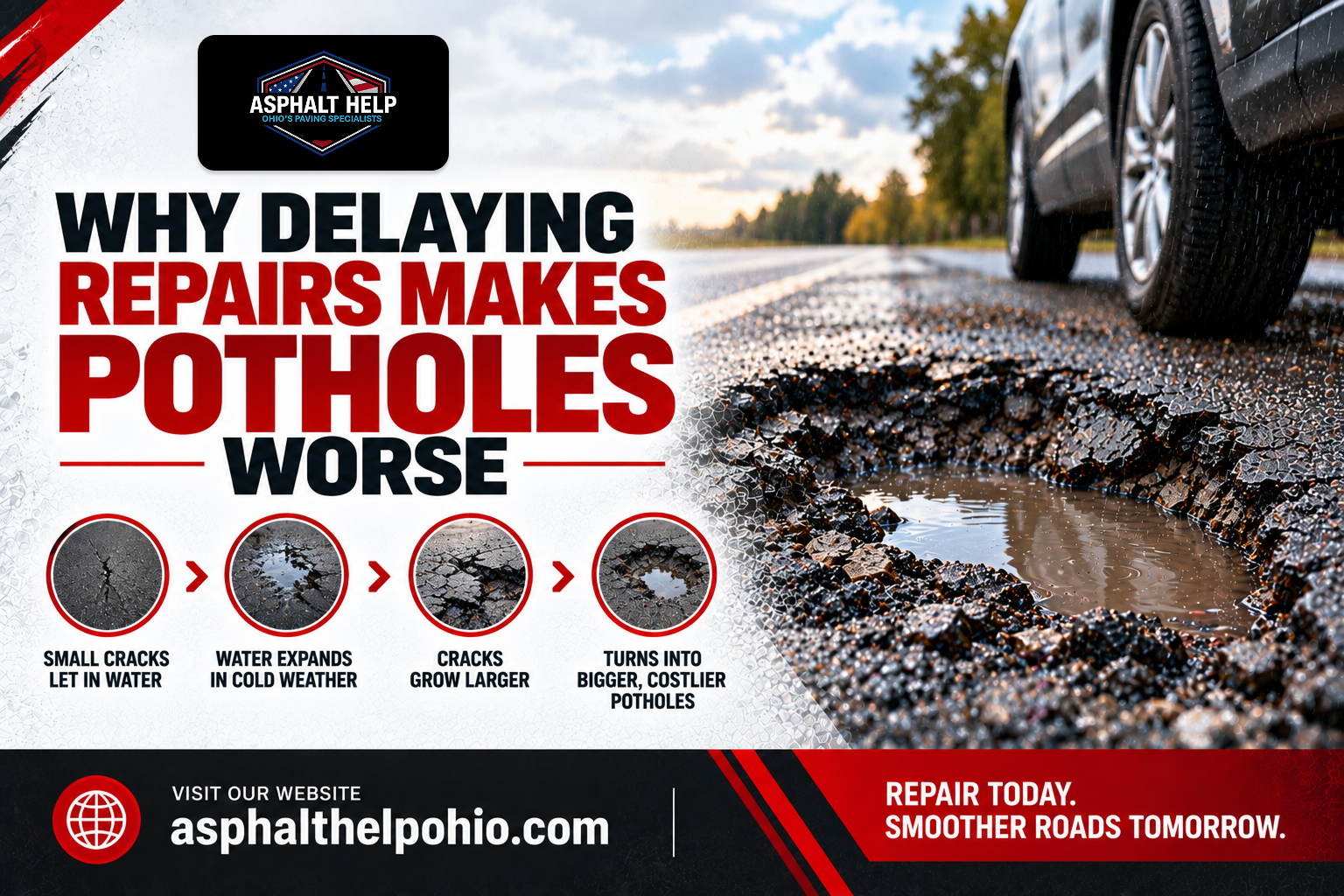
Small cracks can allow water to reach deeper pavement layers. As moisture enters the pavement and Ohio experiences repeated temperature changes, existing cracks can become wider or connect with other cracks.
ODOT’s pavement guidance identifies cracking, drainage problems, and freeze-thaw conditions among factors associated with pavement deterioration and pothole development.
Watch for:
- Long transverse or longitudinal cracks
- Interconnected cracking
- Cracks around existing repairs
- Cracks that continue widening
- Crumbling material around cracks
Prompt attention can help prevent relatively minor pavement defects from becoming pathways for additional moisture.
2. Cracks Are Turning Into Depressions
A crack accompanied by a low or depressed area deserves additional attention.
Asphalt Help Ohio notes that cracks turning into depressions can indicate weakening pavement. These depressions can allow water to collect and may eventually contribute to pothole formation.
A depression can therefore be more than a cosmetic issue. It may indicate that the pavement or supporting material is losing stability.
3. Water Frequently Pools on the Asphalt
Standing water is one of the clearest warning signs that pavement may be vulnerable.
Water may collect because of:
- Poor drainage
- Incorrect grading
- Pavement settlement
- Low spots
- Blocked drainage paths
- Deteriorated pavement
Asphalt Help Ohio identifies water pooling as a warning sign because standing water can accelerate asphalt deterioration and weaken the supporting base.
ODOT also recommends examining drainage conditions when investigating pavement problems, including poor drainage and water-related pavement deficiencies.
4. Asphalt Edges Are Crumbling
Deteriorating pavement edges can indicate that the asphalt is losing strength.
Loose or crumbling edges are particularly vulnerable to:
- Water infiltration
- Vehicle loads
- Freeze-thaw cycles
- Further edge breakup
Asphalt Help Ohio identifies loose or crumbling asphalt edges as an early warning sign that can make pavement more vulnerable to traffic and weather exposure.
5. Existing Potholes Keep Getting Larger
If a small pothole continues increasing in size or depth, the surrounding pavement is likely continuing to deteriorate.
Asphalt Help Ohio identifies increasing pothole size or depth as a sign of ongoing pavement failure.
Traffic repeatedly passing over the damaged area can cause surrounding asphalt to break apart. Moisture and freeze-thaw cycles may accelerate that deterioration.
6. The Same Area Keeps Failing
Recurring damage deserves closer investigation.
If the same section of pavement repeatedly develops cracks, depressions, or potholes after repairs, there may be an underlying issue rather than an isolated surface defect.
ODOT identifies localized structural deficiencies as a cause of deeper potholes and notes that weak asphalt, base, or subgrade layers, poor drainage, and repeated freeze-thaw cycles can contribute.
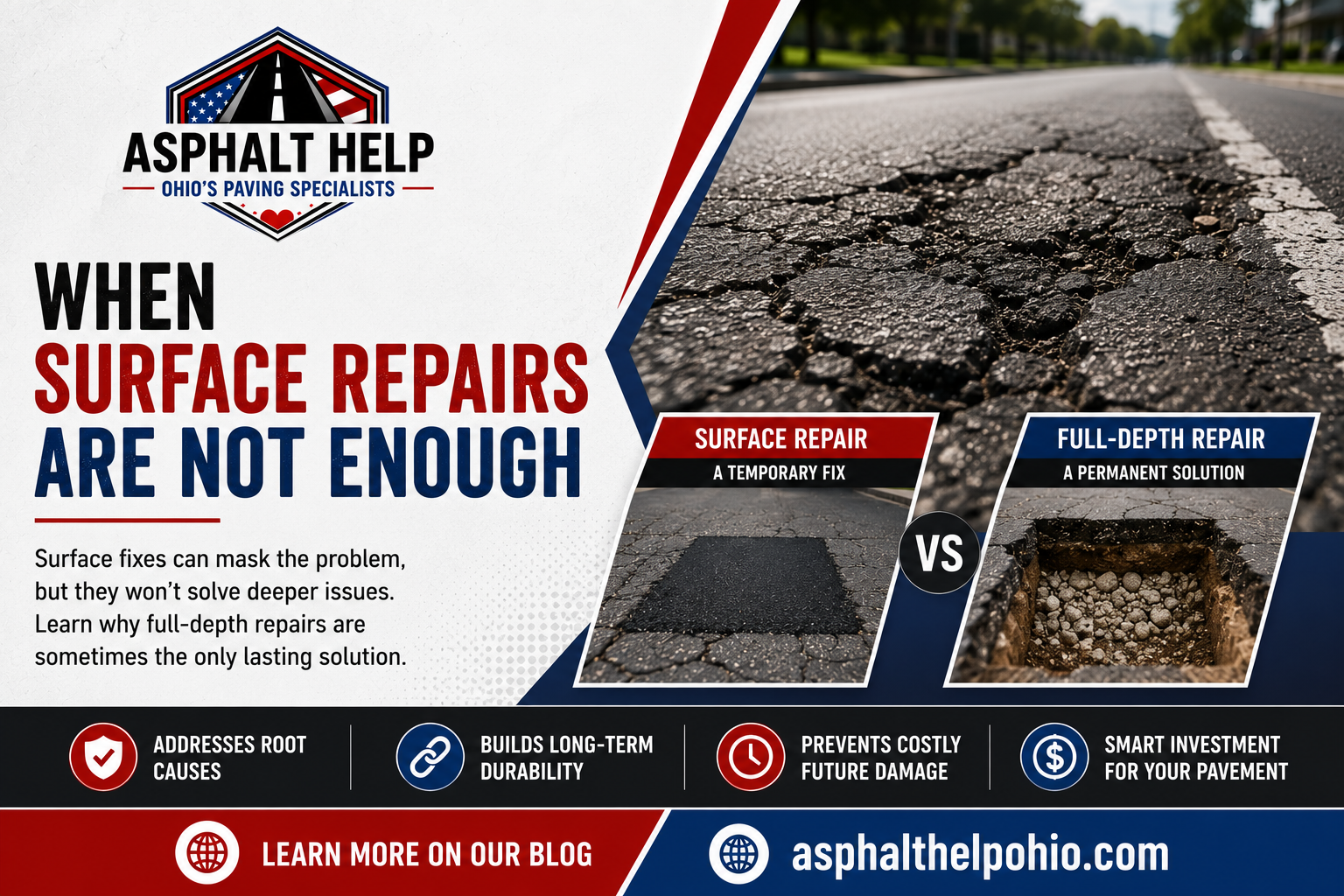
In these situations, simply repairing the visible surface may not address the underlying cause.
7. Rutting Appears in Vehicle Wheel Paths
Ruts are elongated depressions that commonly develop along areas repeatedly traveled by vehicles.
They can indicate that pavement is experiencing repeated traffic stress or that underlying layers are not adequately supporting traffic loads.
Rutting can also create places where water collects, potentially increasing moisture exposure and contributing to additional deterioration.
8. Previous Repairs Are Breaking Down
Older patches can provide useful information about pavement condition.
If previous repairs are:
- Cracking again
- Separating from surrounding asphalt
- Sinking
- Crumbling
- Developing potholes around their edges
the pavement may require a broader evaluation.
ODOT’s guidance notes that potholes can result from debonding between asphalt layers, weak pavement layers, poor drainage, and freeze-thaw action.
9. The Pavement Is Aging and Losing Flexibility
Older asphalt is exposed to years of traffic, weather, moisture, temperature changes, and maintenance activity.
Asphalt Help Ohio notes that aging asphalt can become less flexible and more vulnerable to cracking and deterioration.
Age alone does not mean pavement will develop potholes, but older surfaces with multiple other warning signs deserve closer inspection.
Warning Signs of Pothole-Prone Pavement
| Warning Sign | What It May Indicate |
|---|---|
| Widening cracks | Increasing surface deterioration |
| Connected cracks | Greater moisture-entry potential |
| Depressions | Weakening or settlement |
| Standing water | Drainage or grading problems |
| Crumbling edges | Loss of pavement strength |
| Growing potholes | Continuing pavement failure |
| Recurring repairs | Possible underlying structural issue |
| Wheel-path rutting | Repeated traffic stress |
| Failed patches | Continuing deterioration |
| Multiple defects together | Potential broader pavement problem |
These signs do not automatically mean that a pothole will develop. They indicate conditions that may increase pavement vulnerability and are worth evaluating.
Why Ohio Weather Can Increase Pothole Risk
Ohio pavement must withstand repeated seasonal changes.
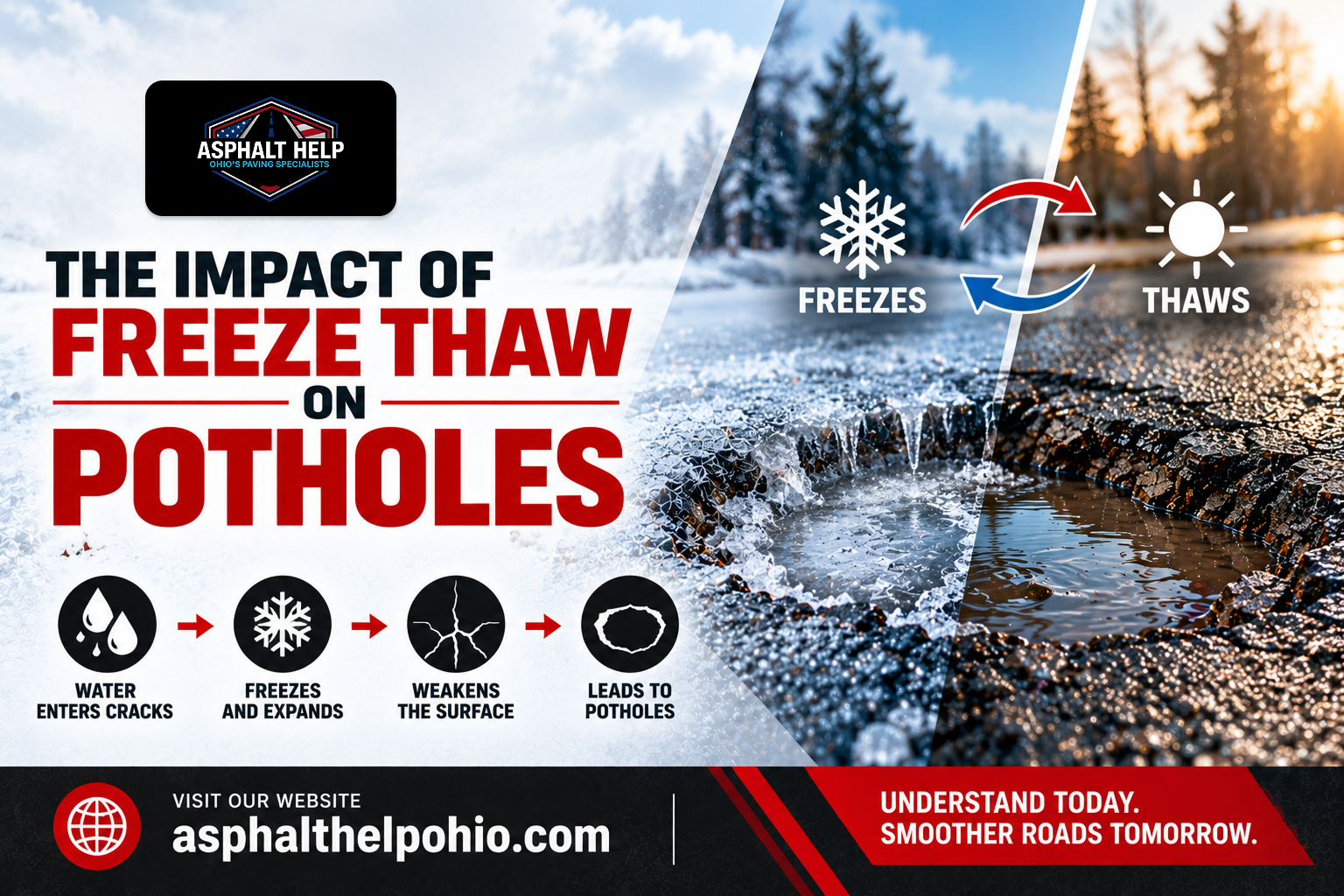
Water can enter cracks and other pavement openings. During freezing temperatures, moisture can freeze and contribute to additional stresses. When temperatures rise, the pavement thaws and traffic continues loading the affected area.
ODOT identifies poor drainage and repeated freeze-thaw cycles as contributing factors in potholes associated with localized structural deficiencies.
This is one reason pavement that appears relatively stable during warmer weather can show more serious deterioration after winter.
How Traffic Contributes to Pothole-Prone Pavement
Traffic is another important factor.
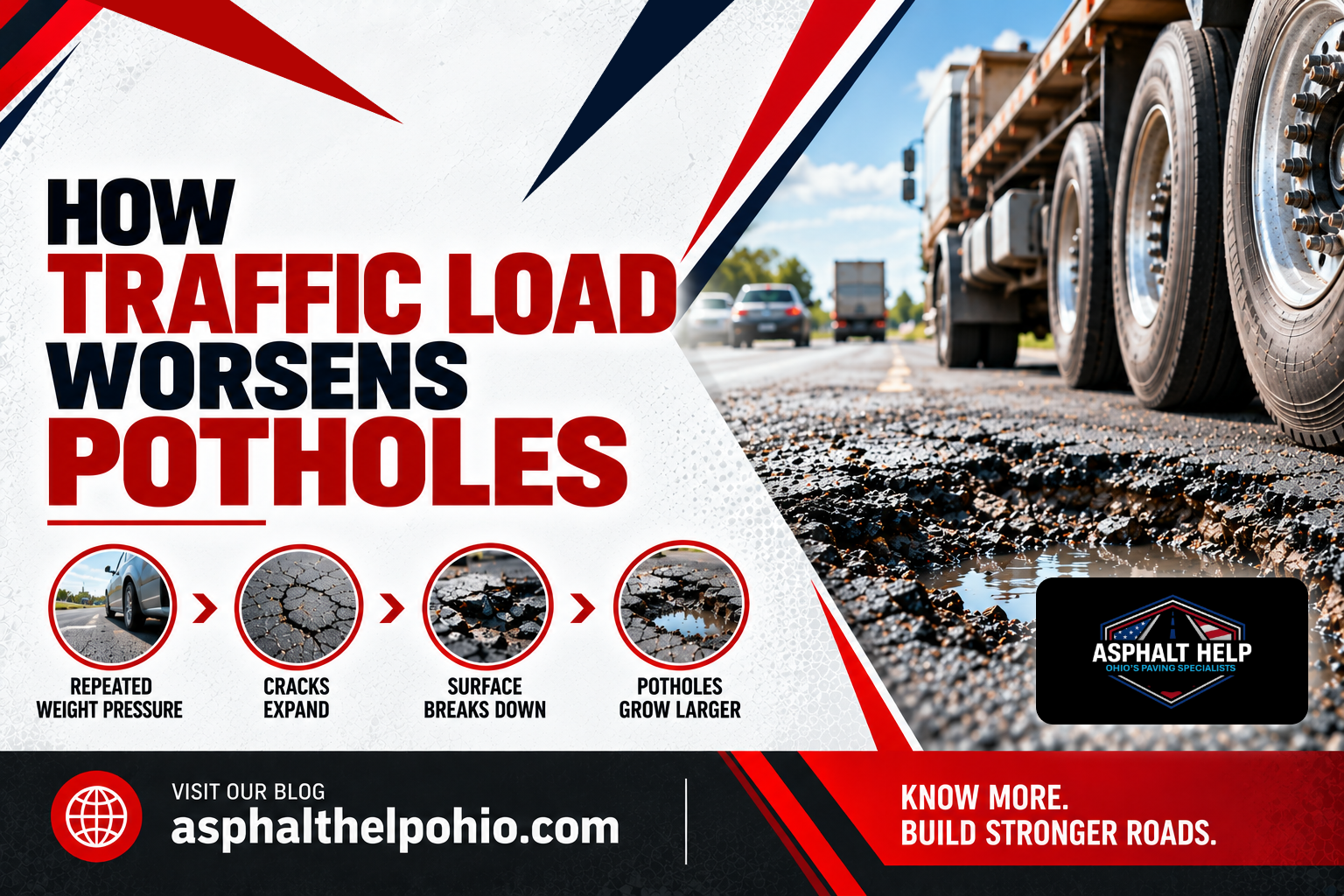
Repeated vehicle loading can accelerate deterioration when asphalt has already been weakened by moisture, cracking, age, or poor structural support.
Asphalt Help Ohio states that its pothole repair approach considers traffic load and environmental exposure when determining an appropriate repair method.
Areas that deserve particular attention include:
- Parking lot entrances
- Drive lanes
- Loading areas
- Commercial parking lots
- Heavy-vehicle routes
- Frequently used driveways
Why Drainage Matters
A pavement system needs to move water away effectively.
Asphalt Help Ohio’s paving information emphasizes grading, base preparation, drainage planning, and compaction as important elements of durable pavement construction.
If water repeatedly collects in the same area, investigate the cause rather than simply repairing the resulting pavement damage.
How to Address Early Warning Signs
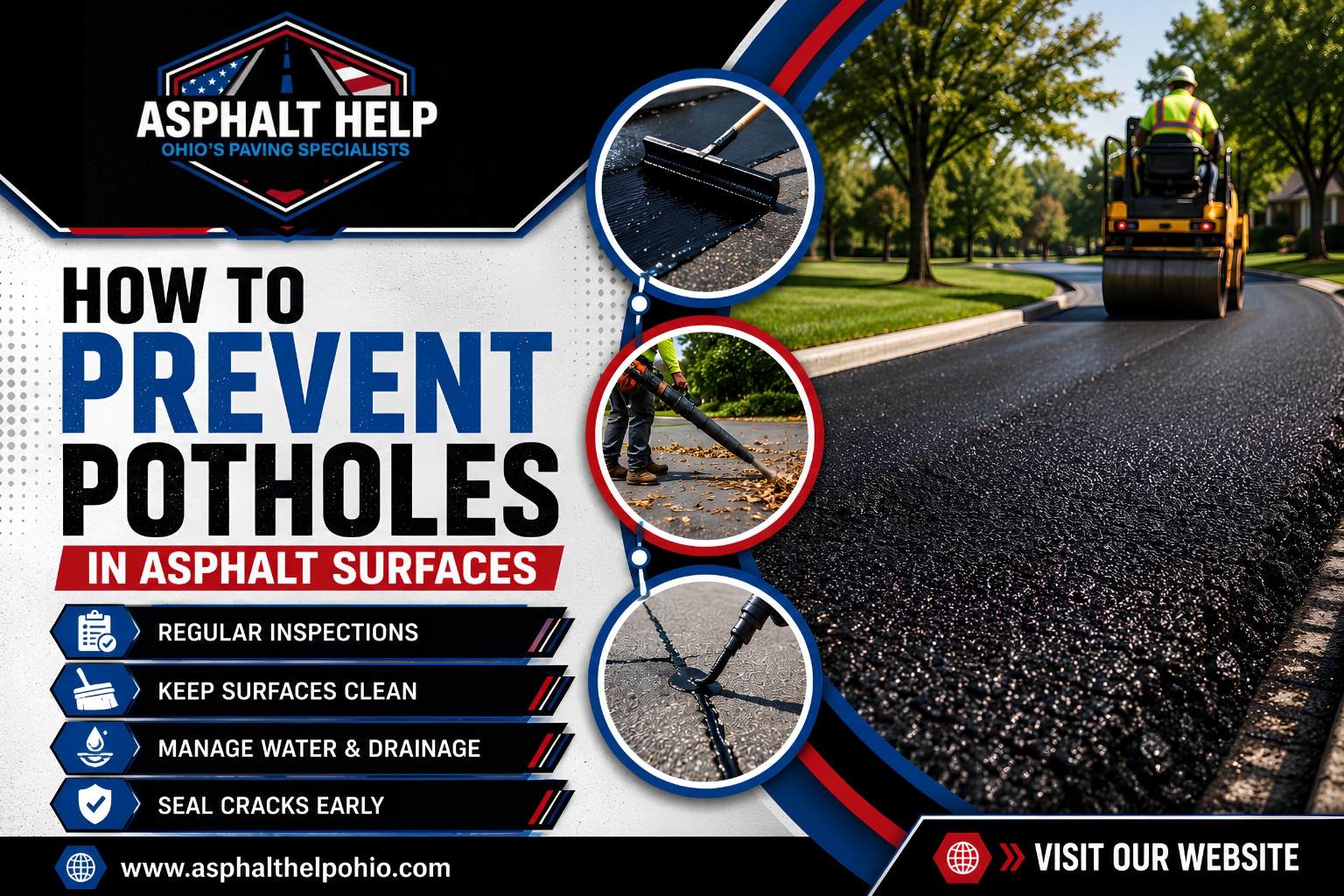
Early maintenance can help prevent small pavement defects from progressing.
Repair suitable cracks
Sealing appropriate cracks can help limit moisture entry and slow deterioration.
Correct drainage problems
Persistent water pooling should be investigated because moisture can contribute to pavement deterioration.
Repair potholes promptly
Asphalt Help Ohio recommends timely pothole repairs to help prevent further deterioration.
Inspect recurring problem areas
If the same location repeatedly fails, evaluate the underlying pavement and drainage rather than treating each failure as an isolated event.
Consider broader pavement rehabilitation
When damage is widespread, individual patches may no longer be the most appropriate solution.
When Is Pothole Repair Appropriate?
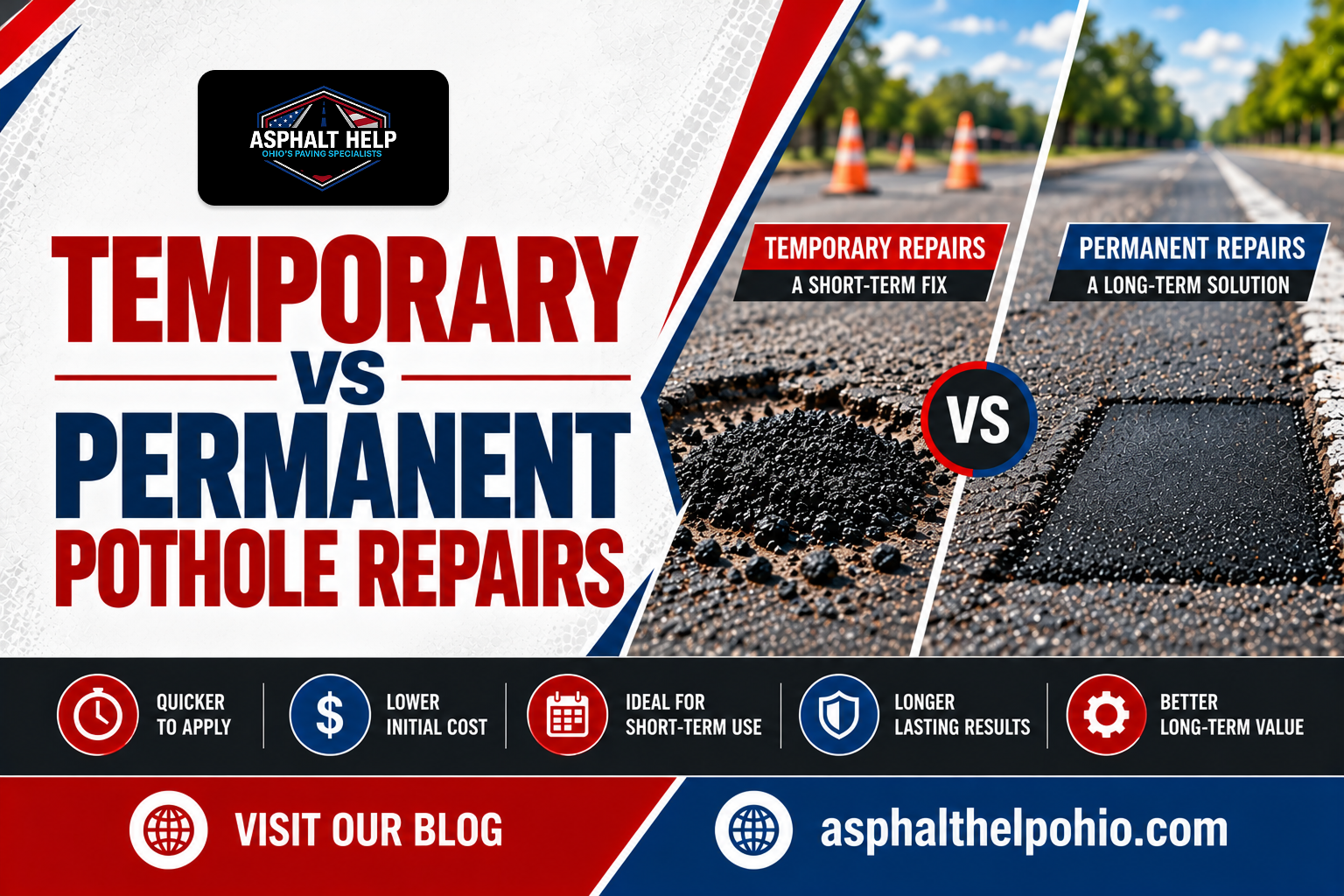
For localized damage surrounded by relatively sound pavement, targeted patching may be appropriate.
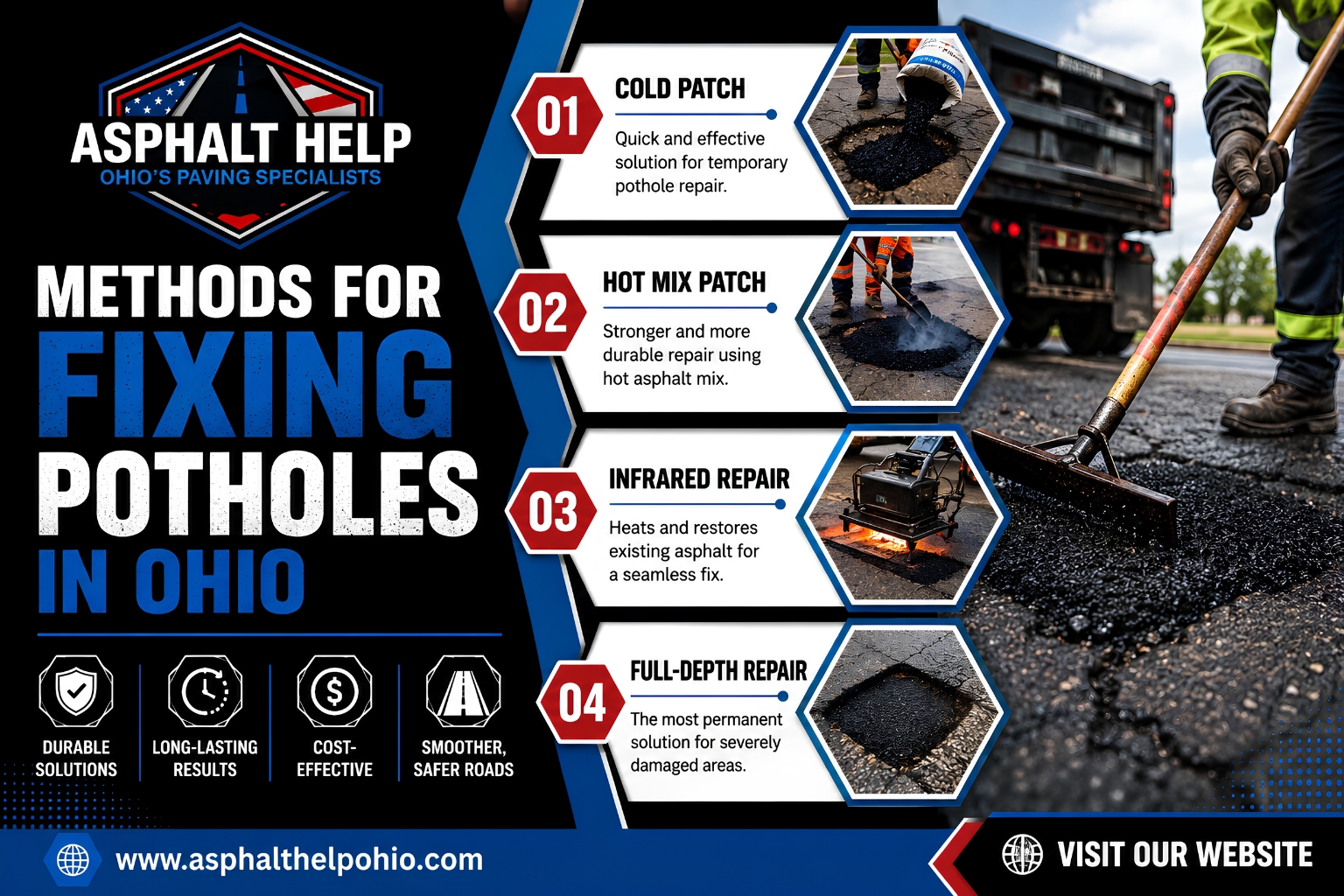
Asphalt Help Ohio’s pothole repair process includes inspecting the affected area, removing weakened asphalt, addressing base issues when necessary, applying suitable patching materials, and compacting the repair.
The exact repair method depends on the depth, extent, and cause of the damage.
When Is More Extensive Asphalt Work Needed?
If pavement contains numerous potholes, widespread cracking, significant rutting, settlement, or recurring failures, the problem may extend beyond isolated surface damage.
Asphalt Help Ohio provides Asphalt Paving Services in Columbus Ohio that include pothole repair, patching, resurfacing, maintenance, and asphalt removal and replacement.
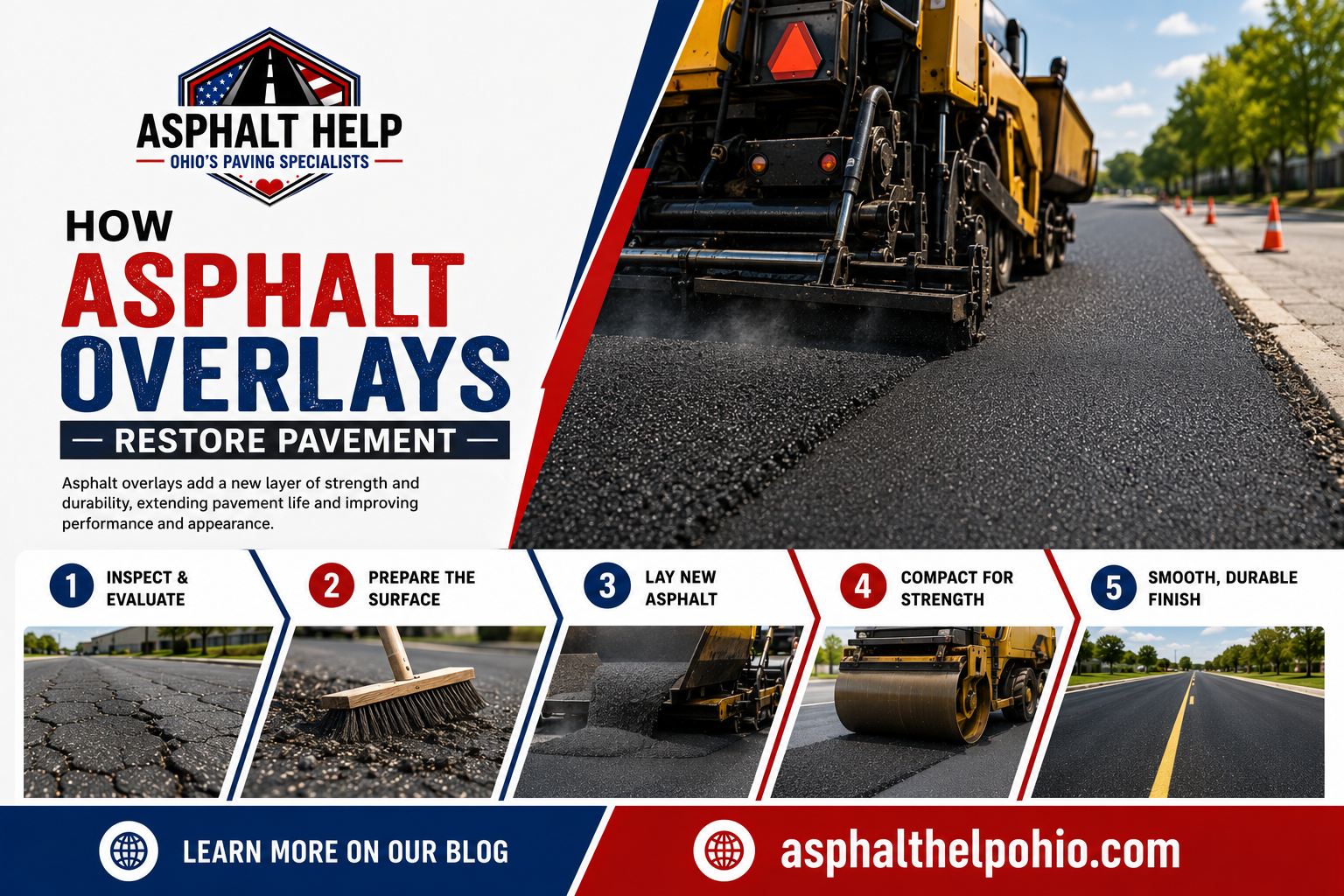
For structurally sound but worn pavement, resurfacing may provide a new asphalt surface. When the pavement is structurally unstable, removal and replacement can address problems from the foundation upward.
How Asphalt Help Ohio Can Help
For asphalt pothole repair in Columbus Ohio, Asphalt Help Ohio evaluates the damaged area and considers factors such as pavement condition, traffic load, moisture, and environmental exposure when selecting a repair approach.
The company also provides broader asphalt paving services for residential, commercial, and municipal properties, including new asphalt installation, resurfacing, patching, maintenance, and full replacement.
This allows property owners to address both localized potholes and broader pavement deterioration based on the condition of the existing surface.
Final Thoughts
Recognizing pothole prone pavement Ohio warning signs early can help property owners respond before minor deterioration develops into larger pavement failures. Widening cracks, depressions, standing water, crumbling edges, rutting, recurring repairs, and growing potholes are all reasons to take a closer look at pavement condition.
Ohio’s freeze-thaw cycles, moisture, traffic loads, poor drainage, aging asphalt, and weak pavement layers can work together to accelerate deterioration. ODOT identifies several of these conditions as contributors to localized pothole and pavement failures.
For asphalt pothole repair in Columbus Ohio, Asphalt Help Ohio can inspect localized pavement damage and determine whether patching is appropriate or whether deeper pavement work may be needed.
When deterioration extends across a larger area, Asphalt Paving Services in Columbus Ohio can include resurfacing, patching, maintenance, or removal and replacement depending on the pavement’s structural condition.