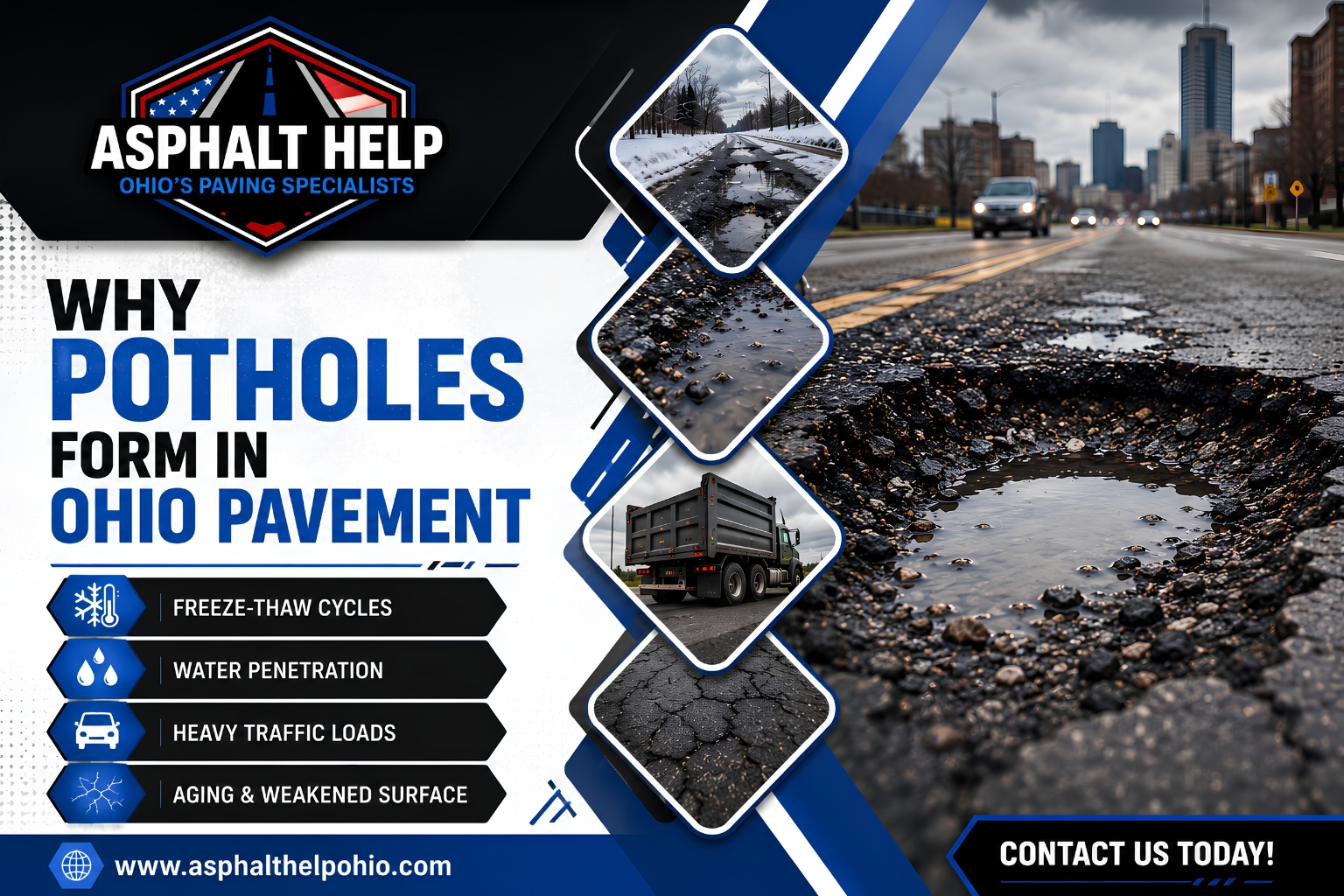




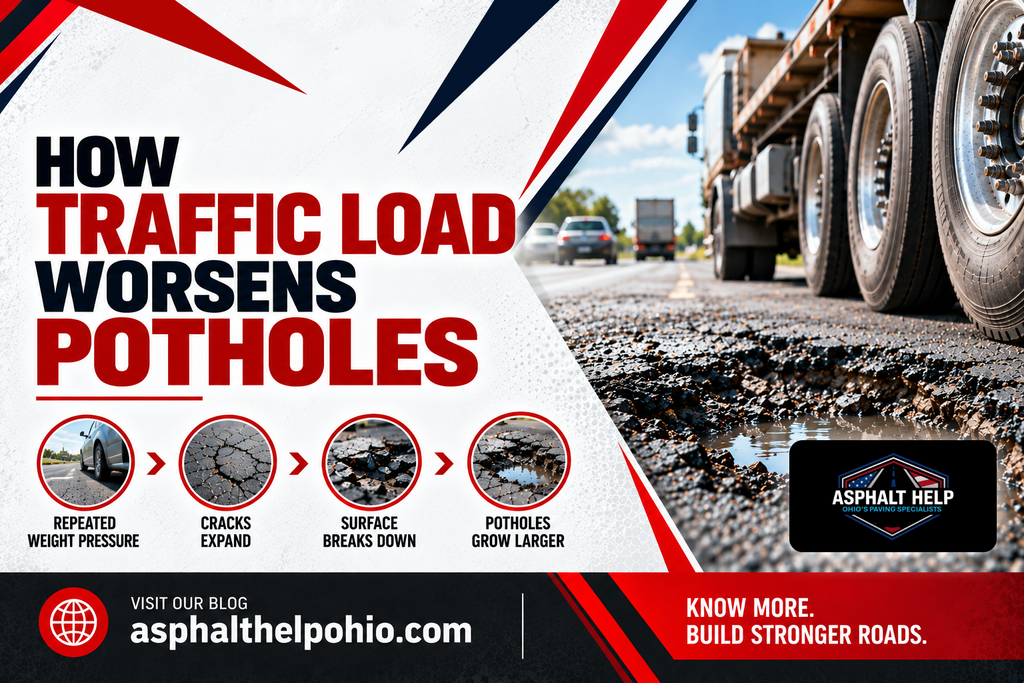
How Does Traffic Load Worsen Asphalt Damage in Ohio? A pothole may start as a relatively small pavement defect, but repeated vehicle loads can accelerate deterioration once the surrounding asphalt or supporting layers become weakened. In Ohio, traffic works together with moisture, freeze-thaw cycles, drainage conditions, pavement age, and structural weaknesses to influence how quickly asphalt deteriorates.
The Federal Highway Administration reports that pavement deterioration is affected by both traffic and environmental conditions, with deterioration accelerating on facilities carrying high traffic volumes, particularly heavy trucks.
For property owners, understanding traffic damage asphalt Ohio conditions can help explain why potholes often become larger and why heavily traveled pavement requires regular inspection and timely maintenance.
1. Repeated Vehicle Loads Stress Weak Pavement
Every vehicle traveling over asphalt places a load on the pavement.
A properly designed and constructed pavement is intended to withstand repeated loading. However, when asphalt has already been weakened by water, age, cracking, or structural problems, repeated traffic can accelerate the deterioration.
FHWA research identifies traffic loading as a significant contributor to asphalt pavement distress, including fatigue cracking and rutting.
This makes traffic particularly important when evaluating pavement that already has potholes or other visible damage.
2. Heavy Trucks Can Accelerate Deterioration
Not all vehicle loads affect pavement equally.
Heavy trucks place substantially greater stresses on pavement than ordinary passenger vehicles. FHWA notes that deterioration accelerates on facilities with high traffic volumes, particularly those used by large numbers of heavy trucks.
Heavy traffic can be especially relevant around:
- Commercial parking lots
- Loading zones
- Industrial properties
- Warehouse entrances
- Delivery routes
- Busy drive lanes
If pavement was not designed or maintained for the traffic it receives, deterioration can occur more quickly.
3. Traffic Can Enlarge Existing Potholes
Traffic does not necessarily create every pothole by itself.
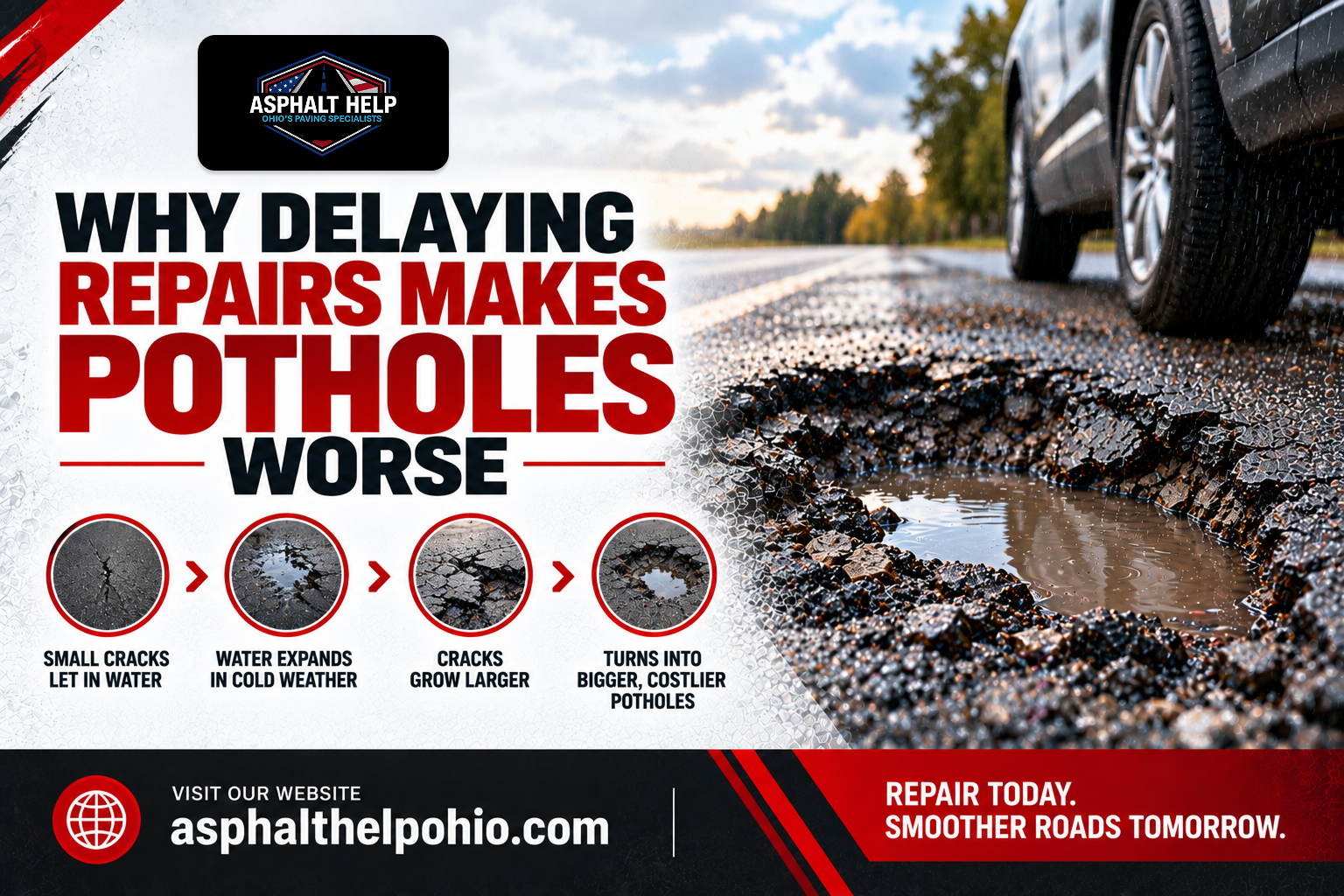
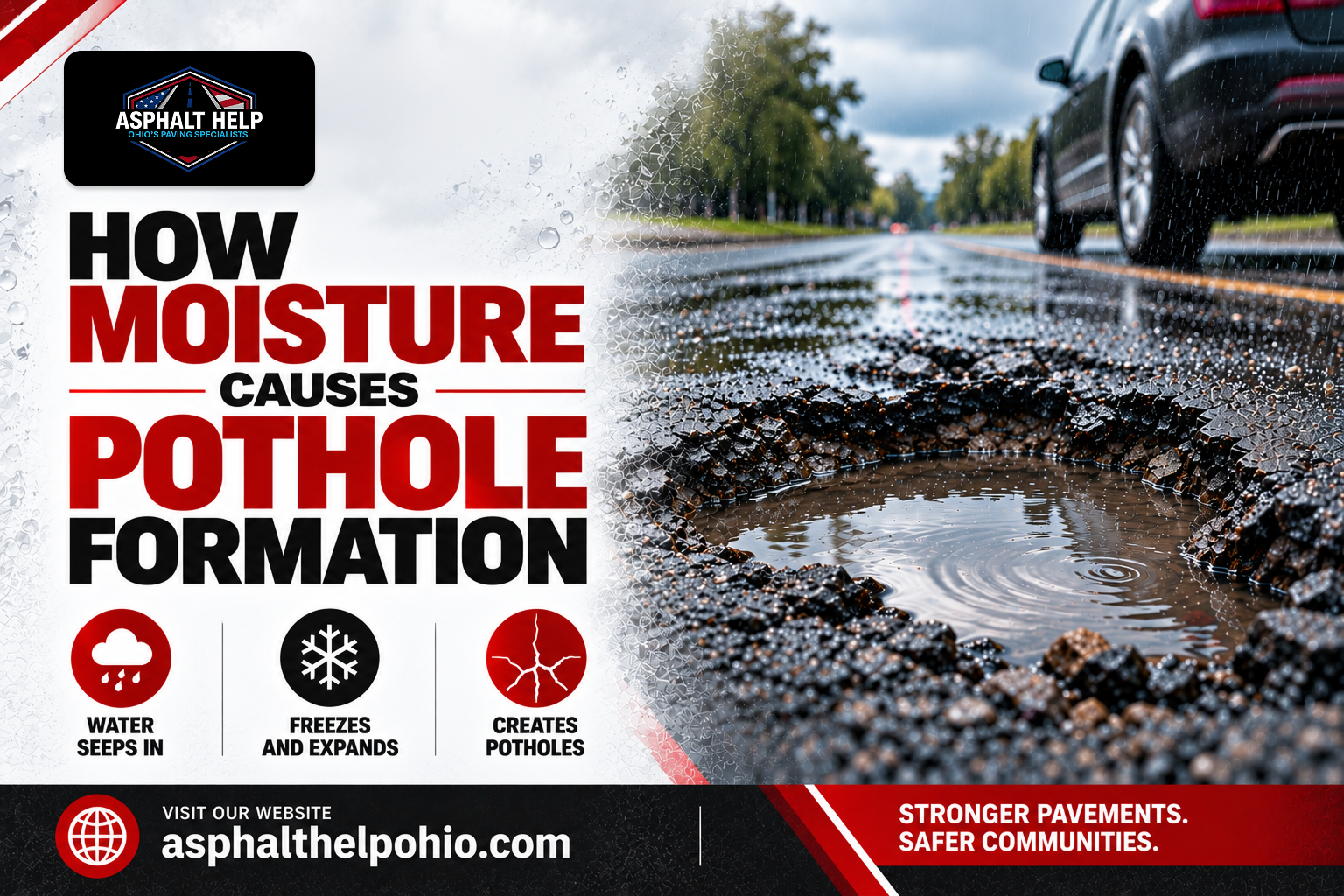
More commonly, vehicles act on pavement that has already been weakened by moisture, freeze-thaw cycles, cracking, or inadequate support. As vehicles repeatedly pass over the weakened area, additional asphalt can break away.
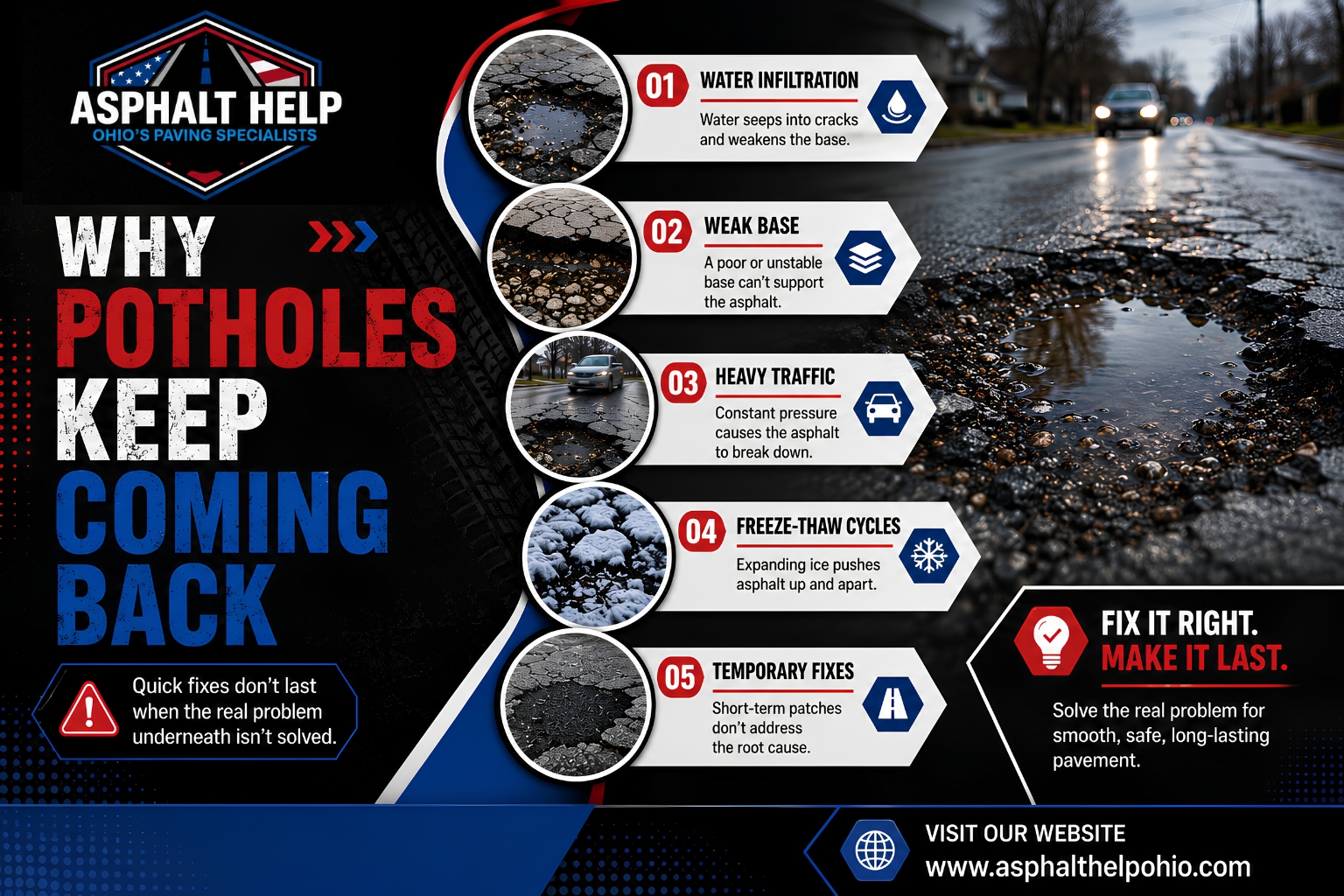
Asphalt Help Ohio explains that potholes in Columbus can result from a combination of traffic pressure, moisture intrusion, freeze-thaw cycles, poor drainage, aging asphalt, and weak or improperly installed base layers.
This is why a small pothole can become noticeably larger when it remains exposed to regular traffic.
4. Moisture Makes Traffic Damage More Serious
Water and traffic can work together to accelerate pavement deterioration.
FHWA explains that excess moisture can adversely affect pavement performance and that moisture combined with heavy traffic loads and freezing temperatures can have a significant negative effect on pavement materials and overall pavement performance.
For example:
Water enters a crack → supporting material becomes weaker → vehicles repeatedly load the area → pavement deteriorates → pothole expands
This interaction is one reason drainage and crack maintenance are important parts of asphalt care.
5. Freeze-Thaw Cycles Can Weaken Pavement Before Traffic Acts
Ohio’s winter conditions can make pavement more vulnerable to traffic.
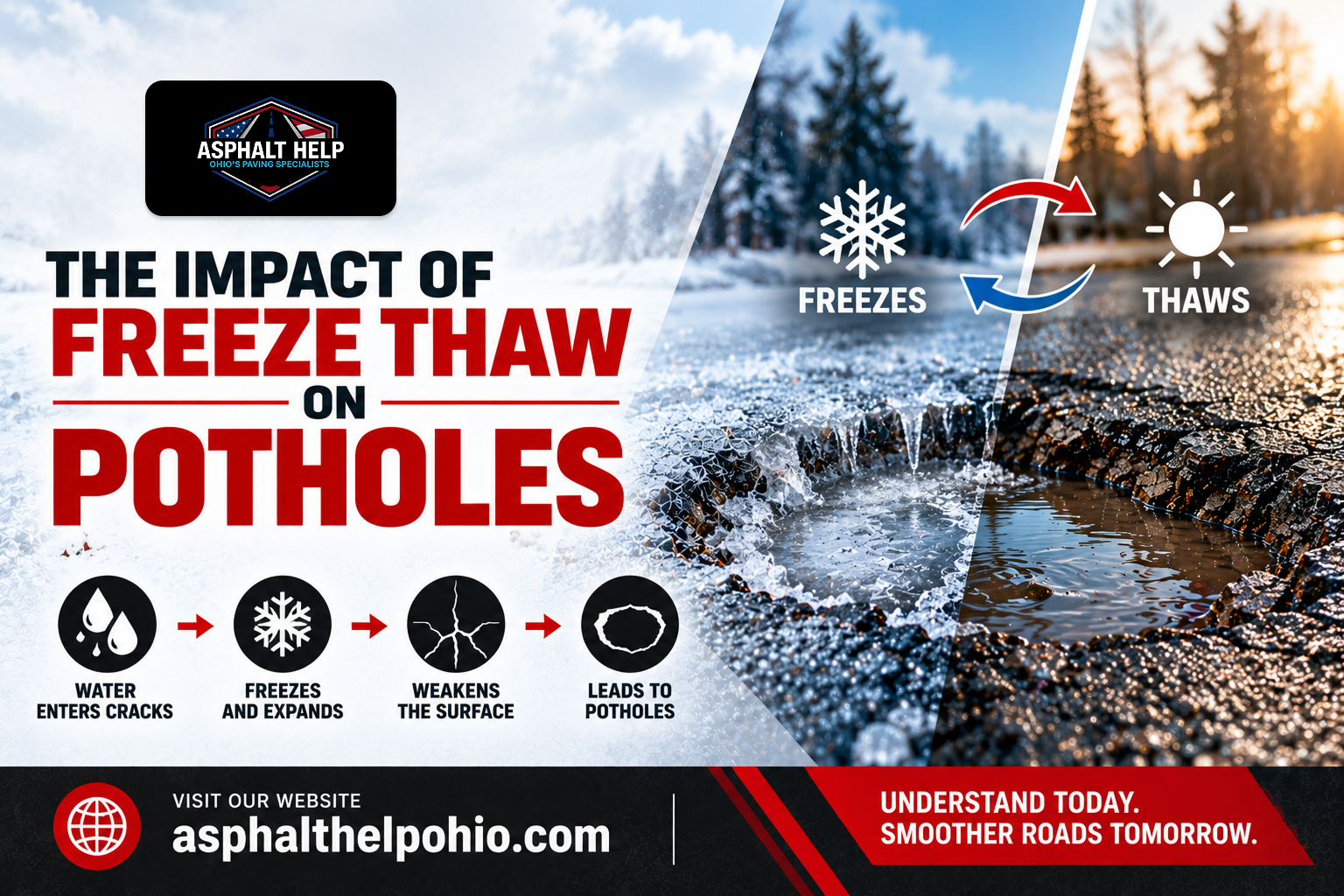
FHWA explains that freeze-thaw cycles can cause cracks to expand and ultimately contribute to pothole formation.
Once winter weather has weakened a pavement area, vehicles continue applying loads. Traffic can then accelerate the breakdown of the already-damaged asphalt.
6. Weak Base Layers Increase Traffic Stress
The surface asphalt is supported by underlying pavement layers.
If the base or subgrade is weak, saturated, or improperly prepared, traffic loads may cause greater movement and deterioration.
FHWA explains that moisture can reduce the stability of pavement materials, particularly when materials become saturated and are subjected to dynamic loading.
Asphalt Help Ohio likewise identifies weak or improperly installed base layers as one factor that can contribute to pothole formation.
7. Traffic Can Contribute to Rutting and Surface Deformation
Potholes are not the only pavement problem associated with repeated traffic.
Traffic loading can contribute to rutting, which creates depressions in vehicle wheel paths. FHWA’s long-term pavement research identifies traffic loading as a significant factor in initiating rutting across pavement layers.
Rutting can also affect drainage because depressions may collect water. That can create additional moisture exposure and contribute to further pavement deterioration.
Traffic and Pothole Damage: How the Process Develops
| Condition | Effect on Pavement |
|---|---|
| Repeated traffic | Applies ongoing loads |
| Heavy vehicles | Increase pavement stress |
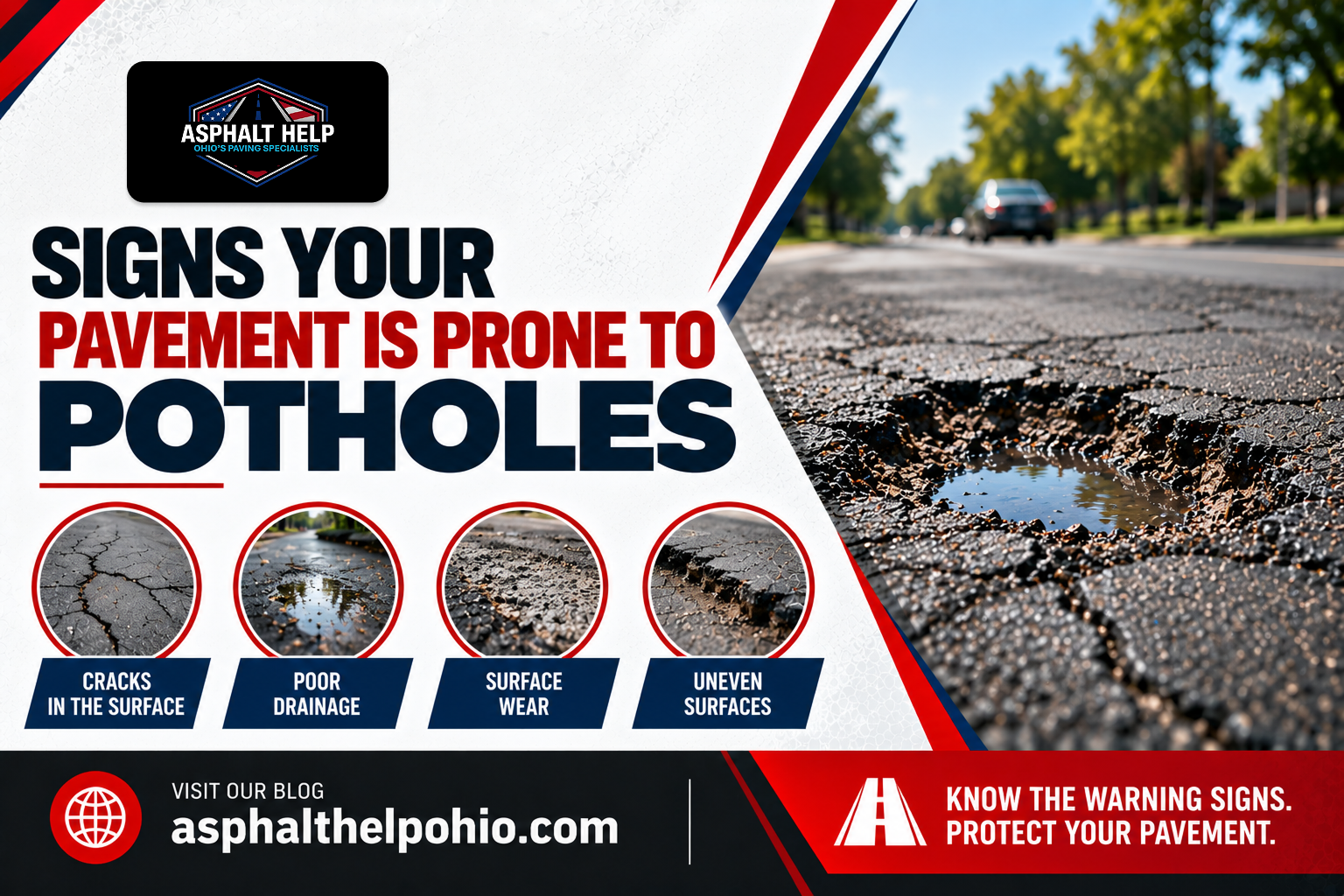
| Existing cracks | Allow moisture infiltration |
| Poor drainage | Keeps pavement exposed to water |
| Freeze-thaw cycles | Weaken vulnerable areas |
| Weak base | Reduces structural support |
| Continued traffic | Accelerates breakdown |
| Existing pothole | Becomes larger or deeper |
These conditions can interact, meaning a pothole may have multiple contributing causes rather than a single source.
8. Busy Areas Need More Frequent Inspections
Pavement carrying frequent or heavy traffic can benefit from closer monitoring.
Asphalt Help Ohio recommends evaluating pothole damage based on factors including pavement condition, traffic load, and environmental exposure.
Property owners should pay particular attention to:
- Areas where vehicles repeatedly turn
- Parking lot entrances
- Loading and unloading areas
- Heavy-vehicle routes
- Potholes in wheel paths
- Areas with standing water
Early identification makes it easier to determine whether a problem is localized or part of broader pavement deterioration.
9. Proper Pothole Repair Helps Restore Load Support
Repairing a pothole involves more than filling the visible opening.
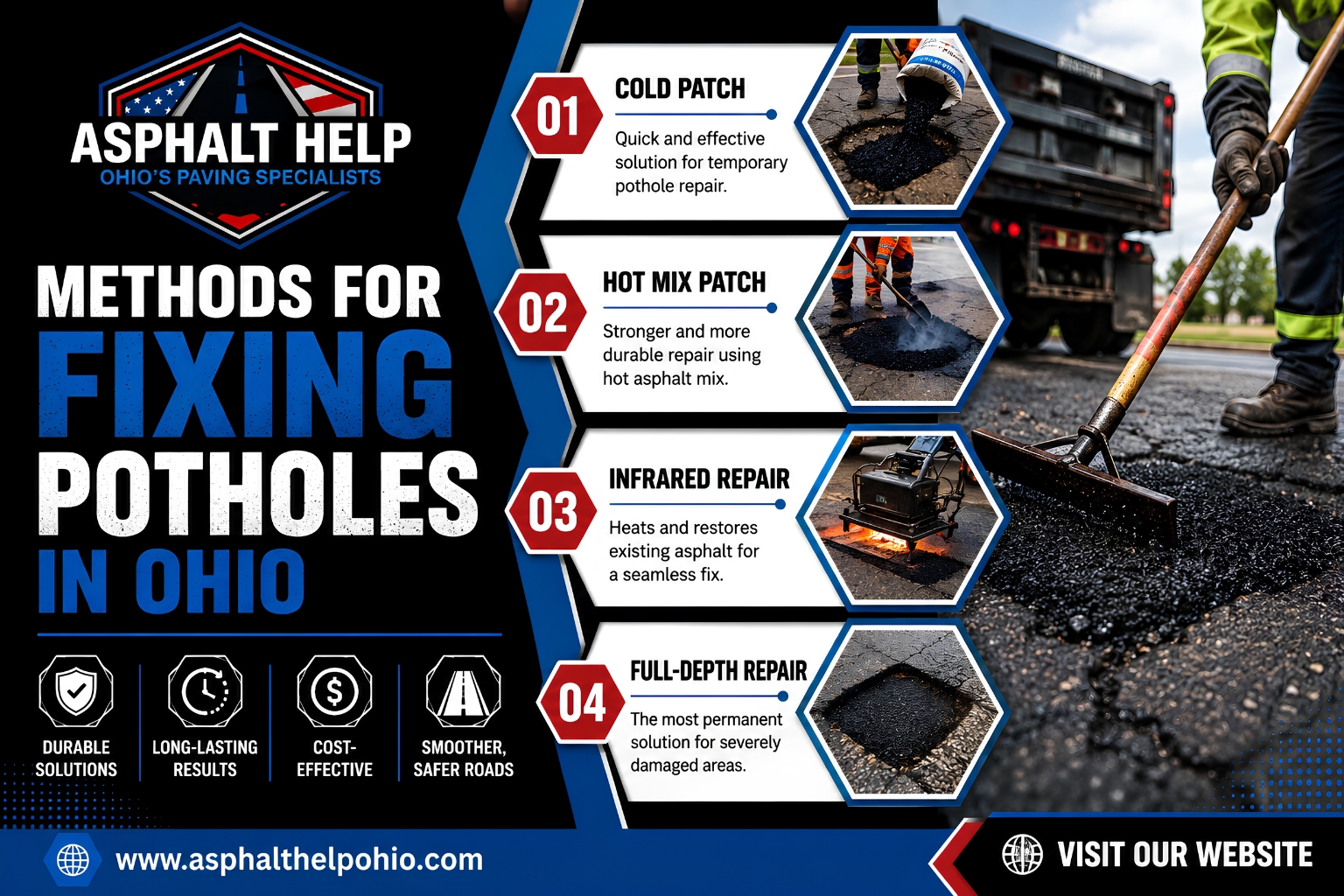
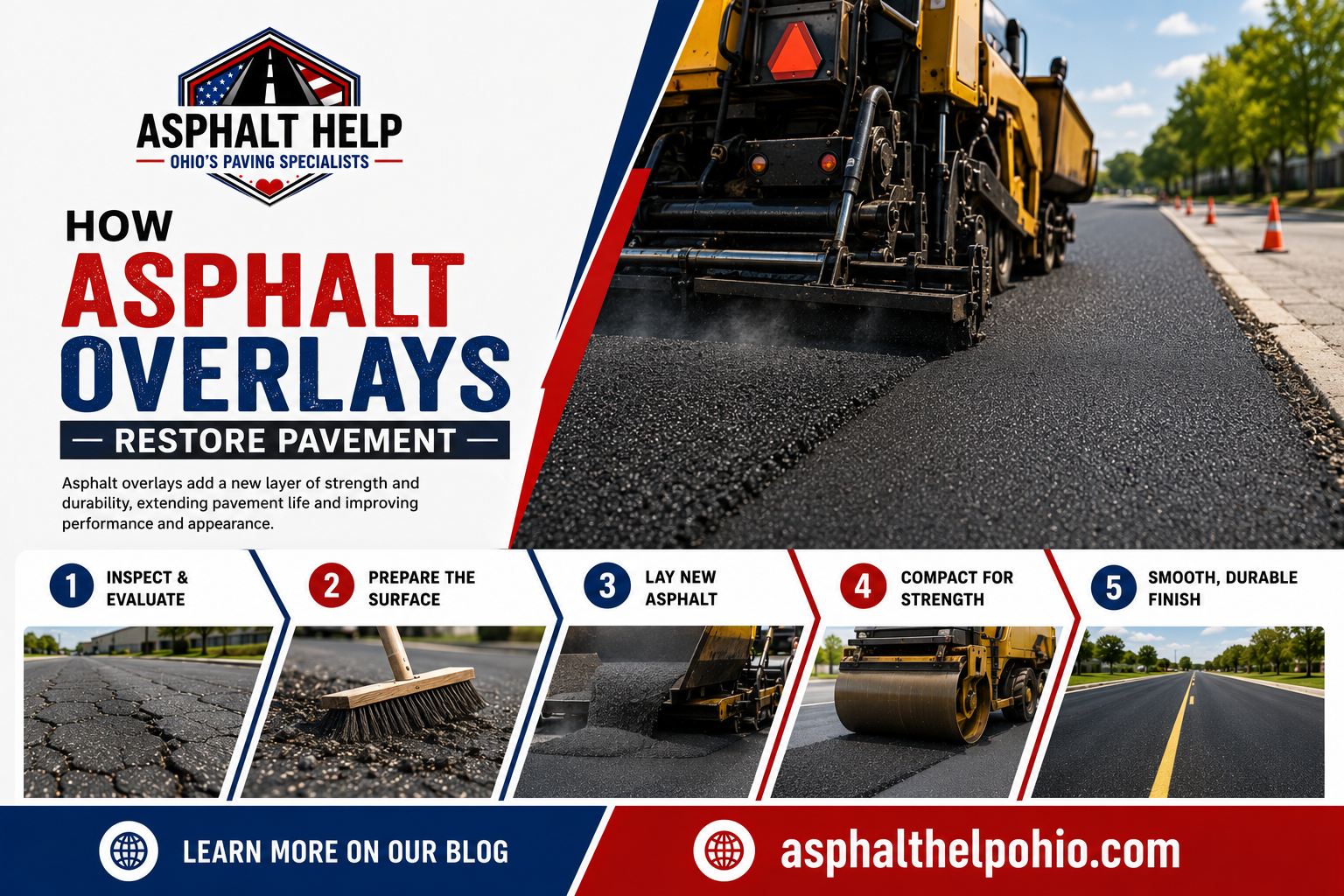
Asphalt Help Ohio states that its pothole repair process includes inspecting the affected area, removing weakened asphalt, addressing base issues when necessary, applying appropriate patching materials, and compacting the repair.
Proper preparation is important because the repaired section needs to withstand the same traffic loads that affected the original pavement.
FHWA also maintains guidance on pothole patching materials and procedures designed to produce quality repairs under different traffic and weather conditions.
10. Recurring Potholes May Require Deeper Evaluation
If a pothole returns repeatedly, traffic may be exposing an unresolved structural problem.
Possible contributors include:
- Weak base material
- Poor drainage
- Persistent moisture
- Insufficient pavement structure
- Heavy traffic
- Widespread pavement deterioration
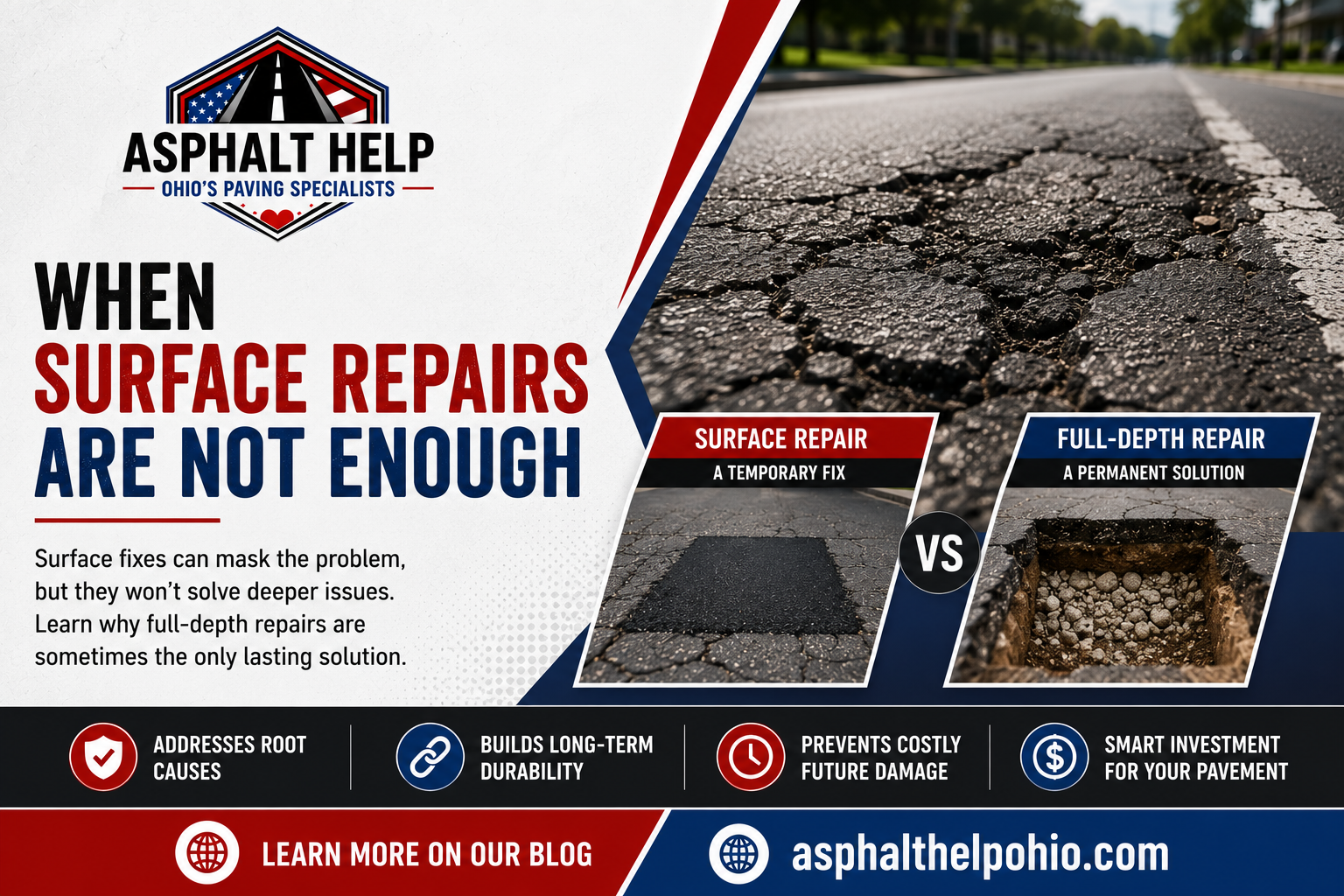
In these situations, repeatedly treating the surface may not address the underlying cause.
Asphalt Help Ohio provides pothole repair and structural asphalt repair services intended to address both localized damage and more extensive pavement problems.
When Is Pothole Repair Enough?
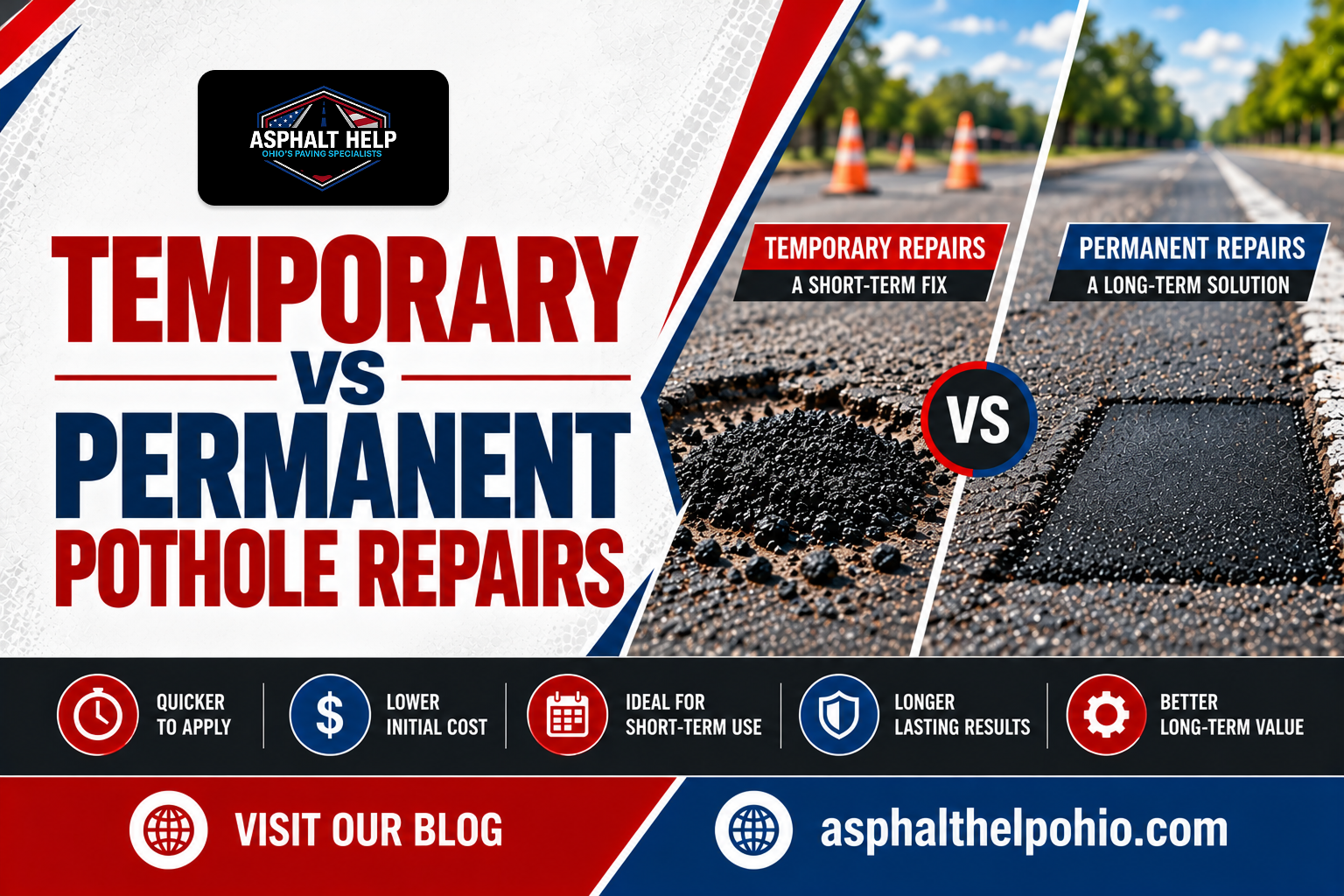
A localized pothole surrounded by stable pavement may be suitable for targeted patching.
Asphalt Help Ohio describes pothole repair and asphalt patching as services that remove damaged material and replace it with properly compacted asphalt to restore pavement stability.
However, the surrounding pavement should also be inspected. If cracking, rutting, settlement, or multiple potholes are present, the issue may extend beyond one isolated repair.
When Is Broader Asphalt Work Necessary?
If pavement has widespread deterioration, individual pothole repairs may no longer be the most appropriate approach.
Asphalt Help Ohio’s Asphalt Paving Services in Columbus Ohio include pothole repair, asphalt patching, resurfacing, maintenance, parking lot repair, driveway repair, and crack filling.
Resurfacing can be considered when the existing pavement structure remains suitable for a new asphalt layer. More extensive deterioration may require deeper rehabilitation or replacement.
How Can Traffic-Related Asphalt Damage Be Reduced?
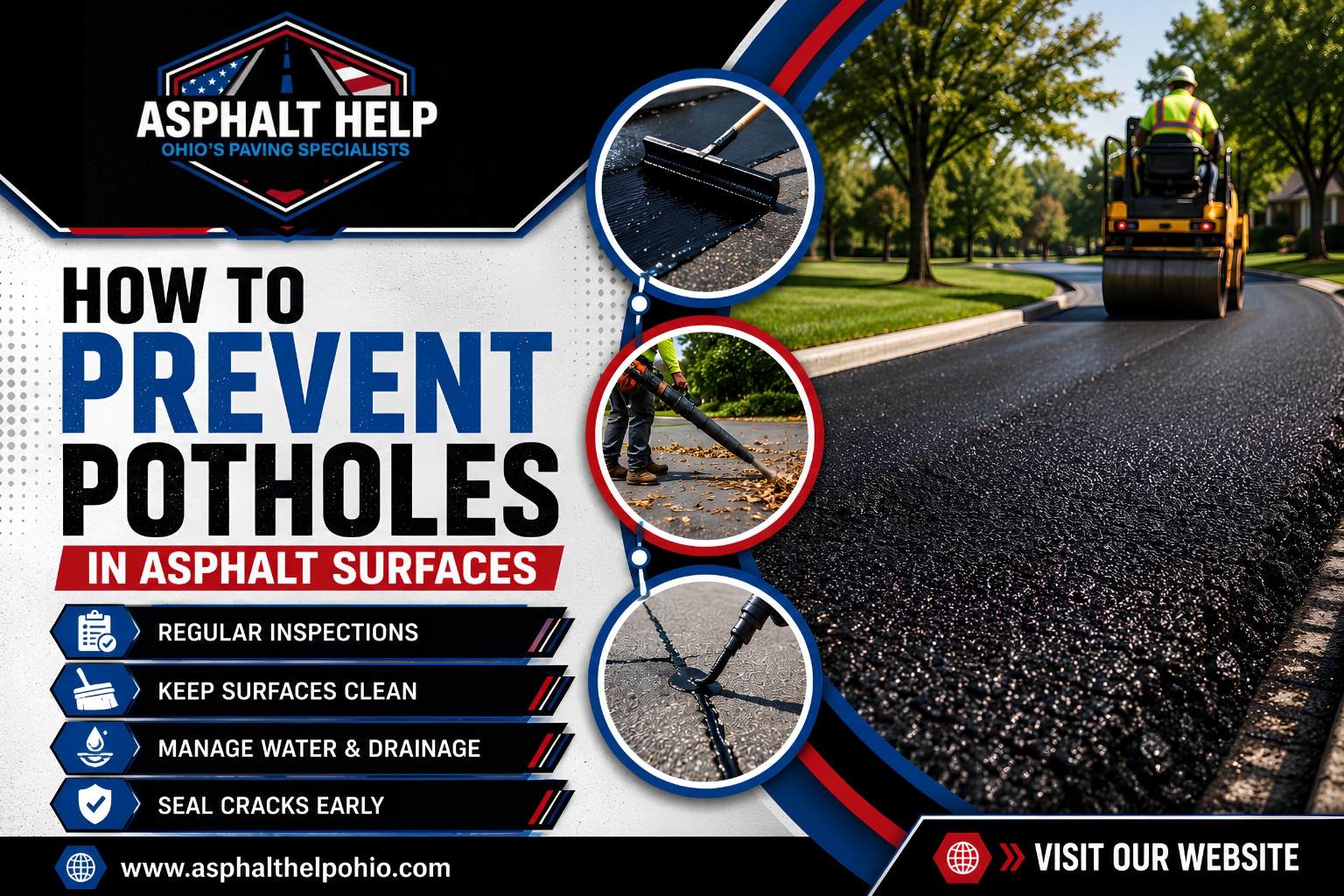
Property owners cannot eliminate vehicle loading, but they can manage the conditions that make pavement more vulnerable.
Useful practices include:
- Inspecting high-traffic areas regularly
- Repairing potholes promptly
- Filling suitable cracks
- Maintaining proper drainage
- Monitoring heavy-vehicle routes
- Addressing standing water
- Maintaining structurally sound pavement
- Evaluating recurring failures
FHWA describes preventive maintenance as a way to slow pavement deterioration when appropriate treatments are applied at the right time with quality materials and construction.
Final Thoughts
Understanding traffic damage asphalt Ohio pavement experiences requires looking at traffic together with environmental and structural conditions. Repeated vehicle loads can accelerate deterioration in pavement that has already been weakened by moisture, freeze-thaw cycles, poor drainage, cracking, or weak supporting layers. FHWA research identifies traffic loading as a significant contributor to several forms of asphalt pavement distress.
For asphalt pothole repair in Columbus Ohio, Asphalt Help Ohio evaluates the damaged area, considers traffic load and environmental exposure, and uses repair methods suited to the pavement condition. Its process can include removing weakened asphalt, addressing base issues when necessary, installing appropriate patching material, and compacting the repair.
When traffic damage extends beyond individual potholes, broader Asphalt Paving Services in Columbus Ohio may be appropriate. Asphalt Help Ohio provides repair, patching, resurfacing, maintenance, and other paving services to address different levels of pavement deterioration.