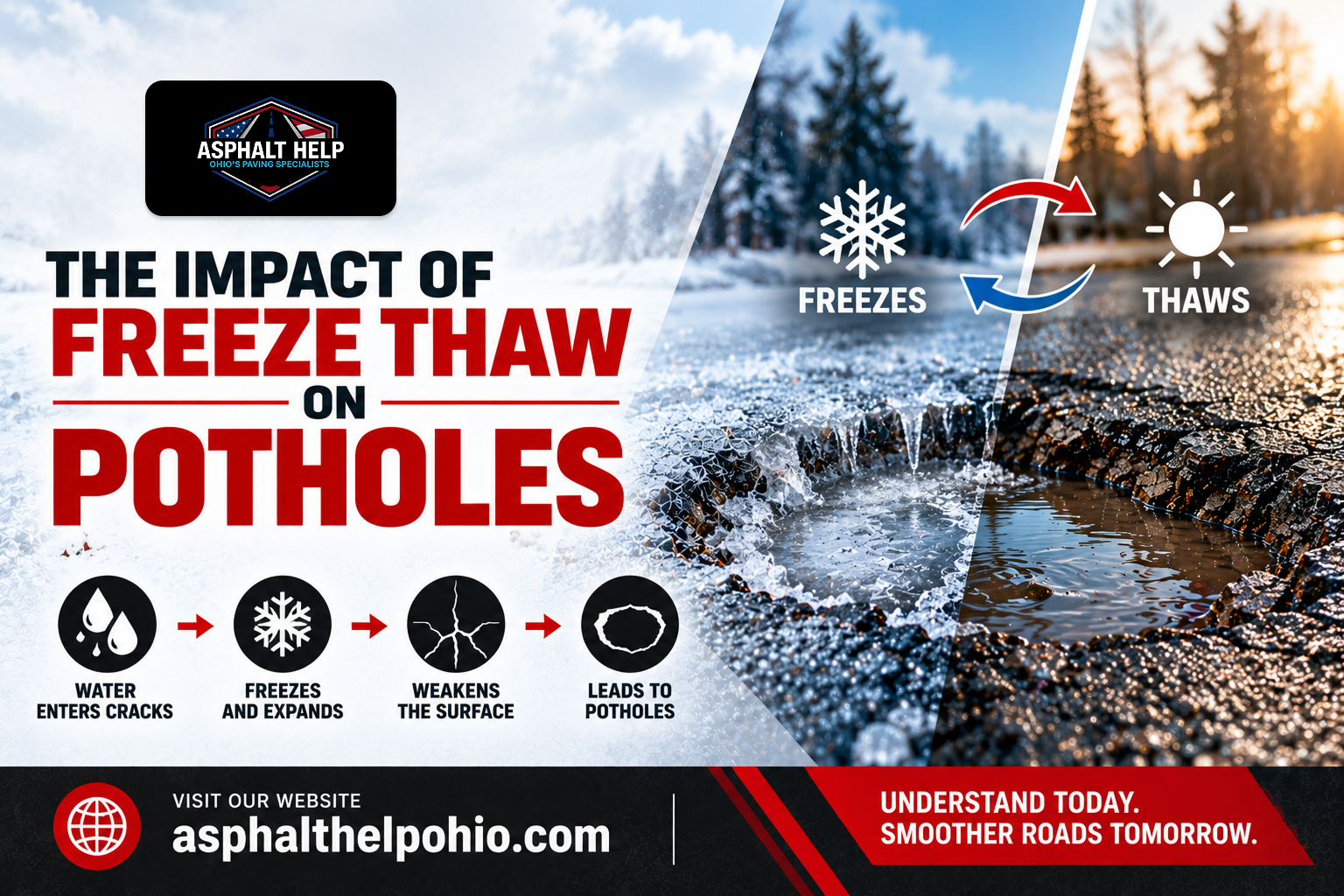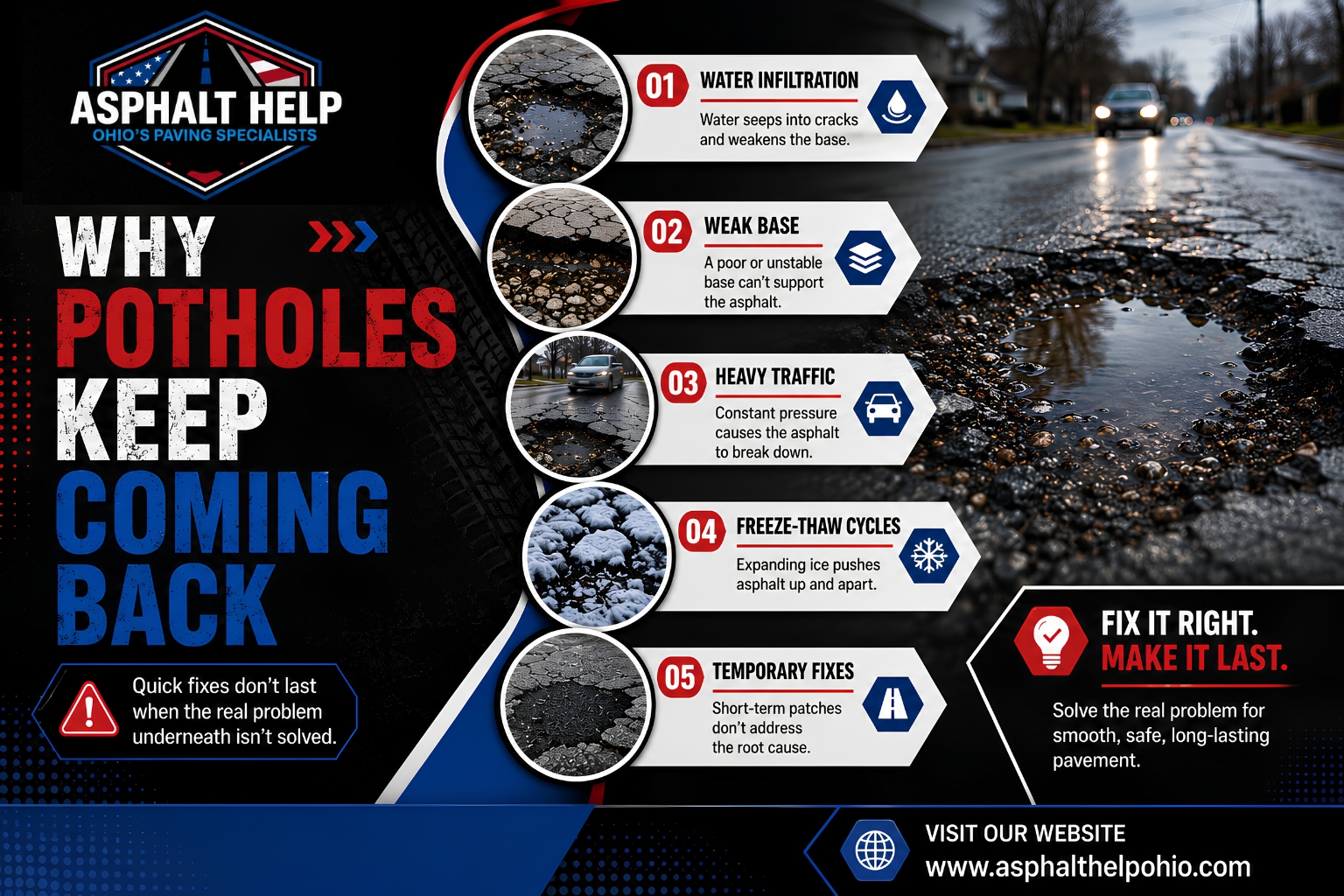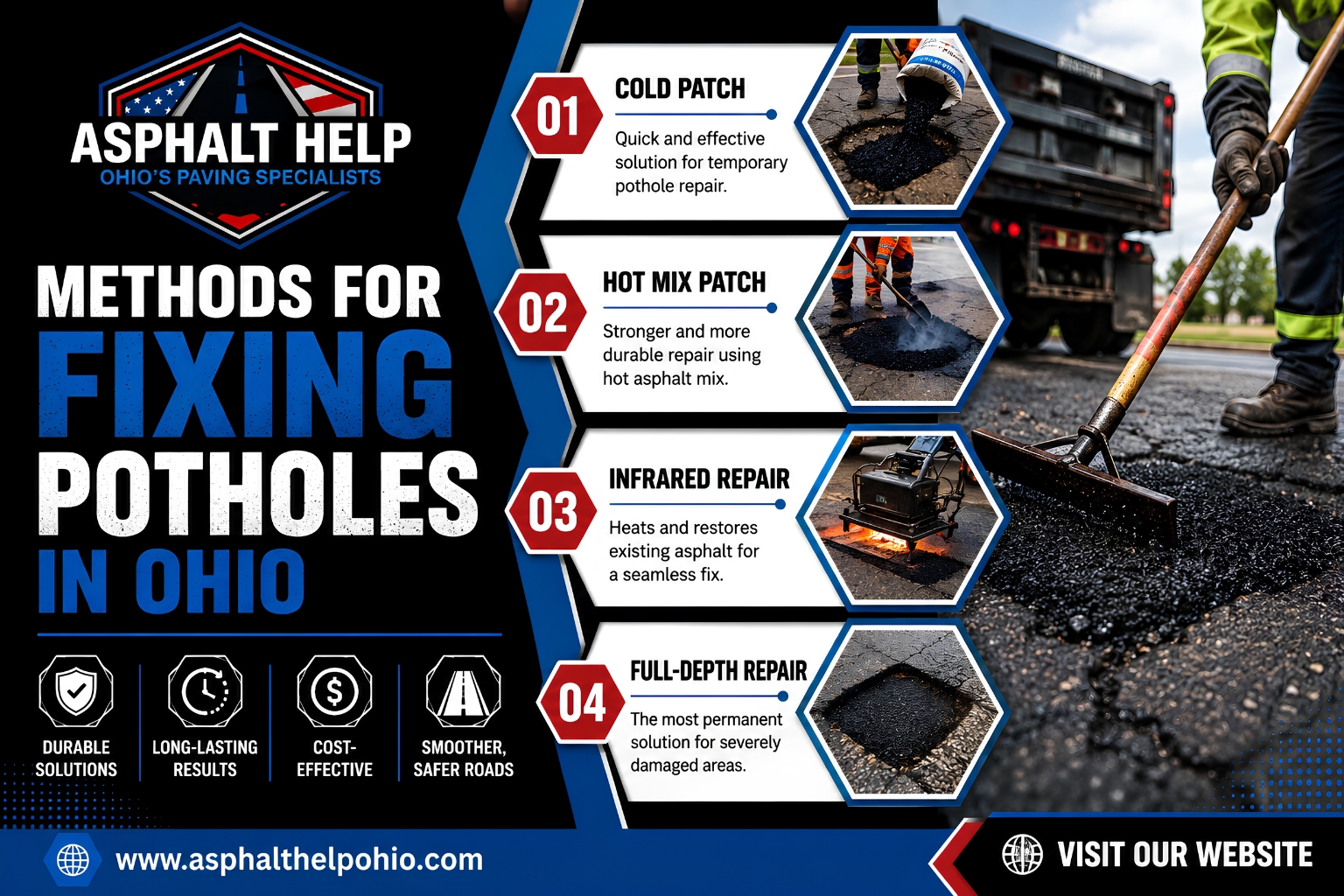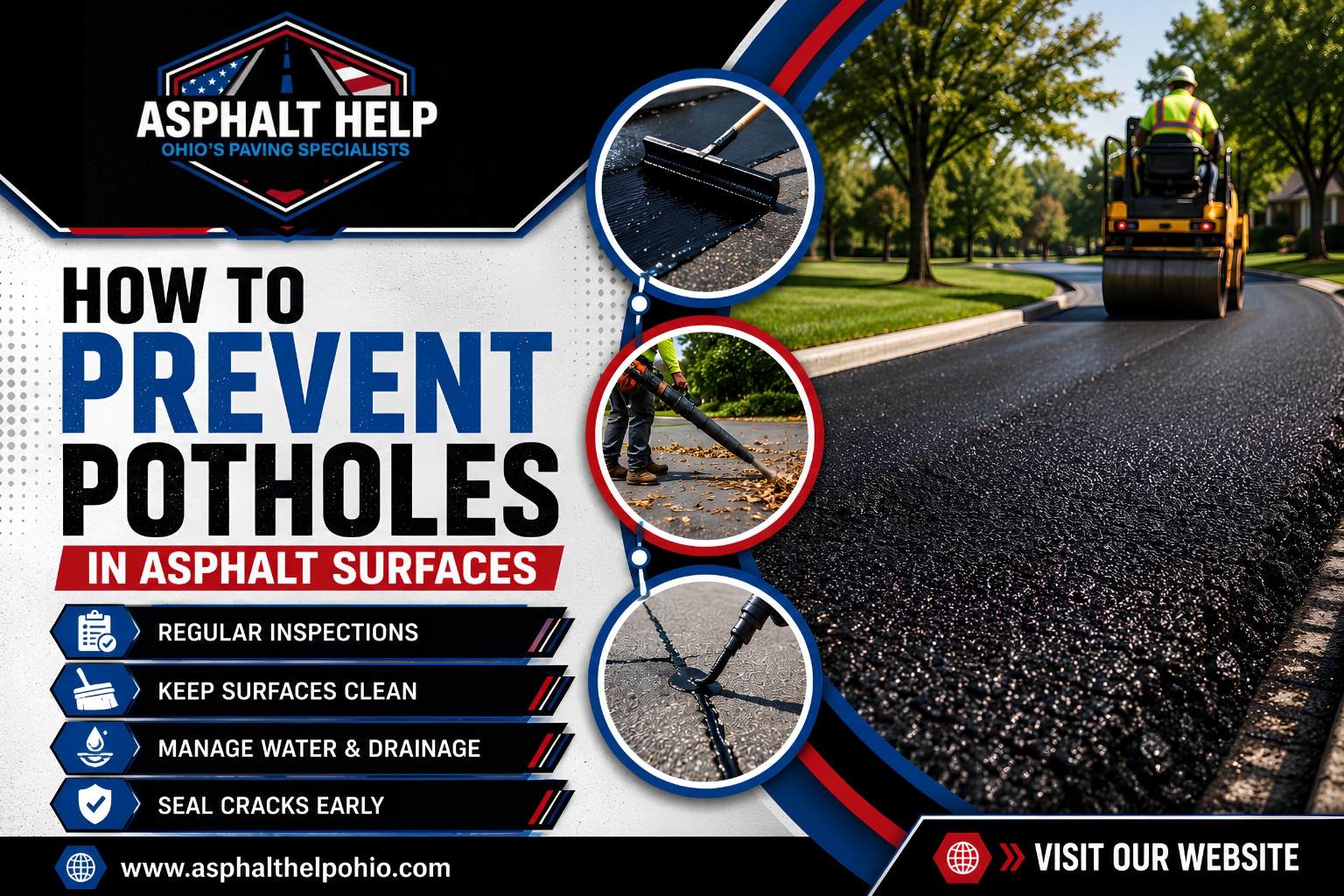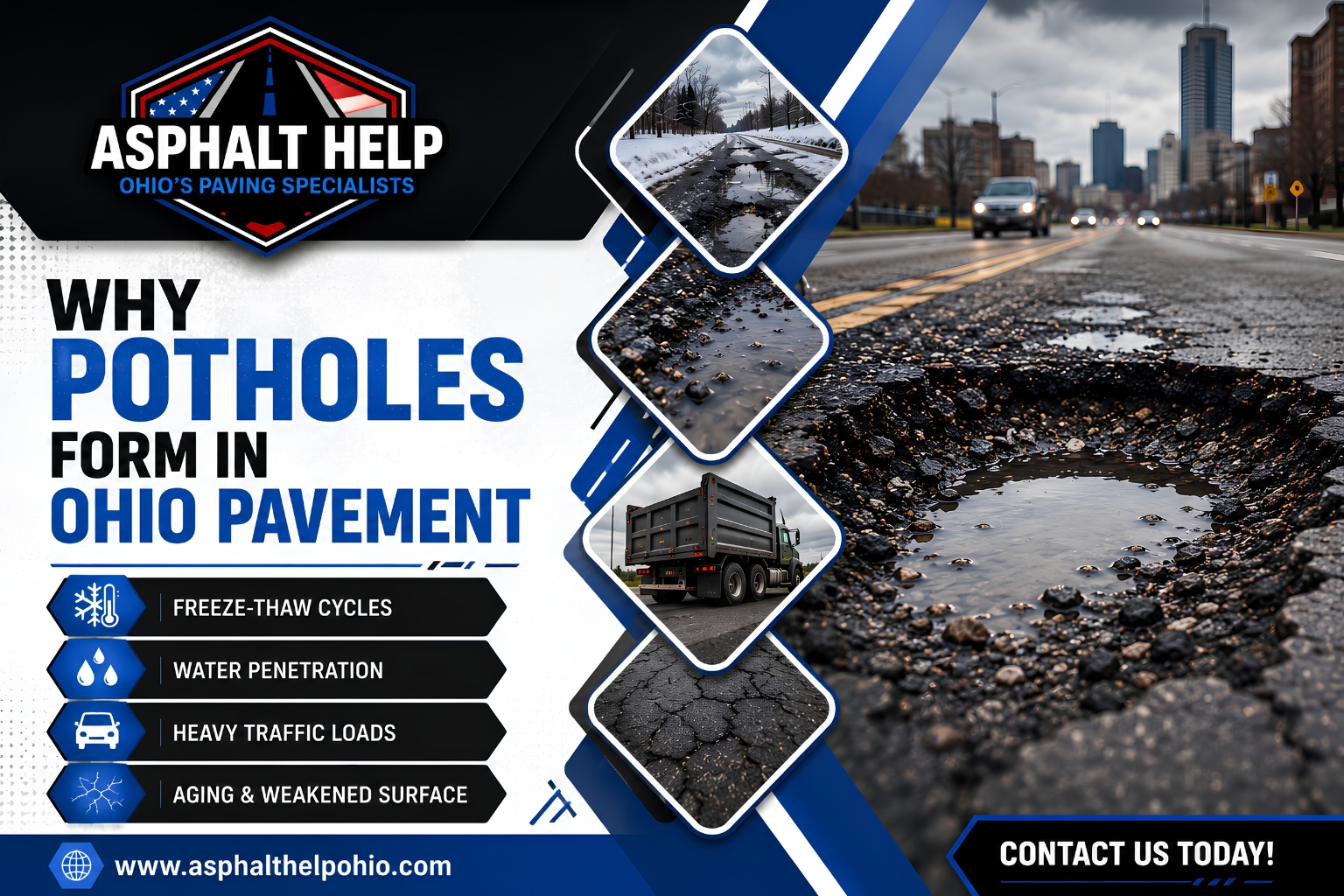




How Does Moisture Cause Potholes in Ohio? Why do potholes often appear after periods of rain, snow, and changing temperatures? Moisture is one of the major contributors to pavement deterioration. In Ohio, water can enter through existing cracks, collect around the pavement structure, and weaken supporting materials. When temperatures fall and the trapped water freezes, the resulting expansion adds stress to already vulnerable pavement.
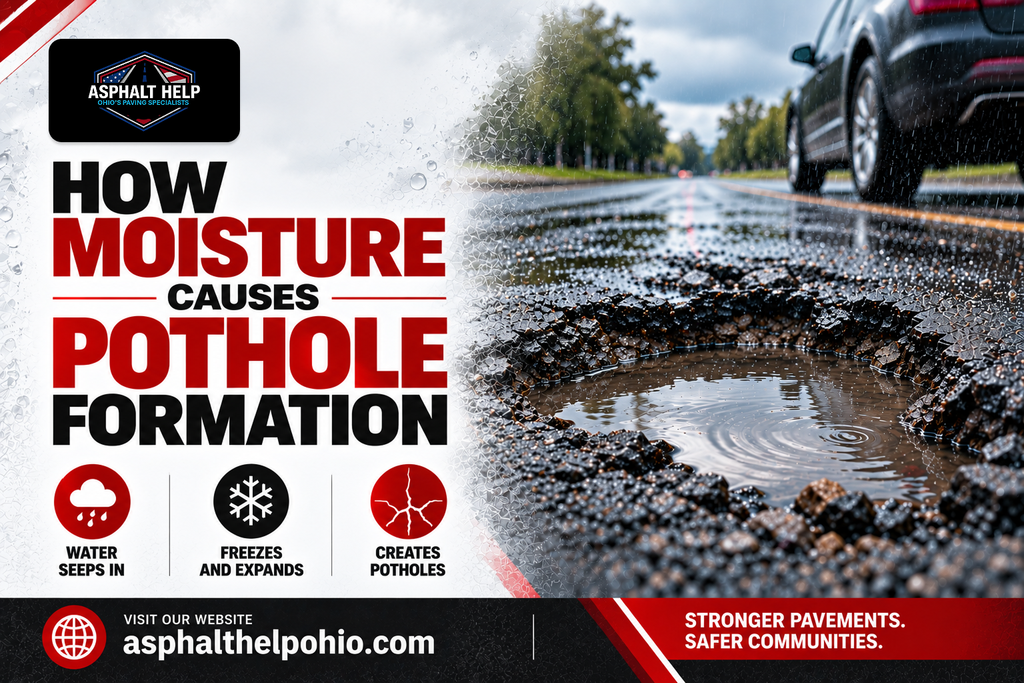
Understanding pothole causes Ohio property owners encounter starts with understanding how water moves through pavement and how seasonal freeze-thaw cycles affect weakened areas.
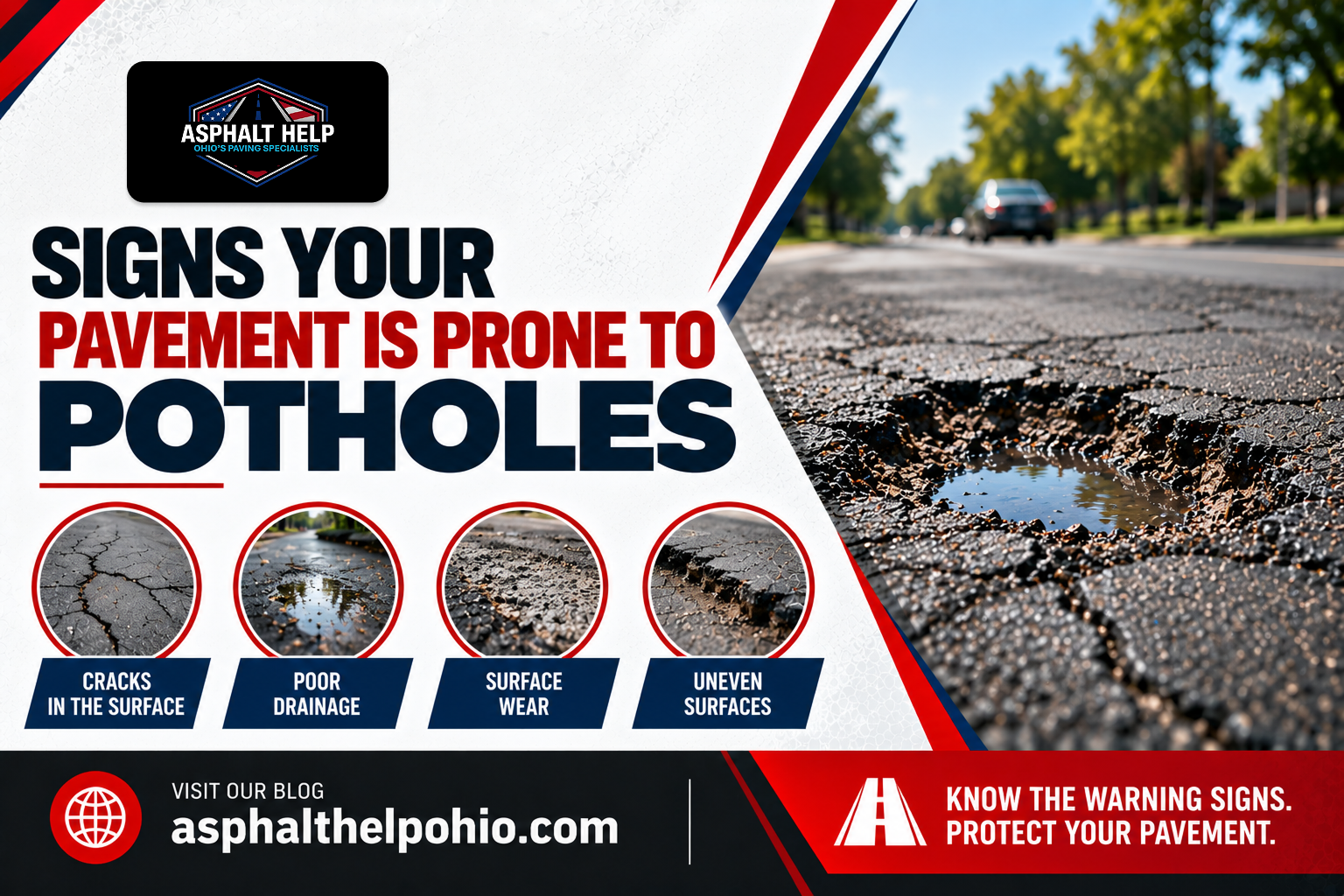
1. Water Enters Through Asphalt Cracks
A small crack can become an entry point for moisture.
Rainwater, melting snow, and other surface water can move through cracks into the asphalt layers and underlying base. The Federal Highway Administration identifies surface cracks as one pathway through which water can enter pavement structures.
Once moisture reaches these deeper layers, the pavement may become more vulnerable to movement and deterioration.
2. Freeze-Thaw Cycles Make Moisture More Damaging
Ohio’s changing winter temperatures make freeze-thaw cycles an important part of pothole formation.
When trapped water freezes, it expands and places pressure on surrounding pavement materials. When temperatures rise, the ice melts and leaves additional space for water to move into the pavement. Repeated cycles can progressively weaken the pavement.
ODOT-related guidance identifies poor drainage and repeated freeze-thaw cycles as contributing factors in potholes caused by localized structural deficiencies.
3. Moisture Weakens the Pavement Base
Asphalt does not work alone. Beneath the surface are base, subbase, and subgrade layers that provide structural support.
The Federal Highway Administration explains that moisture can reduce the strength and stiffness of unbound pavement materials. In cold environments, freezing and thawing can further affect these materials and contribute to pavement distress such as potholes.
This means a pothole visible at the surface may reflect a problem that has developed deeper within the pavement system.
4. Poor Drainage Keeps Water Around the Pavement
Even well-constructed asphalt can experience problems when water cannot drain effectively.
Poor drainage may result in:
- Standing water
- Saturated pavement bases
- Water collecting near pavement edges
- Repeated puddles
- Erosion
- Recurring potholes
ODOT’s pavement repair guidance specifically recommends reviewing drainage systems for pooling, inadequate drainage design, blocked outlets, and subsurface water infiltration when investigating pavement distress.
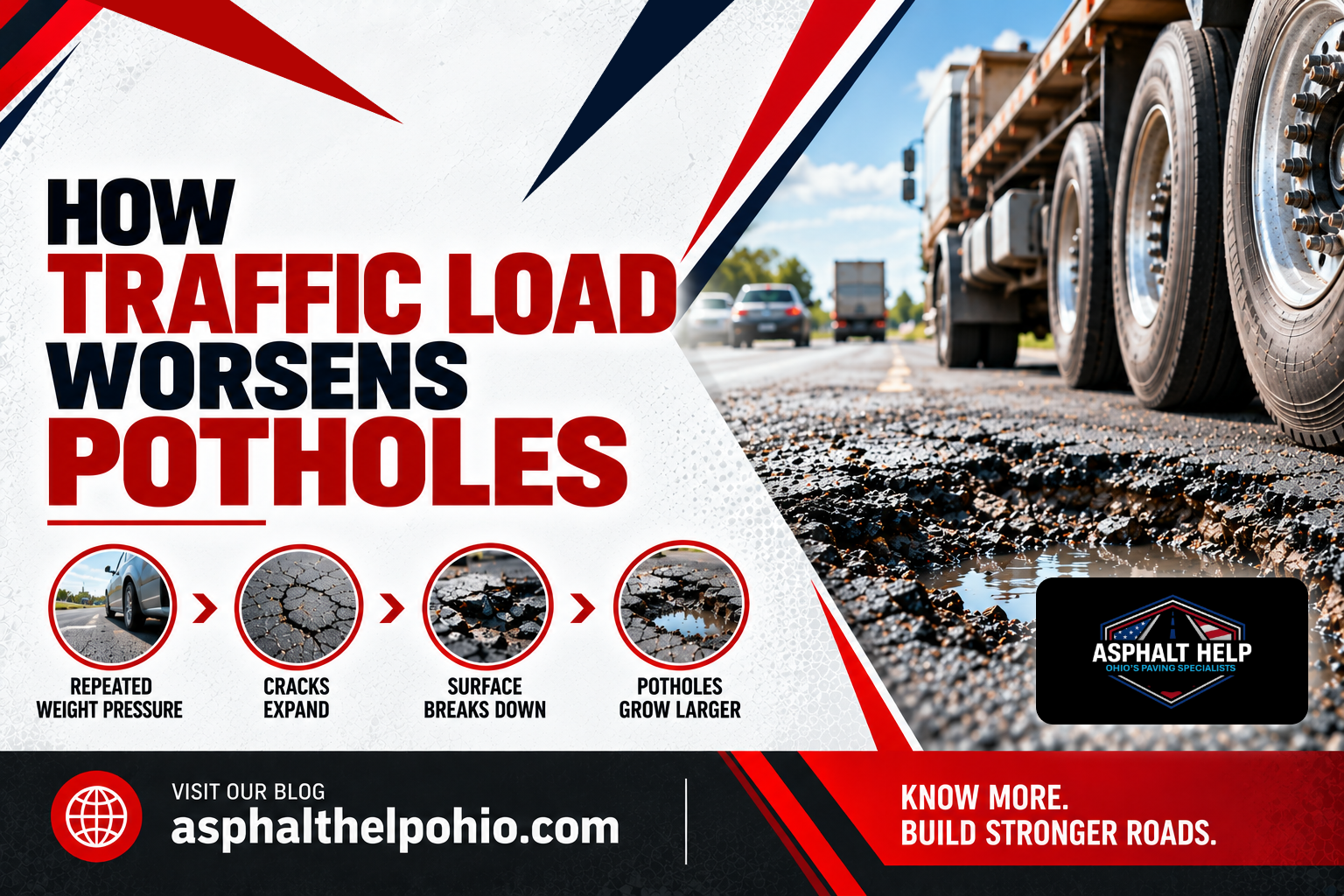
5. Traffic Breaks Down Weakened Pavement
Moisture alone does not necessarily create every pothole.
Traffic becomes particularly damaging after water and freeze-thaw cycles have weakened the pavement. Vehicles repeatedly apply loads to the affected area, eventually causing weakened asphalt to crack, break, or separate.
ODOT’s pavement guidance identifies traffic and weak pavement layers alongside poor drainage and freeze-thaw cycles as contributing factors in localized pothole failures.
6. Water Can Contribute to Asphalt Debonding
Moisture can also affect the bond between asphalt layers.
ODOT identifies potholes caused by debonding as areas where an asphalt layer separates from the underlying layer. Freeze-thaw action and poor bonding are among the potential causes.
Once layers lose their connection, traffic can accelerate the breakdown of the affected section.
7. Spring Can Reveal Winter Moisture Damage
Potholes may become particularly noticeable as winter ends.
During colder periods, water may freeze within pavement. As temperatures rise, the pavement thaws and the supporting materials can become weaker. FHWA notes that spring thawing can trap water above still-frozen zones, substantially reducing the strength of pavement materials.
This helps explain why pavement that appeared relatively stable before winter can show significant deterioration afterward.
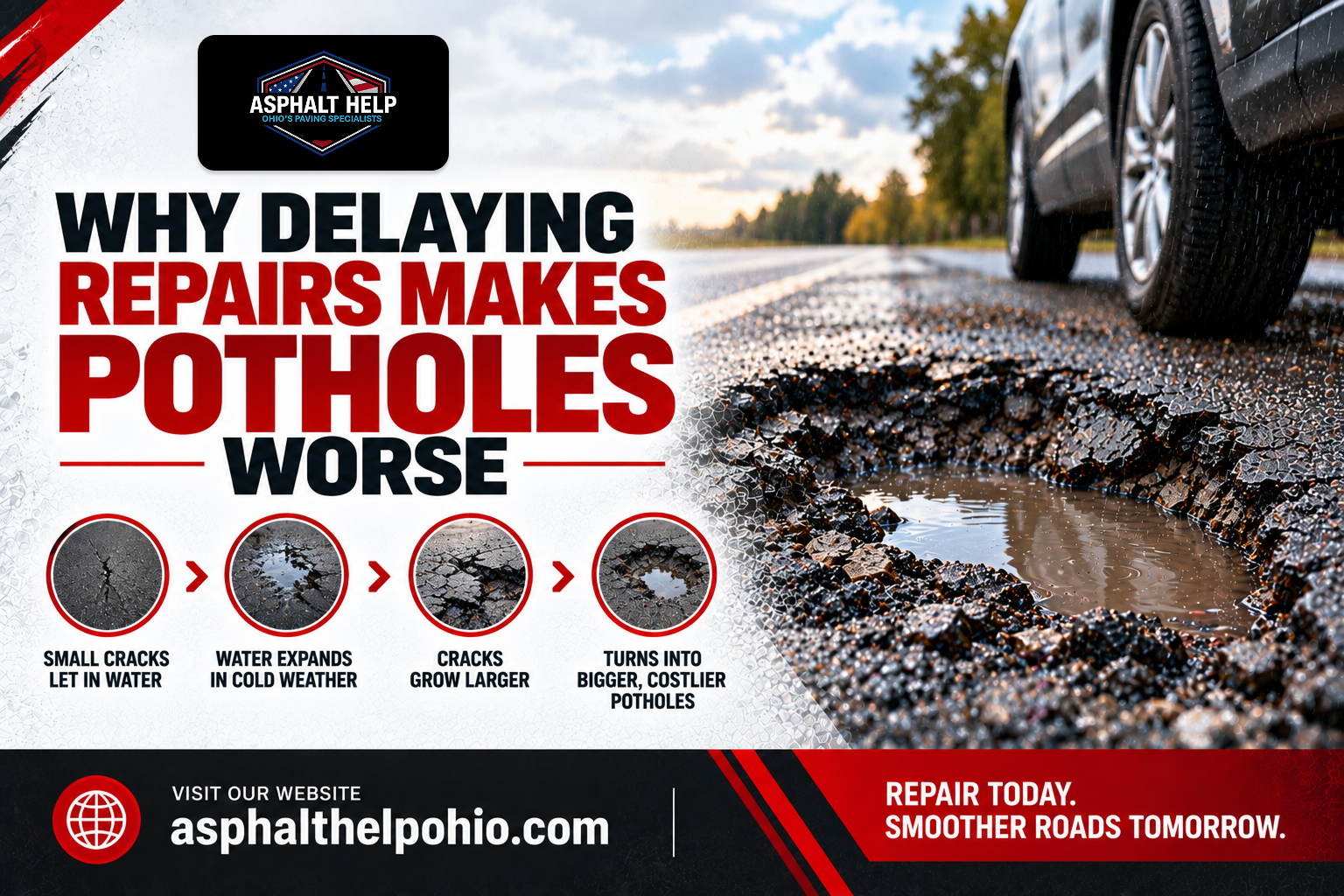
8. Small Cracks Can Become Larger Failures
Moisture-related deterioration often develops gradually.
A simplified progression is:
Small crack → water infiltration → freezing and expansion → pavement weakening → traffic loading → larger cracking → pothole formation
Ohio’s pavement guidance identifies potholes as localized failures that can be associated with weak asphalt, base or subgrade layers, poor drainage, and repeated freeze-thaw cycles.
9. Recurring Potholes May Indicate an Unresolved Moisture Problem
If the same area repeatedly develops potholes, filling the visible hole may not address the underlying cause.
Possible contributing conditions include:
- Poor drainage
- Persistent water infiltration
- Weak base material
- Saturated subgrade
- Freeze-thaw damage
- Inadequate pavement support
ODOT recommends reviewing drainage and, when necessary, using deeper investigation methods to determine whether underlying structural problems are contributing to visible pavement distress.
10. Proper Drainage Is Part of Pothole Prevention
Managing water is therefore an important part of pavement maintenance.
Property owners should watch for areas where water repeatedly collects and address drainage concerns before they contribute to more extensive pavement deterioration.
FHWA recommends pavement systems that use free-draining materials, appropriate stabilization of moisture-sensitive soils, and adequate drainage for water that enters the pavement structure.
Moisture and Pothole Formation at a Glance
| Moisture-Related Condition | Potential Effect |
|---|---|
| Water enters cracks | Moisture reaches deeper pavement layers |
| Water saturates the base | Supporting strength can decrease |
| Water freezes | Expansion creates additional stress |
| Ice melts | Additional water can enter vulnerable areas |
| Repeated freeze-thaw | Pavement gradually weakens |
| Poor drainage | Moisture remains around the pavement |
| Traffic loads weakened areas | Asphalt can break apart and form potholes |
How Can Property Owners Reduce Moisture-Related Damage?
Preventative maintenance should focus on keeping water from becoming trapped within or beneath the pavement.
Useful practices include:
- Inspect asphalt regularly for cracks.
- Address suitable cracks before they allow significant moisture entry.
- Keep drainage systems clear.
- Correct areas where water repeatedly pools.
- Inspect pavement after winter.
- Repair potholes before surrounding damage expands.
- Investigate recurring pavement failures rather than repeatedly treating only the surface.
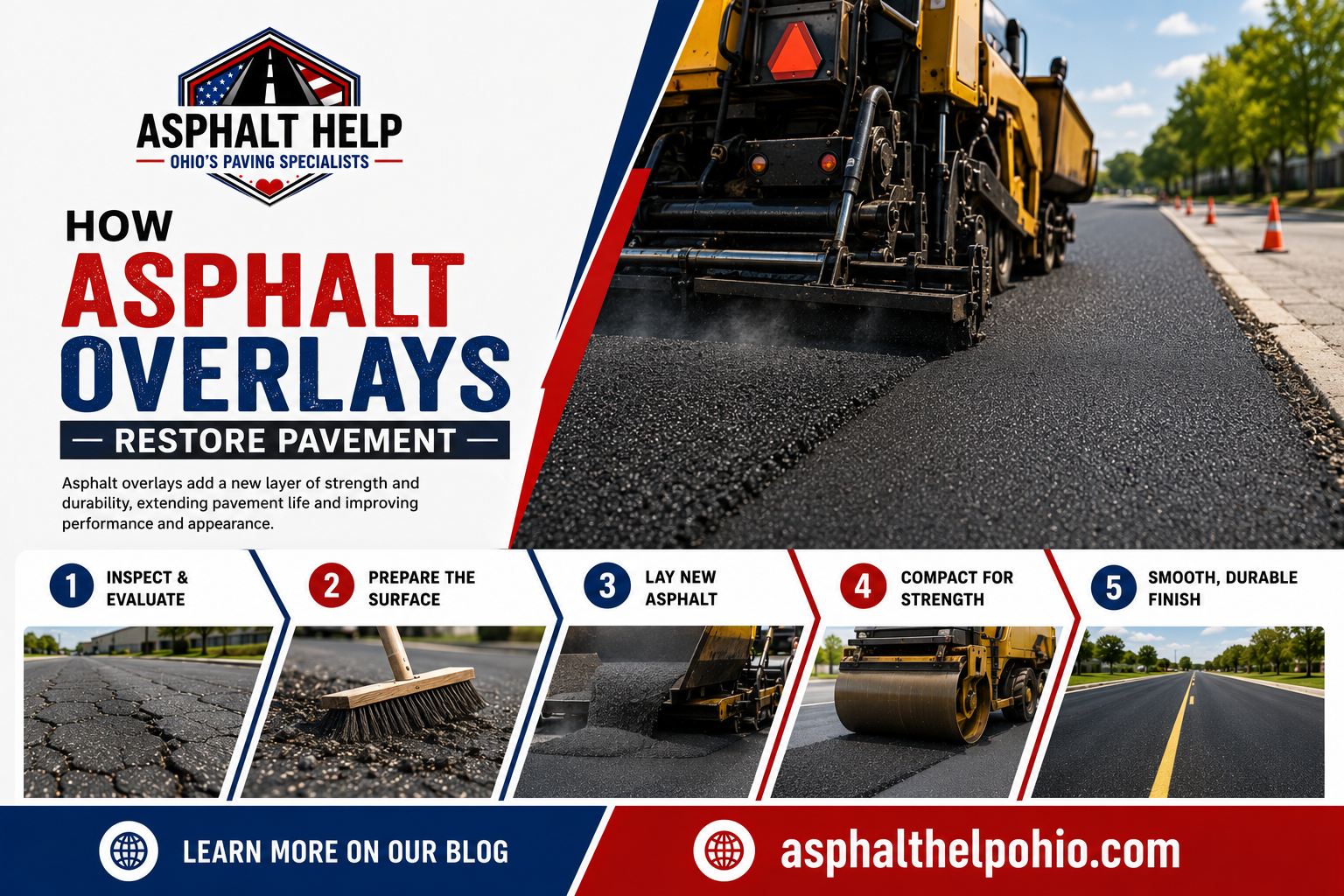
For larger or recurring problems, a professional pavement assessment can help determine whether the issue is primarily surface-related or involves the base and subgrade.
When Does a Pothole Need More Than a Surface Repair?
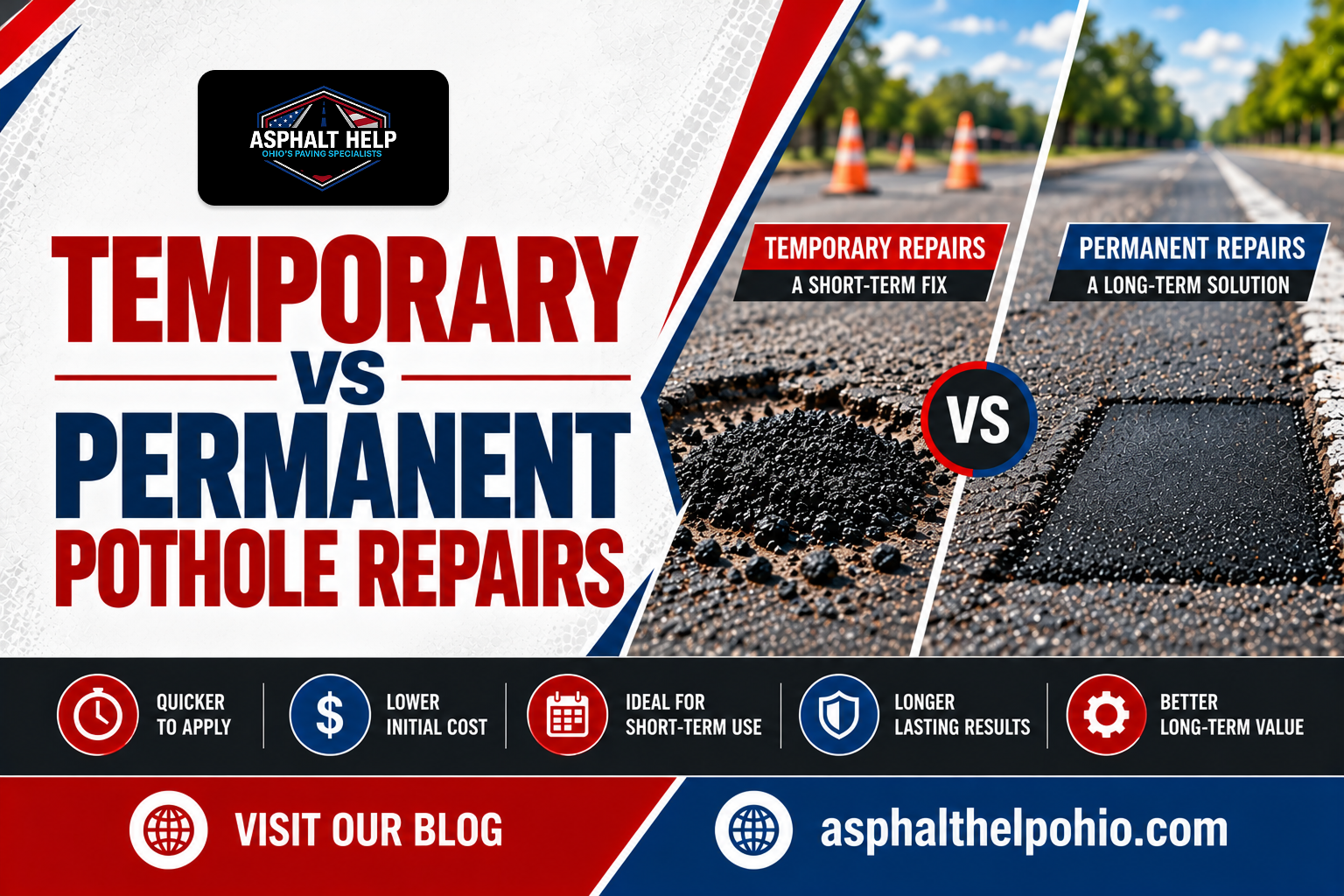
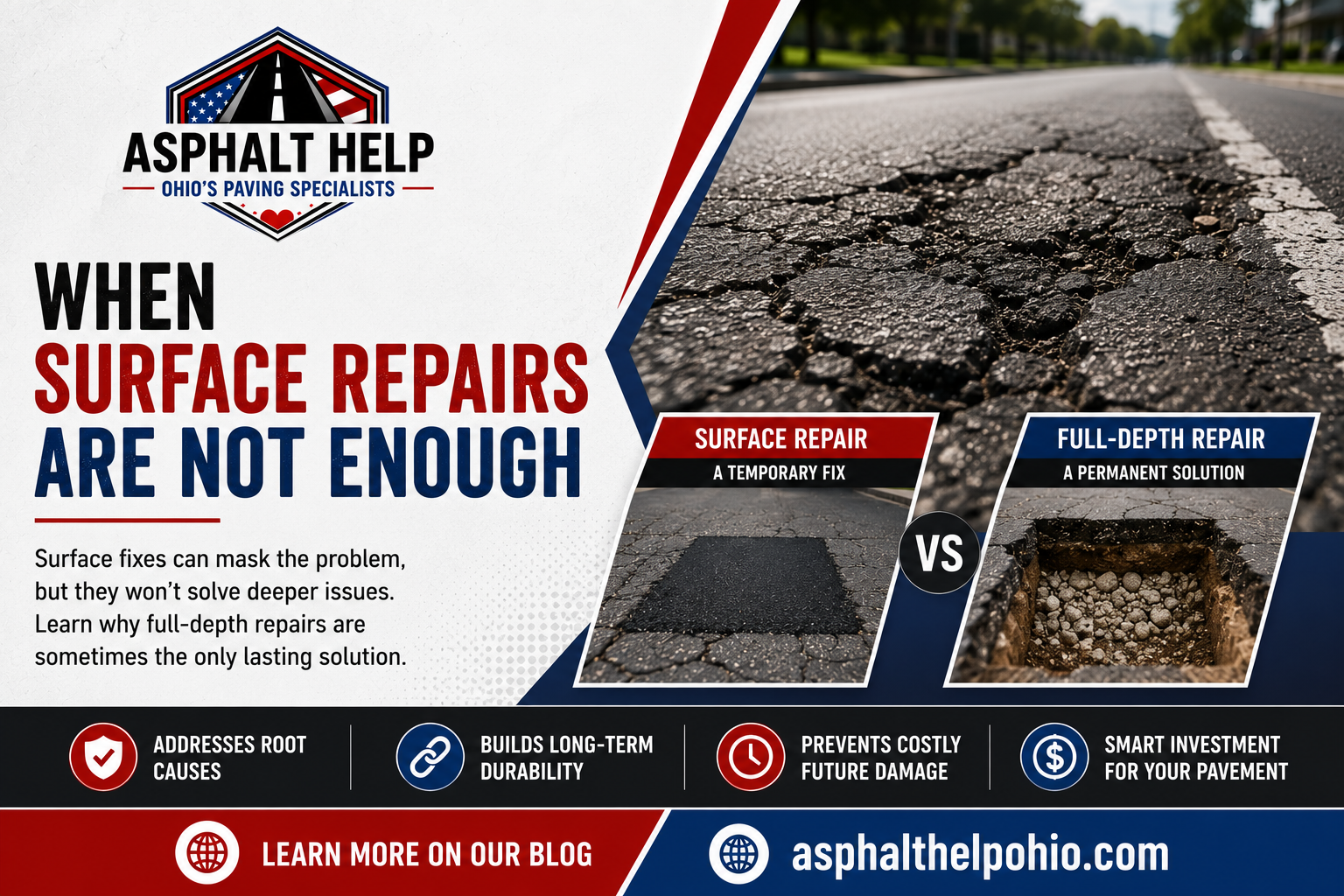
A localized pothole in otherwise sound pavement may be suitable for patching. However, widespread potholes, recurring failures, settlement, extensive cracking, or evidence of weak supporting layers can indicate a deeper structural problem.
ODOT’s pavement repair guide distinguishes between localized potholes and potholes associated with structural deficiencies. For deeper failures, recommended repair approaches can include full-depth pavement repair or, when deterioration is extensive, reconstruction.
This distinction is important because applying new asphalt to the surface alone may not correct a weakened foundation.
Final Thoughts
Understanding pothole causes Ohio property owners encounter requires looking beyond the visible hole. Moisture can enter through cracks, weaken supporting pavement materials, and interact with Ohio’s freeze-thaw cycles. Traffic then places additional stress on those weakened areas, eventually contributing to pavement breakdown. ODOT and FHWA guidance both identify moisture, drainage, freeze-thaw action, and underlying pavement conditions as important factors in pavement deterioration.
The most effective approach is to manage moisture before it becomes a larger pavement problem. Regular inspections, appropriate crack maintenance, proper drainage, and timely pothole repairs can help reduce the conditions that contribute to pavement deterioration.
For properties with recurring or widespread potholes, Asphalt Help Ohio can evaluate the visible damage together with the pavement’s underlying condition to determine whether localized repair, deeper patching, resurfacing, or more extensive pavement work is appropriate.