




Have you repaired the same pothole more than once, only to see it return after another season? Recurring potholes Ohio property owners encounter are often a sign that something beyond the visible surface damage needs attention. Water infiltration, poor drainage, weak base materials, freeze-thaw cycles, traffic loads, and inadequate previous repairs can all contribute to repeated pavement failure.
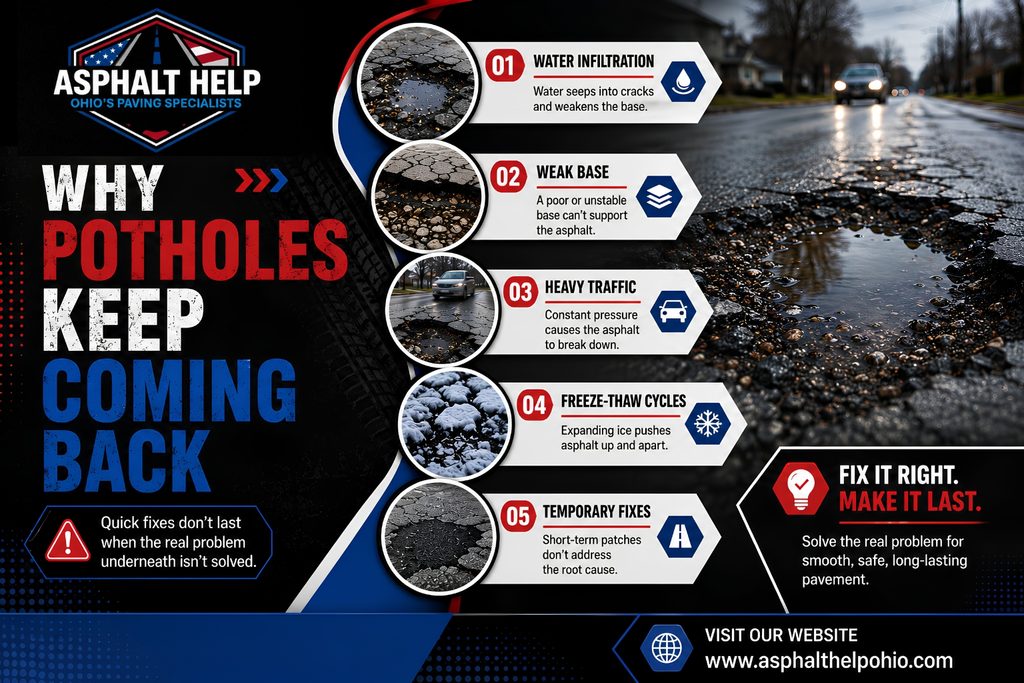
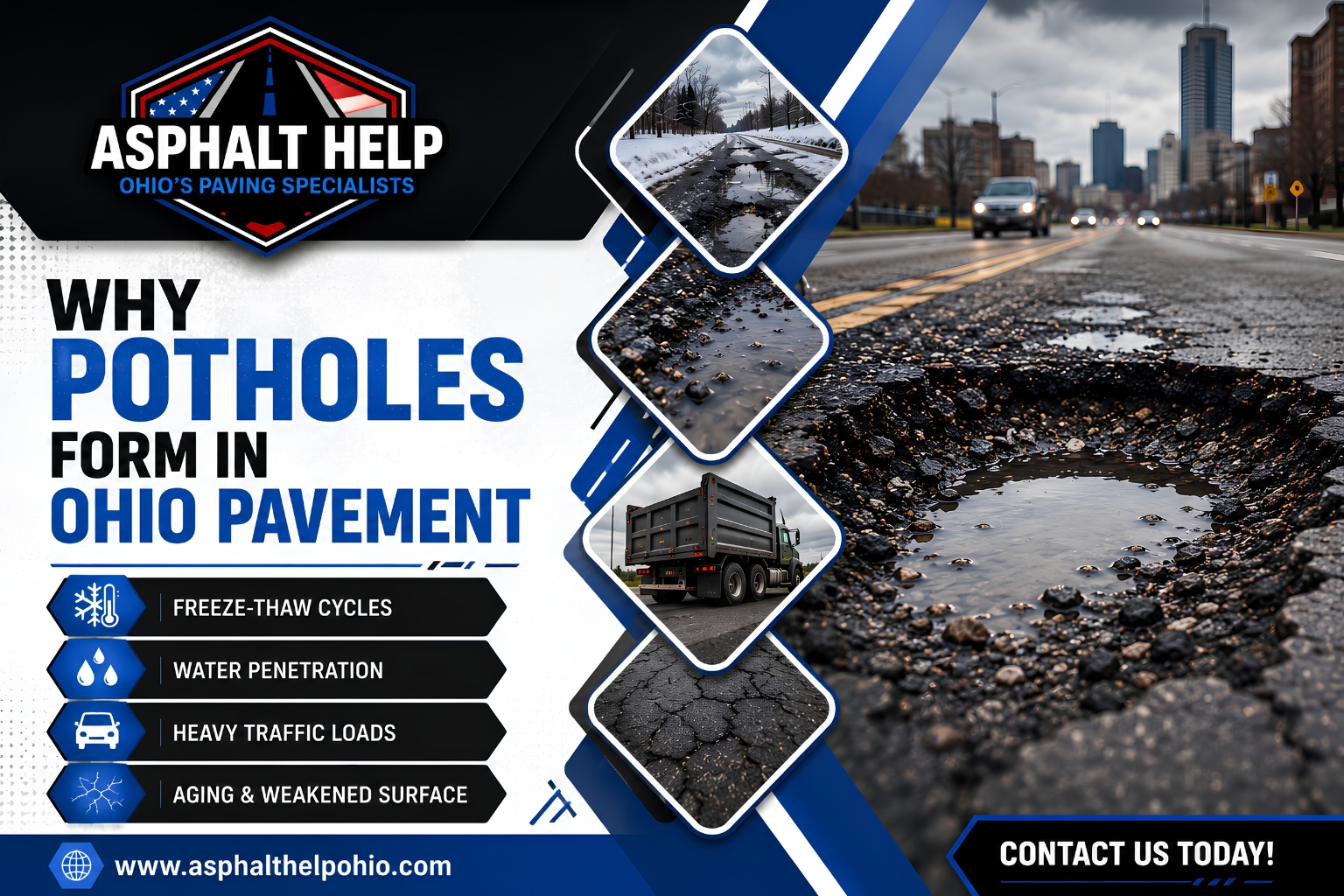
Asphalt Help Ohio explains that potholes in Central Ohio can develop from moisture intrusion, traffic pressure, freeze-thaw cycles, poor drainage, aging asphalt, and weak or improperly installed base layers. Its repair process therefore focuses on identifying the underlying cause rather than simply filling the visible hole.
1. The Underlying Base May Be Weak
One of the most common reasons a pothole returns is that the pavement foundation has not been adequately addressed.
Asphalt depends on stable supporting layers beneath the surface. If the base has weakened or become unstable, a new patch may eventually experience the same stresses as the original pavement.
Asphalt Help Ohio notes that weak or improperly installed base layers can contribute to pothole formation and that base issues may need to be addressed during repair.
This is why repeatedly adding patch material without evaluating the supporting pavement may not resolve a recurring problem.
2. Water May Be Getting Beneath the Pavement
Water is another major contributor to recurring potholes.
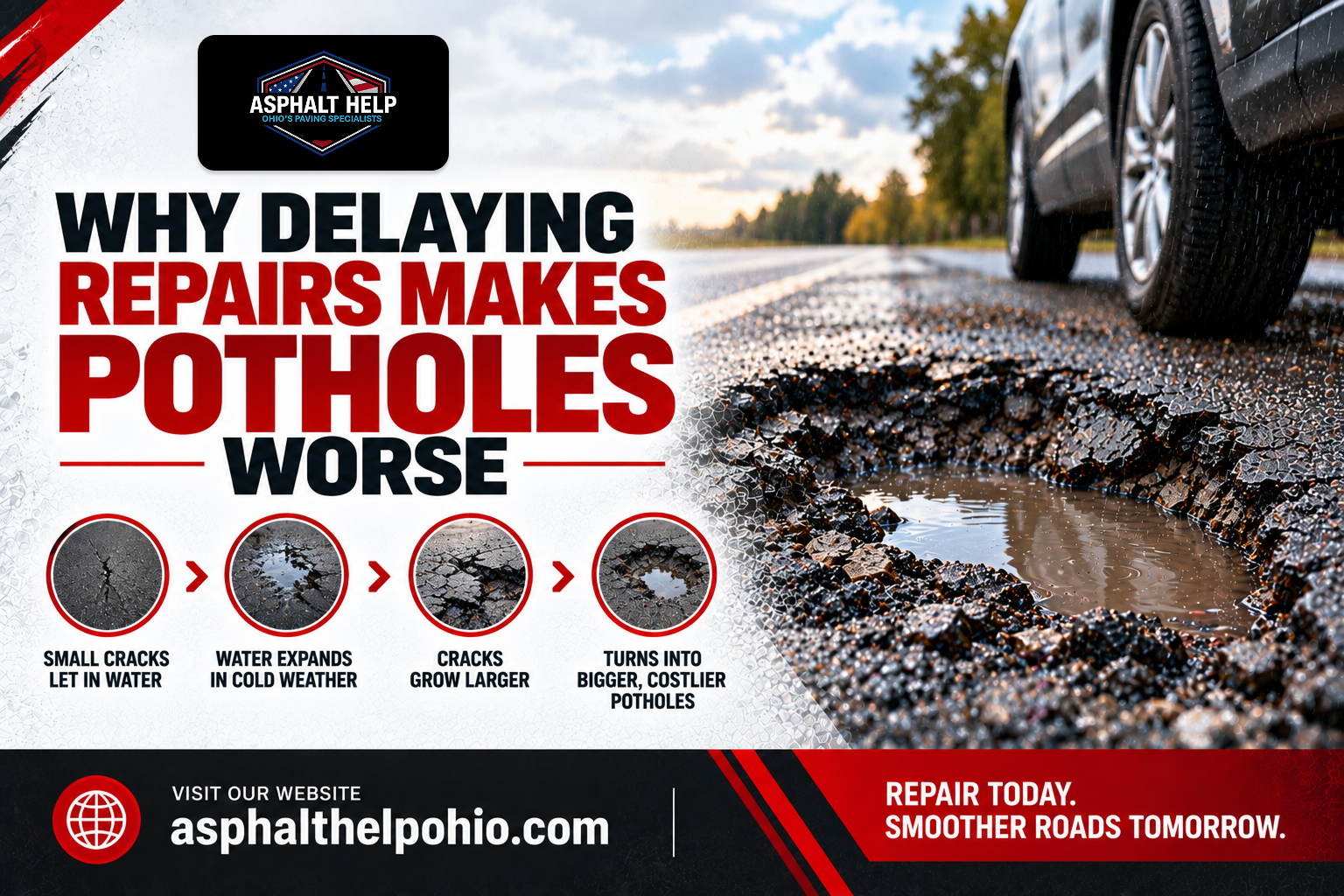
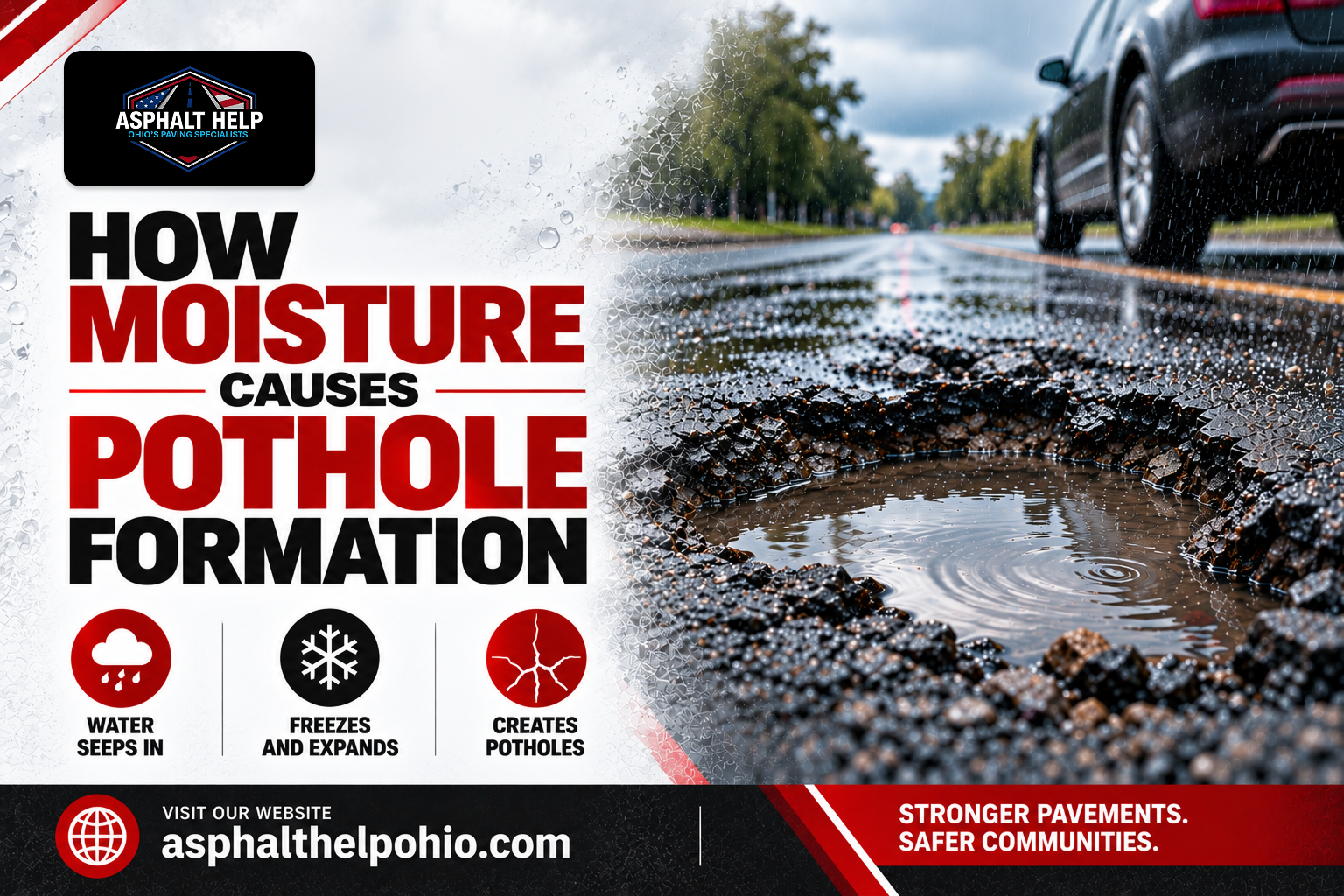
Small cracks can allow moisture to enter the pavement system. Once water reaches vulnerable areas beneath the asphalt, it can weaken the supporting material and contribute to additional deterioration.
Asphalt Help Ohio specifically identifies moisture intrusion as a cause of potholes and recommends addressing drainage and water-related issues as part of pavement maintenance.
If a pothole repeatedly develops after rainfall or seasonal weather changes, moisture should be considered as a possible contributing factor.
3. Poor Drainage Can Keep the Problem Going
A repaired pothole can return if water continues collecting in the same area.
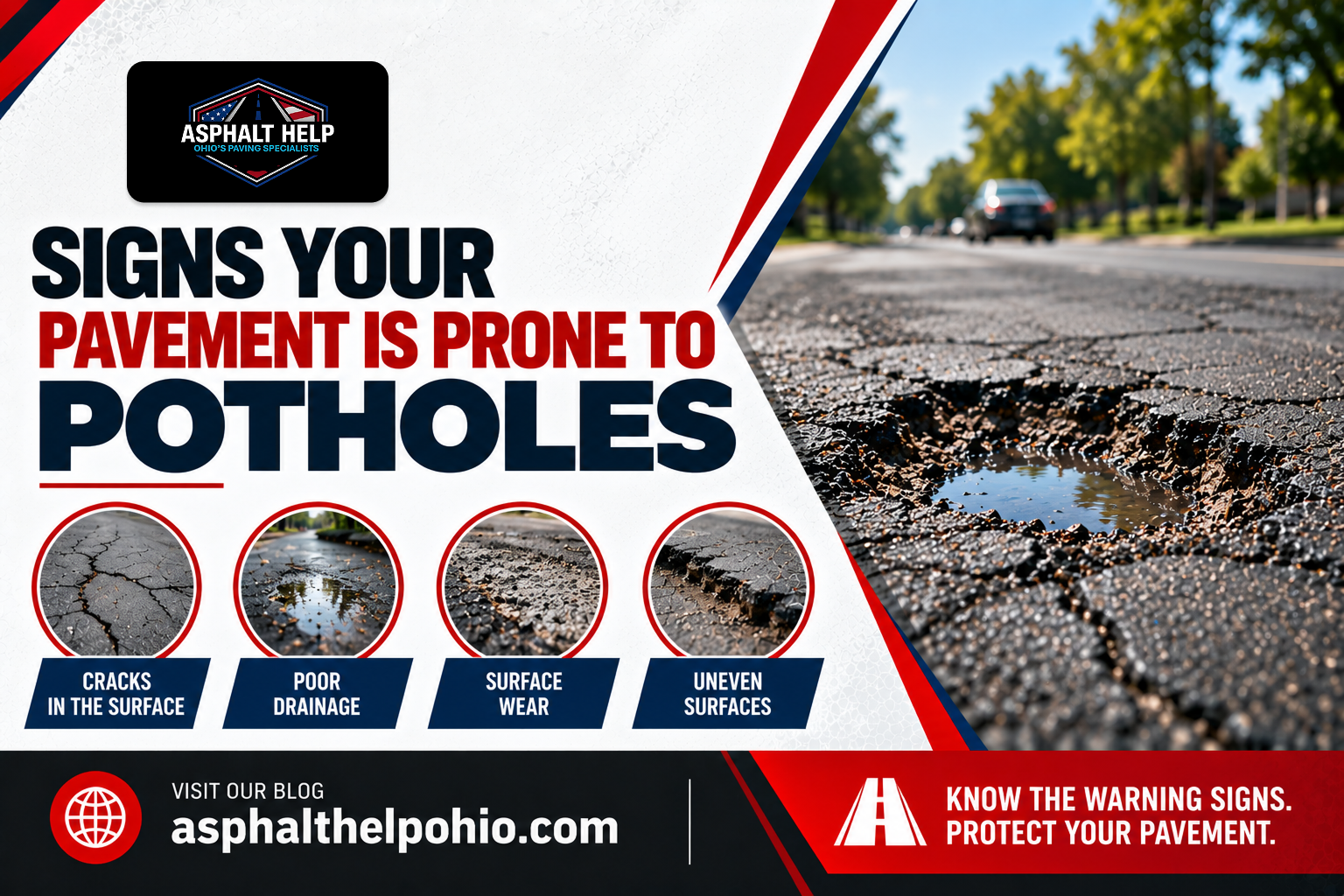
Common warning signs include:
- Standing water after rain
- Persistent puddles
- Low pavement areas
- Water flowing toward asphalt
- Erosion near pavement edges
- Repeated potholes in one location
Asphalt Help Ohio states that water pooling can indicate drainage or surface-level problems and that standing water can weaken the pavement base and increase pothole formation.
Correcting the drainage condition may therefore be an important part of addressing recurring pavement damage.
4. Ohio’s Freeze-Thaw Cycles Add Stress
Ohio pavement experiences repeated temperature changes throughout the year.
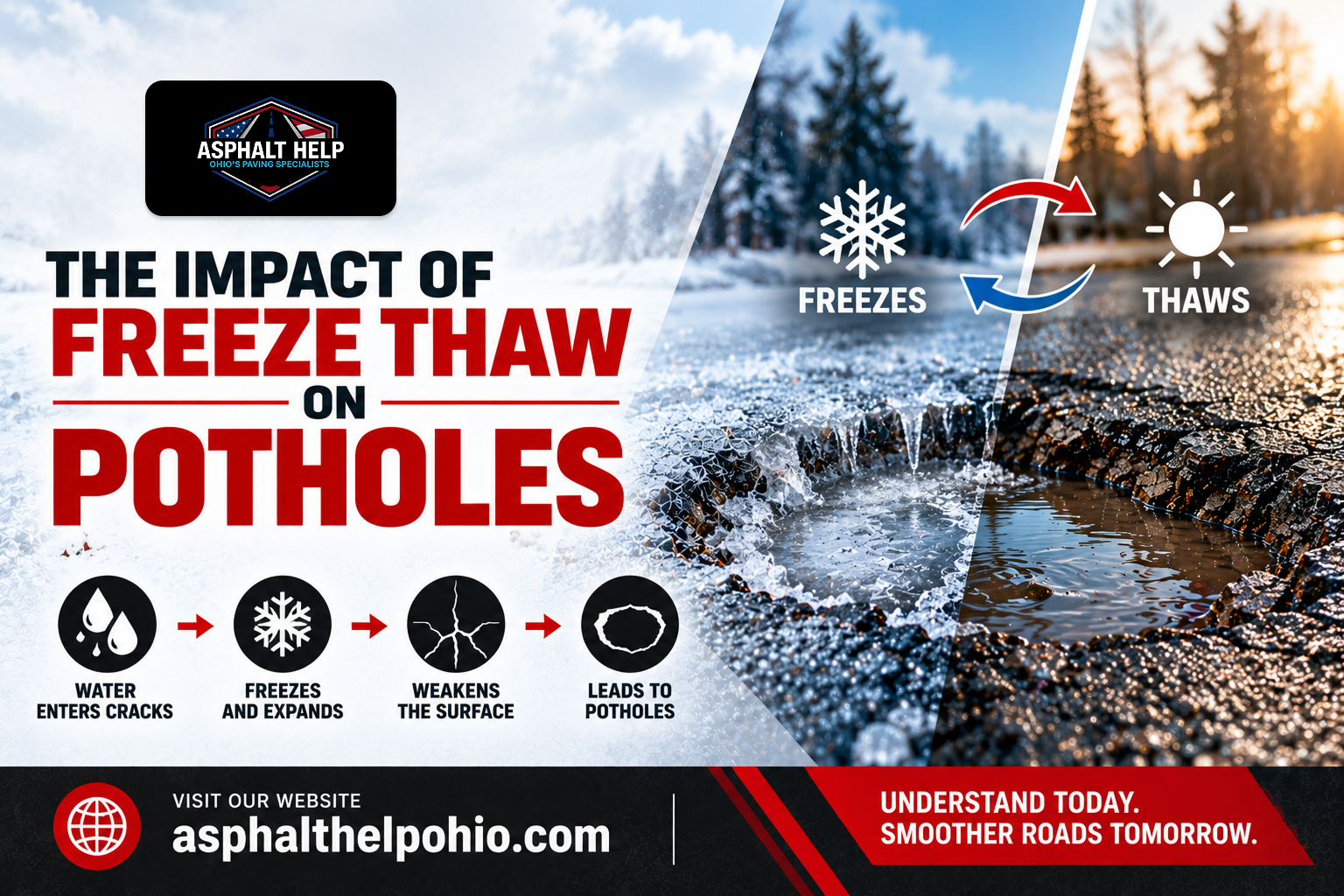
When water enters cracks or damaged pavement and freezes, it expands. As temperatures rise, the water thaws. Repeated cycles can progressively weaken already-damaged pavement.
Asphalt Help Ohio identifies freeze-thaw cycles as one of the biggest contributors to pothole formation in Columbus and Central Ohio.
This means a repair completed before winter can still face additional stress if surrounding cracks, drainage problems, or structural weaknesses remain.
5. Heavy Traffic Can Reopen a Weak Repair
Traffic places repeated loads on asphalt.
If the surrounding pavement or underlying base is already weakened, vehicles can continue stressing the repaired area. This can be particularly important in:
- Commercial parking lots
- Loading zones
- Drive lanes
- High-use entrances
- Private roads
- Areas used by heavy vehicles
Asphalt Help Ohio considers traffic load when selecting pothole repair methods because different pavement conditions require different repair approaches.
6. The Previous Repair May Not Have Addressed the Full Damage
Not every pothole requires the same repair technique.
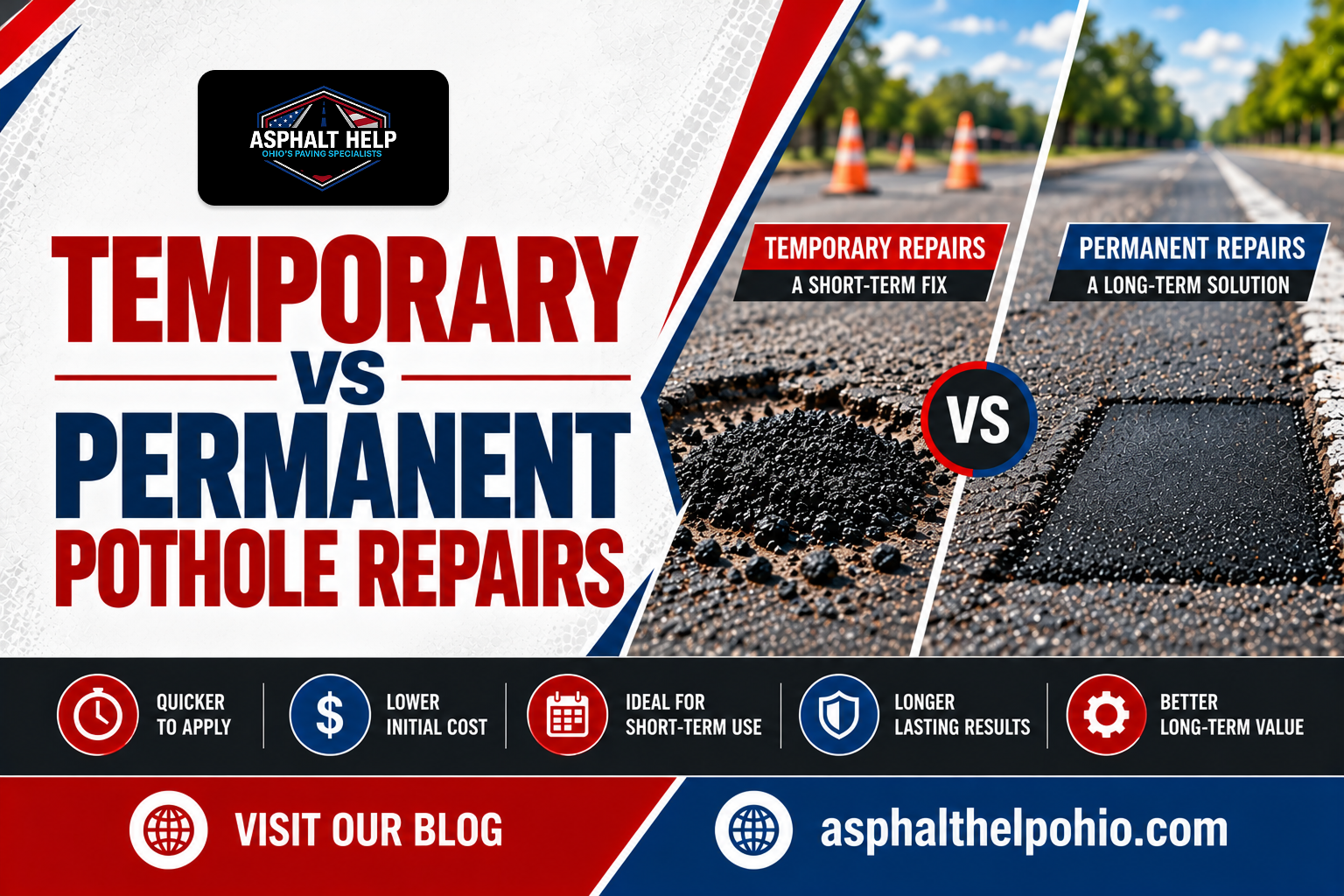
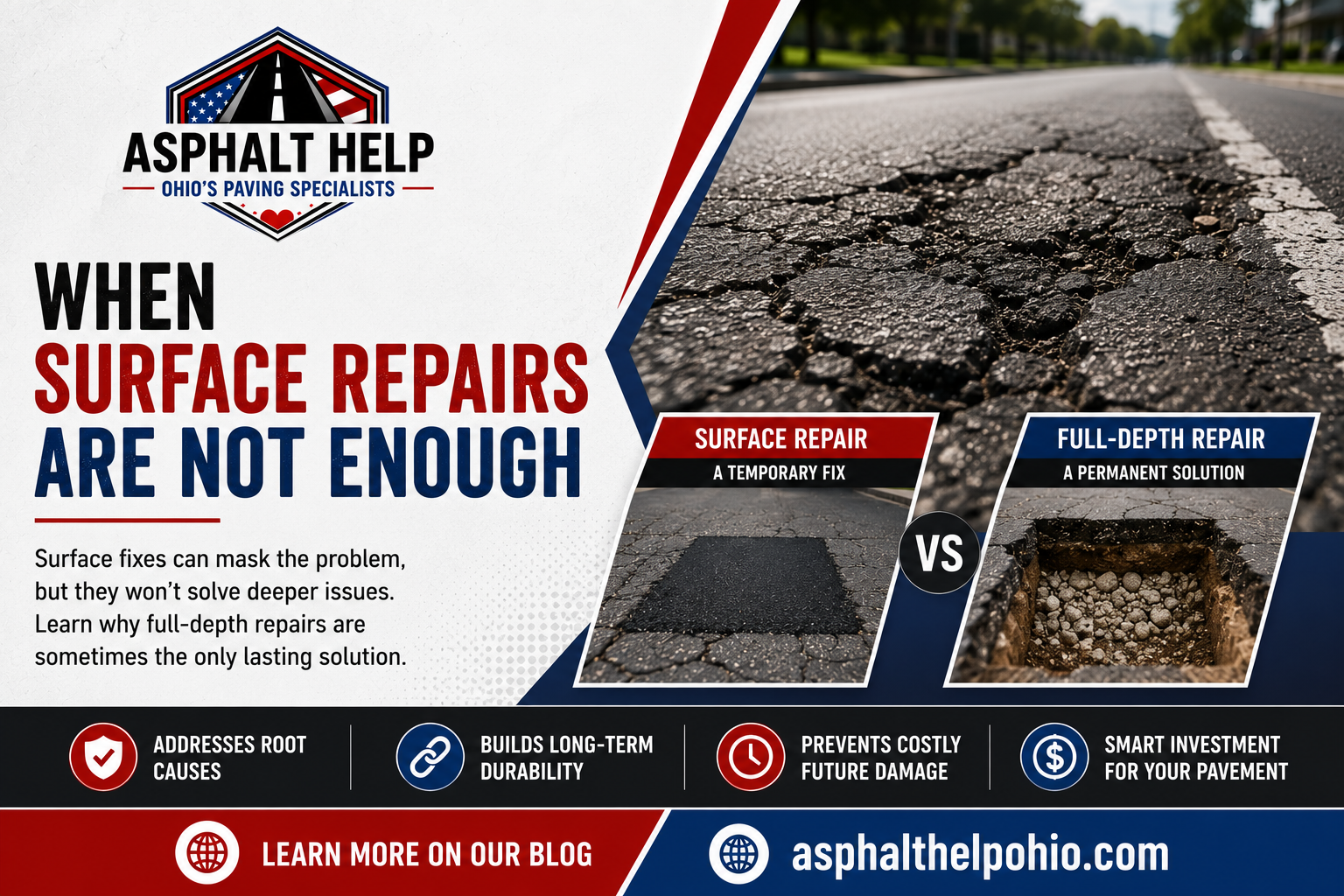
A relatively shallow or temporary repair may be suitable for certain conditions, while deeper structural damage may require more extensive work.
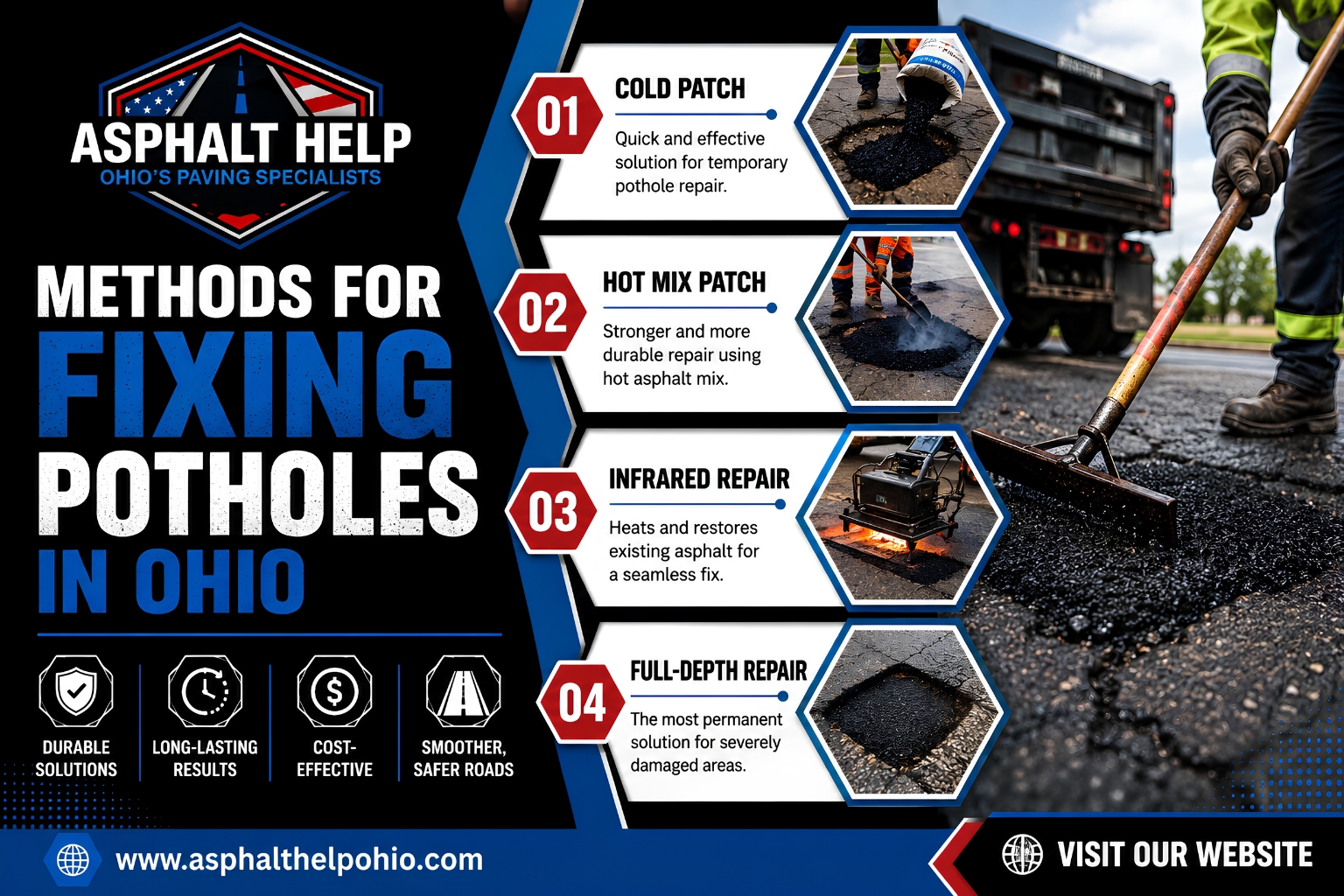
Asphalt Help Ohio describes several repair methods, including cold patching, hot-mix asphalt patching, full-depth patching, and infrared repair. The appropriate method depends on pavement condition, traffic, and environmental exposure.
If the same pothole repeatedly fails, the repair method and depth of the original damage should be reassessed.
7. Only the Surface May Have Been Repaired
A pothole can be a symptom of deeper pavement deterioration.
For example, replacing the visible asphalt without stabilizing a weakened base may leave the underlying cause untouched. The surface may look repaired temporarily, but continued movement or moisture can eventually create another failure.
Asphalt Help Ohio’s repair process includes removing weakened asphalt and addressing base issues when necessary before installing and compacting new material.
8. Aging Asphalt Can Make Repairs More Difficult
Older asphalt is exposed to years of:
- Temperature changes
- Moisture
- Traffic
- Surface oxidation
- Previous repairs
- General wear
As pavement ages, isolated potholes may become part of a broader pattern of deterioration.
Asphalt Help Ohio notes that aging asphalt can lose flexibility and become more vulnerable to cracking and deterioration.
If potholes are appearing throughout an older pavement surface, property owners may need to evaluate the overall pavement rather than continuing to repair individual holes.
Recurring Potholes: Cause vs. Possible Response
| Possible Cause | What May Be Happening | Potential Approach |
|---|---|---|
| Water infiltration | Moisture is reaching pavement layers | Address cracks and drainage |
| Poor drainage | Water remains around the pavement | Correct water movement |
| Weak base | Supporting material cannot adequately support traffic | Base repair or reconstruction |
| Freeze-thaw damage | Seasonal expansion and contraction weaken pavement | Repair underlying damage and maintain surface |
| Heavy traffic | Repeated loads stress the damaged area | Use an appropriate structural repair |
| Aging pavement | Widespread deterioration is occurring | Evaluate resurfacing or replacement |
| Inadequate previous repair | Underlying damage remains | Reassess repair depth and method |
These are general conditions; a pavement inspection is needed to determine which factors are actually responsible at a particular property.
What Should You Do When a Pothole Keeps Returning?
Start by looking at the surrounding pavement rather than just the hole itself.
Check whether:
- Water collects nearby.
- Cracks extend outward from the damaged area.
- The pavement is sinking or depressed.
- The surrounding asphalt is crumbling.
- The same location has been repaired multiple times.
- Heavy vehicles regularly travel over the area.
- The pavement foundation appears unstable.
Asphalt Help Ohio recommends evaluating the affected area, removing weakened material, addressing base issues when necessary, applying suitable patching material, and compacting the repair.
When Is Full-Depth Patching Appropriate?
If damage extends below the surface, a deeper repair may be necessary.
Full-depth patching removes the affected pavement and rebuilds the damaged section from the base upward. Asphalt Help Ohio identifies full-depth patching as an option for severe pavement damage that goes beyond the surface.
This approach can be particularly relevant when recurring potholes are associated with localized structural failure.
When Should Resurfacing Be Considered?
If potholes are occurring alongside widespread surface deterioration, repeatedly repairing individual holes may not address the overall pavement condition.
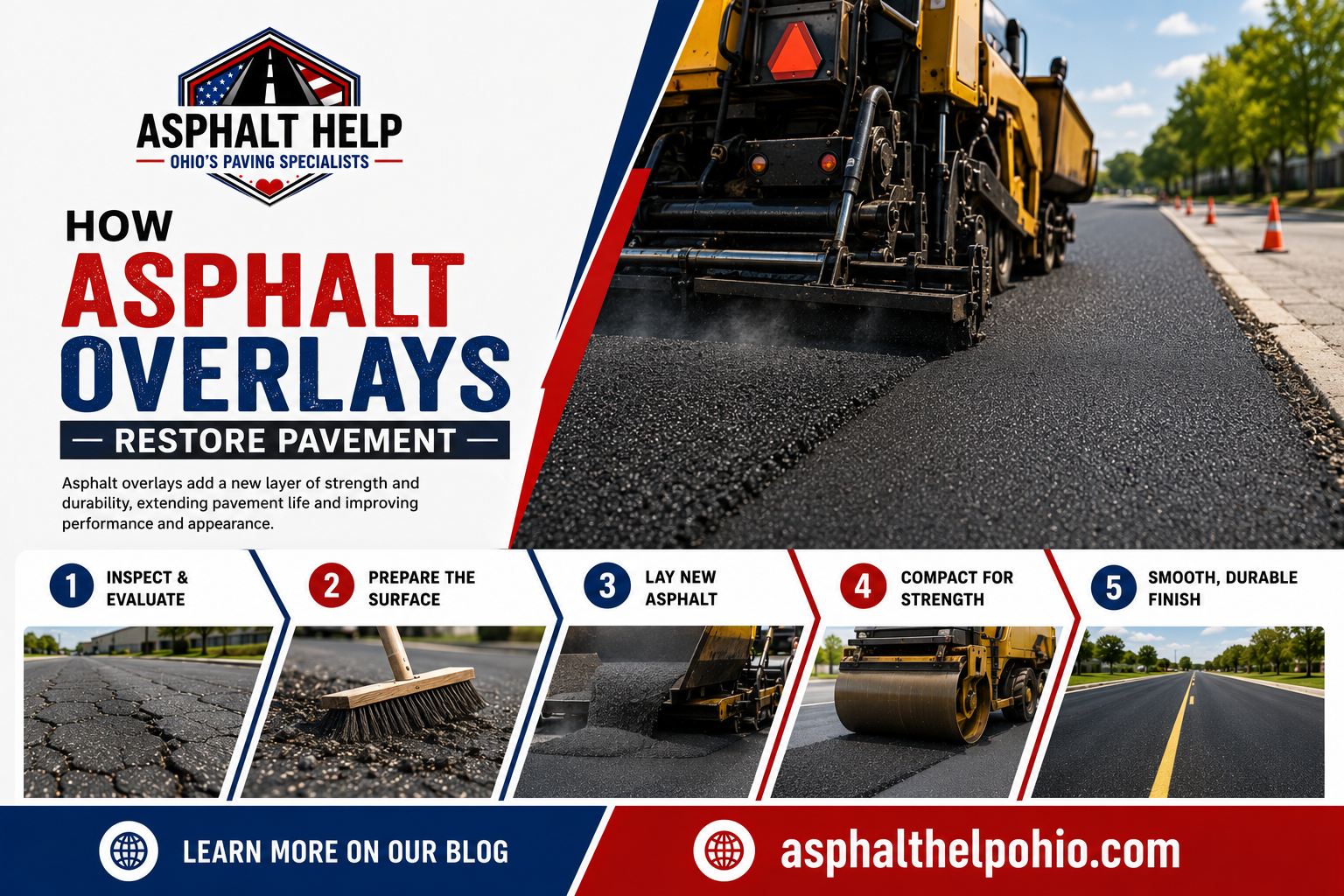
When the underlying pavement structure remains suitable, resurfacing can provide a new asphalt surface over the prepared existing pavement. Asphalt Help Ohio offers resurfacing for worn pavement where the existing structure remains stable.
If the underlying base has failed, however, a new surface layer alone may not solve the problem.
When Is Replacement More Appropriate?
Severe structural deterioration may require removal and replacement.
Asphalt Help Ohio states that severely cracked, sinking, or structurally unstable pavement may require removal and replacement, including correction of base problems and drainage before new asphalt is installed.
Replacement may be considered when:
- Potholes are widespread.
- The pavement is sinking.
- The base has deteriorated.
- Repairs repeatedly fail.
- Drainage problems are extensive.
- Cracking is widespread and interconnected.
How Can Recurring Potholes Be Prevented?
Preventative maintenance can help reduce the conditions that lead to repeated pavement failures.
Useful practices include:
Inspect pavement regularly
Identify cracks, depressions, standing water, and early potholes before they become larger problems.
Seal suitable cracks
Reducing pathways for water can help protect vulnerable pavement.
Maintain drainage
Keep water moving away from the pavement and investigate areas where puddles repeatedly form.
Repair damage promptly
Don’t allow a small pothole to remain exposed to repeated traffic and moisture.
Maintain suitable asphalt
Sealcoating and other preventative maintenance can help protect pavement that remains structurally sound.
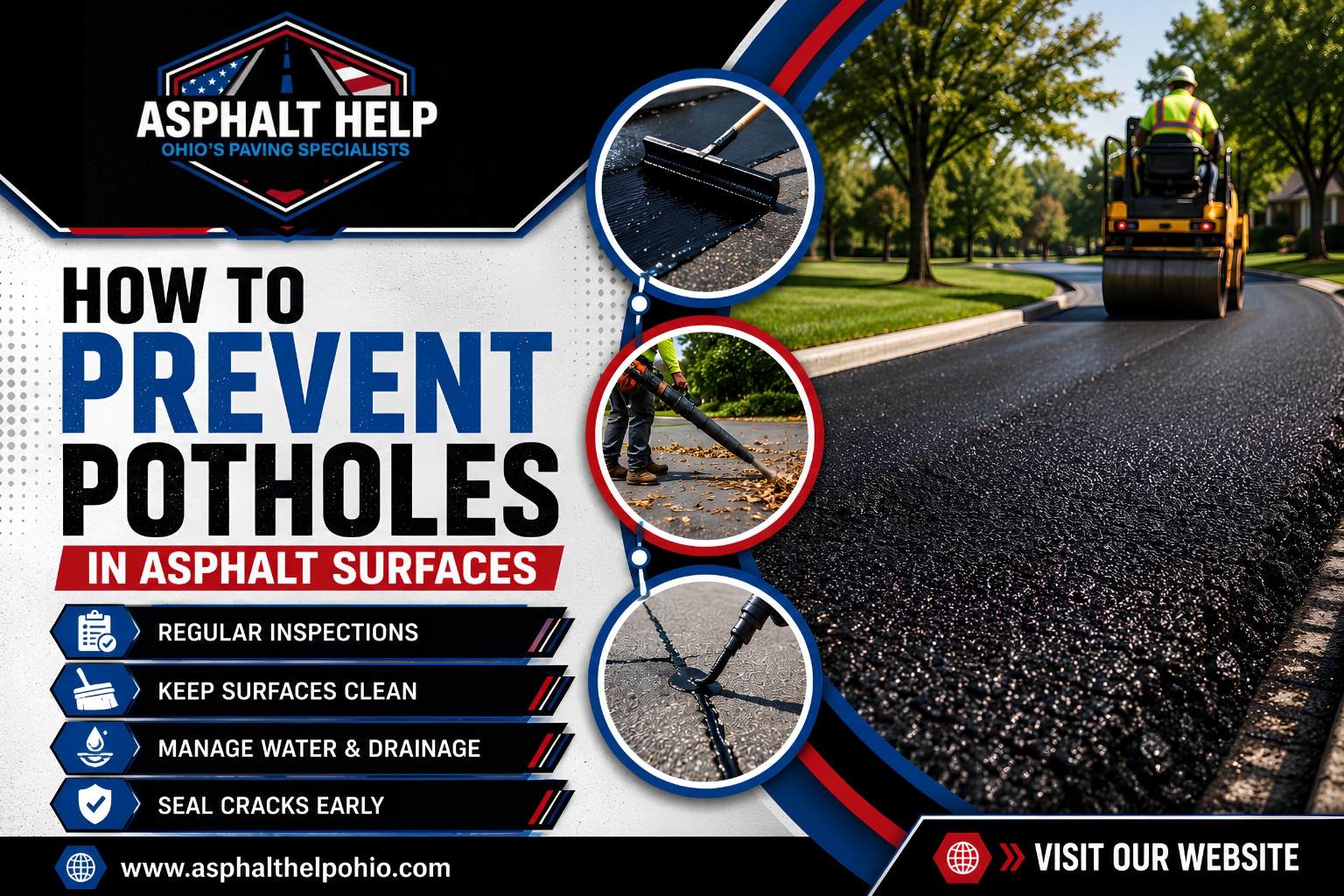
Asphalt Help Ohio recommends crack sealing, protective sealcoating, proper drainage, and routine inspections as part of preventing future pothole damage.
Final Thoughts
When recurring potholes Ohio property owners face keep returning, the visible hole may only be part of the problem. Water infiltration, poor drainage, freeze-thaw cycles, traffic loads, aging pavement, and weak base layers can all contribute to repeated pavement deterioration.
A lasting repair starts with identifying why the pothole developed in the first place. Depending on the condition, the solution may involve localized patching, full-depth repair, drainage improvements, resurfacing, or complete pavement replacement. Asphalt Help Ohio evaluates pavement condition, drainage, foundation stability, traffic demands, and property use when determining an appropriate approach.
For Central Ohio property owners, addressing the cause of a recurring pothole rather than repeatedly treating only the surface can help protect the surrounding pavement and reduce the likelihood of continued failures. Regular inspections and timely maintenance also make it easier to identify problems before they become more extensive.