


What Are the Common Methods for Asphalt Pothole Repair in Ohio? Potholes can develop quickly when water, freeze-thaw cycles, traffic, and pavement deterioration work together. In Ohio, the right pothole repair Ohio method depends on the size of the damaged area, pavement condition, traffic demands, weather, and whether the underlying base has also been affected.
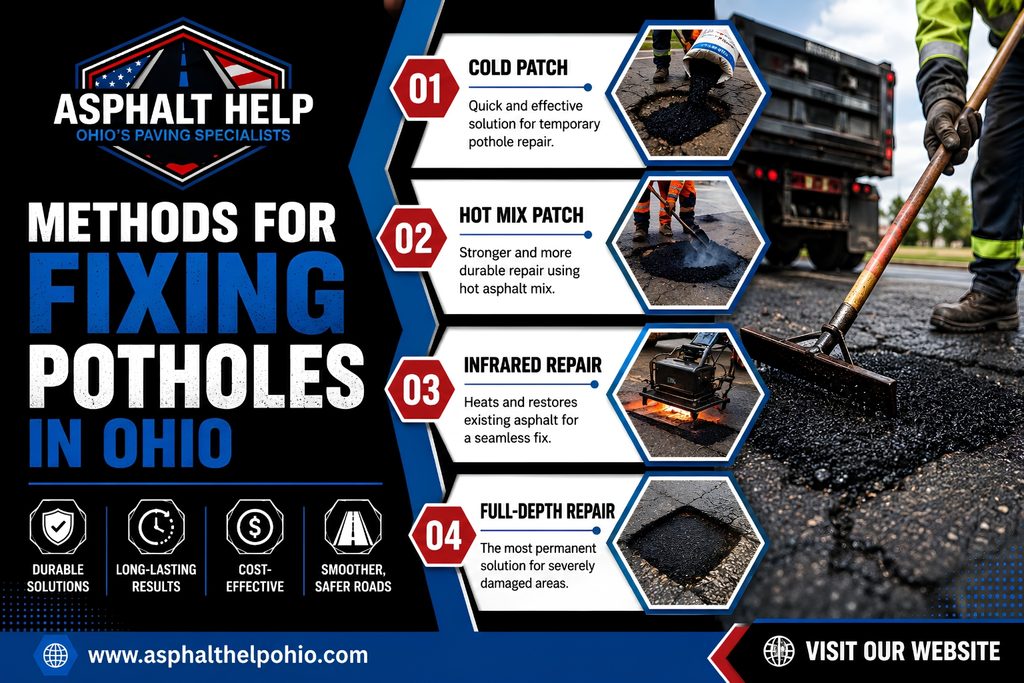
Asphalt Help Ohio explains that effective pothole repair starts with identifying the cause of pavement failure rather than simply filling the visible hole. Its process includes inspecting the damage, removing weakened asphalt, addressing base problems when necessary, applying suitable patching material, and compacting the repair.
1. Cold Patch Repair
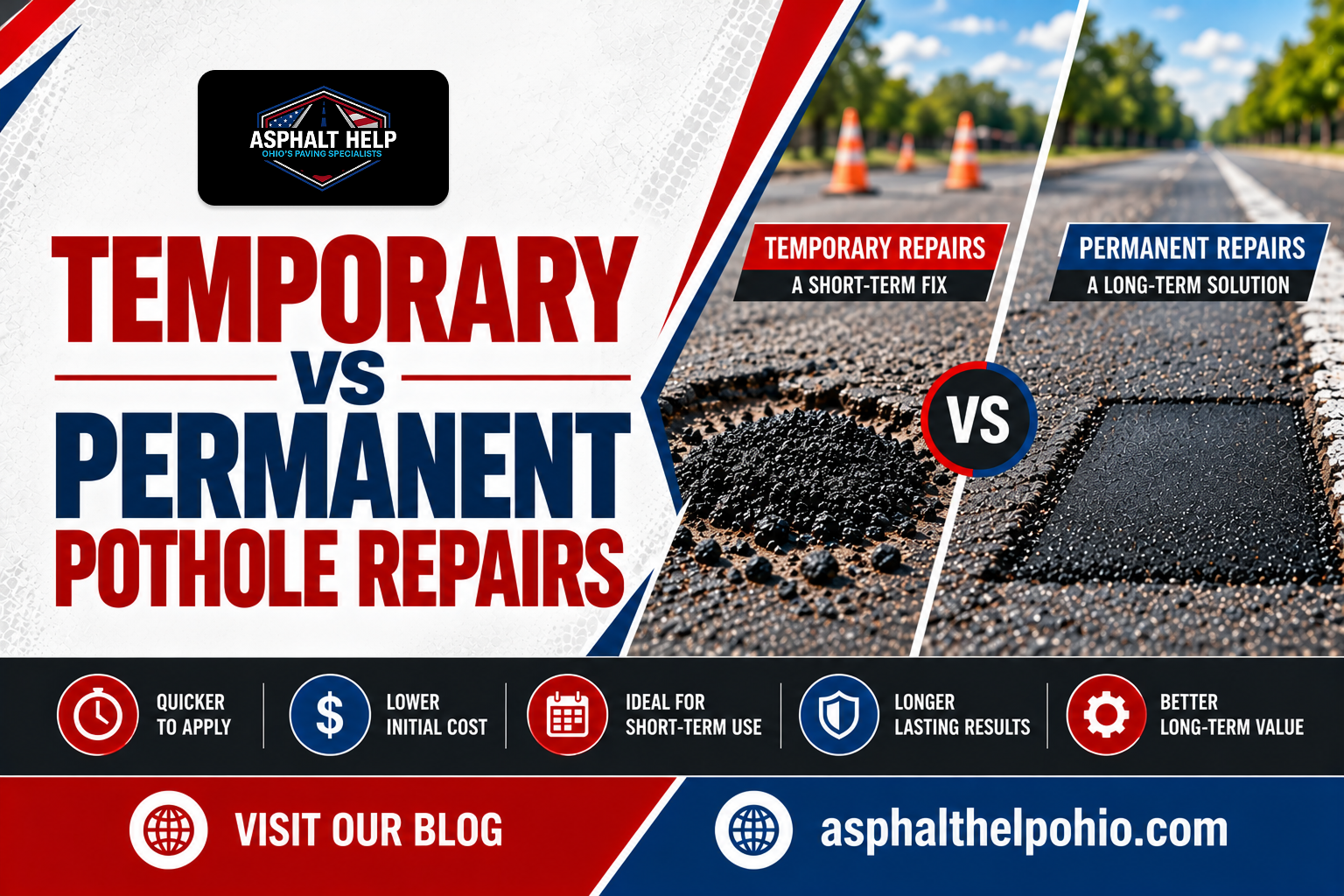
Cold patching is commonly used when an immediate repair is needed, particularly during colder weather.
It can quickly stabilize a damaged area and help reduce further deterioration until a more permanent repair can be completed. Asphalt Help Ohio describes cold patching as a fast repair option for urgent pothole problems, especially during colder months.
Because conditions and pavement requirements vary, cold patching should not automatically be treated as a permanent solution for every pothole.
2. Hot-Mix Asphalt Patching
Hot-mix asphalt patching provides a more durable repair for suitable potholes.
The damaged asphalt is removed and the prepared area is filled with asphalt material before being properly compacted. Asphalt Help Ohio identifies hot-mix asphalt patching as a long-lasting option capable of handling regular traffic and weather exposure.
This method can be appropriate for:
- Residential driveways
- Parking lots
- Drive lanes
- Commercial pavement
- Other localized asphalt damage
3. Full-Depth Patching
Some potholes extend beyond the surface layer.
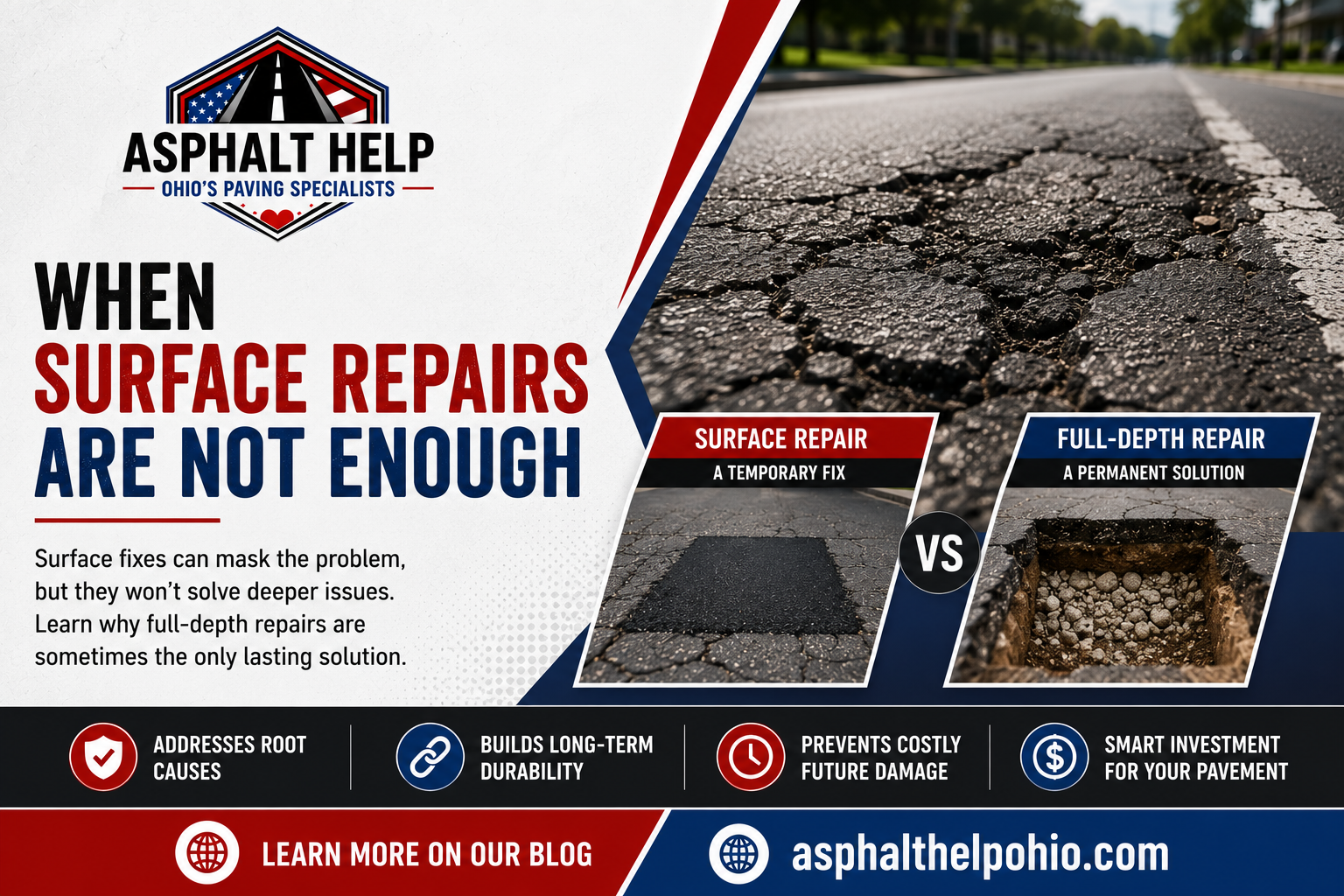
When damage affects the pavement structure, full-depth patching may be necessary. This method involves removing the affected pavement and rebuilding the damaged section from the base upward.
Asphalt Help Ohio describes full-depth patching as an option for severe pavement damage that extends below the surface.
This approach can help address recurring potholes when the underlying pavement structure has been compromised.
4. Infrared Asphalt Repair
Infrared repair is another method available for certain asphalt conditions.
The process heats existing asphalt so new material can be integrated with the surrounding pavement. Asphalt Help Ohio describes infrared repair as a method that can create a seamless connection between existing and new asphalt while providing a smooth finish.
Its suitability depends on the type and extent of pavement damage.
5. Remove the Damaged Material First
A quality pothole repair generally requires more than placing new material over loose asphalt.
Asphalt Help Ohio’s repair process begins by removing damaged and loose pavement before preparing the area for the new patch.
Removing compromised material helps provide a more stable repair area and allows the contractor to evaluate what is happening beneath the surface.
6. Address the Base When Necessary
The asphalt surface depends on the layers beneath it for support.
If water has weakened the base or the underlying material has deteriorated, simply replacing the surface asphalt may not solve the problem.
Asphalt Help Ohio states that its pothole repair process addresses base issues when necessary and stabilizes the base before new patching material is installed.
This is particularly important when potholes repeatedly return in the same location.
7. Proper Compaction Is Essential
After the patching material is installed, proper compaction helps create a stable, even surface.
Asphalt Help Ohio lists compaction as the final stage of its pothole repair process and notes that it helps create proper bonding, durability, and resistance to future damage.
Poorly compacted repairs can be more vulnerable to movement, water infiltration, and premature deterioration.
How to Choose the Right Pothole Repair Method
| Pavement Situation | Potential Repair Method |
|---|---|
| Urgent cold-weather damage | Cold patch |
| Localized pothole with suitable surrounding pavement | Hot-mix asphalt patching |
| Damage extends into pavement structure | Full-depth patching |
| Suitable surface-level repair | Infrared repair |
| Repeated failure from weak base | Base correction and structural repair |
| Widespread pavement deterioration | Resurfacing or replacement evaluation |
The table provides general guidance. A professional assessment is needed to determine which method is appropriate for a specific pavement.
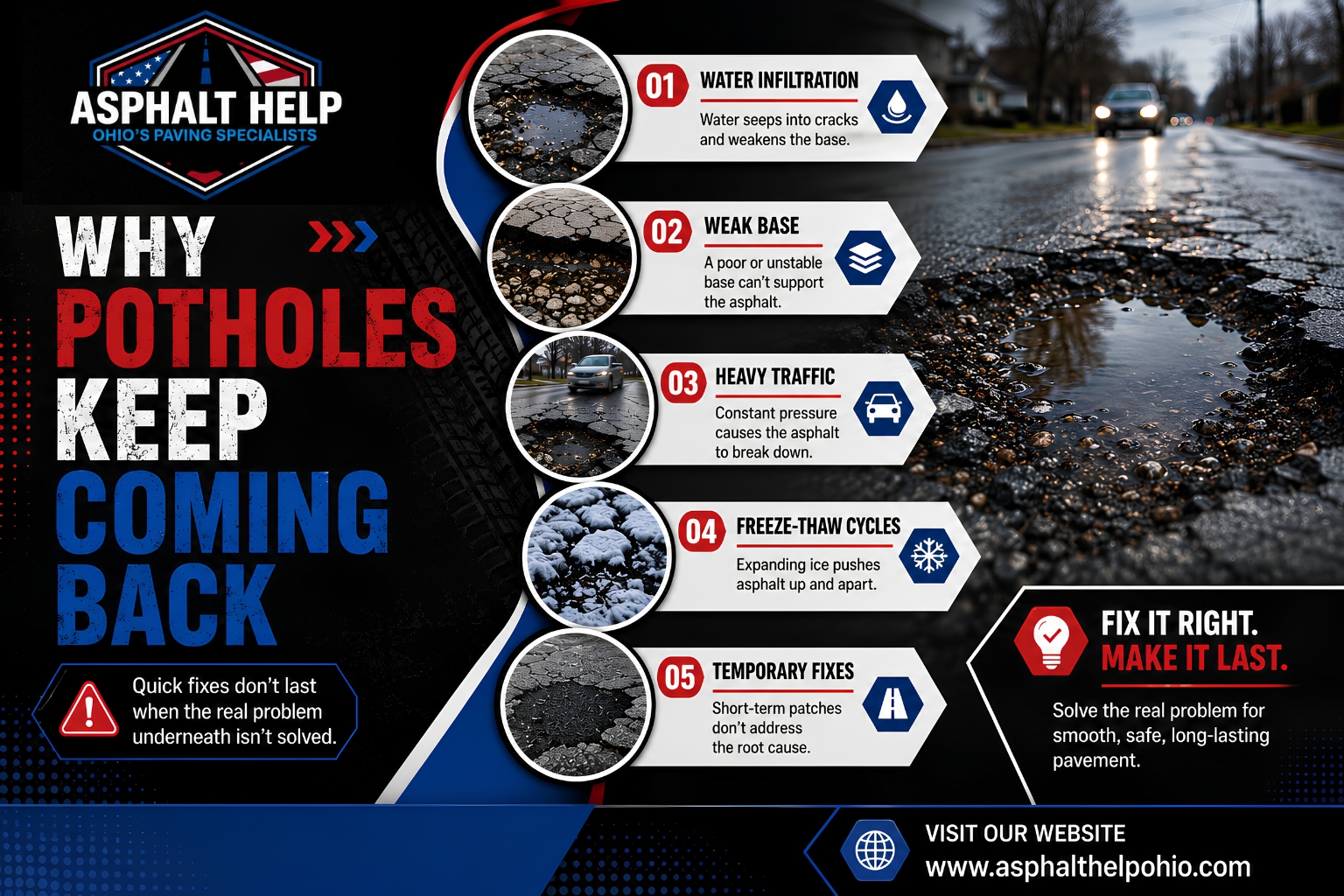
Why Potholes Keep Coming Back
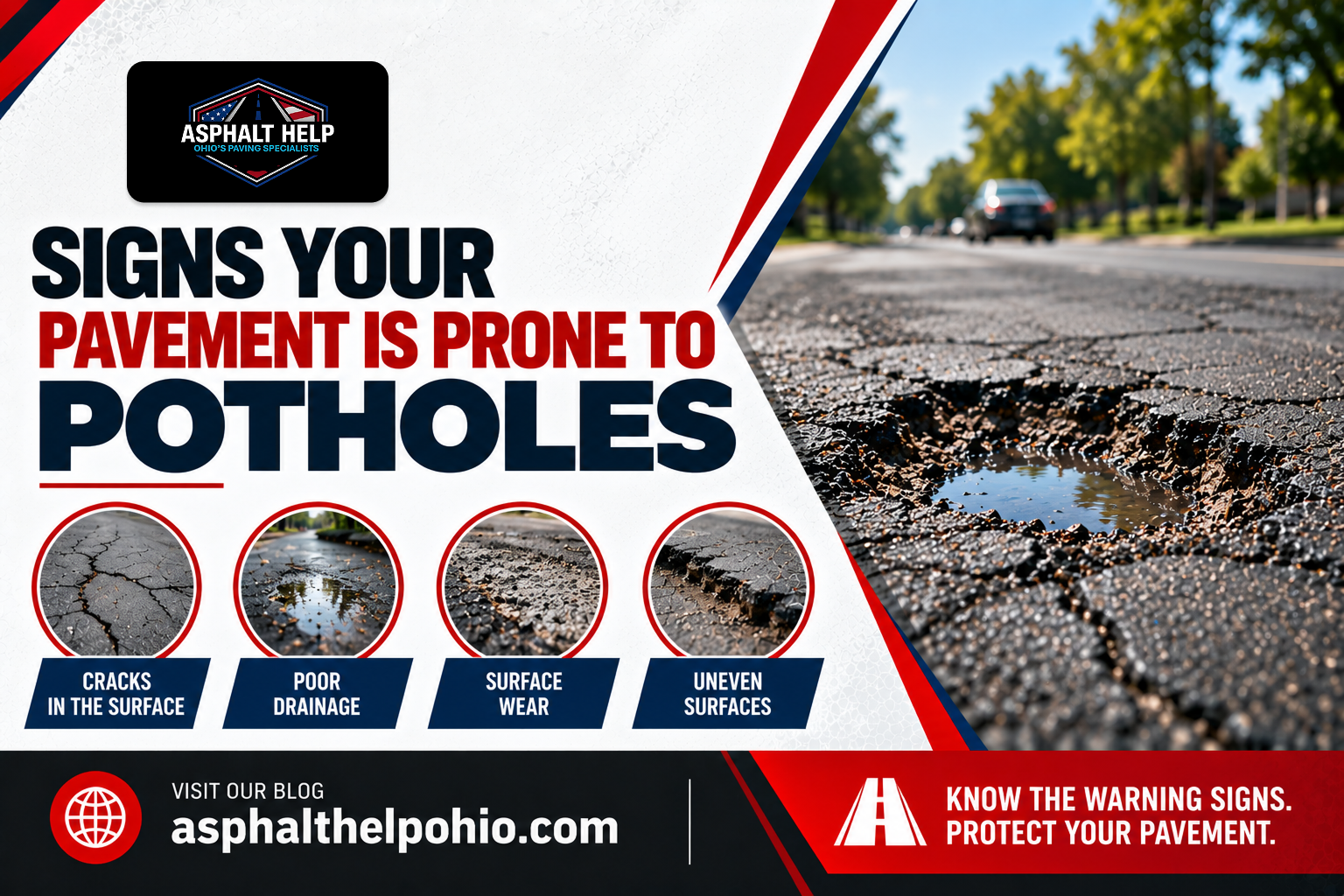
A pothole that repeatedly returns may indicate an underlying problem.
Possible contributors include:
- Water infiltration
- Poor drainage
- Weak base material
- Heavy traffic
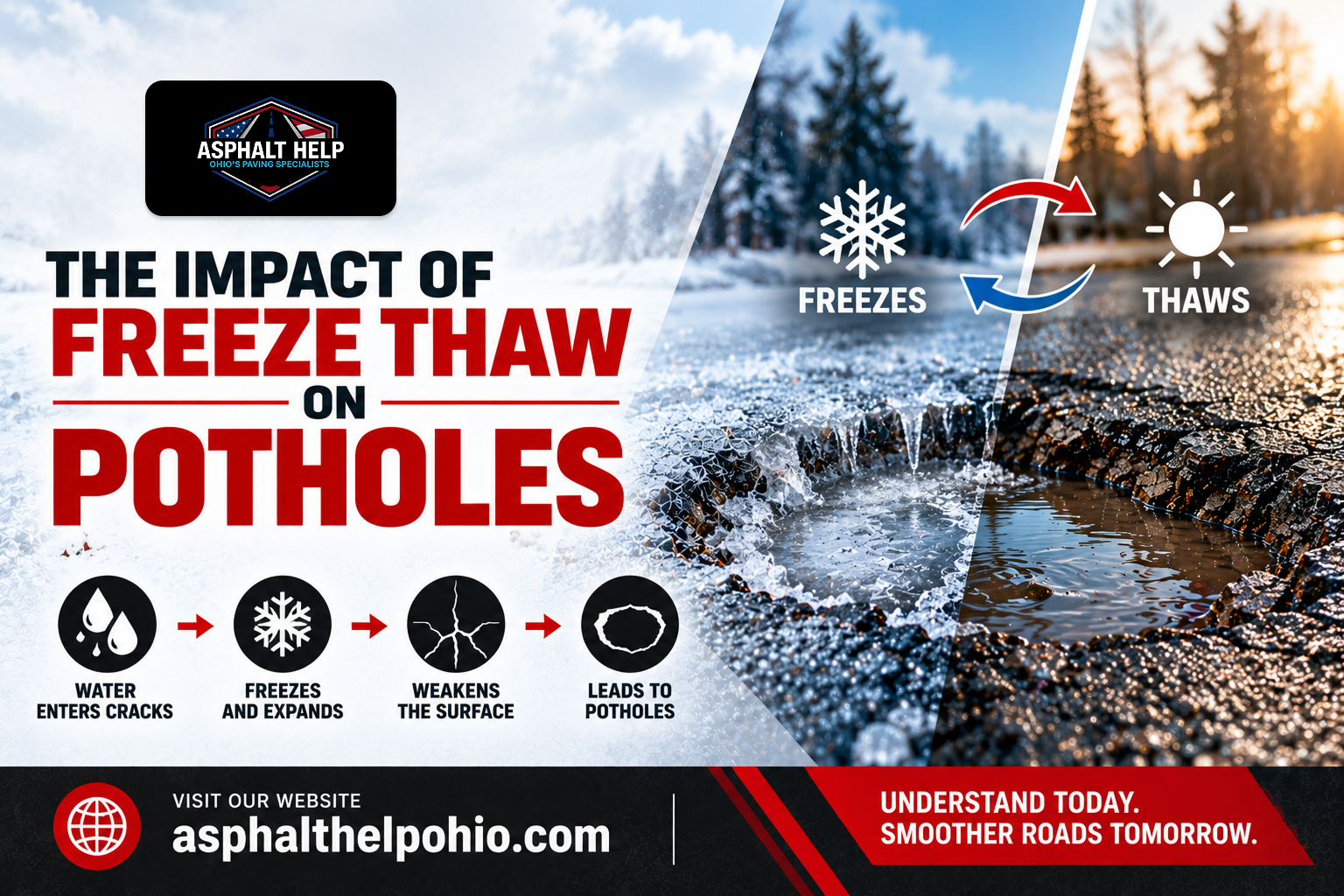
- Freeze-thaw cycles
- Aging asphalt
- Previous inadequate repairs
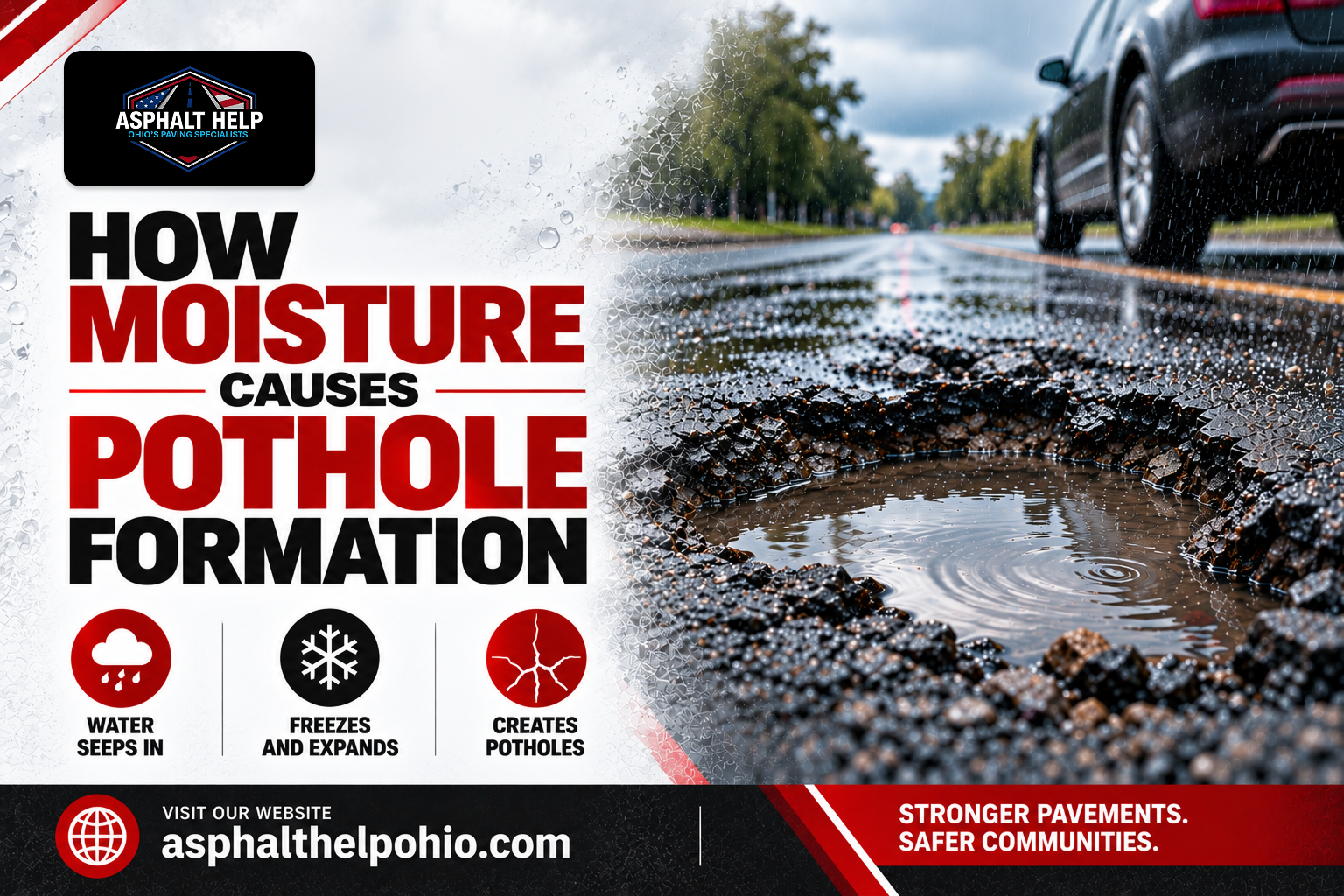
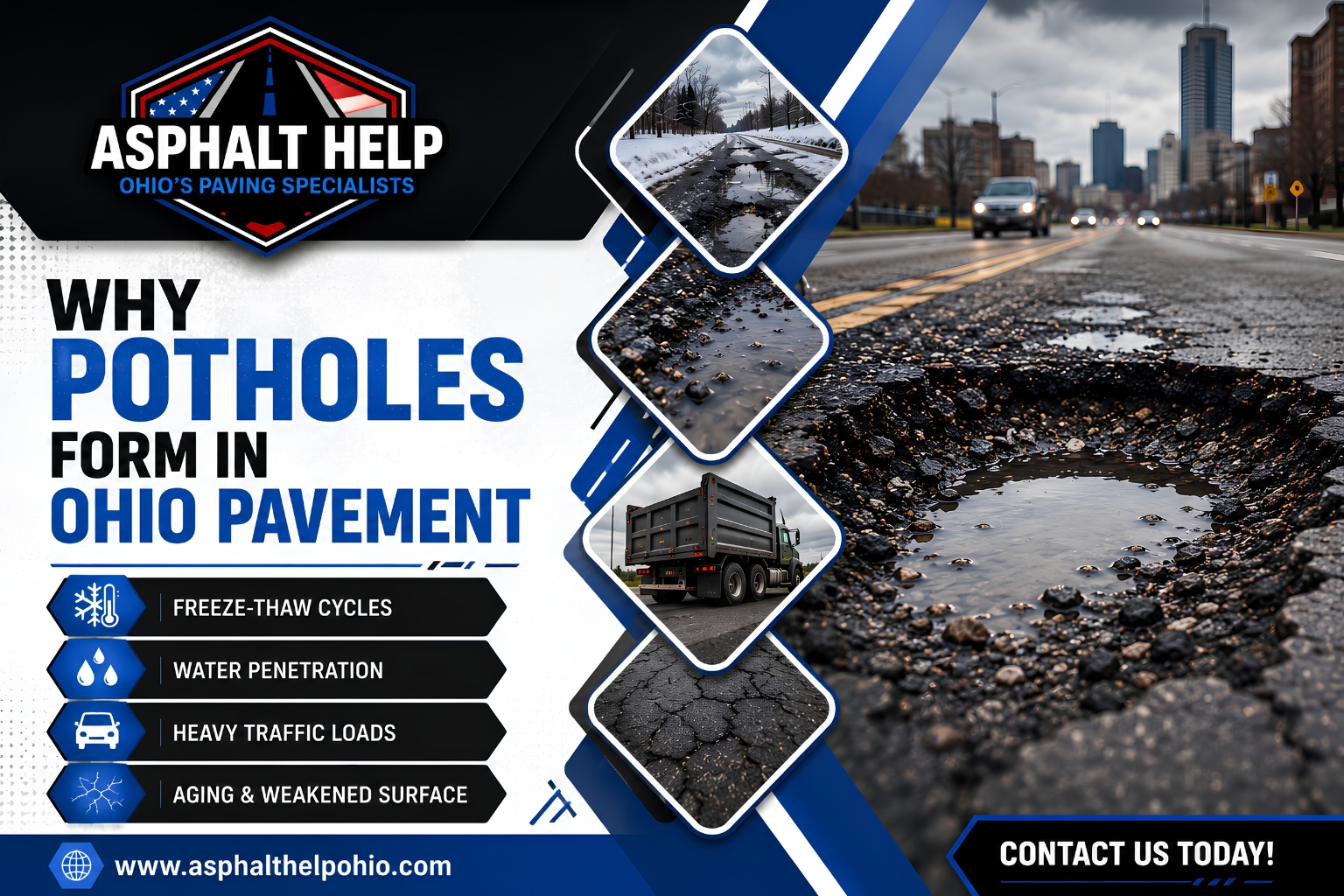
Asphalt Help Ohio explains that potholes can result from moisture intrusion, traffic pressure, Ohio’s freeze-thaw cycles, poor drainage, aging asphalt, and weak or improperly installed base layers.
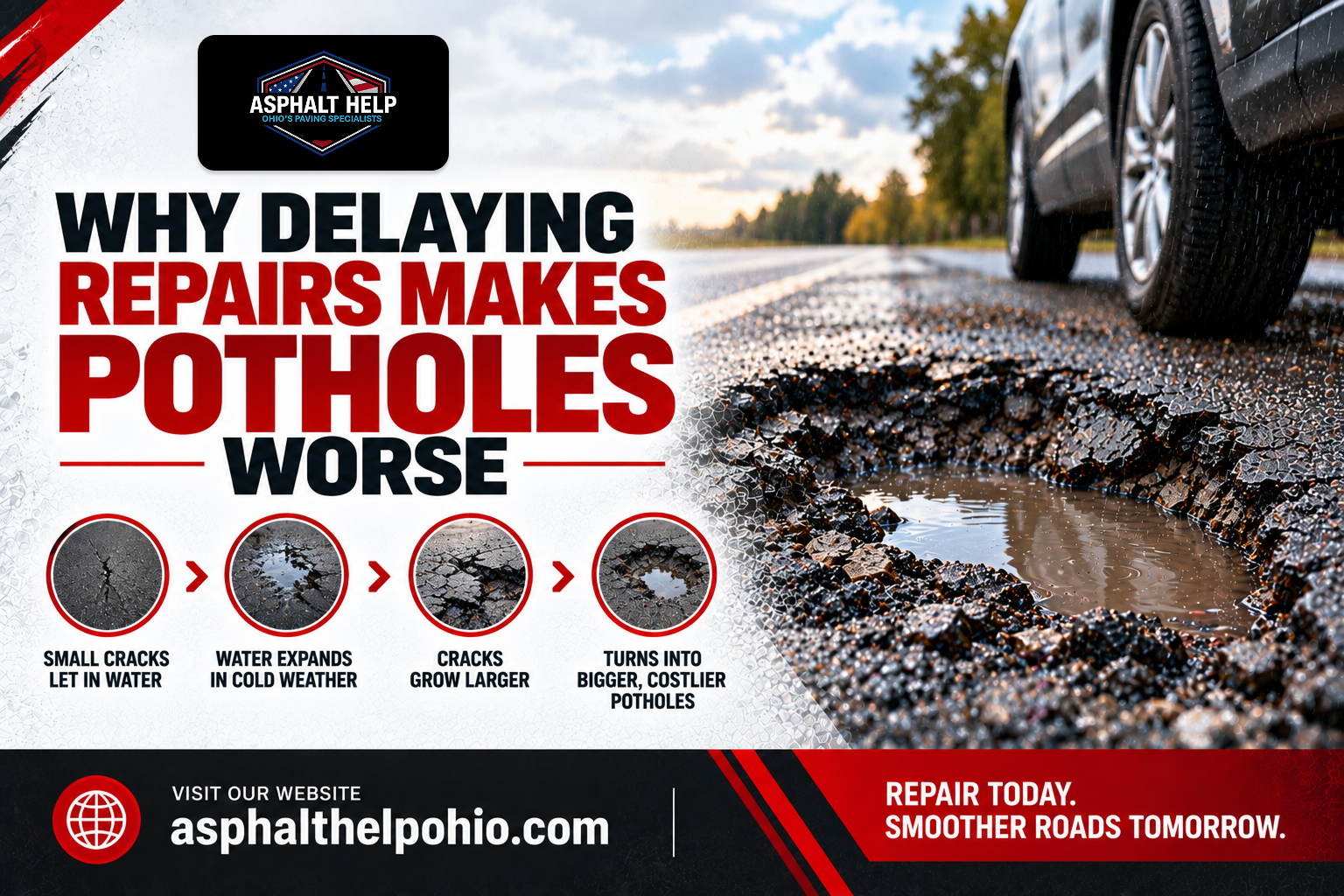
If the underlying cause isn’t addressed, repeatedly filling the visible hole may not provide a lasting result.
When Is Patching Enough?
Patching can be appropriate when damage is localized and the surrounding pavement remains stable.
For example, an isolated pothole surrounded by relatively sound asphalt may be repaired without replacing the entire pavement surface.
Asphalt Help Ohio provides pothole patching for residential driveways, commercial parking lots, private roads, and industrial pavement surfaces.
When Should You Consider Resurfacing?
If potholes are accompanied by widespread surface wear, repeated patching may no longer be the most appropriate approach.
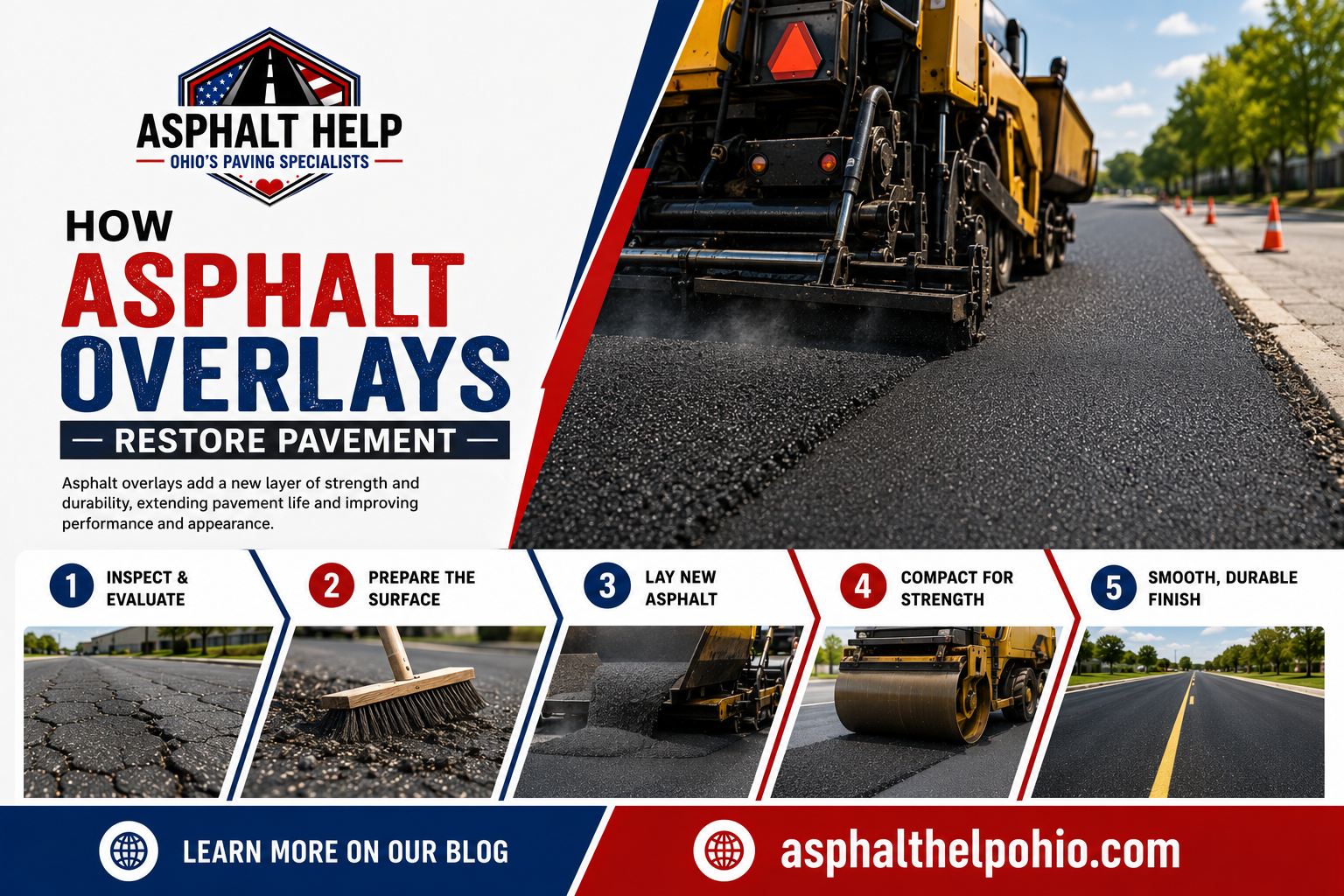
Asphalt Help Ohio explains that resurfacing can restore worn pavement when the existing structure remains sufficiently stable. The process involves preparing the existing surface before applying a new asphalt layer.
Resurfacing may be considered when:
- Surface deterioration is widespread
- Local repairs are becoming frequent
- The pavement foundation remains stable
- The surface needs broader restoration
When Is Replacement Necessary?
If pavement has severe structural deterioration, resurfacing may not address the underlying failure.
Asphalt Help Ohio states that severely cracked, sinking, or structurally unstable pavement may require removal and replacement. The process can include correcting base problems, improving drainage, and rebuilding the asphalt from the foundation upward.
How to Prevent Future Potholes
Repairing existing potholes is only one part of pavement maintenance.
Property owners can also:
- Inspect pavement regularly
- Fill suitable cracks promptly
- Maintain drainage
- Keep pavement clean
- Address standing water
- Apply appropriate sealcoating
- Repair small areas of deterioration early
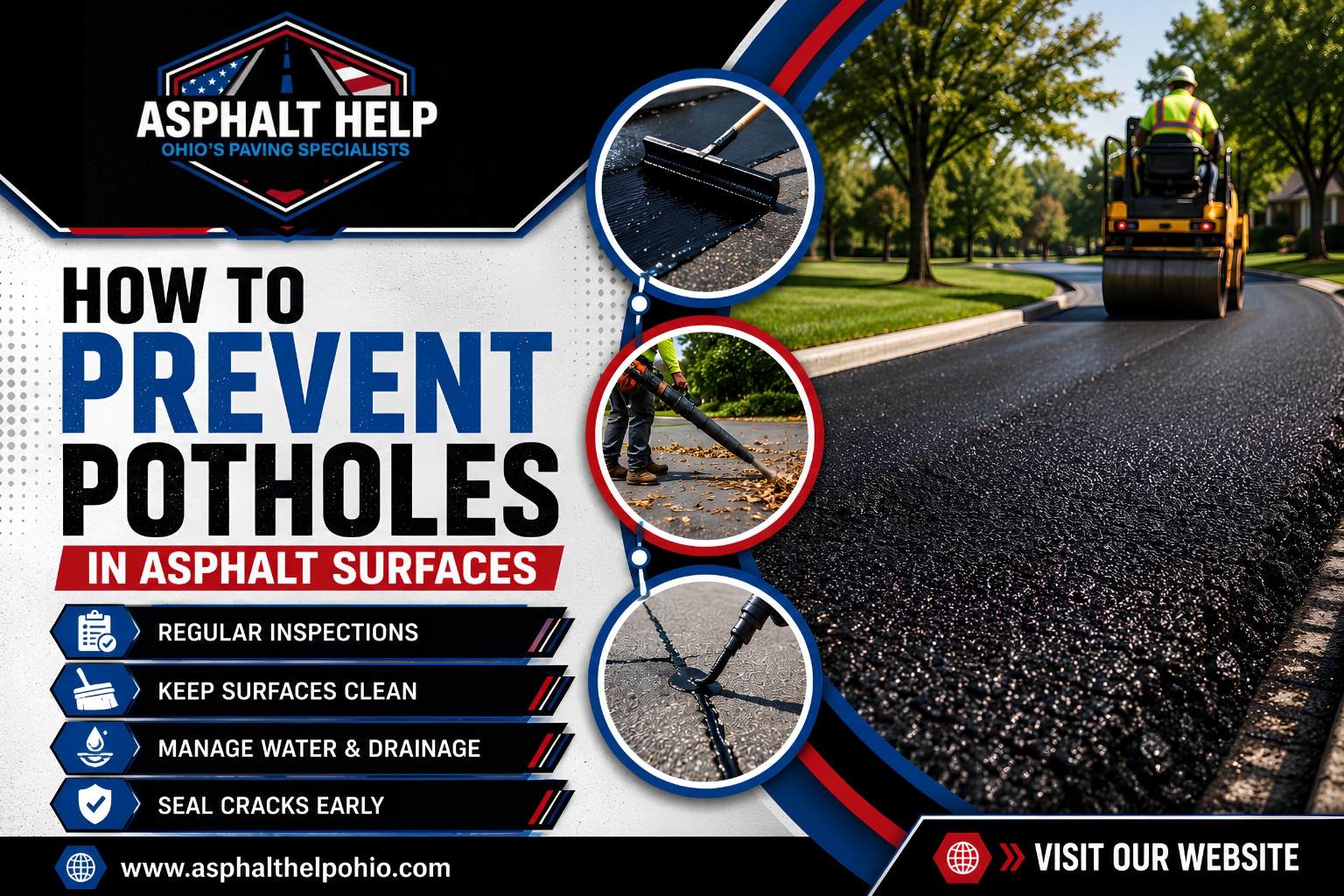
Asphalt Help Ohio recommends crack filling, sealcoating, drainage maintenance, and routine inspections as preventative measures.
Final Thoughts
Effective pothole repair Ohio requires more than filling a hole. The appropriate method depends on the depth and extent of damage, pavement condition, traffic demands, weather, drainage, and the condition of the supporting base.
Cold patching can provide a quick solution for urgent situations, while hot-mix asphalt can provide a more durable localized repair. Full-depth patching may be appropriate when damage extends into the pavement structure, and infrared repair can be useful for certain surface conditions.
For widespread pavement deterioration, resurfacing or full replacement may need to be considered instead of continuing with isolated repairs. Asphalt Help Ohio evaluates pavement condition, drainage, foundation stability, and traffic requirements to determine an appropriate repair strategy.
Addressing potholes early, maintaining drainage, and keeping up with crack and pavement maintenance can help reduce the likelihood of recurring damage and support longer-lasting asphalt performance in Ohio.