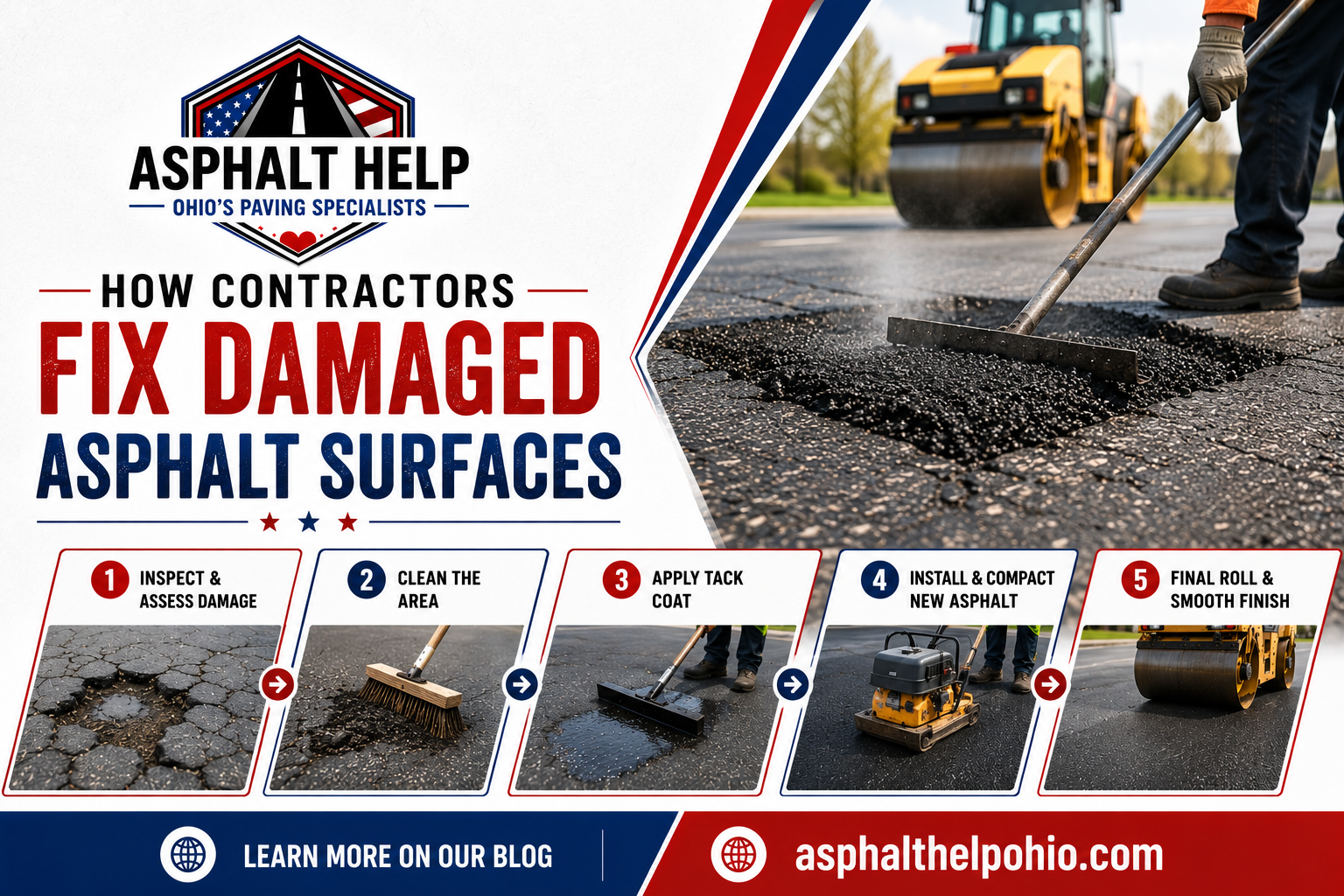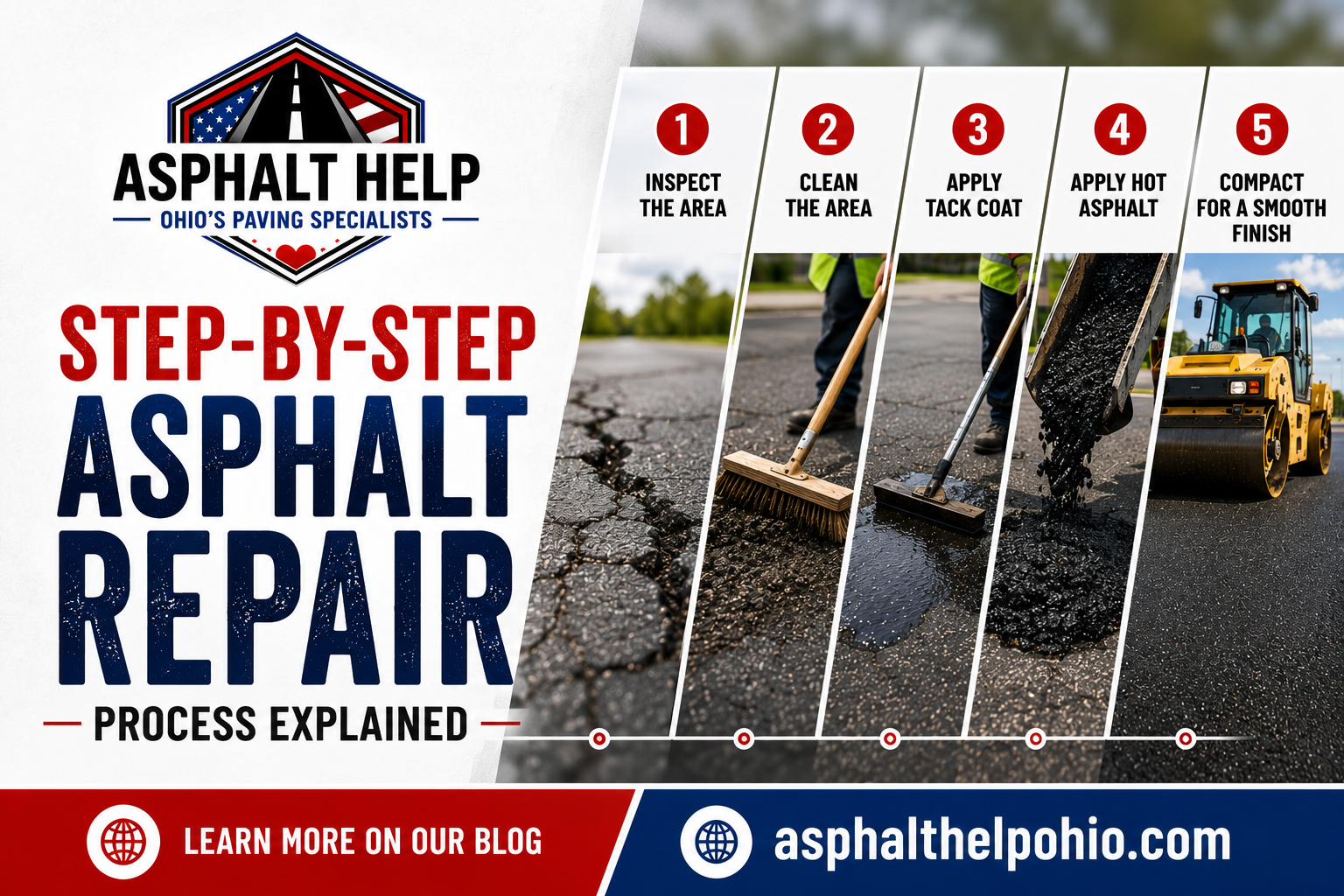



Have you ever wondered what actually happens when professionals repair damaged asphalt? While many property owners only see the finished surface, a successful repair involves much more than filling a crack or covering a pothole. Professional asphalt repairs follow a structured process that identifies the root cause of pavement damage, restores structural integrity, and helps prevent future deterioration. When completed correctly, asphalt repairs can significantly extend the life of your driveway, parking lot, or roadway while improving safety and appearance.
If you’re searching for asphalt repair services Ohio, understanding the repair process can help you make informed decisions about maintaining your pavement. At Asphalt Help Ohio, every repair begins with a detailed evaluation of the pavement condition, drainage, and foundation before recommending the appropriate repair method. The company provides structural asphalt repairs, pothole repair, asphalt patching, resurfacing, crack filling, driveway repair, parking lot repair, and preventive maintenance for residential, commercial, and municipal properties throughout Central Ohio.
Why Professional Asphalt Repairs Matter
Asphalt naturally experiences wear from traffic, moisture, UV exposure, and Ohio’s freeze-thaw cycles. Small problems can quickly develop into larger structural failures when ignored.
Professional repairs help:
- Restore pavement strength
- Improve driving safety
- Prevent water intrusion
- Extend pavement lifespan
- Improve curb appeal
- Reduce long-term maintenance needs
According to Asphalt Help Ohio, professional repairs focus not only on restoring the visible surface but also on correcting underlying issues such as poor drainage, weakened base layers, and structural instability to improve long-term pavement performance.
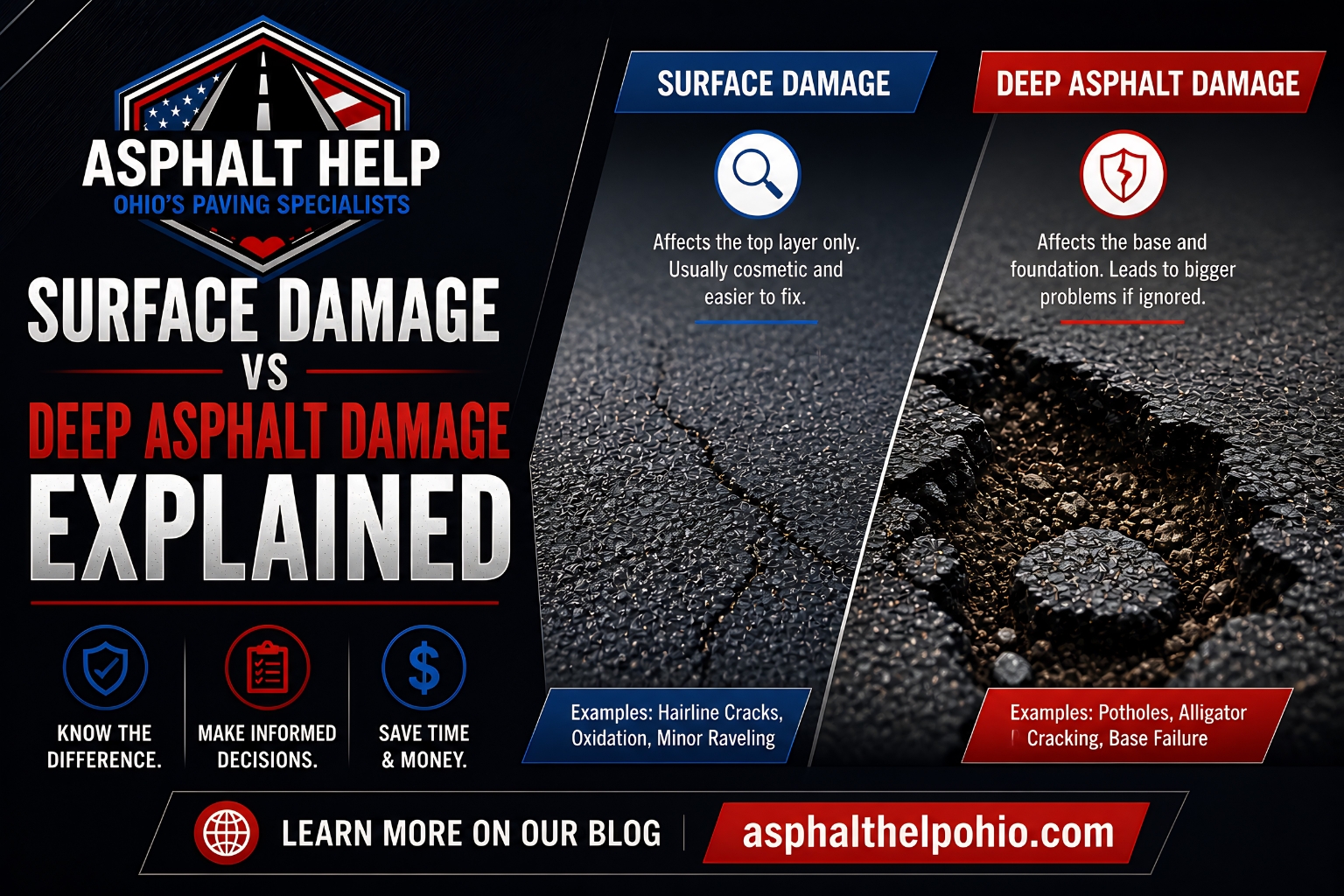
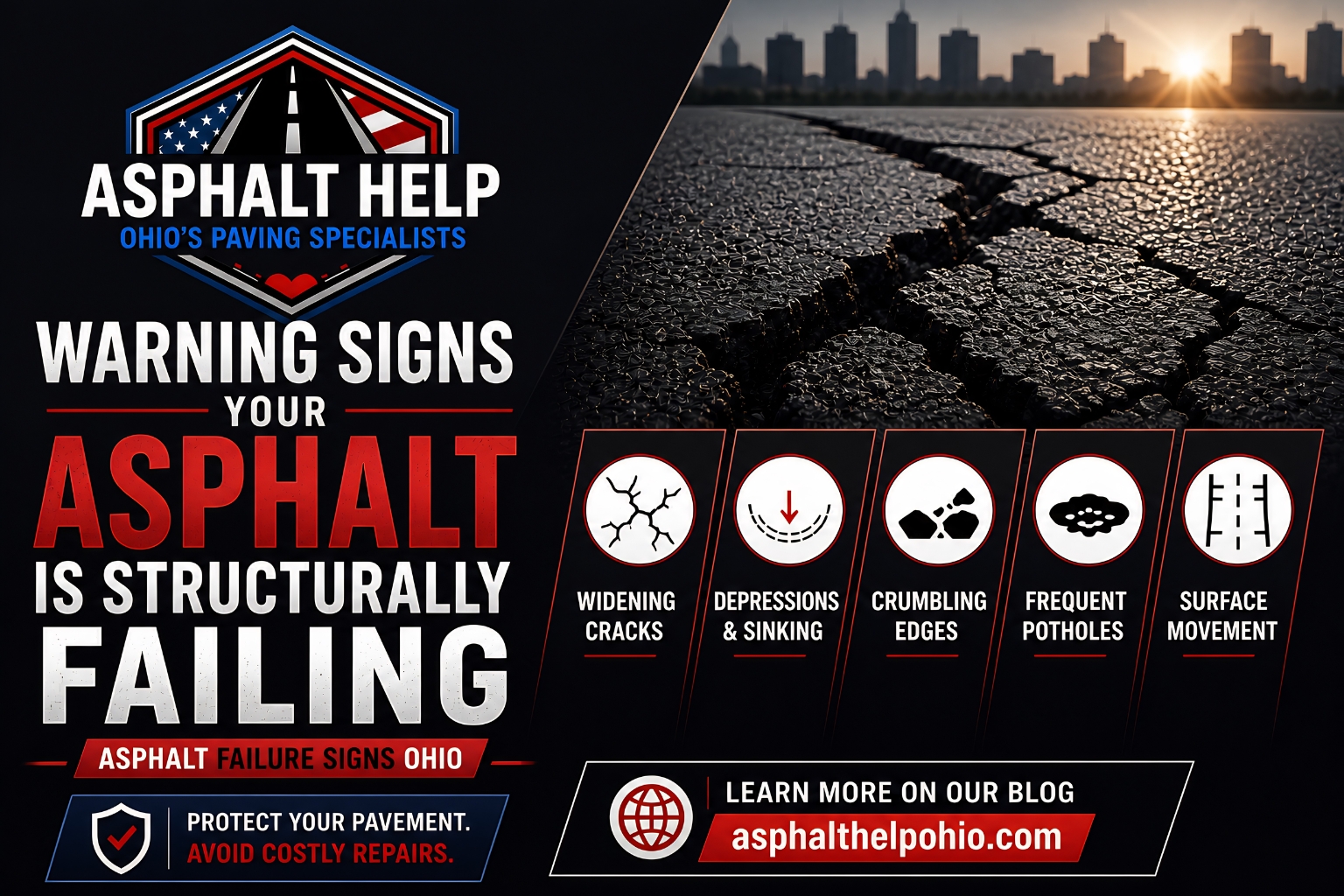
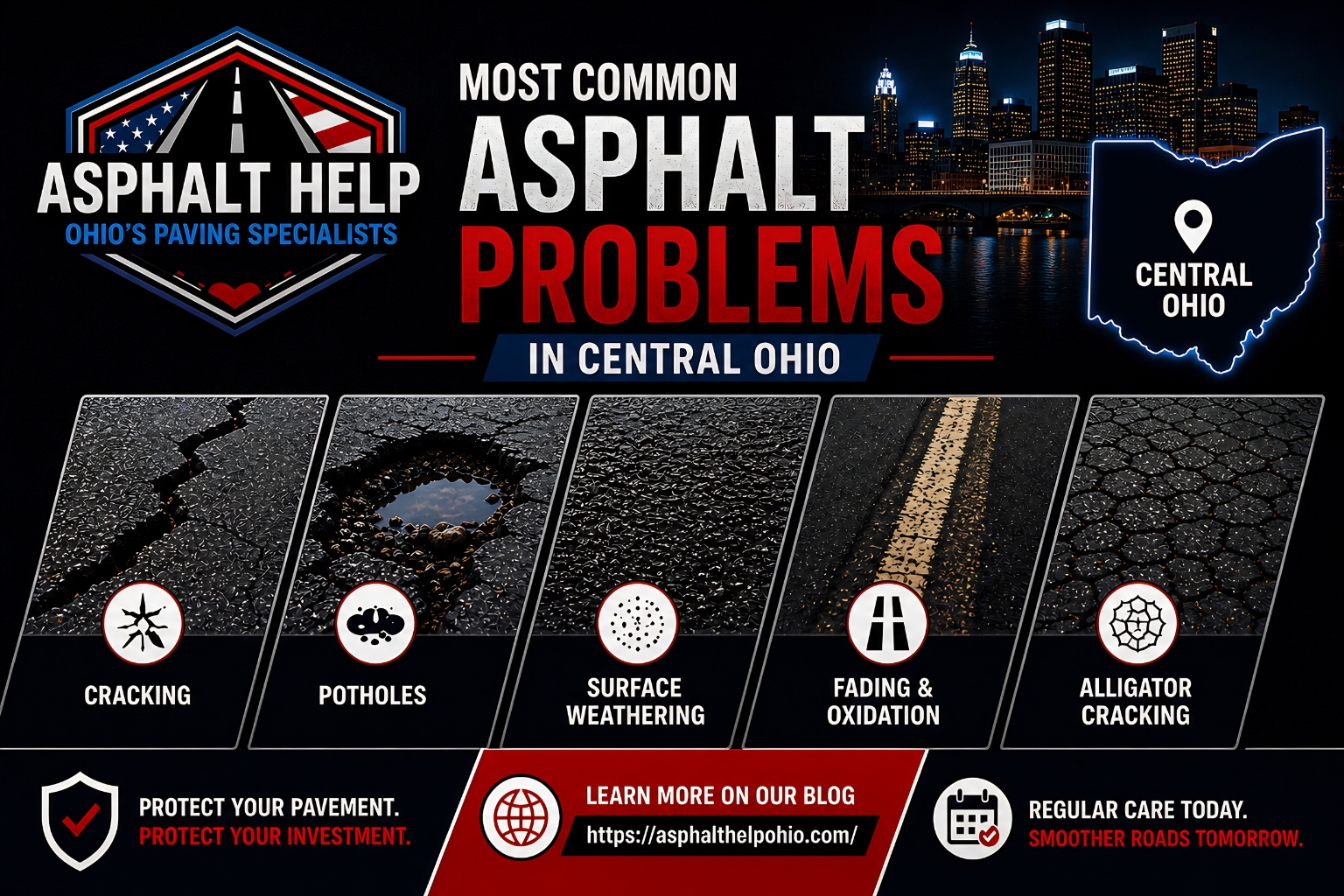
Common Signs Your Asphalt Needs Repairs
Before repairs begin, contractors evaluate visible signs of deterioration.
Common warning signs include:
- Surface cracks
- Potholes
- Alligator cracking
- Rutting
- Edge deterioration
- Standing water
- Surface depressions
- Uneven pavement
- Loose aggregate
- Faded and weathered asphalt
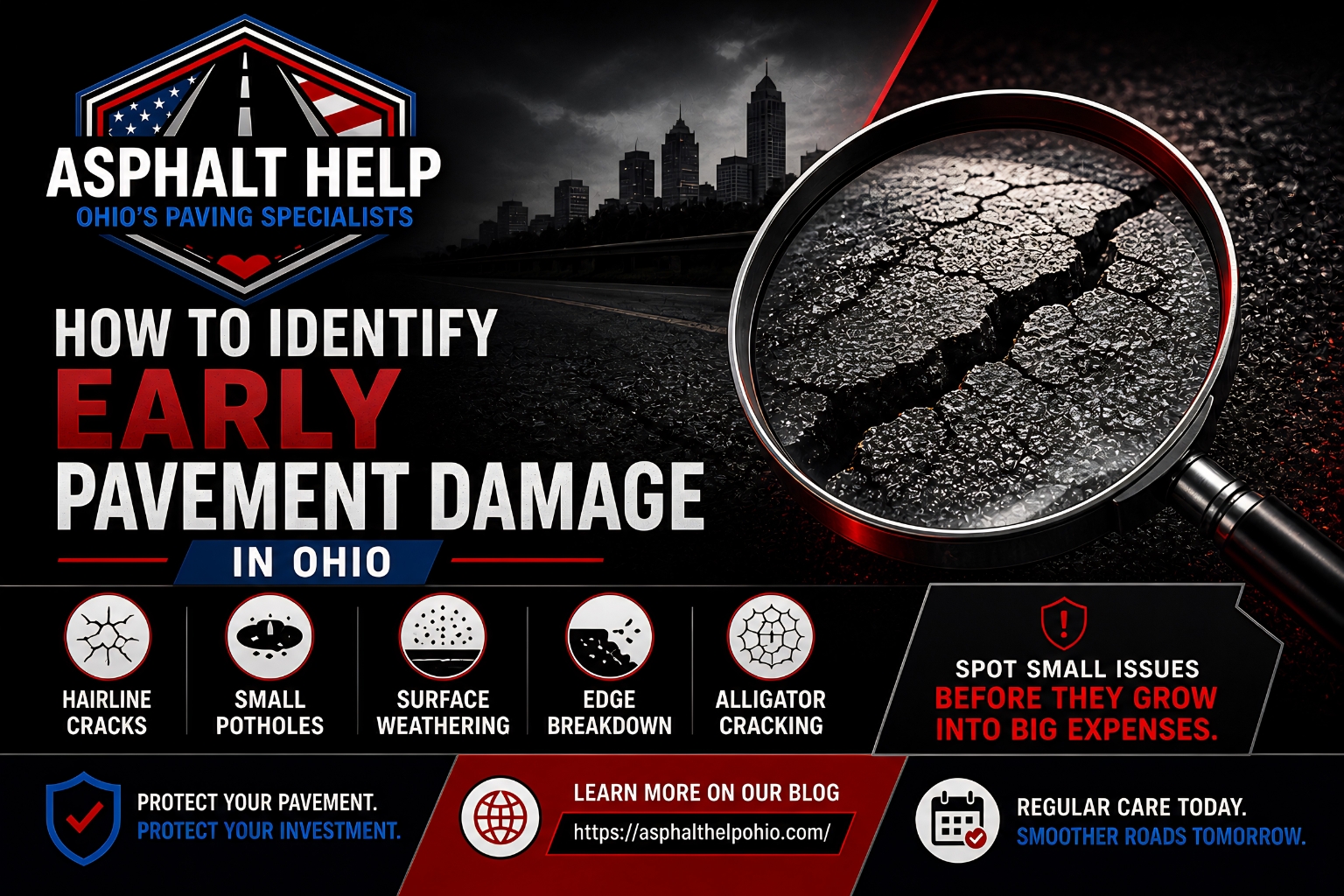
Recognizing these signs early allows repairs to be completed before more extensive reconstruction becomes necessary.
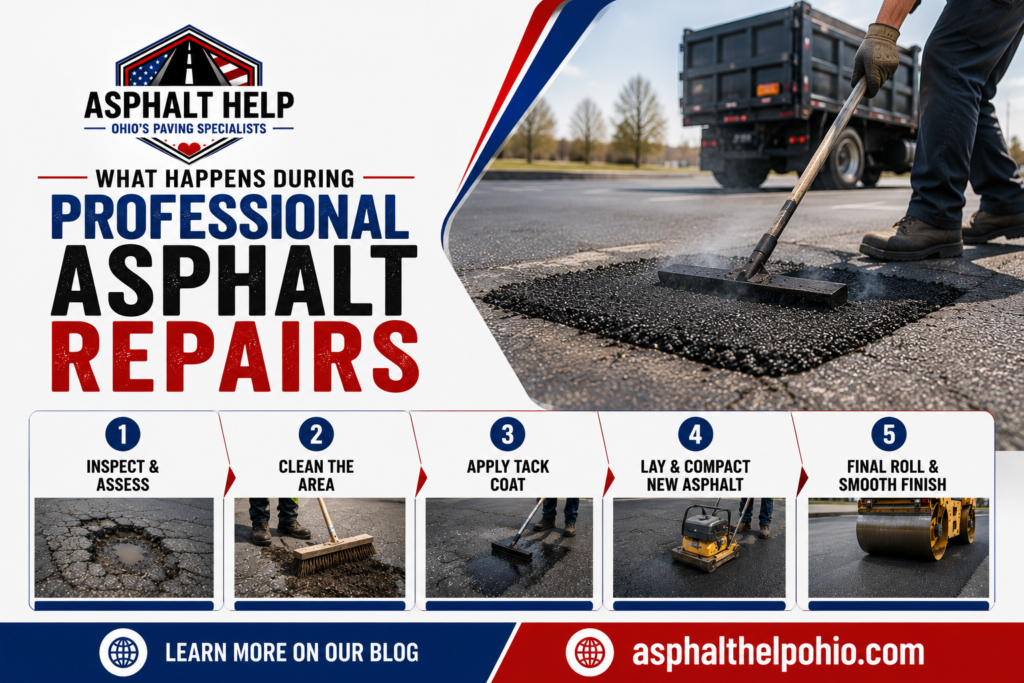
The Professional Asphalt Repair Process
Every pavement is different, but most professional repairs follow a similar sequence.
| Repair Stage | Purpose |
|---|---|
| Initial Inspection | Evaluate pavement condition |
| Damage Assessment | Identify underlying causes |
| Surface Preparation | Clean and prepare damaged areas |
| Base Evaluation | Check structural support |
| Repair Selection | Choose appropriate repair method |
| Asphalt Placement | Install new asphalt material |
| Compaction | Achieve structural strength |
| Final Inspection | Verify repair quality |
Step 1: Complete Pavement Inspection
Every successful repair starts with a detailed inspection.
Instead of immediately filling visible damage, experienced contractors evaluate the overall condition of the pavement.
During the inspection they examine:
- Crack patterns
- Pothole depth
- Drainage conditions
- Surface wear
- Rutting
- Edge stability
- Existing repairs
- Traffic patterns
Asphalt Help Ohio explains that every project begins with a site evaluation to confirm grading, drainage flow, areas prone to water retention, and structural concerns before recommending repairs.
Step 2: Determining the Cause of the Damage
Visible damage is often only the symptom.
Professionals determine what actually caused the pavement to fail.
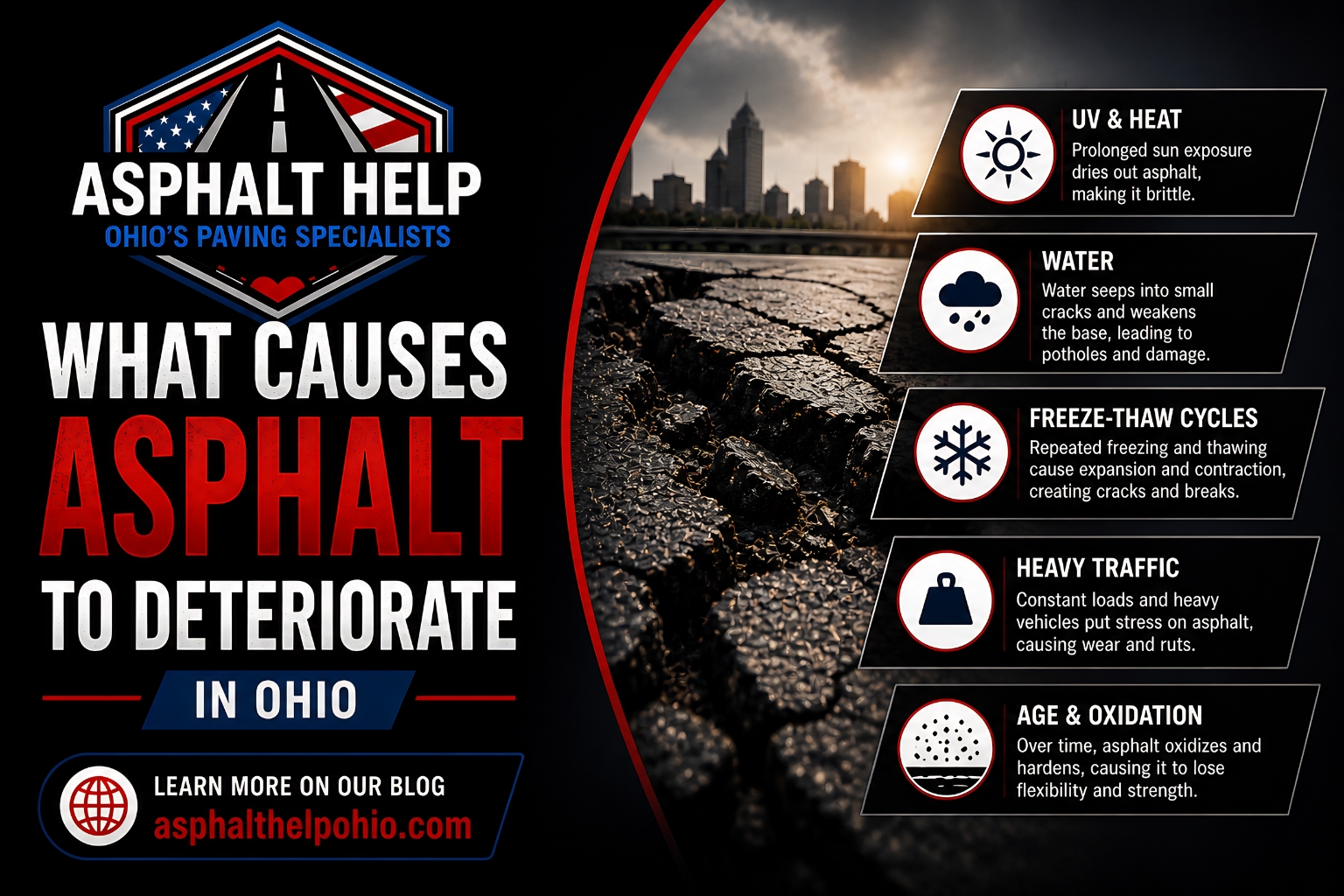
Possible causes include:
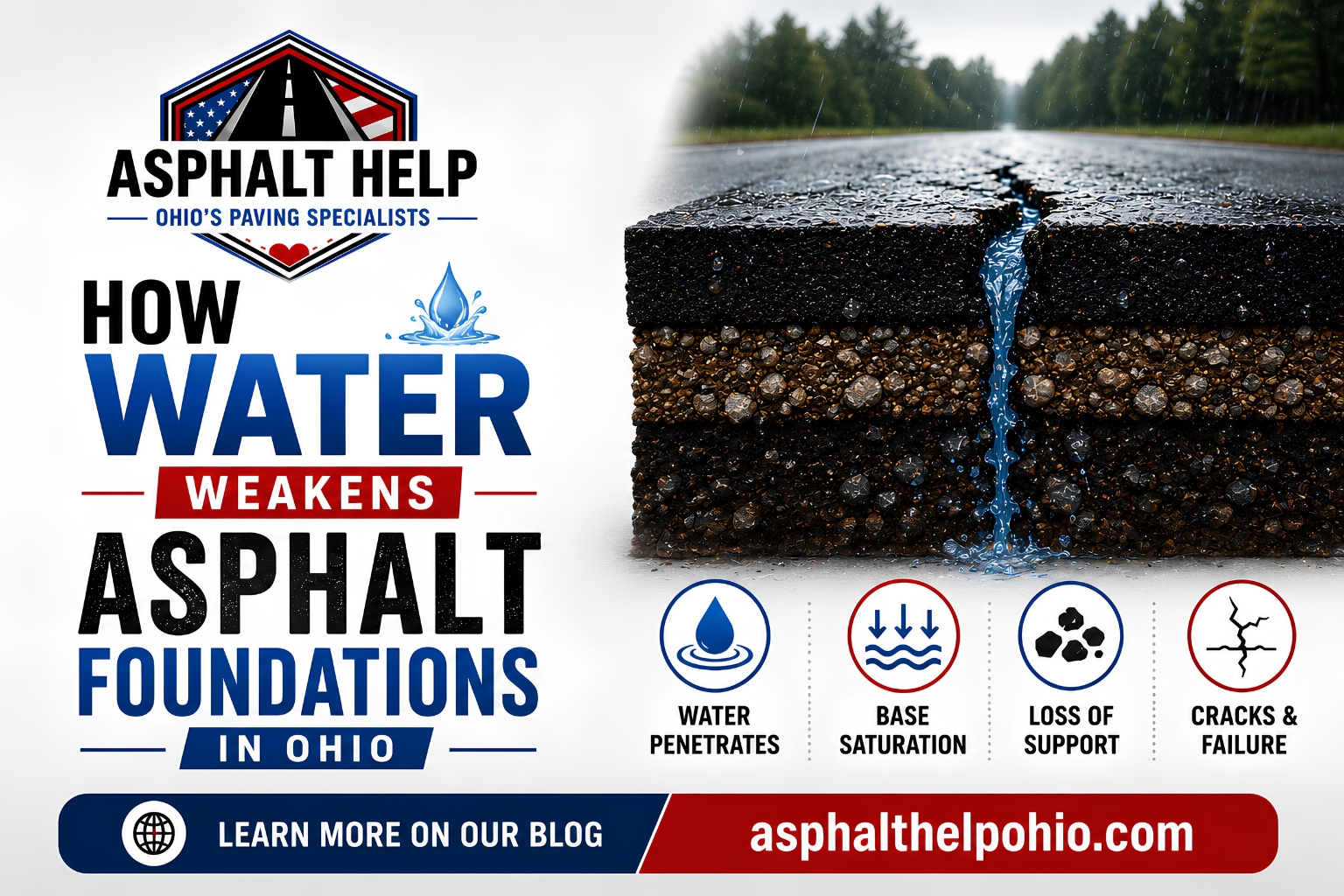
- Water infiltration
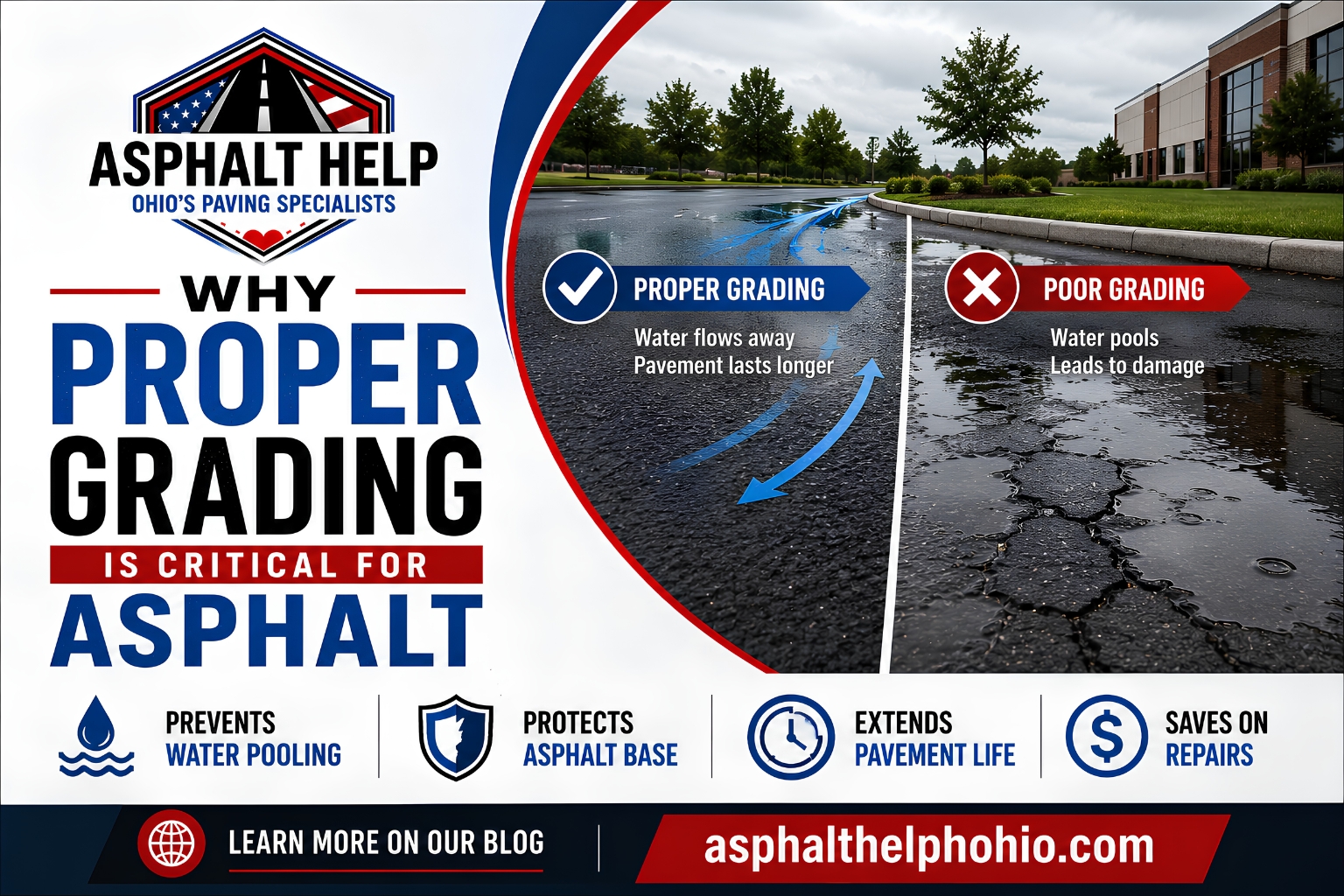
- Poor drainage
- Heavy traffic
- Weak base materials
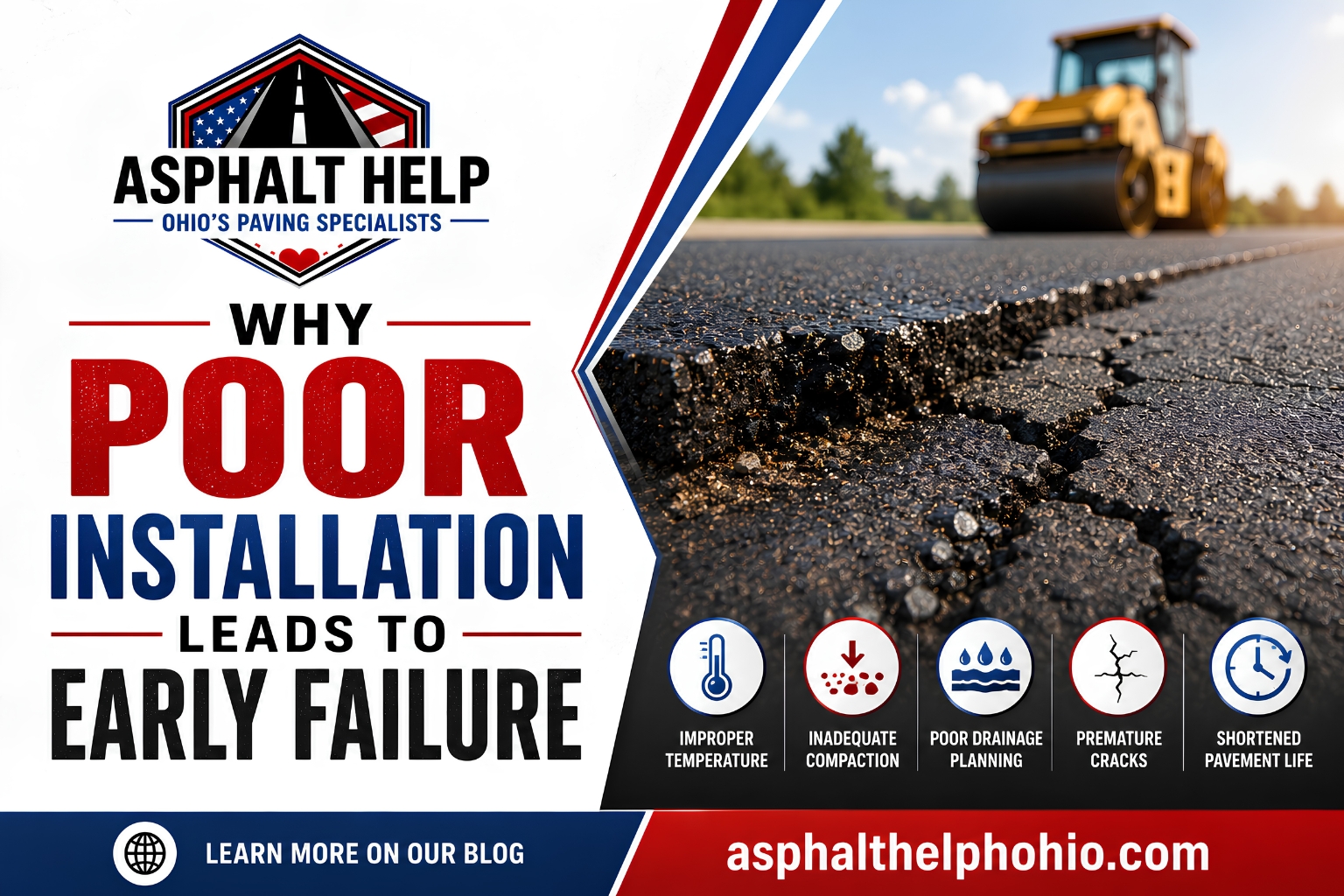
- Improper compaction
- Surface aging
- Ohio freeze-thaw cycles
Repairing only the surface without correcting these underlying issues often leads to recurring damage.
Step 3: Cleaning and Preparing the Surface
Preparation is one of the most important parts of any asphalt repair.
Damaged pavement is cleaned to remove:
- Dirt
- Loose asphalt
- Vegetation
- Oil
- Debris
- Standing water
Asphalt Help Ohio emphasizes that proper surface preparation, grading corrections, and base inspection are essential before new asphalt is placed, because preparation directly affects long-term pavement performance.
Step 4: Repairing the Foundation When Necessary
Many pavement failures begin below the asphalt surface.
If inspection reveals weakened support, contractors repair the foundation before replacing asphalt.
This may include:
- Removing unstable materials
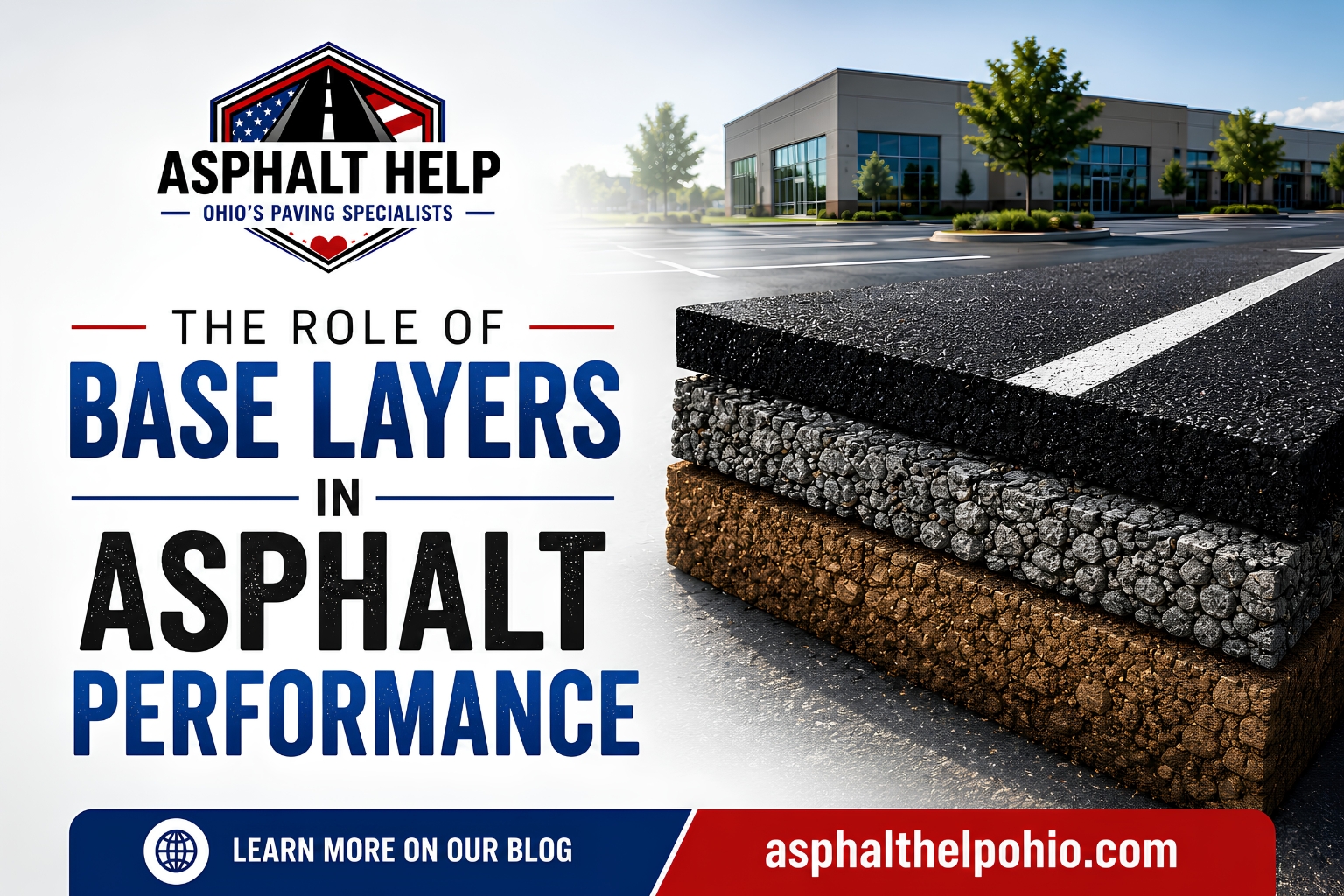
- Rebuilding the aggregate base
- Improving drainage
- Compacting subgrade soils
- Correcting grading problems
Asphalt Help Ohio notes that proper base stabilization, grading, and compaction are fundamental to creating pavement systems designed for Ohio’s climate and traffic conditions.
Step 5: Selecting the Right Repair Method
Not every damaged pavement requires complete replacement.
Professional contractors choose the repair method based on the pavement’s condition.
Crack Repair
Small cracks are sealed to prevent water from entering the pavement structure.
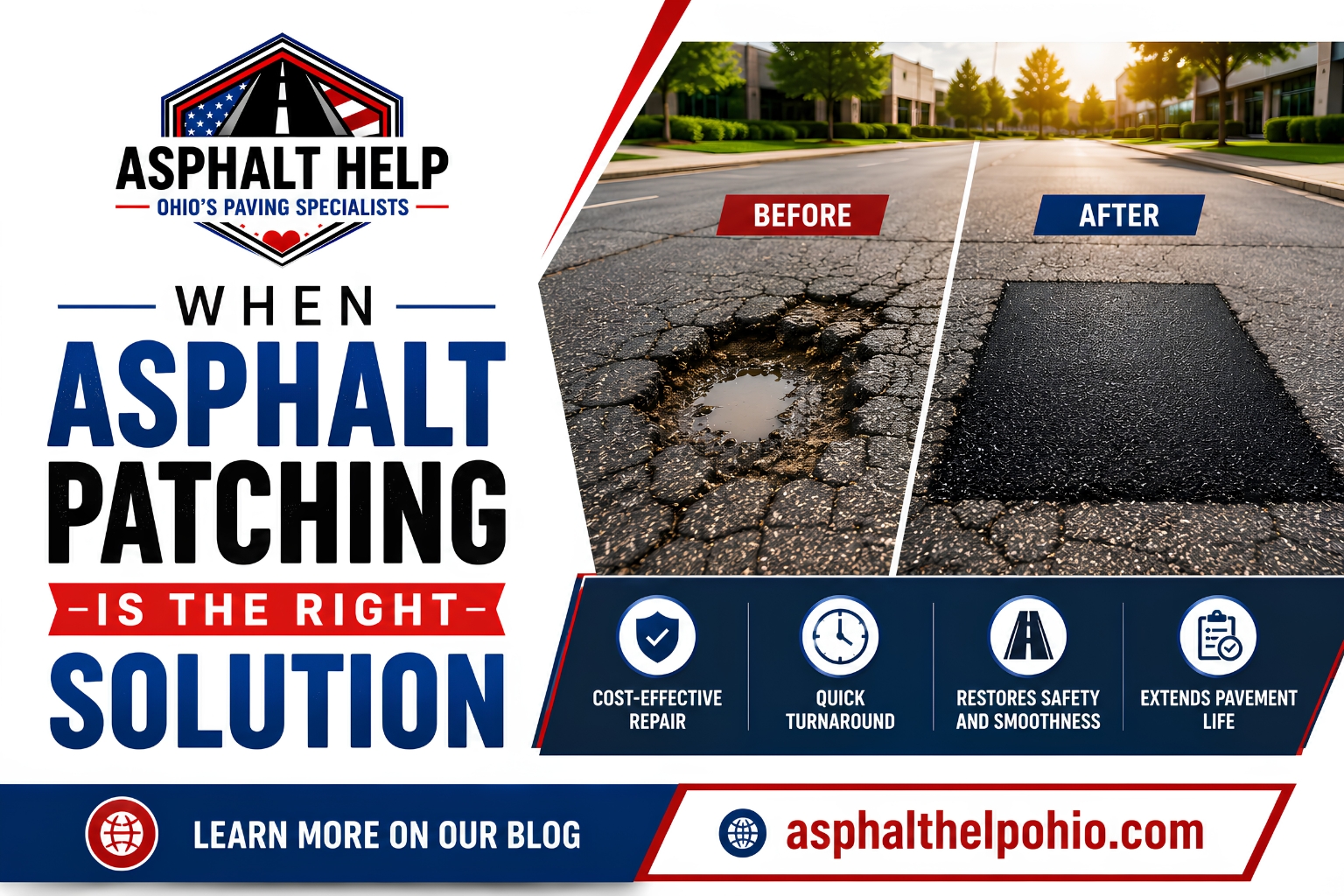
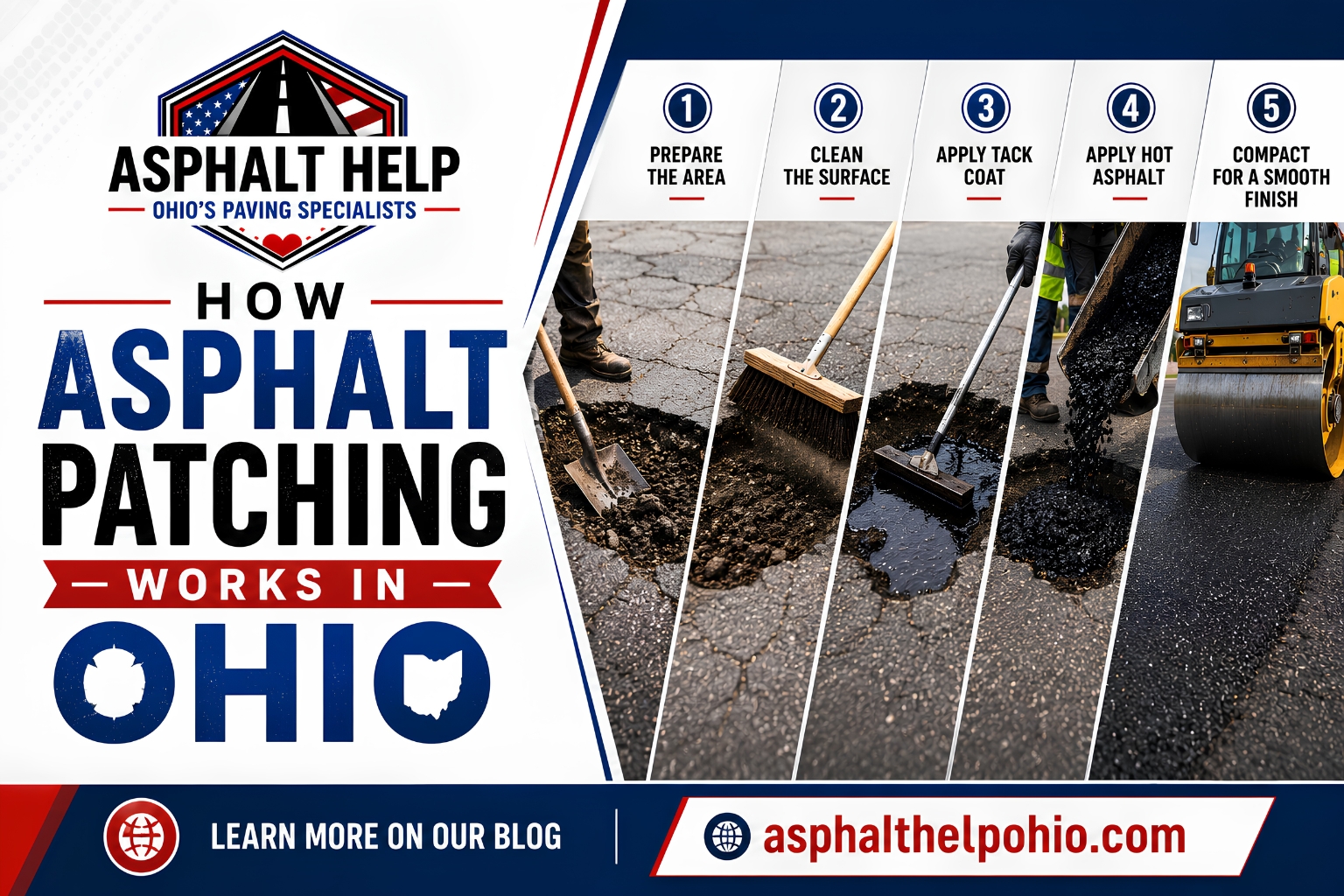
Asphalt Patching
Localized damaged sections are removed and replaced with new compacted asphalt.
Pothole Repair
Loose material is removed, the base is repaired if necessary, and fresh asphalt is compacted into place.
Asphalt Resurfacing
If the base remains structurally sound but the surface has deteriorated, a new asphalt overlay restores smoothness and strength.
Full-Depth Repair
When pavement has suffered structural failure, damaged asphalt and weakened base materials are removed before reconstruction.
Asphalt Help Ohio offers structural repairs, pothole repair, asphalt patching, resurfacing, crack filling, parking lot repair, and driveway repair as part of its maintenance services.
Step 6: Installing New Asphalt
Once preparation is complete, new hot-mix asphalt is installed.
Professional crews carefully:
- Place asphalt evenly
- Match existing grades
- Restore proper slopes
- Blend repair edges
- Ensure uniform thickness
Quality materials and proper installation methods help produce a repair that integrates with the surrounding pavement.
Step 7: Precision Compaction
Compaction is critical to repair durability.
Using specialized rollers and compaction equipment, crews compress the asphalt until it reaches the proper density.
Benefits include:
- Greater structural strength
- Reduced air voids
- Better moisture resistance
- Improved load capacity
- Longer pavement life
Asphalt Help Ohio highlights high-density compaction as one of the key practices used to achieve durable, long-lasting pavement systems.
Step 8: Final Quality Inspection
Before completing the project, professionals inspect the repaired area.
They verify:
- Smooth surface transitions
- Proper drainage
- Correct compaction
- Uniform appearance
- Safe driving conditions
Any minor adjustments are made before the project is considered complete.
Why Professional Repairs Last Longer
Professional asphalt repairs involve much more than replacing damaged material.
Experienced contractors understand:
- Soil behavior
- Drainage requirements
- Pavement structure
- Traffic loading
- Material performance
- Ohio weather conditions
Asphalt Help Ohio states that its team combines decades of local experience with proper grading, drainage planning, precision compaction, and quality materials engineered for Ohio’s freeze-thaw climate to deliver durable repairs.
How Professional Repairs Help Extend Pavement Life
Timely repairs offer long-term benefits.
| Professional Repair Benefit | Long-Term Advantage |
|---|---|
| Crack repair | Prevents water intrusion |
| Pothole repair | Restores safe driving surface |
| Base stabilization | Improves structural support |
| Proper compaction | Increases durability |
| Resurfacing | Renews aging pavement |
| Drainage improvements | Reduces future deterioration |
Regular maintenance allows property owners to postpone major reconstruction while preserving pavement appearance and performance.
Why Choose Asphalt Help Ohio?
Asphalt Help Ohio provides complete asphalt repair services Ohio for residential, commercial, and municipal properties throughout Central Ohio.
Its repair services include:
- Structural asphalt repair
- Asphalt patching
- Pothole repair
- Crack filling
- Parking lot repair
- Driveway repair
- Asphalt resurfacing
- Preventive maintenance
- Base preparation and grading
- Drainage improvements
The company states that every project begins with a thorough site evaluation, followed by proper grading, base stabilization, high-density compaction, and quality asphalt installation. With more than 30 years of experience, Asphalt Help Ohio focuses on delivering durable pavement systems designed to withstand Ohio’s weather, moisture, and traffic demands.
Whether your pavement has isolated cracks or widespread structural damage, the experienced team works to identify the underlying cause and recommend the repair method that delivers the best long-term results.
Final Thoughts
Professional asphalt repairs involve far more than simply covering damaged pavement. Every successful repair begins with careful inspection, surface preparation, base evaluation, and selecting the appropriate repair method before new asphalt is installed and compacted. This systematic process restores pavement strength, improves safety, and helps extend the life of your investment.
If you’re looking for dependable asphalt repair services Ohio, Asphalt Help Ohio provides comprehensive repair solutions backed by decades of local experience, quality workmanship, and repair methods specifically designed for Ohio’s demanding climate. From crack filling and pothole repair to resurfacing and structural restoration, their team delivers long-lasting pavement solutions that keep driveways, parking lots, and commercial properties performing at their best.