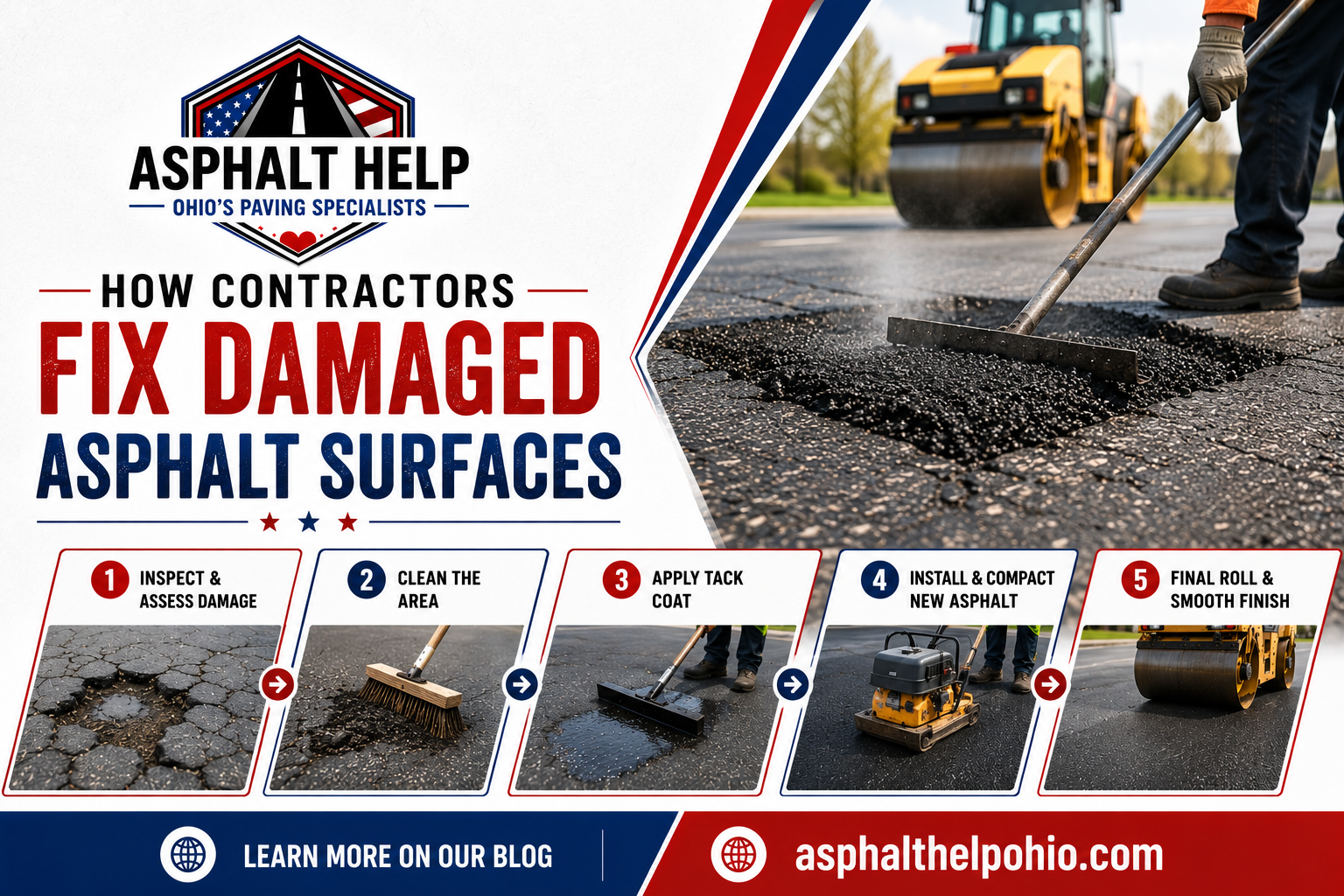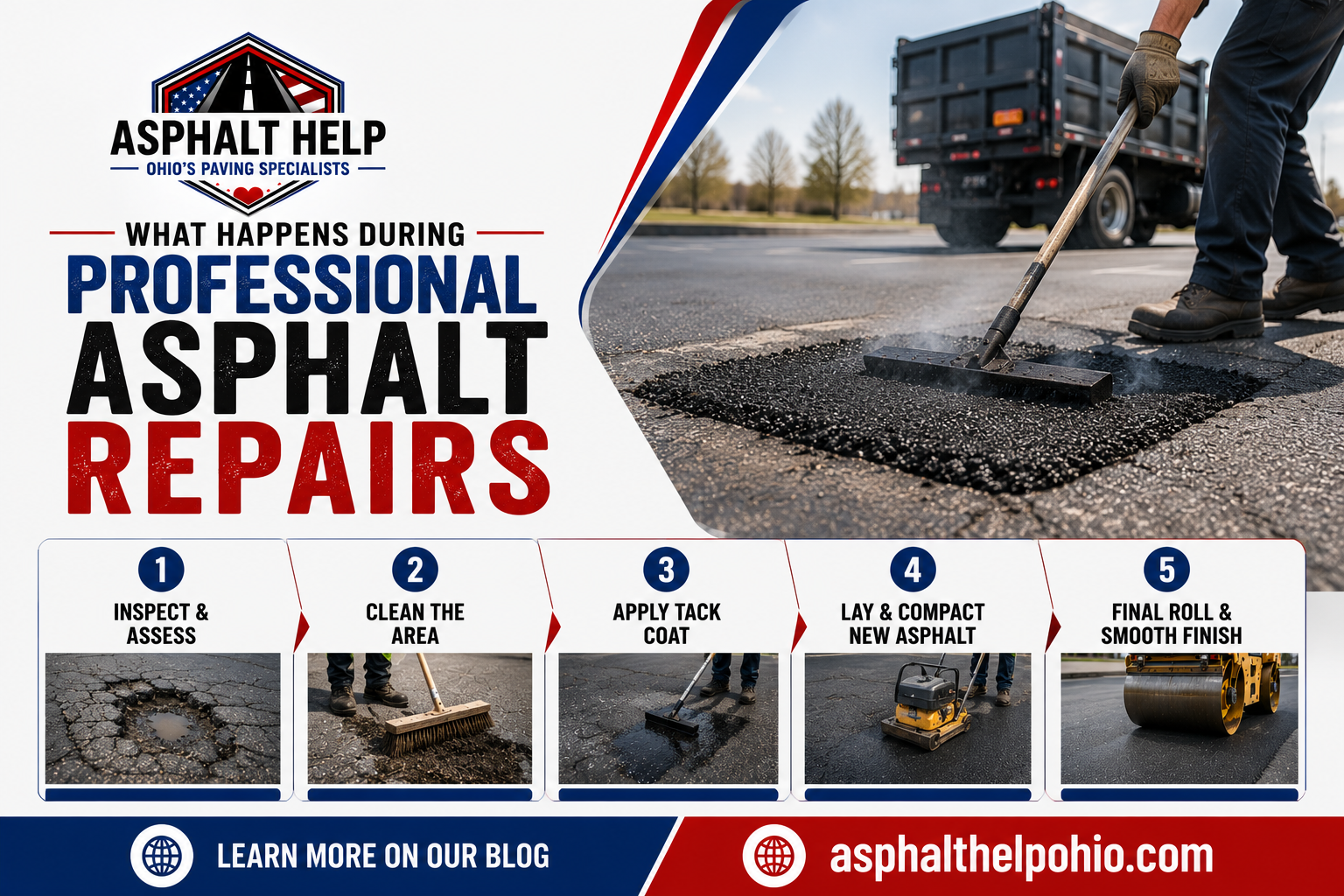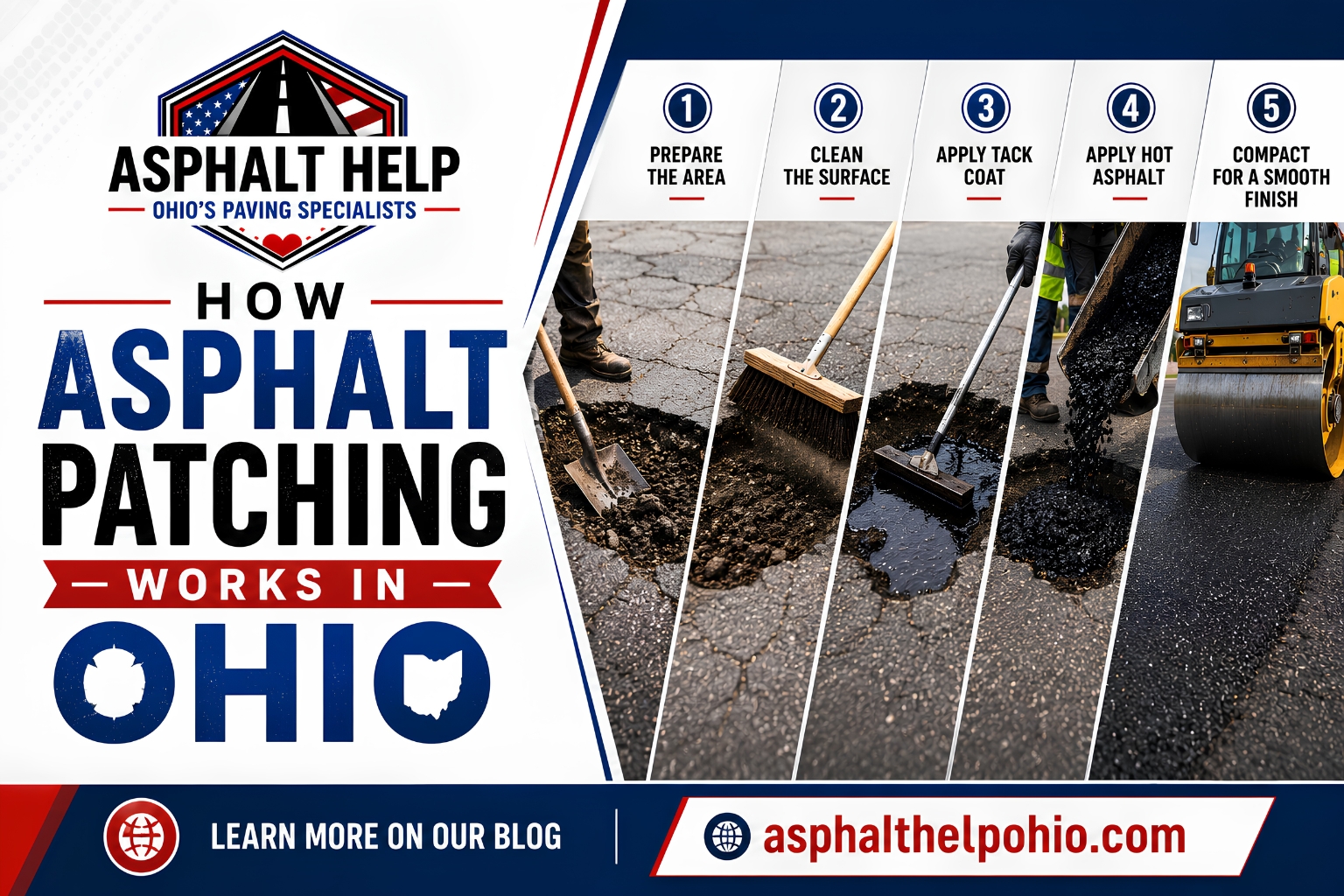



Have you noticed cracks, potholes, or uneven pavement on your asphalt driveway or parking lot? Acting quickly can prevent those small problems from becoming major structural failures. Understanding the asphalt repair process Ohio helps property owners know what to expect and why every repair step matters. Professional asphalt repair is much more than simply filling a crack or patching a pothole. A quality repair restores structural strength, improves safety, and helps pavement withstand Ohio’s demanding freeze-thaw cycles, heavy rainfall, and daily traffic.
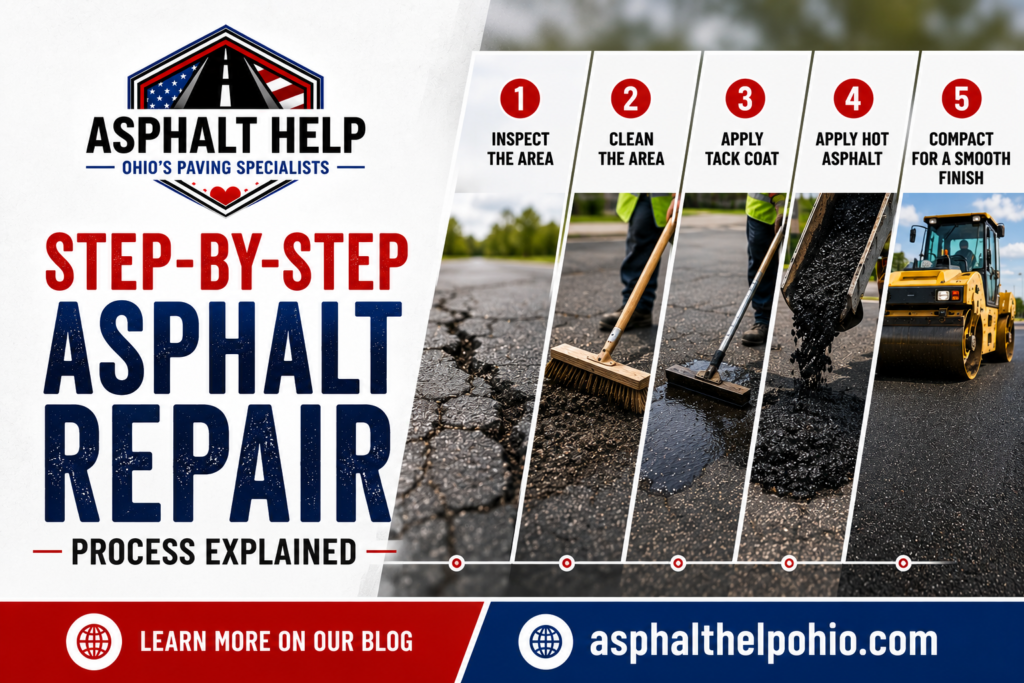
According to Asphalt Help Ohio, professional asphalt repair begins with evaluating the pavement condition, identifying structural issues, correcting drainage concerns when necessary, and using proper preparation, grading, and compaction techniques to achieve long-lasting results. The company provides asphalt repair, pothole repair, crack filling, patching, resurfacing, and preventative maintenance for residential, commercial, and municipal properties throughout Central Ohio.
Whether you’re repairing a residential driveway or a large commercial parking lot, understanding each stage of the repair process helps explain why professional workmanship produces better, longer-lasting pavement.
Why Asphalt Repair Should Never Be Delayed
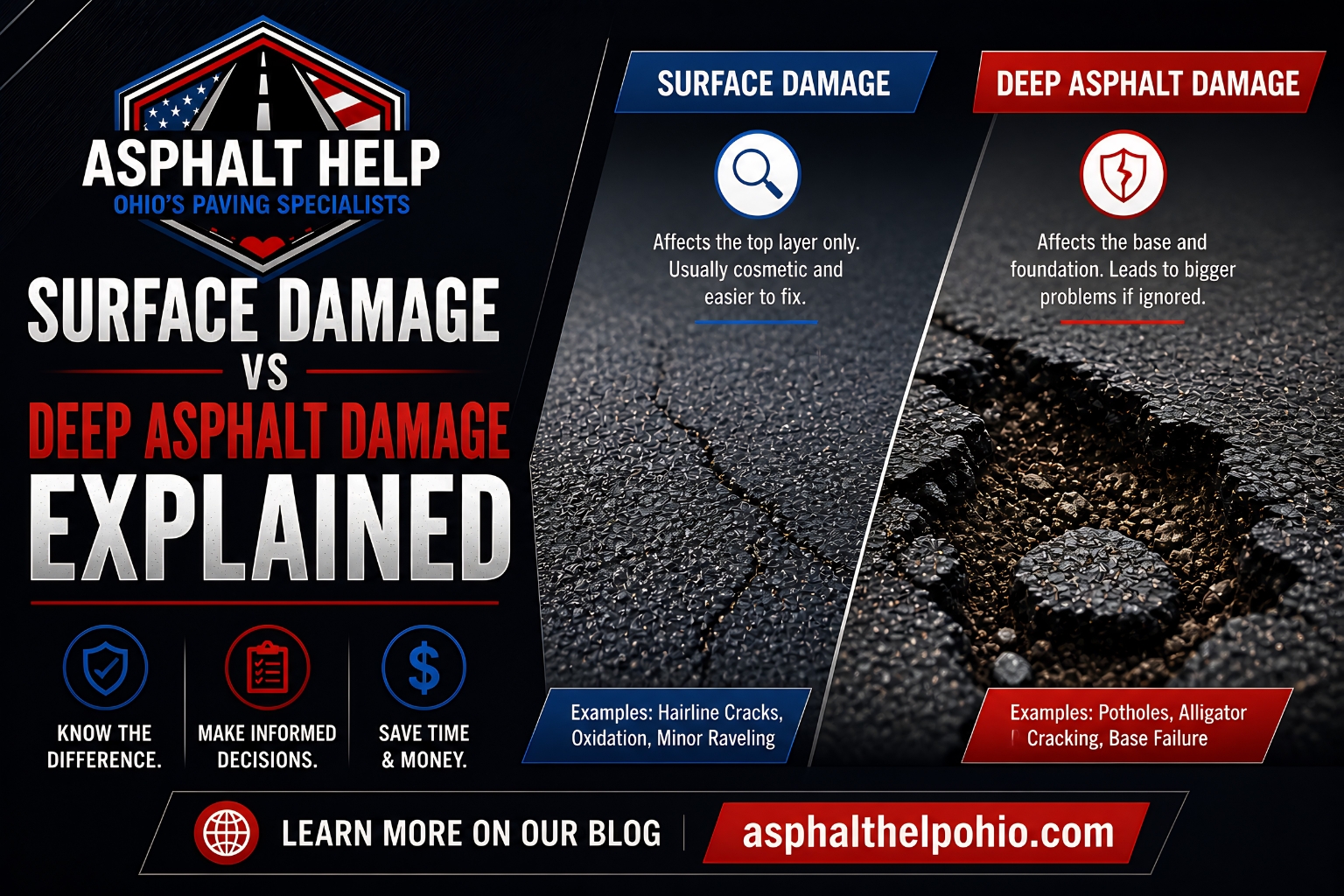
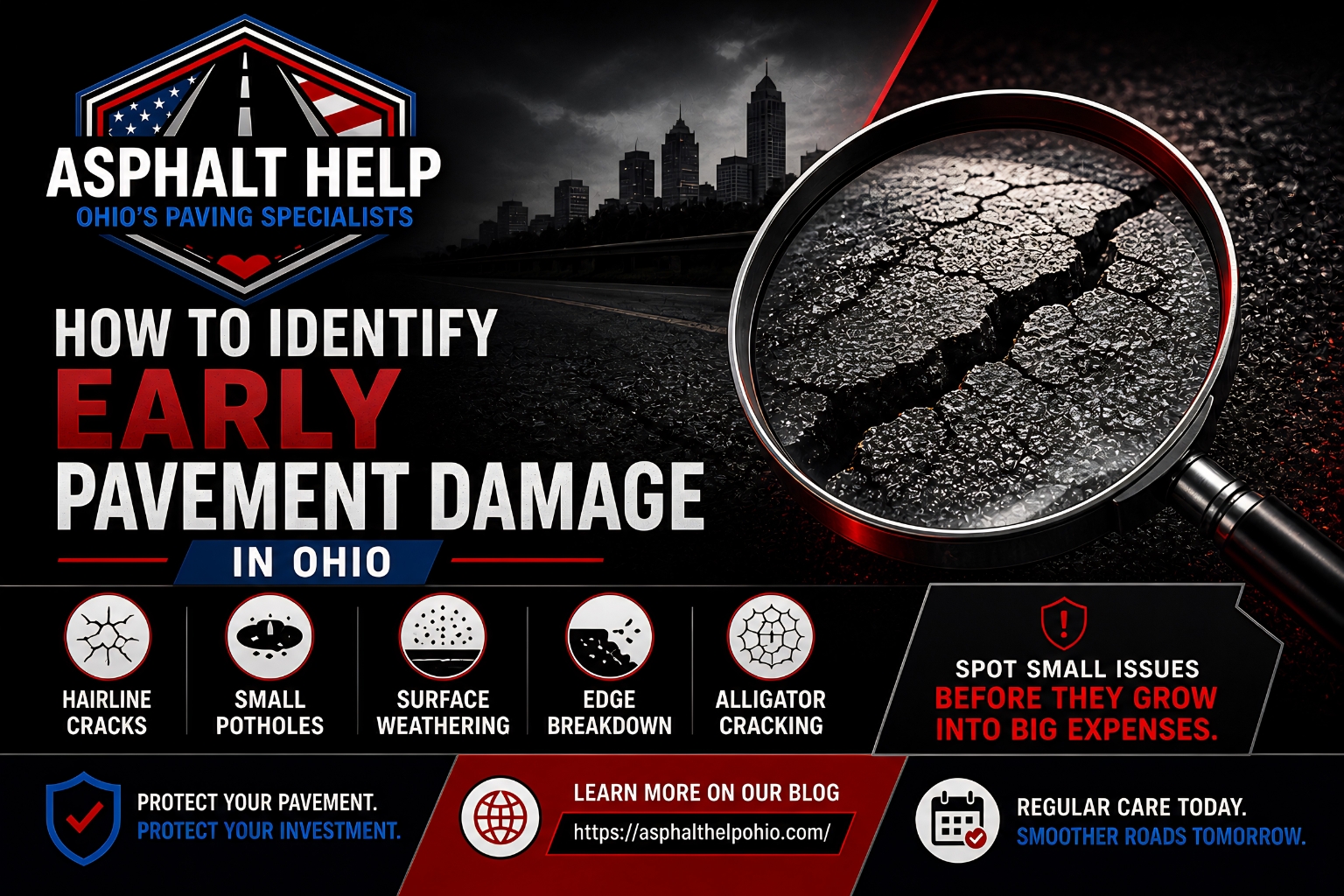
Many pavement problems begin as minor surface defects.
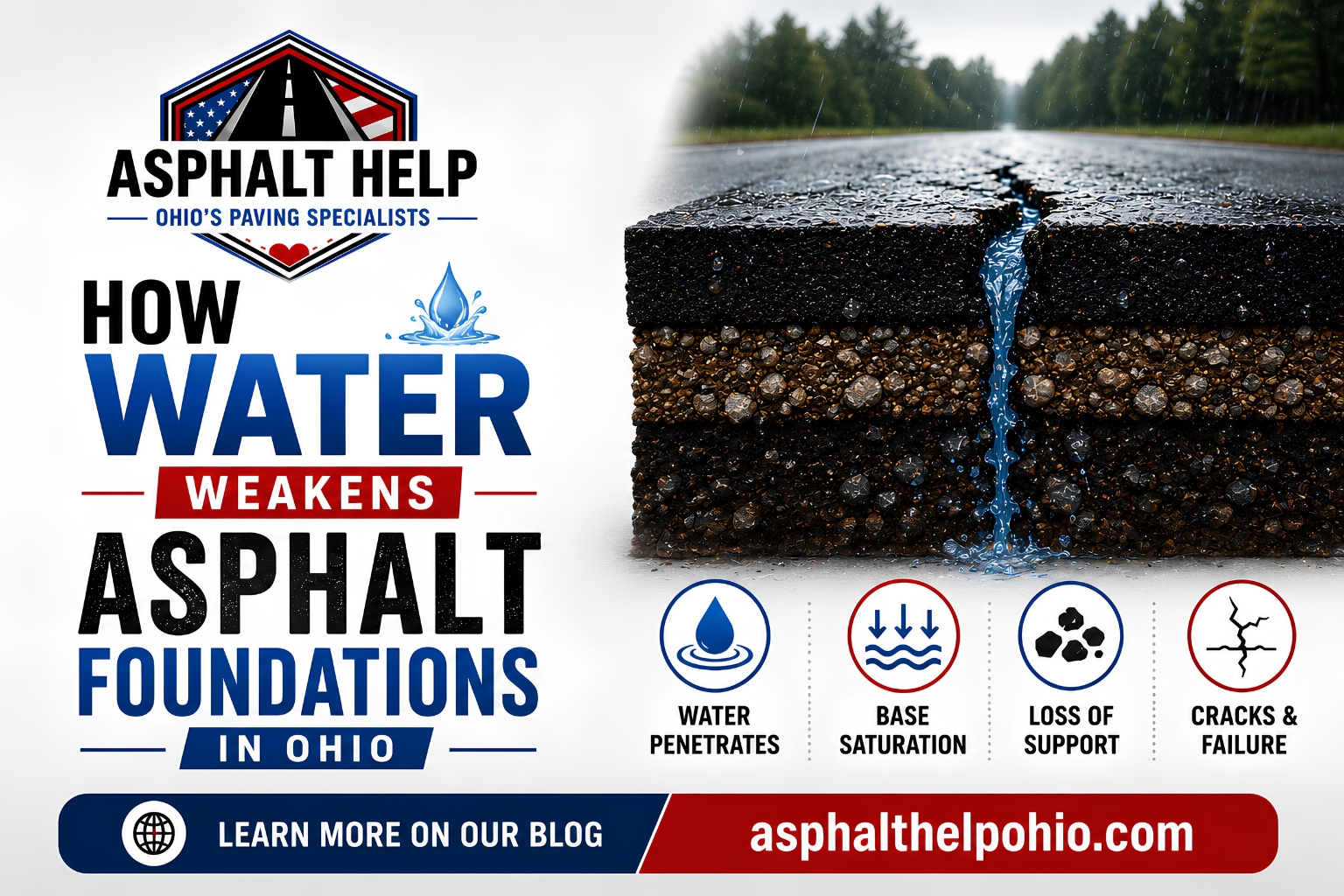
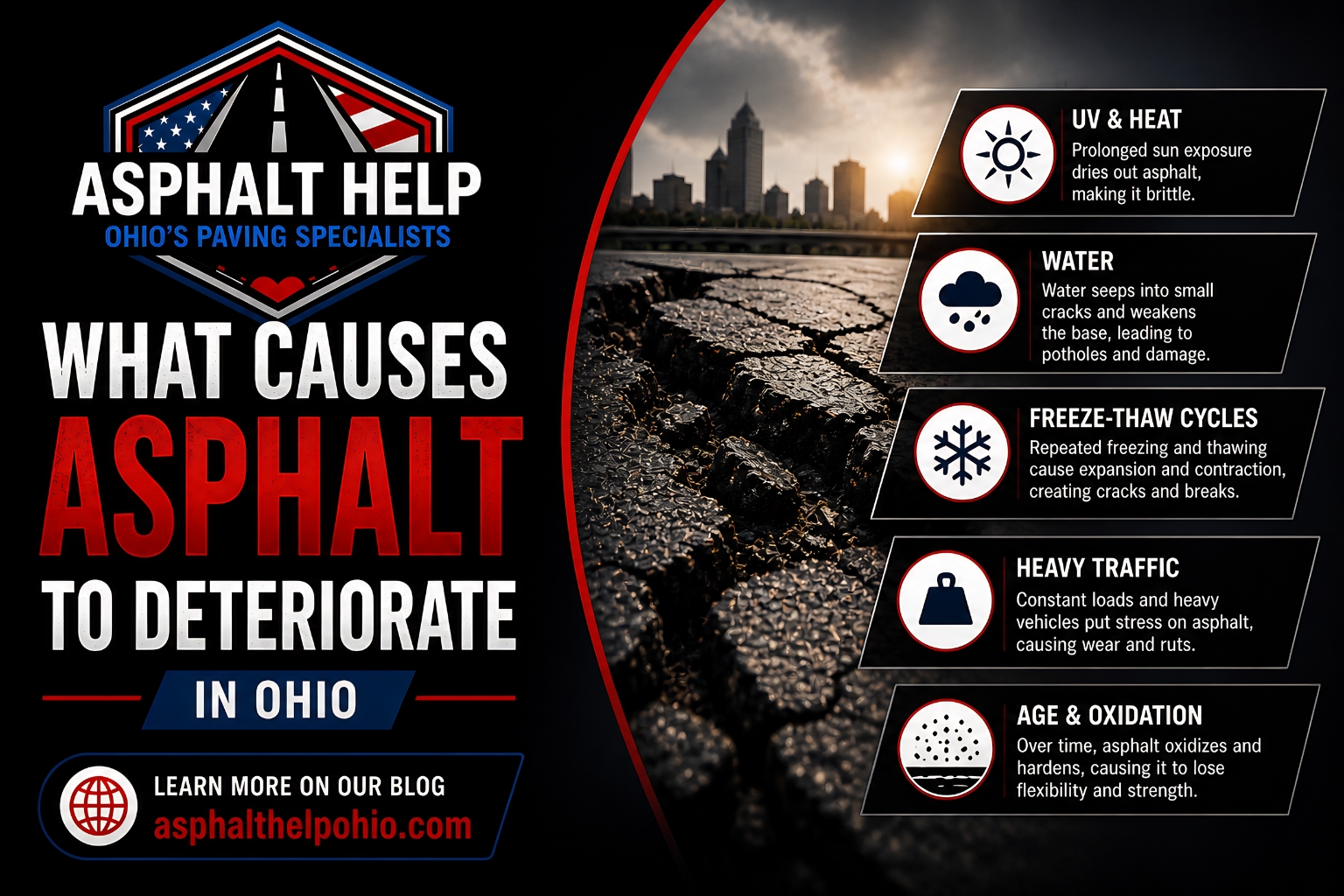
Small cracks may seem harmless, but they allow moisture to penetrate beneath the pavement.
Once water reaches the supporting base, it can lead to:
- Larger cracks
- Potholes
- Surface settlement
- Base deterioration
- Drainage issues
- Premature pavement failure
Asphalt Help Ohio notes that timely asphalt repair and maintenance help extend pavement life, improve structural stability, and reduce the need for major reconstruction later.
Overview of the Asphalt Repair Process
| Repair Stage | Purpose |
|---|---|
| Initial Inspection | Identify pavement damage |
| Damage Assessment | Determine proper repair method |
| Site Preparation | Clean and prepare repair area |
| Remove Damaged Asphalt | Eliminate weak material |
| Base Evaluation | Verify structural support |
| Base Repair (if needed) | Restore foundation strength |
| Asphalt Installation | Place new asphalt material |
| Compaction | Achieve strength and density |
| Surface Finishing | Match surrounding pavement |
| Final Inspection | Ensure quality and performance |
Every step contributes to a durable repair that blends with the surrounding pavement.
Step 1: Complete Pavement Inspection
Every successful repair begins with a professional inspection.
Rather than simply looking at visible cracks, contractors evaluate the entire pavement structure.
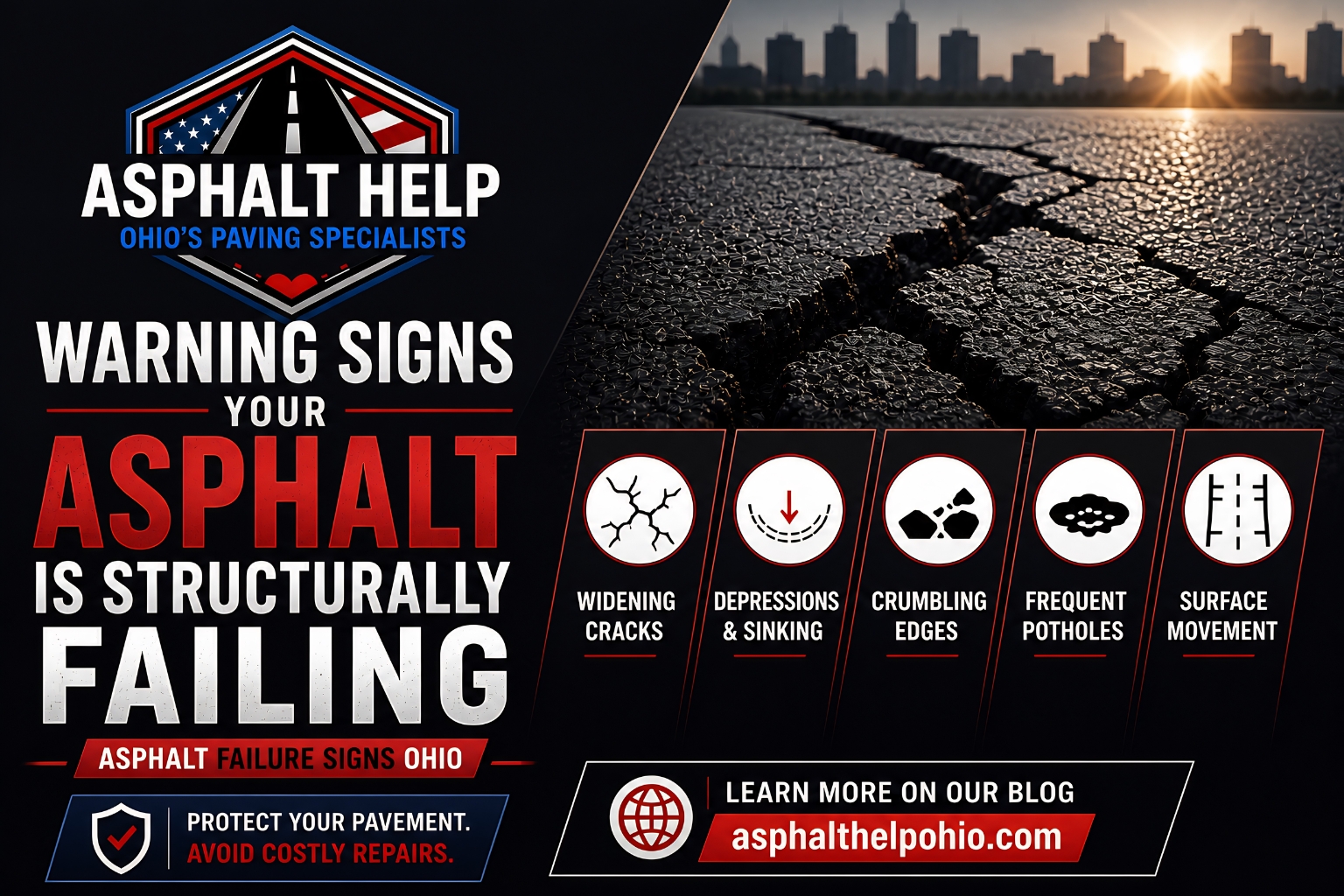
The inspection typically identifies:
- Surface cracks
- Potholes
- Alligator cracking
- Rutting
- Drainage problems
- Edge deterioration
- Surface settlement
- Base failures
Asphalt Help Ohio explains that every project begins with a detailed site evaluation to identify grading concerns, drainage flow, and structural issues before repairs begin.
This evaluation ensures the repair addresses the underlying cause rather than only the visible damage.
Step 2: Selecting the Right Repair Method
Not every damaged pavement requires the same solution.
The repair method depends on:
- Age of the pavement
- Severity of damage
- Structural condition
- Traffic levels
- Drainage performance
- Base stability
Professional repair options may include:
- Crack filling
- Asphalt patching
- Surface repairs
- Pothole repair
- Asphalt resurfacing
- Full-depth repair
- Pavement replacement
Choosing the correct repair method extends pavement life while avoiding unnecessary work.
Step 3: Preparing the Repair Area
Preparation is one of the most important stages of the repair process.
Before new asphalt can be installed, the damaged section must be properly prepared.
This usually includes:
- Removing debris
- Cleaning loose material
- Eliminating vegetation
- Drying wet areas
- Marking repair boundaries
A clean repair area allows the new asphalt to bond properly with the existing pavement.
Poor preparation often leads to early repair failure.
Step 4: Removing Damaged Asphalt
Once preparation is complete, deteriorated asphalt is removed.
The amount removed depends on the extent of the damage.
Contractors may remove:
- Surface deterioration
- Cracked asphalt
- Broken pavement
- Weak edges
- Failed patches
Removing damaged material prevents weak pavement from remaining beneath the repair.
Asphalt Help Ohio states that structural repairs focus on correcting pavement failures rather than simply covering damaged areas.
Step 5: Inspecting the Base
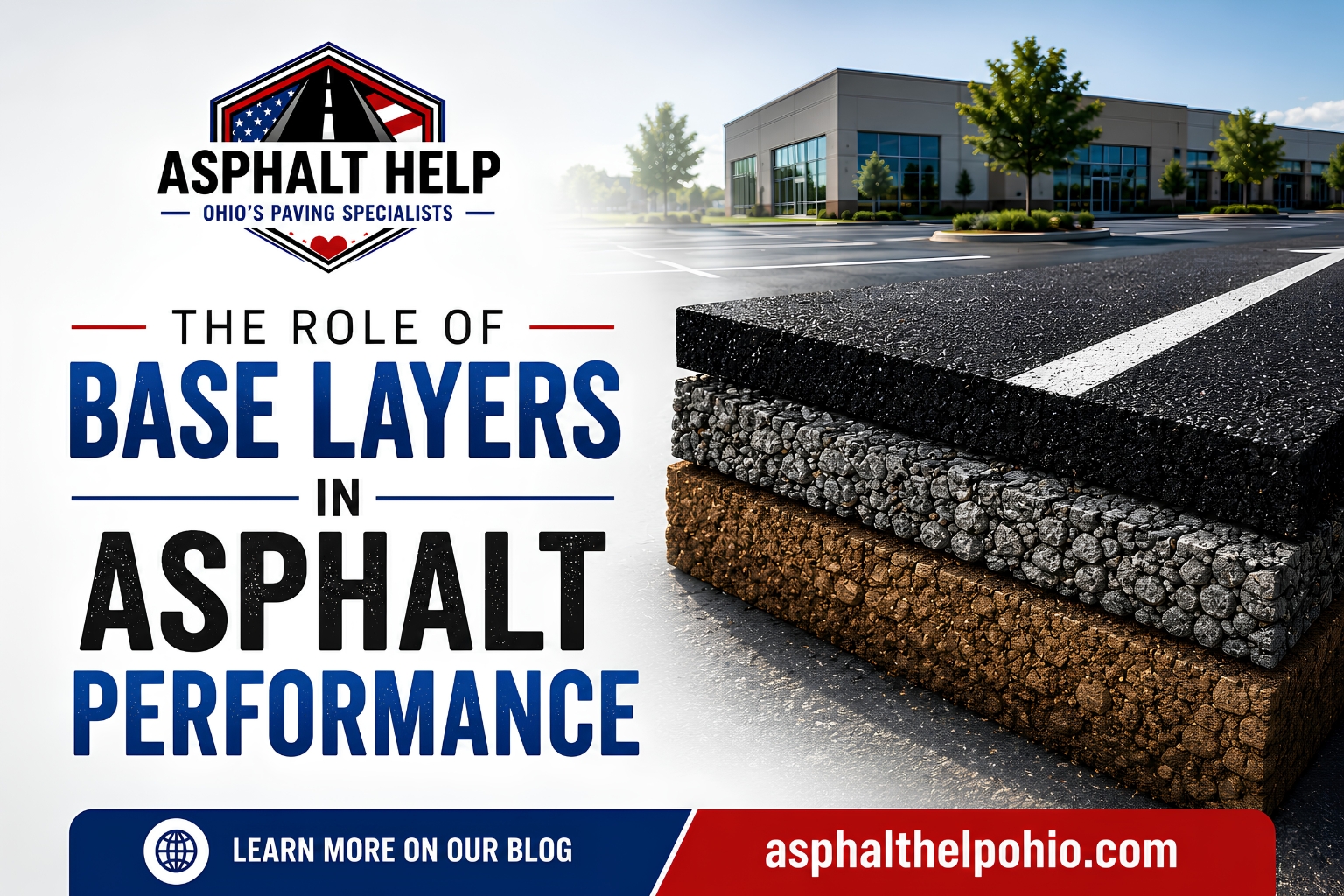
Many asphalt failures actually begin below the surface.
After removing damaged pavement, contractors inspect the supporting base.
They look for:
- Soft soil
- Standing water
- Poor drainage
- Base movement
- Settlement
- Erosion
If the foundation remains weak, new asphalt alone will not solve the problem.
Step 6: Repairing the Foundation
If the base has been compromised, it must be repaired before paving continues.
This stage may involve:
- Removing unstable material
- Adding aggregate
- Regrading
- Compacting the base
- Improving drainage
Asphalt Help Ohio emphasizes engineered base preparation, grading accuracy, and drainage control because these elements directly influence long-term pavement performance.
A strong foundation supports every layer above it.
Step 7: Installing New Asphalt
Once the foundation is ready, fresh asphalt is placed into the repaired section.
Professional crews carefully spread the asphalt to the proper thickness.
The goal is to create:
- Uniform depth
- Smooth transitions
- Proper slope
- Consistent surface texture
The repair should blend naturally with the surrounding pavement.
Step 8: Precision Compaction
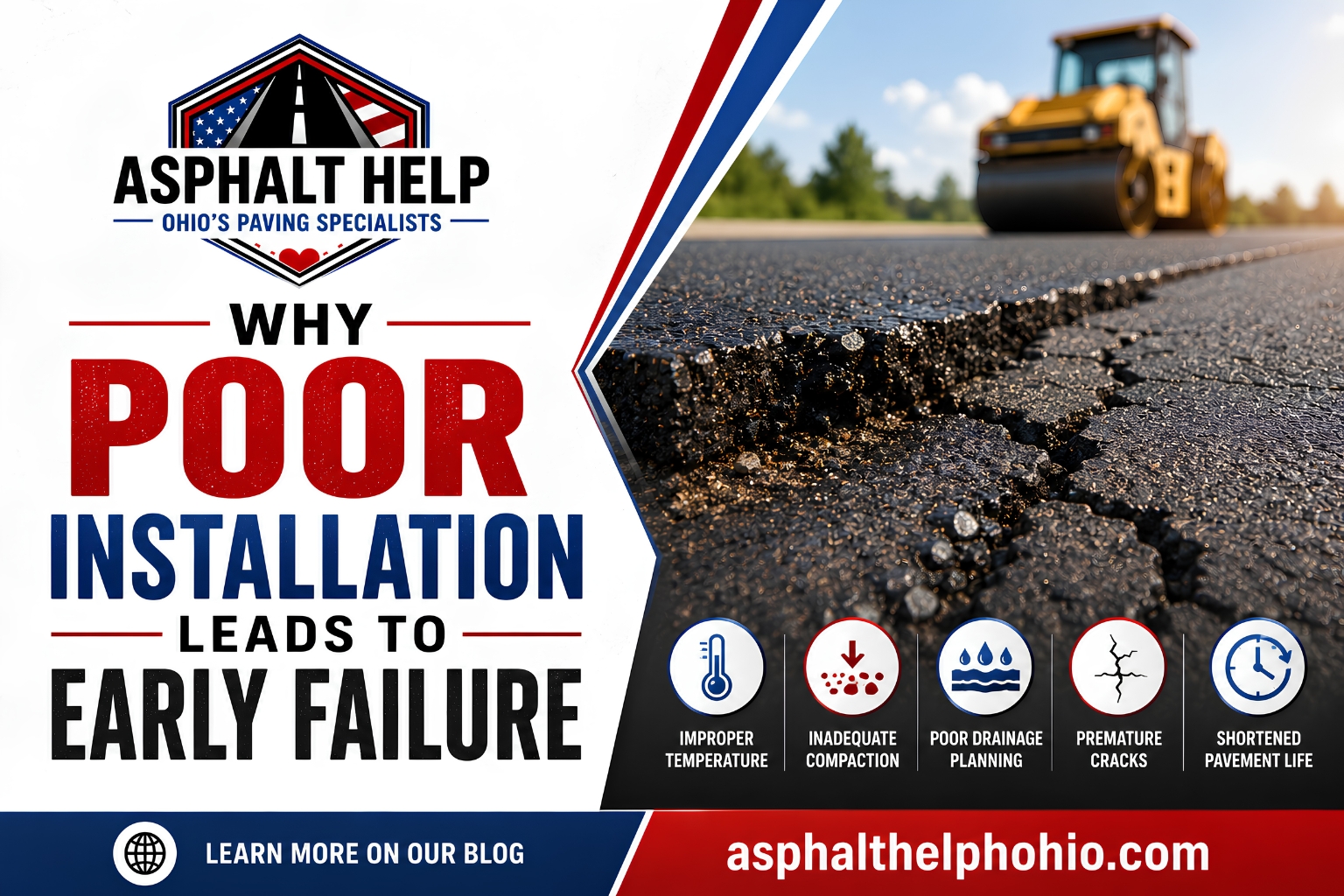
Compaction is critical for long-term durability.
Using specialized rollers or compactors, contractors compress the asphalt to eliminate air voids and create a dense, stable surface.
Proper compaction improves:
- Structural strength
- Surface smoothness
- Load capacity
- Moisture resistance
- Pavement longevity
Asphalt Help Ohio highlights precision compaction as an essential part of producing durable pavement capable of withstanding Ohio’s weather and traffic conditions.
Step 9: Surface Finishing
After compaction, the repaired area is finished to ensure a seamless appearance.
The crew checks:
- Surface elevation
- Edge transitions
- Drainage slope
- Smoothness
- Overall appearance
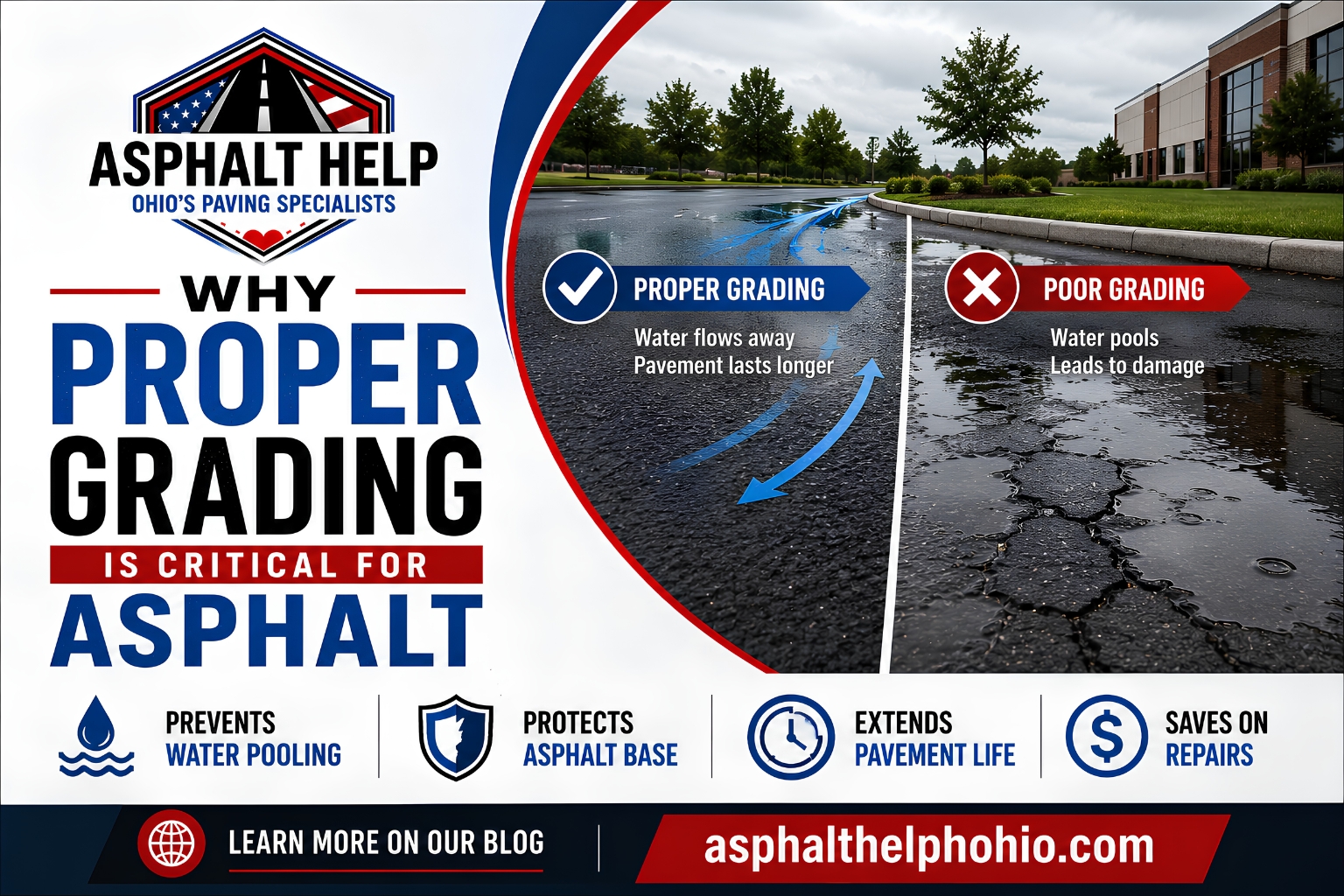
Professional finishing also helps water drain properly away from the repaired area.
Step 10: Final Inspection
Before the project is complete, contractors perform a final quality inspection.
They verify:
- Proper compaction
- Smooth surface
- Drainage performance
- Joint quality
- Overall workmanship
This final review ensures the repair meets performance expectations before reopening the pavement to traffic.
Common Asphalt Repair Methods
Different pavement conditions require different repair techniques.
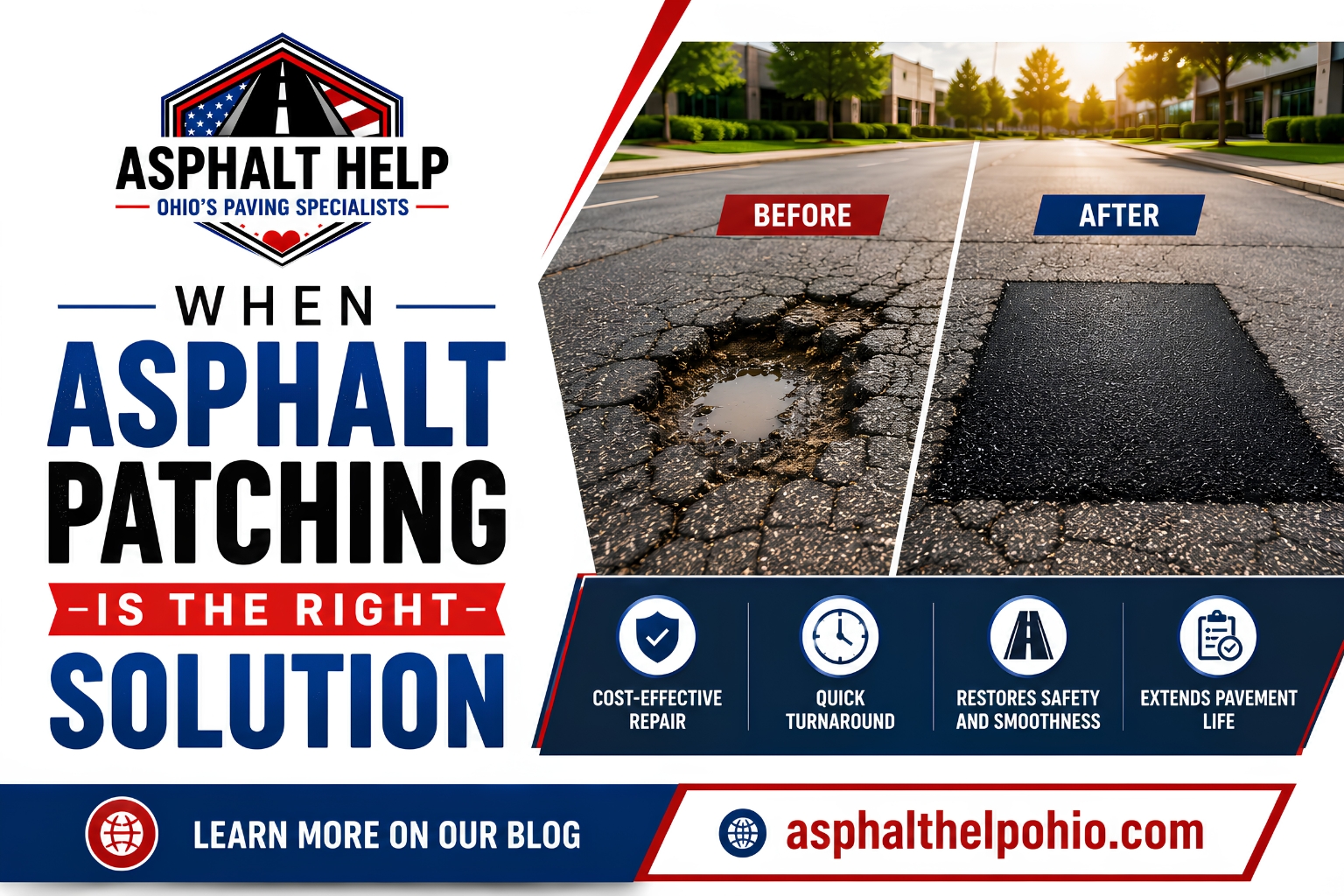
| Pavement Condition | Typical Repair Solution |
|---|---|
| Hairline cracks | Crack filling |
| Small potholes | Asphalt patching |
| Surface wear | Surface repair |
| Multiple damaged sections | Full-depth patching |
| Widespread surface aging | Asphalt resurfacing |
| Structural failure | Removal and replacement |
Selecting the proper repair method helps maximize pavement life.
Why Professional Repairs Last Longer
Professional asphalt repair focuses on correcting the cause of pavement failure—not simply covering visible damage.
Experienced contractors evaluate:
- Base stability
- Drainage
- Traffic loads
- Soil conditions
- Pavement thickness
- Existing deterioration
By addressing these factors, repairs become stronger and more durable.
Why Choose Asphalt Help Ohio?
Asphalt Help Ohio provides complete asphalt repair solutions for residential, commercial, and municipal properties across Central Ohio.
Services include:
- Asphalt repair
- Pothole repair
- Asphalt patching
- Crack filling
- Asphalt resurfacing
- Parking lot repair
- Driveway repair
- Preventative maintenance
- Milling and preparation
- Complete paving services
According to the company, every project begins with a detailed site evaluation, followed by proper grading, engineered base preparation, precision compaction, and high-quality asphalt installation to deliver durable pavement built for Ohio’s freeze-thaw cycles and heavy traffic. With more than 30 years of experience, Asphalt Help Ohio focuses on long-term structural performance rather than temporary fixes.
Final Thoughts
Understanding the asphalt repair process Ohio makes it easier to appreciate why professional repairs involve much more than filling a crack or patching a pothole. Every step—from inspection and site preparation to base repair, asphalt placement, compaction, and final inspection—plays an important role in restoring pavement strength and extending its service life.
When repairs are completed correctly, property owners benefit from safer surfaces, improved appearance, better drainage, and longer-lasting pavement performance. If you’ve noticed cracks, potholes, rutting, or other signs of deterioration, addressing them early with professional repairs can prevent more extensive structural damage in the future.
At Asphalt Help Ohio, our experienced team provides comprehensive asphalt repair services designed specifically for Ohio’s climate and traffic conditions. Using quality materials, proper foundation preparation, and proven repair techniques, we help homeowners and businesses restore their pavement and protect their investment for years to come.