


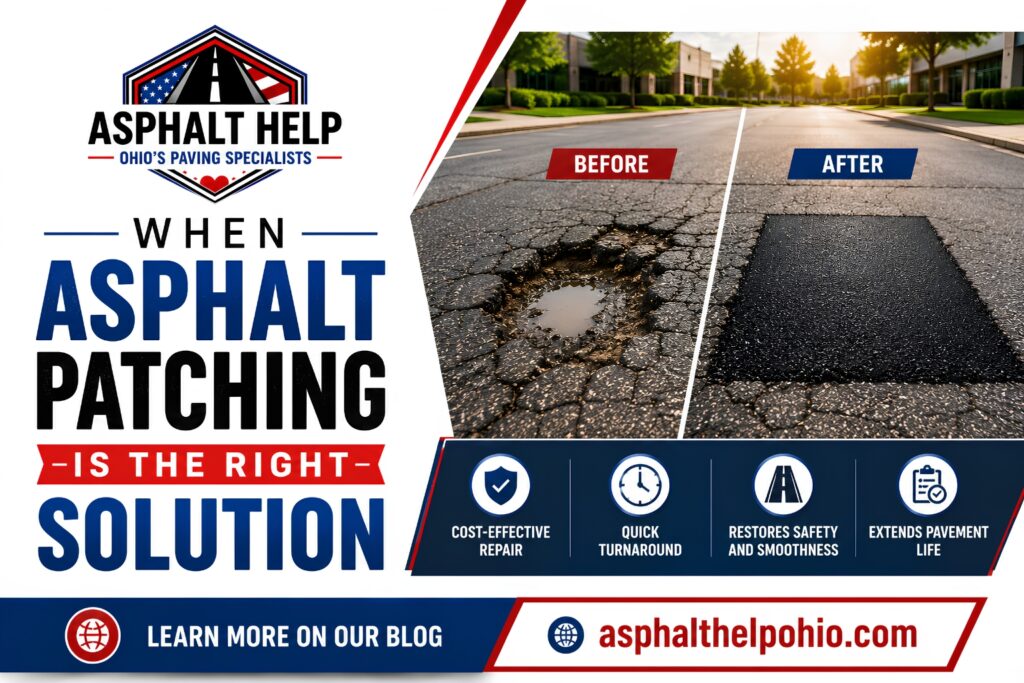
When is a patch the smartest fix for a damaged asphalt surface? Usually, it is the right choice when the damage is limited to a specific area and the rest of the pavement is still structurally sound. In that situation, patching can restore safety, stop the damage from spreading, and extend the life of the surface without the cost and disruption of a full replacement. In Ohio, that matters even more because water, traffic, and freeze-thaw cycles can turn a small failure into a bigger one if it is ignored.
For property owners looking for asphalt repair solutions Ohio, the key is knowing when patching is enough and when the pavement needs something more extensive. Asphalt Help Ohio says it provides asphalt patching and repair, resurfacing, removal and replacement, driveway paving, parking lot paving, and other full-service asphalt work across Central Ohio, and it says each project starts with a site evaluation that checks grading, drainage flow, and water-retention areas.
What asphalt patching does
Asphalt patching is a localized repair that removes damaged pavement and replaces it with new material in the problem area. Technical repair guidance describes patching as either temporary or semi-permanent, with temporary patching often used when weather does not allow a more permanent fix and semi-permanent patching using more careful reconstruction of the failed area.
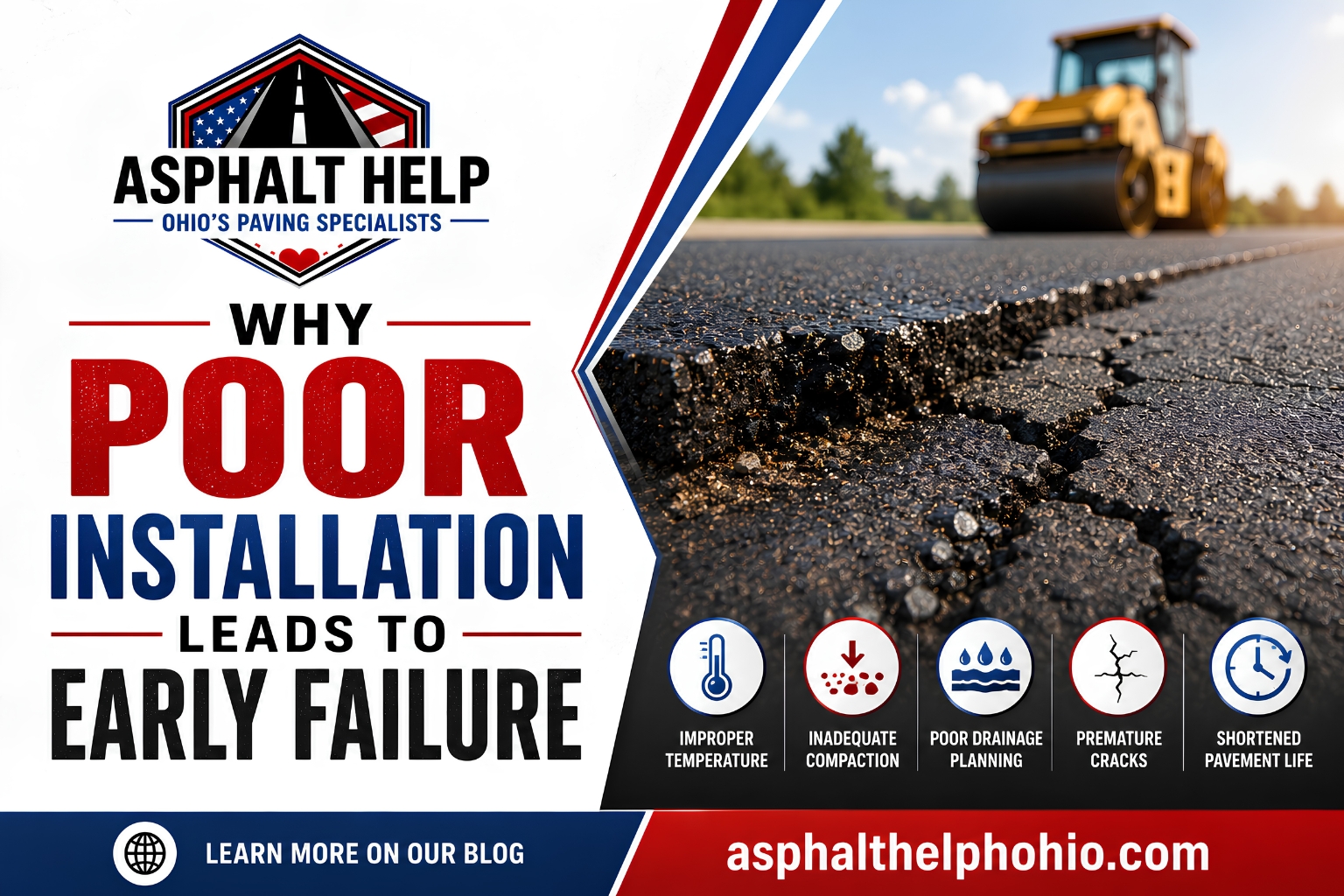
That makes patching a good choice when the damage is contained. If one section has a pothole, a cracked corner, or a soft spot but the rest of the pavement is still stable, patching can correct the problem without tearing out the entire surface. Asphalt Help Ohio says its patching and repair service is designed for potholes, cracks, and localized damage, and that it removes compromised material, repairs the base when needed, and compacts the new asphalt to match the existing grade.
When patching is the right solution
1. The damage is localized, not widespread.
Patching makes the most sense when one section of pavement is failing but the rest of the surface is still in good condition. That might mean a pothole in one lane, a damaged driveway edge, or a small area that has softened from water exposure. In those cases, repairing the exact problem spot is more efficient than rebuilding everything around it.
2. The base below the damaged area can be repaired.
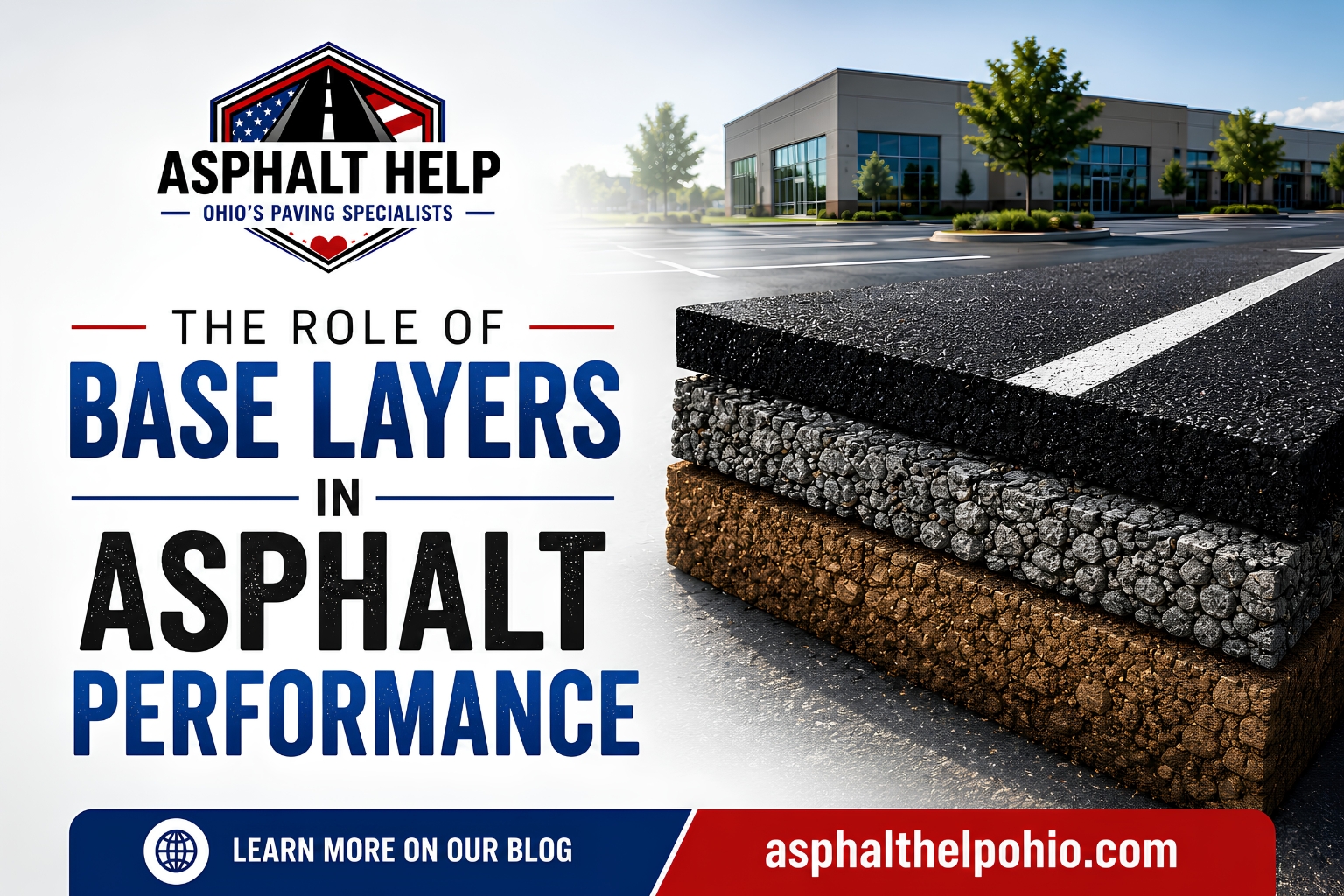
A patch works best when the contractor can remove the failed surface, inspect the support below it, and fix the base if needed. Asphalt Help Ohio says that when it patches damaged areas, it repairs the base when necessary before compacting new asphalt. That matters because a patch over weak support will usually fail early.
3. The pavement is not structurally beyond repair.
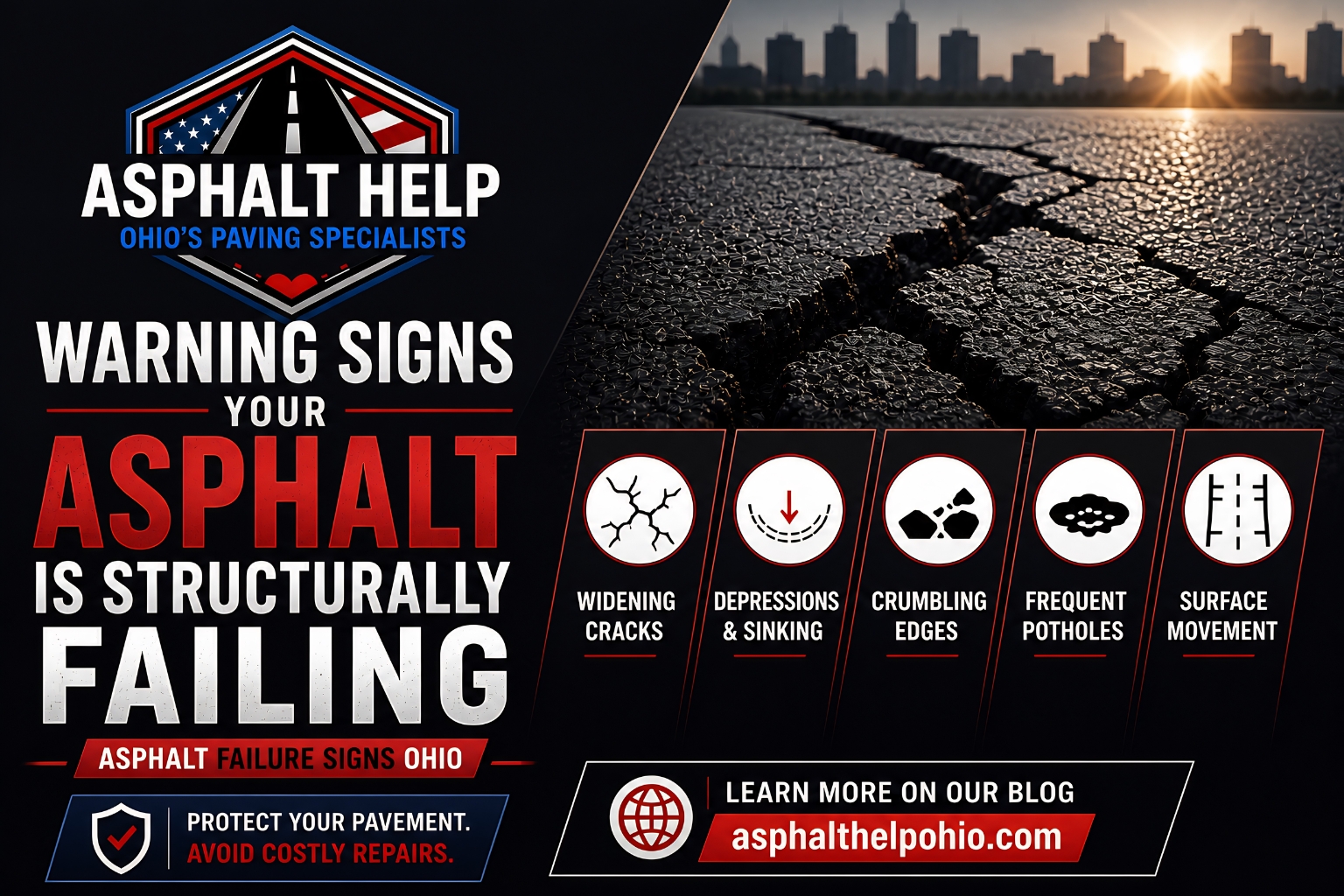
If the surface has severe sinking, major instability, or widespread failure, patching may not be enough. Asphalt Help Ohio says that pavement that is severely cracked, sinking, or structurally unstable should be removed and replaced rather than simply covered over. That is why patching is best for contained problems, not full-system failure.
4. You need a faster, practical repair.
Patching is often the right choice when the goal is to restore function quickly. Temporary patching is specifically used when weather conditions do not allow a more permanent solution, and more durable patching can be used when conditions and pavement condition are favorable.
5. You want to stop the problem from spreading.
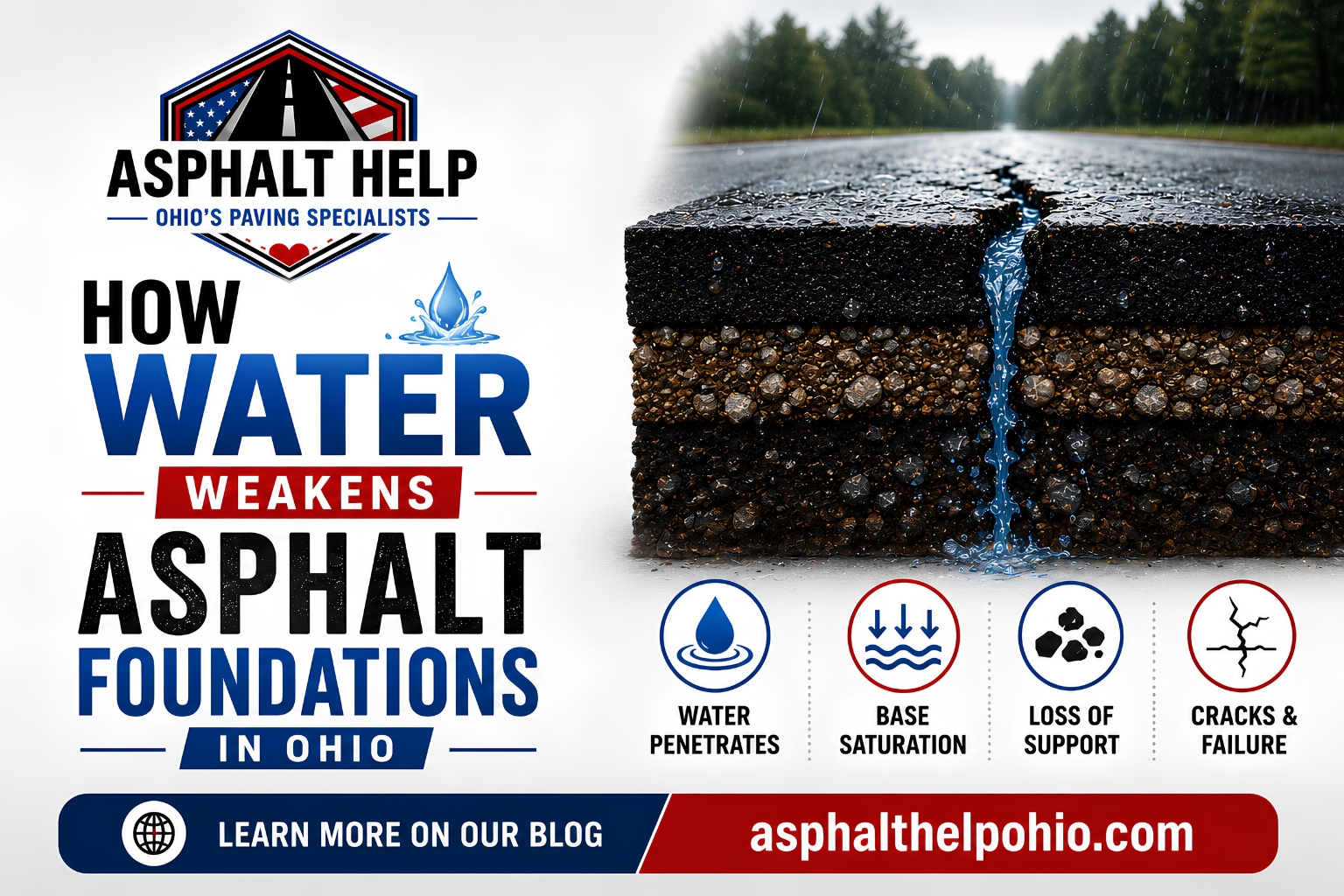
Small pavement failures rarely stay small on their own. Water enters cracks, weakens the base, and traffic then breaks down the unsupported area. Patch repairs help interrupt that cycle before the damage spreads farther across the pavement.
Signs patching may be enough
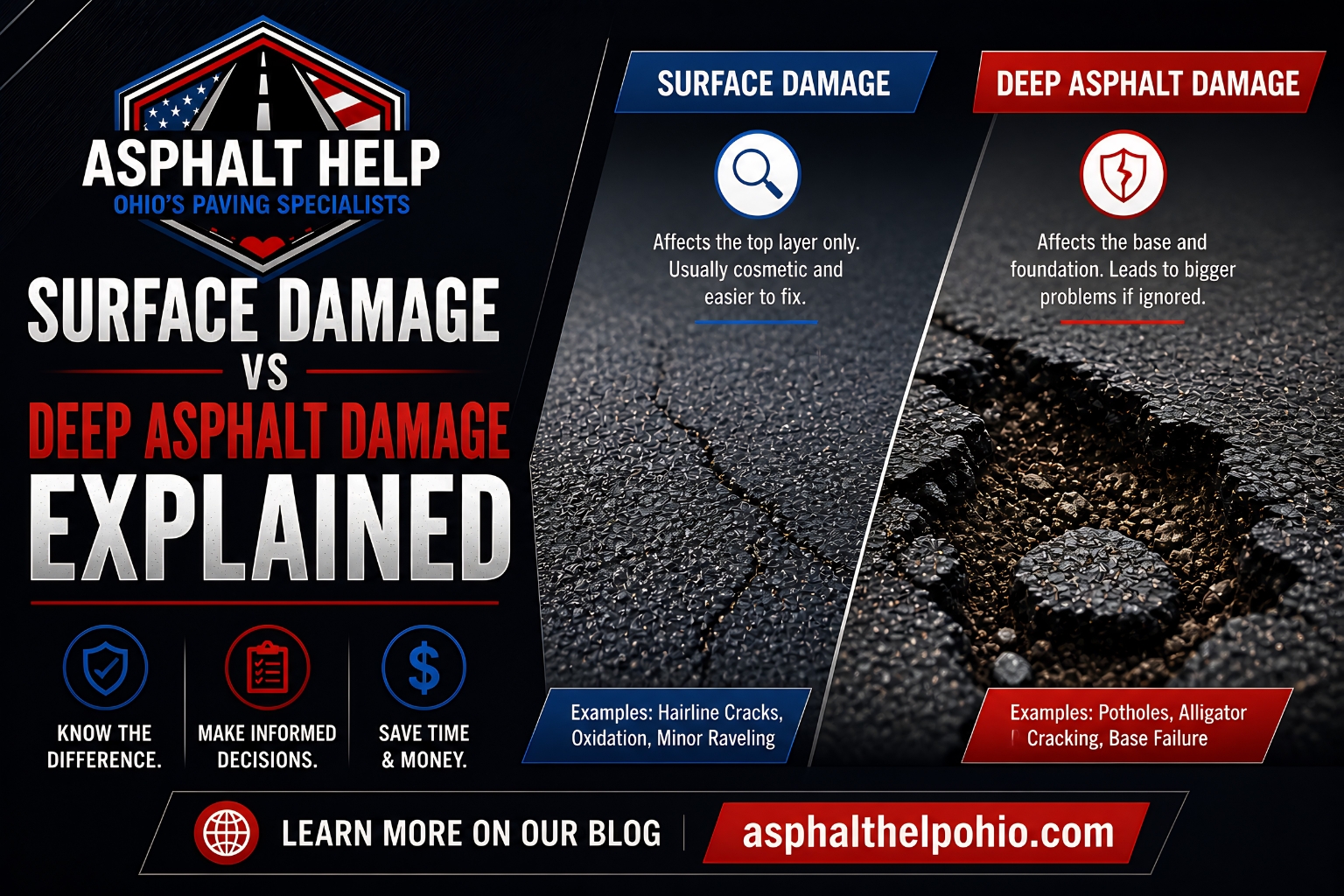
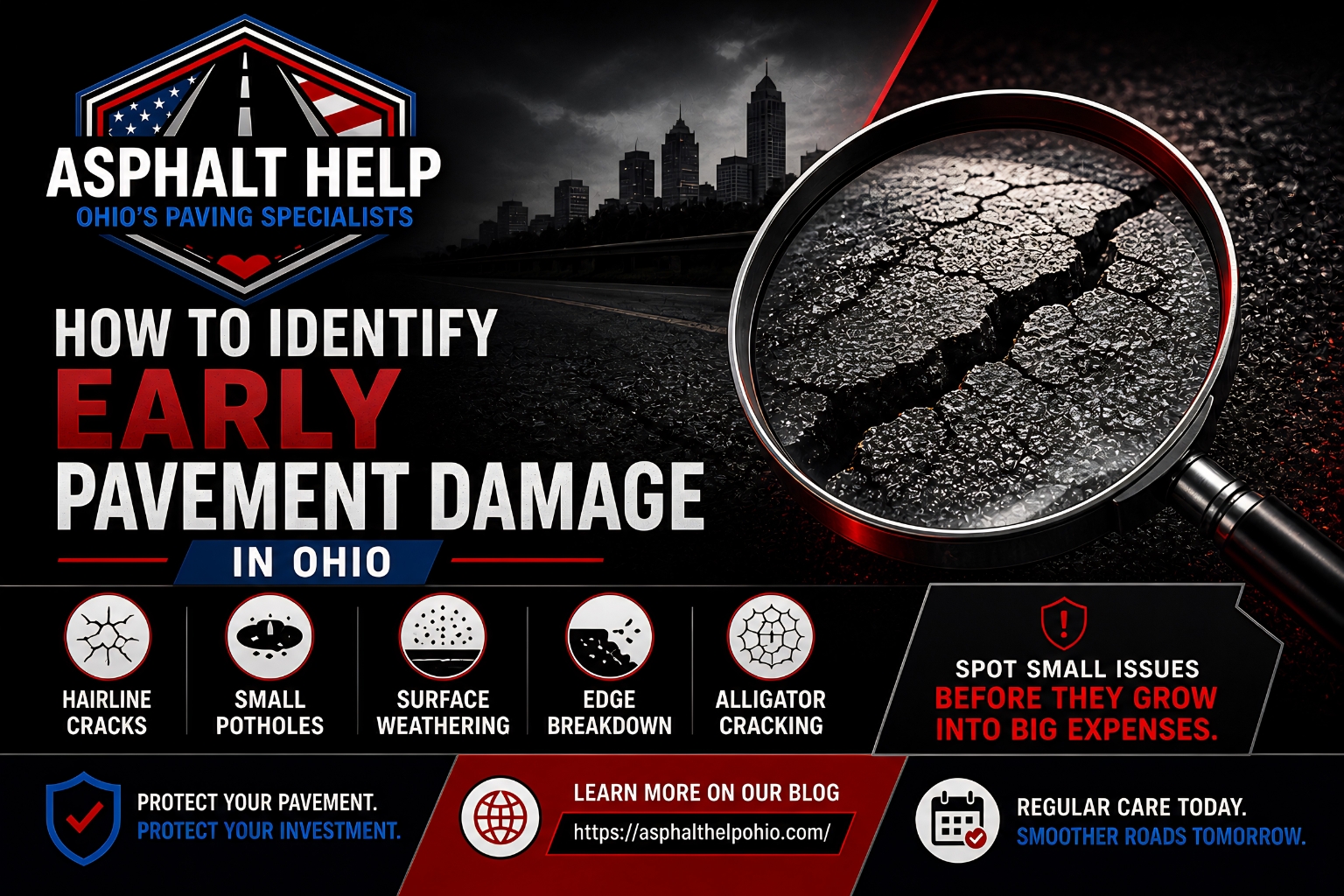
If the damage is limited to a few potholes, isolated cracks, a soft spot, or an edge failure, patching is often the most sensible repair. Those symptoms usually mean the pavement has a problem in one area rather than a complete failure across the entire surface. Pothole guidance describes patching as a standard repair method for restoring pavement smoothness and replacing failed sections before they grow larger.
Another sign patching may work is when the surrounding pavement still looks strong and drains properly. If the overall surface is stable, the lot or driveway can often be preserved by repairing only the broken sections. Asphalt Help Ohio’s repair service is built around that idea: remove the damaged material, repair the base if needed, compact the new asphalt, and protect the surrounding pavement from further deterioration.
When patching is not the right solution
Patching is not the best answer when pavement failure is widespread or caused by major structural problems. If the surface has repeated cracking across large areas, ongoing settlement, or deep drainage issues, a patch may only provide a short-term fix. Asphalt Help Ohio says that when pavement is severely cracked, sinking, or unstable, removal and replacement is the right solution because the surface has to be rebuilt from the foundation up.
It is also not the best option when the same area keeps failing again and again. That usually means the issue is underneath the surface, not just on top of it. If water is reaching the base, the soil is weak, or the drainage pattern is wrong, the repair has to address those conditions or the damage will likely return.
Why Ohio conditions make patching important
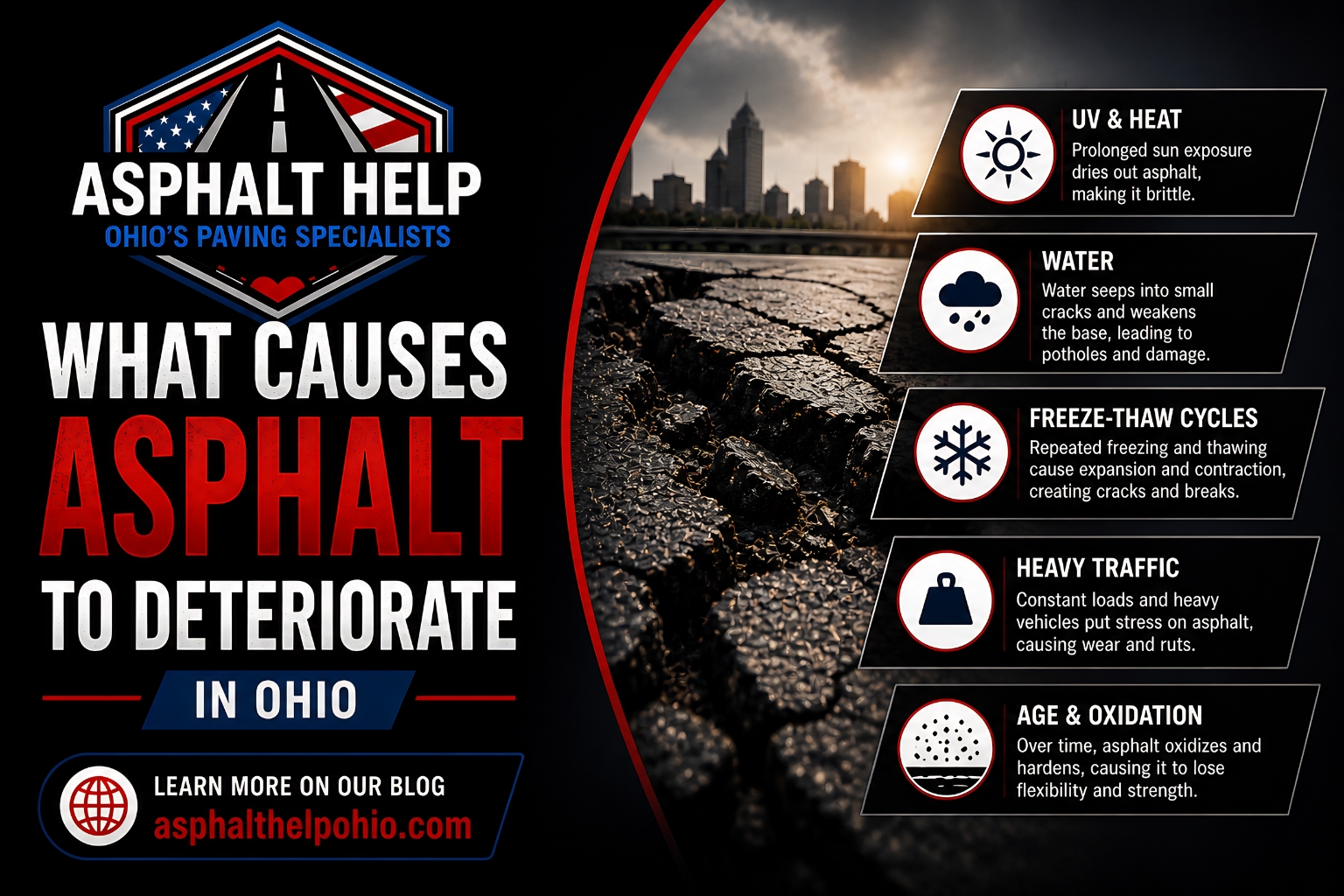
Ohio weather can make a small failure worse very quickly. Water that enters a crack or pothole can freeze, expand, and weaken the pavement below. Traffic then hits that weak area, and the damaged section can break apart further. Technical repair guidance notes that pothole patching may be temporary when weather is not favorable for a more permanent fix, and that winter conditions often limit which repair methods can be used.
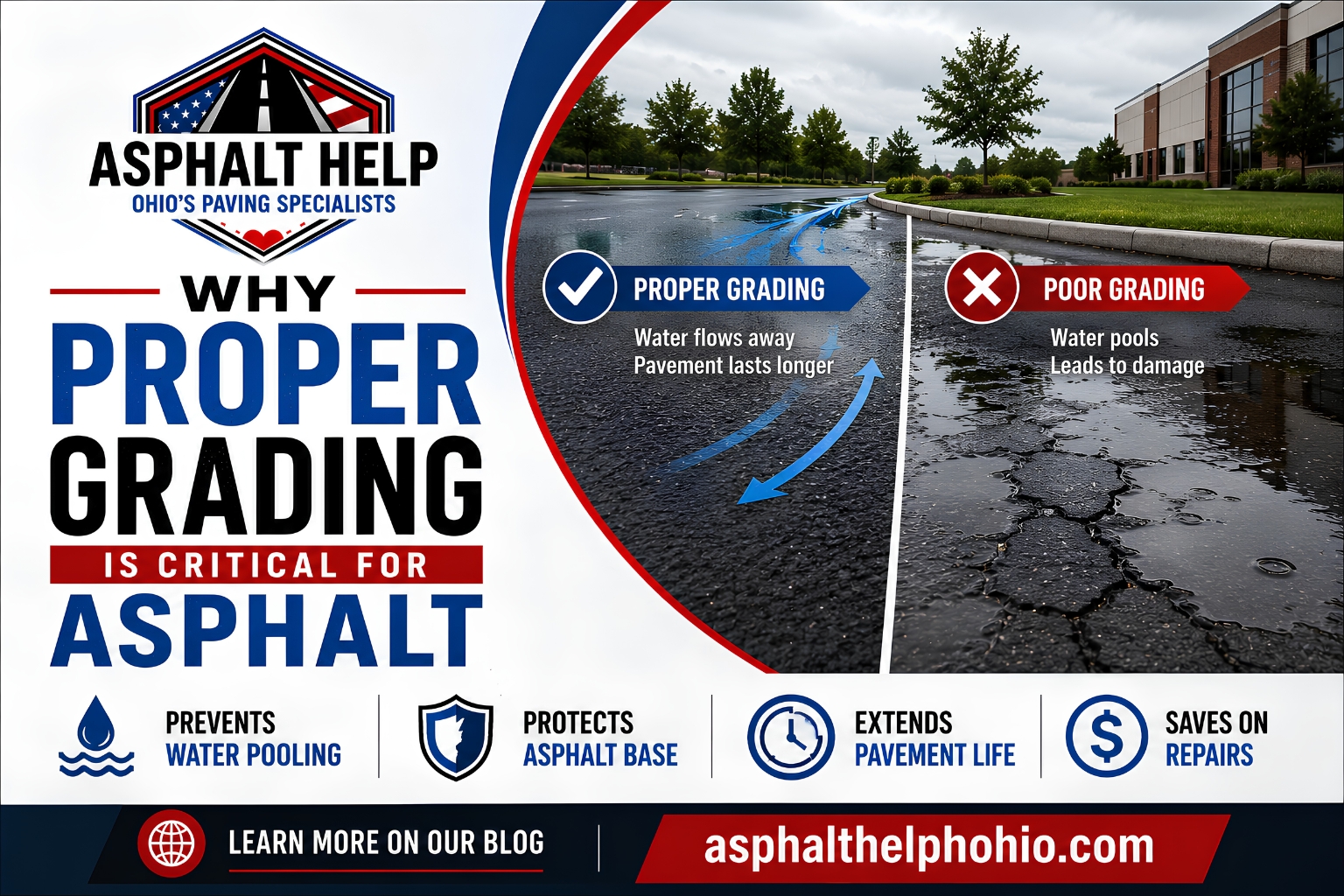
That is why local experience matters. Asphalt Help Ohio says it serves residential, commercial, and municipal properties across Central Ohio and focuses on grading, drainage, and strong base preparation because standing water accelerates cracking and weakens the base. That approach is especially relevant in Ohio, where freeze-thaw cycles and moisture can turn a minor defect into a larger failure.
How professional patching works
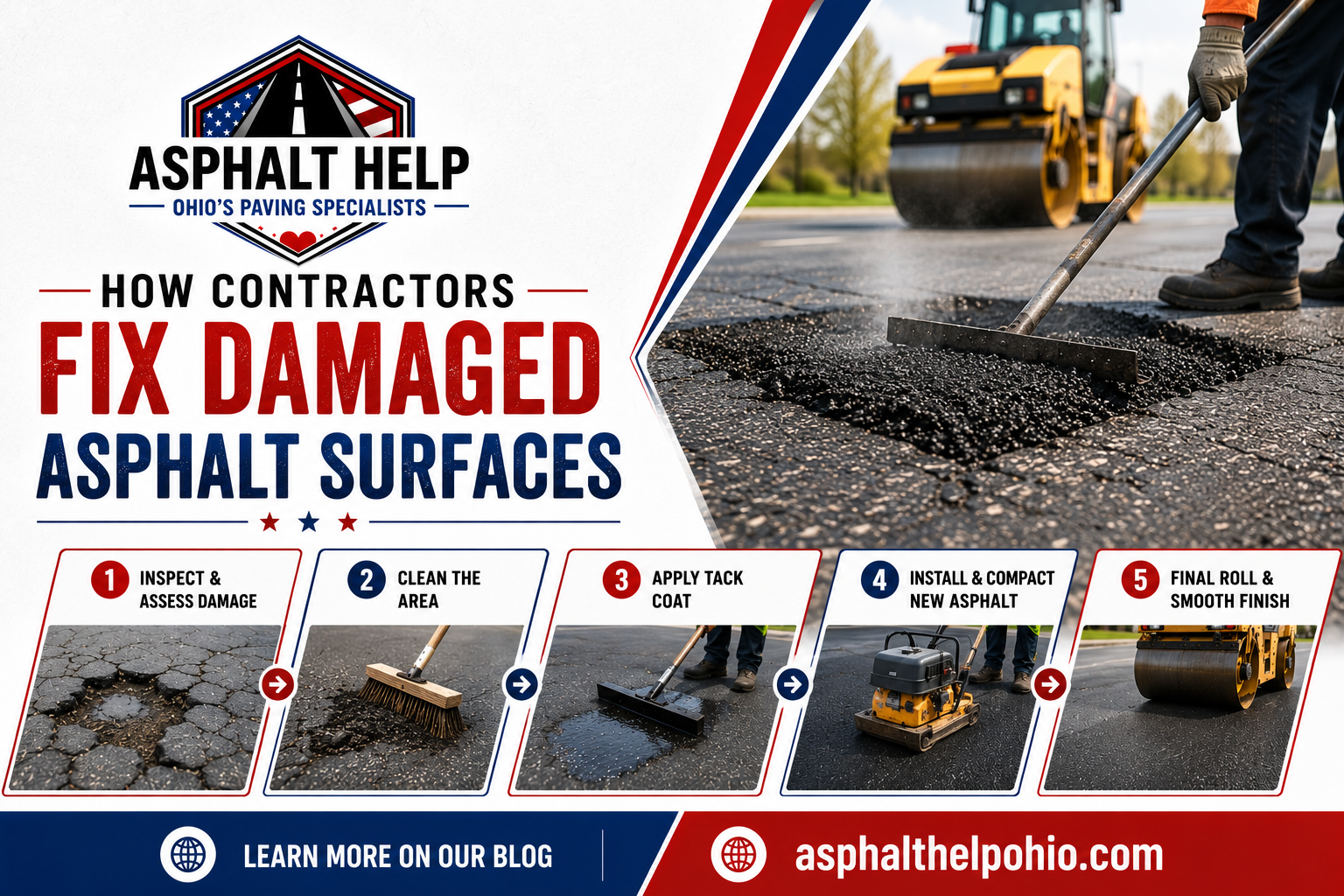
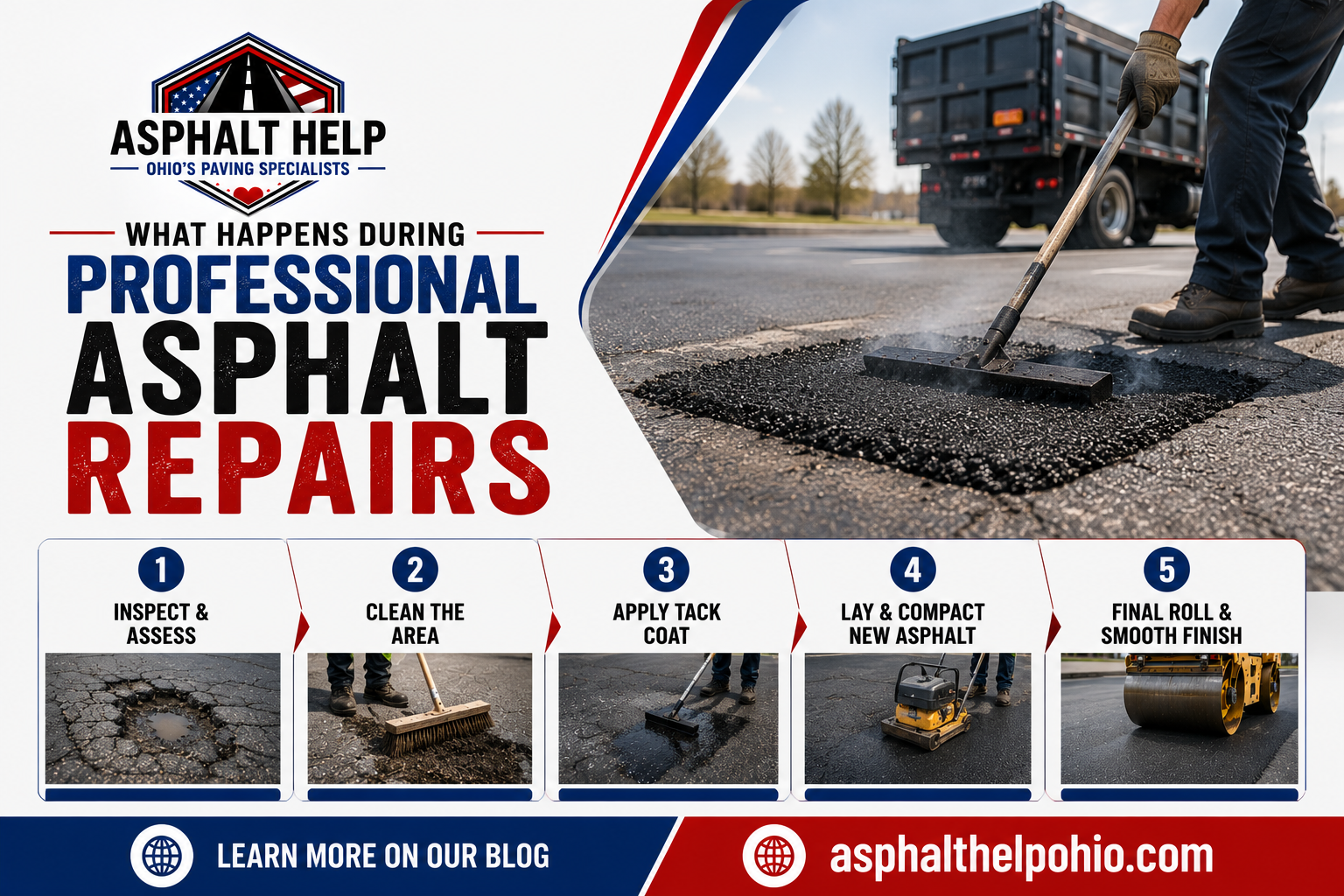
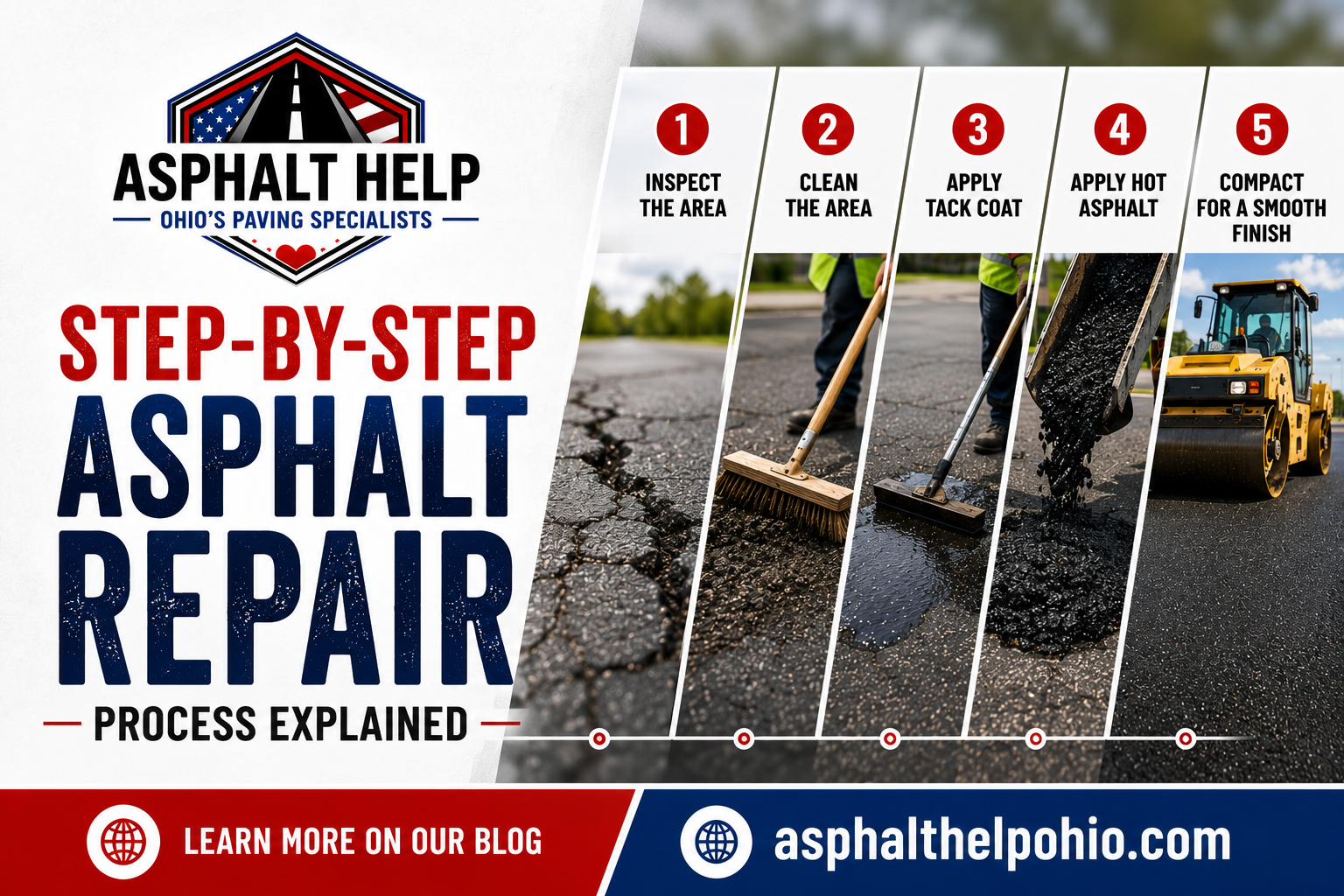
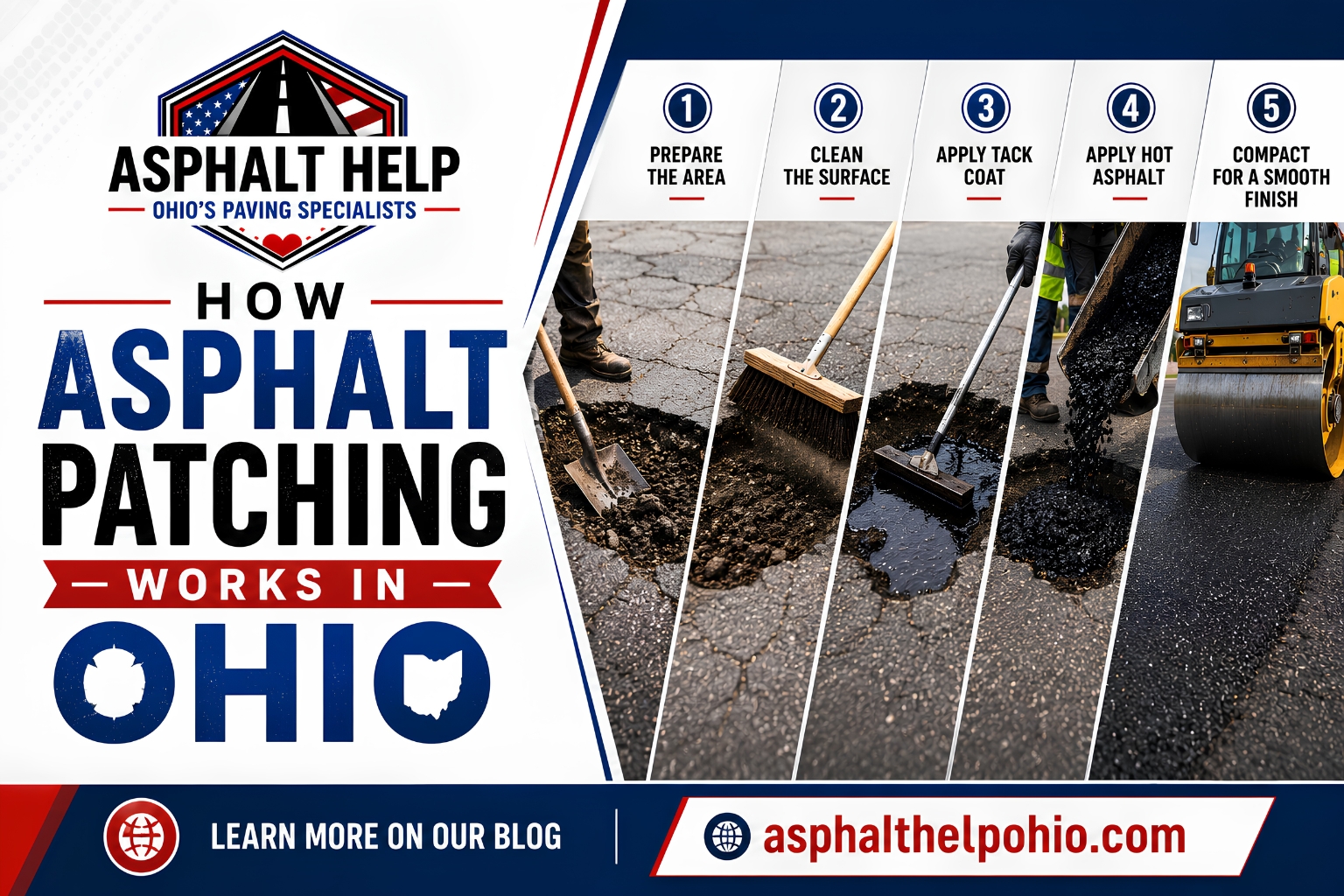
A good patch repair is more than just filling a hole. Asphalt Help Ohio says the process starts by removing compromised material, then repairing the base when needed, and finally compacting new asphalt to match the existing grade. That sequence matters because a patch is only as strong as the surface and support beneath it.
Technical pothole repair guidance also explains that more durable patching uses hot-mix asphalt and careful reconstruction of the failed area’s perimeter so the repair blends better with surrounding pavement. Temporary patching uses cold mix when conditions are not right for a permanent fix.
Why patching can be the best value
Patching is often the most practical repair when you want to preserve the rest of the pavement. It lets you fix a specific failure without paying for a full reconstruction when the base is still mostly sound. That is why patching is commonly used for potholes, surface cracks, and localized damage before the failure spreads.
It also helps extend pavement life by intervening early. Once water has time to enter cracks and soften the support below, repairs become bigger and more expensive. Patching gives you a chance to correct the problem while it is still manageable.
Why professional help matters
Patching is a repair method that depends on judgment. The contractor has to decide whether the area can be patched, whether the base needs repair, whether the damage is temporary or structural, and whether the pavement should be patched, resurfaced, or replaced. Asphalt Help Ohio says it offers patching, resurfacing, and full replacement across Central Ohio, and that it starts each project with a site evaluation to determine the best solution.
For property owners seeking asphalt repair solutions Ohio, that professional evaluation is what prevents the wrong fix. A patch applied to the wrong problem can fail again quickly, while a patch applied to the right kind of damage can restore safety and extend the life of the pavement.
Our asphalt repair services in Central Ohio
Asphalt Help Ohio provides asphalt patching and repair, new asphalt paving, resurfacing, removal and replacement, over stone paving, driveway paving, gravel driveway upgrades, parking lot paving, and sealcoating across Columbus and surrounding Central Ohio communities. The company says it works with residential, commercial, and municipal properties, and that its repair approach is built around grading, drainage, base stability, and long-term performance.
That means patching is not treated as a quick cover-up. It is part of a broader repair strategy that preserves the pavement when the damage is isolated and recommends more extensive work when the structure is failing.
Final thoughts
Asphalt patching is the right solution when the damage is localized, the surrounding pavement is still sound, and the base can be repaired or confirmed as stable. It works well for potholes, cracks, and small failed sections that need a durable, targeted fix. But when the pavement is sinking, unstable, or failing over a wide area, patching is no longer enough.
For property owners comparing asphalt repair solutions Ohio, the best approach is to act early and choose the repair that matches the real condition of the pavement. Asphalt Help Ohio’s patching, resurfacing, and replacement services are designed around that idea, with a focus on finding the right solution before damage spreads farther.