


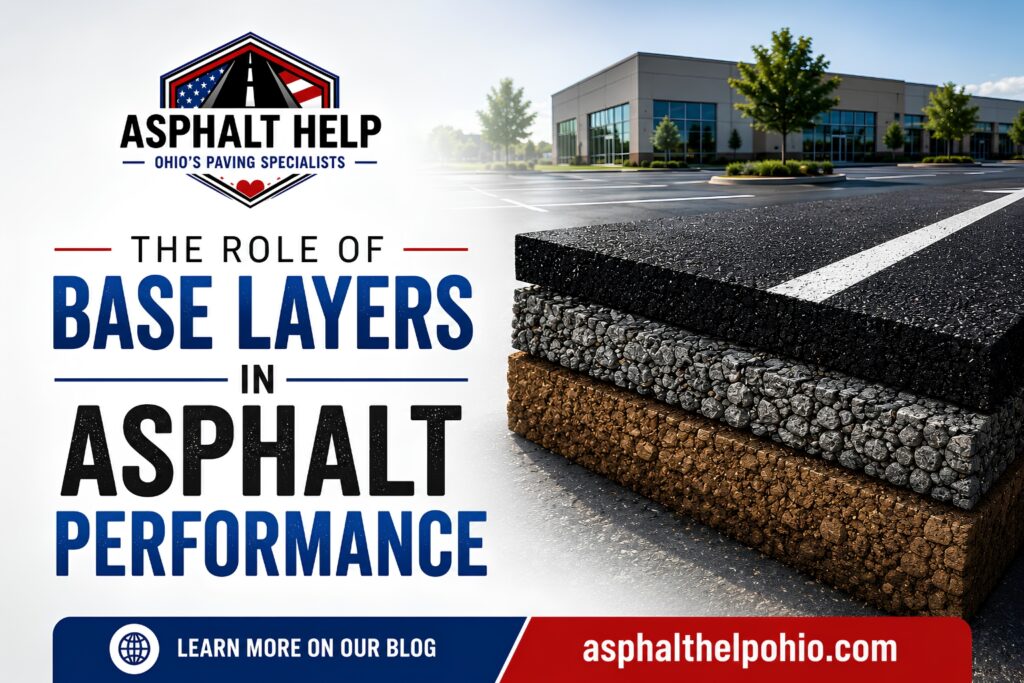
What makes one asphalt surface stay smooth and strong for years while another starts settling, cracking, or rutting much sooner? In many cases, the answer is hidden below the surface. The base layers carry much of the pavement’s load, spread traffic stress, and help keep water from weakening the structure underneath. That is why asphalt base layers Ohio projects depend so heavily on careful preparation, compaction, and drainage control. In pavement systems, the base course sits below the wearing course and above the subgrade or subbase, forming a key structural layer that supports the surface above it.
For property owners comparing Asphalt Paving Services in Columbus Ohio, the base is not a detail to overlook. It is the part that helps determine whether an asphalt driveway, parking lot, or private road can handle daily traffic and Ohio’s weather swings without failing early. Asphalt Help Ohio says it provides full-service residential, commercial, and municipal paving, including new installation, resurfacing, structural repairs, over-stone paving, and sealcoating across Central Ohio, and it emphasizes engineered base preparation and precision grading as part of its long-term performance approach.
Why the base layer matters so much
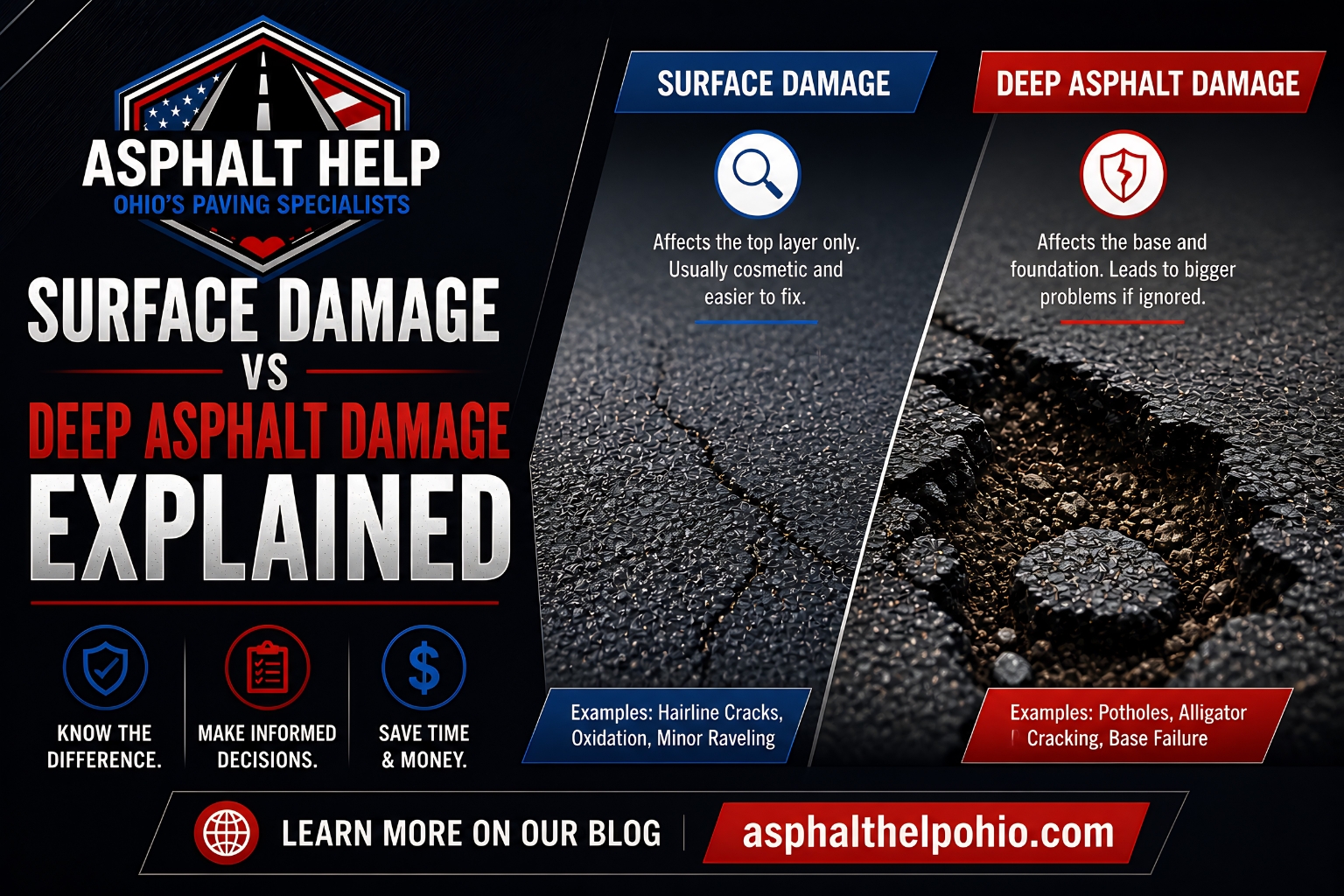
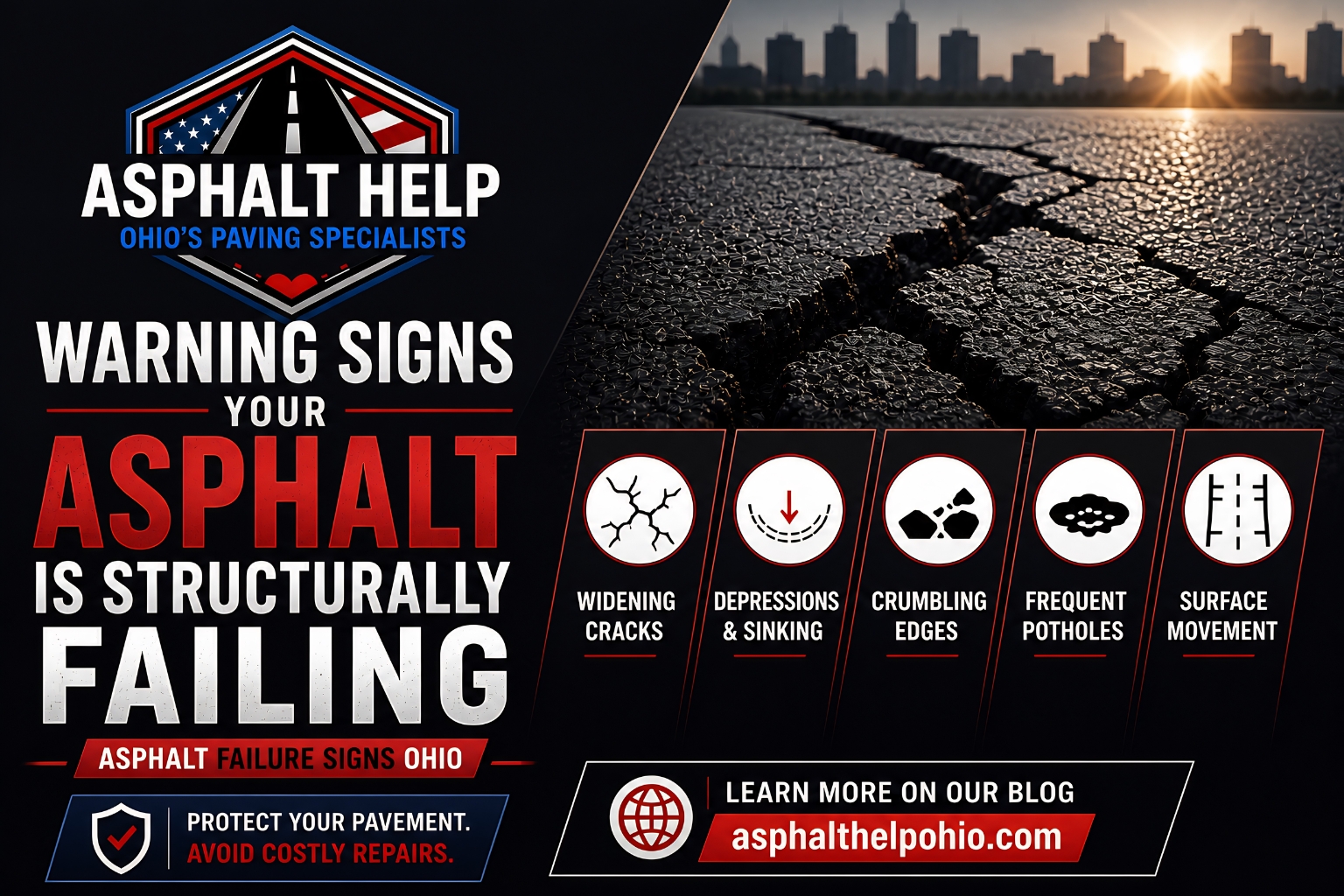
A pavement system is only as reliable as what supports it. The base layer helps distribute wheel loads over a wider area so the subgrade is not overloaded in one spot. When that support is weak, the pavement can deform under traffic, and surface problems such as depressions, rutting, and fatigue cracking become more likely. Engineering references describe the subgrade as the native material below the pavement system and note that failure there can lead to depressions and rutting in the surface courses above.
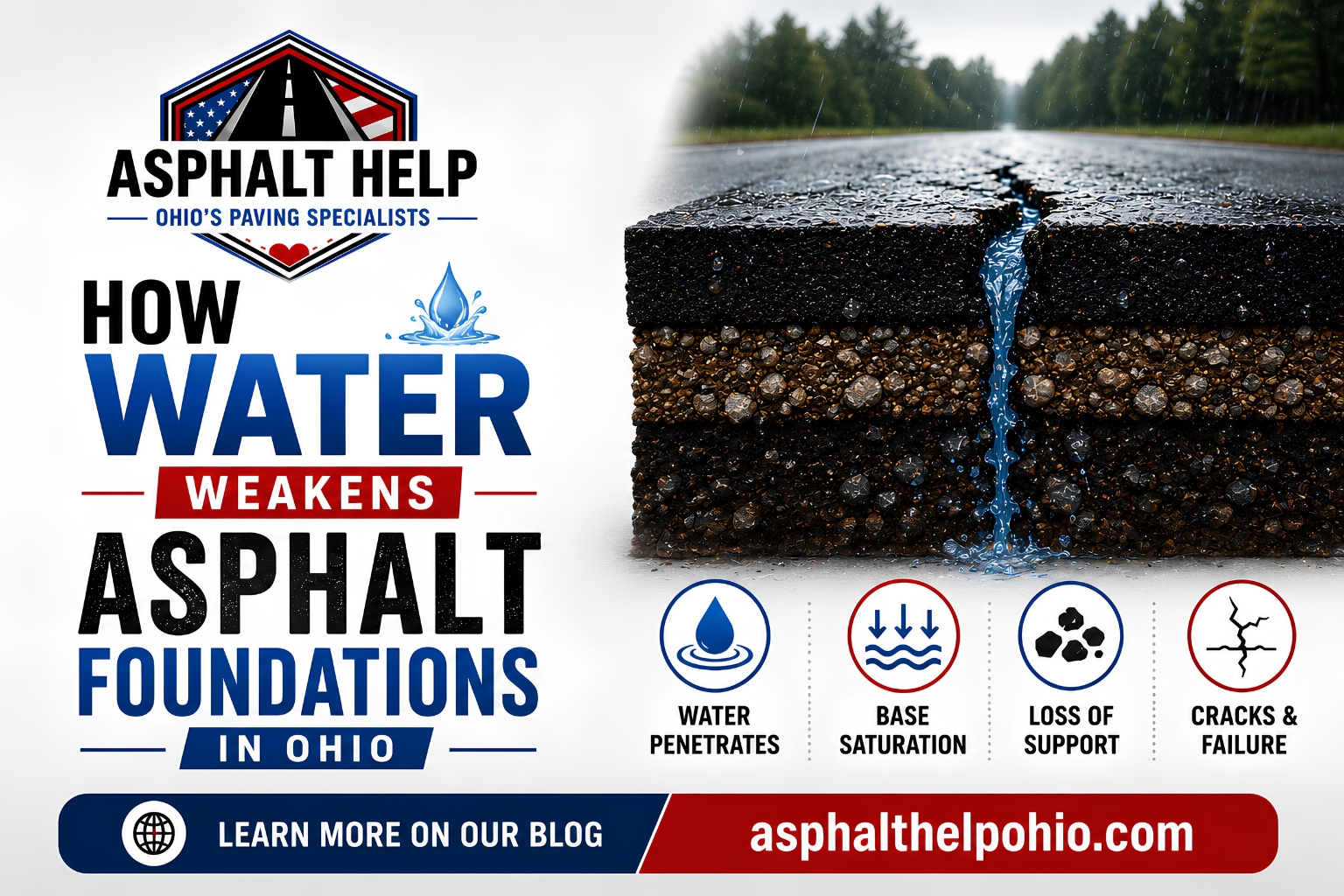
The base also helps protect the asphalt from water-related damage. If moisture reaches the supporting layers and they soften, the pavement loses strength below the surface. That is one reason drainage and grading are so closely tied to pavement performance. Asphalt Help Ohio says it begins every project with a detailed site evaluation to confirm grading, drainage flow, and areas prone to water retention because standing water in Ohio accelerates cracking and weakens the base.
What the base layer actually does
1. It provides structural support
The base course sits under the asphalt wearing surface and gives the pavement a firm foundation. In road construction, it is typically made of compacted aggregate and is designed to create a stable platform for the pavement layers above it. Typical base-course thickness varies depending on the structure and underlying conditions, but the key point is that it must be compacted and strong enough to support traffic loads.
- It spreads weight across a broader area.
Instead of letting every tire load press directly into the soil beneath, the base distributes that force so the pavement can stay level and stable longer. This matters on driveways, parking lots, and private roads where traffic repeats in the same paths every day. - It reduces stress on the asphalt surface.
When the base is compacted properly, the asphalt above it does not have to flex excessively. Less stress means a lower chance of fatigue cracking and a better chance of long-term performance. Research on long-life pavement design also points to base thickness and base material properties as important factors in reducing strain in asphalt layers. - It helps the pavement hold its shape.
A strong base resists settlement and keeps the asphalt from sinking or forming dips. That is important because once the supporting layer moves, the surface usually follows.
2. It improves drainage and moisture control
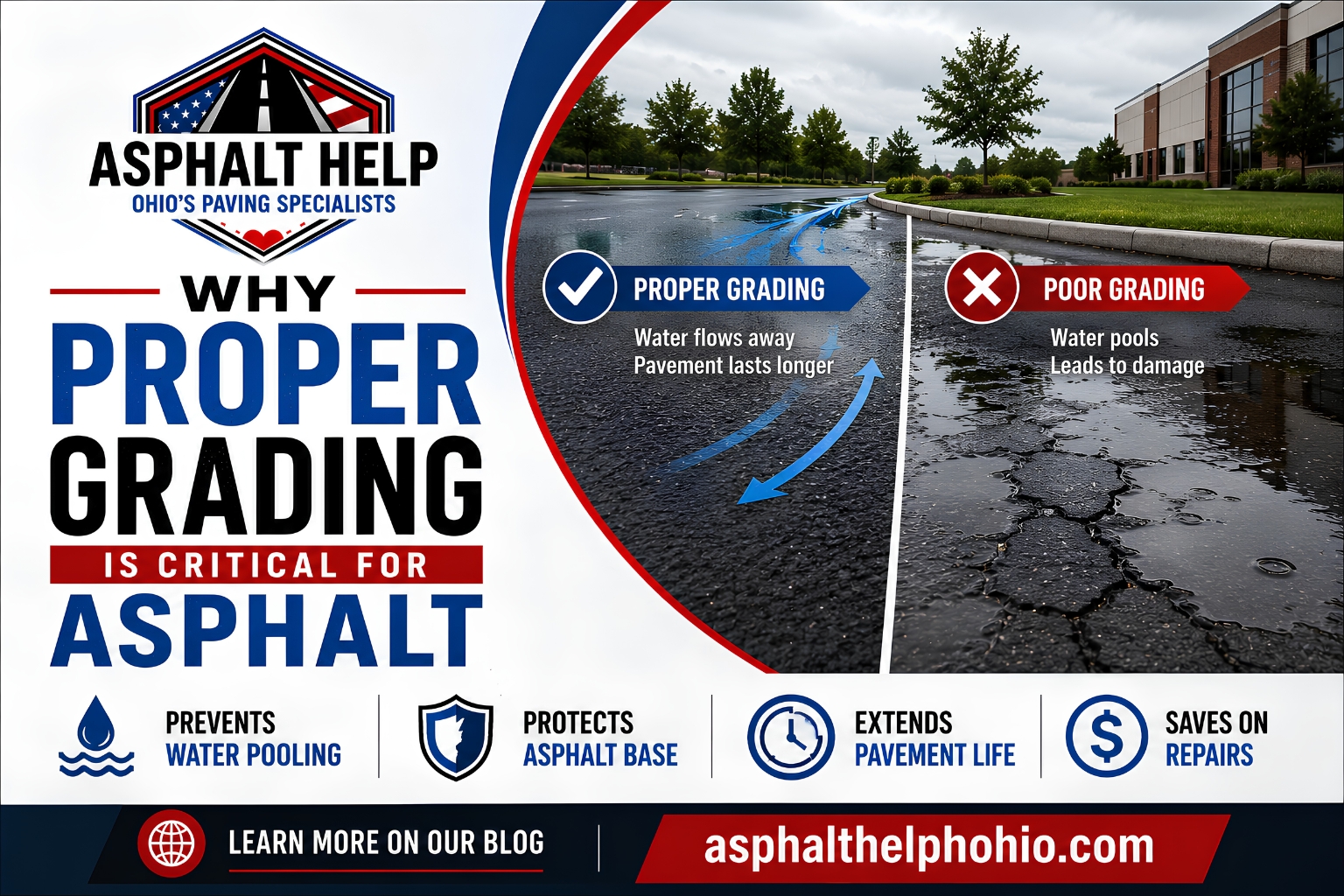
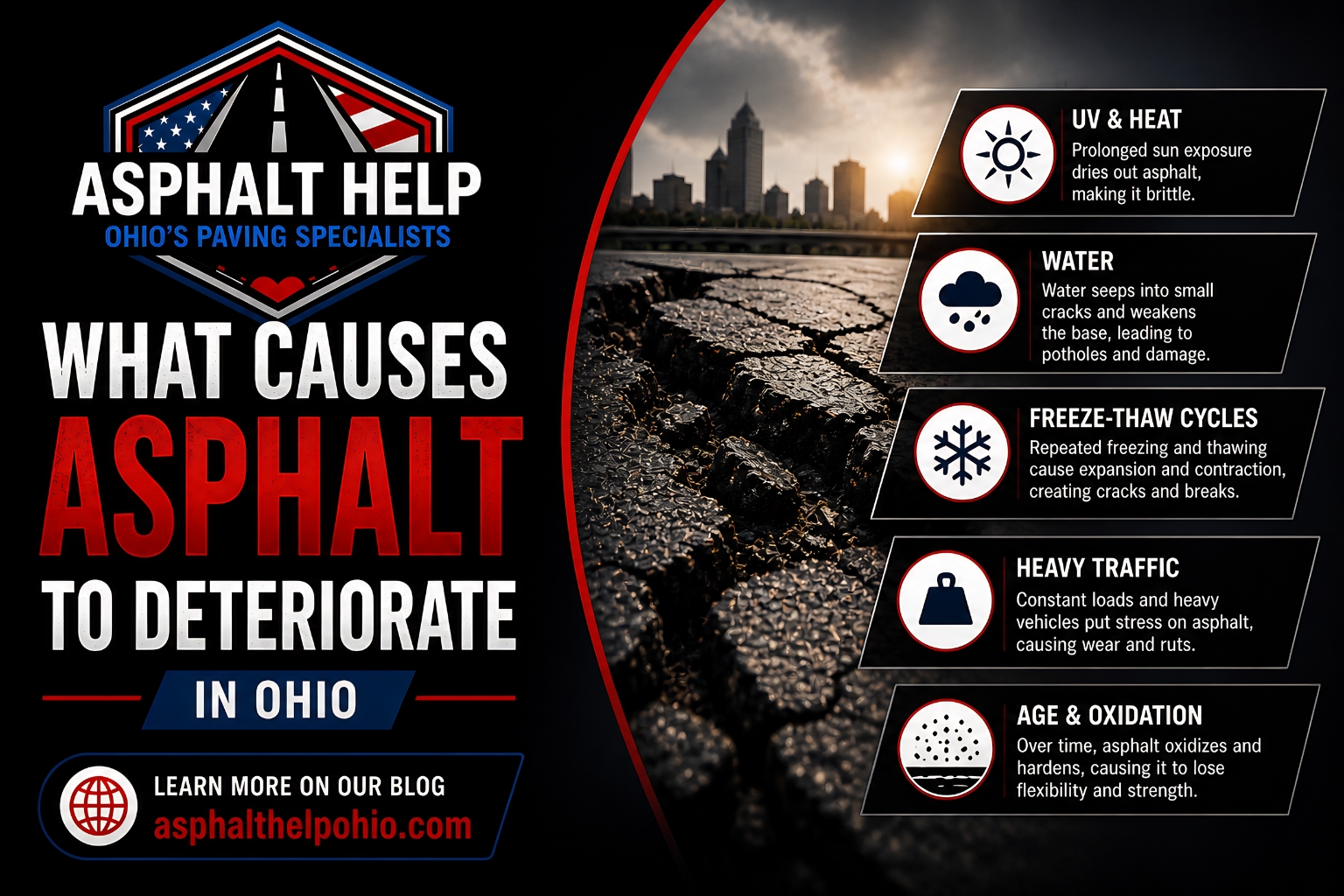
Water is one of the biggest threats to pavement durability. If it lingers in the structure, it can weaken the subgrade, soften the base, and create conditions that lead to potholes or cracking. Drainage gradient matters because insufficient slope allows pooling, and pooling increases the risk of damage.
- It helps move water away from the pavement system.
A well-built base works with grading to guide moisture out of the structure instead of trapping it underneath. That lowers the risk of soft spots and base saturation. - It reduces freeze-thaw damage.
In Ohio, trapped water can freeze, expand, and reopen cracks or weaken the foundation. Once that cycle repeats, the pavement becomes more vulnerable to potholes and edge failure. - It supports a longer service life.
Dry, well-drained support layers stay stronger than wet ones. That is why drainage is not just a comfort issue; it is one of the main reasons pavement lasts.
3. It improves the quality of the finished surface
A well-prepared base gives the asphalt a more even platform to rest on. That helps the finished surface look smoother and perform better under load. If the base is uneven, the top layer usually reveals it later through dips, seams, or irregular wear patterns.
Base layers and Ohio conditions
Ohio weather adds another reason the base matters. The state’s freeze-thaw cycles, seasonal rain, and traffic loads can all expose weak pavement support. Asphalt Help Ohio specifically says its pavement solutions are designed for the region’s climate and that it uses engineered base preparation and precision grading to support durability.
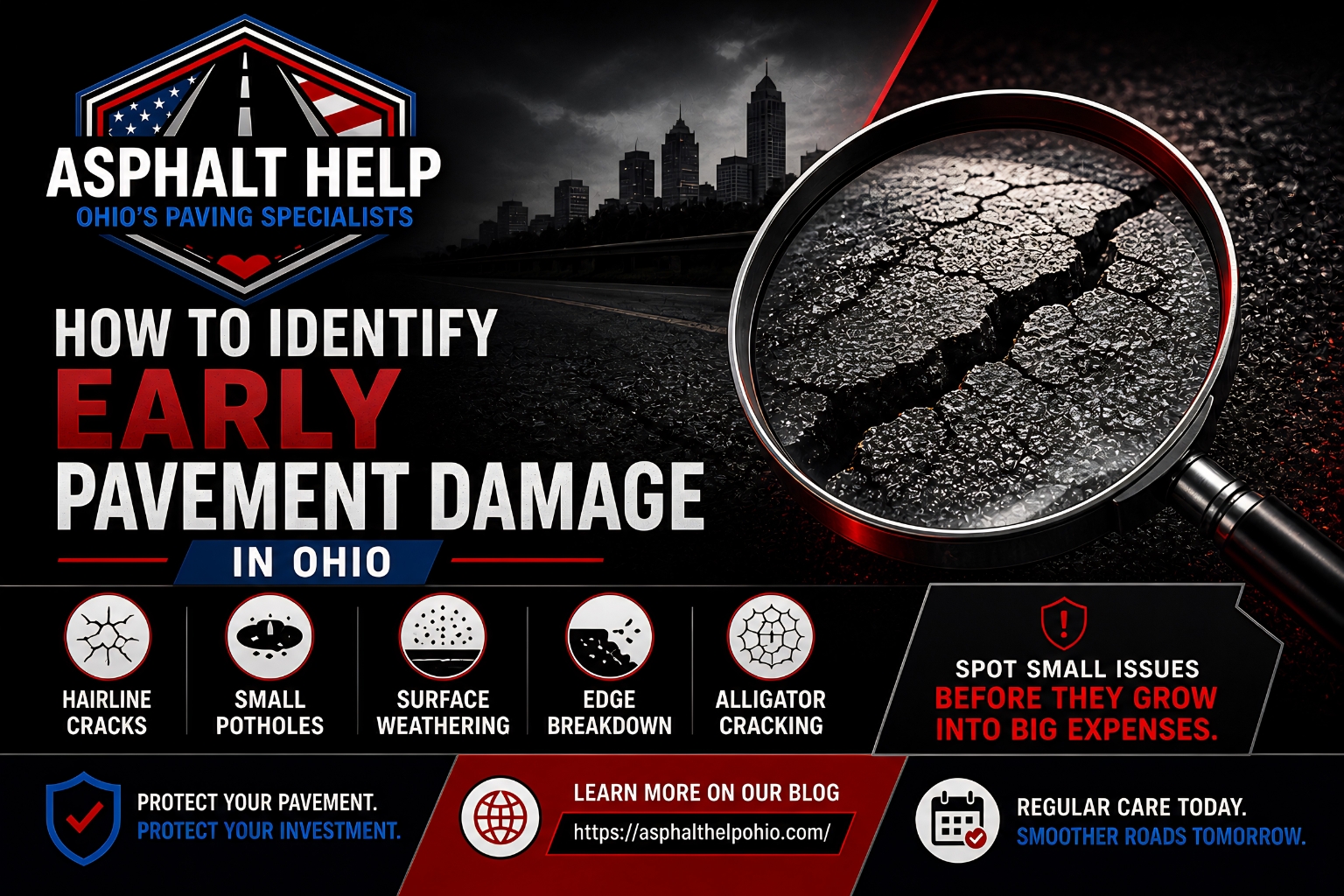
This is why experienced asphalt contractors in Central Ohio pay close attention to what happens before the asphalt is placed. A project that looks good on top but has a weak base underneath may start showing alligator cracking, potholes, or settling much sooner than expected. Pavement references note that base or subgrade failure can lead to depressions and rutting in the upper layers, which then allows water to pool and create more damage.
Common problems caused by weak base layers
| Base-layer problem | What it causes | Why it matters |
|---|---|---|
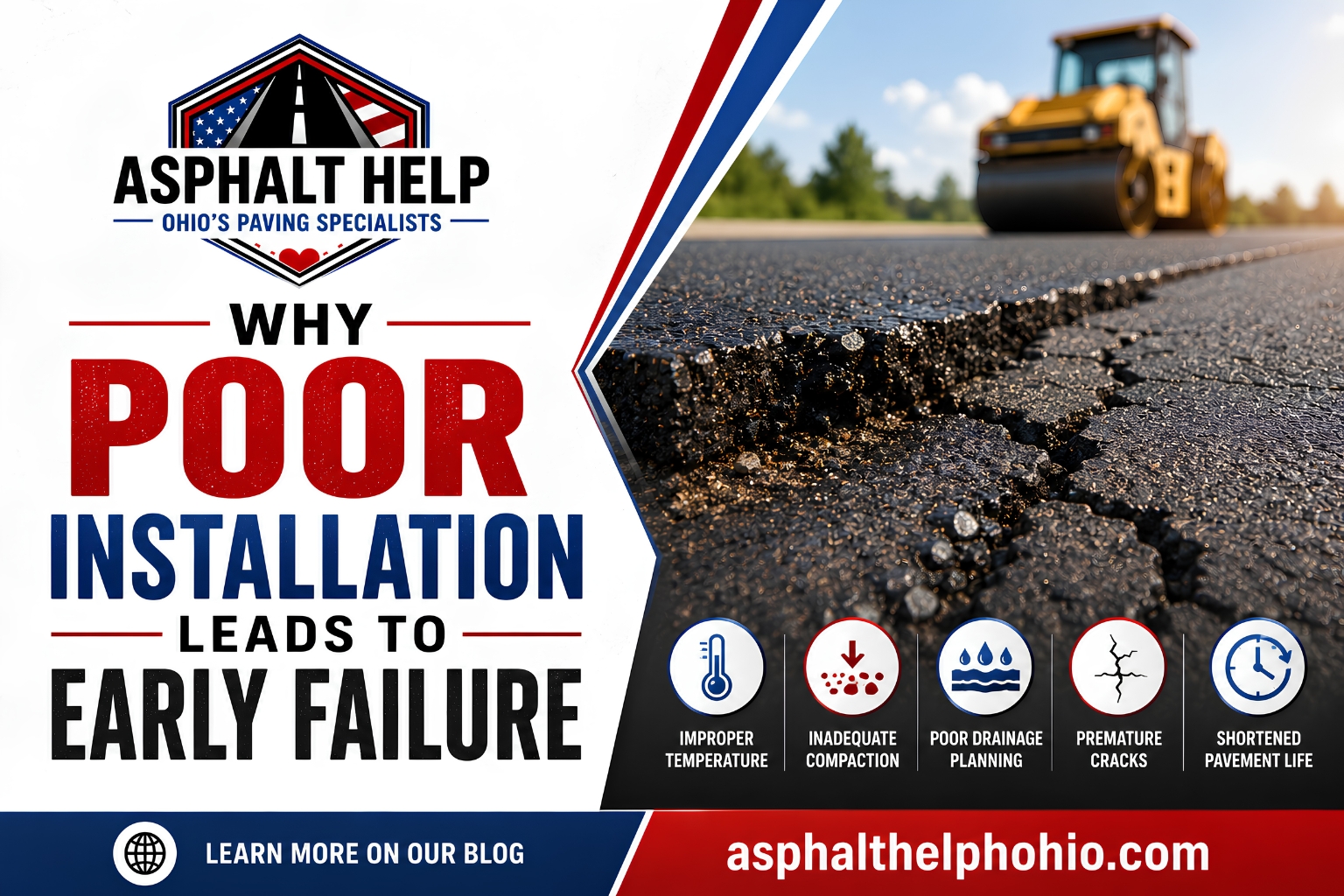
| Poor compaction | Settling, rutting, soft spots | The surface loses support and deforms under traffic. |
| Bad drainage | Water retention, saturation | Moisture weakens the foundation and speeds up failure. |
| Thin support layer | Excess strain on asphalt | The top layer cracks sooner because the load is not distributed well. |
| Weak subgrade | Depressions and rutting | The lower soil cannot carry the pavement load effectively. |
| Freeze-thaw exposure | Potholes and cracking | Water in weak layers expands and opens failures further. |
What a strong base layer includes
A strong asphalt base is not just a pile of stone. It is a carefully prepared layer of compacted aggregate that sits on a stable subgrade and works with proper grading to move water away. That is why site evaluation, base repair, and compaction matter so much. Asphalt Help Ohio says it performs new asphalt installation, resurfacing, structural repairs, and base-related work such as over-stone paving and replacement when pavement failure begins below the surface.
Good base construction usually means:
- Proper site evaluation before work starts so weak zones and drainage issues are identified early.
- Engineered grading that directs water away from the pavement structure.
- Compacted aggregate support that spreads traffic loads and resists settlement.
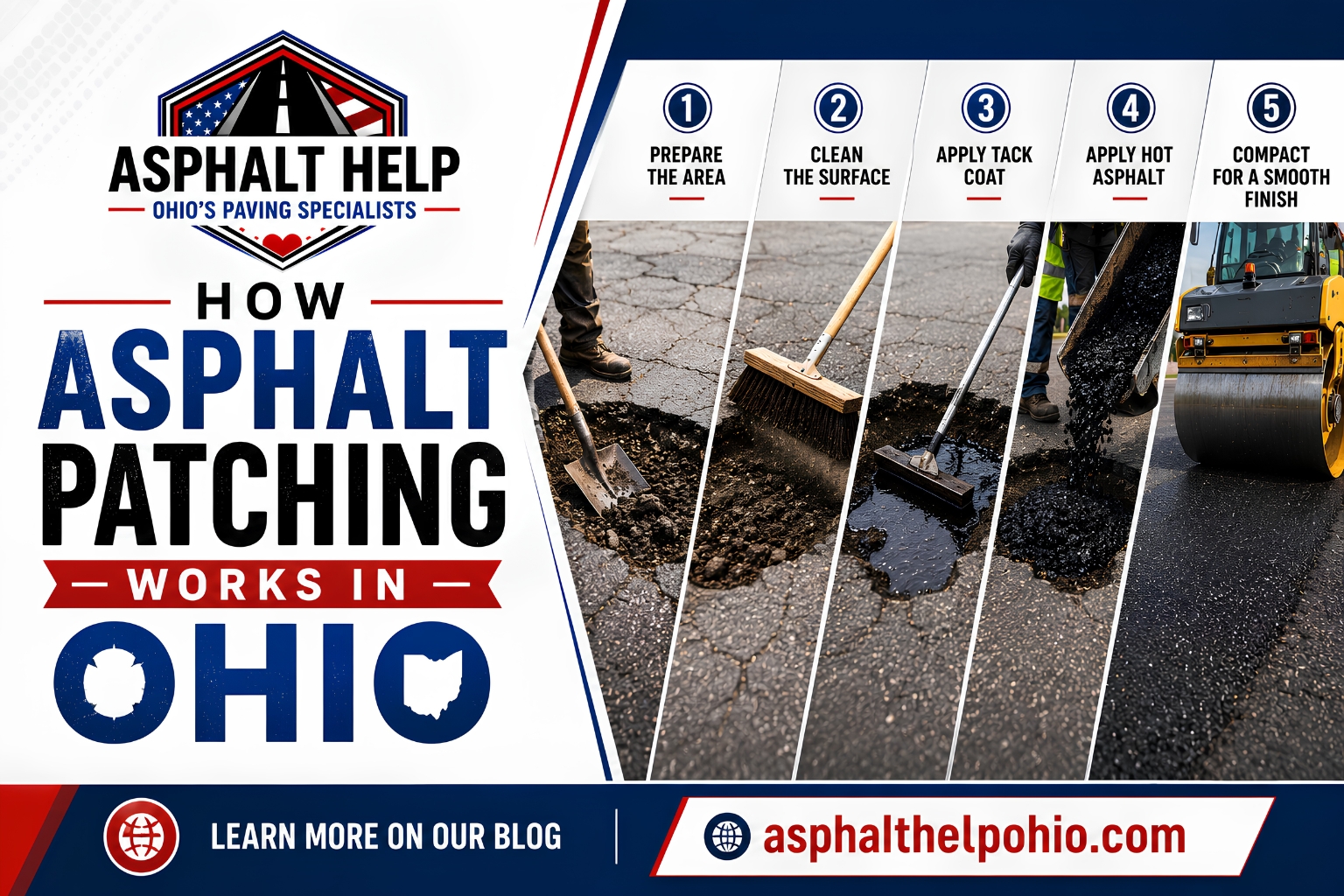
- Surface repair or replacement when needed so damaged support is corrected instead of being hidden. Asphalt Help Ohio says severely cracked or sinking pavement should be removed and rebuilt from the foundation up rather than simply covered over.
Why professional installation matters
Base layers are difficult to get right with guesswork. The contractor has to judge soil conditions, drainage, thickness needs, and the level of traffic the pavement will carry. That is why a local crew with experience in Ohio conditions matters. Asphalt Help Ohio says it has more than 30 years of experience and serves Columbus and surrounding Central Ohio communities with residential, commercial, and municipal paving services.
That experience matters because a pavement system with a strong base is more likely to resist cracking, rutting, and water damage over time. A weak base, by contrast, can lead to early pavement failure even when the surface looks good at first.
Our asphalt services in Columbus and Central Ohio
Asphalt Help Ohio says it provides full-service asphalt paving across Central Ohio, including asphalt paving, resurfacing, patching, removal and replacement, over-stone paving, driveway paving, gravel driveway upgrades, and sealcoating. The company also says it works with residential, commercial, and municipal clients and focuses on durable, long-lasting surfaces built for local conditions.
For property owners needing Asphalt Paving Services in Columbus Ohio, that kind of service mix matters because base-layer problems do not always call for the same fix. Some projects need resurfacing, while others need structural repairs or complete replacement. Asphalt Help Ohio says it evaluates the site first and recommends the right solution based on drainage, grading, and foundation condition.
Final thoughts
The base layer is one of the most important parts of any asphalt pavement because it carries load, improves drainage, and helps the surface stay stable through Ohio weather. When the base is strong and properly graded, the asphalt above it has a much better chance of staying smooth and durable. When it is weak, the surface usually shows the damage sooner or later.
For anyone planning asphalt base layers Ohio projects, the lesson is simple: don’t judge pavement by the top layer alone. The support beneath it is what makes the whole system work. Asphalt Help Ohio’s focus on site evaluation, engineered base preparation, and precision grading reflects that reality across Columbus and Central Ohio.