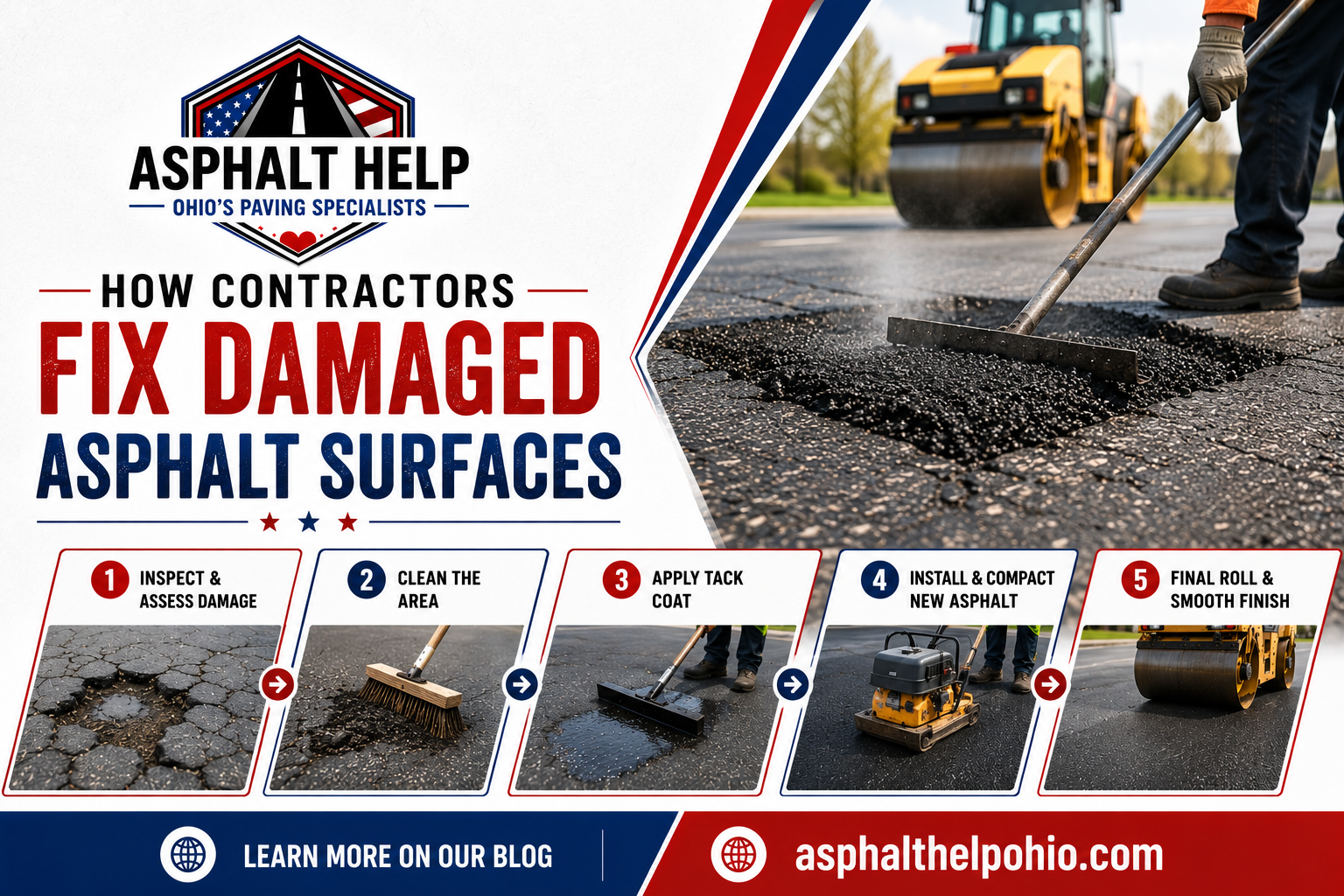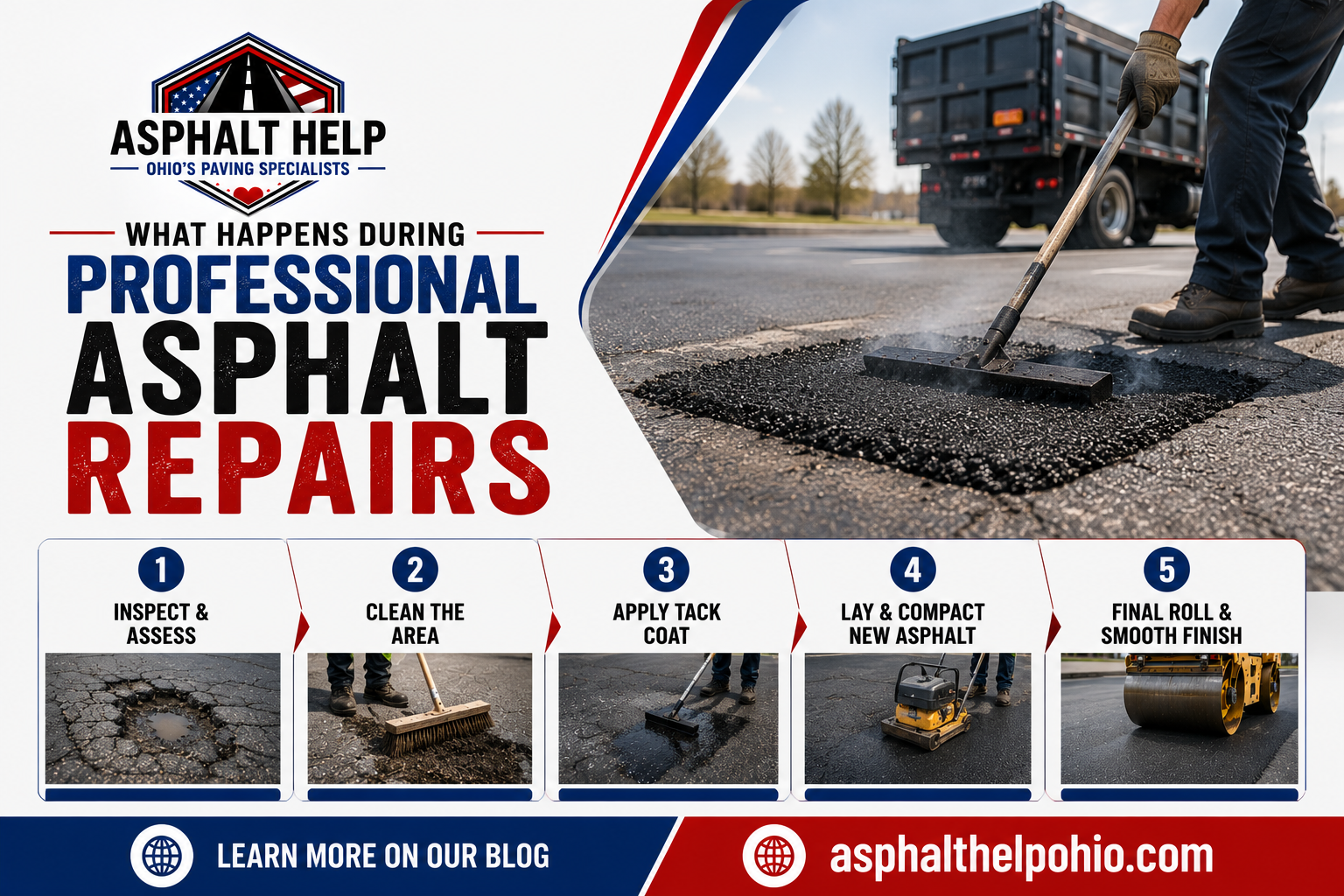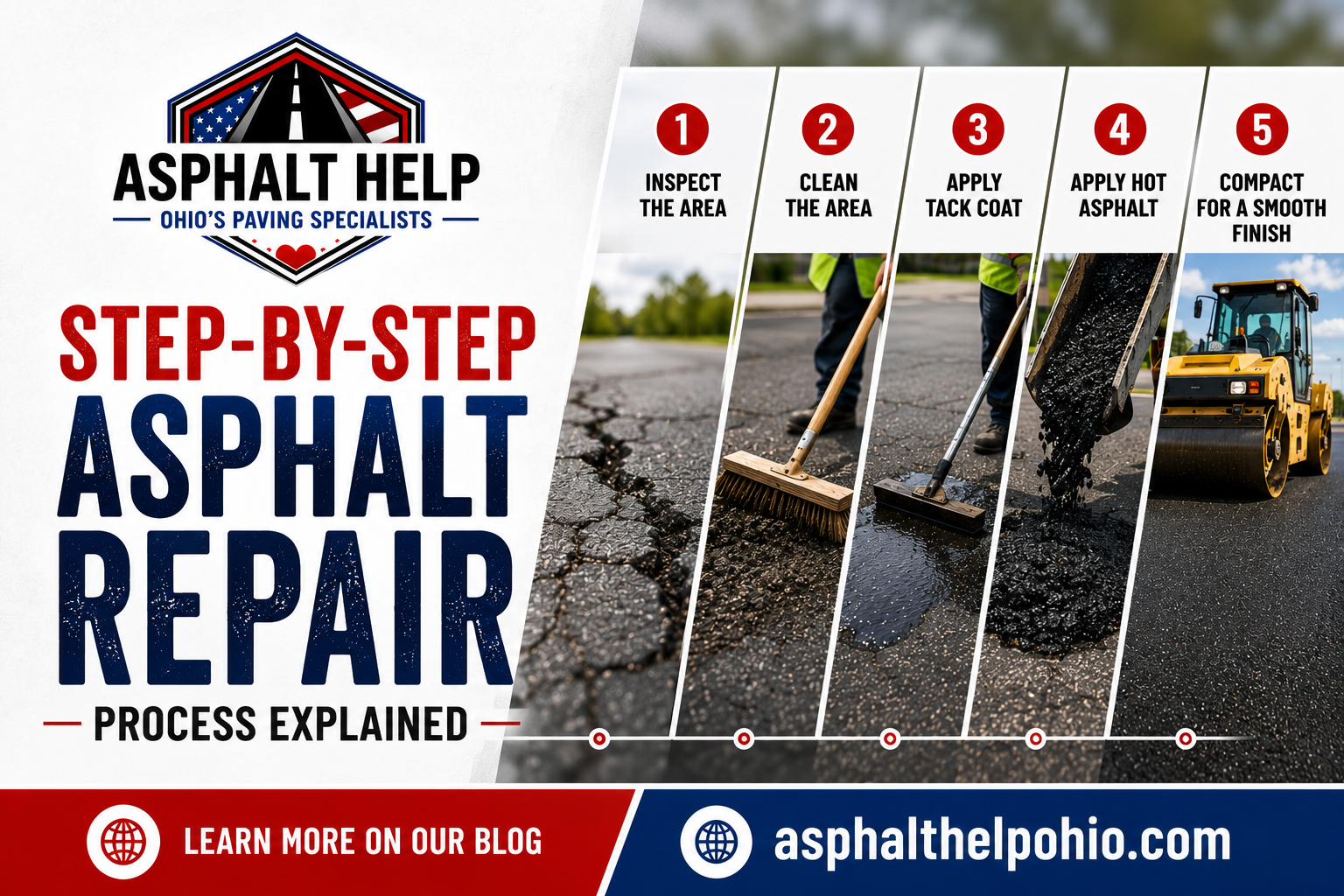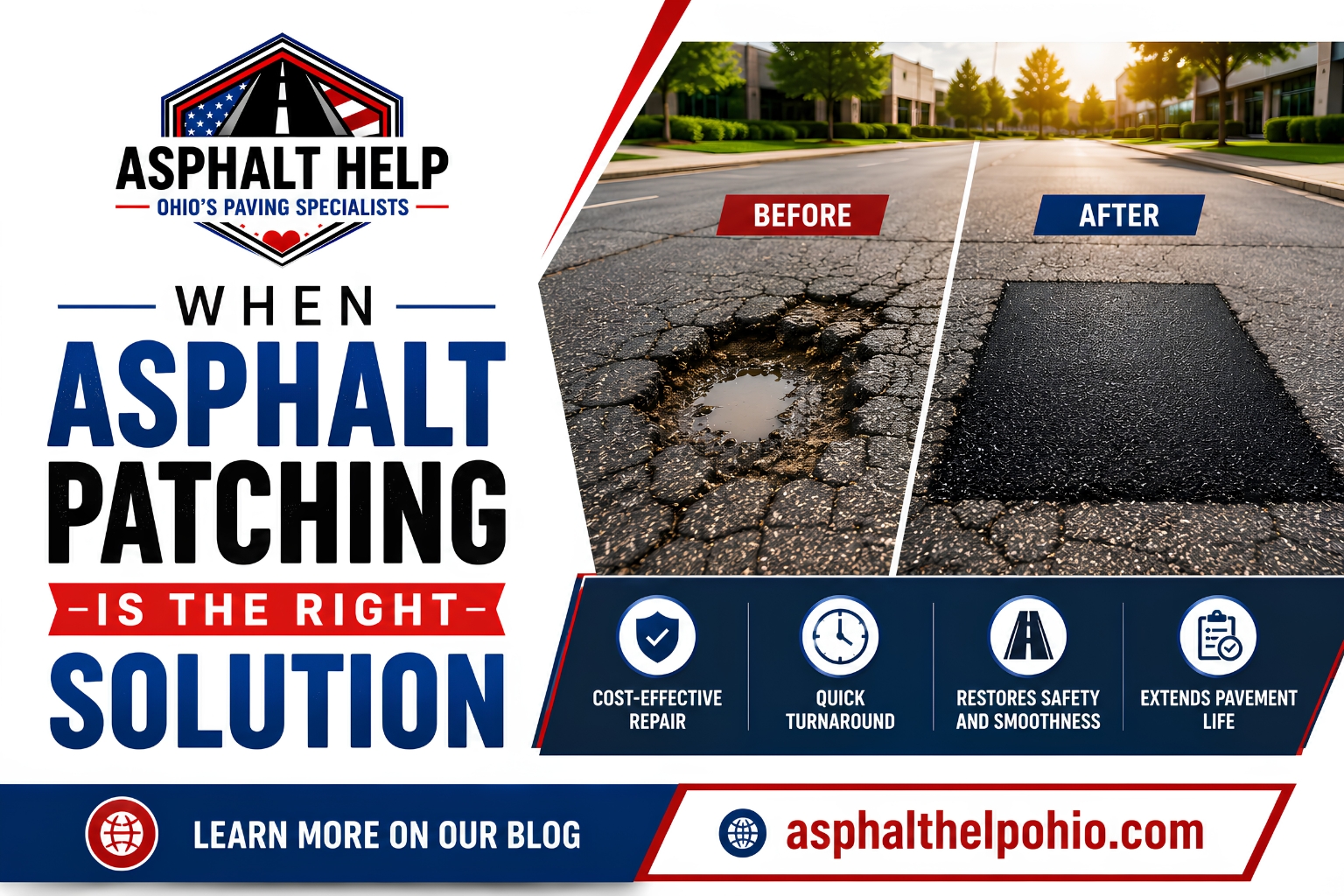



What is the difference between asphalt that lasts for years and asphalt that starts failing early? In many cases, it comes down to grading. When the ground beneath a pavement is properly graded, water moves away from the surface rather than settling beneath it, giving the asphalt a stronger foundation to rely on. That is why asphalt grading Ohio projects depend so heavily on careful site preparation, drainage planning, and base support.
For property owners comparing Asphalt Paving Services in Columbus Ohio or looking for experienced asphalt contractors in Central Ohio, grading is not just one step in the process—it is one of the most important reasons a pavement performs well over time. Asphalt Help Ohio describes its work as full-service residential, commercial, and municipal paving, including new installation, resurfacing, repairs, removal and replacement, over stone paving, driveway paving, gravel driveway upgrades, and sealcoating across Central Ohio. The company also says every project starts with a detailed site evaluation that checks grading, drainage flow, and water-retention areas.
Why grading matters before the asphalt goes down
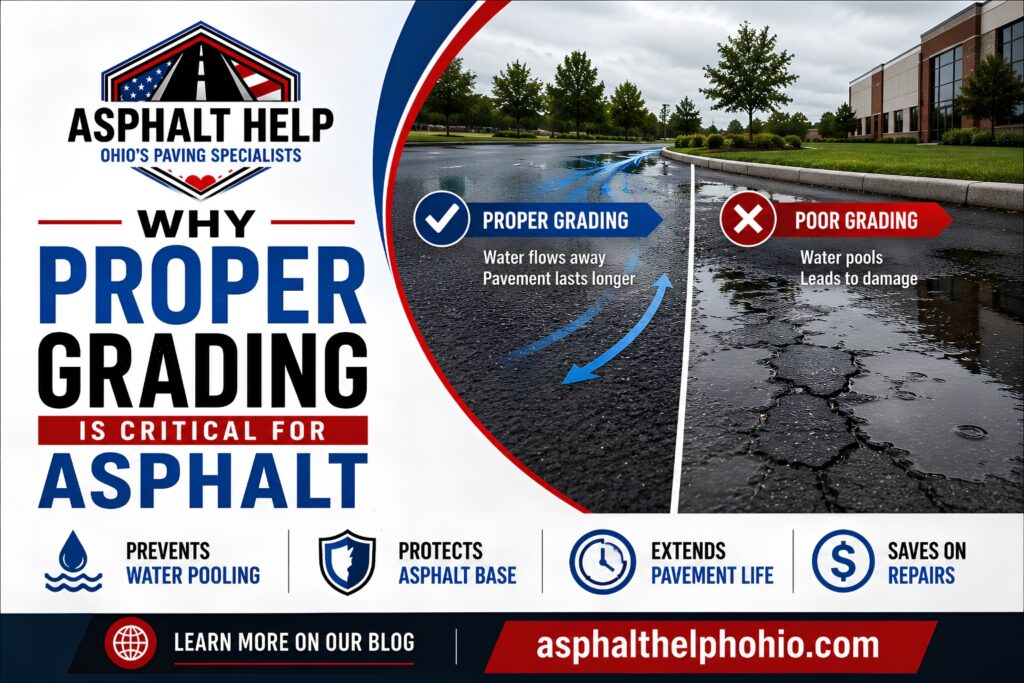
Proper grading shapes the surface so water flows in the right direction. If the grade is too flat, water can sit on the pavement or soak into the edge and base. If the slope is uneven, water may collect in low spots and slowly weaken the foundation. Drainage gradient matters because insufficient slope leads to pooling, and pooling increases the risk of pavement damage.
1. Grading protects the base layer
- It keeps water from saturating the foundation.
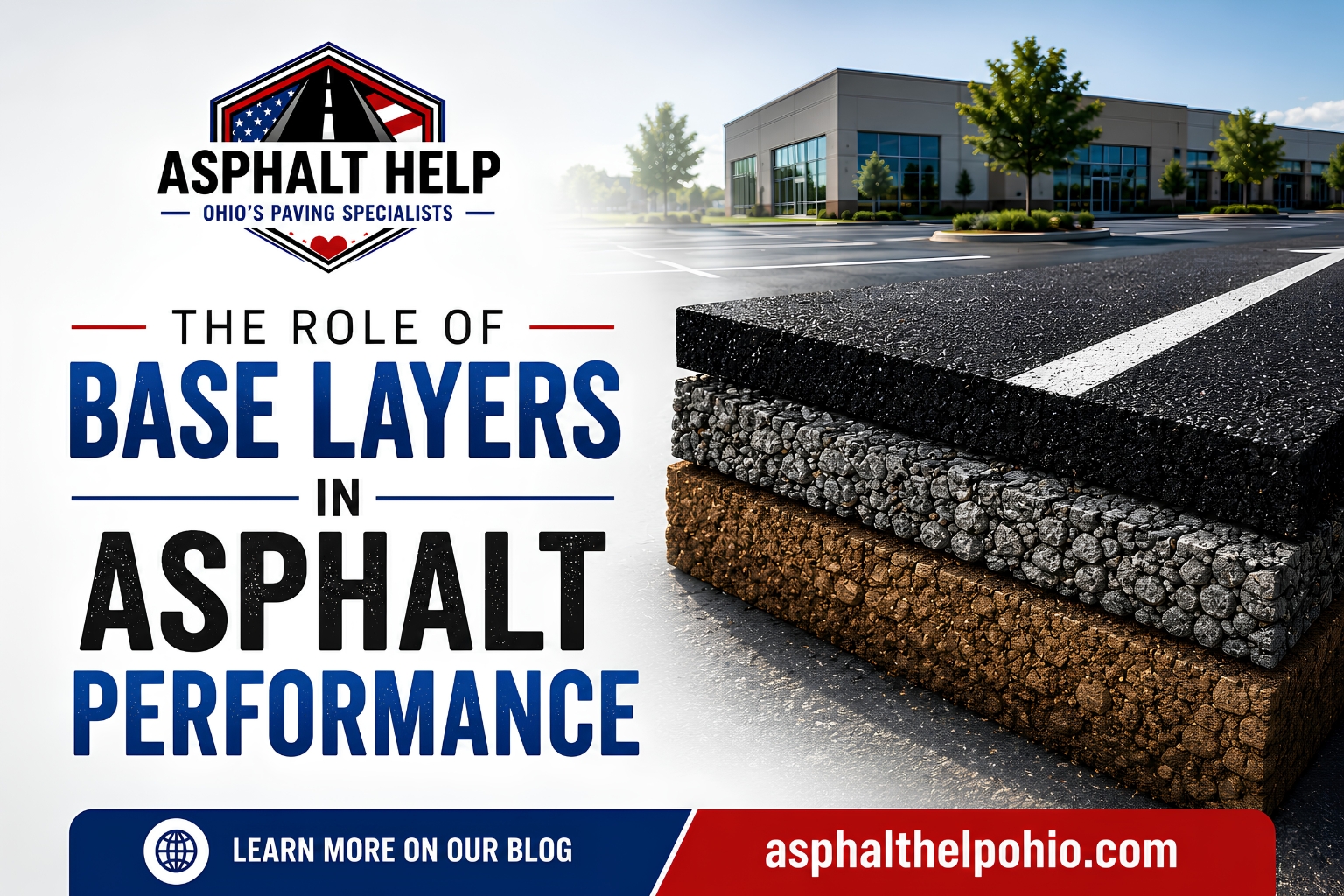
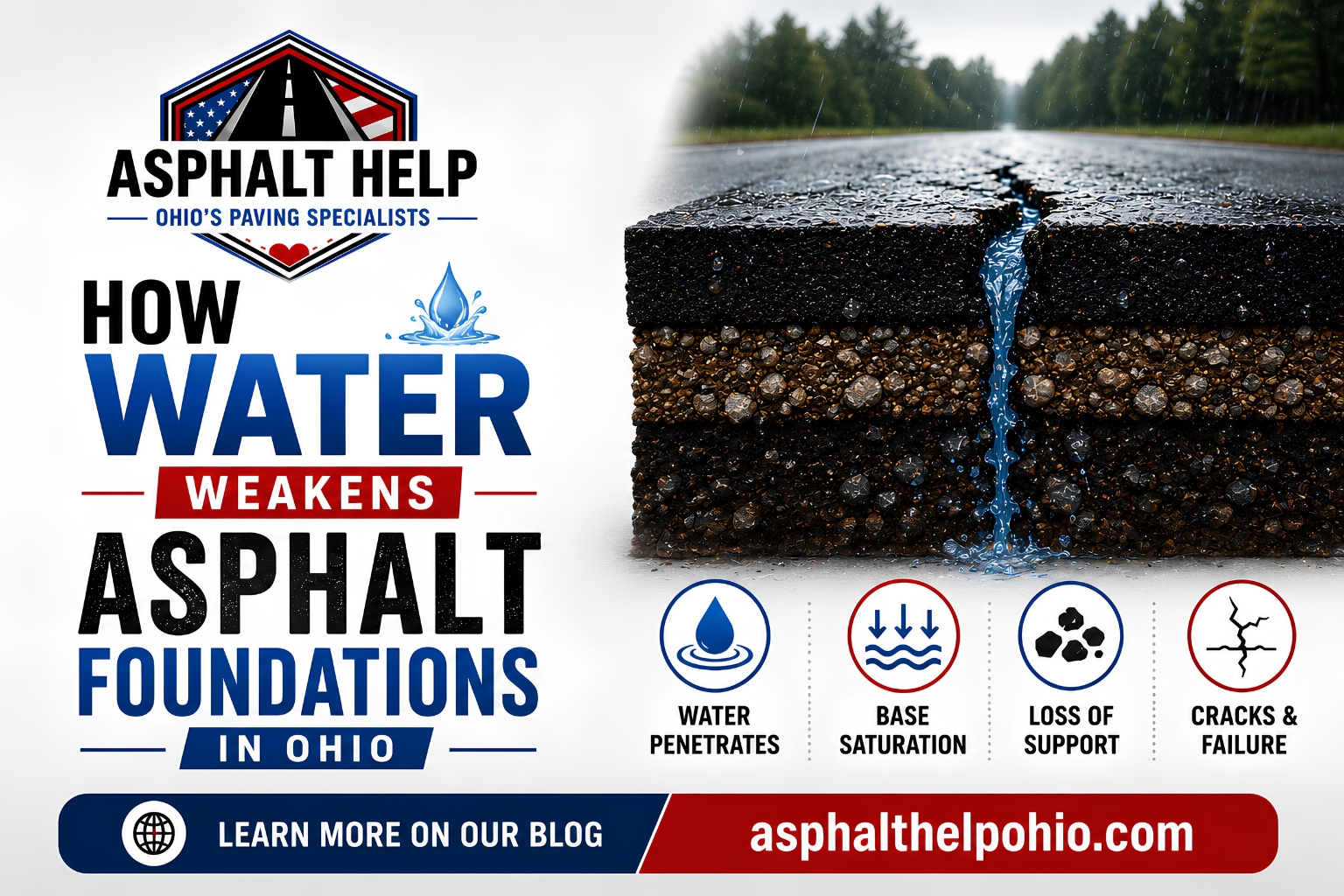
Asphalt itself is only part of the system. The layers underneath carry a large share of the load, so when grading is poor and water gets trapped, the base can soften and lose strength. Once that happens, the top layer begins to flex more than it should, which leads to cracking and surface breakdown. - It reduces the chance of hidden structural damage.
A driveway or lot can look fine from the top while water is slowly working through the edges or low points underneath. Good grading helps prevent that invisible damage by directing runoff away before it reaches the base. That is especially important in Ohio, where repeated wet and cold cycles can make small moisture problems turn into larger failures. - It supports long-term pavement strength.
When the ground is properly shaped and compacted, the asphalt is supported evenly across the whole surface. That reduces stress concentration in weak spots and helps the pavement resist rutting, settlement, and fatigue cracking.
2. Grading improves drainage
- It moves water away from the pavement faster.
Water should not linger on asphalt after rain or snowmelt. A properly graded surface helps runoff leave the paved area instead of soaking in, which lowers the risk of erosion and surface deterioration. - It helps prevent pooling at the edges.
Edge areas are especially vulnerable because they often have less support than the center of the pavement. If water collects there, the edge can break down sooner and begin cracking inward. Poorly drained shoulders are a known contributor to edge cracking and fatigue failure. - It reduces the freeze-thaw effect.
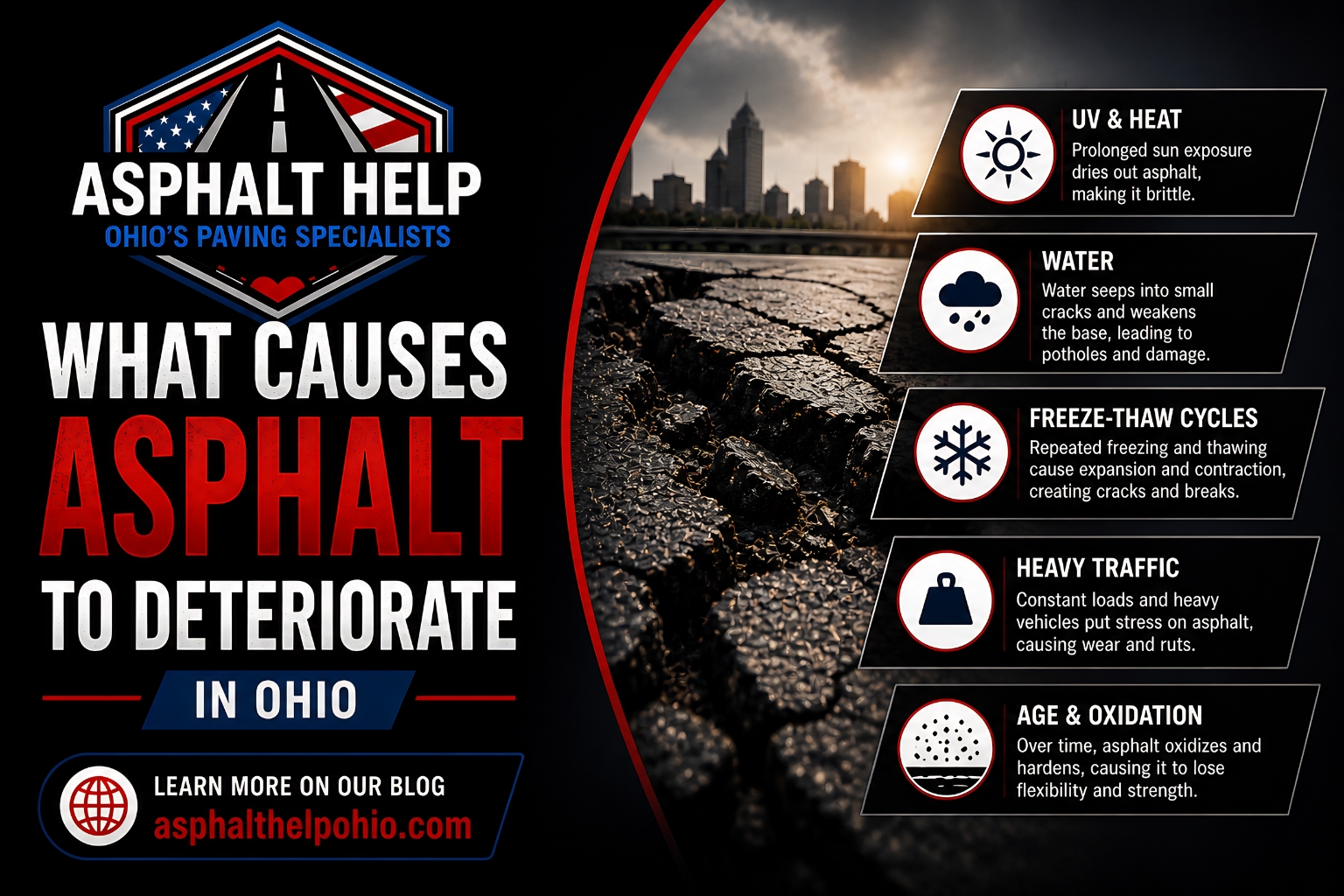
In Ohio, water that sits in or under asphalt can freeze, expand, thaw, and return again. That repeated movement opens cracks wider and weakens the pavement support layer, which is one reason potholes often grow after winter weather.
How poor grading shows up later
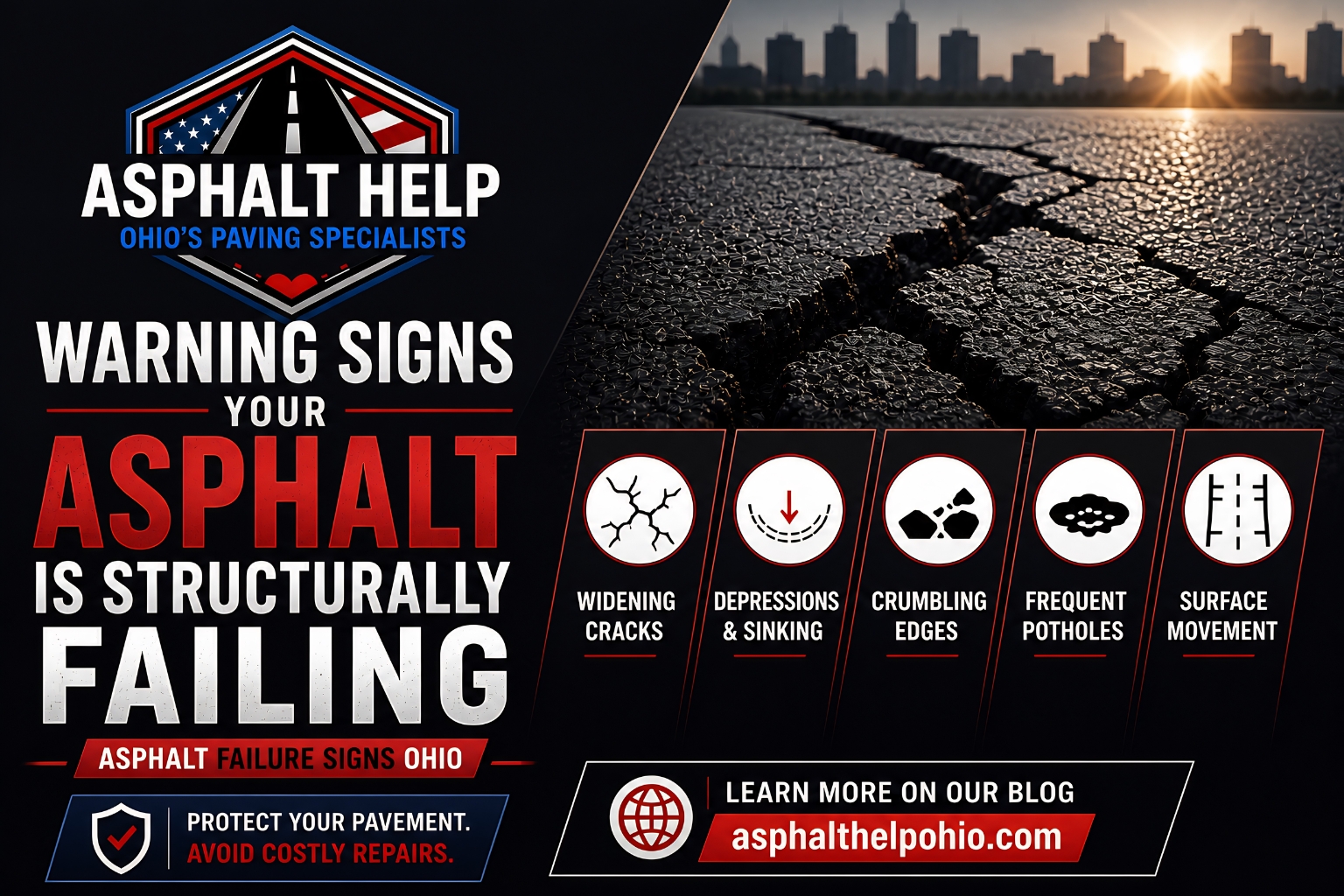
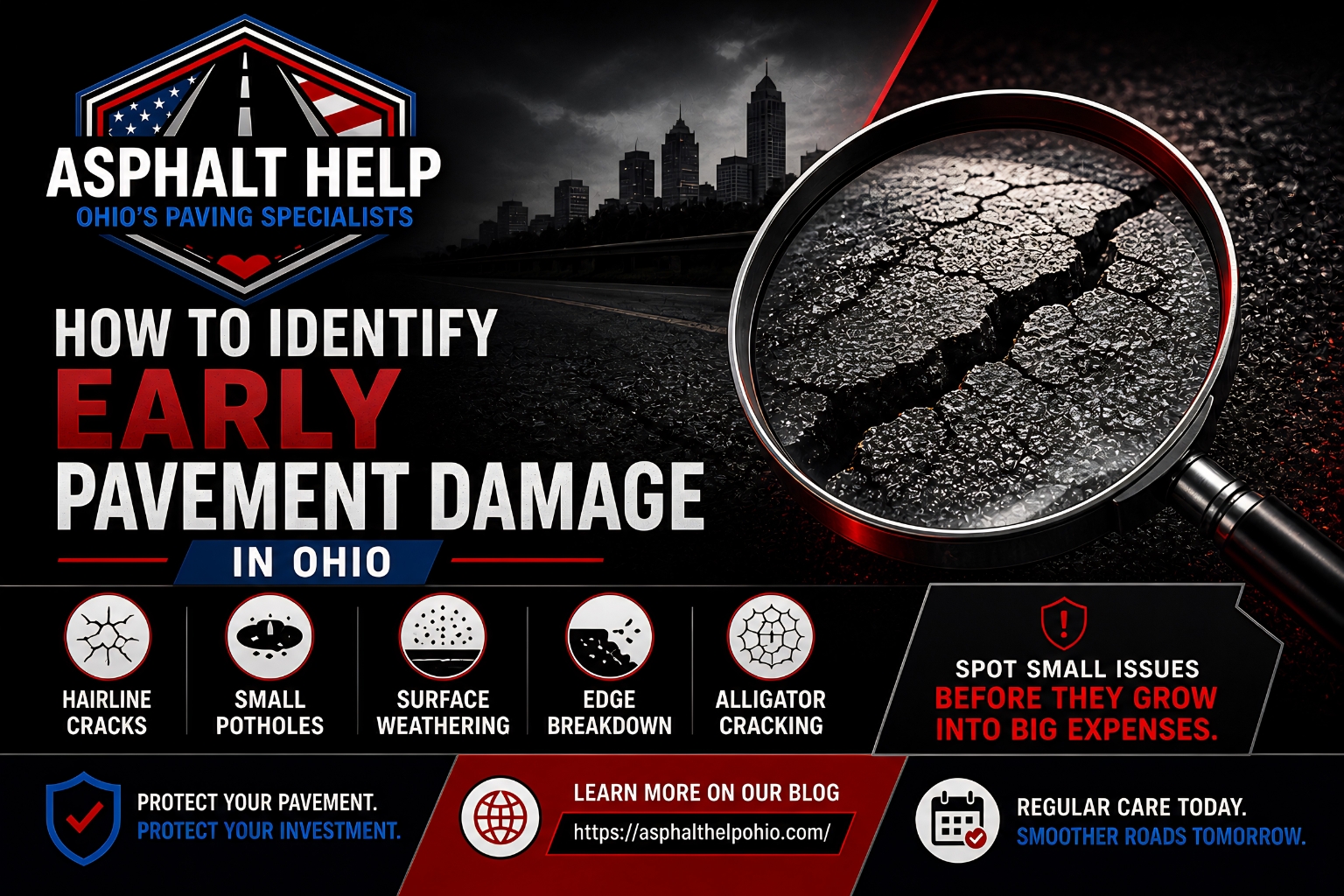
Bad grading is not always obvious on day one. Often, the problems appear months or years later when the pavement starts to move, crack, or sink.
1. Alligator cracking
- This is often a sign of support failure.
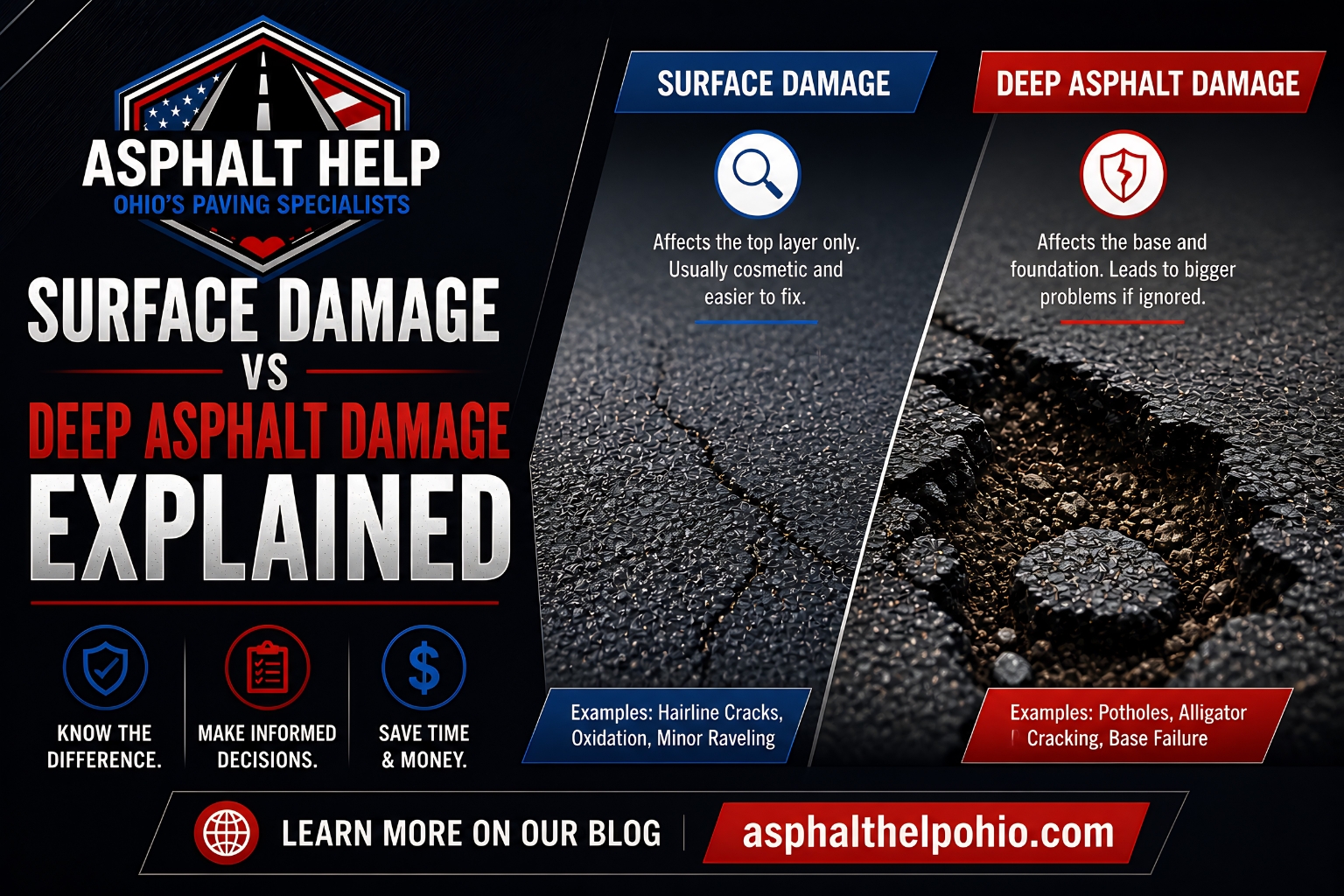
Interconnected cracks that resemble an alligator pattern usually mean the pavement is flexing because the base beneath it is not carrying the load properly. Poor drainage is one of the most common contributing factors because it weakens the base or subgrade. - It usually spreads once it starts.
What begins as a few surface cracks can turn into a larger network if the weak area continues to receive traffic and water exposure. Once that happens, the repair often becomes more involved than a simple patch.
2. Potholes
- These are usually the result of deeper failure.
Potholes form when water weakens the soil below the pavement and traffic breaks the unsupported surface apart. In freezing climates, freeze-thaw movement makes the process even faster. - They often begin with drainage problems.
If the pavement was not graded well at the beginning, water can sit in the same places over and over again until the surface gives way. That is why potholes are often a warning that the real issue is underneath, not just on the top layer.
3. Low spots and settlement
- Water tends to collect where the surface dips.
Even a small depression can become a problem if runoff repeatedly collects in that spot. Over time, the base can lose stability and the low point may deepen further. - Settlement often points to grading or base issues.
If part of a driveway sinks while the rest stays level, the likely cause is a foundation problem, not just wear on the surface. Correct grading and base repair help prevent that cycle from repeating.
Why grading is especially important in Central Ohio
Central Ohio weather creates a lot of stress for asphalt surfaces. Rain can introduce moisture into weak spots, and cold weather can turn that moisture into frost-related damage. That combination makes strong grading and drainage essential for long-term performance. Asphalt Help Ohio specifically notes that standing water accelerates cracking and weakens the base, which is why it includes grading and drainage checks in its project evaluation process.
What proper grading helps accomplish
| Grading benefit | What it does | Why it matters |
|---|---|---|
| Better runoff | Moves water away from the surface | Reduces pooling and saturation |
| Stronger base support | Keeps the foundation evenly loaded | Helps prevent sinking and fatigue cracks |
| Fewer drainage issues | Limits water collection in low areas | Protects the pavement through wet seasons |
| Longer pavement life | Reduces repeated moisture damage | Extends the usefulness of the asphalt |
| Cleaner appearance | Keeps the surface more even and stable | Helps the finished project look better longer |
What professional grading includes
Site evaluation
- The contractor studies slope, runoff, and soft areas.
A good asphalt project begins with understanding how water moves across the property. That helps identify where the grade needs to be adjusted and where the base may need extra support. Asphalt Help Ohio says it begins projects with a detailed site evaluation for exactly this reason.
Base preparation
- The surface underneath must be compacted correctly.
A graded surface still needs a stable base before asphalt can be placed. If the base is weak or uneven, the finished pavement will not hold up as well, no matter how good the top layer looks.
Final slope control
- The finished pavement has to direct water properly.
The right slope helps make sure the surface sheds water instead of trapping it. That is a major reason grading is one of the most critical steps in asphalt construction.
Common mistakes property owners should avoid
- Assuming the top surface is the whole story.
Asphalt can look smooth while the base underneath is already being damaged by water. Hidden moisture problems often show up later as cracking or potholes. - Ignoring standing water after storms.
If water stays on the driveway or parking lot, that is a sign the grade may not be working correctly. Even small drainage issues can lead to bigger damage over time. - Choosing repair over correction when the slope is wrong.
Patching a surface problem will not fix water that keeps entering from the same direction. Correct grading is often the better long-term solution.
Why experienced asphalt contractors matter
Grading requires more than just moving dirt or stone around. It involves reading the site, understanding drainage, and preparing a base that can support the pavement through Ohio weather. That is why working with experienced asphalt contractors in Central Ohio can make such a difference. Asphalt Help Ohio emphasizes long-term performance, precision grading, and high-quality materials for residential, commercial, and municipal work, along with resurfacing, structural repairs, and full replacement when needed.
Our asphalt services in Central Ohio
Asphalt Help Ohio provides a full range of paving services for property owners who need more than a quick fix. Its service list includes new asphalt paving, resurfacing, patching, removal and replacement, over stone paving, driveway paving, gravel driveway upgrades, and sealcoating. The company also serves communities throughout Central Ohio, including Columbus and nearby areas, with experience rooted in more than 30 years of work in the region.
Final thoughts
Proper grading is critical because it protects the base, improves drainage, and helps asphalt perform the way it should. When water is directed away from the pavement instead of allowed to sit under it, the surface is much less likely to crack, sink, or fail early. For Ohio property owners, good grading is one of the most important investments in pavement durability.