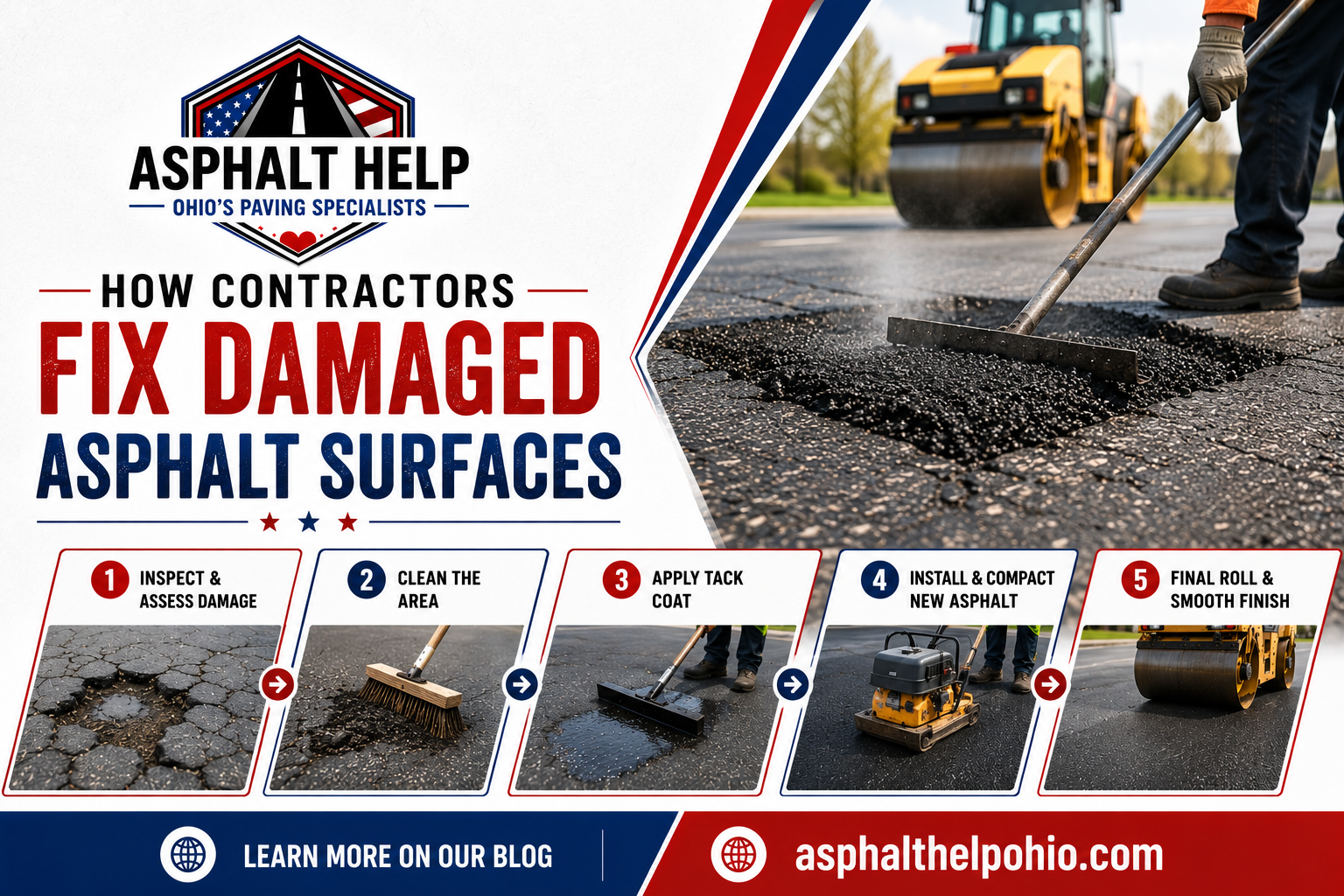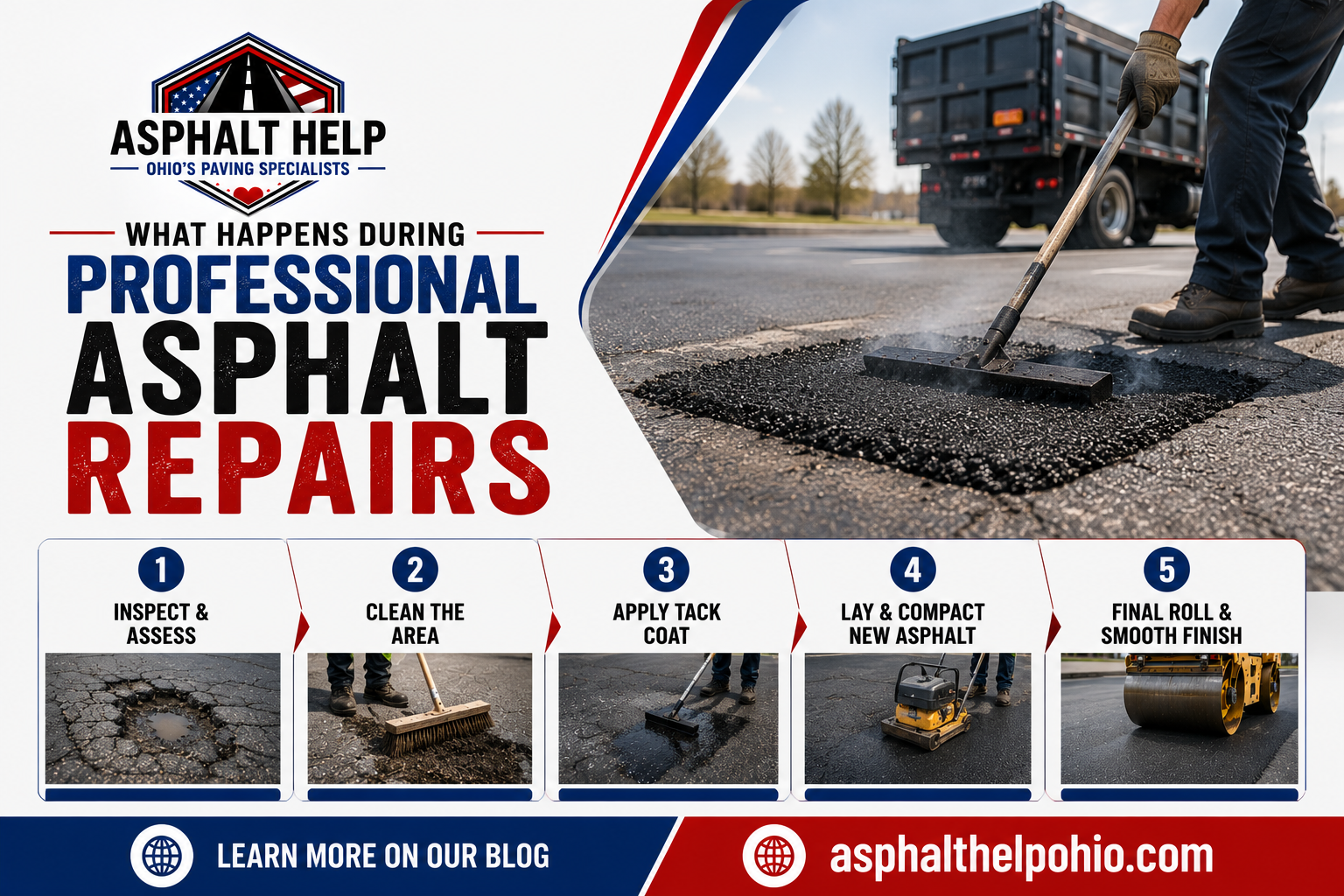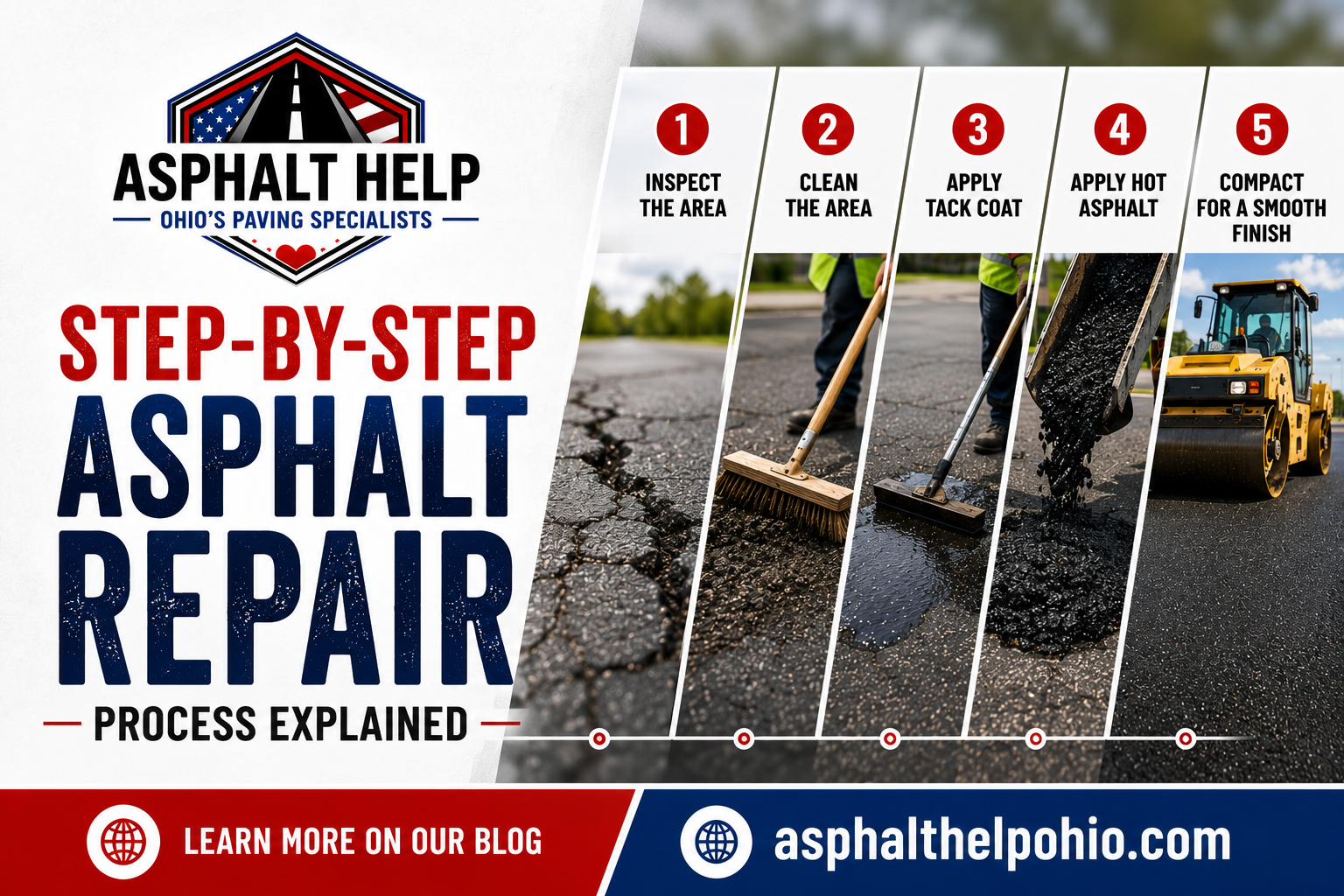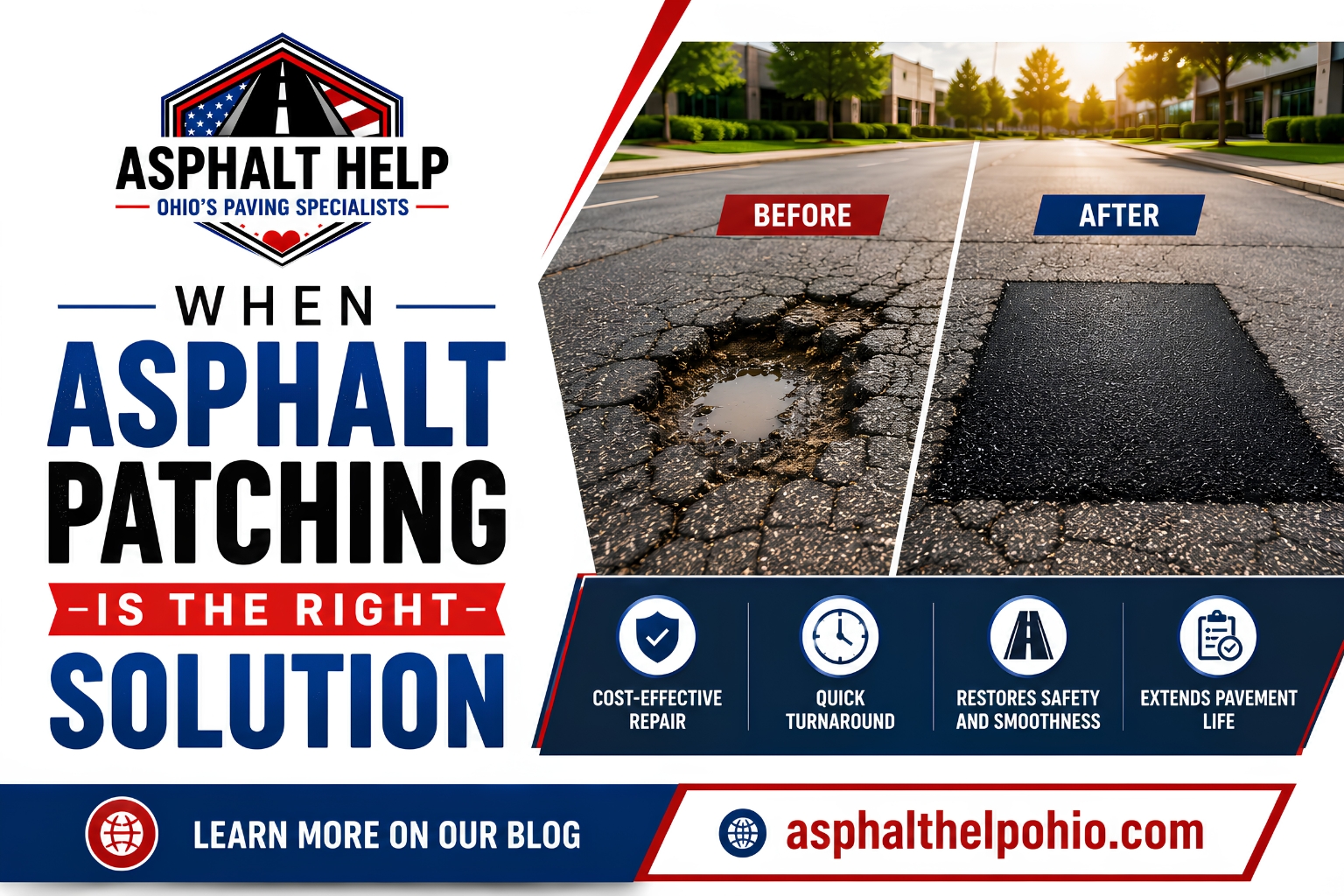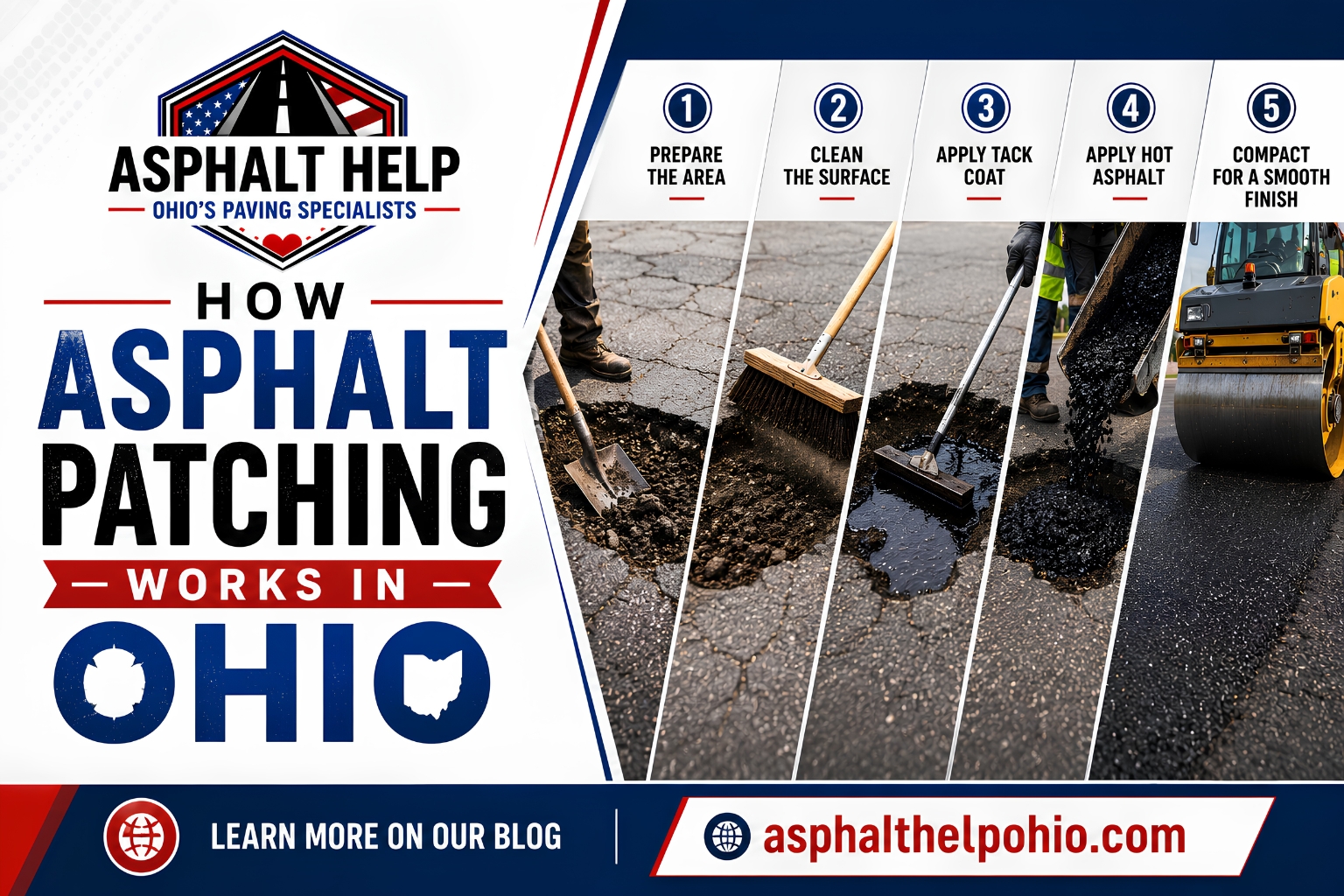



Are you wondering why your asphalt keeps cracking, fading, or breaking apart over time? Asphalt pavement is built to be durable and long-lasting, but Ohio’s harsh climate can significantly speed up the deterioration process. Understanding the causes of asphalt deterioration Ohio property owners commonly experience is essential for protecting driveways, parking lots, and commercial pavement surfaces from costly long-term damage. Throughout the year, asphalt in Central Ohio is exposed to freezing temperatures, snow, ice, heavy rainfall, road salt, UV exposure, and constant traffic stress. These conditions gradually weaken the pavement structure, leading to common problems such as cracking, potholes, rutting, surface erosion, drainage failures, oxidation, and structural instability. Even well-installed asphalt can begin deteriorating prematurely if moisture infiltration, freeze–thaw damage, and routine maintenance issues are not addressed early.
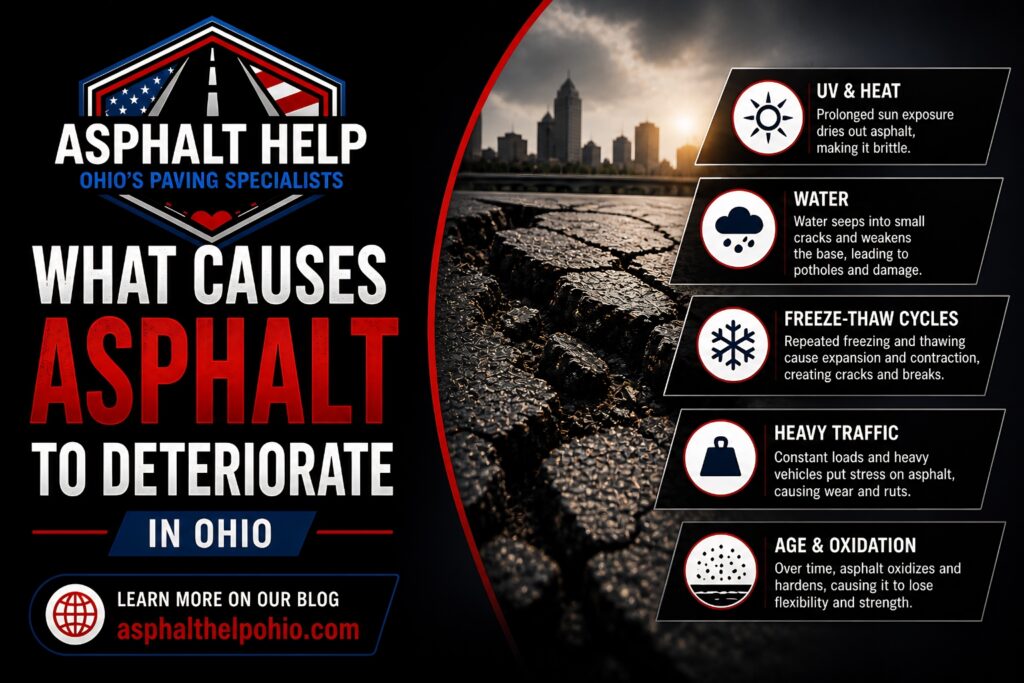
One of the biggest contributors to asphalt deterioration in Ohio is the freeze–thaw cycle. Water enters small cracks in the pavement, freezes during winter, expands, and slowly breaks apart the asphalt from within. Road salt and snow removal equipment can further accelerate surface wear, while hot summer temperatures and UV exposure dry out the asphalt binder and make the surface more brittle over time. Combined with heavy traffic loads and unstable clay-rich soils common throughout Ohio, these environmental factors place continuous stress on pavement surfaces year-round.
Why Asphalt Deterioration Happens
Although asphalt is highly durable, it is constantly exposed to environmental and structural stress.
Over time, factors such as:
- Water infiltration
- UV radiation
- Traffic loads
- Freeze-thaw cycles
- Oxidation
- Poor drainage
- Aging materials
can gradually weaken pavement surfaces and foundations.
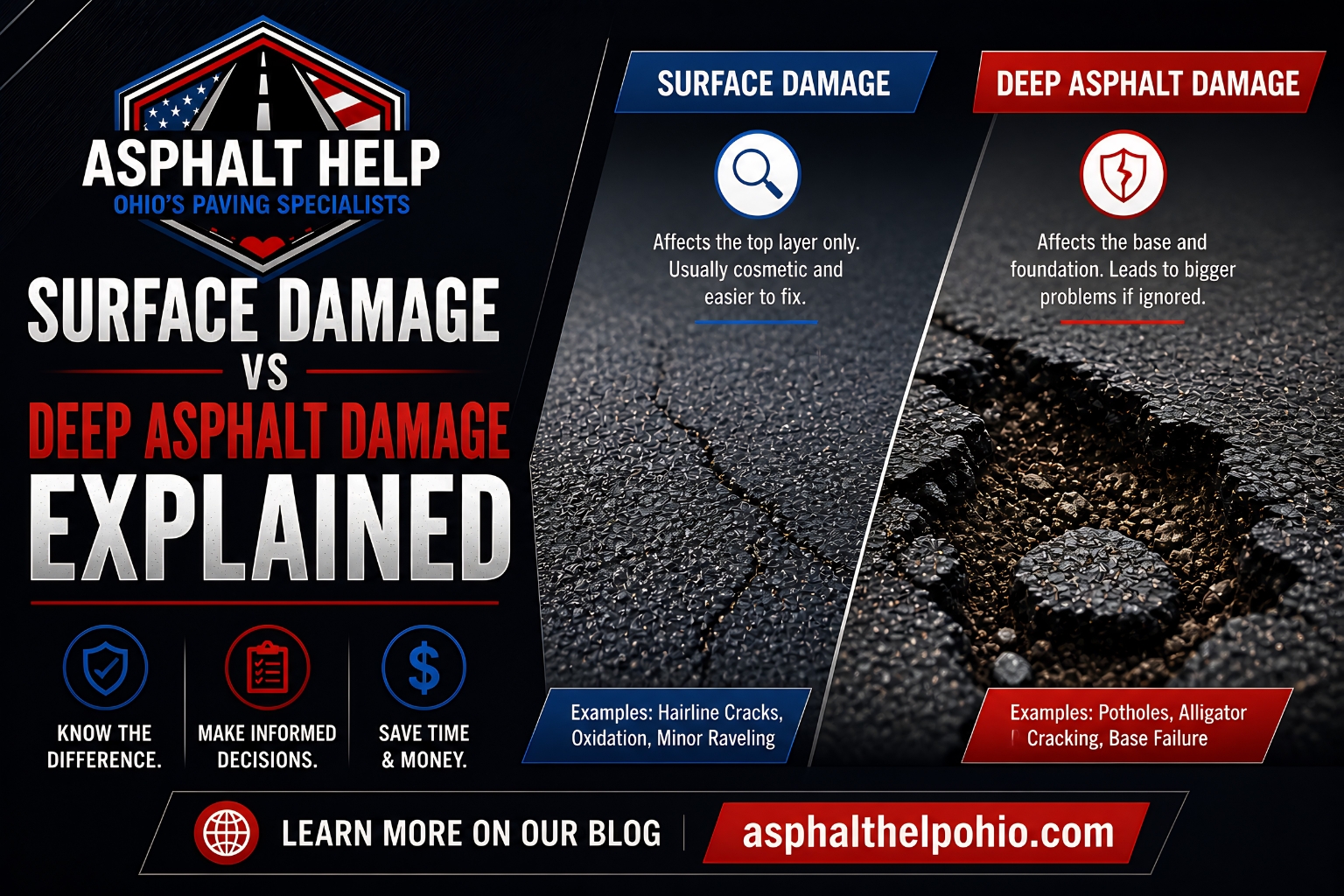
Without proper maintenance, small surface problems often develop into major structural failures.
Ohio’s Climate Creates Unique Pavement Challenges
Ohio experiences dramatic seasonal changes that place significant strain on asphalt surfaces.
Common environmental stress factors include:
- Freezing temperatures
- Snow and ice
- Heavy rainfall
- Summer heat
- Road salt exposure
- Moisture fluctuations
- Seasonal soil movement
These conditions make pavement deterioration more aggressive compared to regions with milder climates.
Major Causes of Asphalt Deterioration Ohio Property Owners Should Know
1. Freeze-Thaw Cycles
Freeze-thaw damage is one of the leading causes of asphalt deterioration in Ohio.
How it works:
- Water enters small pavement cracks.
- Temperatures drop below freezing.
- Water freezes and expands.
- Cracks widen under pressure.
- Repeated cycles weaken the pavement structure.
Over time, this process can create:
- Larger cracks
- Potholes
- Surface separation
- Structural instability
Ohio winters make freeze-thaw deterioration especially destructive.
2. Water Infiltration
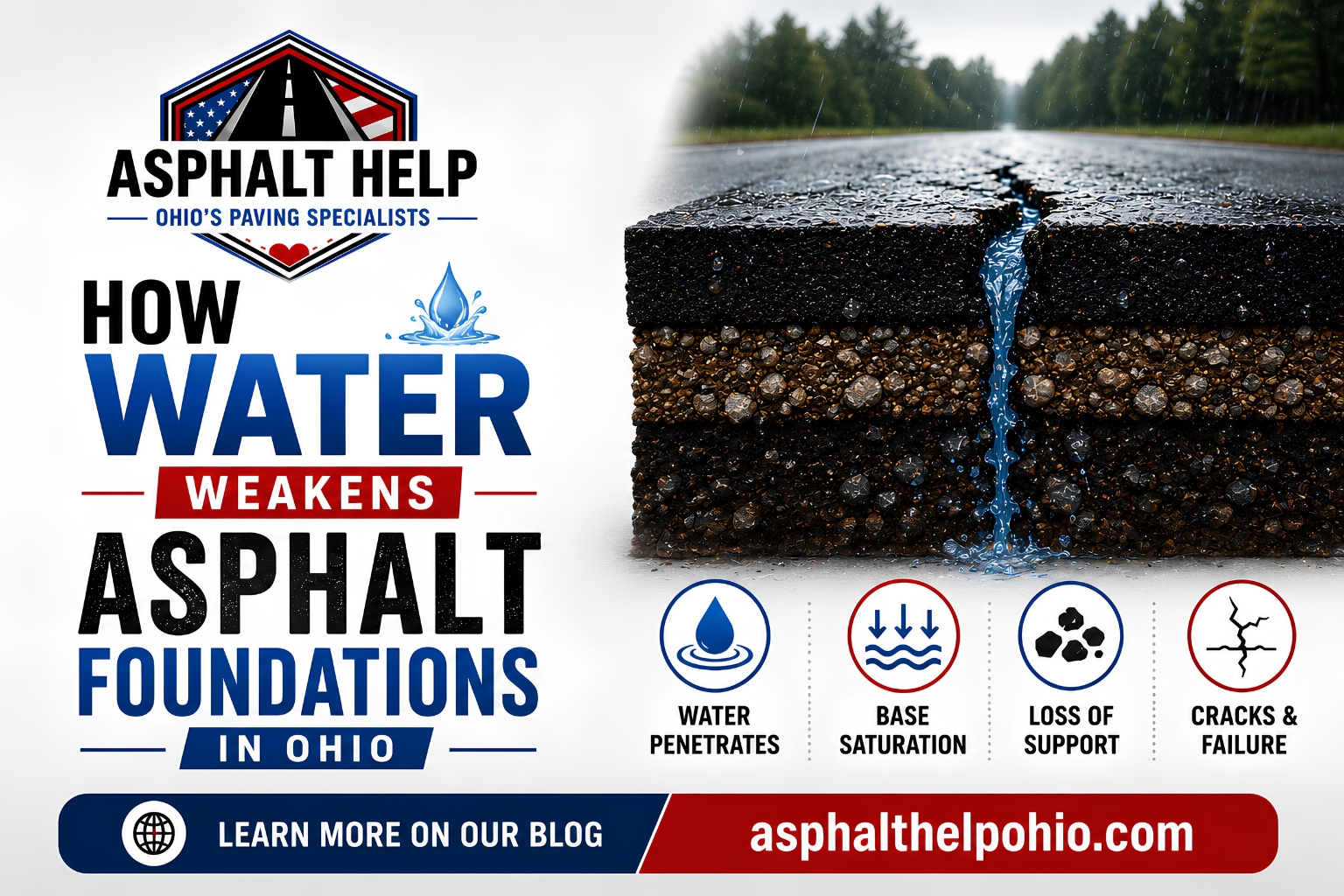
Water is one of asphalt pavement’s greatest enemies.
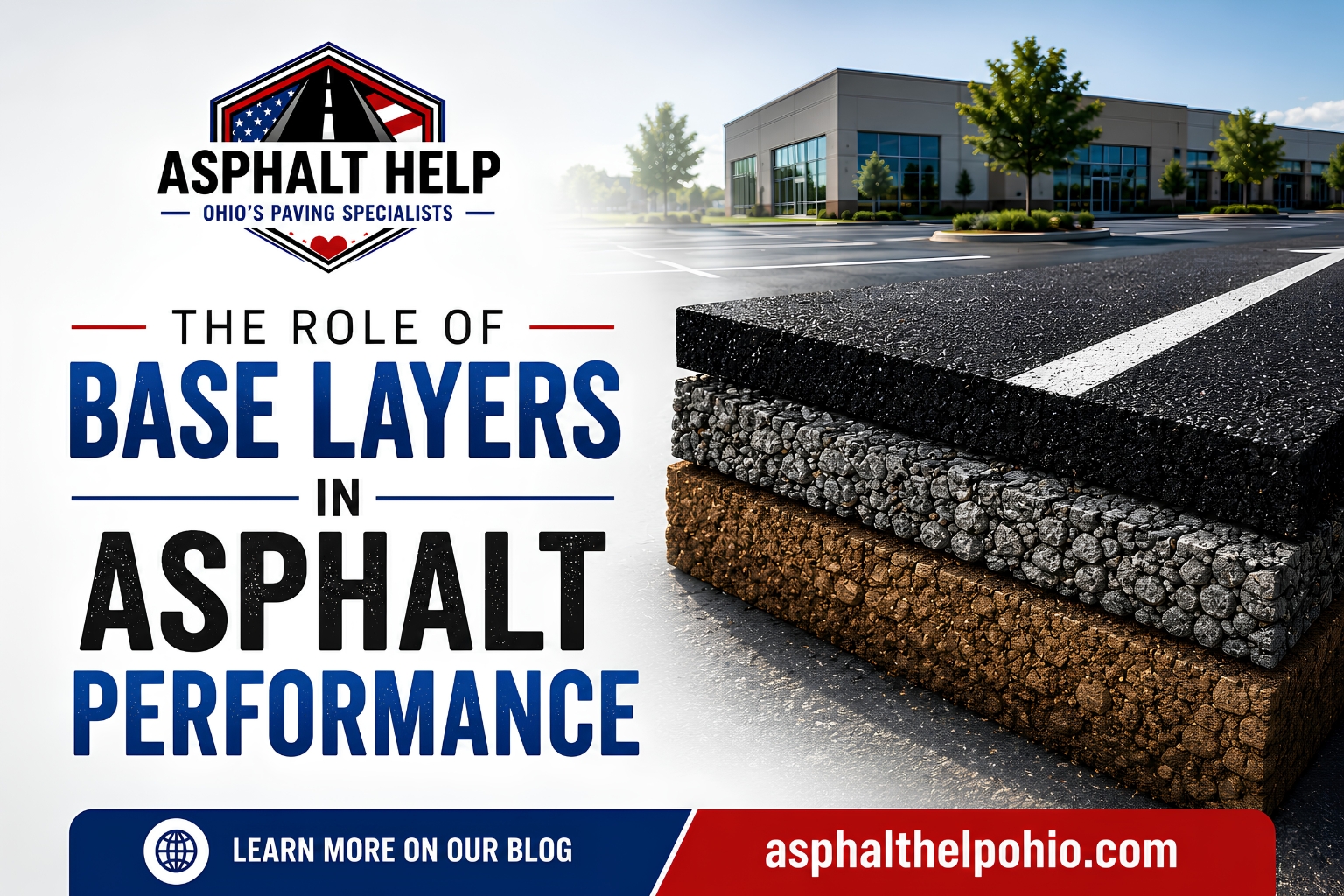
When water penetrates the surface, it can weaken the base layers beneath the asphalt.
Common moisture-related issues include:
- Base erosion
- Surface softening
- Cracking
- Pothole formation
- Drainage failure
Poor drainage systems often accelerate water damage dramatically.
3. UV Oxidation and Sun Exposure
Sunlight gradually breaks down asphalt binders through oxidation.
Oxidation causes:
- Surface fading
- Brittleness
- Reduced flexibility
- Increased cracking risk
Healthy asphalt typically appears dark black, while oxidized asphalt becomes gray and dry-looking.
During Ohio summers, extended UV exposure can significantly weaken unprotected pavement surfaces.
4. Heavy Traffic Loads
Constant vehicle traffic creates pressure that slowly weakens pavement over time.
High-stress traffic conditions may involve:
- Commercial trucks
- Heavy equipment
- Frequent vehicle turning
- Repetitive load patterns
Traffic stress often contributes to:
- Rutting
- Surface deformation
- Cracking
- Structural fatigue
Commercial parking lots and industrial areas are especially vulnerable.
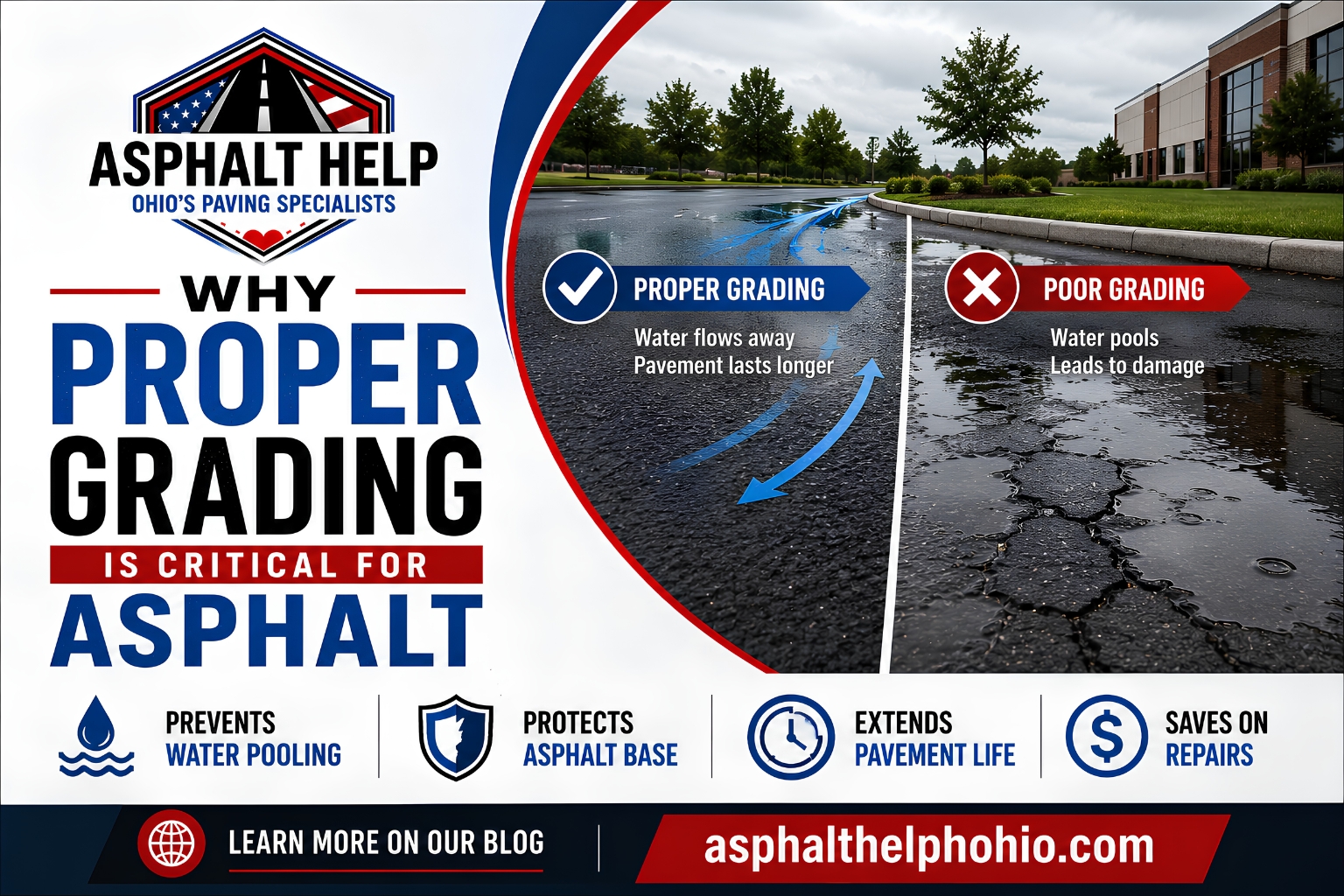
5. Poor Drainage Systems
Drainage plays a critical role in pavement longevity.
Without proper water management, moisture can accumulate beneath asphalt surfaces.
Poor drainage can cause:
- Standing water
- Surface depressions
- Soil instability
- Base deterioration
- Pavement shifting
Water-related damage is one of the most common reasons asphalt surfaces fail prematurely in Ohio.
6. Aging Asphalt Materials
Like all construction materials, asphalt naturally ages over time.
As asphalt binders deteriorate, pavement becomes:
- Less flexible
- More brittle
- More vulnerable to cracking
- More susceptible to moisture intrusion
Routine maintenance helps slow this natural aging process.
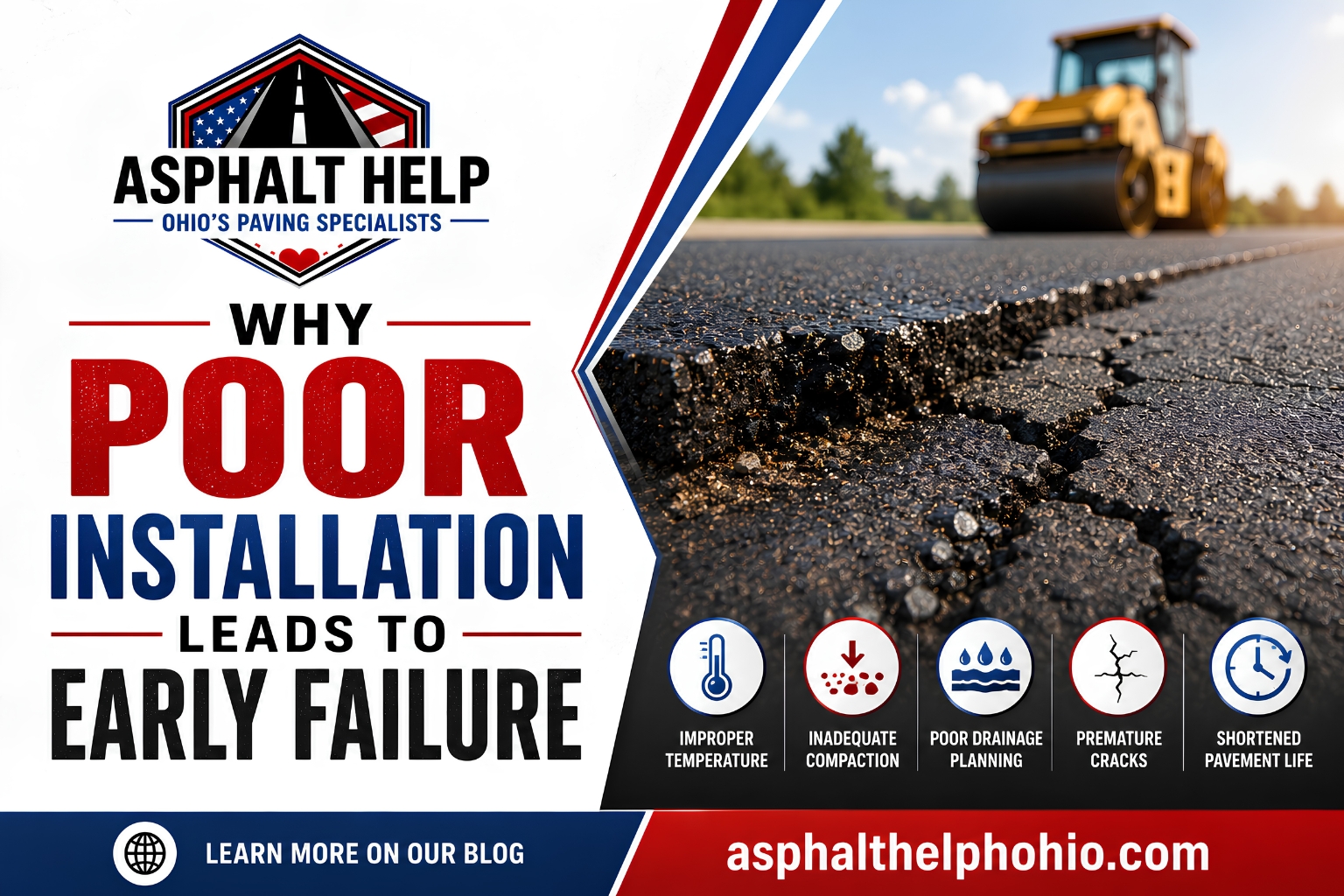
7. Improper Installation
Even high-quality materials can fail if asphalt is installed incorrectly.
Common installation mistakes include:
- Poor compaction
- Weak base preparation
- Incorrect grading
- Inadequate thickness
- Improper drainage design
Professional installation is essential for long-term pavement durability.
Property owners seeking reliable Asphalt Paving Services in Central Ohio should prioritize experienced professionals who understand local climate and soil conditions.
8. Road Salt and Chemical Exposure
Ohio winters require extensive use of de-icing salts and chemicals.
Salt exposure can contribute to:
- Surface weakening
- Moisture retention
- Accelerated cracking
- Material breakdown
Chemical spills such as gasoline or oil can also damage asphalt binders over time.
9. Lack of Preventive Maintenance
Neglecting routine maintenance significantly increases the rate of deterioration.
Without preventative care, small problems quickly worsen.
Important maintenance services include:
- Sealcoating
- Crack filling
- Drainage corrections
- Surface inspections
- Pothole repair
Routine maintenance helps preserve asphalt performance and appearance.
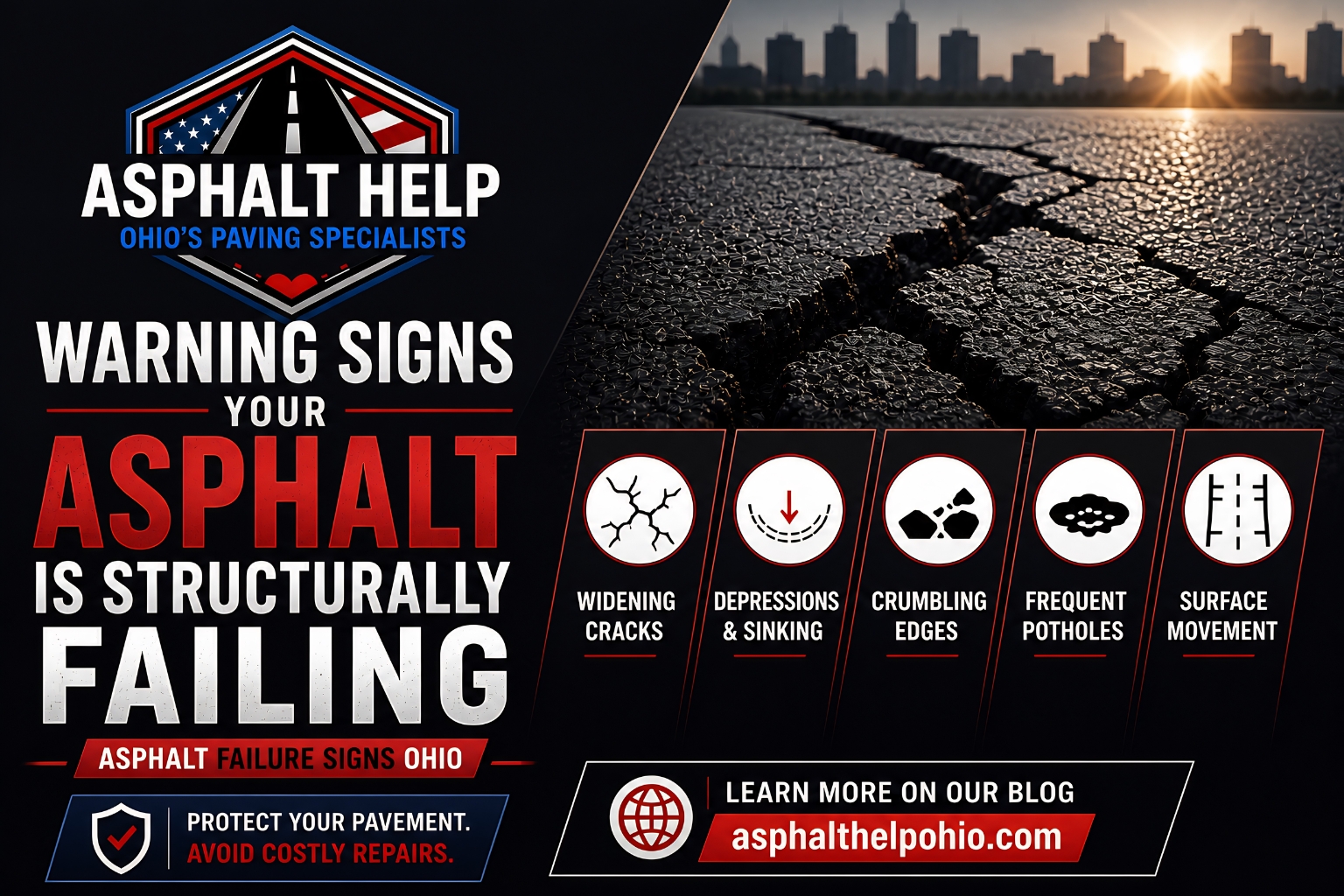
Common Signs of Asphalt Deterioration
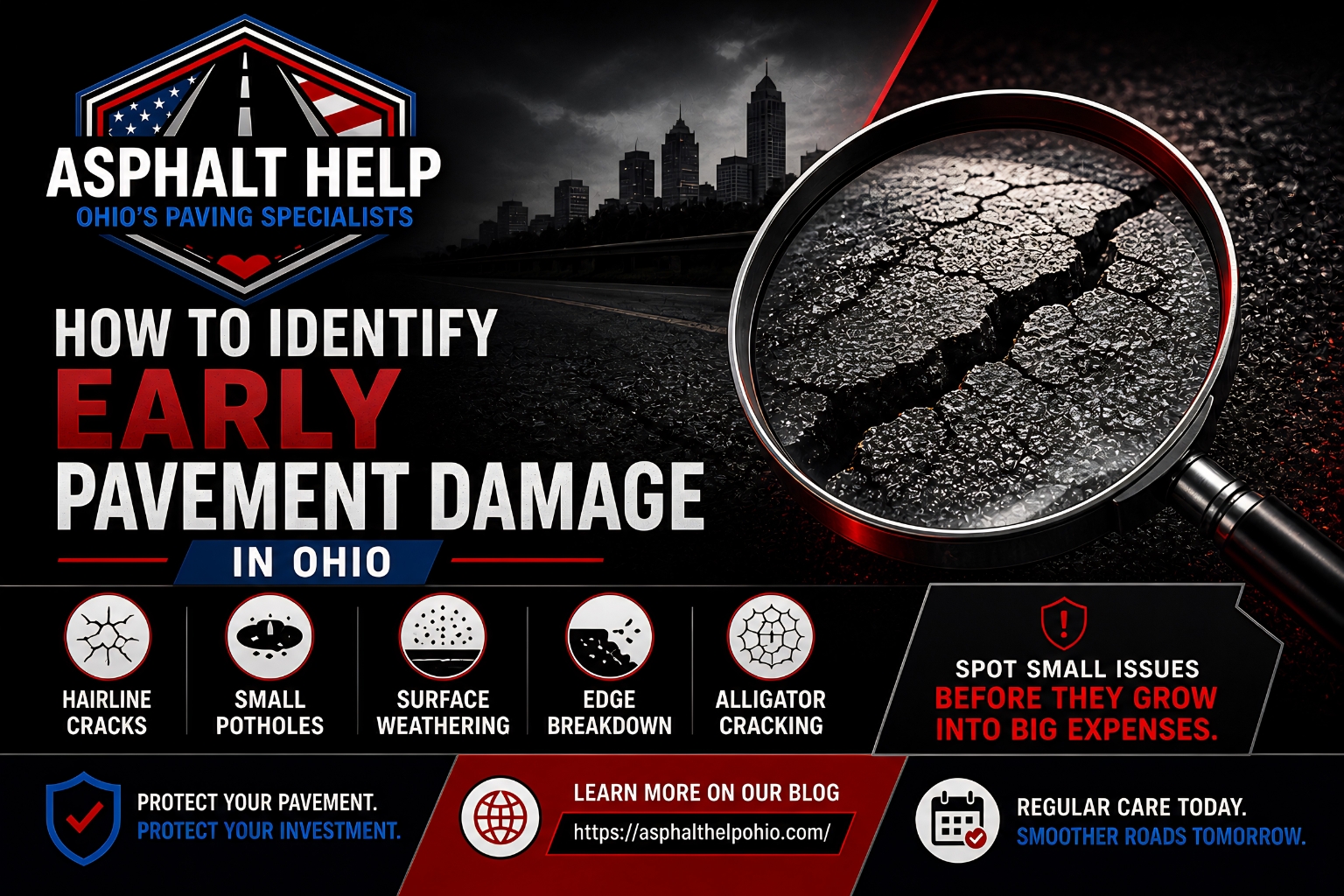
Property owners should monitor for early warning signs.
Common indicators include:
- Cracks
- Fading
- Water pooling
- Potholes
- Surface roughness
- Edge deterioration
- Surface raveling
- Uneven pavement
Early detection allows for faster and more effective repairs.
Asphalt Deterioration Comparison Table
| Cause of Deterioration | Common Symptoms | Potential Impact |
|---|---|---|
| Freeze-Thaw Cycles | Expanding cracks | Structural damage |
| Water Infiltration | Soft spots, potholes | Base failure |
| UV Oxidation | Gray surface color | Brittleness |
| Heavy Traffic | Rutting, depressions | Surface fatigue |
| Poor Drainage | Standing water | Pavement weakening |
| Aging Materials | Surface cracking | Reduced flexibility |
| Improper Installation | Uneven pavement | Premature failure |
| Salt Exposure | Surface breakdown | Accelerated wear |
Residential vs Commercial Asphalt Deterioration
Residential Driveways:
- Surface fading
- Minor cracking
- Edge wear
- Water pooling
Commercial Pavement:
- Heavy load stress
- Large potholes
- Structural fatigue
- Traffic-related rutting
Commercial properties often experience faster deterioration due to increased traffic volume.
How Professional Maintenance Helps Prevent Asphalt Deterioration
Preventative maintenance plays a major role in extending pavement lifespan.
Professional services help:
- Seal surface cracks
- Block moisture intrusion
- Improve drainage
- Protect against UV damage
- Preserve flexibility
- Strengthen pavement structure
Working with experienced asphalt contractors in Central Ohio ensures pavement systems receive maintenance strategies specifically designed for Ohio’s challenging weather conditions.
Why Local Ohio Expertise Matters
Ohio paving conditions require specialized knowledge and regional experience.
Local professionals understand:
- Freeze-thaw damage patterns
- Seasonal moisture risks
- Drainage requirements
- Soil movement challenges
- Climate-specific maintenance strategies
At Asphalt Help Ohio, pavement solutions are tailored specifically for Ohio’s demanding environmental conditions.
Long-Term Benefits of Preventing Asphalt Deterioration
Proactive pavement care provides:
- Improved durability
- Reduced structural damage
- Better appearance
- Safer surfaces
- Longer pavement lifespan
- Lower maintenance frequency
- Stronger property value protection
Preventive maintenance is one of the most effective ways to slow asphalt deterioration.
Final Thoughts
Asphalt deterioration rarely happens from a single issue alone. Instead, it develops gradually as weather, moisture, traffic, and aging materials work together to weaken the pavement structure over time. Understanding the causes of asphalt deterioration Ohio property owners face can help prevent small surface problems from turning into major structural failures that require expensive repairs or full replacement.
For residential properties, proactive asphalt maintenance helps preserve curb appeal, improve driveway safety, and extend pavement lifespan. For commercial parking lots and paved surfaces, regular inspections and preventative maintenance help reduce liability risks, improve appearance, and maintain smoother traffic flow throughout the year. Services such as crack sealing, sealcoating, drainage correction, pothole repair, and asphalt overlays can significantly slow pavement deterioration when completed before severe damage develops.
If your asphalt surface is beginning to show signs of cracking, fading, potholes, or surface wear, Asphalt Help Ohio can help evaluate your pavement condition and provide professional asphalt repair and maintenance solutions designed specifically for Ohio’s demanding weather and pavement conditions.