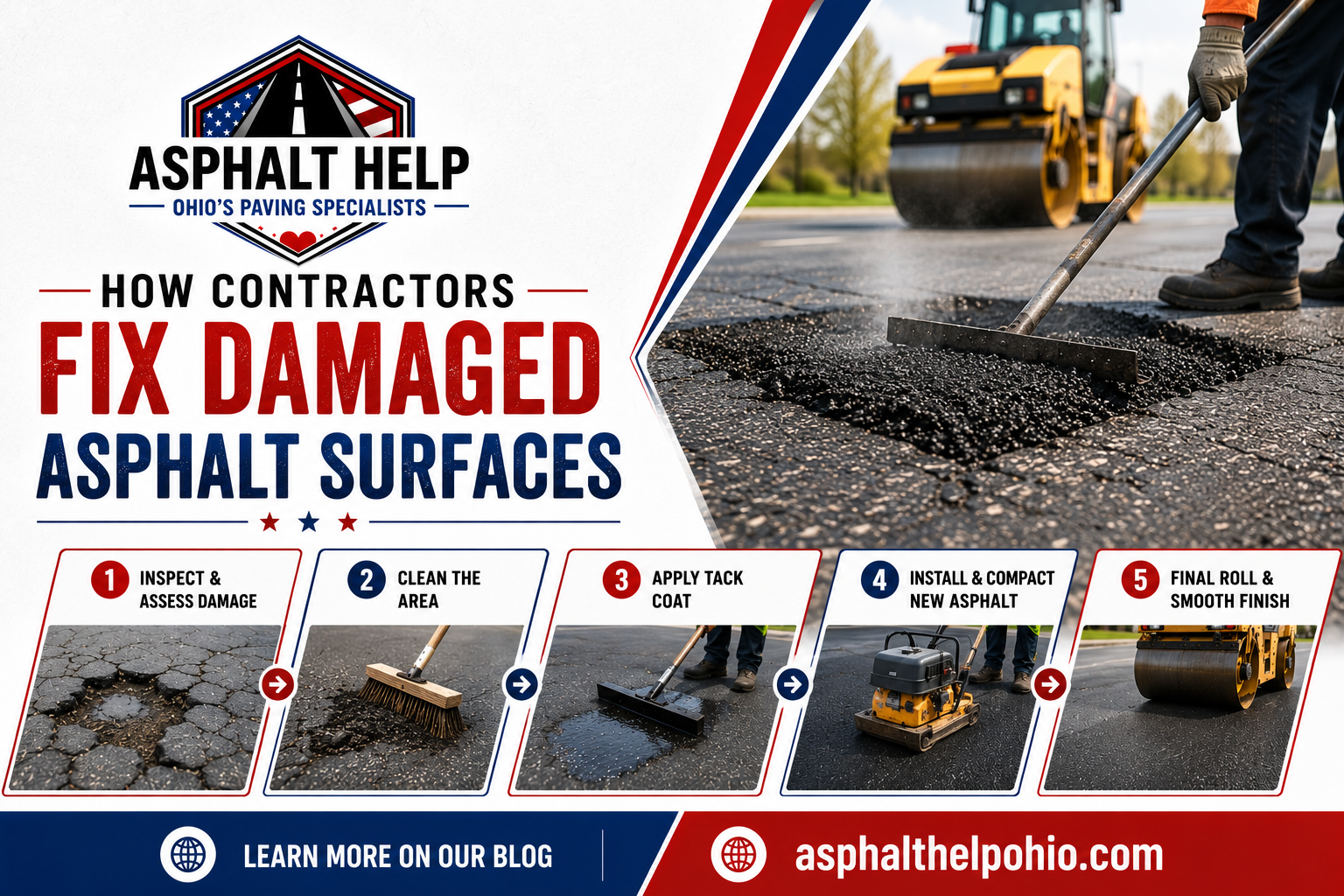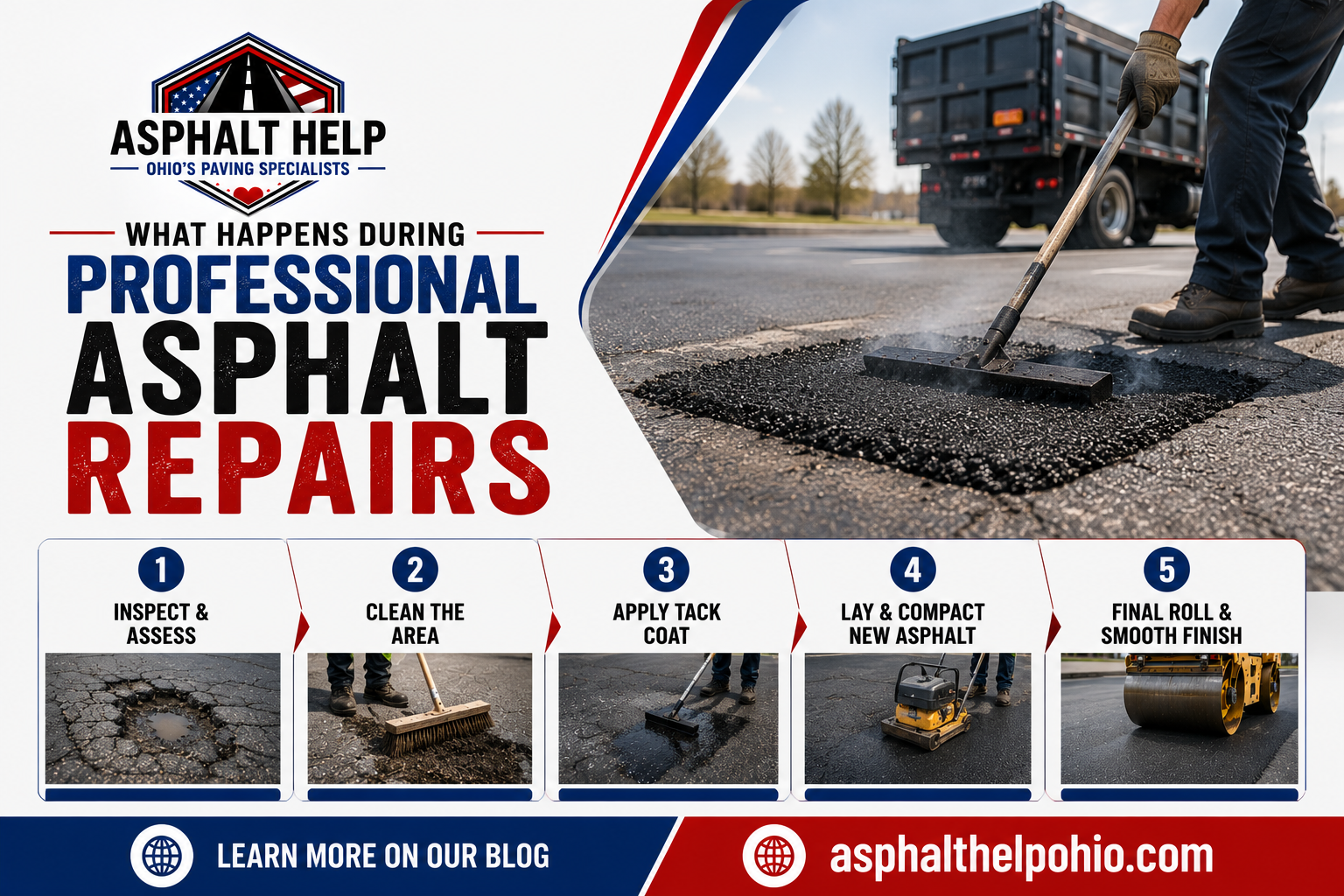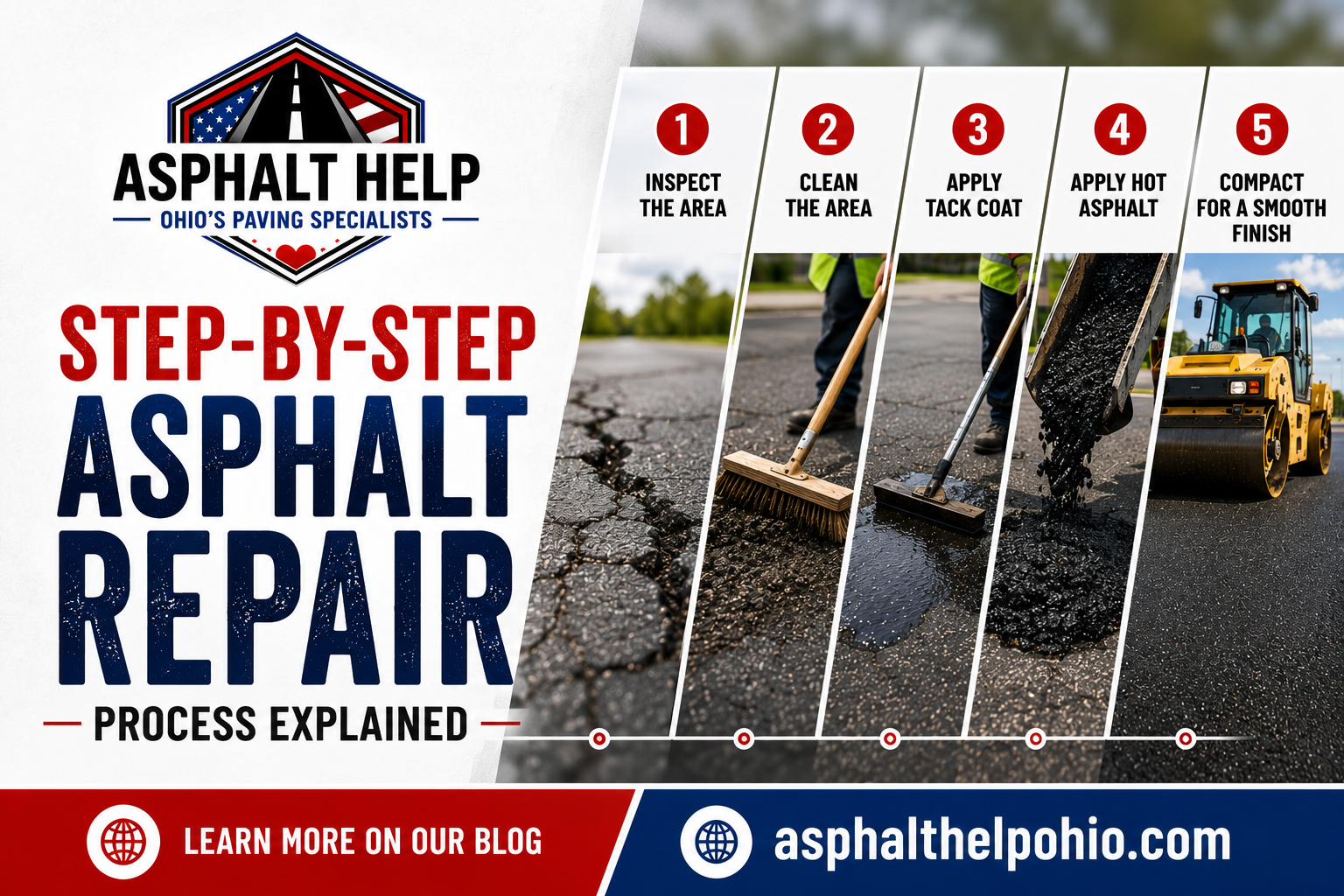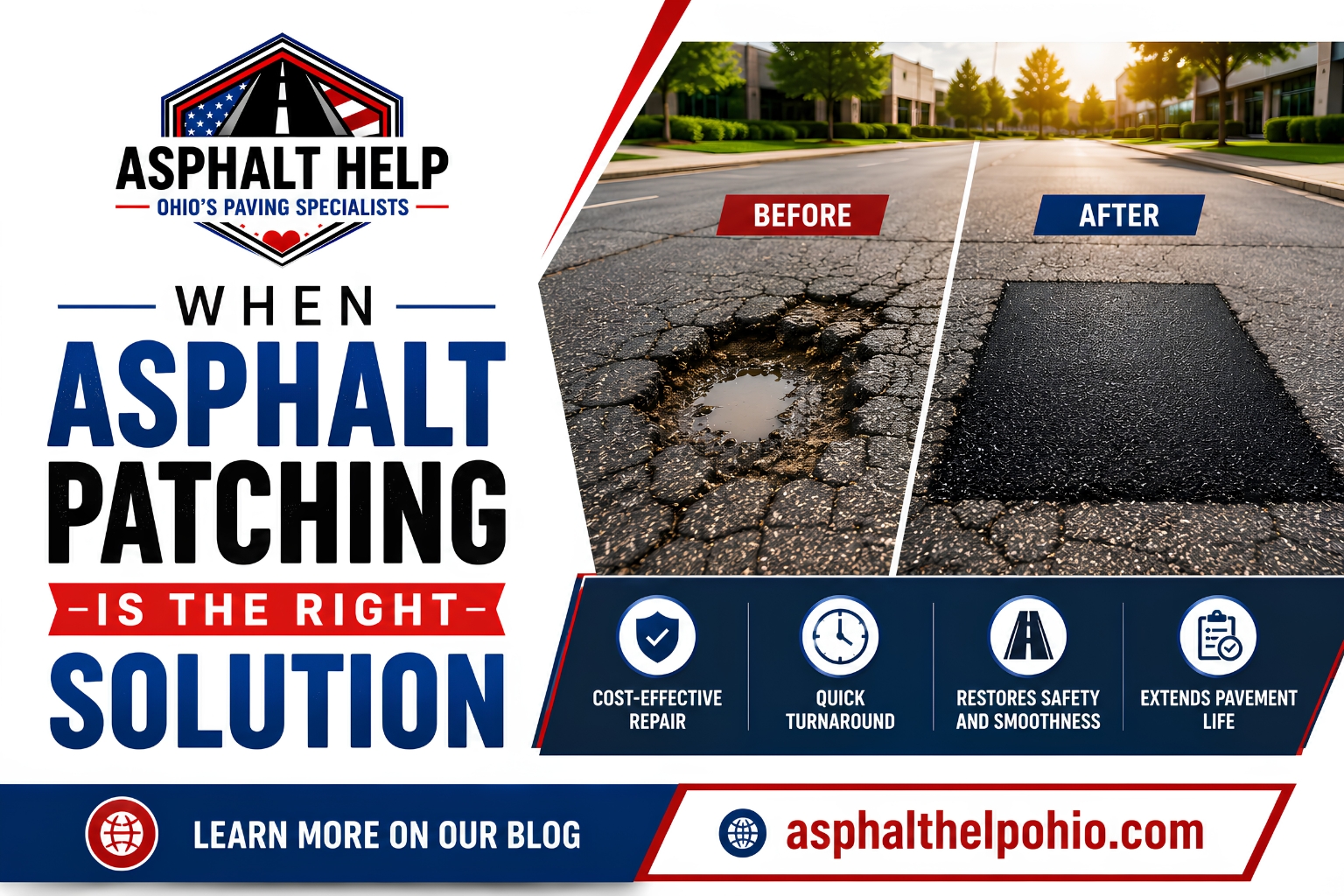



Are you spotting small cracks or surface wear in your pavement? Recognizing the early signs of pavement damage Ohio property owners commonly face can help prevent costly repairs and major structural failures later. Ohio’s climate places constant stress on asphalt surfaces due to freezing winters, hot summers, heavy rain, snow, road salt, and repeated freeze–thaw cycles. These changing conditions gradually weaken pavement, often starting with small visual warning signs that many homeowners and commercial property managers overlook. Early pavement damage may appear as thin surface cracks, fading color, loose gravel, drainage problems, shallow potholes, edge deterioration, or uneven pavement areas. While these issues may seem minor at first, they often indicate moisture infiltration and structural weakening developing beneath the asphalt surface.
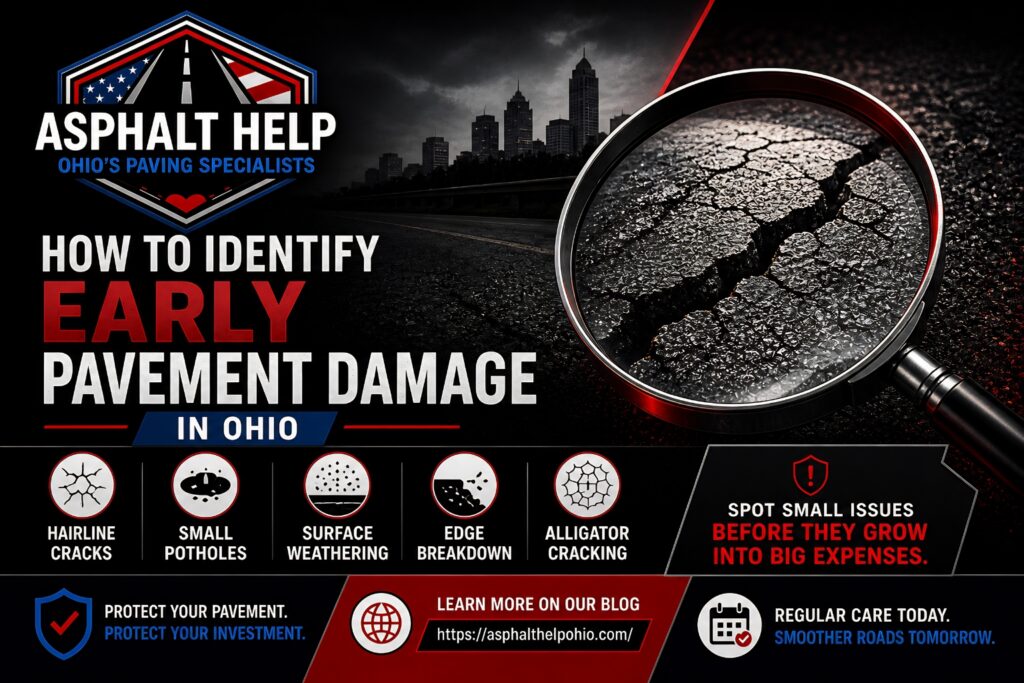
In Central Ohio, freeze–thaw cycles are especially damaging because water enters small cracks, freezes during winter, expands, and slowly breaks apart the pavement structure from within. Heavy traffic loads and clay-rich soils can accelerate the deterioration process even further. Identifying early pavement damage Ohio property owners encounter allows repairs to be completed before widespread cracking, potholes, or base failure occur. Routine inspections and preventative maintenance are key to extending pavement lifespan and avoiding expensive resurfacing or replacement projects.
Why Early Pavement Damage Detection Matters in Ohio
Pavement problems rarely appear overnight. Most severe asphalt failures begin as small, manageable issues that gradually worsen due to weather, moisture, and traffic stress.
Early identification helps:
- Prevent structural pavement failure
- Improve vehicle and pedestrian safety
- Preserve curb appeal
- Extend pavement lifespan
- Reduce future repair intensity
- Maintain proper drainage
- Protect property investment
Because Ohio’s climate accelerates asphalt wear, regular inspections are crucial.
Major Causes of Pavement Damage in Ohio
Understanding what causes pavement deterioration makes it easier to identify and prevent it.
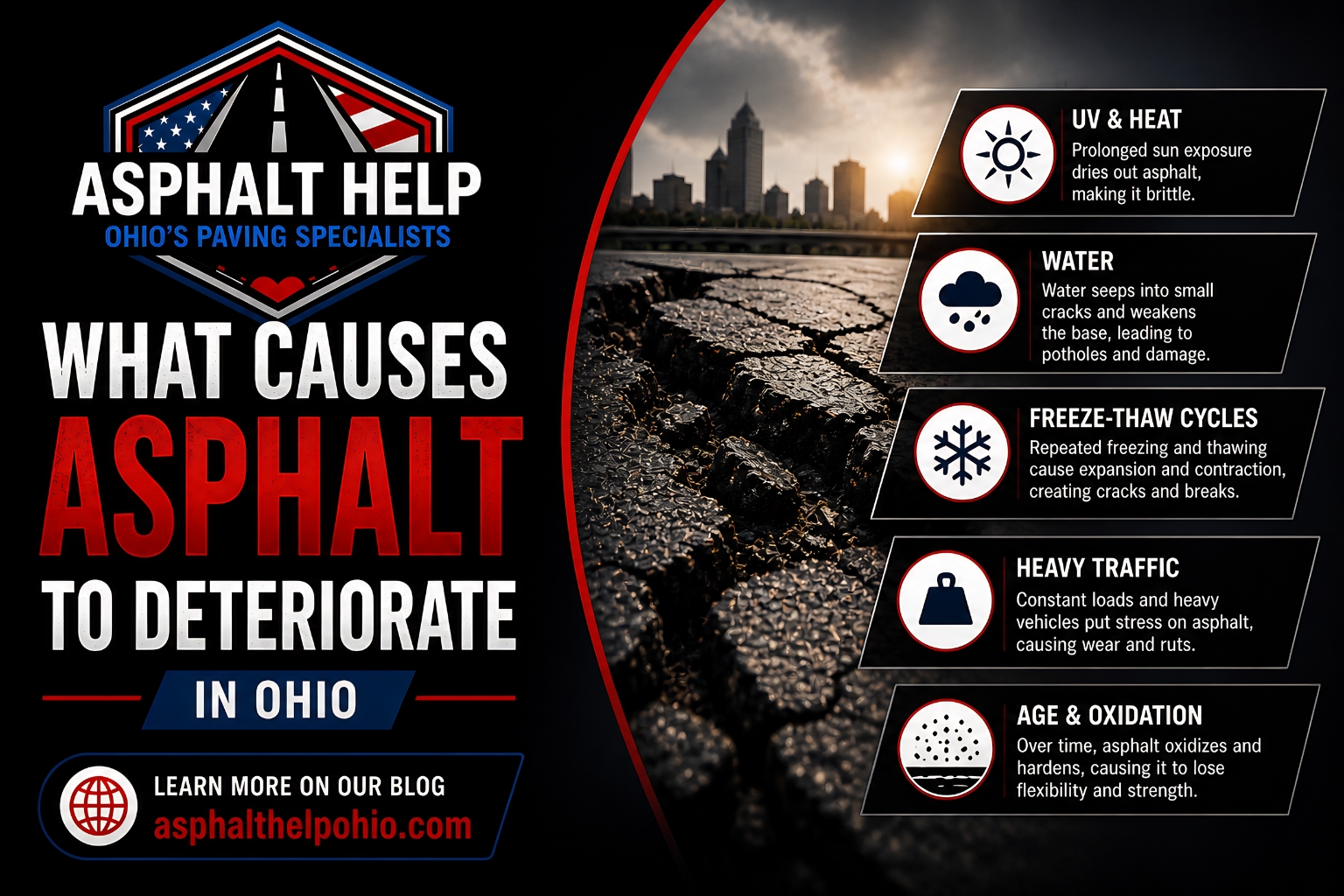
Common causes include:
1. Freeze-Thaw Cycles
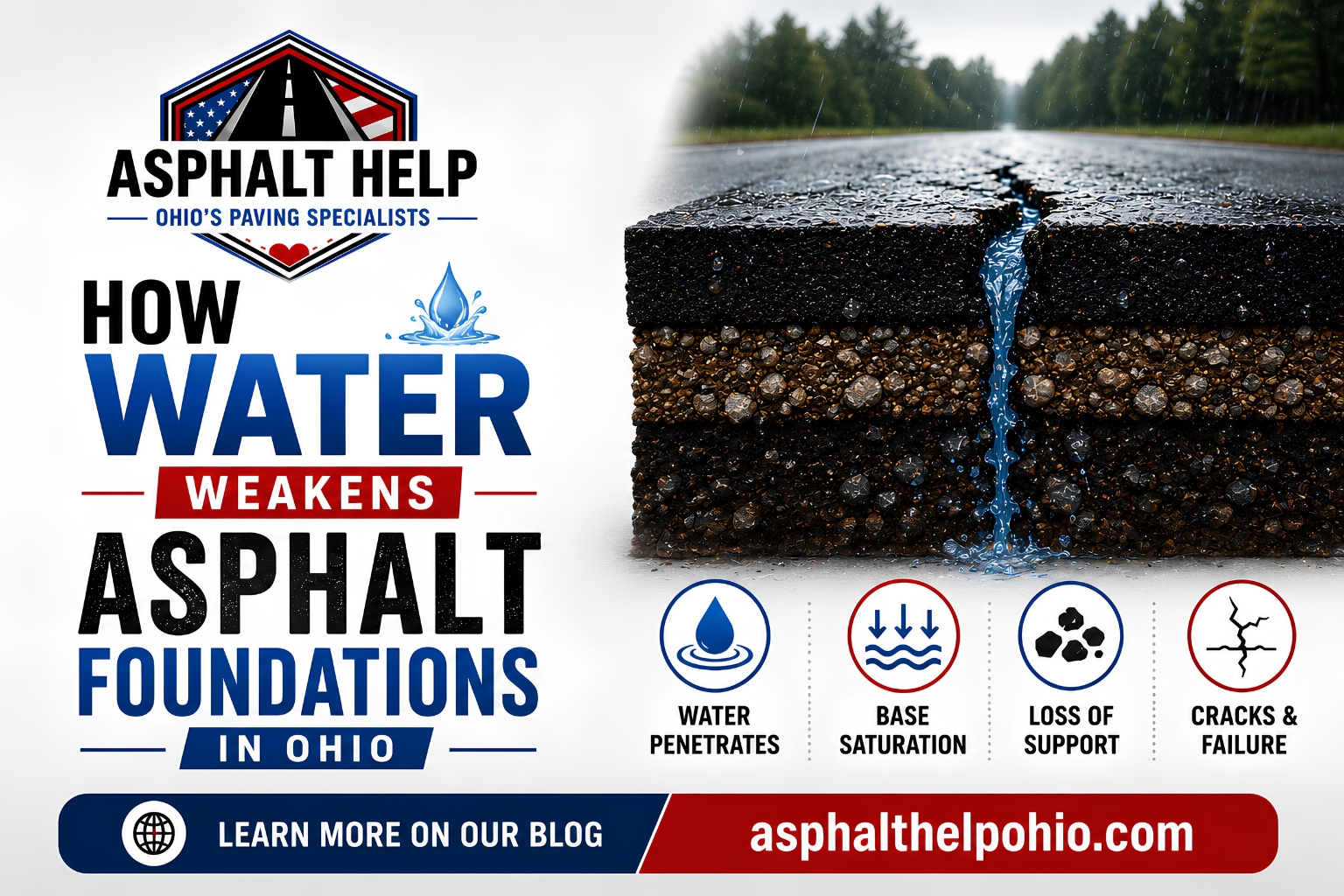
Water enters cracks, freezes, expands, and widens pavement damage.
2. Water Infiltration
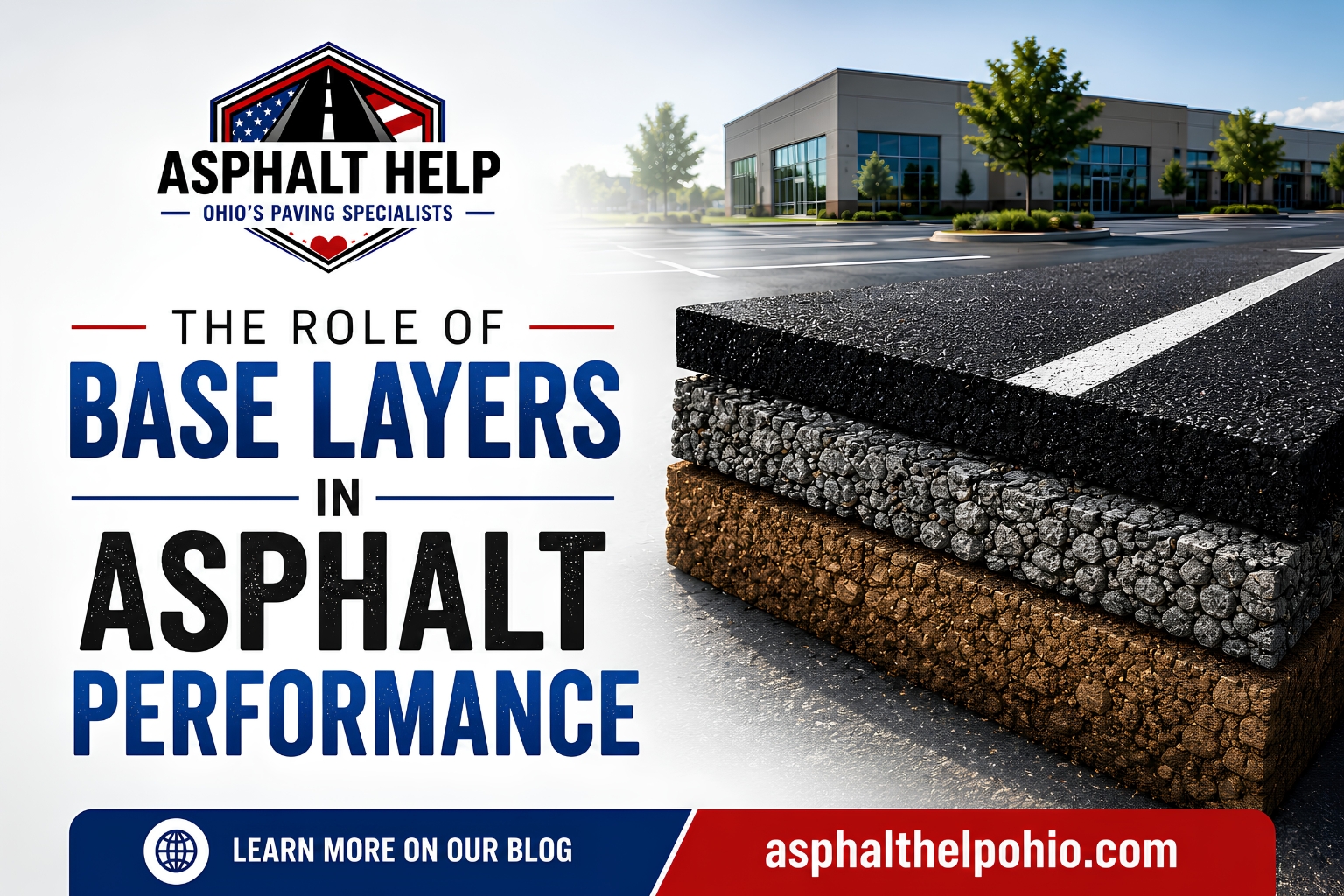
Standing water weakens asphalt foundations and subgrade layers.
3. UV Oxidation
Sun exposure dries out asphalt binders, making surfaces brittle.
4. Heavy Vehicle Loads
Repeated pressure can strain weak pavement areas.
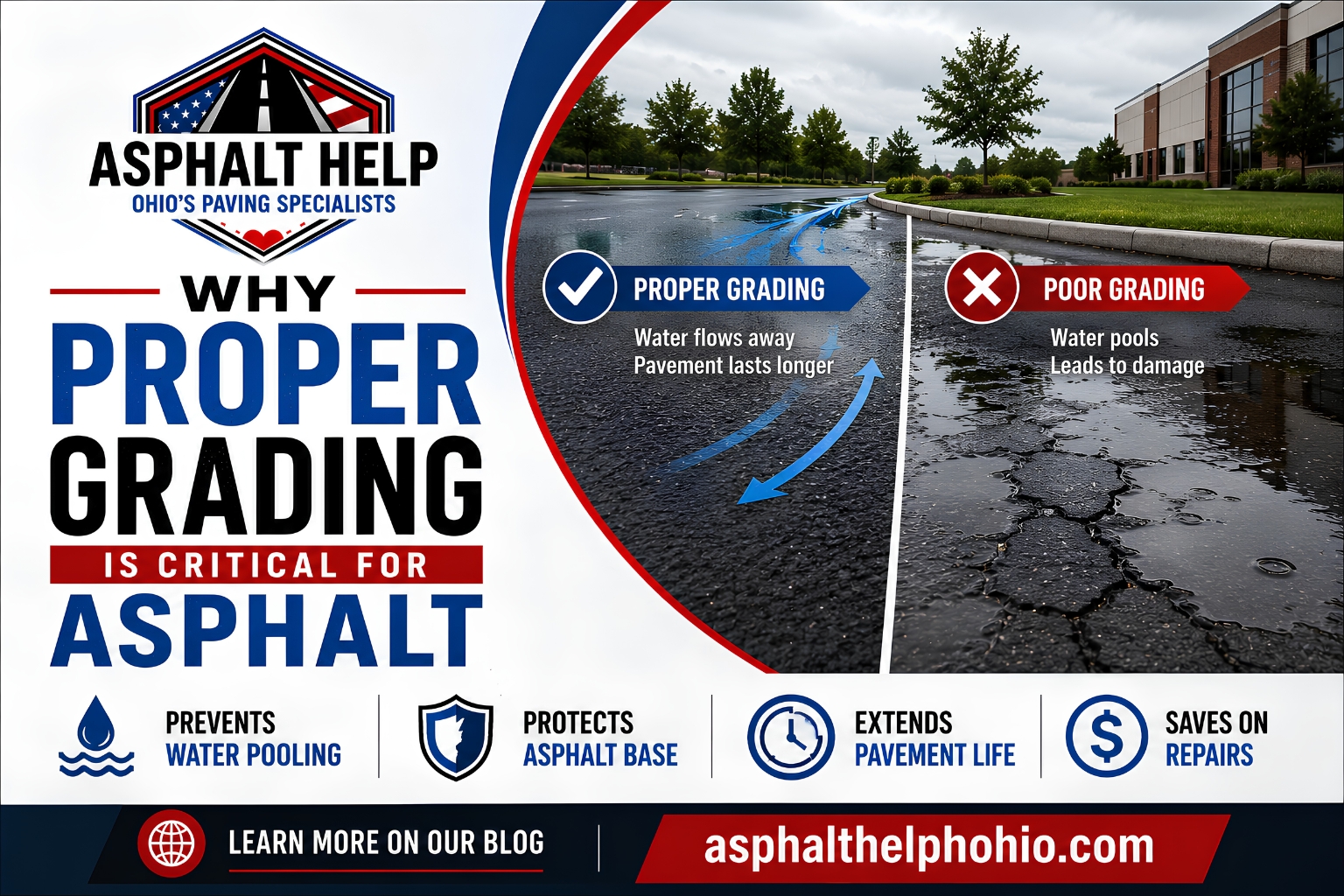
5. Poor Drainage
Improper grading often accelerates damage.
6. Aging Materials
Asphalt naturally deteriorates over time without maintenance.
Early Signs of Pavement Damage Ohio Property Owners Should Watch For
1. Surface Cracking
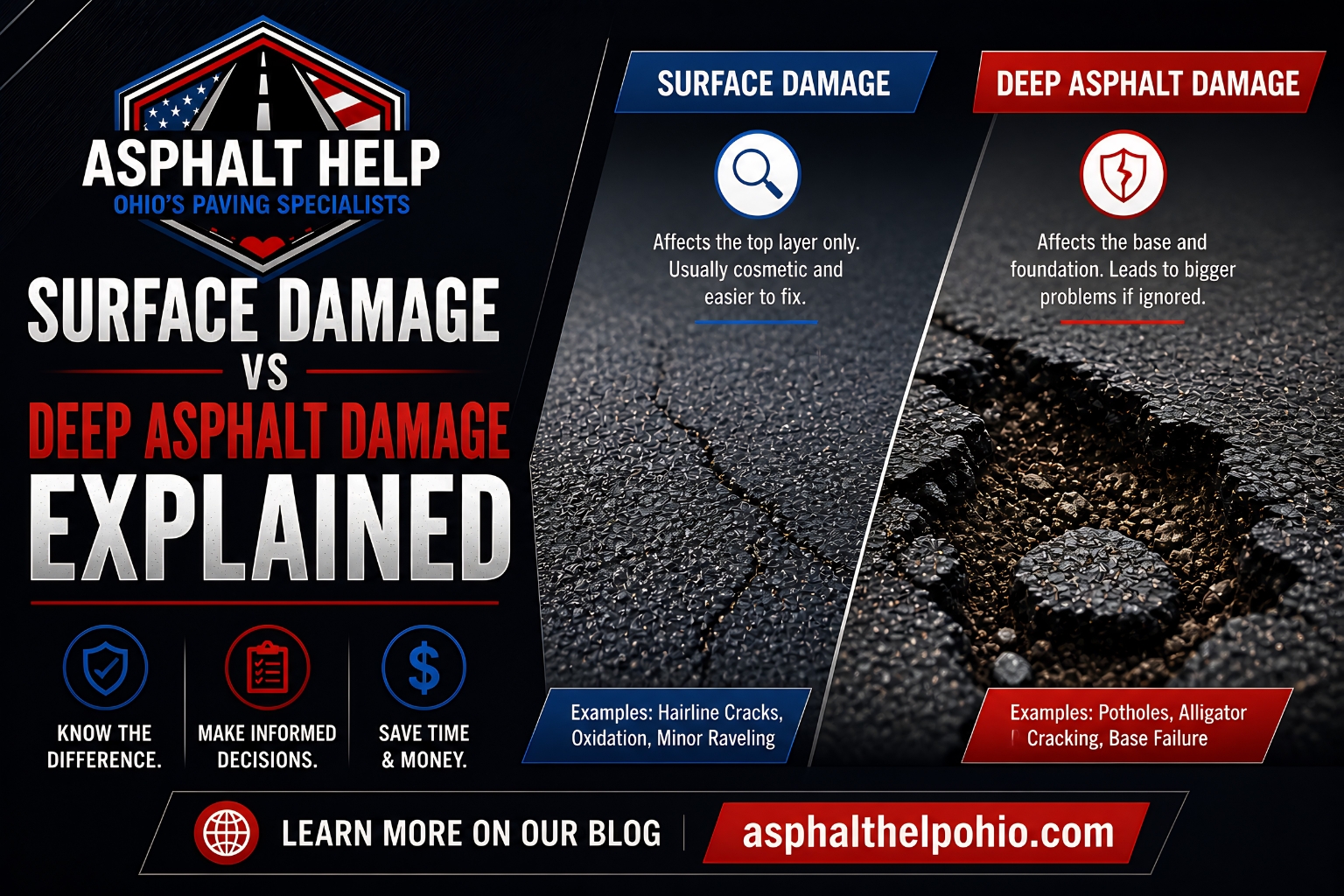
Cracks are often the first visible warning sign.
Common types:
- Hairline cracks
- Transverse cracks
- Longitudinal cracks
- Block cracking
- Edge cracking
Why it matters:
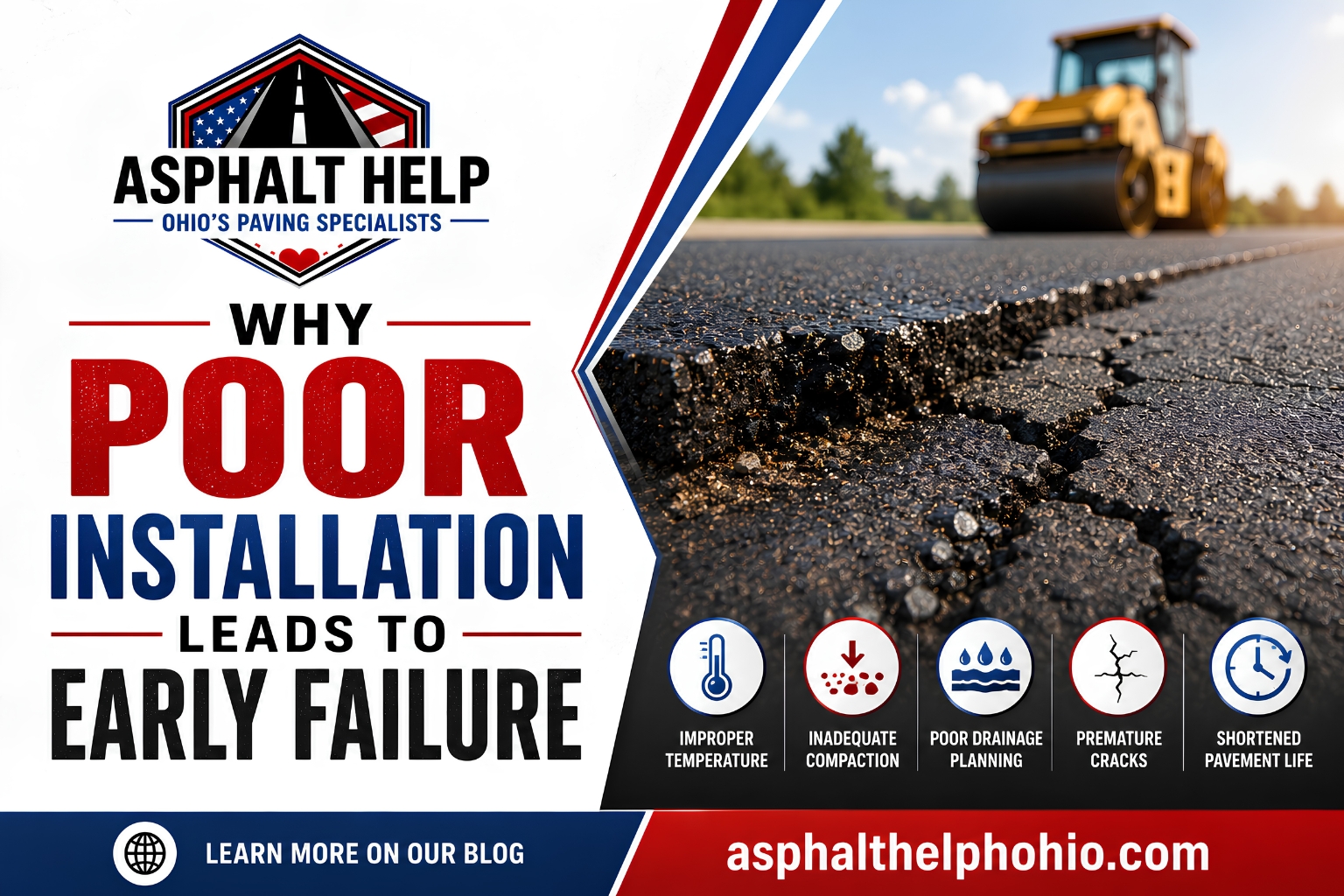
Even small cracks allow moisture penetration, which can rapidly worsen during Ohio winters.
2. Fading and Surface Oxidation
Healthy asphalt is dark black. Gray or faded pavement indicates oxidation.
Warning signs:
- Light gray surface
- Dry appearance
- Surface brittleness
- Reduced flexibility
Why it matters:
Oxidized pavement becomes more susceptible to cracking.
3. Water Pooling
Water accumulation often signals drainage or grading issues.
Warning signs:
- Puddles
- Soft spots
- Surface depressions
- Uneven areas
Why it matters:
Standing water is one of the leading causes of base deterioration.
4. Potholes
Potholes typically begin as small cracks or weak spots.
Why it matters:
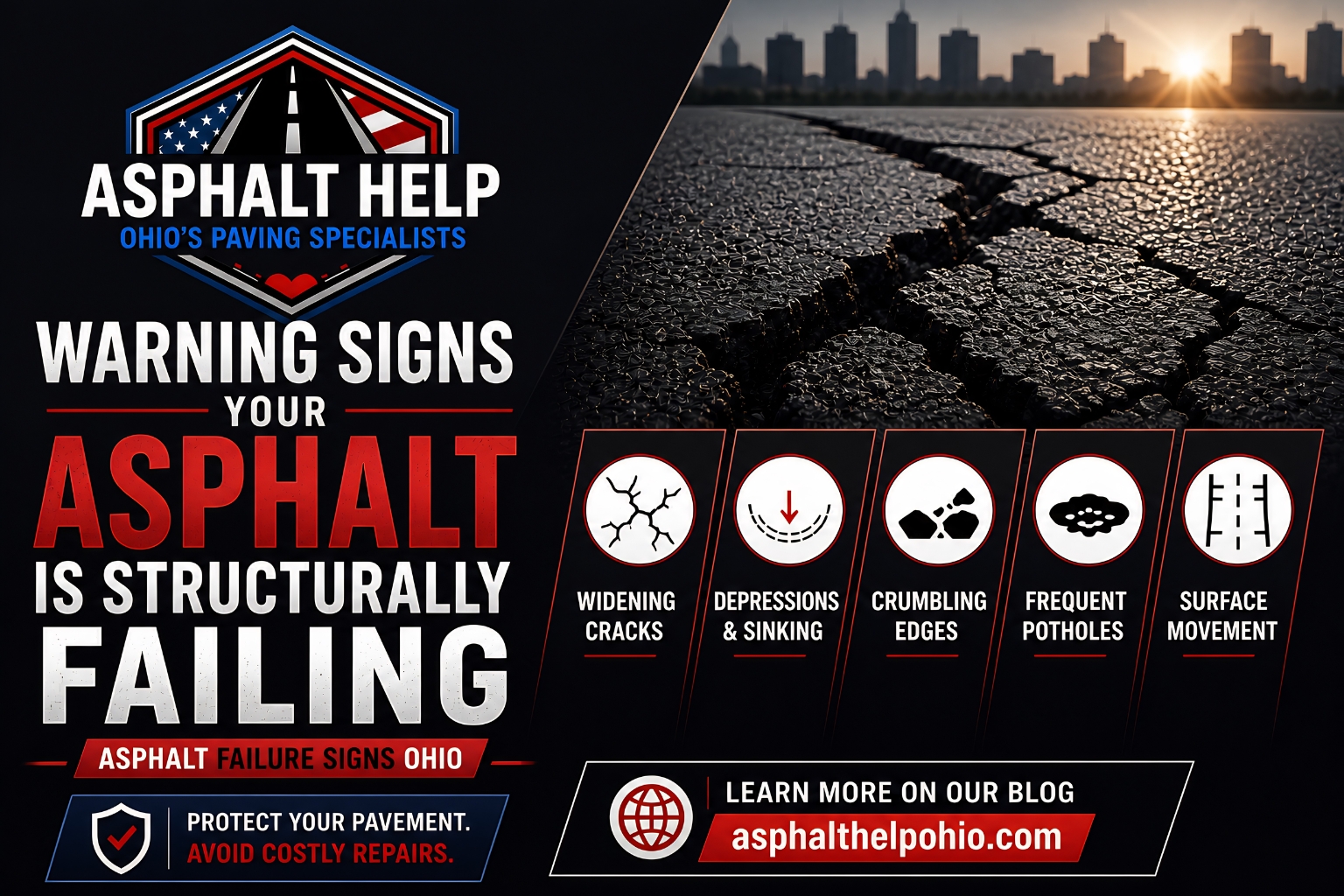
Potholes indicate structural weakness and require immediate professional attention.
5. Edge Crumbling
Pavement edges often deteriorate faster than central surfaces.
Causes:
- Poor support
- Drainage problems
- Vegetation growth
- Erosion
Why it matters:
Edge damage can spread quickly across the pavement surface.
6. Surface Raveling
Raveling occurs when aggregate begins separating from asphalt binder.
Symptoms:
- Loose stones
- Rough surface
- Texture loss
- Surface erosion
Why it matters:
Raveling weakens pavement durability and aesthetics.
Pavement Damage Severity Guide
| Pavement Issue | Early Warning Sign | Risk Level | Recommended Action |
|---|---|---|---|
| Hairline Cracks | Small visible lines | Moderate | Crack filling |
| Oxidation | Gray discoloration | Moderate | Sealcoating |
| Water Pooling | Standing water | High | Drainage correction |
| Potholes | Surface holes | Severe | Structural repair |
| Edge Cracking | Crumbling sides | High | Edge reinforcement |
| Raveling | Loose aggregate | Moderate | Surface treatment |
Ohio’s Seasonal Impact on Asphalt
Winter:
- Snow plows
- Salt damage
- Freeze expansion
- Ice penetration
Spring:
- Heavy rain
- Water infiltration
- Soil shifting
Summer:
- UV oxidation
- Heat softening
Fall:
- Drain blockage
- Moisture buildup
Each season creates different risks, making year-round maintenance essential.
Residential vs Commercial Pavement Damage
Residential Driveways:
- Surface fading
- Minor cracks
- Drainage wear
- Edge erosion
Commercial Lots:
- Load stress
- Heavy cracking
- Potholes
- Striping wear
Commercial surfaces often require more frequent inspections due to traffic volume.
Preventative Maintenance Strategies
Early maintenance can significantly reduce long-term damage.
Recommended services:
- Sealcoating
- Crack sealing
- Drainage corrections
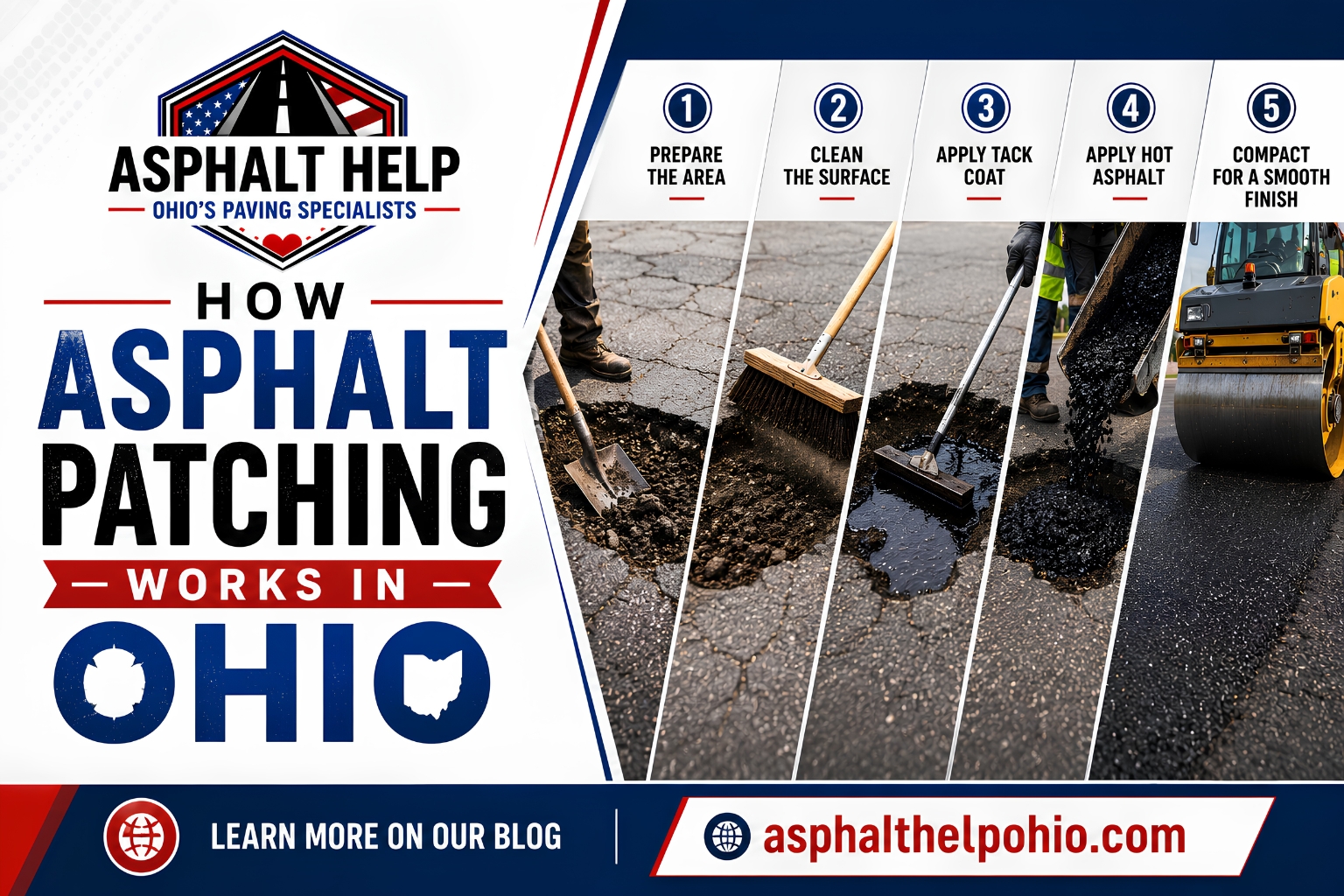
- Surface patching
- Line striping maintenance
- Routine inspections
Property owners searching for Asphalt Paving Services in Columbus Ohio should prioritize preventative care to maximize pavement life.
Why Hiring Experienced Asphalt Contractors in Central Ohio Matters
Choosing knowledgeable professionals is essential for effective pavement evaluation and long-term durability.
Benefits include:
- Climate-specific solutions
- Proper grading
- Professional repairs
- Structural assessments
- Preventative strategies
- Long-term pavement preservation
Working with experienced asphalt contractors in Central Ohio ensures your pavement receives solutions tailored to Ohio’s challenging weather patterns.
Why Local Expertise Is Critical
Ohio’s climate requires specialized paving knowledge.
At asphalt paving in Central Ohio, local experience provides:
- Understanding of freeze-thaw cycles
- Regional drainage planning
- Material performance knowledge
- Proper seasonal scheduling
- Customized maintenance plans
This local focus helps property owners avoid common pavement failures.
When to Schedule Professional Pavement Inspections
You should seek professional assessment if you notice:
- Cracks
- Fading
- Water pooling
- Surface roughness
- Potholes
- Drainage issues
- Edge breakdown
Routine inspections can catch issues before they become severe.
Final Thoughts
Small pavement problems rarely stay small for long in Ohio’s harsh climate. Moisture intrusion, road salt exposure, UV rays, and constant temperature changes can quickly worsen minor cracks and surface wear if maintenance is delayed. Understanding how to identify early pavement damage Ohio property owners commonly experience helps protect driveways, parking lots, and paved surfaces before damage becomes more severe and expensive to repair.
For residential properties, early repairs can help maintain curb appeal, improve safety, and prevent long-term structural deterioration. For commercial properties, proactive pavement maintenance supports safer traffic flow, reduces liability concerns, and preserves a more professional appearance year-round. Services such as crack sealing, sealcoating, drainage correction, and asphalt patching can significantly slow pavement deterioration when completed early.
If your pavement is beginning to show signs of cracking, fading, potholes, or uneven surfaces, Asphalt Help Ohio can help assess pavement conditions and provide professional repair and maintenance solutions designed specifically for Ohio’s challenging weather and pavement conditions.