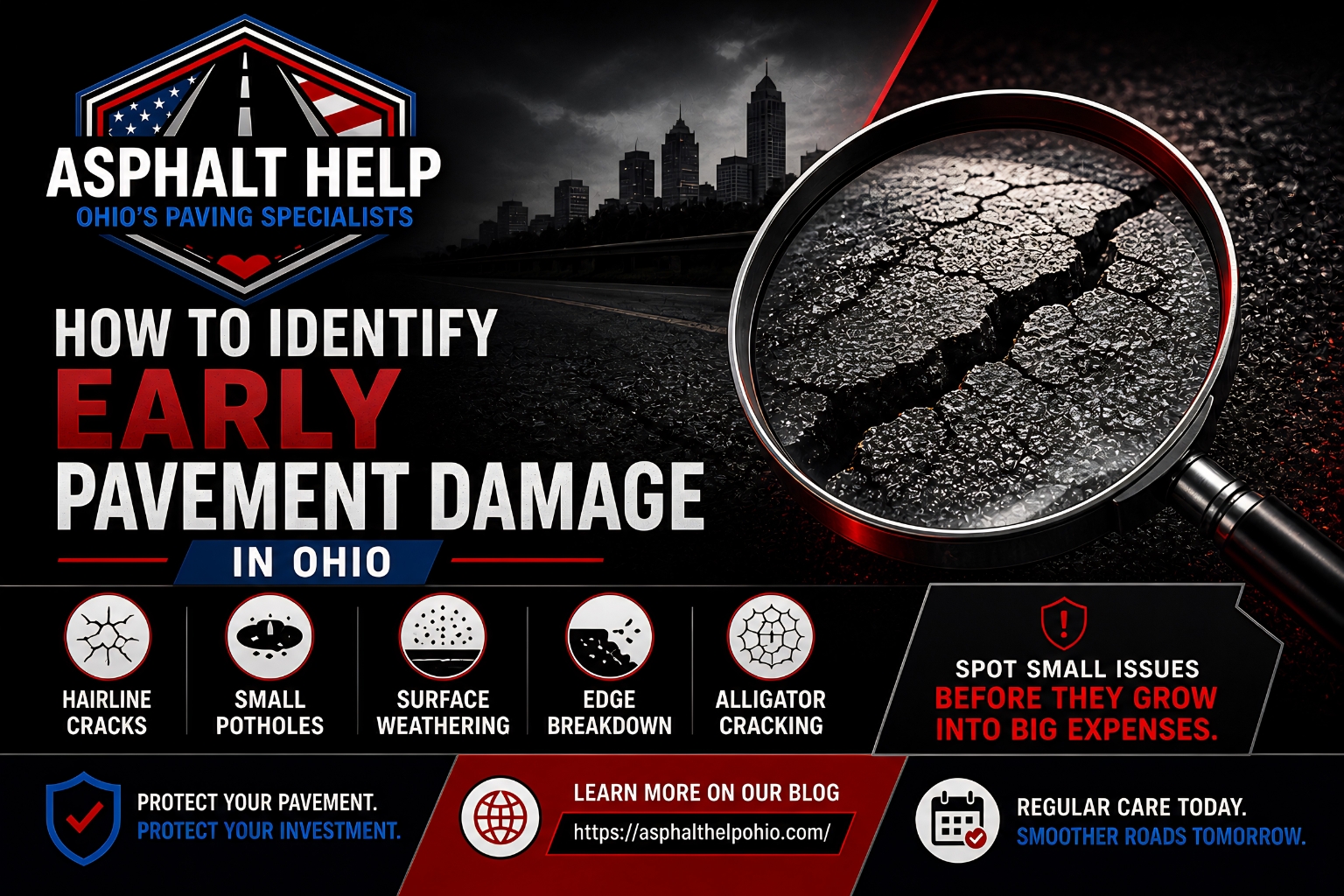


Are you seeing cracks, potholes, or surface damage forming in your asphalt? The most common asphalt problems in Central Ohio are largely caused by the region’s unpredictable and demanding climate. Freezing winters, hot summers, heavy rain, road salt exposure, and constant temperature fluctuations place continuous stress on asphalt surfaces year-round. In Central Ohio, pavement regularly expands and contracts during freeze–thaw cycles, allowing moisture to penetrate beneath the surface and weaken the asphalt structure over time. Combined with clay-heavy soils and heavy traffic loads, these conditions often lead to common pavement issues such as thermal cracking, block cracking, alligator cracking, potholes, rutting, oxidation, stripping, drainage failures, and frost heave. What begins as a small surface crack or faded area can quickly turn into major structural damage if repairs are delayed.
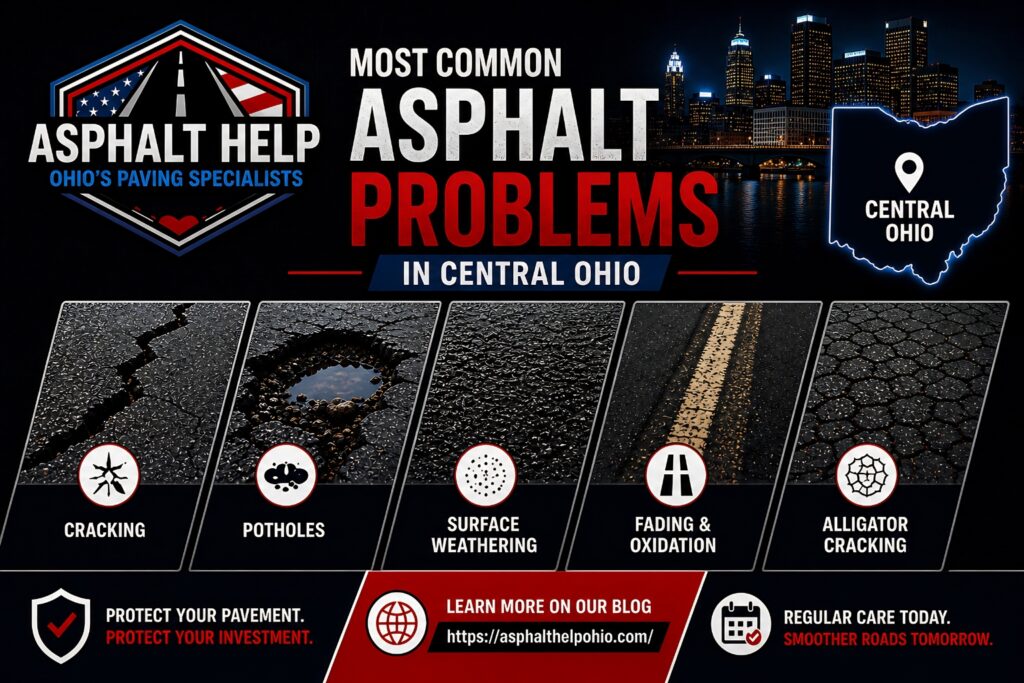
Understanding how these asphalt problems develop—and recognizing the early signs—can help homeowners and commercial property managers prevent expensive repairs and extend pavement lifespan. Some minor issues can be managed with preventative maintenance or small repairs, while more serious damage may require professional crack sealing, resurfacing, base repair, or full-depth restoration. Working with experienced asphalt professionals familiar with Ohio’s climate conditions is essential for protecting asphalt against long-term weather and traffic damage.
Central Ohio Climate & Soil Factors
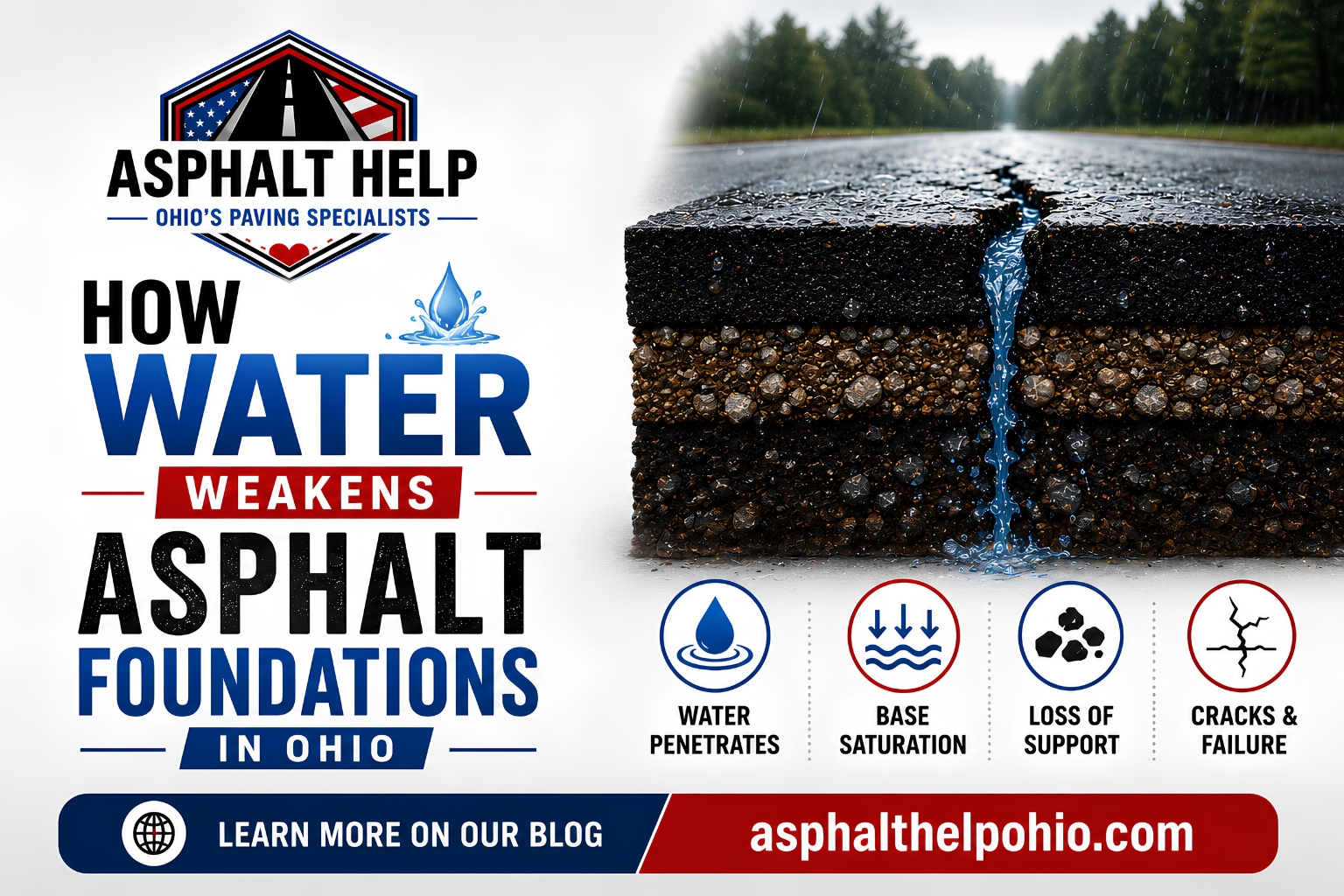
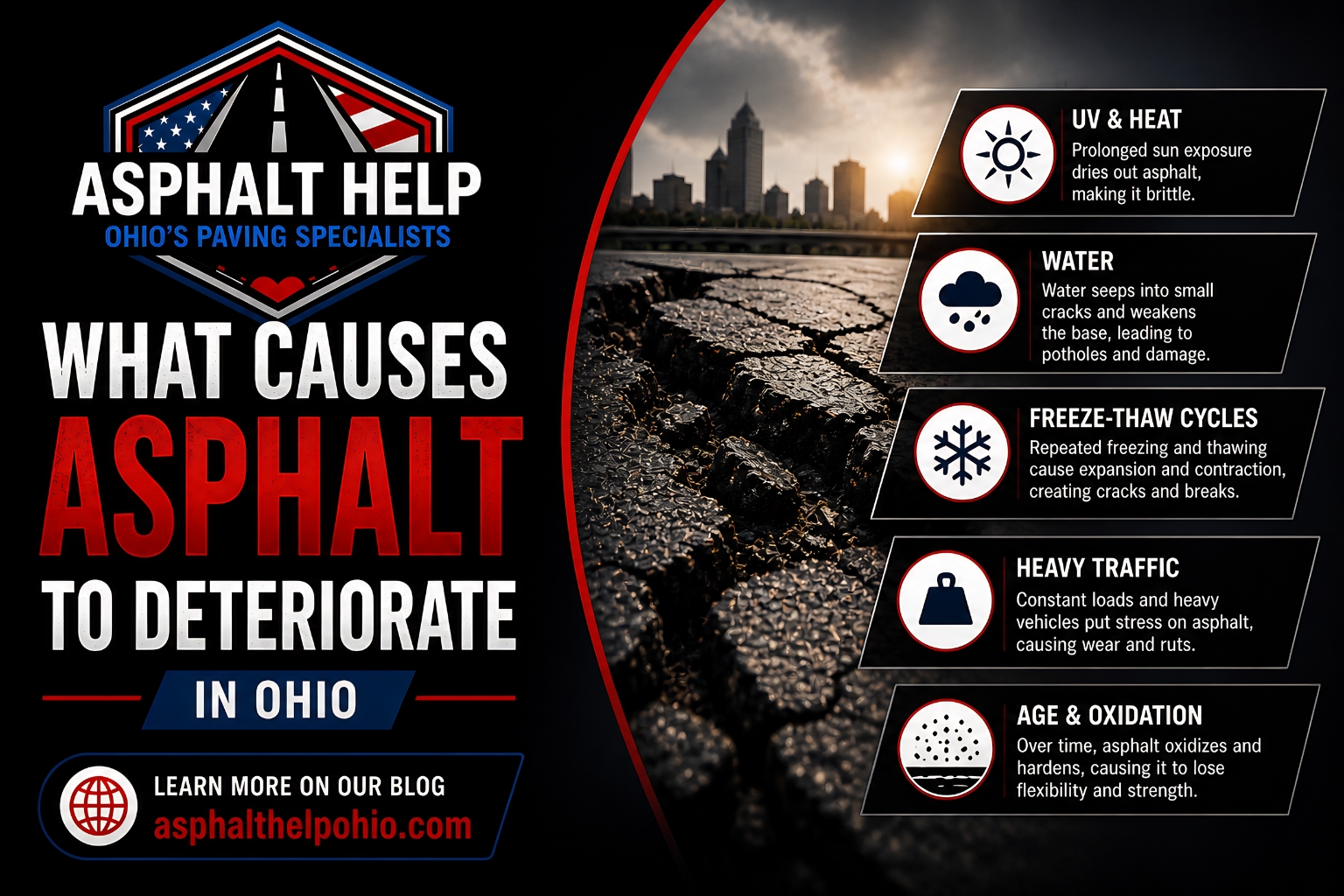
Central Ohio’s weather is especially hard on pavement. Columbus sees dozens of freeze–thaw cycles each winter. Each cycle forces water in small cracks to freeze/expand, then thaw/contract, gradually prying apart the pavement. Ohio’s average of ~42 inches of rain and 28 inches of snow per year means moisture is nearly constant. Water that pools on pavement seeps into cracks and softens the base. Clay-heavy glacial soils (common in Ohio) swell when wet and shrink when dry, causing the ground beneath pavement to shift seasonally. In winter, frozen soil heaves (lifts) asphalt; in spring, thawing soil settles and opens cracks. Moreover, wide temperature swings (hot summers/ cold winters) and abundant sun cause asphalt binder to expand/contract and oxidize. Heavy traffic (cars, trucks, snowplows) flexes pavement repetitively, leading to fatigue cracking. In summary, Ohio’s freeze–thaw cycles, precipitation, soil movement, and traffic loads combine to create conditions that make asphalt age and fail faster. Proper design (strong base, good drainage, flexible mix) and regular maintenance (sealcoating, crack-filling) are critical to counter these stresses
Cracking (Thermal, Block, Reflection): Small cracks are often the first sign of asphalt aging and stress. Block cracks appear as large interconnected rectangles, caused by asphalt shrinkage and temperature cycling. Thermal (transverse) cracks run across the width (often from seasonal shrinkage or reflective cracks in overlays), while longitudinal cracks run parallel to the road (often at joints or poor shoulders). These cracks typically show up after winter’s freeze–thaw (spring) or in late fall. Visual Signs: Faint grey lines in the pavement that may widen over time. Reflection cracks appear when an old crack or joint underneath reflects up through a new overlay.
- Ohio Factors: Frequent freeze–thaw widens even hairline cracks each spring; road salts and plant roots can exacerbate edge or shoulder cracks.
- Prevention: Keep pavement sealed. Crack sealing in spring/early summer (with hot rubberized sealant) stops water intrusion. Apply sealcoat every 2–5 years to block moisture and UV. Ensure proper drainage so water does not pond in cracks.
- Repairs: Small cracks can often be filled with D.I.Y. rubber filler, but large or numerous cracks require professional sealing or even overlay. If cracks are widespread or deep, a contractor can mill the surface and install a new layer.
- DIY vs Pro: Homeowners can handle isolated small cracks with a sealant kit in warm, dry weather. For larger cracks, extensive networks, or alligator patterning, call a pro to evaluate full-depth patching or resurfacing.
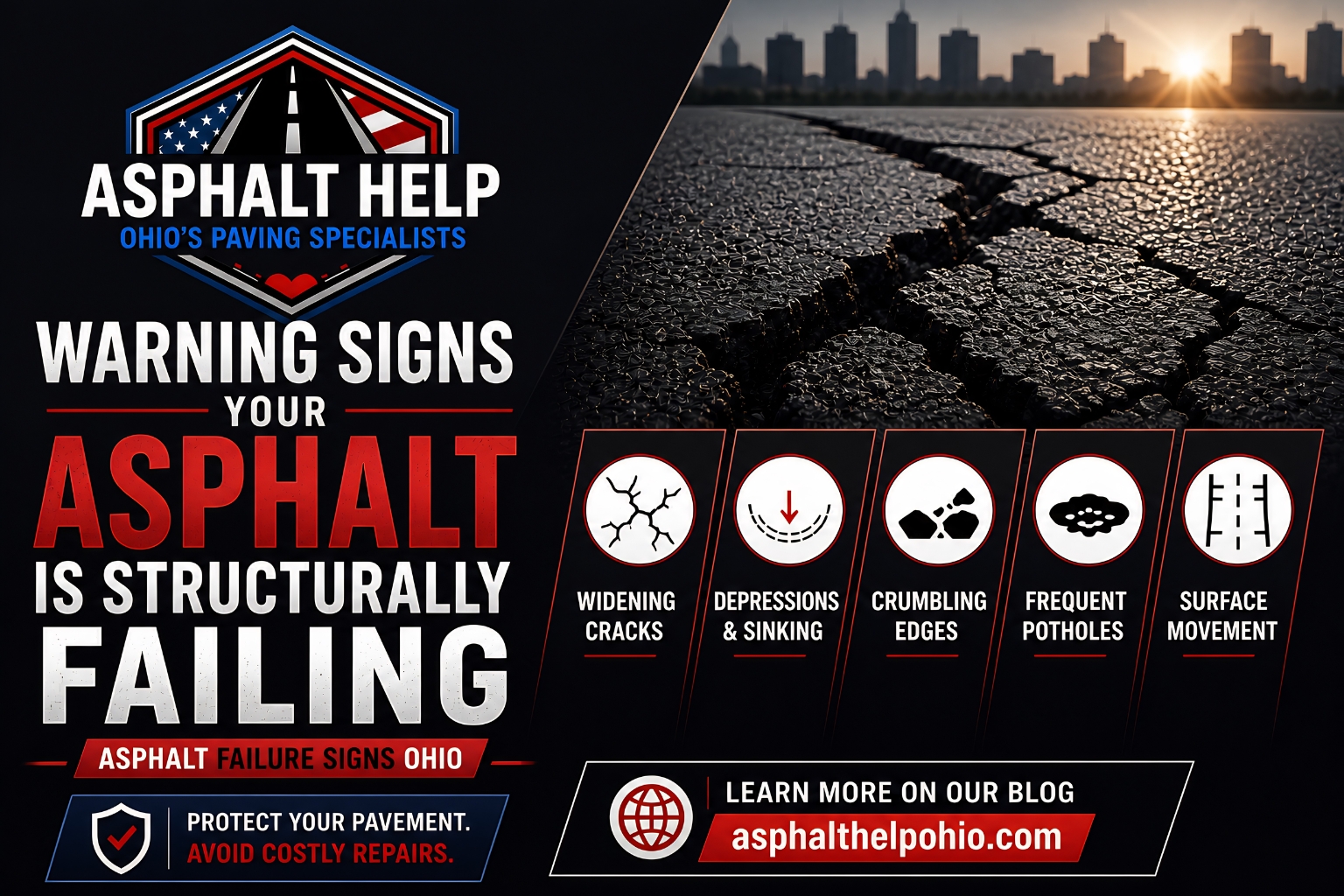
Alligator (Fatigue) Cracking: Alligator or fatigue cracks form a dense pattern resembling reptile skin. They indicate structural failure of the pavement layers.
- Signs: A localized patch of many small, interconnected cracks. Often occurs under wheelpaths or standing loads, and gets worse quickly after winter.
- Causes: Chronic heavy loading or a weak base/subgrade allows pavement layers to flex and break down. Poor drainage exacerbates it – water softens the subgrade and accelerates cracking. Ohio’s freeze–thaw also weakens the foundation, so fatigue cracks often follow a harsh winter on roads with many heavy vehicles.
- Prevention: Prevent water buildup by sealing cracks immediately and ensuring the shoulders/base are stable. Limit parking or idling on asphalt (especially on weak spots). Regular sealcoating keeps moisture out.
- Repair: Alligator cracking requires full-depth repair: the damaged area is cut out, the base stabilized, and new compacted asphalt laid. Simply patching the surface is only temporary. Typically, a milling and overlay or full repave section is needed in the worst areas.
- DIY vs Pro: Because alligator cracking indicates a deep failure, it’s generally a professional fix. Homeowners should call a contractor if they see alligator patterns larger than a few square feet, as it will only worsen rapidly.
Edge Cracks and Edge Failure: Cracks along the pavement edge are very common, especially on driveways and shoulders. These long cracks parallel the pavement edge and may flake off.
- Signs: Thin lines of cracking along the edge, often with grass or eroded soil visible beside the asphalt. Over time, pieces may break off and edges crumble.
- Causes: Poor support along the edge – for example, soil shrinking away (dry clay), erosion undercutting the edge, or repeated stress (vehicles parked half on/half off the edge). Water running down the edge (from roof runoff or street) also seeps under and weakens it. Freeze–thaw cycles lift and drop unsupported edges.
- Ohio Factors: Ohio’s clay soils and heavy rains can wash out or shift the base under edges. Plowing snow along driveway edges also knocks them.
- Prevention: Provide a stable shoulder (gravel or compacted soil) to back up pavement edge. Improve drainage away from edges. Avoid driving/parking on the outermost edge. Sealcoat edges along with the whole pavement.
- Repair: Small edge cracks can be filled with sealant, but failing edges need rebuilding. A contractor will remove broken asphalt, rebuild the shoulder/base (often adding gravel or soil), and repave or patch the edge. In severe cases, extending the base width or adding curbing may be done to prevent recurrence.
- DIY vs Pro: Minor edge cracks can be DIY-filled. However, once pieces are falling off or the base is exposed, professional repair is recommended to prevent a bigger collapse.
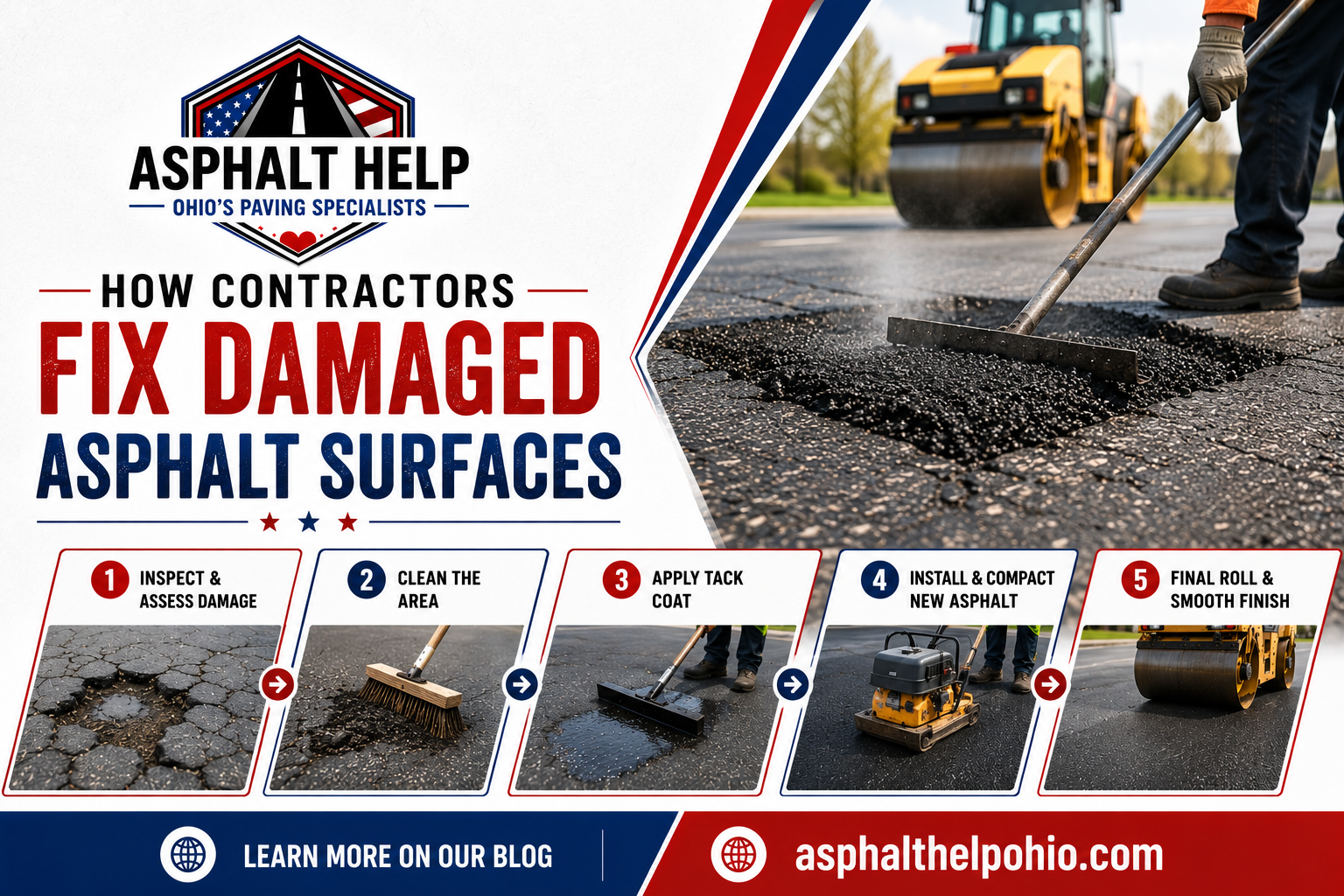
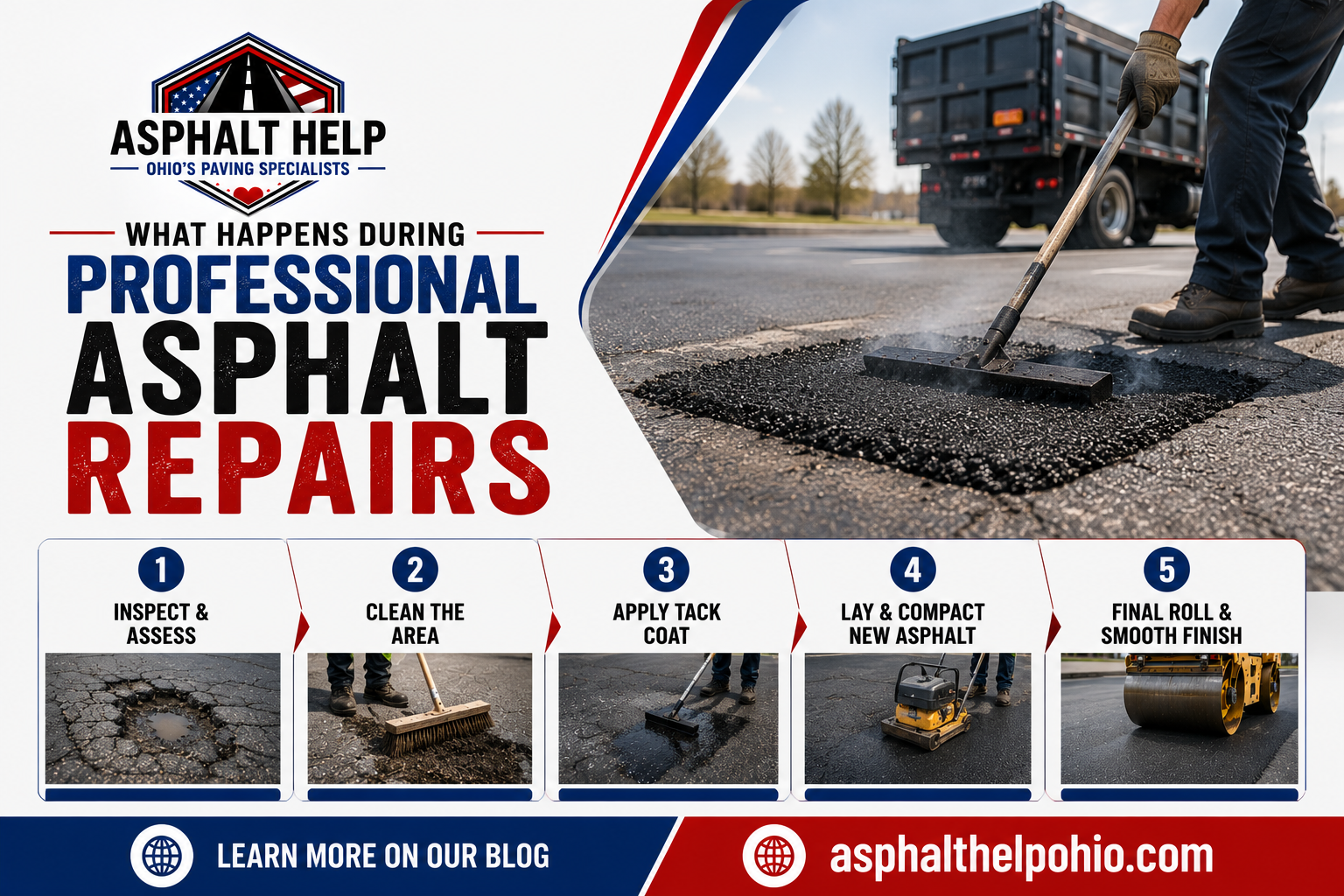
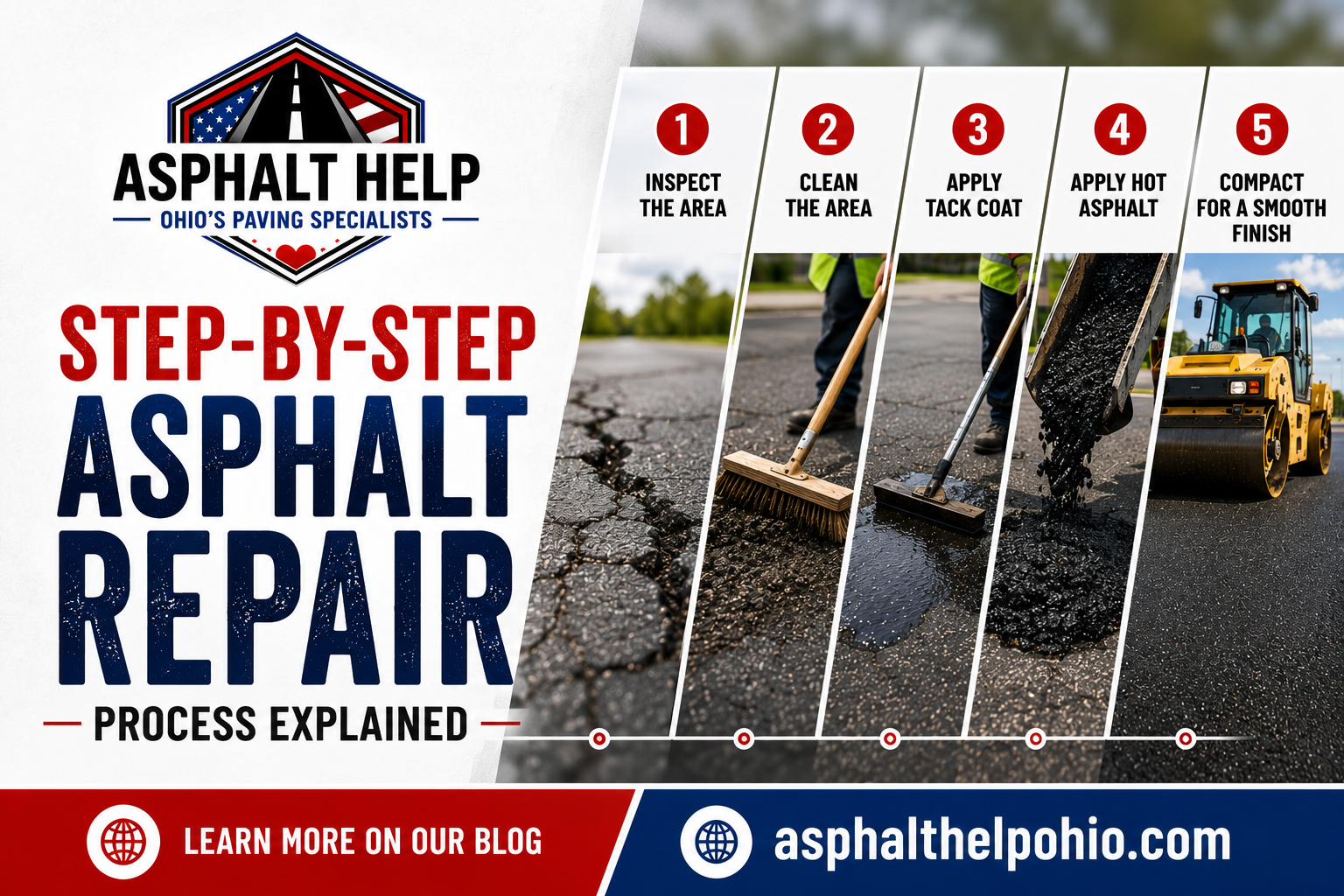
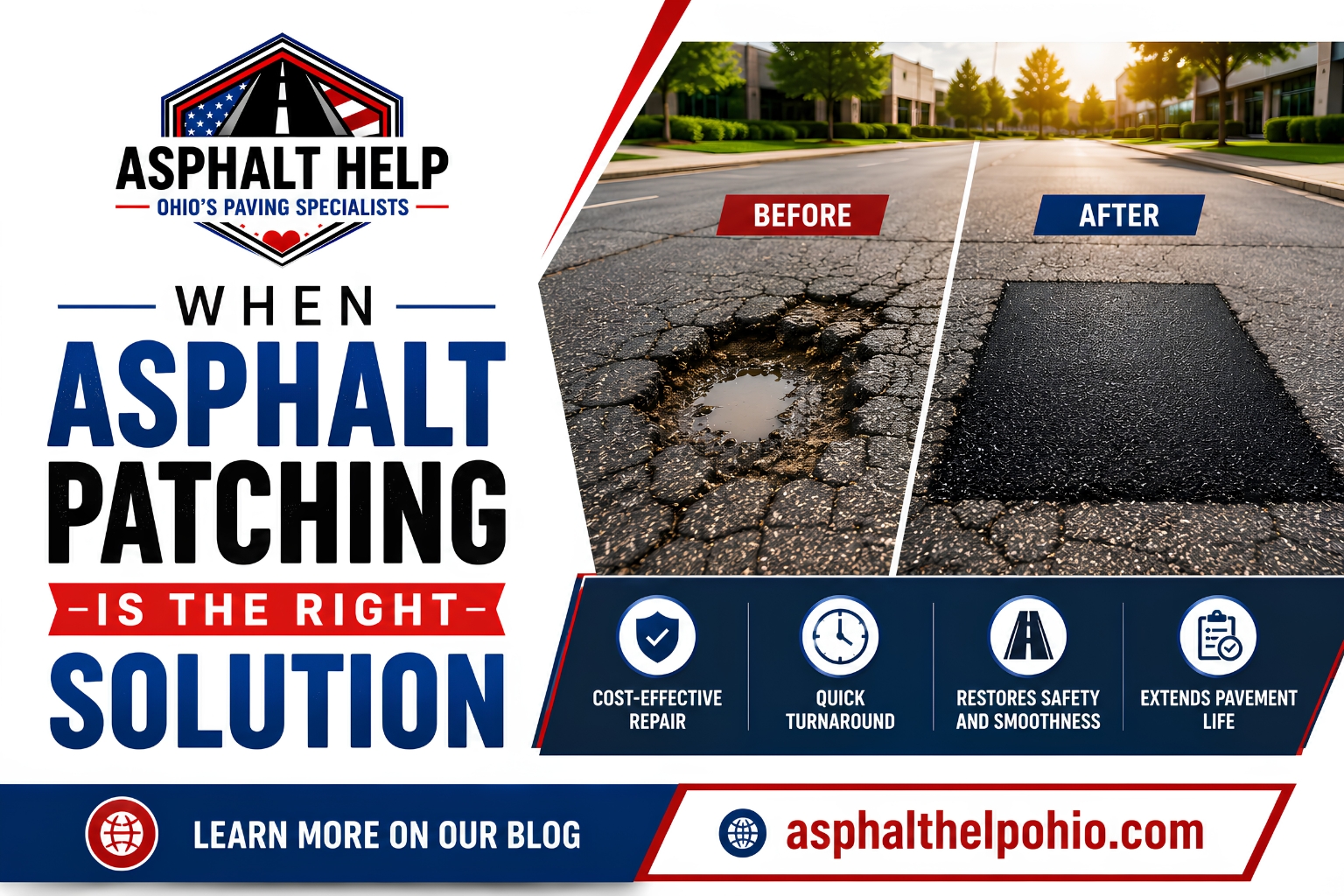
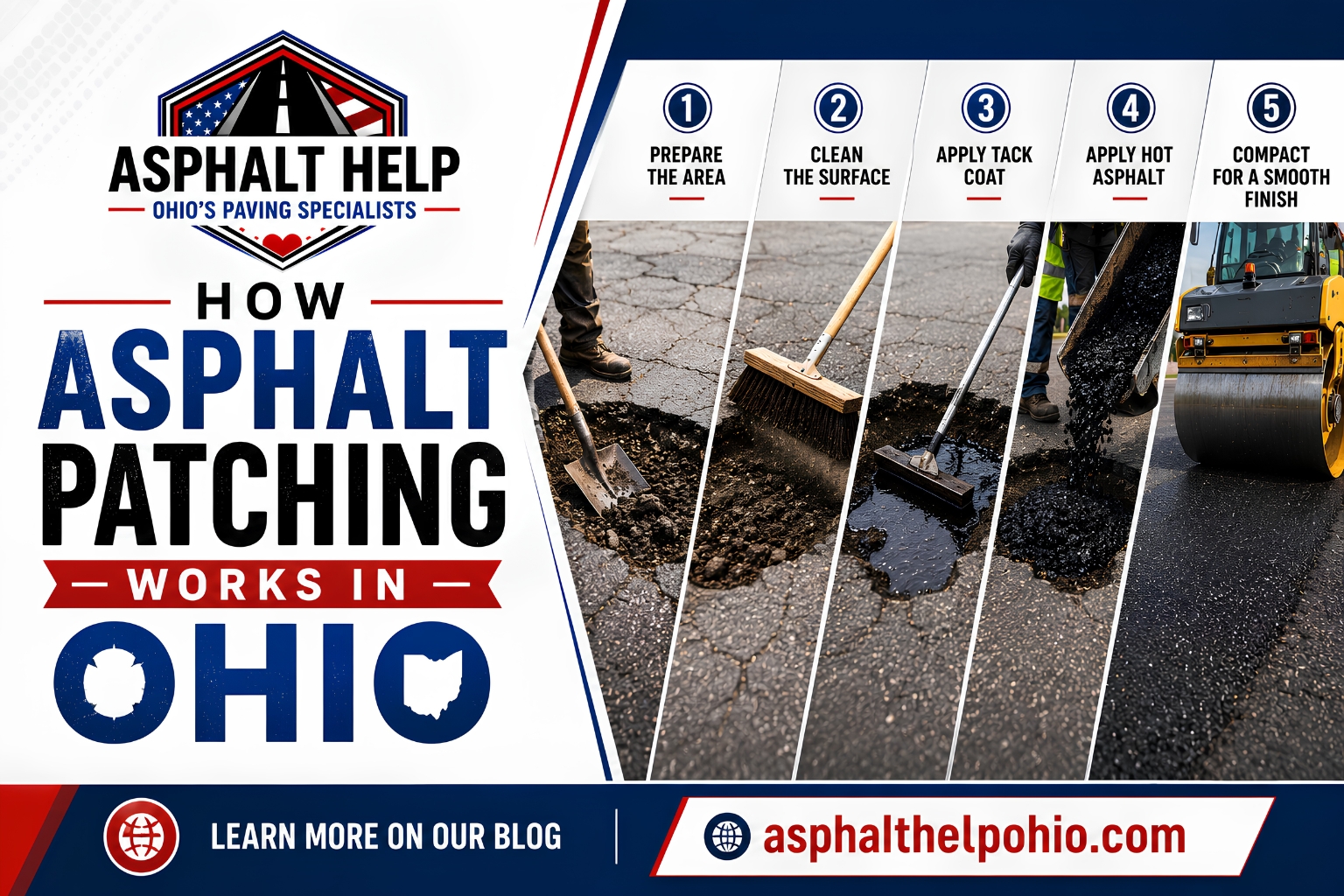
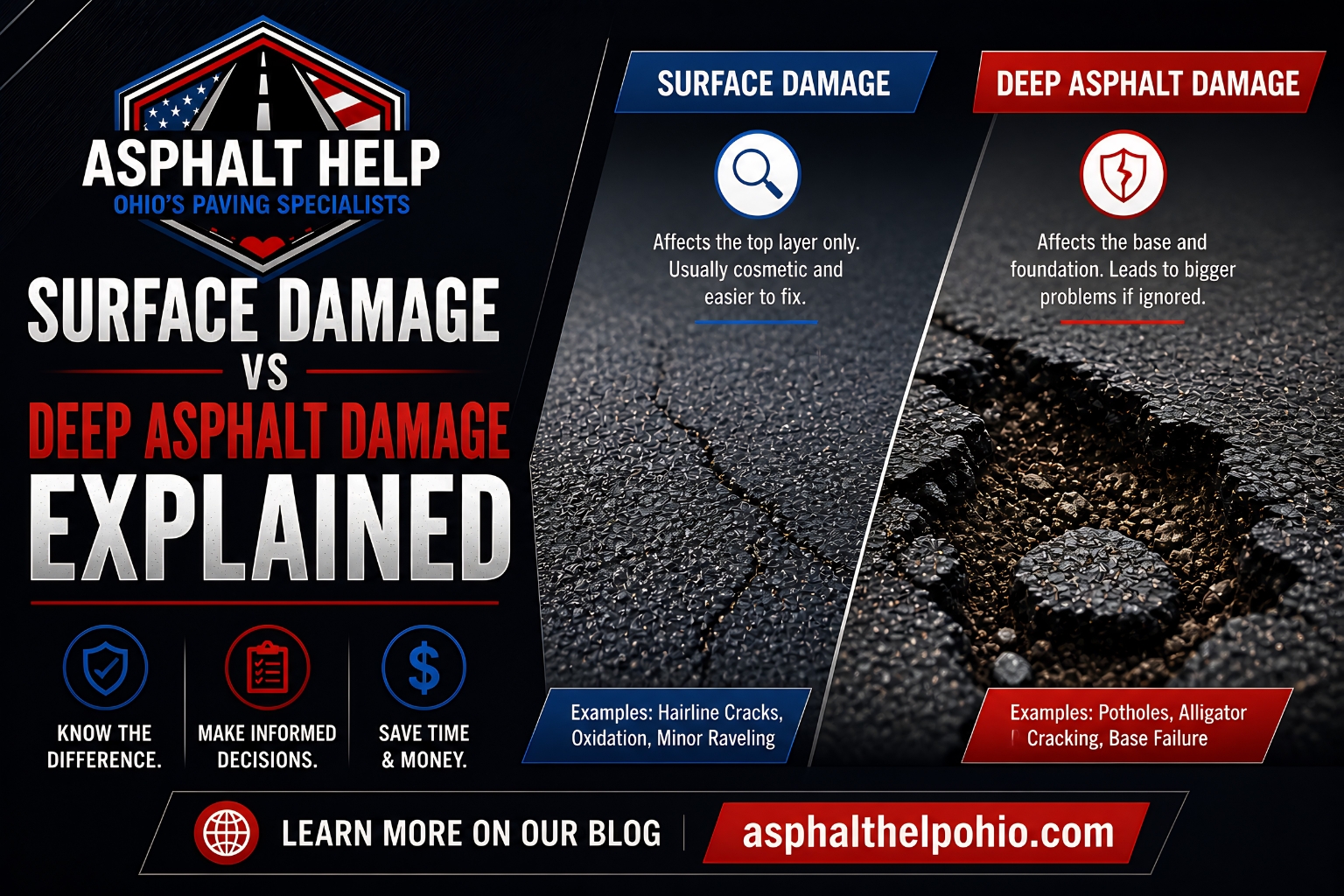
Potholes: Potholes are bowl-shaped holes in the pavement, often the most visible problem in spring. Signs: Depressions or holes in the surface, often accumulating water. After winter, potholes “pop up” as snow/ice melts, revealing the damage beneath. Causes: Potholes usually start as small cracks or soft spots where water has entered the base. Freeze–thaw forces expand these cracks into holes. Heavy vehicles then break out pieces of loose asphalt. Salts and plows can worsen the edges. Ohio Factors: The region’s frequent freeze–thaw cycle means Ohio drivers see potholes yearly. Roads and driveways that had untreated cracks over winter are especially vulnerable. Prevention: Prompt crack sealing before winter keeps water out of the base. Good winter drainage (clearing clogged ditches) also helps. Repair: Small potholes can be filled with cold asphalt patch mix and tamped down as a temporary fix. For a lasting repair, professionals cut out the hole, replace any damaged base, and install new hot-mix asphalt level with the road. Hot pour patches (even in cool weather) are more durable once temps allow. DIY vs Pro: Homeowners can fix tiny holes with a cold patch kit (in dry, mild conditions). Large or multiple potholes, or those with undermined edges, should be handled by pros. Contractors have equipment to ensure proper compaction and base repair. Leaving potholes unattended (or filled poorly) leads to more pavement failure, so address them early.
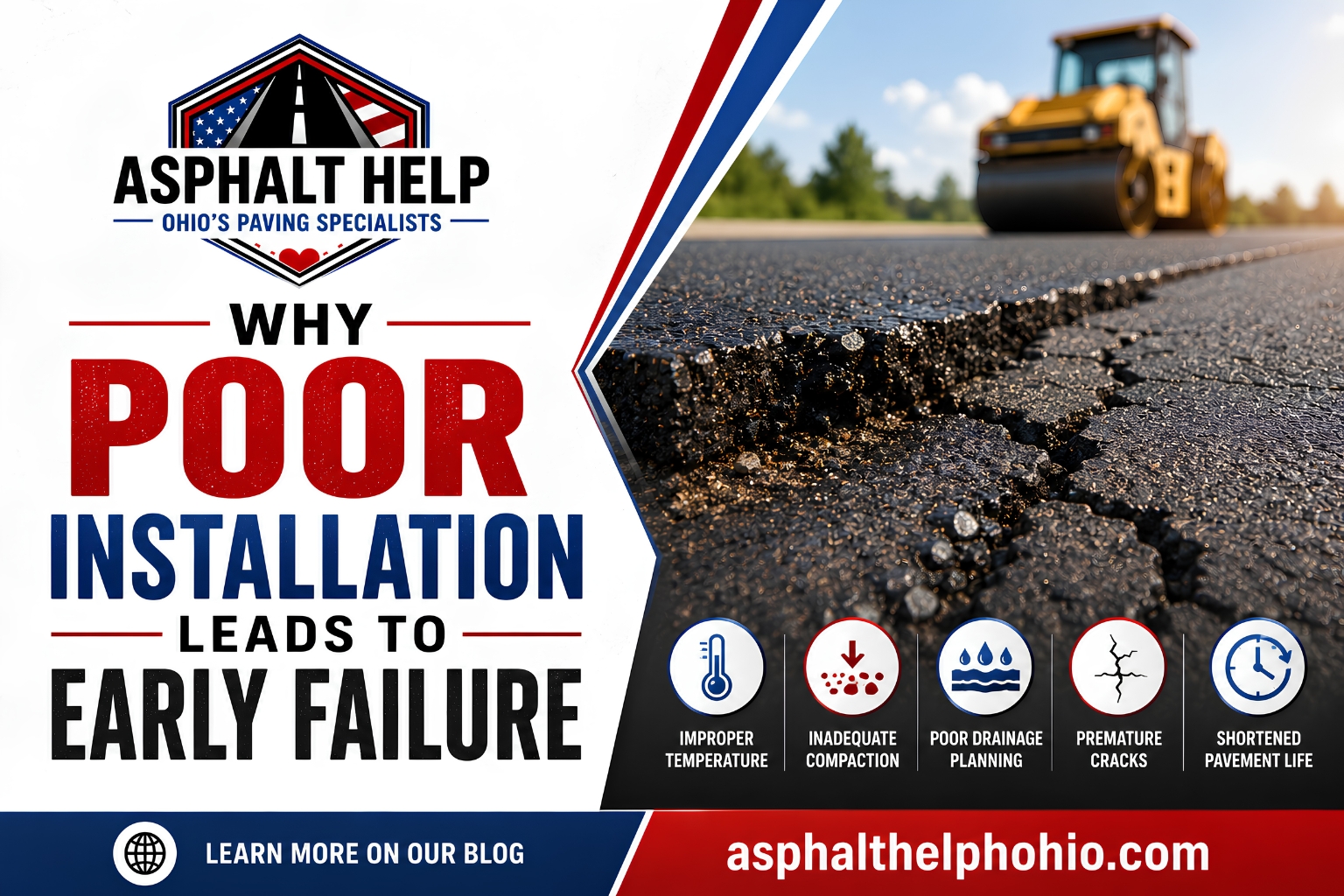
Rutting: Rutting appears as long, narrow indentations (channels) in the wheel tracks. It’s a common issue on roads or driveways with heavy, repeated loads. Signs: Parallel grooves or depressions in the asphalt along tire paths. Water can collect in ruts. Causes: Excessive asphalt thickness, inadequate compaction, or a weak/soft base allows surface layers to permanently deform under load. Hot, wet weather can further soften the asphalt. Overloading (trucks, buses, snowplows) magnifies the effect. Ohio Factors: While rutting is often more a concern in hotter climates, heavy truck traffic on Ohio roads can still create ruts over time. Poorly compacted patch repairs also rut easily. Prevention: Use the right asphalt mix and ensure full compaction when paving or patching. Avoid letting fuel/chemicals pool in one place, which can soften asphalt. Good subgrade compaction and drainage keep the base from collapsing. Repair: Mild ruts (less than ~½ inch) may be corrected by an overlay or a shaving + patch. Severe ruts require a contractor to mill out the affected lanes and repave to restore grade. In parking lots, a drive lane overlay can even out ruts. DIY vs Pro: Because proper rut repair often needs heavy equipment (paver, roller), it’s a professional job. Homeowners notice ruts but typically rely on pros for resurfacing or patching.
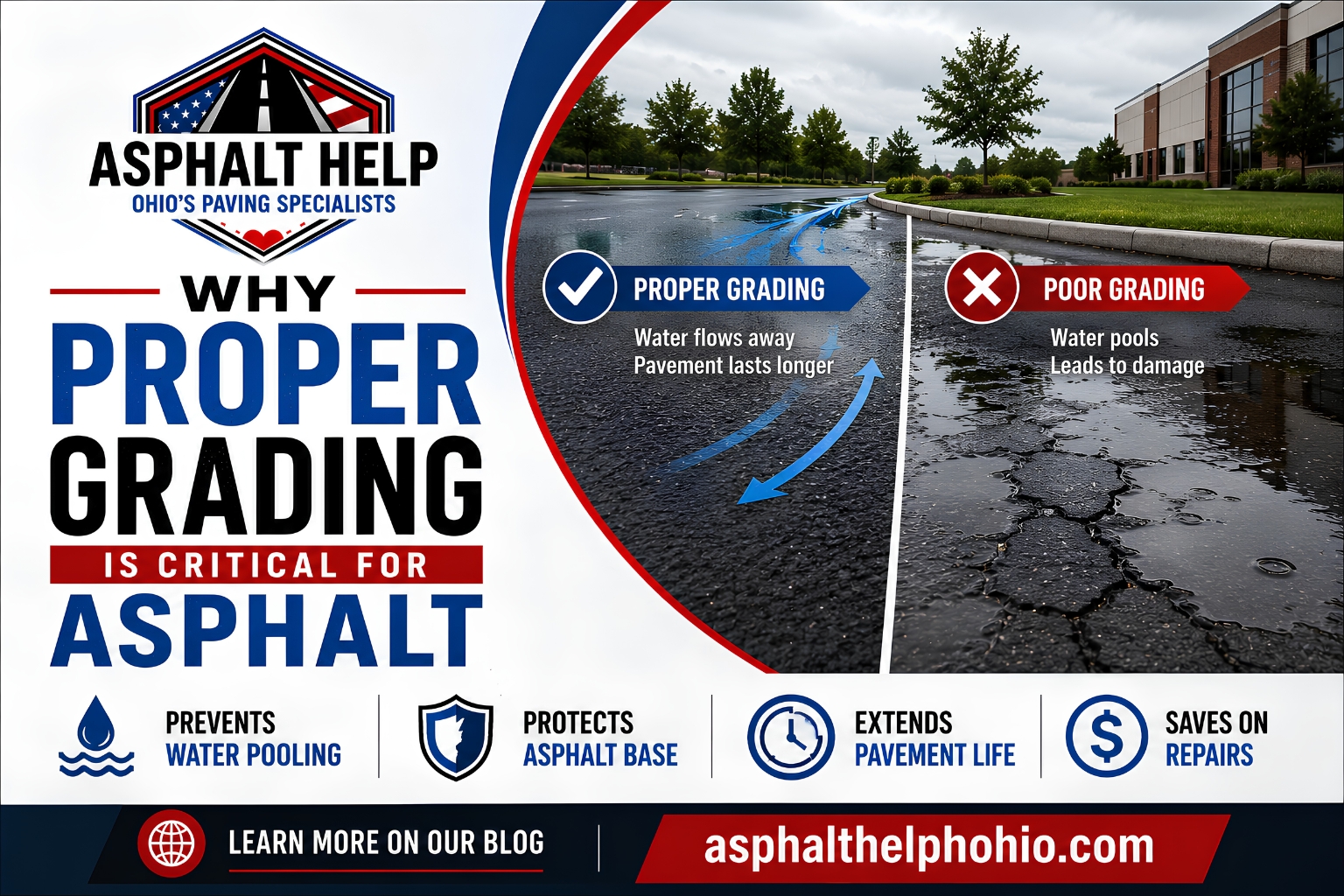
Drainage & Ponding Issues: Poor drainage compounds all asphalt problems. Water that stands on the pavement (in depressions or near edges) accelerates cracking and base erosion. Signs: Puddles or wet spots after rain, usually in low areas or alongside curbs. After a storm, certain sections remain damp. Causes: Improper grading (flat pavement, no slope to drains), blocked or undersized drains, or settling of the subbase causes water to pool instead of running off. Frost can also heave certain patches higher, creating low spots elsewhere. Ohio Factors: Ohio’s heavy rains and snowmelt mean drainage must be managed. Roadside ditches can overflow and spill onto pavements. Section 2 of Byrne & Jones states standing water “accelerates cracking and weakens the base”. Prevention: Ensure pavement has proper crown/slope so water runs to drains. Keep gutters, grates, and inlets clear of debris. If certain spots always pond, consider regrading or adding a trench drain. Seal any pavement cracks promptly so water can’t seep in. Repair: A small puddle might be fixed by filling a depression with asphalt mix (cold patch) if underlying base is solid. If sinkage or base failure occurred, the area should be cut out, the base re-compacted or replaced, and new asphalt applied. Professionals can re-level areas and install proper drainage swales. DIY vs Pro: Minor low spots may be spot-patched by a skilled homeowner. However, large ponding areas or base problems need pro attention. Contractors can rebuild sections and fix drainage, preventing repeated damage.
Oxidation (Weathering): Over time, exposure to sun, oxygen, and chemicals causes asphalt to oxidize and become brittle. Fresh asphalt is a deep black; as it weathers it turns gray and chalky. Signs: Pavement looks faded gray rather than black. Small cracks (crazing) may appear across the surface. The surface feels dry and rough. Causes: UV radiation and heat break down the asphalt binder. Temperature swings cause micro-cracks. De-icing salts and fuel/oil drips also chemically age the surface. Ohio Factors: Ohio’s sunny summers and freeze-thaw-driven cracks speed up oxidation. Byrne & Jones notes sealcoating specifically protects against UV oxidation. Prevention: The primary defense is sealcoating. A good sealcoat every few years (typically 3–5 years) restores flexibility and seals the surface from moisture. Prompt repair of all cracks prevents oxidation from penetrating deeper. Repair: Oxidation itself isn’t “fixed” beyond covering. When oxidation is extensive (surface loss, raveling), an overlay (resurfacing) or resurfacing is recommended. Periodic sealing delays this need. DIY vs Pro: Applying sealcoat can be DIY in small areas if done properly; professional application ensures even coating. If asphalt is already heavily oxidized, consult a paving contractor about overlay options.
Stripping (Moisture Damage): Stripping happens when moisture gets between the asphalt binder and the aggregate, causing the binder to “strip” off. It often follows heavy rain or repeated freeze–thaw. Signs: Patchy surface loss – the aggregate looks loose and bare, often in blisters or rough patches. The pavement feels spongy or gritty. Causes: Water trapped under the asphalt (via cracks or poor drainage) breaks adhesion between the binder and rock. A poorly designed mix without anti-strip additives can strip more easily. Prevention: Keep pavement sealed and avoid water infiltration. Ensure good base drainage. When contracting, use asphalt mixes with anti-stripping agents (common in colder regions). Repair: Stripped areas require removing the affected asphalt and repairing the base if needed, then repaving that section. Simply tacking a patch over stripped asphalt will not hold. DIY vs Pro: Because stripping means adhesive failure, repairs require professional work. Once aggregate is loose, homeowners should get a pro to remove and replace the damaged asphalt before it spreads.
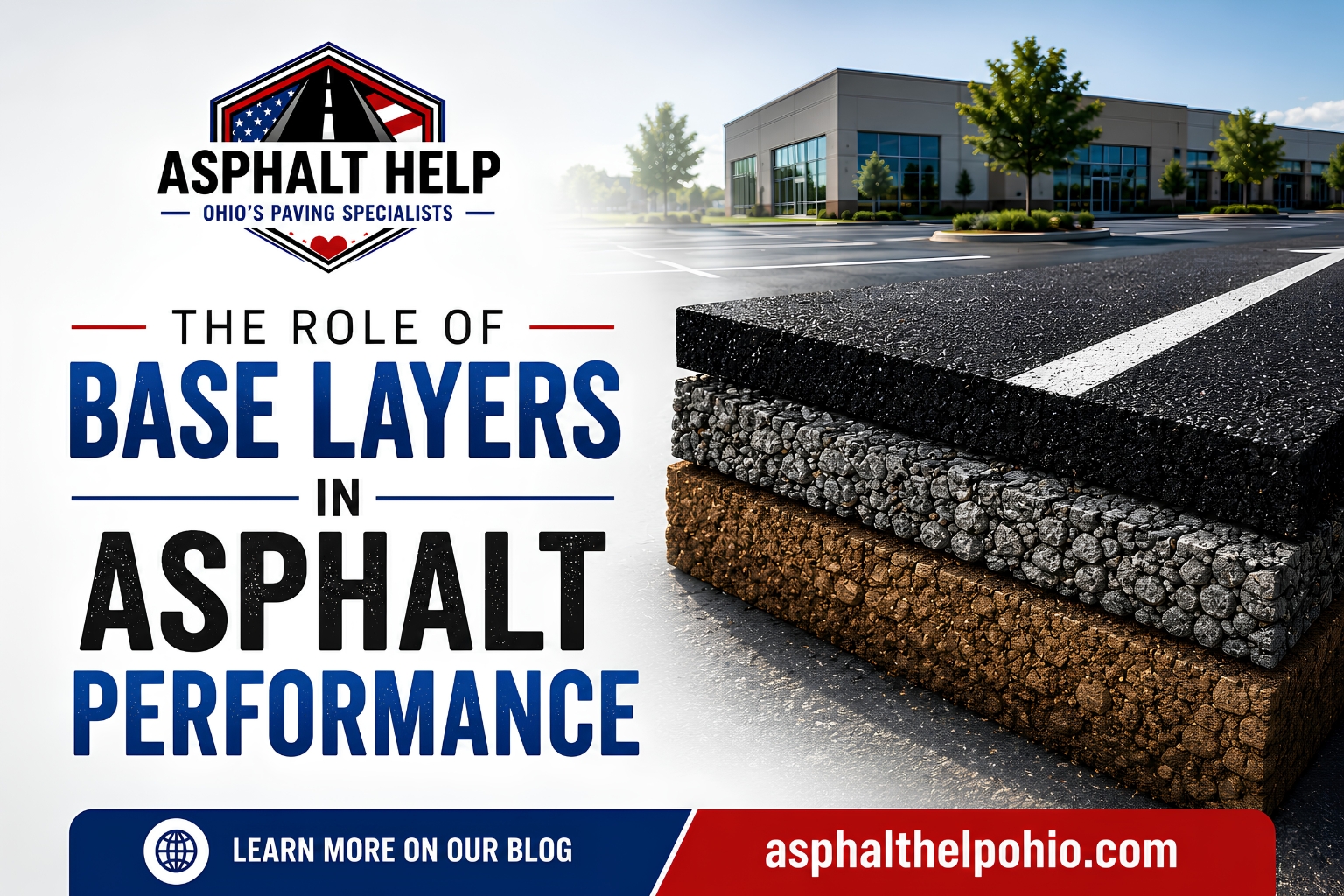
Frost Heave / Pavement Swelling: Freezing water in clay-rich soils can lift (heave) the pavement surface, then leave voids when it thaws. Signs: Bumps or “ripples” in the pavement in cold weather, often in spring, followed by cracks or depressions when thawed. Causes: When the subgrade soil freezes (especially clay or silty soil), it expands. Asphalt layers above can warp upward or crack. Upon thaw, the soil may settle unevenly. Ohio Factors: Central Ohio’s frost depth can be significant. Construction on expansive clay or silty soils without proper sub-base can see heaving. Seasonal freeze–thaw cycles repeatedly push and pull the pavement. Prevention: Proper design is key: use well-compacted granular base or geotextile fabric under asphalt. Control drainage so subgrade stays as dry as possible. Repair: Minor frost heaves sometimes flatten out in summer; small bumps can be ground down. For major heave, the solution is to remove the affected asphalt, improve the base (e.g. add crushed stone, improve drainage), and repave. DIY vs Pro: Frost heave repairs are typically beyond DIY scope. A contractor can diagnose subgrade issues and reconstruct the pavement properly.
Comparison of Asphalt Distresses
| Problem / Distress | Primary Causes / Factors | Repair & Maintenance Actions |
|---|---|---|
| Thermal & Block Cracks | Asphalt shrinkage from temperature swings and aging | Seal cracks (hot rubber sealant); sealcoat surface; repair overlays if severe |
| Alligator (Fatigue) Cracking | Repeated heavy loads, weak base/subgrade; poor drainage | Full-depth patch or mill+overlay to rebuild layers |
| Edge Cracks/Failure | Unsupported edges (eroded shoulder, water infiltration, vehicle stress) | Fill minor cracks; rebuild shoulder/base and repave edge |
| Potholes | Freeze–thaw in existing cracks, traffic pounding weakened spots | Fill with cold patch (temp); remove damaged material and hot-patch properly for lasting fix |
| Rutting | Surface layer compression, poor compaction, heavy traffic | Mill out rutted area and overlay new asphalt; surface patching if shallow |
| Drainage/Ponding | Flat grading, clogged drains, base settlement | Regrade/improve slope; clear/install drains; spot-fill depressions; base repair if needed |
| Oxidation (Weathering) | UV exposure, heat, oxidation of binder | Sealcoat regularly; overlay worn surfaces when necessary |
| Stripping (Moisture Damage) | Water invasion, binder-aggregate separation under freeze cycles | Cut out and replace stripped asphalt; improve drainage; use anti-strip mixes |
| Frost Heave / Swelling | Freeze of moisture in clay soils, soil expansion | Remove/heal heaved sections; install proper base and drainage; repave flat |
Final Thoughts
Central Ohio’s weather and soil conditions make asphalt maintenance especially important for both residential and commercial properties. Small cracks, surface wear, drainage issues, and early potholes rarely stay minor for long once water infiltration and freeze–thaw damage begin affecting the pavement foundation. Understanding the most common asphalt problems in Central Ohio allows property owners to address damage early, improve pavement safety, and extend the lifespan of driveways and parking lots through proper maintenance and timely repairs.
For homeowners, proactive asphalt care helps maintain curb appeal, reduce long-term repair expenses, and prevent premature driveway replacement. For commercial properties, regular inspections and maintenance help create smoother, safer parking areas while protecting the pavement from accelerated deterioration caused by traffic and weather exposure. Services such as crack sealing, sealcoating, asphalt patching, overlays, and drainage correction can significantly slow pavement deterioration when completed at the right time.
If your driveway or parking lot is beginning to show signs of cracking, potholes, rutting, or surface wear, Asphalt Help Ohio can help assess pavement conditions and provide professional asphalt repair and maintenance solutions tailored specifically for Central Ohio’s climate and pavement challenges.