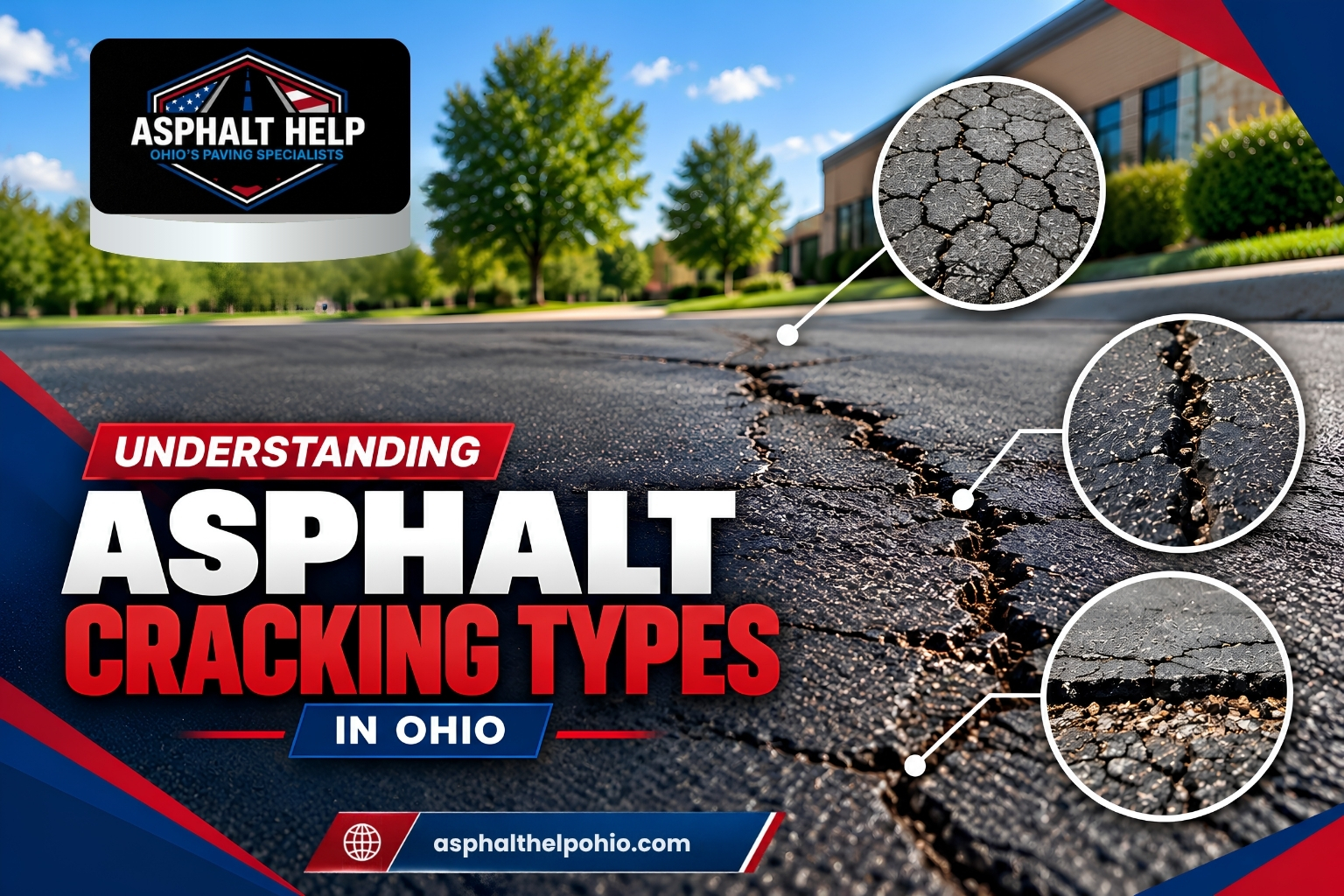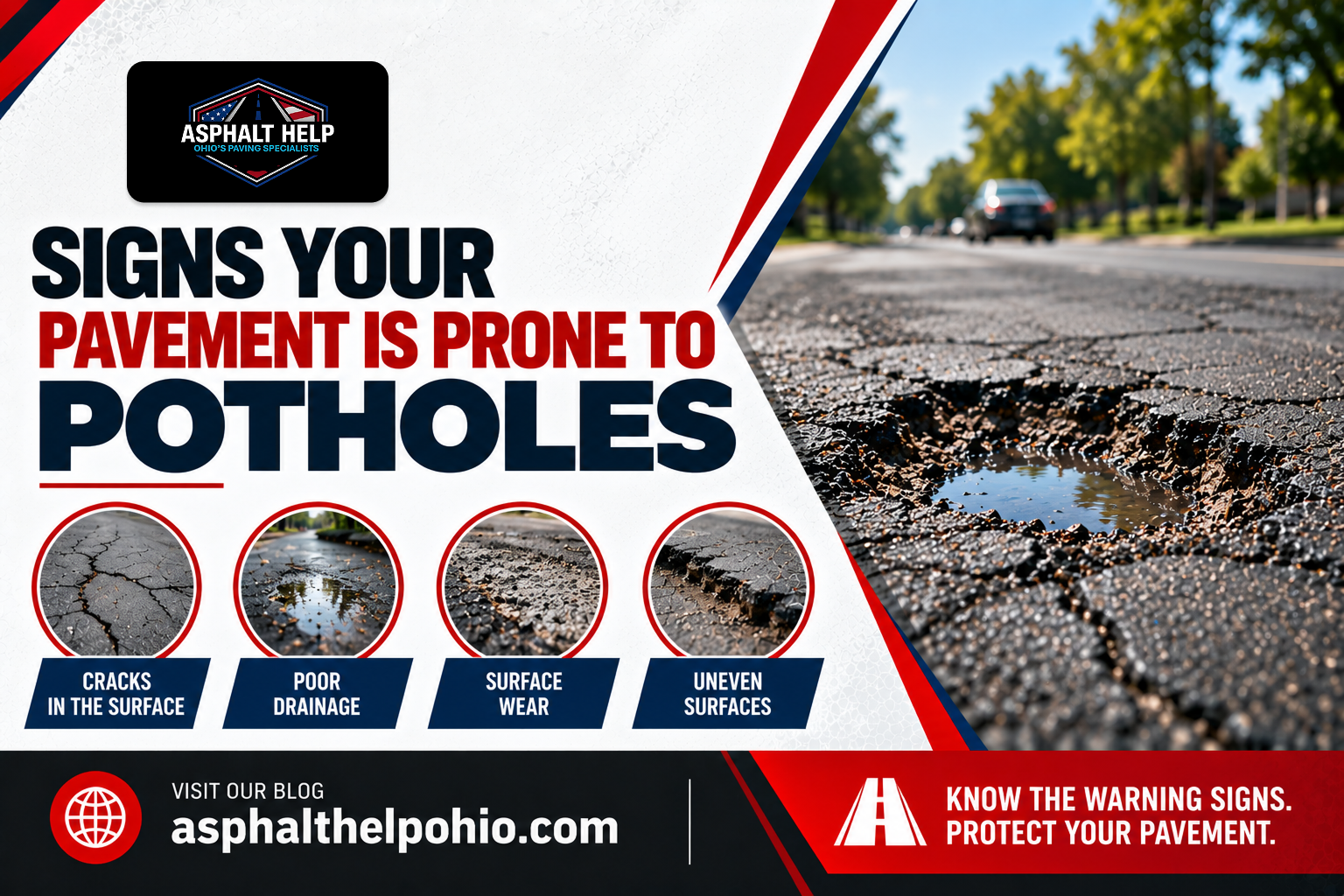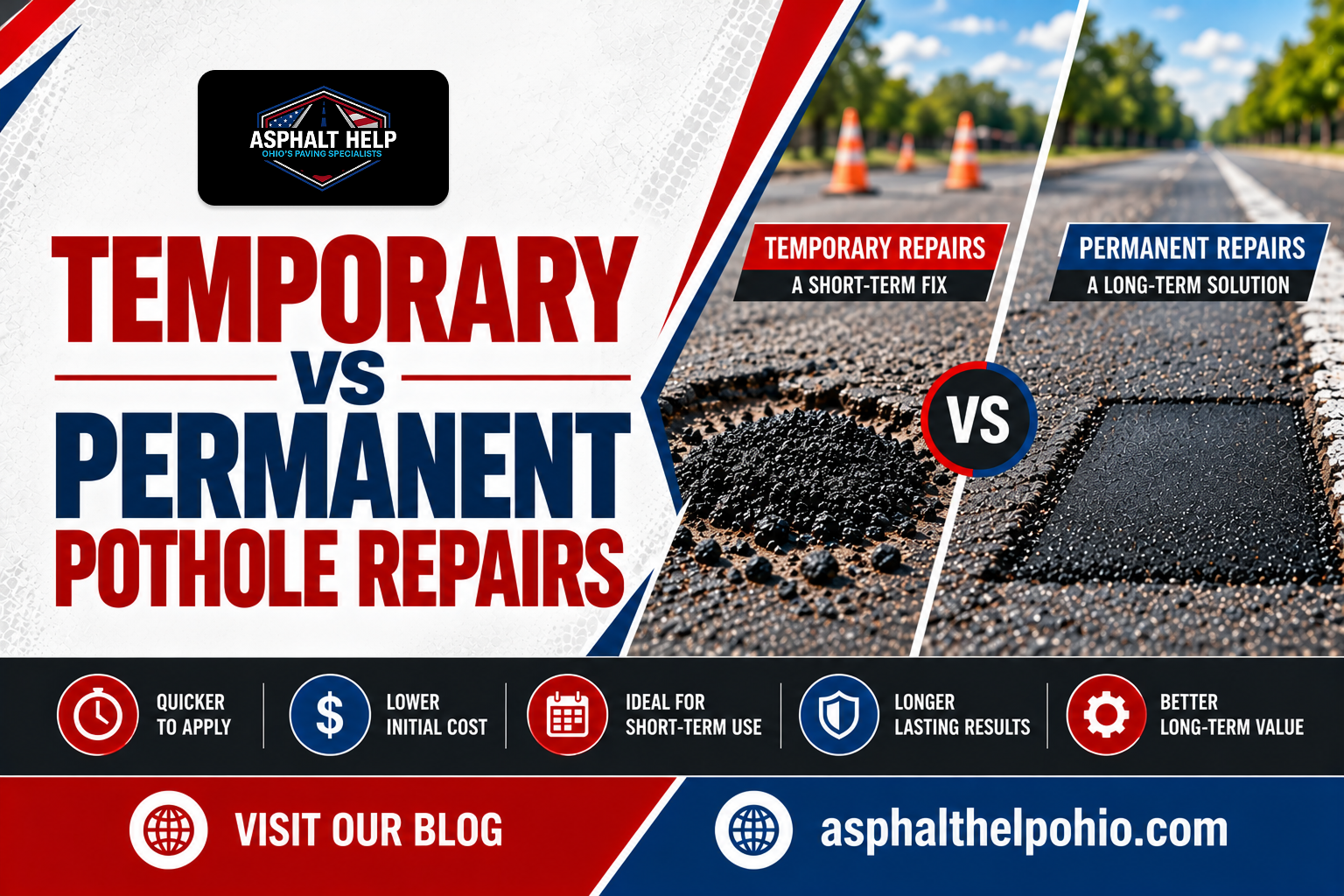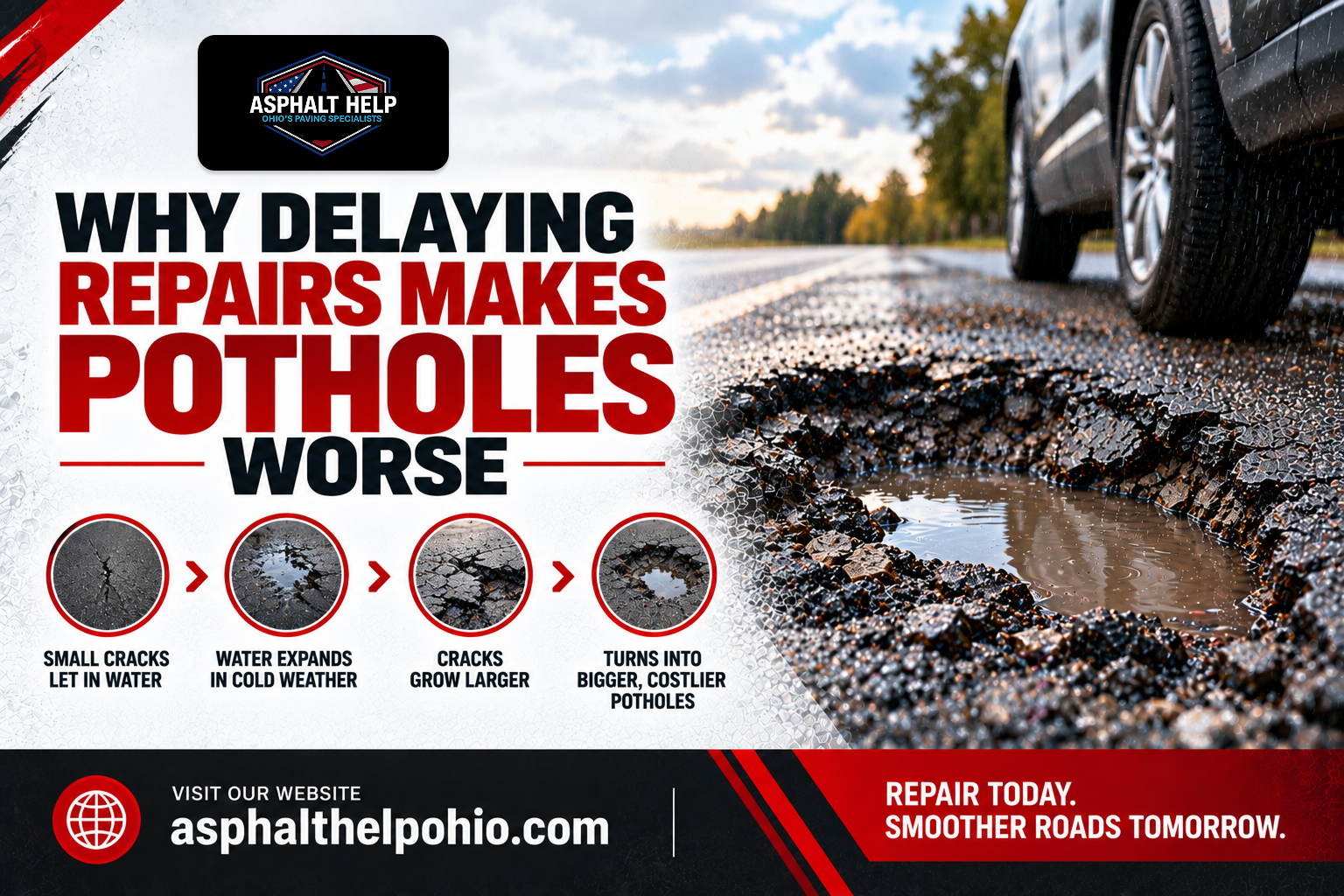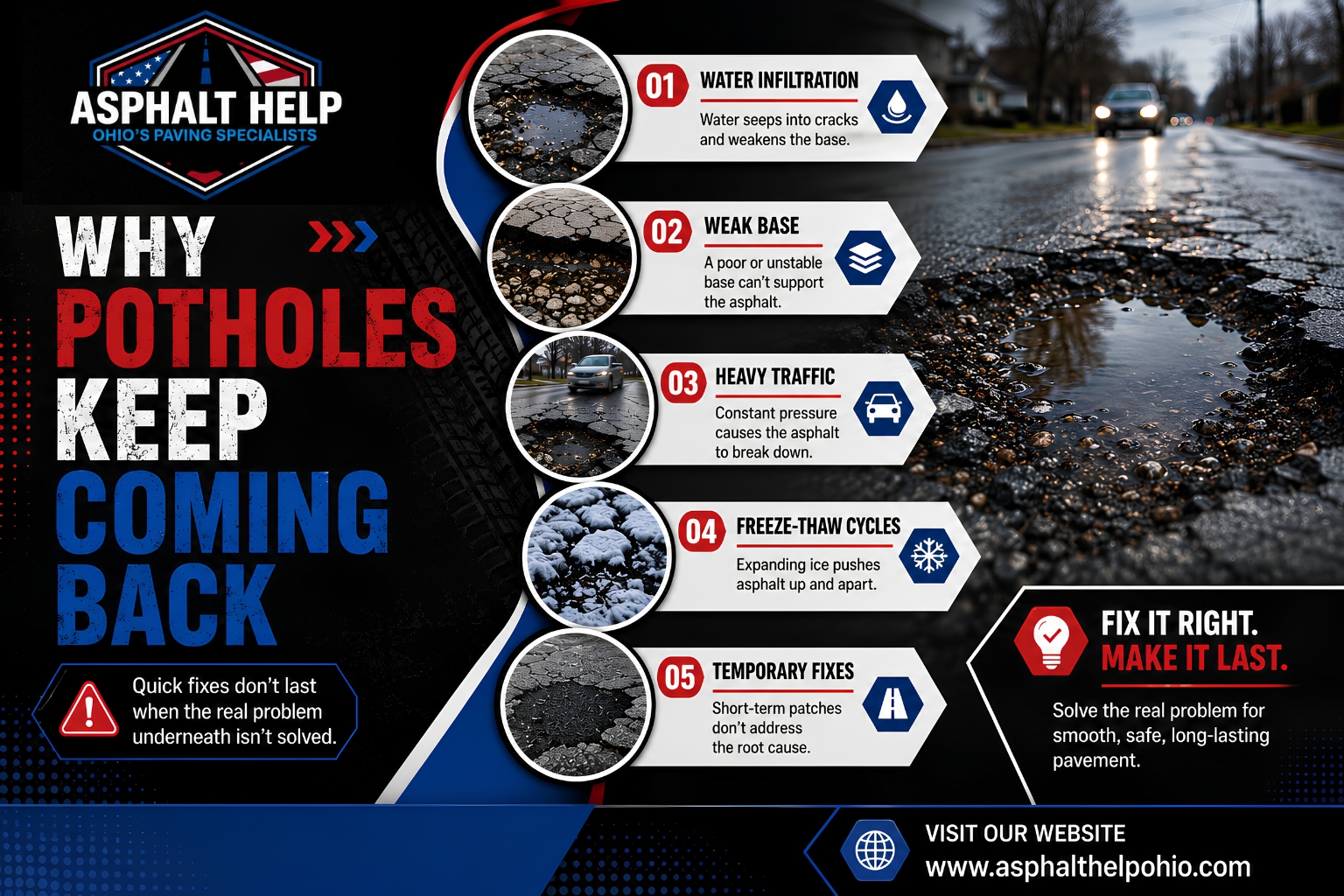





Why do asphalt cracks return even after they have been filled or repaired? Recurring asphalt cracks often indicate that the original cause of the damage was not fully addressed. Water infiltration, weak base materials, ground movement, temperature changes, and repeated traffic can all cause cracks to reopen or appear near previously repaired areas.
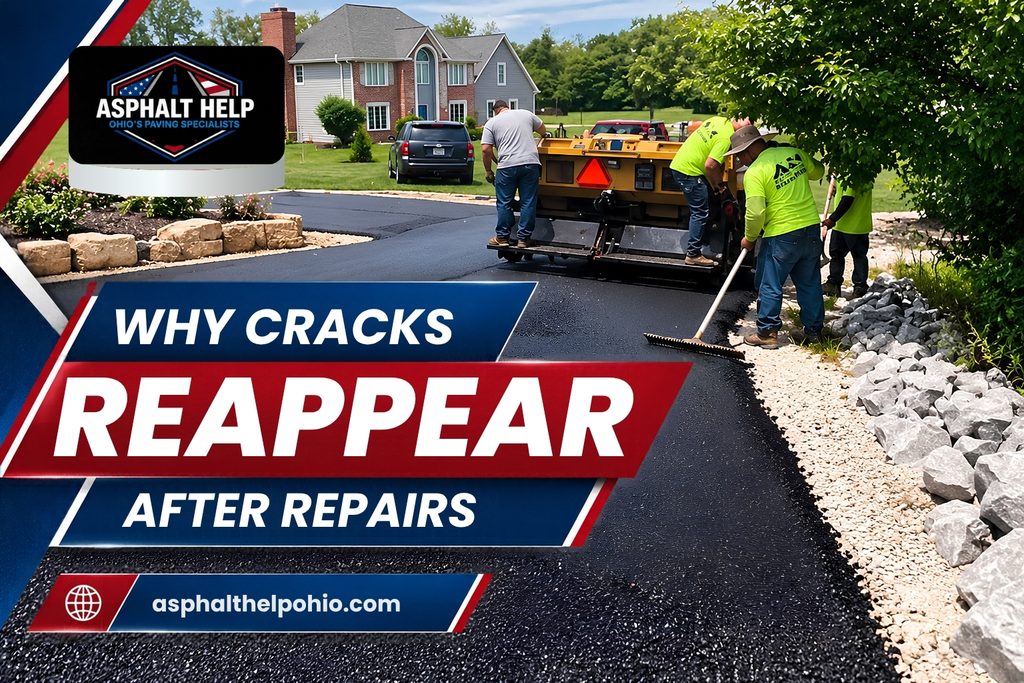
For property owners researching recurring cracks asphalt Ohio, understanding the underlying problem is essential. Filling a visible crack may help protect the surface, but it cannot correct a weak foundation, poor drainage, or widespread structural deterioration. Ohio’s changing temperatures and freeze-thaw conditions can place additional stress on pavement that is already vulnerable.
Asphalt Help Ohio helps property owners understand asphalt deterioration and evaluate appropriate repair options. Whether you manage a residential driveway, a rental property, or a commercial parking lot, identifying why cracks keep returning can help you make better maintenance decisions and reduce repeated repair work.
What Are Recurring Asphalt Cracks?
Recurring asphalt cracks are cracks that reopen after repair or develop again in the same area. In some cases, the original crack becomes visible through a repaired section. In others, new cracks form close to the previous repair because the surrounding pavement or underlying support remains weak.
Common signs include:
- A sealed crack that opens again.
- New cracks forming alongside an old repair.
- Cracks that return after a surface patch.
- Repeated cracking around potholes or settled areas.
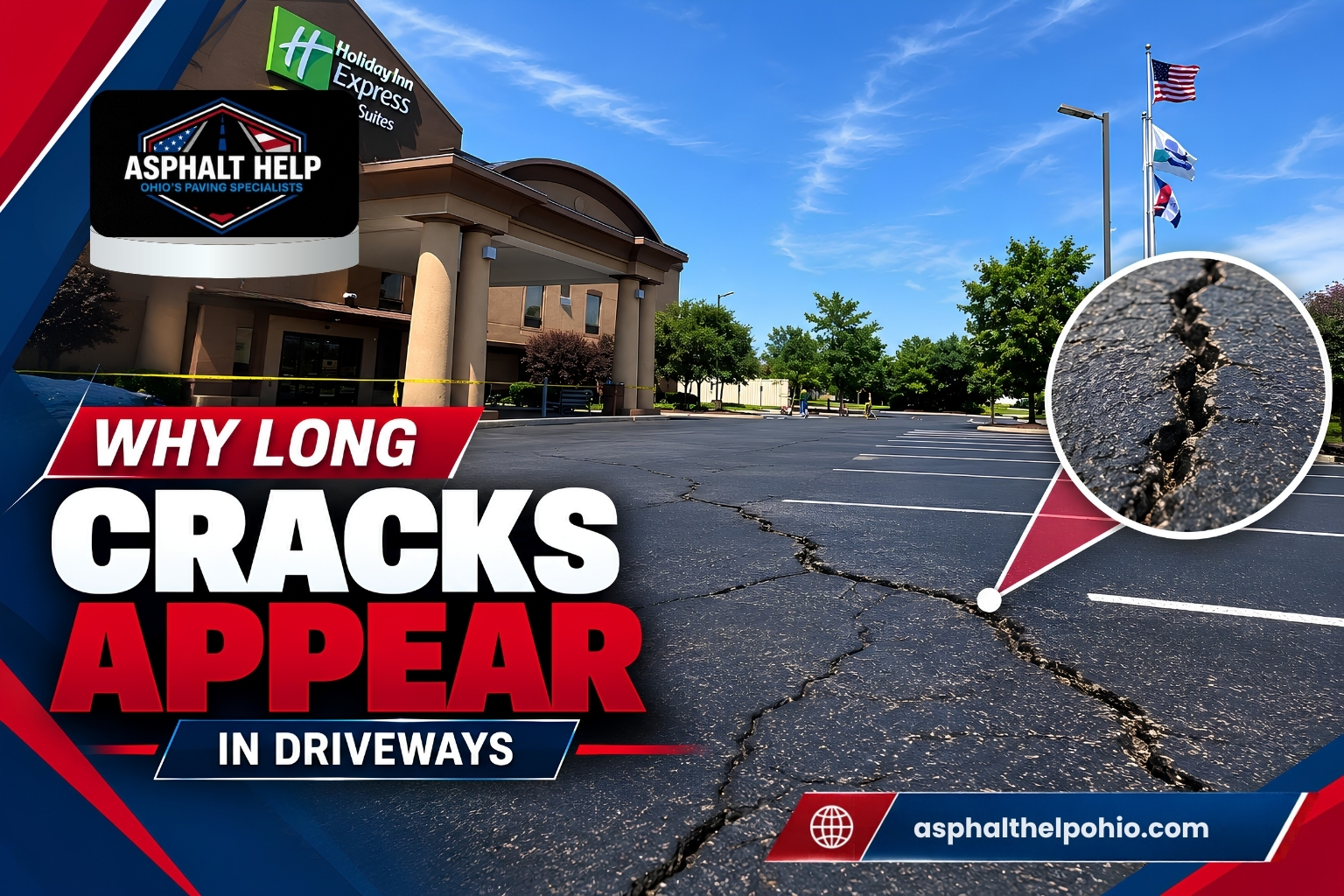
- Long cracks that continue to widen.
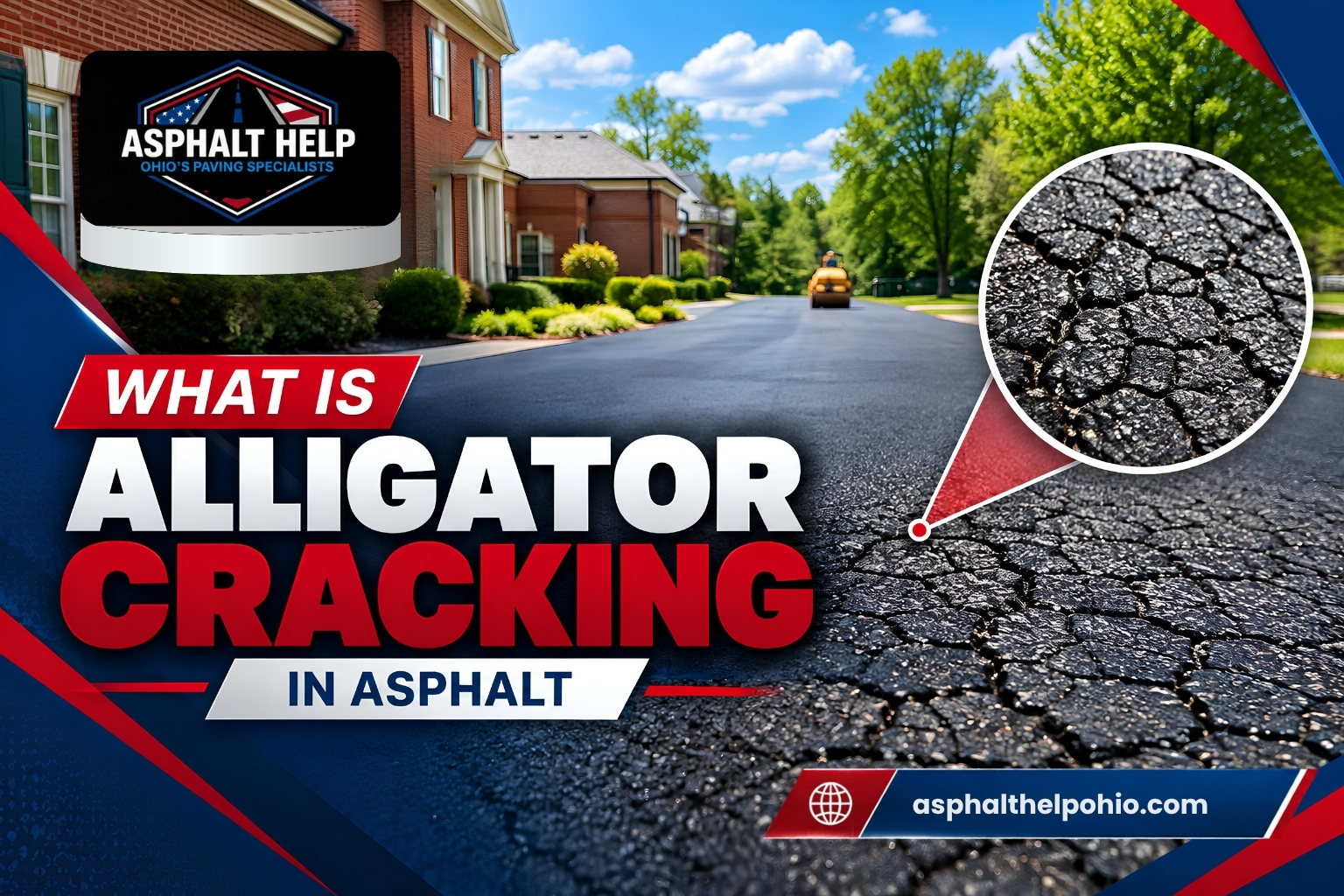
- Interconnected cracks appearing after several repair attempts.
Recurring damage does not always mean the previous repair was performed incorrectly. Even a well-executed surface repair can fail prematurely if the pavement continues to move or the underlying cause remains unresolved.
The key is to determine whether the problem is limited to the surface or extends into the supporting layers beneath the asphalt.
1. The Original Cause of the Crack Was Not Fixed
One of the most common reasons cracks reappear is that the repair addressed the visible opening without correcting the condition that caused it.
For example, a crack may develop because the pavement is settling over weak soil. Filling the crack can temporarily close the opening, but the ground may continue to move and place stress on the repaired area.
Similarly, a crack caused by repeated heavy traffic may return if the pavement structure cannot adequately support the loads it experiences.
Before repeating a repair, consider whether the original cause has been identified. The correct solution may involve drainage improvements, base repair, pavement replacement, or another treatment suited to the damage.
2. Water Continues to Reach the Pavement Foundation
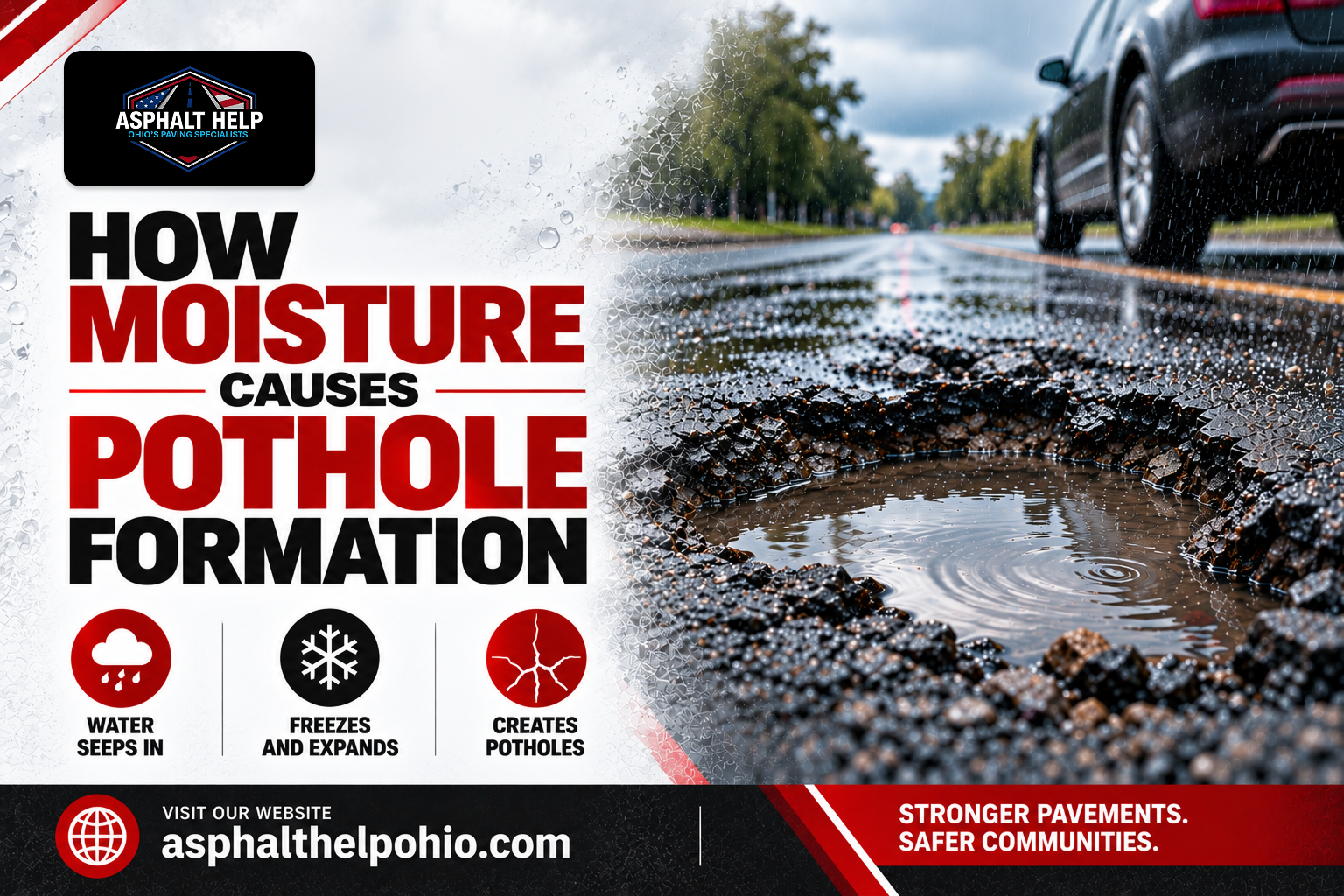
Water can enter through cracks, damaged joints, and other openings in asphalt pavement. If moisture reaches the supporting layers, it may weaken susceptible base materials or the underlying soil.
When vehicles travel over weakened pavement, the surface can flex or settle, causing repaired cracks to reopen.
This problem can become more noticeable where water collects around driveways, parking lot entrances, pavement edges, or low areas.
To address recurring cracks associated with moisture, the repair plan should consider both the visible damage and the drainage conditions. Sealing an opening may help limit water infiltration, but persistent drainage problems may require additional work.
3. Ohio’s Freeze-Thaw Cycles Put Stress on Repairs
Ohio’s seasonal weather can contribute to repeated pavement movement. Asphalt contracts as temperatures fall and expands as temperatures rise. Existing cracks may experience additional stress during these changes.
Moisture can make the situation more complicated. When water enters damaged pavement and temperatures fluctuate around freezing, freeze-thaw cycles can contribute to deterioration.
A repaired crack may reopen if the sealant cannot accommodate the movement, the surrounding asphalt is deteriorated, or the pavement foundation is unstable.
Weather is not the only cause of recurring cracks, however. Construction quality, material selection, traffic loading, and drainage also affect repair performance.
4. The Asphalt Base Is Weak or Unstable
The asphalt surface depends on a stable foundation. Beneath it, the aggregate base and underlying soil help distribute vehicle loads and limit excessive pavement movement.
If these supporting layers are weak, poorly compacted, saturated, or deteriorated, the asphalt above them may crack repeatedly.
This is particularly important when cracks return in the same location after several surface repairs. The repeated pattern may indicate that the problem extends below the visible asphalt.
Over stone paving in Columbus Ohio may be an option for certain projects involving a suitable existing stone base, but the foundation must be evaluated first. Asphalt Help Ohio’s service approach emphasizes checking base stability, grading, compaction, and drainage before determining whether this paving method is appropriate. A weak or poorly drained base may need additional preparation rather than simply being covered with asphalt.
5. The Previous Repair Was Not Suitable for the Crack
Different types of asphalt damage require different treatments. A method that works for a narrow crack may not be appropriate for a wide, deteriorated opening or an area affected by structural failure.
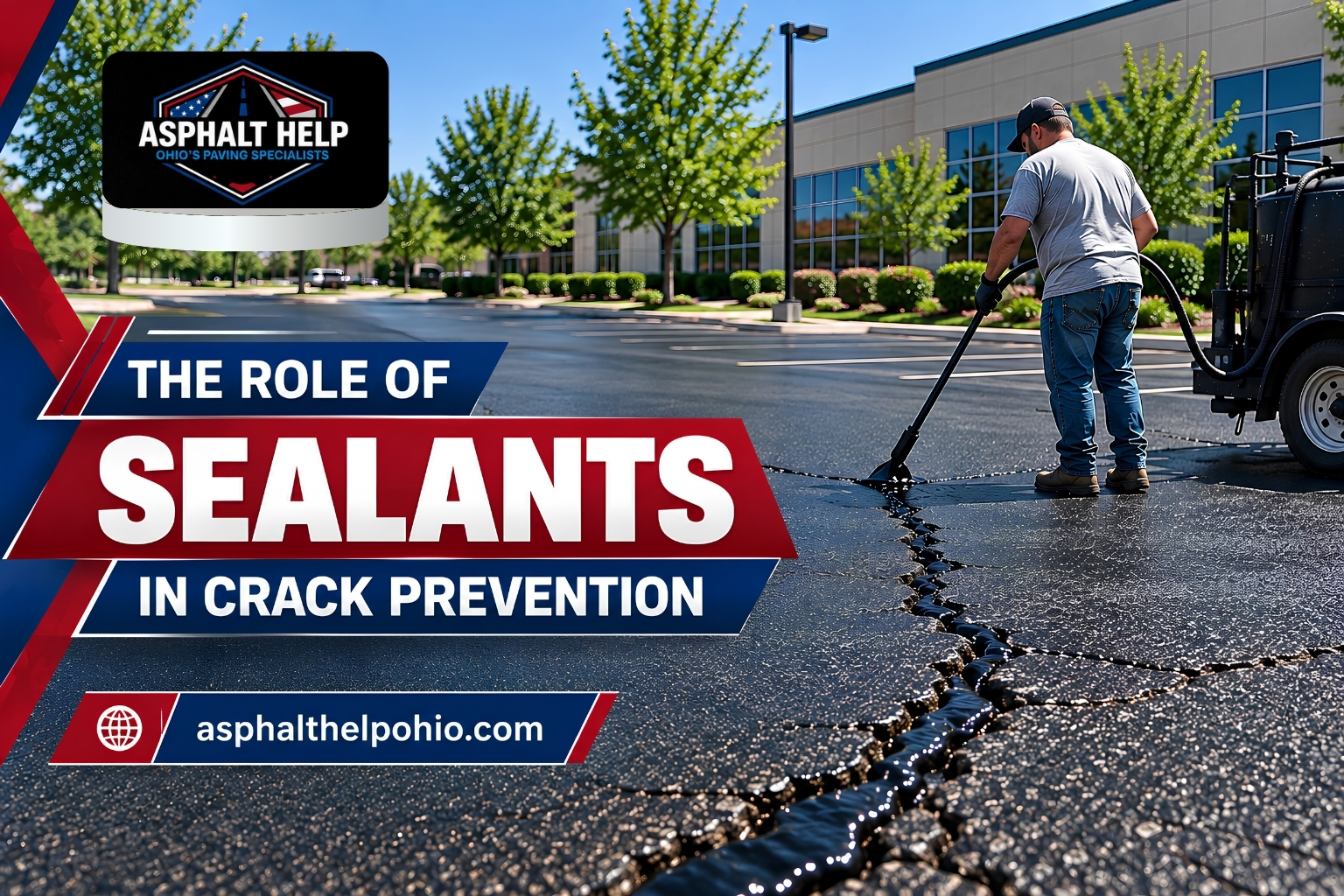
For example, crack sealing can help limit water entry through suitable cracks, but it does not replace missing asphalt or restore a failed base.
Likewise, filling a crack with an unsuitable material may not accommodate the movement that occurs as temperatures change.
Before selecting a repair, consider:
- The crack’s width, depth, and location.
- Whether the crack edges are intact or crumbling.
- Whether the surrounding pavement is stable.
- Whether the crack is isolated or part of a larger pattern.
- Whether the damage appears related to water, settlement, or traffic.
A suitable repair should match the type and severity of the pavement problem.
6. Traffic Continues to Stress the Repaired Area
Vehicle traffic places repeated loads on asphalt. When the pavement is already weakened, these loads can contribute to further movement and cracking.
The risk may be greater in areas that regularly accommodate delivery vehicles, trucks, turning traffic, or repeated braking. Residential driveways can also experience recurring cracks if the pavement is not adequately supported for its use.
If cracks return in wheel paths or loading areas, the pavement’s structural condition and expected traffic should be assessed.
Where the pavement structure is inadequate, repeating the same surface treatment may not provide a lasting solution.
7. The Surrounding Asphalt Is Already Deteriorated
A repair can be limited by the condition of the pavement around it. If the surrounding asphalt has extensive cracking, loose aggregate, or deteriorated edges, a new repair may be exposed to the same stresses that damaged the original area.
For example, a single sealed crack may sit within a larger network of interconnected cracks. Treating only that one opening may leave the wider structural problem untouched.
In these cases, the pavement should be assessed as a whole. Localized patching may be appropriate for isolated damage, while widespread deterioration may require broader rehabilitation.
8. Poor Drainage or Uneven Grading Remains Uncorrected
Pavement needs suitable grading to direct water away from vulnerable areas. If the surface contains depressions or slopes toward a location where water accumulates, moisture may continue to affect the same area.
Repeated repairs can fail when the underlying drainage issue remains unresolved.
Inspect the areas around recurring cracks for:
- Standing water after rainfall.
- Low spots or visible settlement.
- Water flowing toward pavement edges.
- Drainage features that are blocked or ineffective.
- Cracks concentrated around inlets or low-lying sections.
The appropriate correction depends on the site conditions. It may involve drainage improvements, grading adjustments, or repairs to the affected pavement structure.
How to Choose the Right Solution for Recurring Cracks
The right repair depends on the cause, severity, and extent of the damage.
| Condition | Possible Approach | Why It Matters |
|---|---|---|
| Narrow crack with stable surrounding asphalt | Crack sealing or filling, as appropriate | Helps limit water entry |
| Crack with damaged or crumbling edges | Asphalt patching | Removes or repairs deteriorated material |
| Crack with settlement or recurring movement | Investigate the base, soil, and drainage | Addresses possible underlying instability |
| Widespread surface deterioration with a sound base | Consider milling and resurfacing after assessment | Removes damaged surface material |
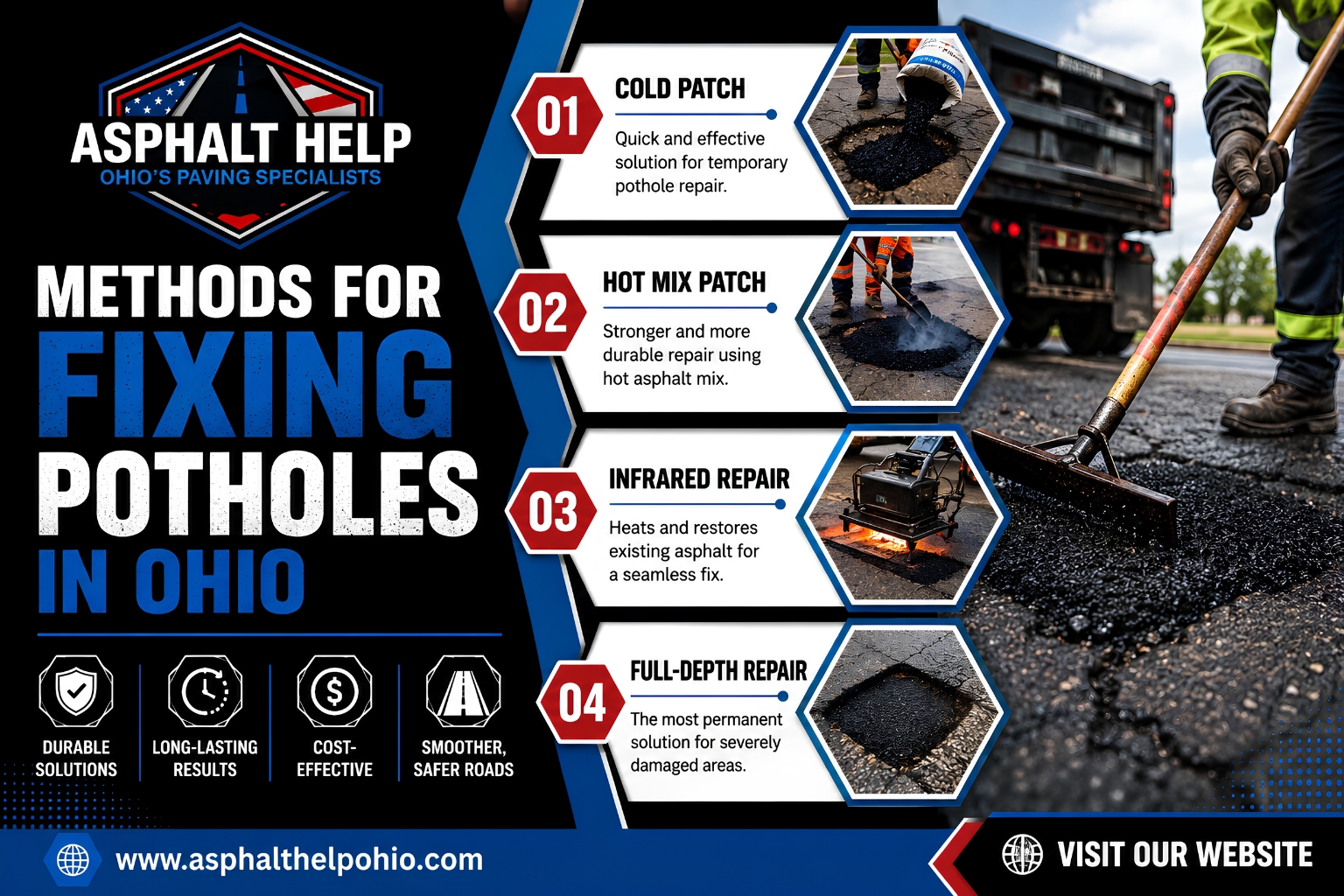
| Extensive structural failure | Full-depth repair or reconstruction may be needed | Restores the failed pavement structure |
These are general guidelines. An inspection is needed to determine whether the underlying layers are stable and which treatment is suitable.
9. When Asphalt Milling May Help
Repeated surface cracking can sometimes indicate that the existing asphalt layer has deteriorated beyond what isolated crack repairs can effectively address. If the underlying base remains sound, removing the damaged surface and preparing it for resurfacing may be an option.
Asphalt milling contractors in Columbus Ohio can help prepare suitable pavement for resurfacing by removing a controlled depth of deteriorated asphalt while preserving the underlying base when its condition allows. Asphalt Help Ohio’s milling service includes evaluating pavement condition, selecting an appropriate milling depth, correcting surface irregularities, and preparing the surface for a new asphalt layer.
Milling is not the right solution for every recurring crack. If the base or subgrade has failed, those problems must be addressed before a new surface is installed. An assessment helps determine whether milling and resurfacing are appropriate or whether deeper repairs are required.
10. How to Reduce the Risk of Recurring Asphalt Cracks
Although no repair can guarantee that cracks will never return, a suitable maintenance approach can reduce the risk of repeated deterioration.
Inspect the Pavement Regularly
Look for cracks that reopen, widening openings, loose edges, potholes, and areas of settlement. Record where the damage appears so that recurring patterns can be identified.
Repair Cracks Before They Worsen
Suitable cracks should be assessed and treated before water infiltration and deterioration become more extensive. The treatment should match the crack type and pavement condition.
Address Drainage Problems
Investigate standing water and recurring moisture around damaged areas. Correcting drainage problems may be an important part of preventing repeat failure.
Use Appropriate Repair Materials
Choose materials according to crack movement, dimensions, pavement condition, and application requirements. Incorrect material selection can reduce the effectiveness of a repair.
Investigate Repeated Failures
If cracks return after multiple repairs, do not automatically repeat the same treatment. Determine whether the pavement is moving, the base is weak, or the damage extends beyond the original repair area.
Plan Maintenance for Each Property Type
Residential driveways, rental properties, and commercial parking lots experience different traffic patterns and maintenance demands. Inspections and repairs should reflect the way each surface is used.
When Should You Consider More Extensive Repairs?
Some recurring cracks indicate that the pavement needs more than routine maintenance.
Consider a more detailed assessment when:
- The same crack returns repeatedly after repair.
- Several cracks are developing close together.
- The asphalt is sinking or uneven.
- Potholes are appearing around repaired areas.
- Cracks form an interconnected alligator pattern.
- Water continues to collect around damaged pavement.
- Previous patches repeatedly break apart.
These signs do not automatically mean the entire pavement must be replaced. They indicate that the cause should be investigated before another repair is selected.
A suitable solution may involve localized patching, drainage correction, milling and resurfacing, or reconstruction, depending on the findings.
Frequently Asked Questions About Recurring Asphalt Cracks in Ohio
1. Why do asphalt cracks return after sealing?
Cracks may return when the underlying cause remains unresolved, when the pavement continues to move, or when the material is unsuitable for the crack. Weak support and moisture-related problems can also contribute.
2. Does recurring cracking mean the whole driveway needs replacement?
Not necessarily. Some recurring cracks can be addressed with localized repairs. Widespread structural deterioration, repeated settlement, or extensive interconnected cracking may require more substantial work.
3. Can Ohio winters cause repaired cracks to reopen?
Seasonal temperature changes and freeze-thaw conditions can contribute to pavement stress, especially when moisture enters existing cracks. However, construction, drainage, traffic, and foundation conditions also influence whether a repair lasts.
4. Can sealcoating stop recurring cracks?
Sealcoating can help protect suitable asphalt from oxidation and weather exposure, but it does not correct structural failure. Existing cracks and damaged sections should be assessed and repaired as needed before sealcoating.
5. Why do cracks keep appearing in the same place?
Repeated cracking in the same location may indicate a weak joint, unstable base, drainage problem, recurring settlement, or repeated traffic stress. The location and surrounding pavement should be inspected to identify the likely cause.
6. When is milling better than another patch?
Milling may be appropriate when deterioration affects a larger surface area but the underlying base remains suitable for resurfacing. If the base has failed, additional structural repairs may be necessary before new asphalt is installed.
7. How can property owners prevent recurring cracks?
Regular inspections, appropriate crack treatments, proper drainage, and timely repairs can help reduce deterioration. Recurring damage should be investigated rather than repeatedly covered with the same surface treatment.
8. Does crack prevention matter for rental and commercial properties?
Yes. Driveways, shared parking areas, loading zones, and commercial lots all benefit from maintenance suited to their traffic and pavement conditions. Early assessment can help identify repeated failures before they affect larger areas.
Conclusion
Recurring asphalt cracks often indicate that a repair addressed the visible damage without fully resolving the underlying problem. Moisture, unstable base materials, traffic stress, Ohio’s seasonal weather, and unsuitable repair methods can all contribute to repeated cracking. Understanding these causes is essential for deciding whether crack sealing, patching, milling, resurfacing, or more extensive structural work is appropriate.
For property owners researching recurring cracks asphalt Ohio, the most effective approach is to investigate why the damage keeps returning before selecting another repair. Asphalt Help Ohio helps residential, rental, and commercial property owners understand asphalt deterioration and evaluate suitable maintenance and repair options. Addressing the root cause can help reduce repeated repair work and support better long-term pavement performance.