


How can sealants help protect asphalt pavement from developing more serious damage? Asphalt crack sealants help prevent water, dirt, and other debris from entering suitable cracks, reducing the risk of further deterioration. In Ohio, where pavement experiences seasonal temperature changes, rain, snow, and freeze-thaw conditions, keeping moisture out of existing cracks is an important part of preventive maintenance.
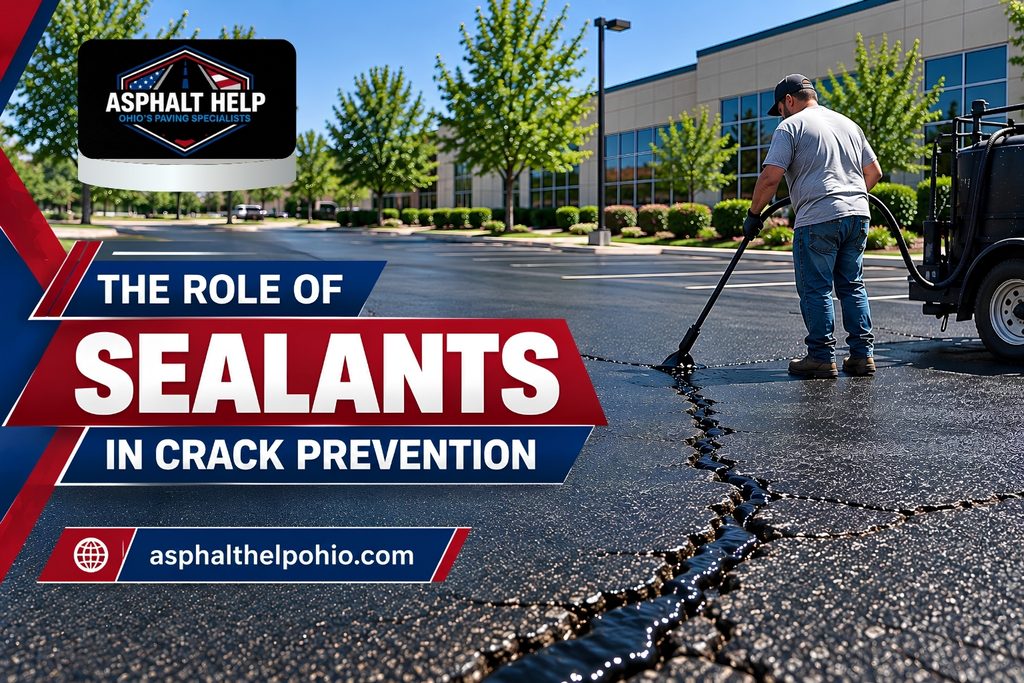
For property owners researching crack sealing Ohio, it is important to understand that sealants do not eliminate every cause of cracking. Instead, they help protect pavement when applied to appropriate cracks before deterioration becomes extensive. Selecting the right material, preparing the crack properly, and addressing drainage or structural problems are all important to achieving a useful result.
Asphalt Help Ohio helps property owners understand common asphalt maintenance needs and potential repair approaches. Whether you manage a residential driveway, a rental property, or a commercial parking area, knowing when crack sealing is appropriate can help you make informed decisions about maintaining your pavement.
What Is Asphalt Crack Sealing?
Asphalt crack sealing is a maintenance treatment in which a suitable sealant is placed in or over prepared cracks to help prevent water and debris from entering the pavement.
The sealant is selected according to factors such as crack width, expected movement, pavement condition, traffic, and environmental exposure. Some materials are designed to accommodate movement as temperatures change, while others are intended for different crack conditions.
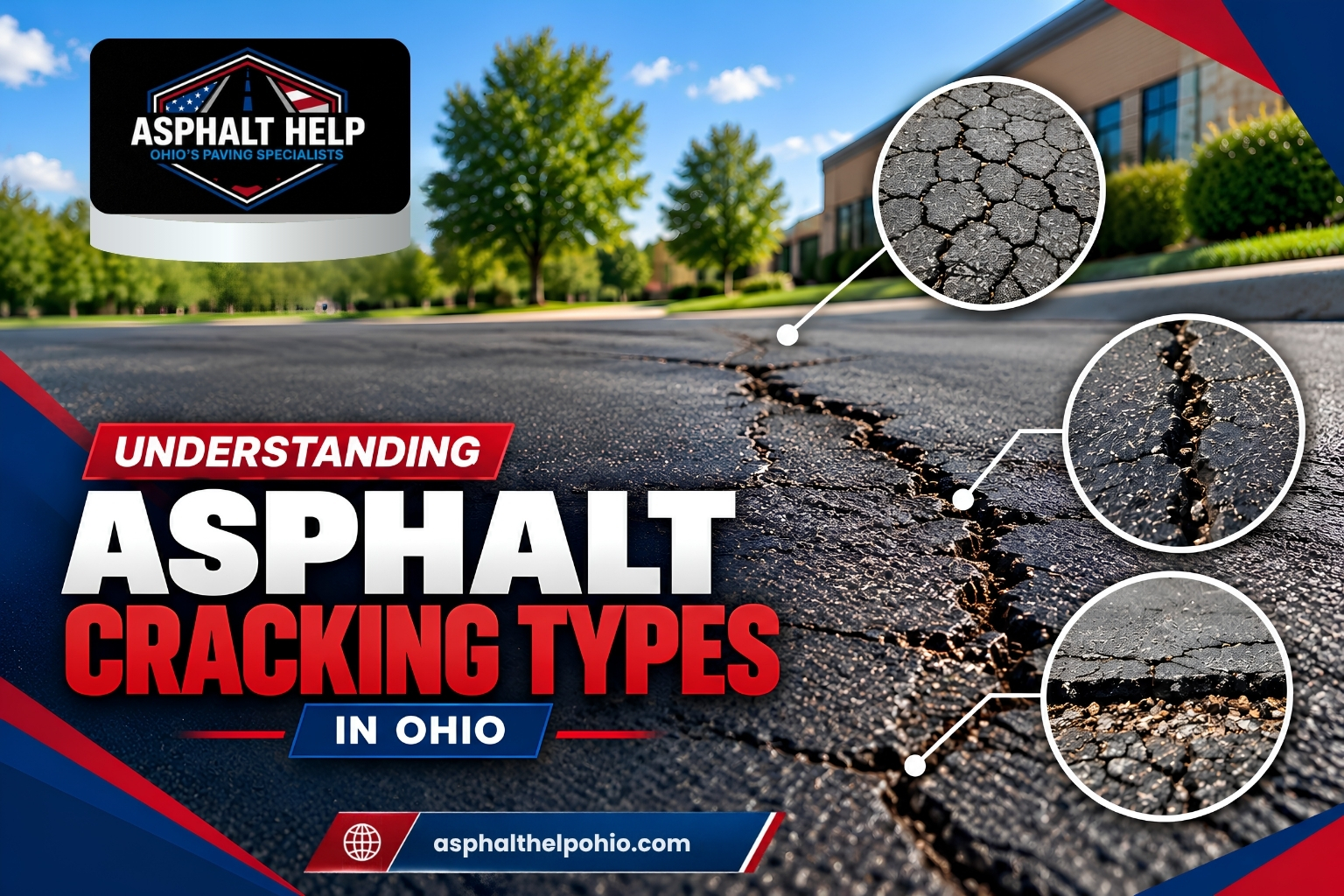
Crack sealing is commonly used for certain longitudinal cracks, transverse cracks, reflection cracks, and block cracks when the pavement is otherwise suitable for the treatment.
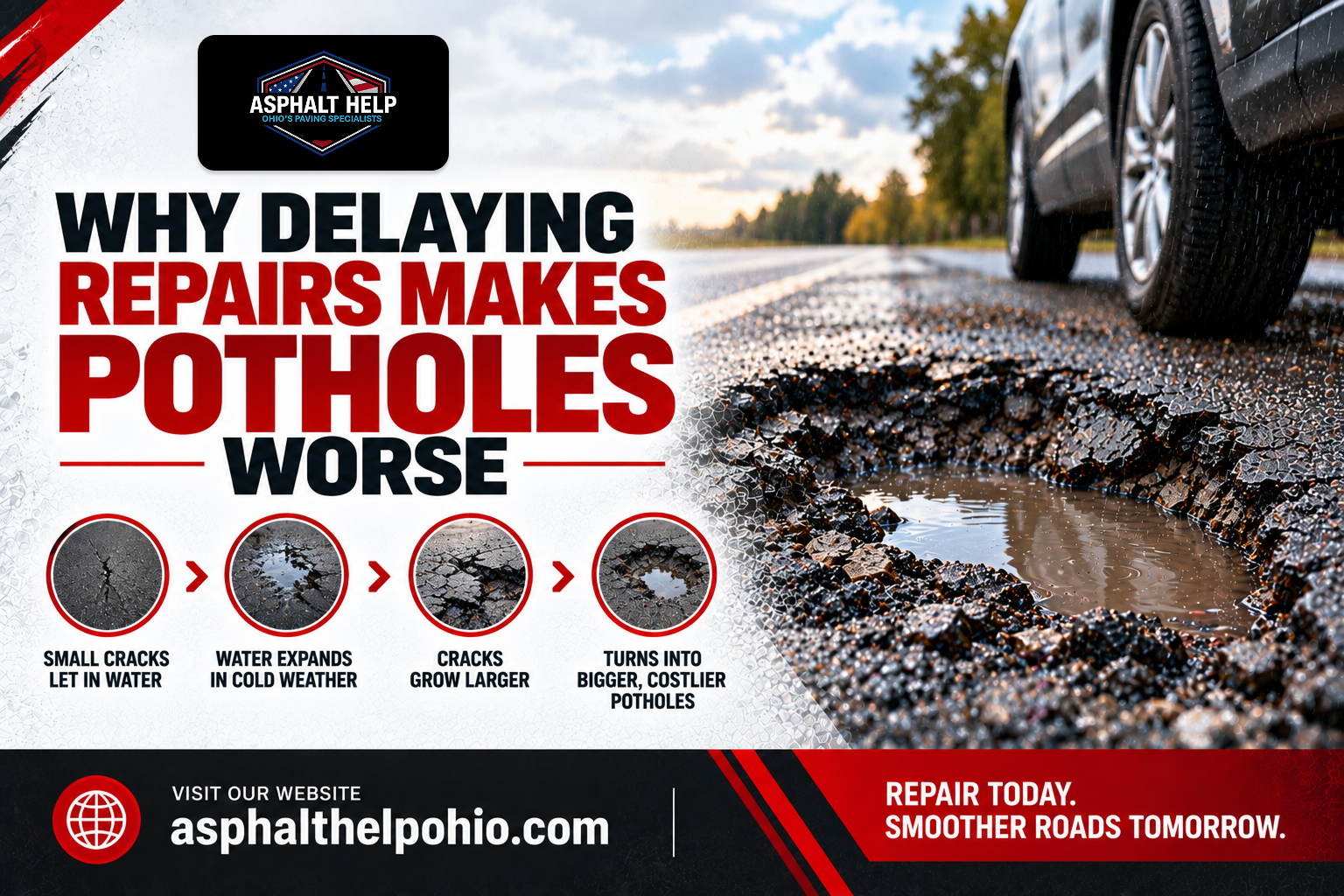
The purpose is to slow deterioration by limiting water infiltration. If moisture reaches the supporting layers, it can contribute to weakening, erosion, and additional pavement damage.
However, crack sealing is a preventive maintenance measure rather than a universal repair. Severe alligator cracking, widespread pavement breakup, and areas with significant settlement may require patching or structural repairs instead.
Why Is Crack Sealing Important in Ohio?
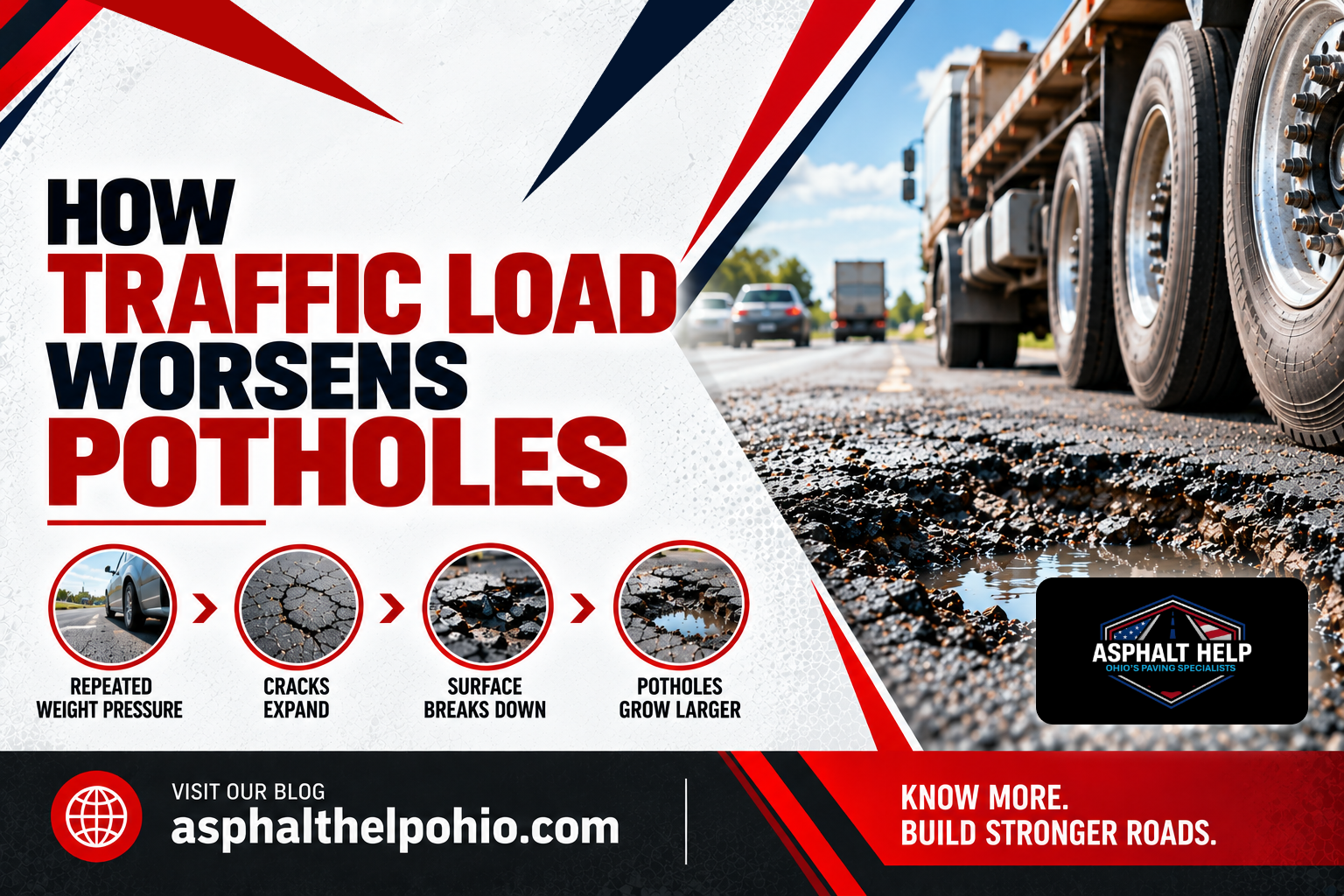
Ohio’s weather creates several challenges for asphalt pavement. Moisture, seasonal temperature changes, and repeated vehicle traffic can affect existing cracks and the materials supporting the surface.
1. Helps Limit Water Infiltration
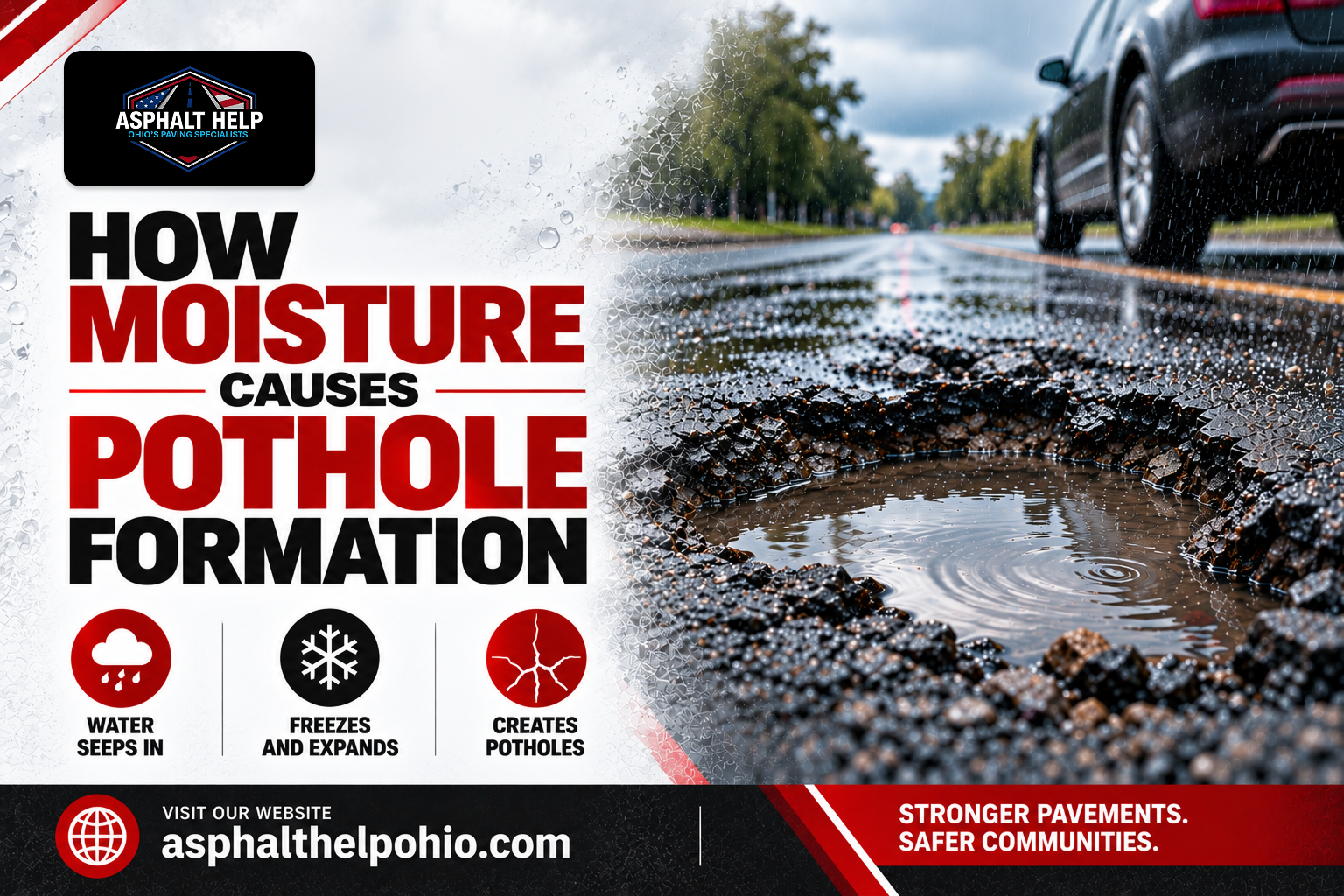
Water entering an asphalt crack can reach the underlying base or soil. When supporting materials become weakened, pavement may move under traffic and develop additional damage.
A properly selected and applied sealant helps reduce the amount of water entering a suitable crack. This can help preserve the condition of the pavement and slow the progression of moisture-related deterioration.
2. Helps Reduce Freeze-Thaw-Related Deterioration
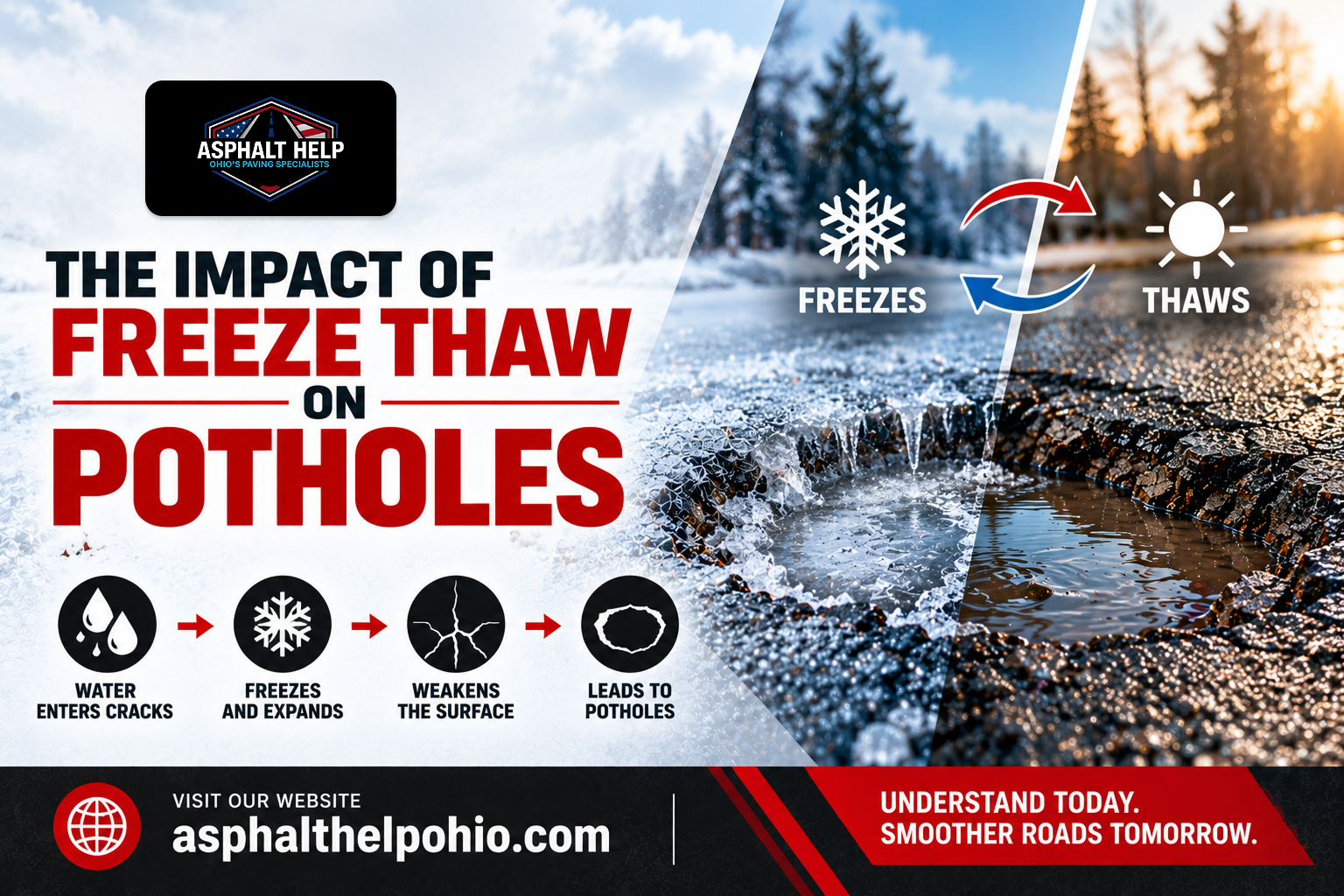
During colder periods, water may freeze and thaw as temperatures fluctuate. Existing cracks can become more vulnerable to deterioration when moisture repeatedly enters the pavement.
Sealants help limit water entry into suitable cracks before these conditions worsen the damage. They cannot eliminate all freeze-thaw effects, but they can form part of a broader pavement maintenance plan.
3. Helps Slow Crack Deterioration
Cracks exposed to traffic and weather may widen or develop damaged edges. Dirt and debris can also accumulate inside openings, making subsequent maintenance more difficult.
Crack sealing helps protect suitable openings from these external influences and can slow further deterioration when performed at the appropriate stage.
4. Supports Preventive Pavement Maintenance
Addressing suitable cracks before extensive deterioration develops may help reduce the need for more substantial repairs.
The benefits depend on the condition of the asphalt, the cause of the cracking, and the quality of the treatment. Sealing a crack that reflects a deeper structural problem will not correct that underlying failure.
What Types of Asphalt Cracks Can Be Sealed?
Not every crack is a suitable candidate for sealant. The crack’s shape, movement, width, and severity all affect the repair decision.
| Crack Type | Typical Appearance | Crack Sealing Consideration |
|---|---|---|
| Longitudinal cracking | Runs parallel to the pavement’s direction | May be suitable if the pavement remains stable |
| Transverse cracking | Runs across the pavement | May be sealed when the crack condition and movement are appropriate |
| Reflection cracking | Reappears above a crack or joint in an underlying layer | Treatment depends on the cause and expected movement |
| Block cracking | Forms a network of roughly rectangular sections | Some cracks may be sealed if deterioration is limited |
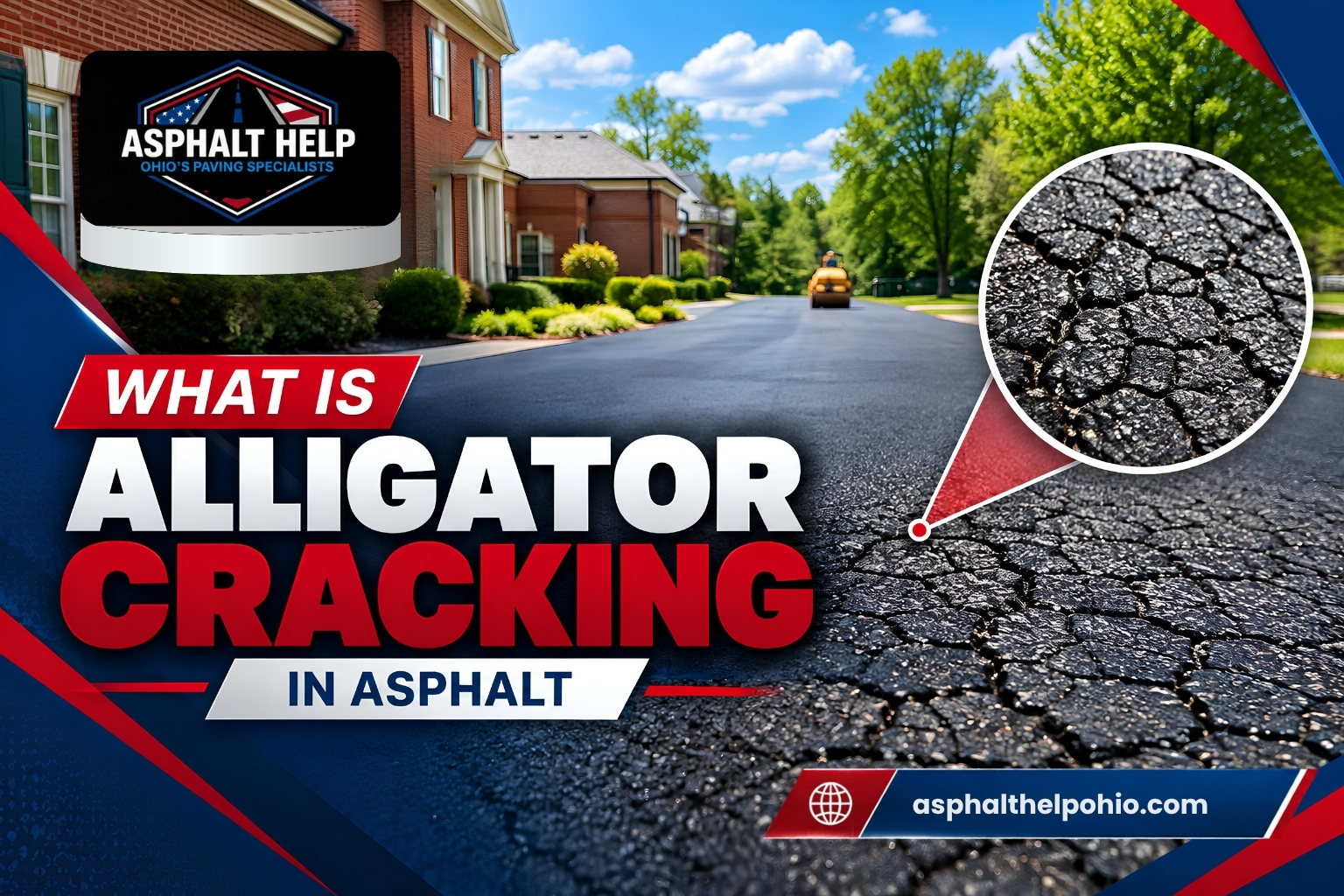
| Alligator cracking | Interconnected cracks resembling reptile skin | Often requires a patch or structural assessment rather than routine sealing |
| Cracks with severe breakup | Wide openings with loose or missing asphalt | May require patching or deeper repairs |
This table provides general guidance. A pavement assessment is important when cracks are widespread, have crumbling edges, or appear alongside depressions and potholes.
How Does the Crack Sealing Process Work?
Effective crack sealing requires more than applying material over a visible opening. Preparation and material selection influence how well the treatment performs.
Step 1: Inspect the Pavement
The first step is to examine the crack pattern, width, length, severity, and surrounding surface.
The inspection should identify whether the cracks are isolated or widespread and whether there are signs of structural damage, poor drainage, or settlement.
This helps determine whether crack sealing is appropriate or whether a different repair method is needed.
Step 2: Clean and Prepare the Cracks
Dirt, loose aggregate, vegetation, and other debris can interfere with sealant adhesion.
The crack must be prepared according to the chosen material and application method. Depending on the pavement condition and specification, preparation may involve cleaning and, where appropriate, routing or shaping the crack.
Proper preparation helps the sealant bond to the intended surfaces.
Step 3: Select the Appropriate Sealant
Sealants differ in their composition, flexibility, application requirements, and intended uses.
The material should be suitable for the crack dimensions, expected movement, weather conditions, and traffic exposure. A product designed for one type of crack may not be appropriate for another.
Following the manufacturer’s instructions and applicable project specifications is important for selecting and applying the material correctly.
Step 4: Apply the Sealant
The prepared crack is treated using the method appropriate for the selected sealant.
Some professional crack-sealing systems use heated materials, while other products have different application requirements. Temperature, moisture, and surface preparation must be suitable for the chosen treatment.
Excess material should be avoided because improper application can affect the pavement surface and performance.
Step 5: Allow the Material to Set
The treated area needs sufficient time to cool, cure, or set according to the product requirements before normal traffic resumes.
The required time varies with the material, weather, pavement temperature, and application method. Following the specified reopening guidance helps protect the repair.
Step 6: Inspect the Completed Work
After application, the treated area should be checked for coverage, bonding, and obvious defects.
Periodic follow-up inspections can help identify sealant that has pulled away, deteriorated, or stopped protecting the crack effectively.
Choosing the Right Sealant for Asphalt Cracks
The best sealant depends on the condition of the pavement and the type of crack being treated. Selecting material based solely on price or appearance may lead to an unsuitable repair.
Consider the following factors:
- Crack movement: Some cracks experience greater movement as temperatures change and may need a more flexible material.
- Crack width and depth: Different products have different application limits.
- Pavement condition: A stable pavement may be suitable for sealing, while severely deteriorated asphalt may require patching.
- Weather conditions: The application temperature and moisture requirements depend on the material.
- Traffic exposure: Driveways, parking lots, and high-use access lanes may have different performance requirements.
- Compatibility with future treatments: Planned resurfacing or other surface treatments can influence the appropriate material and timing.
Ohio Department of Transportation specifications distinguish among crack-sealing material types and application methods. Its guidance also notes that very wide cracks may require a different treatment from standard crack sealing. The appropriate choice should follow the relevant specifications and the actual pavement condition.
Crack Sealing vs. Crack Filling: What’s the Difference?
The terms crack sealing and crack filling are sometimes used interchangeably, but pavement maintenance guidance often distinguishes them according to the crack’s expected movement and the treatment’s purpose.
Crack sealing generally uses a material intended to accommodate movement and maintain a protective seal. Crack filling commonly refers to filling cracks that experience less movement, although terminology and product definitions can vary.
| Feature | Crack Sealing | Crack Filling |
|---|---|---|
| Primary purpose | Help prevent water infiltration in suitable moving cracks | Fill suitable cracks and limit water entry |
| Material considerations | Often uses flexible sealants designed for crack movement | Material depends on crack characteristics and product specifications |
| Common applications | Selected longitudinal, transverse, and reflection cracks | Selected cracks with limited movement |
| Preparation | Cleaning and other preparation as required | Cleaning and preparation as required |
| Main limitation | Cannot repair structural failure by itself | Cannot repair structural failure by itself |
The appropriate treatment should be selected according to the crack’s characteristics and the pavement’s condition rather than the terminology alone.
When Is Crack Sealing Not Enough?
Sealants can help protect suitable cracks, but some pavement problems require more substantial work.
Severe Alligator Cracking
When cracks connect into a network resembling alligator skin, the pavement may be experiencing structural fatigue. This often indicates that the asphalt or supporting layers are no longer providing adequate strength.
Simply filling each crack may not restore the pavement. The affected area may need partial-depth or full-depth patching, rehabilitation, or reconstruction, depending on the extent of the damage.
Wide Cracks With Broken Edges
Cracks with significant crumbling, missing material, or extensive deterioration may be unsuitable for standard crack-sealing materials.
A more appropriate repair might involve removing loose asphalt, repairing the affected section, or using a material specifically designed for wider cracks when suitable.
Cracks With Settlement or Potholes
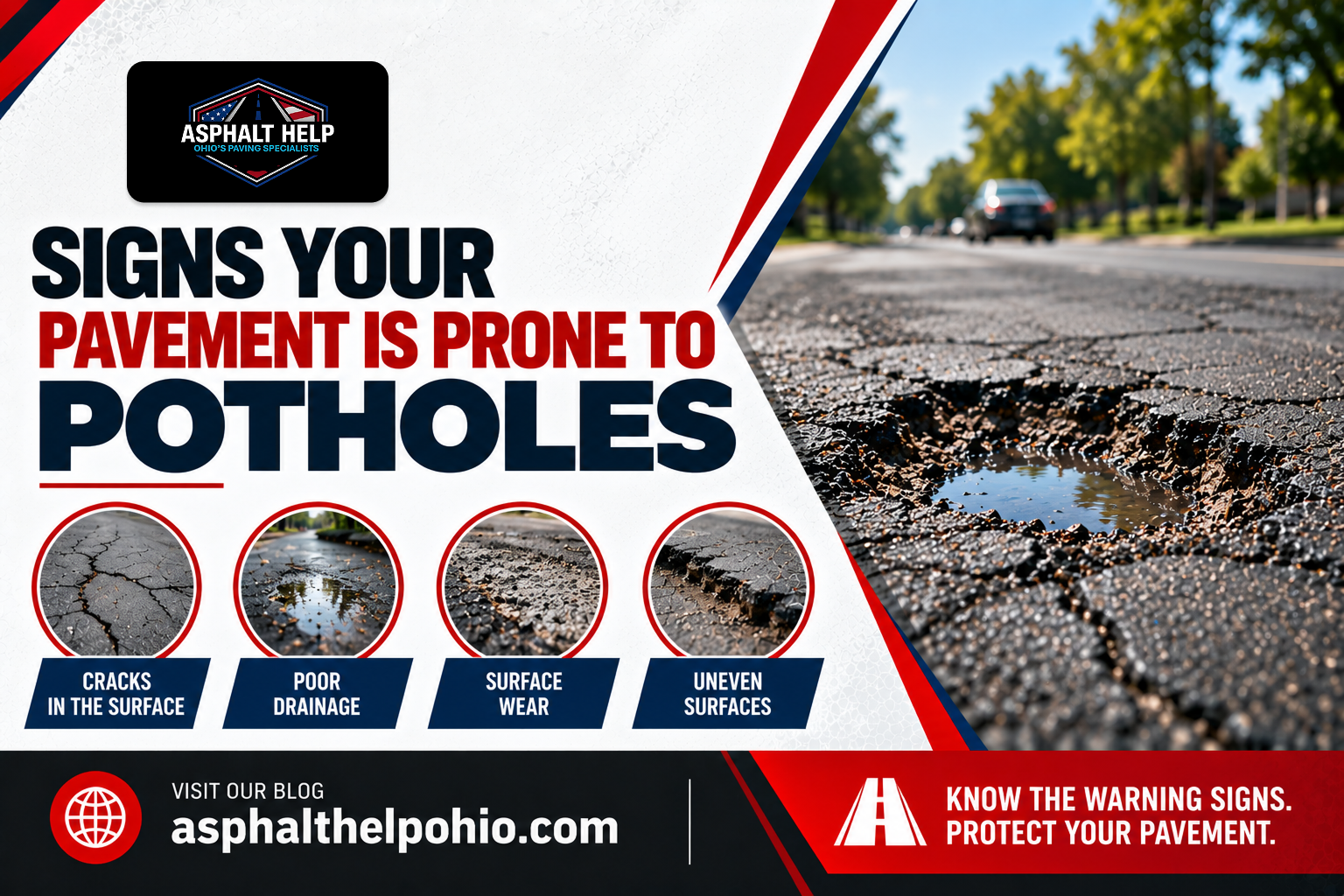
If a crack appears alongside sinking pavement, potholes, or uneven surfaces, the underlying base or soil may need to be investigated.
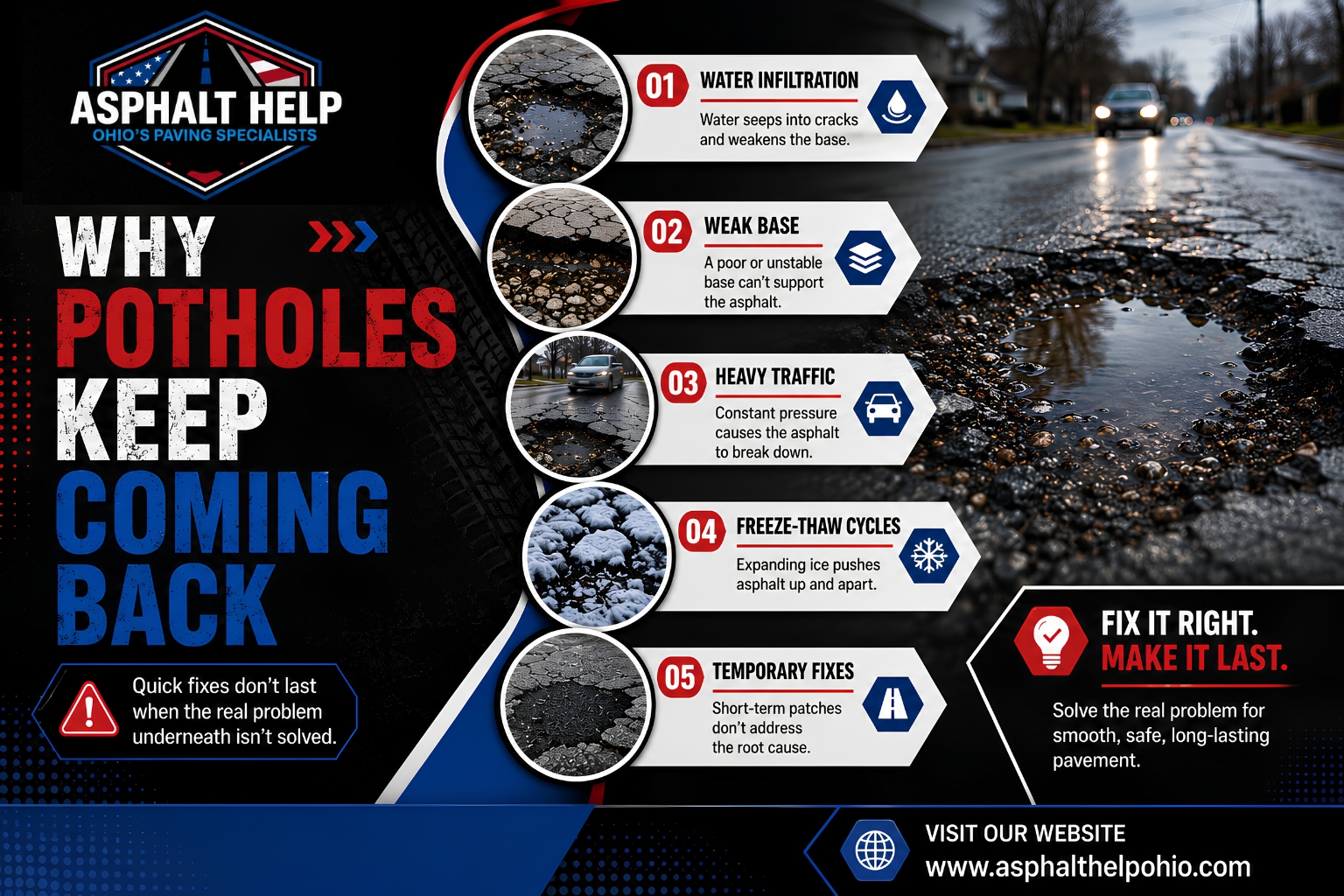
Surface sealing cannot correct unstable support or restore missing pavement material. Addressing the underlying problem is essential to reducing the risk of recurring damage.
Widespread Pavement Deterioration
If cracks cover large areas and the asphalt is breaking apart, an overall pavement assessment may be needed to determine whether localized repairs, resurfacing, or reconstruction is appropriate.
The goal is to select a treatment that addresses the actual deterioration rather than repeatedly applying sealant to an unsuitable surface.
How Often Should Asphalt Cracks Be Sealed?
There is no single schedule that works for every driveway or parking lot. Crack sealing frequency depends on pavement condition, crack development, traffic, drainage, weather exposure, and how well previous treatments have performed.
A practical maintenance approach includes:
- Inspecting pavement regularly for new or widening cracks.
- Checking treated cracks for separation or failed sealant.
- Assessing drainage problems and other possible causes of damage.
- Sealing suitable cracks when conditions and product requirements allow.
- Repairing structural deterioration rather than repeatedly sealing the same failed area.
Seasonal inspections are particularly useful in Ohio because pavement conditions can change following winter weather and spring thaw. The timing of treatment should depend on the crack condition and the material’s application requirements.
Best Practices for Crack Sealing in Ohio
To get the most from a crack-sealing program, property owners should focus on the following practices.
Inspect Before Selecting a Treatment
Determine whether the cracks are isolated, moving, deteriorated, or associated with structural problems. Not every visible crack needs the same treatment.
Prepare Cracks Properly
Cleaning and preparation help remove contaminants that can interfere with adhesion. Follow the material specifications rather than applying sealant directly over dirt or loose debris.
Use Suitable Materials
Choose a product designed for the crack dimensions, expected movement, and site conditions. Follow applicable specifications and the manufacturer’s instructions.
Consider Weather and Surface Conditions
Temperature and moisture conditions can affect the application and performance of crack sealants. Treatments should be scheduled when the selected material can be installed correctly.
Address Drainage Problems
If water repeatedly collects near cracks, investigate the cause. Sealing the openings may help limit infiltration, but drainage improvements may also be necessary.
Reinspect Treated Areas
Check repairs periodically to identify areas where sealant has failed or cracks have returned. Recurring damage may indicate that a different treatment or further assessment is needed.
Crack Sealing for Residential, Rental, and Commercial Properties
Different property types experience different pavement demands, but all can benefit from appropriate inspections and timely maintenance.
Residential Driveways
Homeowners should look for cracks that are widening, allowing water to enter, or developing loose edges. Suitable cracks may be sealed before more extensive deterioration occurs.
If cracks are accompanied by sinking, widespread breakup, or recurring water accumulation, the underlying cause should be evaluated.
Rental Properties
Rental properties may have private driveways, shared parking areas, and access lanes that experience repeated vehicle use.
Property owners and managers can include pavement inspections in their regular maintenance routines. Recording recurring cracks and arranging suitable repairs can help identify problems before they spread across larger areas.
Commercial Parking Lots
Commercial parking lots often experience frequent traffic, turning movements, delivery vehicles, and localized loading. Cracks in drive aisles, loading zones, and wheel paths should be assessed for signs of structural deterioration.
A maintenance plan should prioritize cracks according to their condition and the potential consequences of further damage. Areas with extensive interconnected cracking may need more than routine sealing.
Frequently Asked Questions About Crack Sealing in Ohio
1. What is the main purpose of asphalt crack sealing?
The main purpose is to limit water and debris from entering suitable pavement cracks. This helps slow deterioration and protect the supporting pavement structure.
2. Does crack sealing prevent all asphalt damage?
No. Crack sealing helps manage suitable cracks but cannot eliminate all causes of pavement deterioration. Poor drainage, heavy traffic, weak base materials, and structural failure may require other solutions.
3. When should cracks be sealed in Ohio?
Cracks should be assessed when they appear and treated when the pavement, weather, and material requirements are suitable. Regular inspections help identify the right time for maintenance.
4. Can sealant be applied to wet cracks?
Many crack-sealing materials require the crack and surrounding surface to meet specific dryness and temperature conditions. Follow the selected product’s requirements because moisture can affect adhesion and performance.
5. Can crack sealing repair potholes?
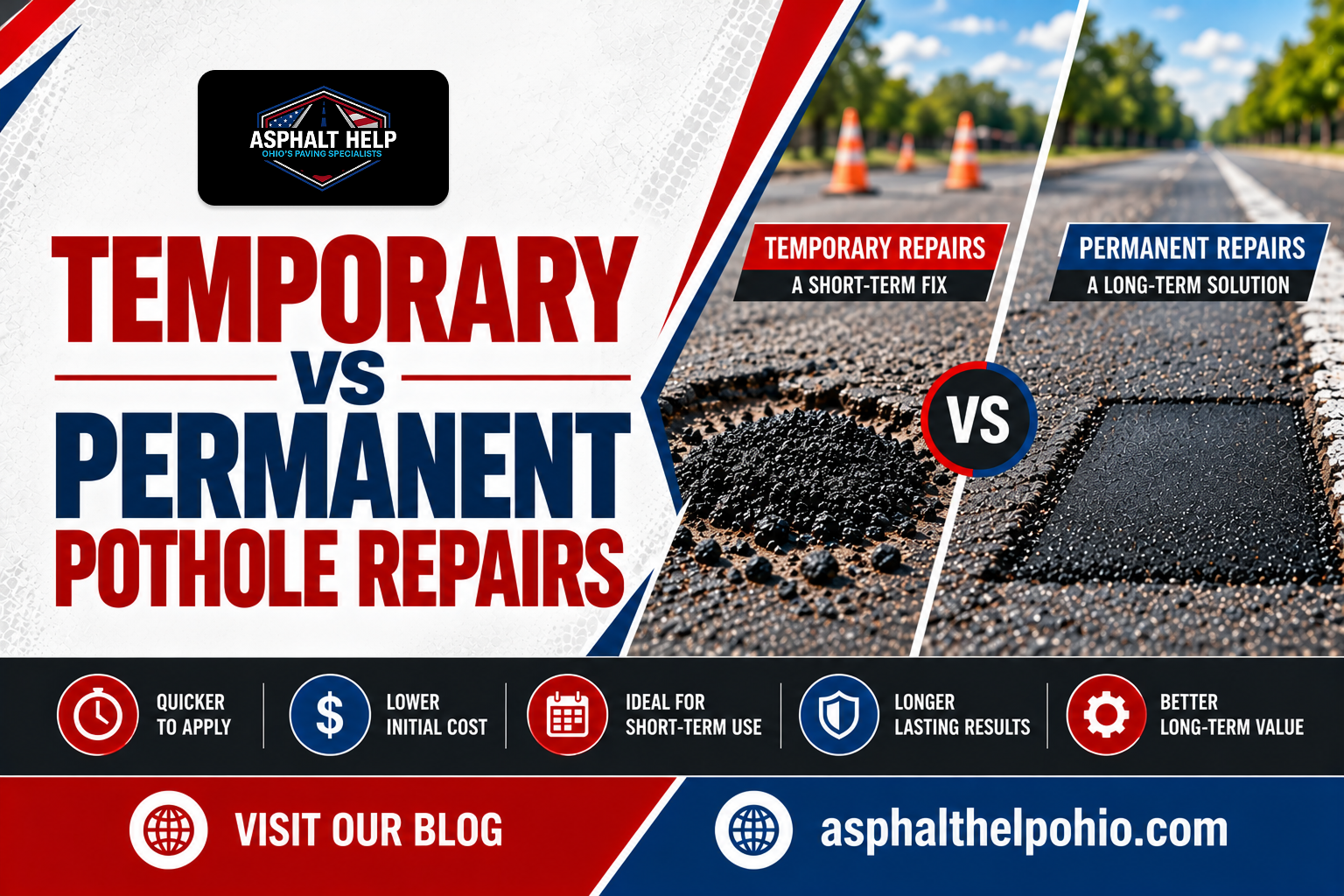
Standard crack sealing is not a substitute for pothole repair. Potholes generally require a patching method appropriate to the damage and condition of the underlying pavement.
6. Should alligator cracks be sealed?
Extensive alligator cracking often indicates structural fatigue and generally needs an assessment for patching or more substantial repairs. Applying ordinary crack sealant alone is unlikely to resolve the underlying problem.
7. How long does crack sealant last?
Service life varies with the material, crack movement, preparation, weather exposure, traffic, and pavement condition. Regular inspection is needed to determine whether the seal remains effective.
8. Is crack sealing useful for commercial parking lots?
Yes, when the cracks and pavement condition are appropriate for the treatment. It can be part of a broader maintenance plan that also includes drainage management, inspections, patching, and other repairs when necessary.
Conclusion
Sealants play an important role in asphalt crack prevention by helping limit water infiltration and slowing deterioration in suitable cracks. In Ohio, this maintenance approach can be especially useful because pavement experiences changing temperatures, moisture, traffic, and seasonal weather stress. However, effective crack sealing depends on proper inspection, material selection, preparation, application, and follow-up maintenance.
For property owners researching crack sealing Ohio, the key is to match the treatment to the pavement’s actual condition. Asphalt Help Ohio helps property owners understand asphalt maintenance needs and evaluate appropriate repair options for residential driveways, rental properties, and commercial pavement. By addressing suitable cracks early and investigating more serious damage, property owners can make better-informed decisions about maintaining their asphalt surfaces.