




Ohio’s climate can be tough on asphalt surfaces. From cold winters to hot summers, changing weather affects the strength, appearance, and longevity of driveways, parking lots, and roadways. Understanding how weather impacts asphalt helps you protect your investment and plan proper maintenance.
Winter Freeze-Thaw Cycles
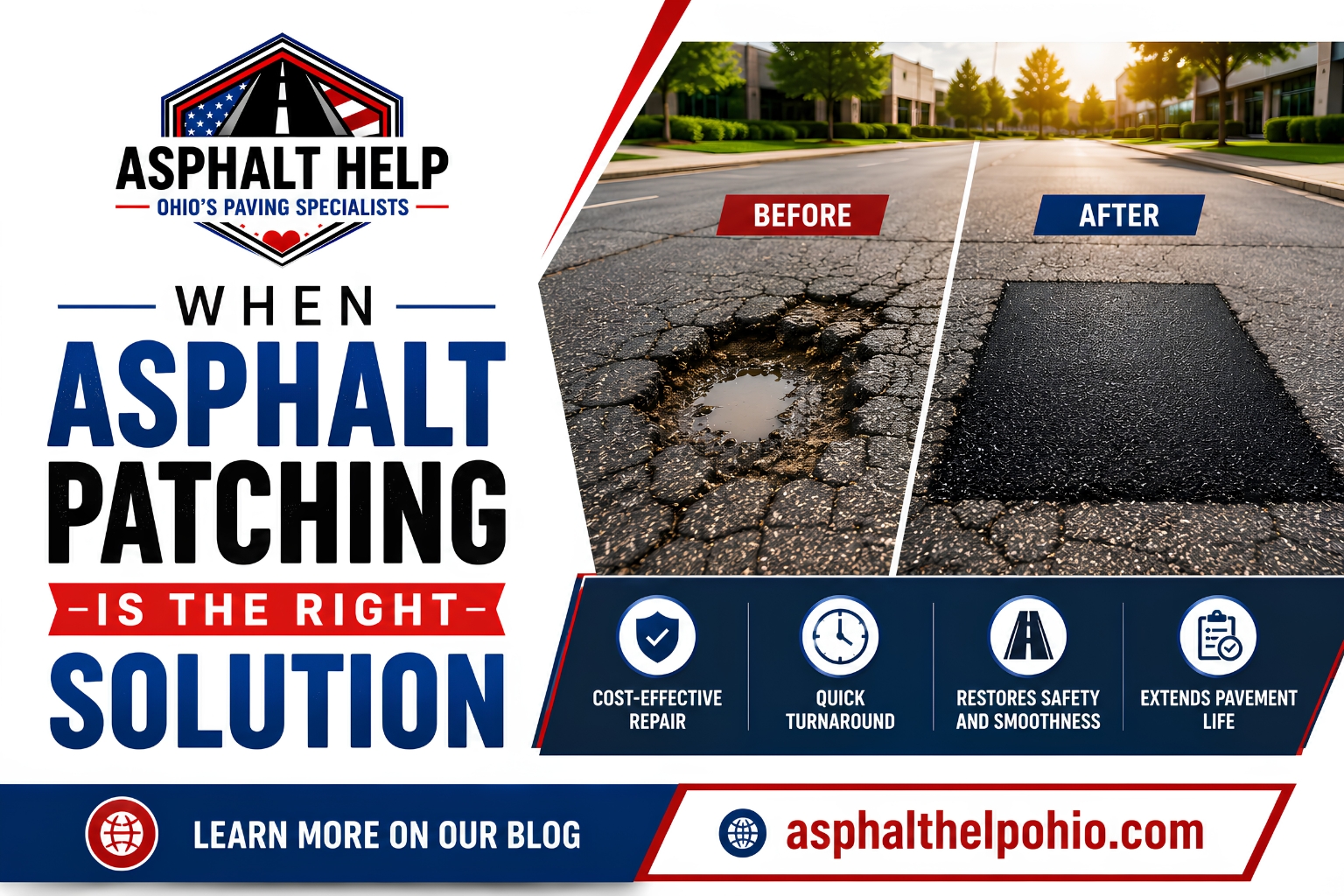
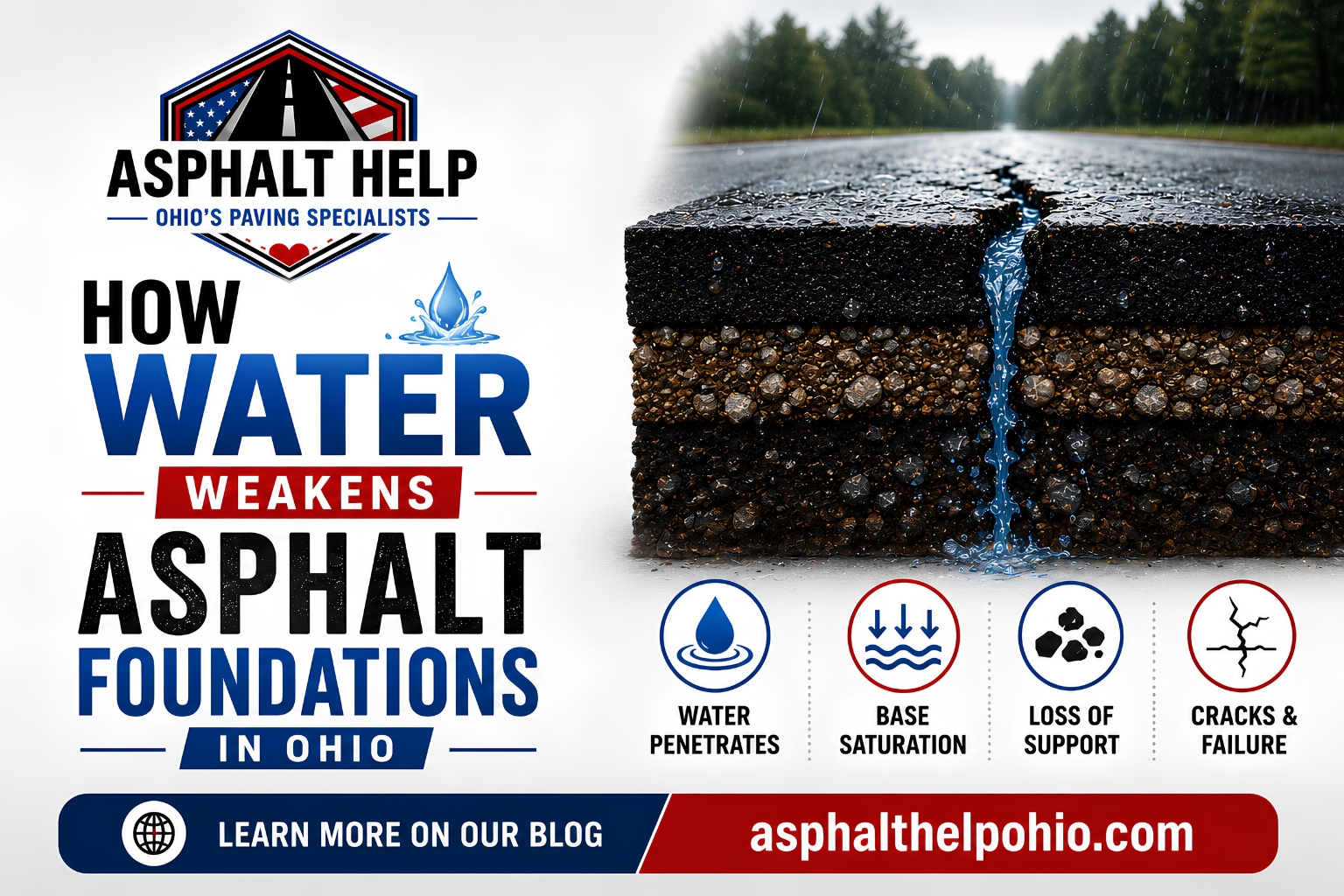
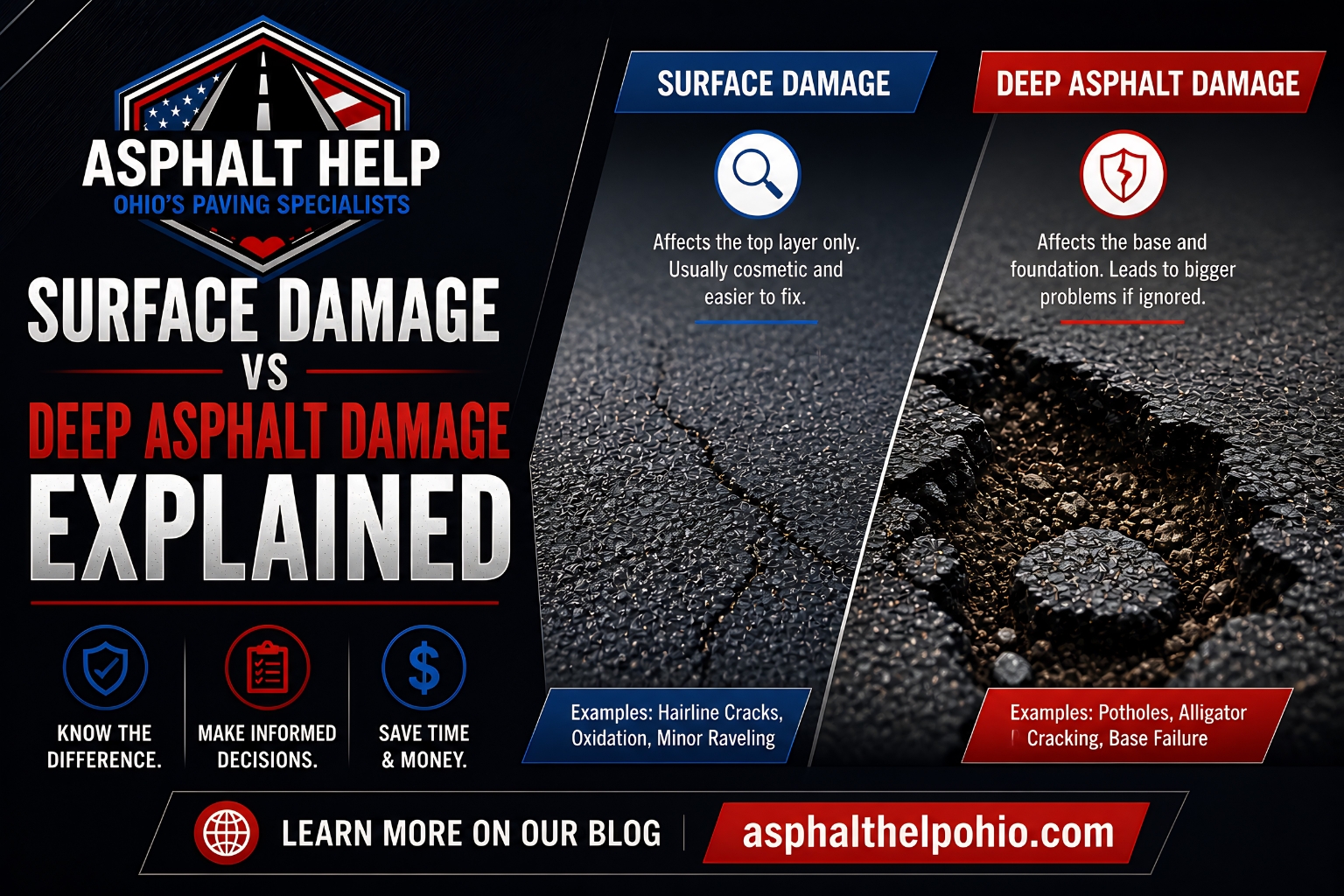
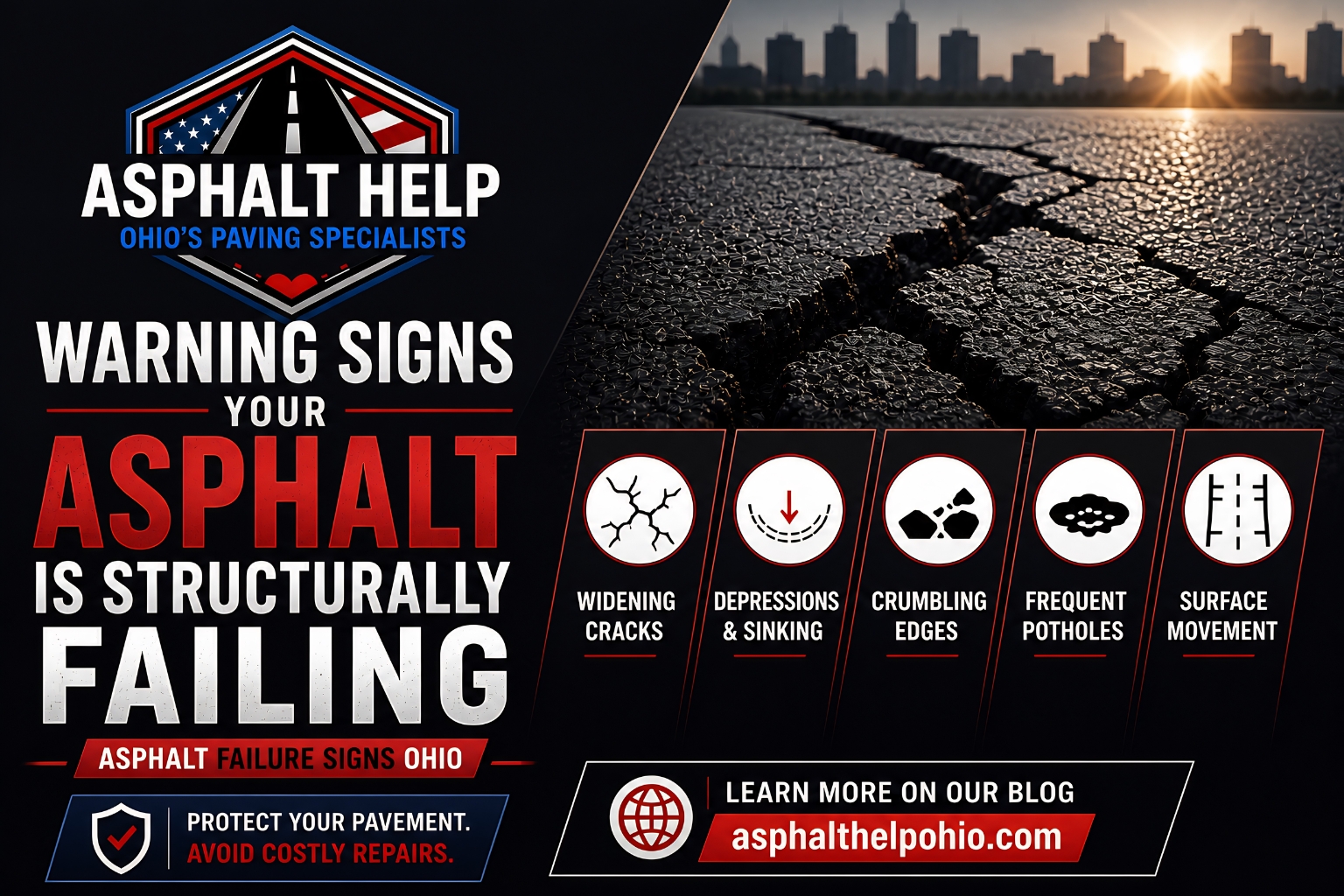
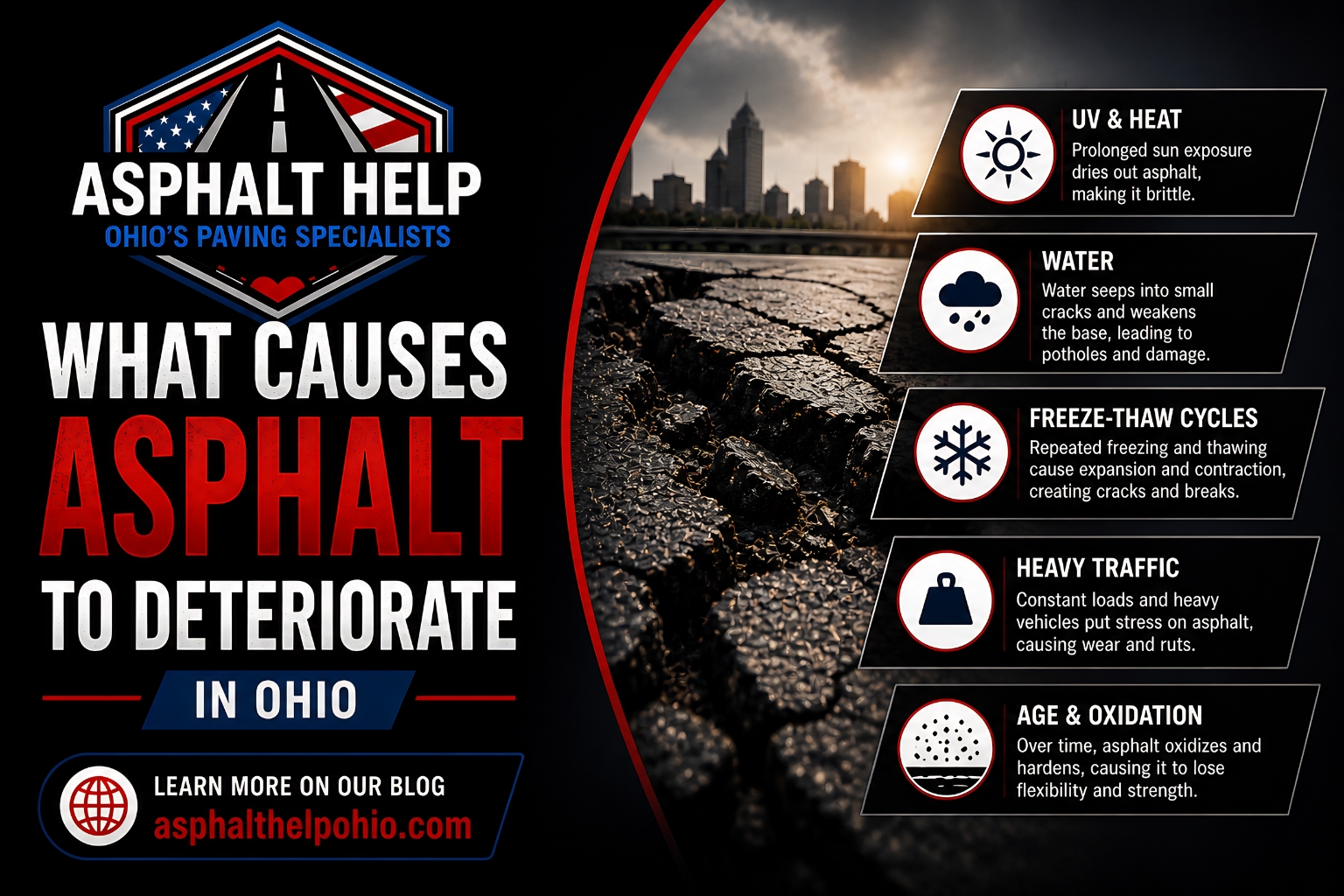
During winter, water can seep into small cracks in the asphalt. When temperatures drop, that water freezes and expands, causing cracks to widen and potholes to form. Repeated freeze-thaw cycles accelerate surface damage, especially if moisture remains trapped beneath the pavement.
Hot Summers and UV Exposure
In summer, high temperatures and direct sunlight can soften asphalt, making it slightly more pliable. This can lead to surface rutting, especially under heavy vehicle traffic. UV rays also break down asphalt binders over time, causing fading and increased brittleness.
Heavy Rain and Poor Drainage
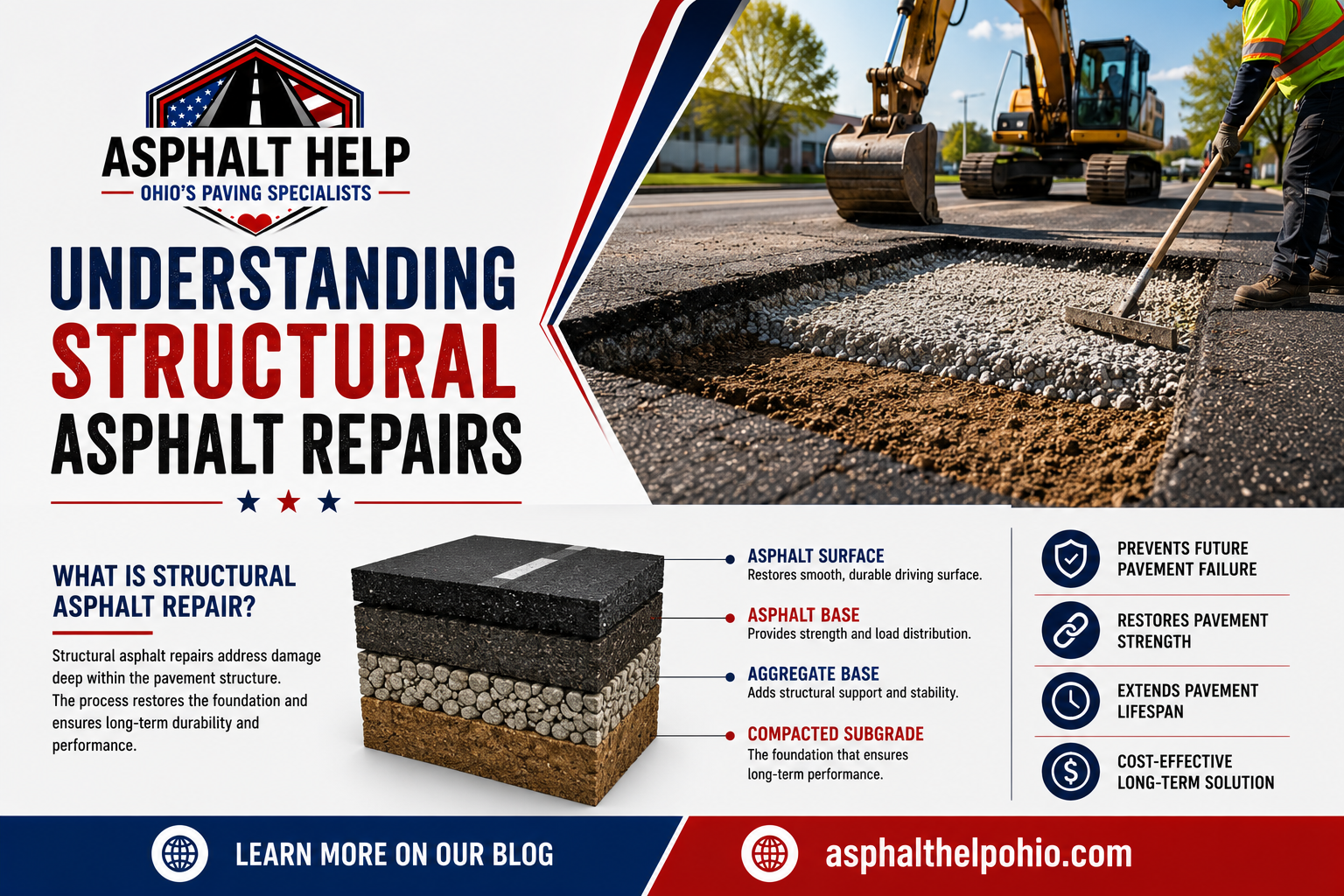
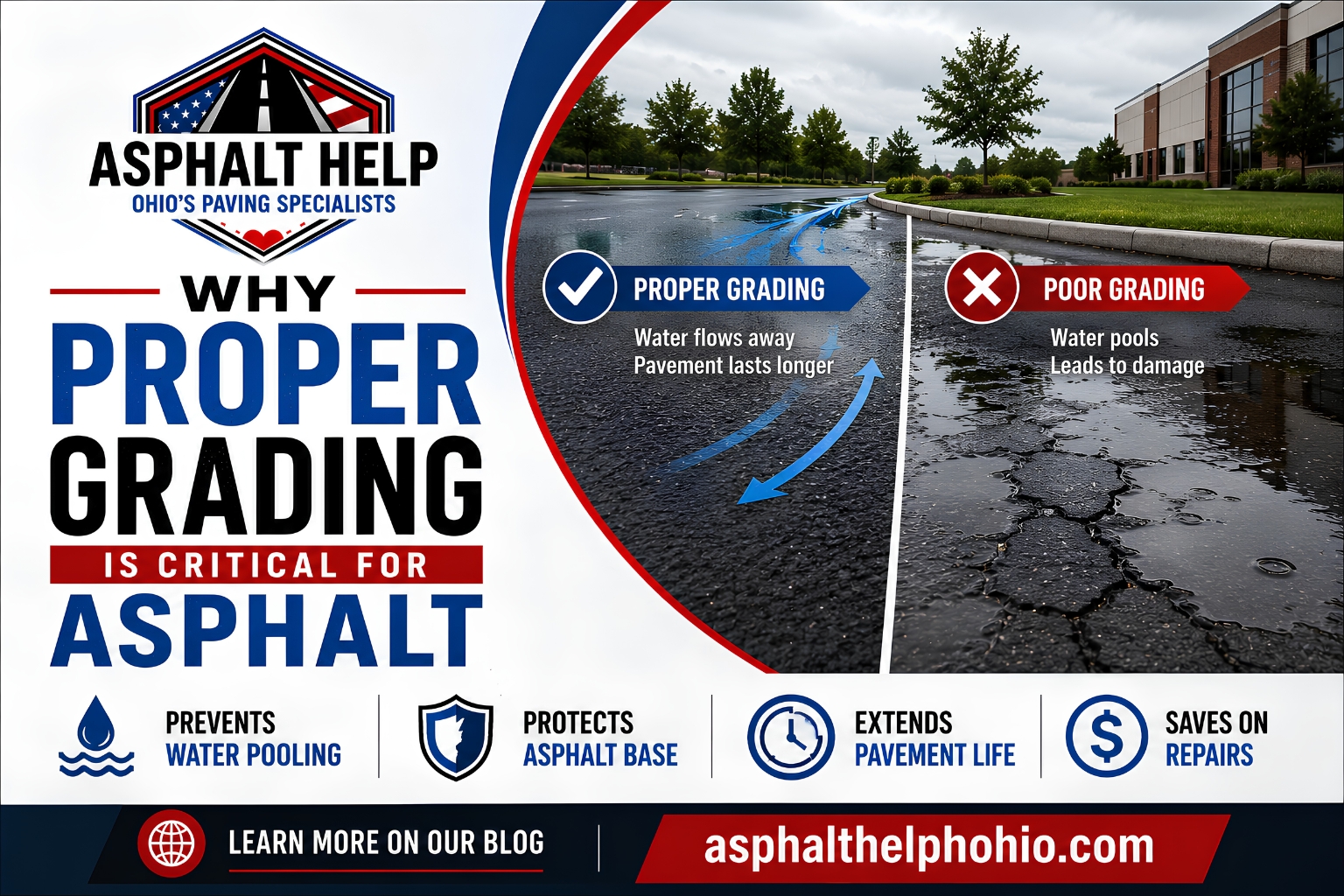
Excessive rain, especially during storms, can weaken the pavement base if water does not drain properly. Standing water increases the risk of cracking and potholes because moisture undermines the foundation beneath the surface.
Seasonal Transitions
Sudden changes in temperature—especially in spring and fall—can stress asphalt surfaces. Rapid warming after cold weather can cause expansion of materials, while quick cooling can lead to contraction. Repeated expansion and contraction contribute to surface fatigue.